r/ElectricalEngineers • u/RoyalKlutzy430 • Aug 15 '26
Is Macbook Air (M4/M5) a good choice for engineering ?? Gonna do coding, graphics designing, study and stuff or should I go for windows ?? [Branch : EE]

121
Upvotes
r/ElectricalEngineers • u/RoyalKlutzy430 • Aug 15 '26
r/ElectricalEngineers • u/AdvantageEntire1496 • Jul 11 '26

Looking for hard resume criticism, it is ass I know it is. I just need some specs on why its ass. If my experience is stupid please feel free. I have a two pager on purpose, will bring it down based on what people say.
r/ElectricalEngineers • u/Haitham_H7 • Nov 30 '25

the transformer core is made of metal sheets and insulating layers, so by just bringing the wire ends and placing them in the metal sheets, we would create a capacitor, right?
so why we don't do that instead of adding a separate capacitor to improve the power factor?
the image in my mind is like this:
r/ElectricalEngineers • u/-Lux_ion- • Apr 11 '26

Guys!! I just bought my first board today and I've been testing it out.
r/ElectricalEngineers • u/AdvantageEntire1496 • Sep 05 '26

Just wanna preface: no internships, no co-ops, no EE related extra curricular activities, one summer of unrelated research in EE, project heavy resume featuring my senior capstone and some class labs. Was applying while doing my last summer courses this summer. Started applying seriously in early July, got interviews in early August, got an offer in late August. Only 21 applications perhaps shoulda done more but the job I got was exactly what I was looking for. 3.09 GPA. August 2026 grad. Position in Power Electronics for Corporate R&D. Sharing to give some hope for the EE students in here that think they’re fucked all the time. Just focus on your classes, learn your stuff well and learn shit that you actually find interesting. No need to stress about extra curricular activities for EE but they are very beneficial.
r/ElectricalEngineers • u/Alive-Shallot-9386 • Oct 19 '26

r/ElectricalEngineers • u/RotemT • 15d ago
I have been building this simulator as a side project with the purpose to help students understand and visualize electromagnetic concepts such as radiation, near field effects, polarization, wave interference, scattering and diffraction. It is interactive and runs on the browser.
You can:
place multiple, diffrent radiation sources and set their parameters (geometery, amplitude, phase and more)
place perefect wire conductors, PEC plane and poke slots in the plane to create diffraction patterns
observe the electric field, magnetic field, energy flow field, energy density or radiation pattern
zoom in and out and translate the canvas
change the simulation resolution, frequency and propogation speed and some other parameters
I hope someone might find it useful and I’d love to hear what people think :)
Live:
https://www.antennasim.com/
GitHub:
r/ElectricalEngineers • u/xtherexuu • 18d ago
Hey everyone!
I'm currently studying circuit theory, and there's something that's been really frustrating me.
I can learn formulas, apply Kirchhoff's laws, simplify complicated circuits, and get the correct answers. But I often don't fully understand WHY those methods work or what's actually happening physically inside the circuit.
And that's exactly what I want to change.
I don't want to just memorize rules and learn how to solve circuit problems. I want to genuinely understand circuits, down to the physical principles behind everything.
For example, take a current source. I don't just want to know how to include it in calculations or how it affects the equations. I want to understand how an actual current source works, how it physically maintains a certain current, what happens inside it, how it interacts with other components, and WHY the equations describing it make sense.
The same goes for voltage, resistance, electric fields, energy transfer, and pretty much everything else.
Even when I successfully simplify a complicated circuit, it bothers me that I sometimes can't explain why that simplification is valid in terms of what's physically happening.
My goal is to reach a point where I can look at a circuit and actually visualize and understand how it behaves in real life, rather than just seeing a bunch of components and remembering which formulas or tricks to apply.
I want to connect the mathematics, the underlying physics, and real-world electronics into one complete understanding.
And I'm willing to go really deep into the theory to get there. I don't mind learning more physics or mathematics if that's what it takes.
So my question is: where can I learn circuit theory at this level of depth?
Are there any books, courses, science papers, websites, videos, or other communities that focus on explaining why things work rather than just teaching you how to calculate the answers?
I'm especially interested in resources that connect theoretical explanations with real physical behavior and practical experiments or visualizations.
I'd really appreciate any recommendations or advice from people who've had a similar frustration and managed to overcome it.
Thanks!
r/ElectricalEngineers • u/lilswan- • Jan 19 '26

pls help me with this
r/ElectricalEngineers • u/Appropriate-Can-8602 • Sep 21 '26

r/ElectricalEngineers • u/[deleted] • Nov 29 '25
Just about to finish up my Christmas exams in year 1 and so far I’m finding it okay and I’m enjoying it, a lot of lecturers are saying from first year to second year there is quite a big jump? Is that the case?
r/ElectricalEngineers • u/arjitraj_ • Oct 07 '25

r/ElectricalEngineers • u/Waste-Emotion-6074 • Sep 04 '26
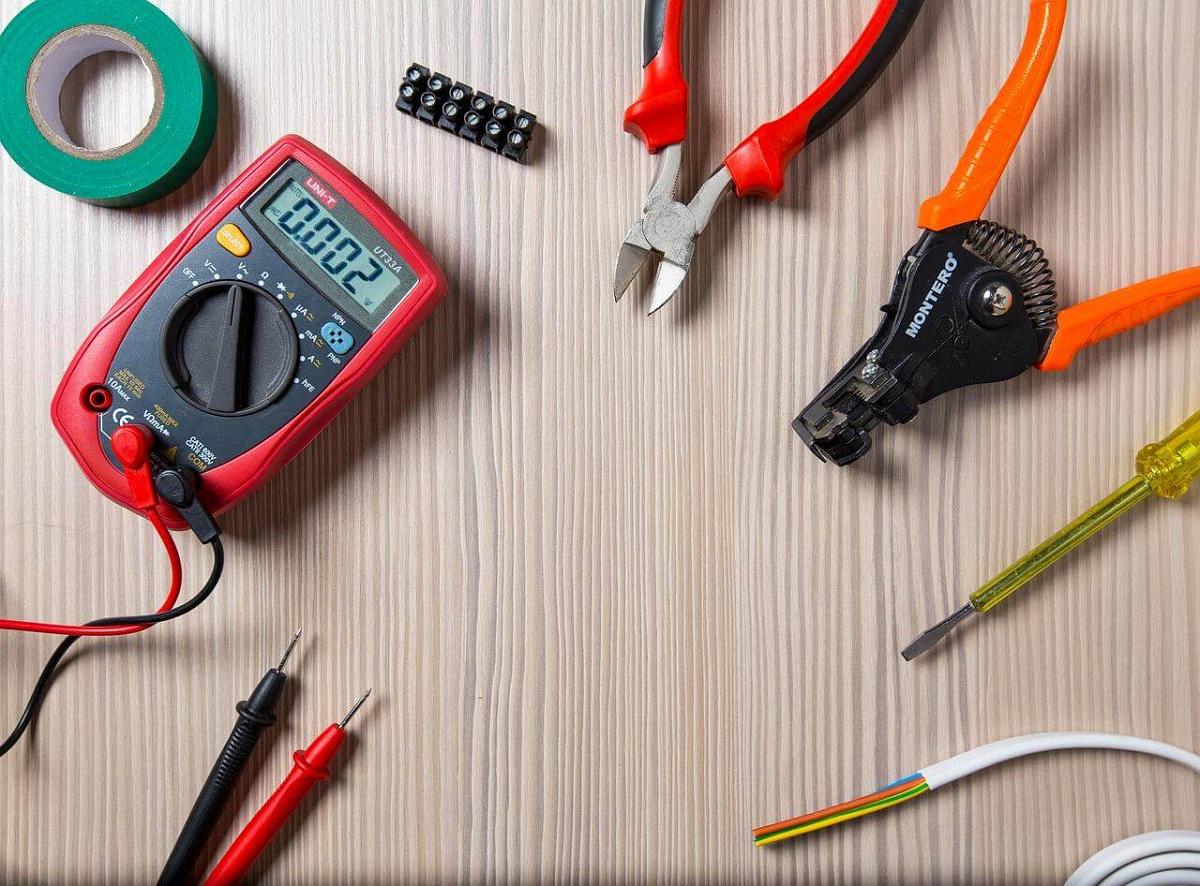
How did you start in electricity? What are the things that developed each person in their field of electricity?
r/ElectricalEngineers
•
u/essenseoflazyness
•
Sep 18 '26

Hi all im looking at takeing an EE degree. However i want to know what people in the field actually do like what is your day to day life like. And also is the daily job as mentally taxing as the degree is do you need to put alot of effot into your work day by day and work after hours often?
r/ElectricalEngineers • u/Wide_Boot_6502 • Dec 02 '25

We solving for current at R2.
Using Ohm's law: 100/200= 0.5Am
Now i try to do it using thevenin, i consider R2 to be R load, i remove it and calculate for V thevenin and R thevenin.
V thevenin stays 100. So Vth= 100.
When i calculate Rth i get = 22.2222 ohm
I make an equievlent circuit and plug back the R load, and i get a different result for current at R load which is R2.
Why doesn't thevenin work here?
r/ElectricalEngineers • u/Appropriate-Can-8602 • Oct 11 '26
r/ElectricalEngineers • u/Upbeat_Ratio3753 • Sep 10 '26
This is a question mostly aimed at people who are already working as electrical engineers. I am a high school senior and I’ve recently been really interested in electrical engineering. I’ve been hearing about how hard electrical engineering is in college and how many people end up dropping out and switching to business or something. Given that you guys were able to graduate with this difficult degree shows that you are probably really passionate about it. With this amount of passion, do you engineers try to build things on your own outside of work for fun? And if you do, then what kinds of things have you built or are working on? One minor question is that I also want to know what kinds of cool college senior projects that you guys worked on. One thing that really interests me in electrical engineering is the types of tech that you can build and work on. Hope this wasn’t a stupid question. Just curious.
r/ElectricalEngineers • u/Rough-Salt3287 • Feb 06 '26
I have started to learn electrical engineering as a hobby.
my first project is to try and build a non contact ac voltage detector, and after building it base on a youtube video that i saw i get this weird phenomena.
can someone help me understand what is happening here?
r/ElectricalEngineers • u/no_honorinsuffering • Jul 23 '26
Intro:
I'm 17, going into my senior year in high school, and I'm a girl. (edit: I have a 3.6 GPA at the moment, it's not impressive but I don't think it's terrible? Lmk)
~~
Interest:
I'm definitely going into electrical engineering, and I'm excited! It looks fun- I love tinkering with circuits and such. I'm currently on lesson 6 of the ELEGOO Super Starter Kit Uno R3 Project, and the code and electronic pieces do interest me.
~~
Concern + qualifications:
But I'm scared- Everyone around me is a genius. I'm taking an engineering course next year, plus AP Physics. I'm decent at Calculus (took AB, almost flunked it but ended with a C in second semester, B- second semester, didn't take the AP test) and I've already taken regular Physics (B- both semesters).
What I'm worried about is the fact that girls make a minority in STEM fields, engineering included. I want to be GOOD at this stuff. To the point where I'll be taken seriously and I know what I'm doing. I don't want to struggle later.
~~
Issue:
What are some things I absolutely should learn that are
reliable (tech these days changes so fast, what code/electronic thing can I learn that will definitely be relevant by next year)
available (through videos, textbooks, etc.)
I just want to know what to do. The doomscrolling has got me, and redditors have always been more passionate, helpful, and real than AI ever could be. Please help :)
r/ElectricalEngineers • u/Important-Cap-8875 • Nov 01 '25

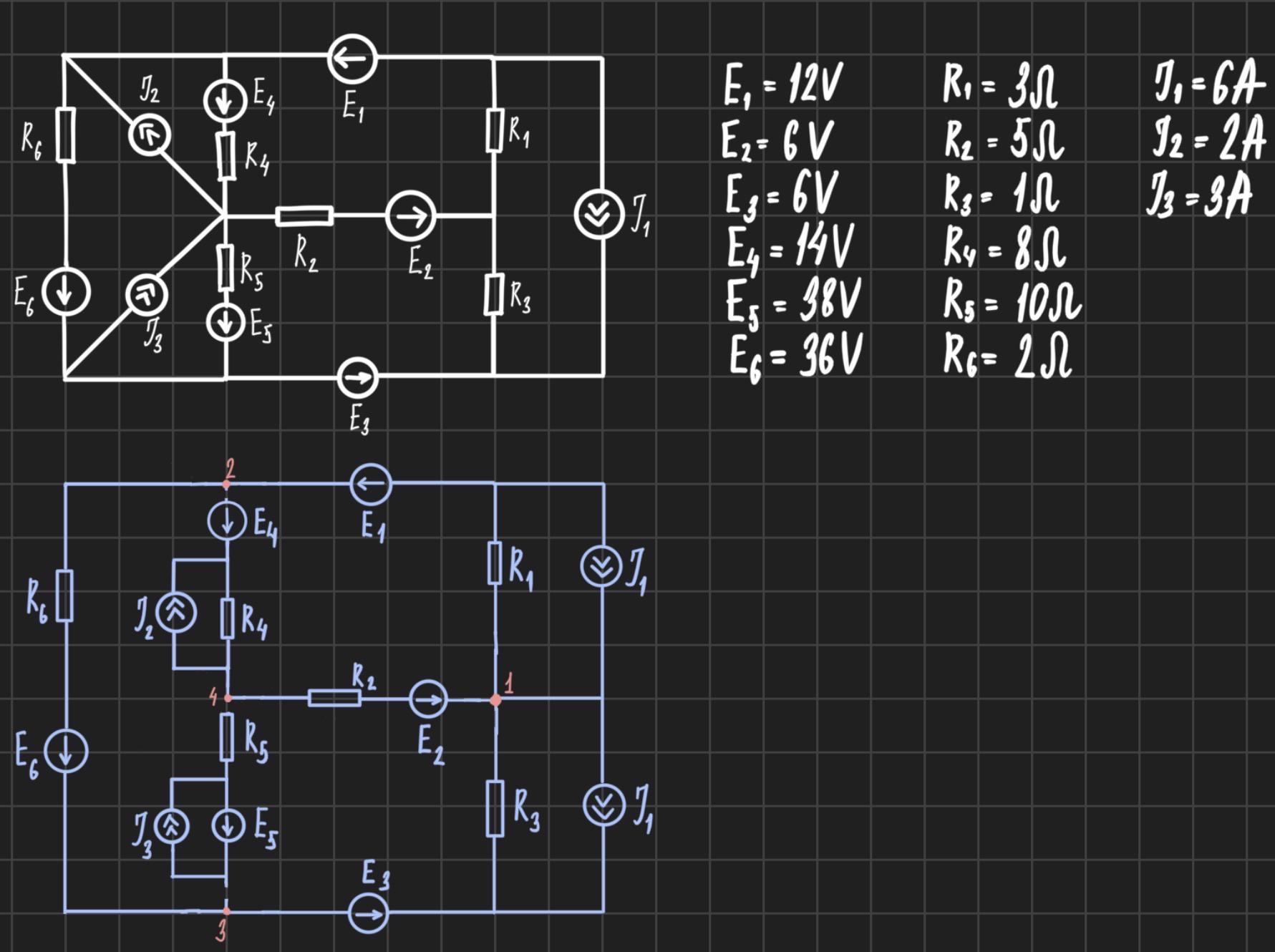
Hello everyone! I am a first year EEE and i cant solve this no mater how hard i tried.
Can anyone tell me how do i find the Voltage across the R7 and the current flowing in R9?
I think i have to use KVL and KCL?
r/ElectricalEngineers • u/anonymarxxx • Jul 29 '25
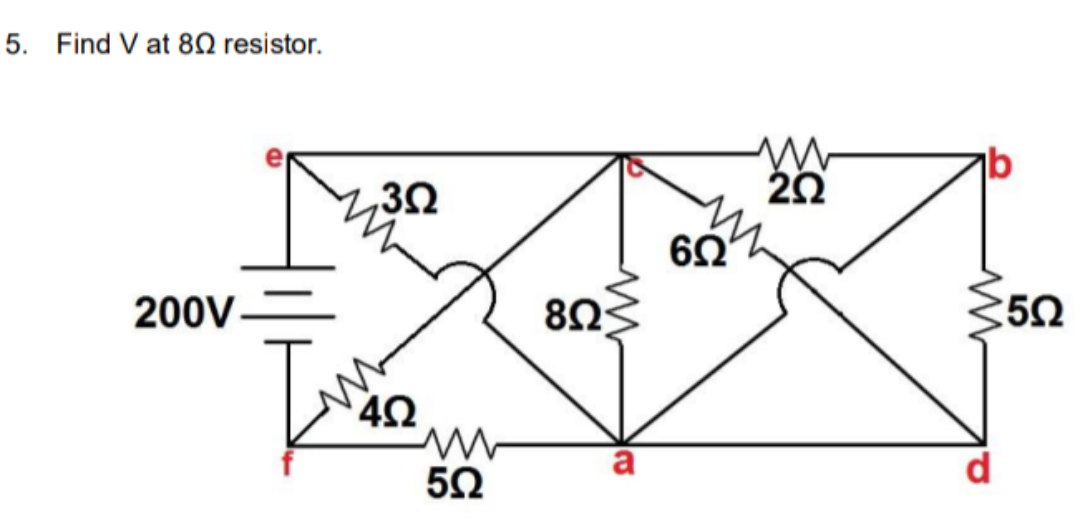
I'm currently studying circuit analysis and stumbled upon this question. Honestly, I have a few ideas on how to approach this myself but I feel like I'm on the wrong track every time. I also tried to browse the web but nothing came up so I'm shooting my shot in this subreddit. Can somebody help me out? 🙏🏼
r/ElectricalEngineers • u/Cool-Staff1811 • Dec 08 '25

Will this just cancel out ? Leaving C’
r/ElectricalEngineers • u/Charming_Barber_3317 • Sep 21 '26
I’ve been collecting and organizing free university-level resources for Electrical Engineering, and I decided to put everything into one repository for anyone who wants to self-study EE or supplement their university courses.
🔗 GitHub: https://github.com/mabdulre9/electrical-engineering
Instead of searching through hundreds of YouTube videos and random websites trying to figure out what to study, I wanted to create a structured collection of full courses from universities and established educators to learn electrical engineering online for free.
What’s included
The repository currently covers:
Calculus
Differential Equations
Linear Algebra
Complex Variables & Transforms
Physics
Circuit Analysis
Electromagnetic Field Theory
Analog & Digital Electronics
Digital Logic Design
Microprocessors & Microcontrollers
Electrical Machines
Signals & Systems
Digital Communication
Computer Networks
Industrial Automation
Control Systems
Power Systems
Measurements & Instrumentation
High Voltage Engineering
Programming & Algorithms
Artificial Intelligence & Machine Learning
There are resources from MIT, Stanford, Harvard, Yale, Georgia Tech, IITs/NPTEL, UMass, NYU, Beijing Jiaotong University, Cisco, and others.
Most of the resources are completely free to access, with no enrollment required. Some platforms may require a free account.
This is mainly for:
EE students who want additional material alongside university
People studying Electrical Engineering independently
Students preparing for exams or interviews
Engineers wanting to revisit fundamentals
Anyone who wants to learn a particular EE specialization
Students who don't have access to good courses locally
People transitioning into areas like embedded systems, communications, power, control, networking or AI
I've also included prerequisites and suggested learning order where possible, so hopefully someone completely new to a topic can figure out where to start.
I'm still actively expanding and checking the repository, so it's a work in progress. If you know of a genuinely good free university-level EE course that should be included, feel free to suggest it.
I made this primarily because I wish there had been a resource like this when I was trying to figure out what to study.
Feedback, corrections, broken links, and additional course recommendations are very welcome.