My huckleberry came with those tiny little white pest flies, and I was hoping the predators would come in soon to take care of it. Turns out just a week of patience is all you need. Shoutout to this harvestman who I have named Steve.
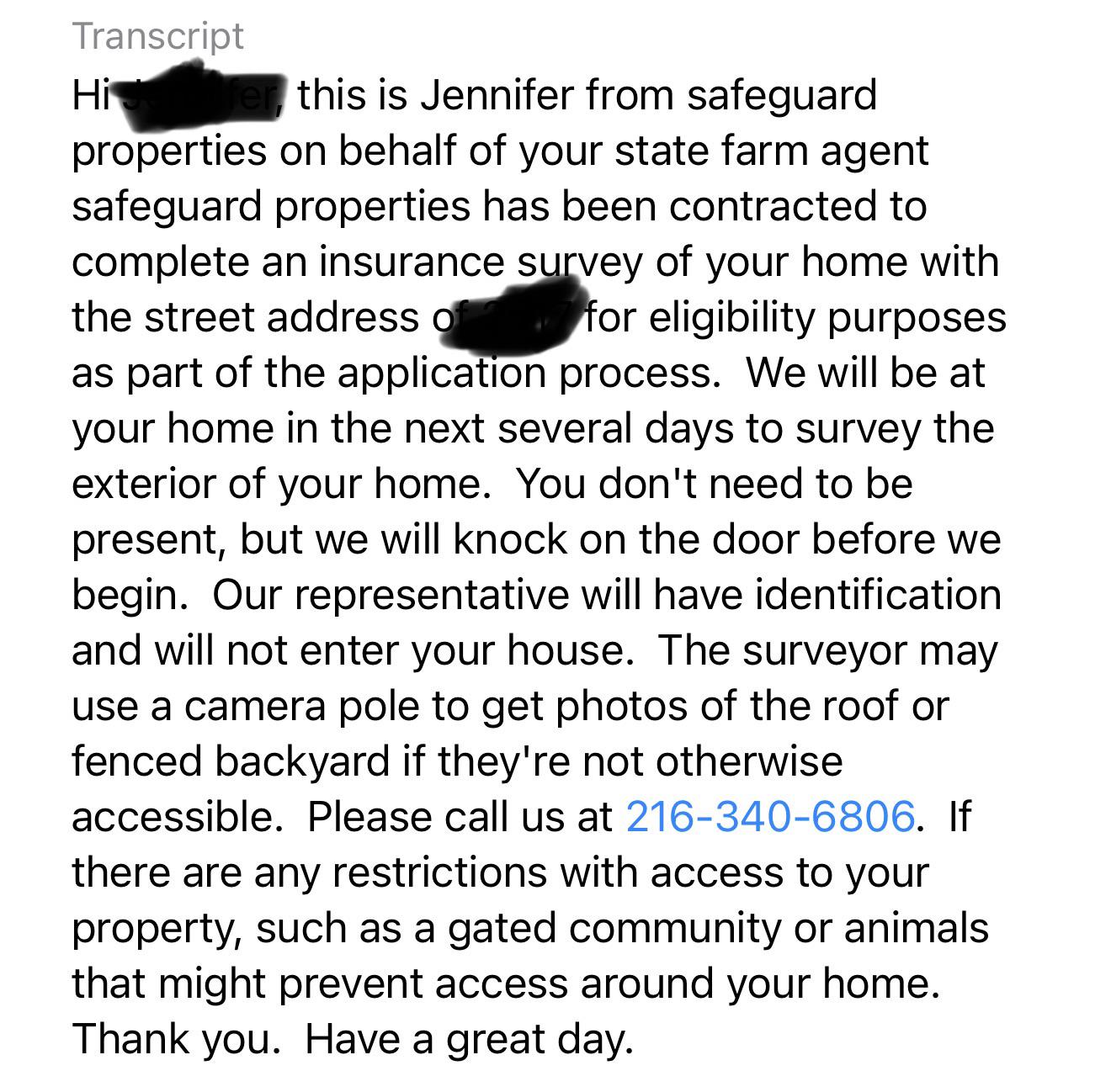
Edit: Thanks everyone. I feel less stressed now. It sounds like I’m worrying about nothing. Only one person had an issue and it was easily resolved by stating it was a native garden and not brush. I’ll update if I do hear anything from State Farm.
Has anyone had to deal with this after redoing their entire yard in natives, left natural? I basically have prairie plants standing around the entire perimeter of my fence that I haven’t cut down. I am leaving them for the bees and wildlife. They are around the house as well. The center of the backyard is mulched with a couple raised garden beds covered in leaves. The front yard is all leaves and standing plants, everything other than shrubs is under 2 feet. Obviously, we all know how this keeps the ground cooler and wetter, but I fear they are going to claim all the leaves and standing plants as fire hazards and demand we remove them.
I was actually getting ready to shop around for a different company since I know we are paying too much for our insurance with no where near enough coverage since it hasn’t been updated since 2020. Last time we had an inspection, I watched as they took the photos. They were going to cancel because they claimed no one was living here at the time.
I have to admit they weren't foraged or gardened, I bought them online from a farm in Ohio where they're marketed under the name Appalachian Allspice. I've been experimenting with using them in rice pudding and sugar cookies, which did not work great, but by far the best experiment was tonight's Thanksgiving dessert.
I modified a recipe I got from HelloFresh and used: 5 apples peeled and diced, 3/4 cup of sugar, one tbsp flour, and half a tbsp of dried spicebush berries, mashed fine as possible with a mortar and pestle. The spicebush flavor turned out pretty mild so I could have probably used a full tbsp.
Then the crumble topping is 1 cup flour, half a cup sugar, a little cinnamon, with 6 tbsp of butter. Combine the ingredients with your hands until the butter is just about holding it together, but not fully melted. It should have a texture like wet sand.
Then put it in an 8x8 pan and bake for about 45 minutes to an hour, until the filling is bubbling up and the topping is browned.
I like this recipe because it's easier than apple pie, basically, and makes a great gift. Point is the spicebush flavor really sang and everyone loved it.
Last year, we moved into a new house with a large yard. I mowed over some fallen leaves to create leaf mulch, and I raked a bunch of the remaining leaves into our garden beds. A big part of my logic was that I wanted to help insect populations during the winter. My question for you all: When in the spring/summer can I plant on top of these leaves without harming insects? I'm specifically thinking about spreading topsoil over the leaves. In our region, the last frost occurs in mid-May. I would really appreciate any guidance here! I'm trying to balance eco-consciousness with a nice garden in 2027.
I recently moved and am in the motion of putting together my (mostly) native garden! Most of these guys are specifically native my local ecoregion. Absolutely lovely sandy loam soil here, but my god the mugwort, goutweed and nightshade have made themselves enemies. Don't test me on the 'local' phragmites nearby.
I've put in several handfuls of plugs already, and I will be putting in tons of the seeds of my listed species in for winter sowing. Getting frosty 🤟
I have a white Japanese lilac tree (probably around 8 years old) growing which creates some shade, as well as an elderberry cutting growing along the lower [unseen] left fence. The left corner is natural shade. In the center of 28, there will be a birdbath. I dump water out of it into the soil beneath it frequently.
Anyways, there's a decent sized species list. A couple of them aren't shown in the plan, but they'll make their way into it one way or another. I'll probably toss in some wild leek seeds into the shade mix just for the hell of it. See if it'll pop up in two years time.
Love some feedback or some criticism. Just having a good one. Hope y'all have a good one too
Edit: Also thinking of throwing in some roundleaf sundew (Drosera rotundifolia) seeds under the area of the birdbath, but I'm wondering if the soil would be wet enough, or if it would get enough sun when the sideoats grama grow in. If not, I'll throw them in the nearby wetland— definitely throwing them in the wetland now
Edit: Forgot to put more grey goldenrod (41) above the little blue stem (2). My swamp milkweed (7) is scraggly oof :/
If you have any links you'd like to see added to our Wiki, please feel free to recommend resources at any time! This sub's greatest strength is in the knowledge base from members like you!
Other plants are already 2-3 years established Plenty of room to put something 4-5 feet tall where the X’s are. Gets 6 hours of evening sun and soil is never too dry or too wet.
Blue, white, yellow and pink are kinda off the table for colors given that’s what’s there already. Tho I’m willing to hear options anyway.
I already know about purple cone flowers and black cohosh but there’s a cat window thing above the X’s so can’t be much taller than 5ft.
Spread some Xerces Society local pollinator mix in advance of the El Nino rains. Just added some official-ish signs to hopefully protect my little babies.
Hi y'all, I'm looking for help picking a native vine to grow on a fence in partial shade with wet clay soil, to replace kiwiberry vines I ripped out after finding out that they're a rising invasive.
I already have passiflora incarnata in a sunnier, less formal spot, Virginia creeper growing wild, and a couple lonicera sempervirens on a different part of fence.
I'd like flowers or fruit since I see this fence every day. I was originally thinking of wisteria fructens, but I'm fairly far north of its native range & I know folks who've ripped theirs out after they never flowered over a decade.
Considering a native grape vine but getting mixed info on how well they tolerate wet feet or partial shade. Any experience with native vitis? Or other decorative vines I'm not thinking of?
My wife (F38) and I (39M) have gotten into native planting and gardening in NE Iowa. We have turned about 25% of our yard into native plants, trees, woodchips, and planning to expand every year. I didn't know if there was any tool, decoration, or something else that people found helpful in the journey of native planting Thank you.
I started some plants (royal catchfly) in August, thinking I might grow them up to a decent size to plant out before winter. They are NOT what I would call a decent size. Some are still in a 1" cell plug tray. Some I've up potted into 2.5" pots, but they have minimal root systems. I'm not feeling committed to growing them all indoors over the winter. I also dont want to lose them all to the January freeze.
I'll nurse some of them along inside until next year. My thought was to bury the plug trays and extra mini pots in my veggie garden bed and cover them with ground up leaves.
Anyone have any experience doing this? Do you think any of them will make it through winter?
This caterpillar was so exquisite, with stinging hairs. Never seen anything like it. Host plants in NC include native trees, quercus, acer, prunus, birch. The moth is not as striking as the caterpillar. Seen in newly fallen oak leaves, perhaps ready to overwinter, piedmont of NC. https://content.ces.ncsu.edu/crowned-slug-caterpillar
I'm usually not big on gift giving with so much excess and waste that seems to happen around this time but this year I'm considering giving out seed packages as holiday gifts! I don't have much experience starting things from seed so I need some help!
For the gift seed packages I'm looking for:
- native to the US Southeast
- easy to grow
- at least some plants that will bloom the first year
- plants adapted to different conditions/ a variety of plants that like different conditions
- will behave well in a garden
Not every species would need to fit that perfectly but I want people to be successful and see some of the benefits of native plants. I would include a little instruction guide with a couple options on how to start the seeds. I'm thinking enough seeds for maybe 10-20 sq ft. I've looked into some pre-made seed mixes but I haven't found any that I like yet so I'm considering making my own mix. Has anyone done this before? I'd love to hear everyone's thoughts on what I should include as far as species, info, or just general suggestions!
Collected a bunch of seeds this year and I’m trying to figure out the best way to cold stratify them.
Most of the seeds are wind dispersed and are quite small. All the moist cold stratification methods I’m coming across are variations of adding the seeds to a damp inert medium, but I don’t see how I’m going to be able to separate the seeds afterwards to plant into plug flats. Some seeds are smaller than grains of sand.
Any recommendations for seeds this small?
I’ve been thinking about planting them in flats, covering with mesh, and letting nature do its thing, but I’m not sure if that is the best way to go about it. On the line for zone 5/6, so it gets fairly cold with long periods of freezing.
I took the feedback about sourcing seriously. I've since gone through the website and added citations to reputable sources for 100% of factual claims, using primarily sources from universities, state wildlife agencies, and federal publications. I want this to be a trustworthy resource, so it was the most basic requirement.
Hey everyone!
I've been working on Planting Native, a website to make discovering and learning about native plants a little easier.
You can explore different native plant species across the US, learn how to grow and care for them, find places to source them, and see what kinds of wildlife they support.
Let me know what you think!
There's also a daily game, plantle.io, which I wrote a ton of questions for and it's really fun.
We just finished our third fall of forestry mulching in southwest Wisconsin, and this one was the hardest call yet: saving a stand of 100-year-old oaks meant taking out a lot of native black walnuts. Our forester ended up talking us out of our original plan at the last minute, for a reason I hadn't even considered. I made a video about how we decided what to cut, and what to spare. Before-and-afters from all three years are below including some of the high value native plants that are already making a comeback!
Oak Woodland - Mulching In Progress
Here are some before and after shots we took during our most recent workday.
We’ve been taking it section by section, mulching out from 1-3 acres each fall.
1 Year After Mulching Walnut Grove
Native plants found in this area in the first spring after mulching included Mayapple, solomon’s seal, maidenhair ferns and a bunch of sedges I don’t have the skills yet to identify by name.
Of course there was also plenty of Yellow Rocket, Garlic Mustard and other invasives as well.
2 Years after Mulching Oak Savanna
We will be bringing in a timber crew and removing any remaining non-fire adapted tree species (i.e. anything other than oaks and shagbark hickories) in this zone this winter so the restoration is still in progress, but the mulching was a HUGE step forward for this zone and native plants are already starting to emerge here as well.
There are many other native plants in the oak savanna as well - Scribner’s panic grass, ferns, Virginia bower, monarda, etc., but I haven’t done as good a job of capturing images.
Long-Term Maintenance
We always do follow up spot spraying with a backpack in the spring and plan to do that for at least 3 years after each mulching. Hopefully by then the fuel loads will be ready and we can switch over to controlled burning and wean off the herbicides.
BTW - We really loved the guy who did our mulching - Justin Orcutt. If you’re in Southwest Wisconsin and looking for someone to do work near you, drop a comment and I’ll share his contact info. He’s also listed on the video.
Question for the group: For those of you who've mulched oak woodlands: how long before you could burn?
I would like to be able to harvest berries off this sumac I planted this past spring. Can I prune this the way you would any other fruit tree, cutting the main stem about a yard or so above the ground? Anything different I should do/are sumacs amenable to pruning?
Is there any detailed guides about native alternatives to European Honeybees to create honey? I became aware of Mexican Honey Wasps (Brachygastra mellifica) this year but they seem to be impractical to farm given the way they store their honey. Last night I learned about Stingless Bees (Meliponina) which are promising and are farmed in parts of the world.
Curious if anyone has created a guide or comprehensive write up that go over options. One of the problems I see with stingless bees is apparently they are banned to import to the US (where I live). But "naturalized" honeybees are okay to move around because reasons. There might be some domestic stingless that can be moved/sold but I couldn't find them