r/ExploreLuxor • • 4h ago

Stela of Djedmutiuesankh, Third Intermediate period Dynasty 21, Findspot Medinet Habu, Painted wood, The Grand Egyptian Museum

Post image
1 Upvotes

Stela of Djedmutiuesankh

GEM Number
465

Collection
Main Galleries

Period
Third Intermediate period

Dynasty
21

Description
This round-topped stela of Djedmutiuesankh was found in 1907 at Medinet Habu on the west bank at Thebes (Luxor). The curved sign of heaven and a beautifully detailed winged sun disc decorate the top of the stela. Below, Djedmutiuesankh is depicted as a middle-aged woman with almond-shaped eyes and arched brows. She wears a loose transparent robe, a long hair wig surmounted by a perfume cone and a lotus bud. She raises both arms in adoration before the enthroned figure of the hawk-headed Deity Re-Horakhty who wears a unique checkered pattern garment. Before him, is a table piled high with offerings. The hieroglyphic text is a hymn asking the sun God to place Djedmutiuesankh with his followers.

Provenance
Region
Upper Egypt
Area
Luxor

Material
Painted Wood

Dimensions
Height
25 cm
Width
3.5 cm
Length
20.5 cm

Title
Stela of Djedmutiuesankh, Third Intermediate period Dynasty 21, Findspot Medinet Habu, Painted wood, The Grand Egyptian Museum

https://gem.eg/en/collection/artefacts/stela-of-djedmutiuesankh

The Grand Egyptian Museum


r/ExploreLuxor • • 14h ago

Stela of Neskhonsu, Date not given, Findspot Deir el-Bahri, Painted wood, Grand Egyptian Museum

Post image
2 Upvotes

Stela of Neskhonsu

Description
This round-topped painted wooden stela of Neskhons was found at Deir el-Bahri in an area dedicated for the burials of the priests of God Montu.  Neskhons' husband was a priest of Montu. The stela is framed by the arched body of the sky G oddess Nut who touches the earth with the tips of her fingers and her feet. A winged sun disc spans above hieroglyphs that read Behdety (a form of Horus of Edfu). The central scene on the stela shows Neskhons embraced by Goddess Maat as she stands at an altar, her hands are raised in adoration before the falcon-headed God Re-Horakhty and the Goddess of the West. On the lower part of the stela, an offering formula asks God Re-Horakhty to grant Neskhons provisions for the afterlife. Neskhons was apparently a descendant of a priestly family, as in the text her father Hormaa is referred to as the 'beloved of the God at Karnak'.

Provenance
Region
Upper Egypt
Area
Luxor

Material
Painted Wood

Dimensions
Height
29 cm
Width
3 cm
Length
26 cm

Title
Stela of Neskhonsu, Date not given, Findspot Deir el-Bahri, Painted wood, Grand Egyptian Museum

https://gem.eg/en/collection/artefacts/stela-of-neskhons

Grand Egyptian Museum


r/ExploreLuxor • • 17h ago

Stela of the Standard Bearer Smen, 1400-1390 BCE New Kingdom Dynasty 19 Reign of Thutmose 4, Findspot ?Thebes, Fine-grained limestone, The Michael C. Carlos Museum at Emory University

Post image
1 Upvotes

Stela of the Standard Bearer Smen

POSSIBLE ORIGIN Thebes, Egypt, Africa

CULTURE Egyptian

PERIOD New Kingdom, Dynasty 18, reign of Thutmose IV

DATE 1400-1390 BCE

MEDIUM Fine-grained limestone

CREDIT LINE Gift of the Georges Ricard Foundation

DIMENSIONS 25 9/16 x 17 5/16 x 2 3/4 in. (65 x 44 x 7 cm)

OBJECT NUMBER 2018.010.408

Label Text
This round-topped stela belongs to a man named Smen, meaning “goose” in ancient Egyptian, who served on the royal state barge called Meryamun. He was promoted to standard bearer of the boat, “Menkheperure-destroys-Syria,” indicating he saw active military service during King Thutmose IV’s northern Syrian campaigns. In ancient Egypt, standard bearers could command troops and collect men for expeditions.

On the top register, Smen praises Osiris-Wennefer, enthroned before an offering table piled high with bread, meat, fruit, and onions. The table and two braziers below are topped with lotus flowers, symbolizing eternity. Above, two Anubis jackals and udjat eyes face an encircling shen-ring. Osiris-Wennefer, the mummiform deity of the underworld, wears an Atef-crown and holds a crook and flail, his standard insignia. His block throne rests on the hieroglyph for ma’at, relating to his role as the judge of the dead. Behind the throne, an ankh sign holds an ostrich feather sunshade aloft, symbolizing the god’s divine presence. Smen wears a wig, a bag tunic, and a kilt tied with a sash. The column of text behind Smen gives his lineage, “born of the mistress of the house, Tjenna, and the dignitary Shemsu.” On the register below, his wife, Hesetre, makes a bouquet and libation offering to her deceased parents, Nakht and Rui, who are seated on a couch. Before them is an offering table loaded with the same provisions as above; the only difference is two containers of wine wrapped with lotus buds below the table. Below the second register are four rows of text, “(1) An offering which the king gives to Osiris, ruler of eternity, the great god, lord of Abydos, so that he may give a voice offering of bread [sic], beer, ox, fowl, and cold water, wine [sic], and (2) milk, breathe the sweet north wind, drink from […],(3) the receipt of the offerings that come forth in the presence of the choicest things that are issued on their altar, that one may come forth to me bearing […] (from among the offerings of the lord of) eternity, for the ka of the serviceman (w’w) (of the boat) Mery-Amun, (S)men.” Another stela belonging to Smen in the Louvre, mentions his son Nai.
Exhibition History
Michael C. Carlos Museum, Veneralia 2019 Senuseret Collection Preview, May 18, 2019
Life and the Afterlife: Ancient Egyptian Art from the Senusret Collection, Michael C. Carlos Museum, February 4 - August 6, 2023
Scent: Connection, Confrontation, Memory, Vanderbilt University Museum of Art, Nashville, Tennessee, February 14 - May 10, 2026

Published References
Melinda K. Hartwig, ed., Life and The Afterlife: Ancient Egyptian Art from the Senusret Collection (Atlanta: Michael C. Carlos Museum, 2023), catalogue entry 24.

TERMS reliefs (sculptures)stelae

PROVENANCE Ex coll. Georges Ricard Foundation, Santa Barbara, California, possibly purchased from Jean-François Mignon, Aix-en Provence, France.

STATUS Not on view

COLLECTIONS
Ancient Egyptian, Nubian, and Near Eastern Art

Title
Stela of the Standard Bearer Smen, 1400-1390 BCE New Kingdom Dynasty 19 Reign of Thutmose 4, Findspot ?Thebes, Fine-grained limestone, The Michael C. Carlos Museum at Emory University

https://collections.carlos.emory.edu/objects/37986/stela-of-the-standard-bearer-smen

The Michael C. Carlos Museum at Emory University


r/ExploreLuxor • • 1d ago

Shabti of Queen Henuttawy, 1076-944 BCE Third Intermediate Period Dynasty 21,Findspot Thebes?, Faience,The Michael C. Carlos Museum at Emory University

Thumbnail gallery
5 Upvotes

Shabti of Queen Henuttawy

POSSIBLE ORIGIN Thebes, Egypt, Africa

CULTURE Egyptian

PERIOD Third Intermediate Period, Dynasty 21

DATE 1076-944 BCE

MEDIUM Faience

CREDIT LINE Gift of the Georges Ricard Foundation

DIMENSIONS 4 5/8 x 9/16 x 1 in., 90 g (11.8 x 1.5 x 2.6 cm, 3 3/16 oz.)

OBJECT NUMBER 2018.010.294

Label Text
This striking blue shabti belongs to Queen Henuttawy, whose name means “Mistress of the Two Lands.” She was pivotal in the transition from the New Kingdom to the Third Intermediate period. Henuttawy was the daughter of Ramesses XI, the last pharaoh of the Ramesside period, and the wife of Pinedjem I, the high priest of Amun, who assumed royal titles and ruled Upper Egypt from Thebes. Her son, Psusennes I, ruled from Tanis.

The shabti wears a black tripartite wig with a simplified uraeus. Its arms are crossed on the chest, and it holds two hoes. A large seed bag hangs down the middle of the back. A column of black hieroglyphs reads: “The Illuminated One, the Osiris, King’s wife, Henuttawy,” with her name in a cartouche. Her mummified body and those of her husband, Pinedjem I, her father, Ramesses IX, and their shabtis were found in the famous royal mummy cache in Deir el-Bahari in 1881.

Exhibition History
Life and the Afterlife: Ancient Egyptian Art from the Senusret Collection, Michael C. Carlos Museum, February 4 - August 6, 2023
Published References
Melinda K. Hartwig, ed., Life and The Afterlife: Ancient Egyptian Art from the Senusret Collection (Atlanta: Michael C. Carlos Museum, 2023), catalogue entry 82.

TERMS ushabti

PROVENANCEPurchased by Georges Ricard (1921-2022) from Jean-François Mignon, Aix-en Provence, France, June 29, 1974. Ex coll. Musée de l'Égypte et le Monde Antique, Collection Sanousrit, Monaco, 1975-1982. Ex coll. Georges Ricard Foundation, Santa Barbara, California.

STATUS Not on view

COLLECTIONS
Ancient Egyptian, Nubian, and Near Eastern Art

Title
Shabti of Queen Henuttawy, 1076-944 BCE Third Intermediate Period Dynasty 21,Findspot Thebes?, Faience,The Michael C. Carlos Museum at Emory University

https://collections.carlos.emory.edu/objects/37723/shabti-of-queen-henuttawy

The Michael C. Carlos Museum at Emory University

r/ExploreLuxor • • 1d ago

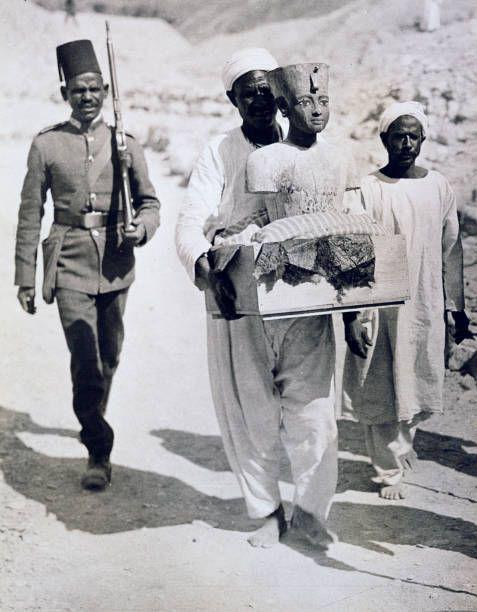
Workers carrying Tutankhamun, 1922

Post image
3 Upvotes

Luxor, 1922. Workers carrying a statue of Tutankhamun out of KV62.

After 3,000 years underground, he wasn't carried out by machines or by Carter's team alone - he was carried by hand, by Egyptian workers from Luxor.

Their names are almost never recorded, but they did all the heavy lifting in the Valley of the Kings.


r/ExploreLuxor • • 1d ago

Shabti 1837-1479 BCE Middle Kingdom - Early New Kingdom Findspot unknown Egypt Calcite The Michael C. Carlos Museum at Emory University

Thumbnail gallery
2 Upvotes

Shabti

PLACE CREATED Egypt, Africa

CULTURE Egyptian

PERIOD Middle Kingdom - early New Kingdom

DATE 1837-1479 BCE

MEDIUM Calcite

CREDIT LINE Gift of the Georges Ricard Foundation

DIMENSIONS 5 3/8 x 1 3/4 x 1 5/8 in., 450 g (13.7 x 4.4 x 4.2 cm, 15 7/8 oz.)

OBJECT NUMBER 2018.010.613

Label Text
Shabtis first appear at the end of the Middle Kingdom. They were crafted from various materials and deposited in burials or given as votive figurines. The decoration of shabtis at this time was varied. Some shabtis bore offering formulas typically found on stelae, coffins, and other funerary objects.

This small calcite figure wears a large lappet wig and rectangular beard. The wig, ears, eyes, and nose are carefully modeled. There are faint traces of a mouth. Two hands in low relief protrude from the wrappings of his mummiform body, with one grasping an ankh. The other implement is lost or was never completed. It is possible that an inscription was once painted on the shabti.

Exhibition History
Life and the Afterlife: Ancient Egyptian Art from the Senusret Collection, Michael C. Carlos Museum, February 4 - August 6, 2023

Published References
Hotel des Ventes, Marseille, Archeologie (25 Avril 1974), lot 93.
Melinda K. Hartwig, ed., Life and The Afterlife: Ancient Egyptian Art from the Senusret Collection (Atlanta: Michael C. Carlos Museum, 2023), catalogue entry 84.

TERMS ushabti

PROVENANCE
Purchased by Georges Ricard (1921-2012) from Hotel des Ventes, Marseille, France, April 25, 1974, lot 93. Ex coll. Musée de l'Égypte et le Monde Antique, Collection Sanousrit, Monaco, 1975-1982. Ex coll. Georges Ricard Foundation, Santa Barbara, California.

STATUS Not on view

COLLECTIONS
Ancient Egyptian, Nubian, and Near Eastern Art

Title
Shabti 1837-1479 BCE Middle Kingdom - Early New Kingdom Findspot unknown Egypt Calcite The Michael C. Carlos Museum at Emory University

https://collections.carlos.emory.edu/objects/38335/shabti

The Michael C. Carlos Museum at Emory University


r/ExploreLuxor • • 1d ago

Shabti of Tamehyt ,1292-1191 BCE New Kingdom Dynasty 19, Findspot unknown Egypt, Wood and paint,The Michael C. Carlos Museum at Emory University
Thumbnail gallery
1 Upvotes

Shabti of Tamehyt

CULTURE Egyptian

PERIOD New Kingdom, Dynasty 19

DATE 1292-1191 BCE

MEDIUM Wood, paint

CREDIT LINE Gift of the Georges Ricard Foundation

DIMENSIONS 8 11/16 x 2 1/16 x 1 7/16 in. (22 x 5.2 x 3.7 cm)

OBJECT NUMBER 2018.010.607

Label Text
The wooden shabti of Tamehyt has a simple lappet wig with ears protruding. A broad collar and garland encircle the neck, both painted black. The hands protrude from the mummy wrappings with a single column of text painted golden yellow. The inscription reads, “The illuminated one, the Osiris, Tamehyt […], true of voice.” The name Tamehyt is common in the New Kingdom.

While it is unusual for the lower torso of funerary figurines to be colored black with yellow text, similar shabtis exist from Dynasty 19. The black and yellow painted decoration is comparable to anthropoid coffins from the same period.

Exhibition History
Life and the Afterlife: Ancient Egyptian Art from the Senusret Collection, Michael C. Carlos Museum, February 4 - August 6, 2023
MCCM Permanent Collection Galleries, March 11, 2024 - Present

Published References
Melinda K. Hartwig, ed., Life and The Afterlife: Ancient Egyptian Art from the Senusret Collection (Atlanta: Michael C. Carlos Museum, 2023), catalogue entry 87.

TERMS ushabtipainting (image-making)

PROVENANCE
Ex coll. Georges Ricard Foundation, Santa Barbara, California, possibly purchased from Jean-François Mignon, Aix-en Provence, France.

STATUS On view

COLLECTIONS
Ancient Egyptian, Nubian, and Near Eastern Art

Title
Shabti of Tamehyt ,1292-1191 BCE New Kingdom Dynasty 19, Findspot unknown Egypt, Wood and paint,The Michael C. Carlos Museum at Emory University
https://collections.carlos.emory.edu/objects/38224/shabti-of-tamehyt

The Michael C. Carlos Museum at Emory University


r/ExploreLuxor • • 2d ago

Shabti of Neferibresaneith, 664-525 BCE Late Period Dynasty 26, Findspot unknown Egypt, Faience, The Michael C. Carlos Museum at Emory University

Post image
7 Upvotes

Shabti of Neferibresaneith

PLACE CREATED Egypt, Africa

CULTURE Egyptian

PERIOD Late Period, Dynasty 26

DATE 664-525 BCE

MEDIUM Faience

CREDIT LINE Gift of the Connoisseurs by exchange

DIMENSIONS 7 1/4 x 1 5/8 x 7/8 in. (18.4 x 4.1 x 2.3 cm)

OBJECT NUMBER 1998.011

Label Text
This tall, slender figurine belonged to a man named Neferibresaneith, son of Shepenbaster. Fashioned from pale blue faience, the shabti is typical of the Late Period and the Ptolemaic Period. The facial features are well-modeled, with almond-shaped eyes, and delicately incised details. The mummiform figure stands in the traditional pose, with arms crossed, grasping a pick in the left hand and a hoe and the cord of a basket in the right.

The text, a standard Late Period version of the shabti spell, reads as follows: The Illuminated One, the Osiris Neferibresaneith, born of Shepenbastet, justified of voice, he says: O, these shabtis, if one counts off the Osiris Neferibresaneith, born of Shepenbastet, justified of voice, in order to do any work which is done therein in the necropolis; indeed, (one) implants an obstacle there as a man at his duty; "here I am," you (pl.) shall say; count yourselves off at the time, daily, to be served therein the necropolis, to make arable a field, to irrigate the riparian land, to transport by boat the sand of the west to the east and vice versa; "here I am," you (pl.) shall say.

Exhibition History
MCCM Permanent Collection Galleries, October 1998 - February 2000
MCCM Permanent Collection Reinstallation, October 6, 2001 - June 2006
MCCM Permanent Collection Gallery, 2009 - Present

Published References
Peter Lacovara, "The New Galleries of Egyptian and Near Eastern Art at the Michael C. Carlos Museum," Minerva 12 (2001): 9-16.
Peter Lacovara and Betsy Teasley Trope, The Realm of Osiris (Atlanta: Michael C. Carlos Museum, 2001), 30.
Sara E. Cole, Judith Barr, and Roselyn Campbell, "'A Man in His Duty': An Ushabti of Neferibresaneith and a Case Study in the Dispersal of Egyptian Antiquities," Getty Research Journal 10 (2018): 191-206.
Rune Nyord, Seeing Perfection: Ancient Egyptian Images beyond Representation (Cambridge: Cambridge University Press, 2020), 69, Figure 23.

TERMS ushabti

PROVENANCE
Acquired by MCCM from Merrin Gallery, New York, New York.

STATUS On view

COLLECTIONS
Ancient Egyptian, Nubian, and Near Eastern Art

Title
Shabti of Neferibresaneith, 664-525 BCE Late Period Dynasty 26, Findspot unknown Egypt,
Faience, The Michael C. Carlos Museum at Emory University

https://collections.carlos.emory.edu/objects/19348/shabti-of-neferibresaneith

The Michael C. Carlos Museum at Emory University


r/ExploreLuxor • • 2d ago

Shabti of the Vizier Paser, 1292-1191 BCE New Kingdom Dynasty 19, Findspot Sheikh Abd el-Qurna in western Thebes (TT106), Faience, The Michael C. Carlos Museum at Emory University

Thumbnail gallery
4 Upvotes

Shabti of the Vizier Paser

POSSIBLE ORIGIN Thebes, Egypt, Africa

CULTURE Egyptian

PERIOD New Kingdom, Dynasty 19

DATE 1292-1191 BCE

MEDIUM Faience

CREDIT LINE Gift of the Georges Ricard Foundation

DIMENSIONS 6 x 1 15/16 x 1 5/16 in., 168 g (15.2 x 4.9 x 3.3 cm, 5 15/16 oz.)

OBJECT NUMBER 2018.010.346

Label Text
This bright blue faience mummiform shabti wears a striped lappet wig and a large broad collar. The crossed arms protrude from the wrappings, a distinctive feature of Dynasty 19 shabtis. On his wrists he wears bracelets. On his back is a yoke with two water pots and a small seed bag strung over one shoulder.

The shabti inscription, picked out in black, gives Paser’s name and titles as the “Overseer of the city of Thebes” and “Southern vizier,” the latter being one of the highest titles in ancient Egypt. He was appointed vizier by Sety I and remained in that role until at least the twenty-first year of Ramesses II. Several of his shabtis were found at the Serapeum in Saqqara, donated to the sacred Apis bulls. This shabti likely came from Paser’s tomb at Sheikh Abd el-Qurna in western Thebes (TT106).

Exhibition History
Michael C. Carlos Museum, Veneralia 2019 Senuseret Collection Preview, May 18, 2019
Life and the Afterlife: Ancient Egyptian Art from the Senusret Collection, Michael C. Carlos Museum, February 4 - August 6, 2023
MCCM Permanent Collection Galleries, March 11, 2024 - Present

Published References
Hotel des Ventes, Avignon, Meubles Objets d'Art (22 Mai 1977), lot 43.
Melinda K. Hartwig, ed., Life and The Afterlife: Ancient Egyptian Art from the Senusret Collection (Atlanta: Michael C. Carlos Museum, 2023), catalogue entry 86.

TERMS Ushabti

PROVENANCE
Purchased by S.A.M. Sanousrit from Hotel des Ventes, Avignon, France, May 22, 1977, lot 43. Ex coll. Musée de l'Égypte et le Monde Antique, Collection Sanousrit, Monaco, 1977-1982. Ex coll. Georges Ricard Foundation, Santa Barbara, California.

STATUS On view

COLLECTIONS
Ancient Egyptian, Nubian, and Near Eastern Art

Title
Shabti of the Vizier Paser, 1292-1191 BCE New Kingdom Dynasty 19, Findspot Sheikh Abd el-Qurna in western Thebes (TT106), Faience, The Michael C. Carlos Museum at Emory University

https://collections.carlos.emory.edu/objects/37726/shabti-of-the-vizier-paser

The Michael C. Carlos Museum at Emory University


r/ExploreLuxor • • 2d ago

Medinet Habu in Old Photos (1851–1862)

Thumbnail
exploreluxor.org
3 Upvotes

r/ExploreLuxor • • 3d ago

[1920s] Statue of Talaat Harb in front of the Groppi building, Downtown Cairo, Egypt [736x1308]

Post image
1 Upvotes

r/ExploreLuxor • • 3d ago

Shabti for Khaemwaset,1292-1191 BCE New Kingdom Dynasty 19, Findspot Said to have been found at the Serapeum, Saqqara, Faience, The Michael C. Carlos Museum at Emory University

Thumbnail gallery
3 Upvotes

Shabti for Khaemwaset

PLACE CREATED Egypt, Africa

CULTURE Egyptian

PERIOD New Kingdom, Dynasty 19

DATE 1292-1191 BCE

MEDIUM Faience

CREDIT LINEGift of Joseph A. Lewis II and Sofi Lewis

DIMENSIONS 6 x 1 3/4 x 1 in. (15.2 x 4.4 x 2.5 cm)

OBJECT NUMBER 2015.050.001

Published References
Galerie Gunter Puhze, Gallery 25 (2011), number 183.

TERMS Ushabti

PROVENANCE
Said to have been found at the Serapeum, Saqqara, Egypt. Ex coll. Florent Dalcq (1878-1950), Belgium, acquired from the Service des Antiquities, Egyptian Museum, Cairo, Egypt, 1923. Thence by descent to Andre Lagneau, Neuchatel, Switzerland. Ex coll. Joseph Lewis, United States, purchased from Galerie Gunter Puhze, Freiburg, Germany, January 24, 2012.

STATUS Not on view

COLLECTIONS
Ancient Egyptian, Nubian, and Near Eastern Art

Title
Shabti for Khaemwaset,1292-1191 BCE New Kingdom Dynasty 19, Findspot Said to have been found at the Serapeum, Saqqara, Faience, The Michael C. Carlos Museum at Emory University

https://collections.carlos.emory.edu/objects/35049/shabti-for-khaemwaset

The Michael C. Carlos Museum at Emory University


r/ExploreLuxor • • 3d ago

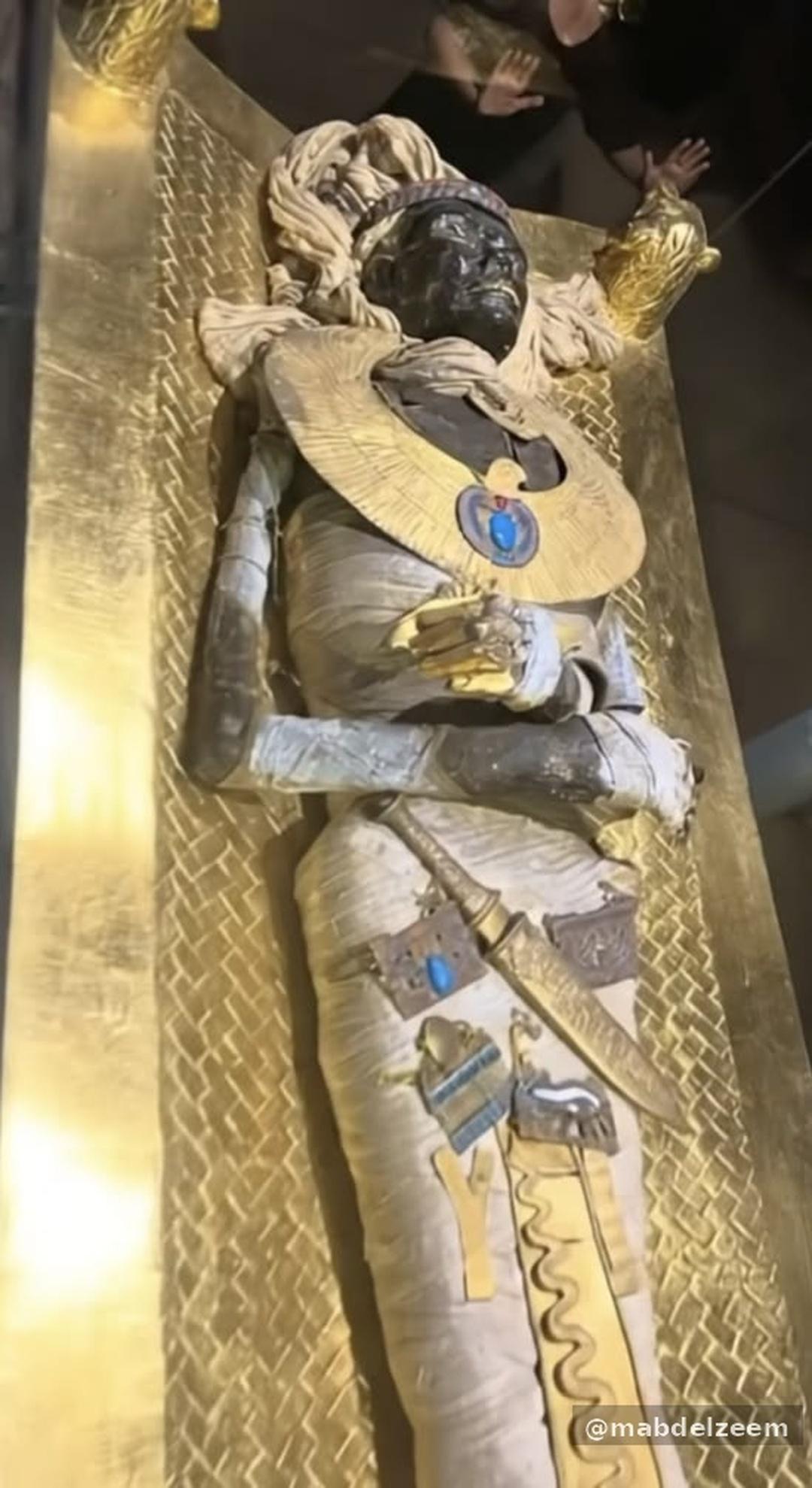
Golden mummy with his broad collar still in place, Ancient Egypt [1080x1979]

Post image
3 Upvotes

r/ExploreLuxor • • 3d ago

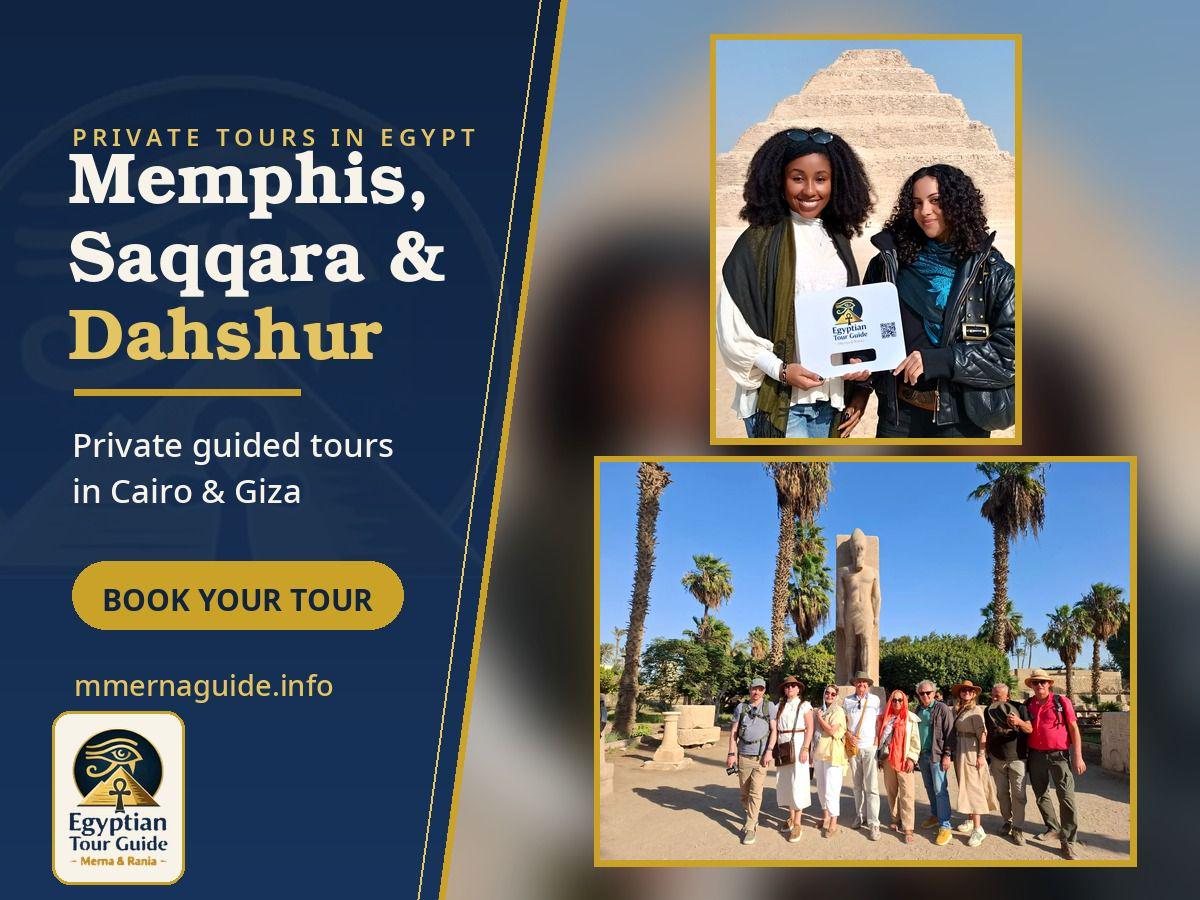
Beyond Giza: Exploring Saqqara, Memphis and Dahshur — Where Egypt’s Pyramid Story Began 🇪🇬

Post image
1 Upvotes

r/ExploreLuxor • • 3d ago

Amulet from a Child's Burial in the Shape of a Baboon, c. 943–723 BC 22nd–24th Dynasty Third Intermediate Period, Egypt (Find context), Findspot: Tomb 1248, Matmar, Middle Egypt, Faience, Staatliches Museum Ägytischer Kunst

Thumbnail gallery
1 Upvotes

Amulet from a Child's Burial in the Shape of a Baboon

Accession number
AS 3339

Current Location
Magazines

About the object
Numerous amulets were placed with the deceased children, which were meant to protect the children from various misfortunes during their lives, but especially in the afterlife. Among the typical amulets from the child burials of the Third Intermediate Period in Matmar are the protective gods Bes (ÄS 3153, ÄS 3161) and Isis lactans (ÄS 3315) as well as the protective udjat eye (ÄS 3333). Children who were buried without coffins had a higher proportion of Bes and udjat amulets, which probably compensated for the missing protective coffin cover. In addition, among the child burials in Matmar, among other things, the Sau (ÄS 3349) as a symbol of the heavenly goddess Nut, the Ba birds (ÄS 3122), which stand for a aspect of the human soul, as well as the gods Horus (ÄS 3152), Sachmet (ÄS 3156), Thot (ÄS 3339) and also an aegis with a lion's head (ÄS 3159). (Mélanie Floßmann)

Date
c. 943–723 BC, 22nd–24th Dynasty, Third Intermediate Period, Egypt (Find context)

material
Faience

Dimensions
Height x Width x Depth: 3.9 x 1.7 x 1.4 cm.

Geographic Origin
Find spot: Tomb 1248, Matmar, Middle Egypt, Egypt

Provenance
Since 1970, Institution: State Museum of Egyptian Art, Munich
1949–1970, Institution: Egyptian Collection of the Bavarian State
1945–1949, Institution: Central Collecting Poin
1935–1945, Institution: State Egyptian Collection
1932–1934, Institution: Museum of Ancient Small Art
1929–1931, Excavation: British Museum Expedition, Guy Brunton, Matmar, Egypt

Individuals / Institution
Museum of Ancient Small Art

References
Flossmann-Schütze, Mélanie / Schlüter, Arnulf with the collaboration of Perrot, Anne-Hélène / Kutschka, Markus (editor), Childhood on the Nile. Growing up in Ancient Egypt, Munich 2025, cf. 318-319 with illustrations, Cat. No. 98j [M. Flossmann-Schütze].

Brunton, Guy, Matmar: British Museum Expedition to Middle Egypt 1929-1931, London 1948, cf. Tf. LIX, 43.

Credits
Dataset: SMÄK, last editors (chronologically): Mélanie Flossmann-Schütze, Jan-Michael Dahms; Bibliography: Anne-Hélène Perrot; Data editorial board: Nora Heil.

Last change

02.07.2026, 11:34 AM.

Title
Amulet from a Child's Burial in the Shape of a Baboon, c. 943–723 BC 22nd–24th Dynasty Third Intermediate Period, Egypt (Find context), Findspot: Tomb 1248, Matmar, Middle Egypt, Faience, Staatliches Museum Ägytischer Kunst

https://sammlung.smaek.de/en/object/amulet-1733?sort=field=sortInv%26order=asc%26type=text&offset=455

Staatliches Museum Ägytischer Kunst


r/ExploreLuxor • • 3d ago

Stele of Kesi, 18th Dynasty, Time of Thutmosis IV-Amenophis III ca. 1419-1372 BC., Findspot Abydos (presumably), Painted limestone, Kunsthistorisches Museum (Art History Museum, Vienna)

Post image
3 Upvotes

Stele of Kesi

18th Dynasty, time of Thutmosis IV-Amenophis III., ca. 1419-1372 BC.

Time:
18th Dynasty, time of Thutmosis IV-Amenophis III., ca. 1419-1372 BC.

Object Name
Stele

Culture
Egyptian

Location of discovery:
Abydos (presumably)

Material/technology:
Painted limestone

Dimensions:
H 50.3 cm, B 34.3 cm, T 9 cm.

copyright
Art Historical Museum, Egyptian - Oriental Collection

Invs.
Egyptian collection, INV 141.

Provenance
1821 purchase by E. A. Burghart in Egypt

Title
Stele of Kesi, 18th Dynasty, Time of Thutmosis IV-Amenophis III ca. 1419-1372 BC., Findspot Abydos (presumably), Painted limestone, Kunsthistorisches Museum (Art History Museum, Vienna)

https://www.khm.at/en/artworks/stele-des-kesi-317240

Kunsthistorisches Museum (Art History Museum, Vienna)


r/ExploreLuxor • • 4d ago

Stelophorous statue of Amenemipet, 1539– 1292 BCE New Kingdom Eighteenth Dynasty, Findspot Luxor / Thebes, Limestone, Museo Egizio di Torino

Thumbnail gallery
4 Upvotes

Stelophorous statue of Amenemipet

This ‘stelophorous’ statue is an example of the tomb’s connection with the celestial plane. Statues of this type date back to the New Kingdom and were placed, facing the rising sun, in the niches of the pyramidal superstructures of private tombs. They depict a kneeling person holding a stela in front of them, bearing a representation of the sun god in his boat and a hymn dedicated to the deity.

Inv. no. :
Cat. 3038

Material:
Stone / Limestone

Dimensions:
20 cm x 55 cm x 26 cm

Date:
1539–1292 BCE

Period:
New Kingdom

Dynasty:
Eighteenth Dynasty

Provenance:
Egypt, Luxor / Thebes

Acquisition:
Purchase Bernardino Drovetti, 1824

Museum location:
Museum / Floor 1 / Room 06 DEM / Showcase 10

Selected bibliography:
Fabretti, Ariodante-Rossi, Francesco-Lanzone, Ridolfo Vittorio, Regio Museo di Torino. Antichità Egizie (Cat. gen. dei musei di antichità e degli ogg. d’arte raccolti nelle gallerie e biblioteche del regno 1. Piemonte), vol. I, Torino 1882, pp. 413–414.

Malek, Jaromir, Topographical bibliography of ancient Egyptian hieroglyphic texts, statues, reliefs and paintings VIII: objects of provenance not known. Part 2: private statues (Dynasty XVIII to the Roman Period), statues of deities (Topographical bibliography of Ancient Egyptian hieroglyphic texts, statues, relief and paintings 8/2), Oxford 1999, p. 575.

Orcurti, Pier Camillo, Catalogo illustrato dei monumenti egizi del R. Museo Egizio di Torino, Torino 1855, ii, p. 193.

Tiradritti, Francesco, Il cammino di Harwa: l'uomo di fronte al mistero: l'Egitto [mostra: Brescia, Mus. Diocesano ott. 1999-gen. 2000], Milano 1999, p. 30 e 161, fig. a p. 31.

Vidua, Carlo, “Catalogue de la collect. d'antiq. de mons. le chev. Drovetti, a 1822”, in Ministero della Pubblica Istruzione (a cura di), Documenti inediti per servire alla storia dei Musei d'Italia, vol. 3, Firenze - Roma 1880, p. 288, n. 91.

Title
Stelophorous statue of Amenemipet, 1539– 1292 BCE New Kingdom Eighteenth Dynasty, Findspot Luxor / Thebes, Limestone, Museo Egizio di Torino.

https://collezioni.museoegizio.it/en-GB/material/Cat_3038/?description=&inventoryNumber=&title=&cgt=&yearFrom=&yearTo=&materials=4755b4240b924e1ba0a5fae2d57f85d4&provenance=&acquisition=&epoch=&dynasty=&pharaoh=&searchLng=en-GB&searchPage=13

Museo Egizio di Torino


r/ExploreLuxor • • 4d ago

Winged Scarab, 332–30 BCE Hellenistic period, Findspot unknown Egypt, Faience, Museo Egizio di Torino

Thumbnail gallery
2 Upvotes

Winged Scarab

Inv. no. :
Provv. 5278

Material:
Faience

Dimensions:
7.1 cm x 4.7 cm
4.2 cm x 2.8 cm
4.4 cm x 2.8 cm

Date:
332–30 BCE

Period:
Hellenistic period

Provenance:
Unknown

Acquisition:
Old Fund, 1824–1888

Museum location:
Museum / Floor 1 / Room 08 / Showcase 13

Title
Winged Scarab, 332–30 BCE Hellenistic period, Findspot unknown Egypt, Faience, Museo Egizio di Torino

https://collezioni.museoegizio.it/en-GB/material/Provv_5278/?description=&inventoryNumber=&title=&cgt=&yearFrom=&yearTo=&materials=cda375308abd422a97d1734e5bceec91&provenance=&acquisition=&epoch=&dynasty=&pharaoh=&searchLng=it-IT&searchPage=96

Museo Egizio di Torino


r/ExploreLuxor • • 5d ago

Kohl Tube, 1539–1076 BCE New Kingdom Eighteenth Dynasty, Findspot unknown Egypt, Faience, Museo Egizio di Torino

Thumbnail gallery
2 Upvotes

Kohl Tube

Inv. no. :
Cat. 7383/01 + Cat.6329

Material:
Faience

Dimensions:
3.5 cm x 13.7 cm x 2 cm

Date:
1539–1076 BCE

Period:
New Kingdom

Dynasty:
Eighteenth Dynasty

Provenance:
Unknown

Acquisition:
Old Fund, 1824–1888

Museum location:
Museum / Floor 2 / Room 05 / Showcase 11

Title
Kohl Tube, 1539–1076 BCE New Kingdom Eighteenth Dynasty, Findspot unknown Egypt, Faience, Museo Egizio di Torino

https://collezioni.museoegizio.it/en-GB/material/Cat_7383_01_Cat_6329/?description=&inventoryNumber=&title=&cgt=&yearFrom=&yearTo=&materials=cda375308abd422a97d1734e5bceec91&provenance=&acquisition=&epoch=&dynasty=&pharaoh=&searchLng=en-GB&searchPage=85

Museo Egizio di Torino


r/ExploreLuxor • • 5d ago

Cup Decorated with a Double Hathoric Sistrum and Lotus Flowers, 1539–1292 BCE New Kingdom Eighteenth Dynasty, Findspot unknown Egypt, Faience, Museo Egizio di Torino

Thumbnail gallery
4 Upvotes

Cup Decorated with a Double Hathoric Sistrum and Lotus Flowers

Inv. no. :
Cat. 3368

Material:
Faience

Dimensions:
16.5 cm x 5 cm

Date:
1539–1292 BCE

Period:
New Kingdom

Dynasty:
Eighteenth Dynasty

Provenance:
Unknown

Acquisition:
Purchase Bernardino Drovetti, 1824

Museum location:
Museum / Floor 2 / Room 05 / Showcase 11

Selected bibliography:
Christiane Ziegler-Ziegler, Christiane, Queens of Egypt : from Hetepheres to Cleopatra, Monaco 2008, pp. 316–317, fig. p. 316, 319.

Fabretti, Ariodante-Rossi, Francesco-Lanzone, Ridolfo Vittorio, Regio Museo di Torino. Antichità Egizie (Cat. gen. dei musei di antichità e degli ogg. d’arte raccolti nelle gallerie e biblioteche del regno 1. Piemonte), vol. I, Torino 1882, p. 452.

Peck, William H., Drawings from ancient Egypt, London 1978, p. 116, fig. 47.

Vidua, Carlo, “Catalogue de la collect. d'antiq. de mons. le chev. Drovetti, a 1822”, in Ministero della Pubblica Istruzione (a cura di), Documenti inediti per servire alla storia dei Musei d'Italia, vol. 3, Firenze - Roma 1880, p. 275, n. 33.

Title
Cup Decorated with a Double Hathoric Sistrum and Lotus Flowers, 1539–1292 BCE New Kingdom
Eighteenth Dynasty, Findspot unknown Egypt, Faience, Museo Egizio di Torino

https://collezioni.museoegizio.it/en-GB/material/Cat_3368/?description=&inventoryNumber=&title=&cgt=&yearFrom=&yearTo=&materials=cda375308abd422a97d1734e5bceec91&provenance=&acquisition=&epoch=&dynasty=&pharaoh=&searchLng=en-GB&searchPage=75

Museo Egizio di Torino


r/ExploreLuxor • • 5d ago

Statuette of Osiris, Late Period, Dynasty 26 or later 664–332 BCE, Findspot unknown Egypt, Copper alloy, Art Institute of Chicago

Thumbnail gallery
2 Upvotes

Statuette of Osiris

Date:
Late Period, Dynasty 26 or later, 664–332 BCE

Artist:
Egyptian

ABOUT THIS ARTWORK
Ancient Egyptian worshippers purchased statuettes like this one from temple workshops and deposited them in temples or shrines. They made such offerings in thanks for answered prayers or to request good health, long life, and other favors from the gods. This finely cast statuette depicts the mummified Osiris, ruler of the underworld. The god holds a shepherd’s crook and a flail, symbols of royal authority that signify his role as Egypt’s first king. The statuette would have been inserted into a rectangular base inscribed for the person who offered it.

Status
On View, Gallery 50

Department
Arts of Africa

Culture
Ancient Egyptian

Title
Statuette of Osiris

Place
Egypt (Object made in:)

Date 
c. 664 BCE–332 BCE

Medium
Copper alloy

Dimensions
27 × 6.8 × 4.5 cm (10 5/8 × 2 5/8 × 1 3/4 in.)

Credit Line
Gift of Henry H. Getty, Charles L. Hutchinson, and Norman W. Harris

Reference Number
1892.130

IIIF Manifest 
https://api.artic.edu/api/v1/artworks/617/manifest.json

EXTENDED INFORMATION ABOUT THIS ARTWORK
PUBLICATION HISTORY

Thomas George Allen, A Handbook of the Egyptian Collection (Chicago: The Art Institute of Chicago, 1923), pp. 102, 105.
Roberta Casagrande-Kim, ed., When the Greeks Ruled Egypt: From Alexander the Great to Cleopatra. Exh. cat. (New York: Institute for the Study of the Ancient World; Princeton: Princeton University Press, 2014), p. 99, cat. 91.
Emily Teeter, “Cat. 28 Statuette of Osiris,” in Ancient Egyptian Art at the Art Institute of Chicago by Emily Teeter and Ashley F. Arico, ed. Ashley F. Arico (Art Institute of Chicago, 2025)

EXHIBITION HISTORY
Art Institute of Chicago, Ancient Art Galleries, Gallery 154A, April 20, 1994 - February 6, 2012.
Art Institute of Chicago, When the Greeks Ruled: Egypt After Alexander the Great, October 31, 2013 - July 27, 2014; traveled to New York City, NY, the Institute for the Study of the Ancient World, October 8, 2014 - January 4, 2015.
Art Institute of Chicago, Life and Afterlife in Ancient Egypt, Feb. 11, 2022 - present.

PROVENANCE
Martin A. Ryerson (1856-1932), Chicago, 1890; transferred to the Art Institute of Chicago, 1892; price reimbursed by Henry H. Getty and Charles L. Hutchinson.

Title
Statuette of Osiris, Late Period, Dynasty 26 or later 664–332 BCE, Findspot unknown Egypt, Copper alloy, Art Institute of Chicago

https://www.artic.edu/artworks/617/statuette-of-osiris

Art Institute of Chicago


r/ExploreLuxor • • 6d ago

Amulet of a Lion-Headed Goddess with Kitten, Third Intermediate Period Dynasty 21–25 (about 1069–664 BCE), Findspot unknown Egypt, Faience, The Art Institute of Chicago

Post image
2 Upvotes

Amulet of a Lion-Headed Goddess with Kitten

Date:
Third Intermediate Period, Dynasty 21–25 (about 1069–664 BCE)

Artist:
Egyptian

ABOUT THIS ARTWORK
Ancient Egyptians, both living and dead, wore amulets of gods and goddesses to bring protection and health. These small charms depicted deities in their human, animal, or mixed forms. Here, a powerful striding figure draws the eye, but who is the small cat at her feet? This amulet likely represents the lioness goddess Sekhmet or the cat goddess, Bastet. In Egyptian mythology, Sekhmet and Bastet both act as the Eye of Re, the daughter/protector of the sun god, Re. Sekhmet was known for her ferocious nature, while Bastet was thought to be a gentler form of the same goddess. Ancient Egyptians recognized the fickle moodiness of felines, a quality still associated with today’s domesticated cats. The amulet represents this duality by showing the goddess in both her lion and cat forms.

Status
Currently Off View

Department
Arts of Africa

Artist
Ancient Egyptian

Title
Amulet of a Lion-Headed Goddess with Kitten

Place
Egypt (Object made in:)

Date 
1069 BCE–664 BCE

Medium
Faience

Dimensions
7.7 × 1.8 × 2.7 cm (3 1/16 × 3/4 × 1 1/8 in.)

Credit Line
Gift of Charles L. Hutchinson, Henry H. Getty, and Norman W. Harris

Reference Number 1892.5

IIIF Manifest 
https://api.artic.edu/api/v1/artworks/135839/

PUBLICATION HISTORY
Thomas George Allen, A Handbook of the Egyptian Collection (Chicago: The Art Institute of Chicago, 1923), p. 131.

PROVENANCE
Panayotis Kyticas (d. 1924), Cairo; sold to the Art Institute of Chicago, 1892; price reimbursed by Charles L. Hutchinson and Henry H. Getty, 1892.

Title
Amulet of a Lion-Headed Goddess with Kitten, Third Intermediate Period Dynasty 21–25 (about 1069–664 BCE), Findspot unknown Egypt, Faience, The Art Institute of Chicago

https://www.artic.edu/artworks/135839/amulet-of-a-lion-headed-goddess-with-kitten

The Art Institute of Chicago


r/ExploreLuxor • • 6d ago

Bowl, Faience with Manganese Black Decorations of Lotus Blossoms and Buds, 1539–1292 BCE New Kingdom Eighteenth Dynasty, Findspot unknown Egypt, Faience, Museo Egizio di Torino

Thumbnail gallery
2 Upvotes

Bowl, Faience with Manganese Black Ðecorations of Lotus Blossoms and Buds

Inv. no. :
Cat. 3369

Material:
Faience

Dimensions:
13 cm x 4.4 cm

Date:
1539–1292 BCE

Period:
New Kingdom

Dynasty:
Eighteenth Dynasty

Provenance:
Unknown

Acquisition:
Purchase Bernardino Drovetti, 1824

Museum location:
Museum / Floor 2 / Room 05 / Showcase 11

Selected bibliography:
Eggebrecht, Arne, Ägyptens aufstieg zur Weltmacht, Mainz am Rhein 1987, p. 169.

Fabretti, Ariodante-Rossi, Francesco-Lanzone, Ridolfo Vittorio, Regio Museo di Torino. Antichità Egizie (Cat. gen. dei musei di antichità e degli ogg. d’arte raccolti nelle gallerie e biblioteche del regno 1. Piemonte), vol. I, Torino 1882, p. 452.

Heimann, Simone (Hrsg.)-Stiftung Historisches Museum der Pfalz, Ägyptens Schätze entdecken: Meisterwerke aus dem Ägyptischen Museum Turin, München - London - New York 2012, p. 61.

Letellier, Bernadette (ed.), Le Louvre présente : la vie quotidienne chez les artisans de Pharaon : Musée Borély, Marseille, octobre 79/31 janvier 1980, Marsiglia 1979, pp. 70–71, n. 100.

Seipel, Wilfried, Ägypten: Götter, Gräber und die Kunst : 4000 Jahre Jenseitsglaube, Schlossmuseum Linz 9. April bis 28. September, 1989 (Kataloge des Oberösterreichischen Landesmuseums 22), Linz 1989, p. 254.

Vidua, Carlo, “Catalogue de la collect. d'antiq. de mons. le chev. Drovetti, a 1822”, in Ministero della Pubblica Istruzione (a cura di), Documenti inediti per servire alla storia dei Musei d'Italia, vol. 3, Firenze - Roma 1880, p. 263, no. 68.

Title
Bowl, Faience with Manganese Black Decorations of Lotus Blossoms and Buds, 1539–1292 BCE New Kingdom Eighteenth Dynasty, Findspot unknown Egypt, Faience, Museo Egizio di Torino

https://collezioni.museoegizio.it/en-GB/material/Cat_3369/?description=&inventoryNumber=&title=&cgt=&yearFrom=&yearTo=&materials=cda375308abd422a97d1734e5bceec91&provenance=&acquisition=&epoch=&dynasty=&pharaoh=&searchLng=en-GB&searchPage=75

Museo Egizio di Torino