r/DawnPowers • • May 11 '18

Claim Merroth

26 Upvotes

Over strange aeons even death may die.

“R'lyeh wgah'nagl fhtagn!”

A silence fell over the night-time attendance when the Witch began to enter her trance. The dying fire smoldered, casting flickers of light which illuminated her pupils. From the vantage of a distant observer, she appeared as merely two glowing hot orbs inset in wild white eyes, thrashing around in the night, as some distant voice, chanted dark words from the beginning of time. The disembodied voice might not have been hers, if not for its vague hint of femininity, and that it conformed perfectly with the rolling of her tongue, and the gnashing of her teeth.

The words began unintelligible, as though picked from some alien tongue, but slowly a form of comprehension fell over the crowd. For as the words washed and broke upon the crowd, they began to piece together an understandable and dark vernacular, as if she had been forced to communicate in some primeval speech, as if her message was itself sloshing down the river of time, negligent of the insignificant human ears that might hear it. But for those that did, the thrashing witch upon the black beaches of Merroth spoke of things thought to be forgotten for countless generations:

“-In Nyarlotha, there existed the adherents Diune Gods of Sea and Sky. Born twins among the halls of ice at the roof of the world. There, the Sisters of Nyarloth lived within great depressions in the ice, where an abundance of running water and game nourished their civilization. And during the ceaseless turning of time, this was enough for our ancient forebears. For aeons they defended their lands from the coming of the hirsute men with sloping craniums, whose numbers had dwindled, and forced them to desperation. And yet when they stole the daughters of Nyarlothi, the Gods cursed them with stillborns until their kindred was eradicated.”

“No, it was not an enemy that drove the forbears south. It was the Diune Gods, who were capricious and unsteady. For several seasons they punished their adherents. The great behemoths no longer came to the valleys of the Nyarlothi, and instead retreated into the coldest vagaries in all creation. Without the meat of the behemoth, there was scant food to go around, and as the winter worsened the ice-oasis of the Nyarlothi began to seal up.

“So it was, the elders of the dying race turned to desperation to save at least some few. They elected to bring their tribes out from the ice-valley and into the great unknown, and into the arms of strange Gods. Ours are their stock, flung from the far reaches so as to save a mere splinter of the tribe. What our ancestors should have learned then is that the Diune God would merely offer failure after failure as its only blessing. So to you kindred of Merroth, sea born, you have not made the same mistake: for now your Gods are countless as the stars, and their boon is endless.”

And as she finished, the Witch nearly collapsed. As she hobbled to her tent, a voice called out:

“What of those that stayed? Does the blood of old Nyarloth still flow?”

To which she turned her head and bleated forth a weary answer before ducking into the darkness of the tent.

“Each and every one of them starved and perished. The suffocating ice grew around them like a tomb, encroaching on them and ending their lines. The only blood that flows in Nyarloth is that which flows in ice!”

Culture

The peoples of Merroth are divided between the two banks on the river Ib. They migrated to the region 300 years hence shortly after the 2nd Nyarlothi divergence of -500 (fig 1). Culturally, the Merrothi owe much to their Nyarlothi heritage, including much of their language, customs, and social structure. Like the ancient Nyarlothi, the Merrothi are matriarchal, and many of the old customs revolving matrilineal kinship are still held to.

Religiously, the Merrothi have taken the Diune God of the Nyarlothi and split the element which represents the sea into many pieces. For the Nyarlothi have countless sea-spirit Gods ranging from Dagon the Elder, Nyctelios the Cyclops and Uvhash the Blackness from the stars. Each of the myriad gods of Merroth chooses a Witch to serve as its oracle, through which it dispenses wisdom and leadership.

The history of the Gods in Merroth have a long and storied history. It began with the arrival of the Merrothi along the east banks of the river Ib. The Merrothi had broken away from the Nyarlothi nomads at least 200 years prior. They had followed the banks of the sea north, and it is from the sea that they received their moniker, Mer (sea) and Oth (born of). Finally they stopped at the river Ib, and began to settle the land. For the river was replete with fish and the floodplains made for ample foraging and some farming.

On the other side of the river laid the people of Ia (fig 2). They were of an altogether different stock than any the Merrothi had seen. They had ruddy, tanned skin. Their hair fell in ringlets, but appeared to be perpetually soaked in seawater. They darted around their village and spoke strange guttural words. The Merrothi could only observe from a distance as the men of Ia ran about their days, most of which was spent diving in the delta that separates Ib from the sea.

Eventually a band of Merrothi ventured west and conquered them, thus establishing the Sarnothi or “born of the river”. Their culture existed for some 200 years (fig 3). The matriarchs of Merroth did not condone this attack, and excommunicated all those that lived on the western banks of the river. The remnants of the Ia were given shelter with the Merrothi, and they in turn taught the Merrothi their ways of sailing and fishing. Because of this influence, the Merrothi became proficient shipwrights and catching fish. Perhaps the most important lesson that the men of Ia taught was to construct their dwellings on hills, or on stilts, for on one fateful day the great river Ib flooded. While the people of Merroth were spared by the teachings of the men of Ia, all of Sarnoth was dragged, screaming into the depths of the Gods.

Now, Merroth is all that remains (fig 4)

Bonus: Stone Mosaic of the region in the style of the Indigenous Folk

Tech Maritime and Farming

Choice of Techs:

Trident, Bow, Crab/Shrimp/Lobster Traps

Simple Boat: Plank Boat

Simple Boat: Outrigger Canoe

Housing: Stilted Houses or Latte Stone Supports

3 Weapons: Spear-thrower, Bow, Bowai Fijian Club

Wheat

Flax

Oats

Flavor Tech: Advanced Boat: Double Hull Outrigger Canoe

Trawling Nets

Map https://imgur.com/a/zN6rdJw Map Color: 000cff

Culture


r/DawnPowers • • May 11 '18

Modpost The Skies Danced

24 Upvotes

It began as did any other evening, the stars appearing as the sun retreated from the sky after a long day of sharing its life-giving glory. Most peoples of the world sought refuge and rest, for night was the time of recuperation after a hard day’s labour. Elders or priests would perhaps remain awake around campfires or outside temples, to see what omens the skies might bring for the future, whilst some eager fathers may have taught their children the constellations, the images the gods had painted in the sky.

Such stargazers were the first to note that this night was not like the others, for streams of light began to dance in the sky, flickering and twirling in hues of red, green, blue, pink and shining white. Though they started modestly as beautiful but aseasonal northern lights, they did not remain so, for they intensified and crept down the sky further and further until they stretched further than any eye could see. Such a bright crescendo did they reach that people the world over awoke to the light, wondering how the dawn had come so quickly but beginning to set about their day.

Only once such people had shaken off their sleep in earnest did they move outside to see the sky, those awake before them calling out in excited wonder at what there was to see: shining lights from pole to equator, unparalleled in their brightness and beauty.

This was a true aurora, a herald to a new dawn.


The above event occurs in the year 0, marking the start of the new season.

It is with great pleasure that I announce DawnPowers Season 3 is open to claims and RP. Happy roleplaying!


r/DawnPowers • • May 09 '18

Modpost DawnPowers Season 3 Mechanics

24 Upvotes
Dawn Season 3 Mechanics


  • Overall

The general approach to season 3 has been simplification, the pursuit of fewer less complex mechanics that require less effort on the part of both players and moderators to keep everything running.

The central focus on Dawn has always been the roleplay, and with simpler mechanical systems we hope people can enjoy spending more time doing what they want and less time dealing with mechanical minutia.


  • Tech

Tiered system, consisting of three tiers: A, B, C.

The A tier will be very important and key technologies (writing, agriculture, sails, etc), Or cutting edge main techs (first to: plows, concrete, Spoked Wheel, etc.). They can be acquired through high quality RP. Key technologies will always require A slots, whereas most major techs will eventually only require B slots, and then C slots with the passage of time and neighbors.

The B tier will be established main techs (Roads, Wells, Kilns, etc. that either several people have, or one person has had for a while) or original/nearly original flavor/low impact techs (plant cultivars, orelocks, weapon varieties, etc.)

The C tier will be established flavor/low impact techs (pinch and coil pottery, etc.) or ubiquitous main techs (bows, weaving, etc.)

Optional Tech Addition

Some technologies can be made a state secret as they were in real life (Silk, Greek Fire, to name only two). Players who want to protect these techs should make it clear in a one sentence statement in their tech post if they’re to be open or secret. If secret, other players will have to either raid or write special RP. If open, then it’s assumed that the knowledge is allowed to be diffused by word of mouth or writing. Players can also choose for a tech to only be made freely available to certain other civs. Players keeping techs secret should bring this up in their RP and how they’re guarded. With nothing to be backed, mods will assume they’re not protected.

Example: I research Steel smelting and forging. “Tech will be secret, except for Civ B, my military andcommercial ally.”


  • Exploration

Explorations will be self led by Players and is their chance to story tell and write adventures. Mods will only step in when required to describe what they see/new lands, but will not create situations like in past season. We will not be handing out resources as exploration rewards, as resources have been reworked, however players may use explorations to showcase some of their technologies and culture. Explorations will be allowed to be used as RP justifications, and Right of Minor Canon will apply for players who are journeying to previously unexplored and undiscovered territories

Players in their post should detail where they're going, how far, what provisions, and how many people. Mods will approve or ask to adjust. After approval, players may begin.

Every player can only have one exploration running at a time, and only one exploration per week.

Exploration posts will be allowed from the 14th of May onward.

Internal explorations will not feature in season 3 - Your local environment is in your hands, so be creative within the bounds of reality! You may refer to your ecoregion for ideas, but as previously stated, you can get creative with some animals.


  • Resources And Other Maps

Dawn 3.0 features our most alien planet yet. Our lovingly crafted biomes and their floral and faunal Earth-equivalents aren’t always where you might expect, and some species may have had their ranges truncated compared to Earth as a result as the species can’t expand into their ‘natural’ habitats.

To compensate for this, players in regions adjacent to the point of origin for particular plants and animals will be able to propose new subspecies of existing ones.

As an example, we might find that the Sugar Maple has a truncated range from real life, but we might really want maple syrup. So a player might propose: “I’d like a sugar maple, but one that is slightly more tolerant of summer heat and rains, thereby extending its range slightly south.” Generally speaking we’ll require a drawback too, in this case perhaps, “But the yields are lower due to lesser sugar content.”.

If moderators and other players with similar species feel the suggested modification is fair, you may receive permission to roleplay the new non-Earth subspecies and name it. e.g. “Suparian Sugar Maple”.

Please note that this proposal is tentative and subject to revision based on balancing concerns.

Before claiming, please consult the many resource, climate, territorial and melanin maps to help develop who your people are and what resources are available to them.


  • Melanin and ‘Race’

Historically, Dawn has had some fairly strange ethnic neighbours. In Season 3, we’ve prepared a history of human migrations, evolution and melanin to better understand who is neighbours with who. Subsequently, particular racial features like skin colour and epicanthic folds will be associated with particular locations.

In some locations one’s ethnic features are likely to be stricter than others, particularly once other players have established their own ethnicities as native to particular areas. Some variation will be permitted however, especially if (feasible) migrations are included in one’s claim background.


  • Expansions

Cultural expansions will be permitted largely on the basis of roleplay, though ability to reliably produce excess food and thus have good population growth will also aid such expansions. Players should remember that these regions are largely out of their political control, and cannot count them for production/army/etc in times of war. They will of course remain within player’s cultural control, though do mind the cultural influence of other states.

States will develop a number of weeks after game star with the advent of writing and roads and such, and of course the appropriate RP. Often a state will control all provinces of its culture, however states may also have incomplete control over their own culture, or have control of part or all of another culture (or even several!). A state’s capacity to do so will be determined by pretty much every factor in the game - population, technology, terrain, and most importantly RP. Expansions will be approved on a selective basis, sometimes with the understanding that empires will decay and collapse.

Multiple maps will be available to clearly display the extent of cultures and states.


  • Population

Gone are tedious territorial modifiers and sheets full of numbers. Population has been reformed into two simple metrics on a 0-10 scale for each culture: Population and Urbanisation. The former is a measure of how many people a culture has, and will be a somewhat relative metric whereby the most populous players may begin with high scores. The latter is a measure of what proportion of a culture’s populace lives in cities, and is a more absolute metric where claims can expect to start off with low scores of 1-2 as early agriculturalists, or 0 if they’re hunter-gatherers.

Mods will continue working on the population system, and we will post an exact system later once states began appearing in the world.


For further reading, most of these mechanics - if not all of them - have a wiki page related to them that explains in more depth.


r/DawnPowers • • May 09 '18

Modpost How to Claim Guide

23 Upvotes

Hey folks,

Welcome to DawnPowers season 3! As most of you know, the first post you’ll need to make before you start roleplay is your claim post. Your claim post establishes who your people are, while also asserting their territorial sphere, where their player’s RP has the Right of Minor Canon apply1.

Please consult the following for what information to include in your claim post. Claims will open on 11AM EST on Friday the 11th of May.


Title of your Post: The name you want your culture referred to as on the culture map.

  • Please abide by this, it makes the map making process easier.

Post Body:

  • A claim post should, firstly, include a piece of roleplay that gives an overview of who your people are. What information you think is important here and how you present it is up to you: you can offer an oral history, a story of a migration, how their current state or leadership came to be, a creation myth, slice of life, etc. Be creative.

  • A claim post should reference role play previously performed in the area of their claim. Such role play may include linguistic, religious or ancestral similarities with other nearby or historical claims. A player claiming in land with an existing playerless culture should very much weave that culture into their people's backstory, whether they are recent migrants, a former oppressed minority or a true successor people.

  • Early claimants of a region naturally won’t have existing cultures to reference. In this case, please explain your culture’s relation to their neighbours in a future post, or otherwise establish this relationship over time.

  • A claim post MUST include a map depicting what territories your culture (and/or state, for later claims) is claiming. For now, claims will start with a maximum of two adjacent territories.

  • A claim post should include an indication of what technologies your people have access to, nominating their primary and secondary starter tech sets and two personality techs. Please find starter techs here..

  • Refer to the various maps in the sidebar/wiki to confirm what resources may be available and useful to you.

  • A claim post should indicate the real-world ethnicity/phenotype group of their people. For this, players should refer to the melanin map here - please read here for how best to interpret the melanin map and related allowances/restrictions.

  • If you have a preference, please include a hexcode or colour name of what you'd like your colour to be on the map

  • Offer a summary of what makes your cultures unique in as few words as possible, if you can think of something.

  • You may also want to include your people’s ethnonym/demonym somewhere in the post, but this is optional.

  • Once posted, please flair a claim with the green ‘Claim’ flair.


1: The Right of Minor Canon is the right of whoever controls a territory to describe sensible geographic features for it. For example, someone controlling a major river delta may suggest how many distributaries it has and add minor tributaries, whilst someone controlling a desert has the right to place a number of oases in their territory. Things so established will become canon for future purposes. Please use your right sensibly, and don’t give yourself all the natural wonders of the world or wait until you’re invaded to establish that a marsh impedes movement. Also, please don’t retcon other people’s stuff if you happen to seize other people’s territory.

For contrast, the Right of Major canon is a matter for moderators and consensus. If a number of players agree on the location of a particular natural wonder or the name of a particular region and moderators have no issue with it, that may too become canon.


r/DawnPowers • • Dec 22 '16

Modpost A New Dawn

23 Upvotes

Hello everyone! This is your friendly horseman of the apocalypse coming at you from wherever I've been these past few months and from mobile so excuse the formatting. Boy, do I have news for all of you.

I will once again be the horseman of the apocalypse because...

DAWN IS GETTING A REMAKE

That's right. You heard it here folks. It's obvious to all that activity has come to a screeching halt. Dawn has had a wonderful run and I've seen it from its Pangea days, to its iteration we see now. I joined as a player and quickly saw potential for which I wanted to help grow and develop, officially becoming the first player to become a mod. Many of you might remember me as one of the first persons you interacted with here, either through the game or as a mod to help you out, and could hopefully feel my enthusiasm. I loved every interaction. We've seen Dawn progress through the ages, becoming increasingly complex both RP wise and mechanically. We've witnessed players write RP that would make writers proud. We've seen players come and go, and most who have stayed have become close friends in and out of this sub. We've seen many players rise to the occasions when times were tough and they've now become part of the team. All in all, I'm so happy to have been part of this group. But this isn't a goodbye letter; quite the opposite.

Those of you who have taken part in Discord have heard the stirring. The mod team along with myself thought it necessary to breath new life into the sub. It would be hard to come back to Dawn in its current state and pretend like it was just going to pick itself up by sheer willpower, so, we've decided to do a restart. We've gathered a well of knowledge on how to run things this past year and we want to make a new world with all the improvements, address problems, and kick start activity.

Of course, we do listen to you guys, and if it seems this idea isn't well received, then we will stop. However it seems well received by the team and the players so far. If you want to be part of the process, let us know here or anywhere, and we will make a sheet for everyone to input ideas or tell us what you'd like us to do better in the next run.

I'm ready to work tirelessly alongside the rest of the team as we make a new Dawn, new guides, and new systems for everything. This will be our Christmas gift to you guys, if you wish it to be. If you have any questions about what this all means, don't be shy!

Everyone, it's good to be back!


r/DawnPowers • • May 11 '18

Claim The Children of Starlight - Alukitans

21 Upvotes

Overview


The Alukitan people live at the headwaters of the Great River Kalada - Kalada being the name of a spirit Dragon, the Great Bluegreen Serpent - where they farm rice and build villages. Their appearance is much like their neighbors, with epicanthic folds, stockier build, low noses, and flat cheeks. Women and Men both like to keep their hair at ear-length, being less pale than their neighbors and with lighter hair (usually ranging from a mid-brown to a dark blonde). They live amongst domesticated Aurochs and farm dogs. Though quite dis-unified, villages have some contact with each other, with marriages between villages do occur with reasonable frequency.

The Alukitans farm rice, wheat, and soybeans, forming the majority of their sustenance along with the meat and milk from the aurochs and dogs. However, they also forage for apricots, mulberries, and wild meats on occasion, though certainly not enough to be called hunter-gatherers. Some Alukitans have started growing these mulberry and apricot groves near their villages. They also ferment beers that are flavored with apricot, mulberry, and occasionally sweet fermented soybean (soy molasses). An Alukitan meal usually takes place with the whole village, with beers and waters provided as drink, as well as breads (large buns, enough to feed several people at once - sometimes garnished with mulberry leaf and cooked with tallow on special occasions), fried meats, soybeans, and mulberry leaf. Soups are common, as well as breads stuffed with meats, leaves, and possibly apricot.

Alukitans wear silk clothes as their civil outfit, gathered from the mulberry trees they either encounter or have begun to raise. These can be pigmented based on the prosperity of the person, and beauty of that person. Animal hide clothing is also used, generally undyed as work clothing.

In short, the Alukitans are a matriarchal, agrarian, and animal-rearing people that live at the headwaters of the Kalada river and are related to the Reulkians and the Nim to the south. They put much focus on beauty and aesthetic, and worship celestial deities. They live in villages that are clustered around nodes and other centers. They are lead by village “Sun Mothers” who serve as the village high priestesses and chiefs.


Specifications


  • Culture Name: Alukitans

  • Location: Headwaters of the Kalada, land of Tanvoma

  • Phenotype: Northern Chinese, lighter hair than neighbors, with more yellow-colored skin, epicanthic folds

  • Techs: Agrarian Primary, Animal secondary, Masonry, Proto-writing

  • Crops: Rice, Wheat, Soybeans, Mulberry, Apricot

  • Fibers: Silk, Jute, Hemp

  • Animals: Aurochs, Dogs (Muscular dogs with loud barks, used to scare off leopards and bears and warn the village in case of attack. Bred to endure brutal summers, and able to swim well)

  • Weapons: Javelin, Short Bow, Throwing Axe, Spear

  • Special Buildings: Nodes/Sun Nodes, Cellars, Kennels

  • Tools: Mattock, Grain Flail, Hoe, Stone Axe, Stone Knife (used ceremonially as well as practically), Looms,

  • Writing: Logographic, vertical

  • Worship: Alukitan Pantheon, celestial iconography, some shamanism/animism


Alukitan Life


The Alukitans are an agrarian, forest people - much like their Reulkian and Nim cousins whom they share much of their culture with. They too build their cities around nodal abodes, but to a much more extensive degree. Their houses are usually rectangular or square, one to two stories in level, but they cluster around much larger “node” buildings. These node buildings, usually five to seven meters in length, house fires that are used for warmth, lighting, and cooking. The nodes also have cellars, in which the food is stored in a cooler environment (alcohol brewing also takes place here). These nodes all have “node mothers” – matriarchs have leadership, ritualistic, and priestess roles. They are selected based on beauty, as this society equates beauty with magical or divine power. The node mothers are also responsible for distributing food based on merit, and oversee the brewing process. However, these node buildings are themselves clustered around a larger building, a sun node, which measures twelve to fifteen meters in side length. These sun nodes have large open ceilings, with clear views of the sky. They also have much larger ceremonial fireplaces, and sun mothers (a grander version of a Node mother), which are selected by the previous sun mother based on beauty. One sun mother may have several disciples - apprentice priestesses. They are responsible for coordinating the rituals, reciting oral histories, and other grand practices of the villages. Sun nodes also have cellars, in which not food but grave goods are stored.

The men in the society are typically given more menial roles than the women, but these gender roles are not extremely rigid. Both men and women participate in farming rice, maintaining irrigation ditches, raising aurochs, and foraging local plants. However, men are usually tasked with foraging outside the village as well, or tasks that require greater strength. When war or hunting bands need to be raised, it is usually lead by one or several female champions, while made up of a sufficient amount of men with spears and bows, with some dogs being involved in skirmishes and hunts.

Alukitans generally have two sets of clothing - work clothing and civil clothing. It is considered bad form to wear one’s civil clothing while working and dirty it, or wear one’s work clothing when not working. These clothes are generally dyed, though the dyes currently are not very good.

Occasionally people journey into the mountains, to become closer to both the Land-of-Stars and Land-of-Spirits for guidance. They would bring offerings of food and gifts in order to beseech the spirits and the gods for assistance and advice.


Values


The society, being obsessed with beauty, therefore has a lot of concern for aesthetic. As they ascribe to some celestial worship, motifs involving the sun, the moons, and the suns are common across their pottery and stonework. Oftentimes, murals will decorate the interior of the nodes or sun nodes, showcasing their legends and folklore. Beauty is not only considered to be aesthetic, but also in beautiful memories, beautiful work, beautiful stories, beautiful songs, beautiful realizations, and so forth. These are all considered to have magical properties, and thus the society emphasizes hard work and pride in one’s work. Loyalty is also prized, especially to sun mothers and node mothers.

The Alukitans also have specialized masonry in order to generate these murals and their buildings, but they also use some basic logograms in order to tell the stories their walls depict. Their logograms are connected by a vertical line, as they go down the side of whatever they are annotating.

When Alukitans die, their remains are cremated in the Sun node’s fire pit. Dawn and dusk are the most holy times of the day (The sun, the moons, and the stars are all visible during this time). The cremation takes place at dawn, and by the end of the day the ashes are put into a brew, which is then drank at the feast at dusk. This is to remember the life of the individual. The remaining remains are put in a vase - decorated with a logogram representing the person and his deeds, or sometimes a blessing for the afterlife - which is kept in the Sun node’s cellar. Some members of the society make masks, in order to hide facial imperfections, or to be decorated with more logograms or celestial iconography. These may be cremated along with them, and they become their faces in the next life.


Religious and Cultural Beliefs


Spiritually, the Sun mother appoints a Shaman-father, to arrange hunts, and journeys to other villages or pilgrimage sites. The Shaman-father also observes nature activity in the wild, and looks for omens and so forth, and can act as a village doctor. This leads to an interesting dichotomy of astral and mundane folklore.

The Alukitan Pantheon dictates that the universe was pulled from a primordial soup when the Celestial Mother pulled the Earth Father from the sea as she was looking for a lover. Together, they had three daughters - the Sun, and the two moons. The Celestial mother grew tired of caring for her daughters, and made the stars as servants to them. The Celestial Mother told the Sun to go on a journey, to retrieve an item of some worth (there are many versions of this story with varying items). The Sun recruits the moons and the wandering stars for this adventure, and asks the Earth Father for a guide.

The Earth Father created a number of guide, the Shooting stars and Comet, and they journey into the Land-of-Spirits, where they encounter dragon spirits and animal spirits. They bring those spirits back to the overworld. The Earth Father grew angry that they let the animals overrun the world, so the Sun seduces a comet and gives birth to the first humans, tasking them to take care of the problem. The moons, not to be outdone, create sustenance to placate the humans, raising up those nearly as beautiful as their solar mother to watch over the others. A rite of passage of the society is for one of the sun mother’s apprentices to recruit a band of adventurers, and a boy to serve as a shaman, and go out in search of adventure. They return up to a year later, with some offering for the sun mother. The band of adventurers are to serve the sun apprentice, and the sun apprentice is to use her magical powers to have them succeed on their adventure. Upon their return, there is a feast at dusk, and the sun apprentice recites a song of their adventure.

During a marriage ceremony, the two families build the new house for the bride and groom, with the bride designing the home layout and the groom coordinating the construction efforts. Construction of the house may take up to a week, and ends with a feast and an exchange of tapestries. One tapestry from both families are presented, usually with a design that has celestial iconography or a logogram of some blessing for the new family (usually “prosperity”, “happiness”, “fertility”, “long life” and so forth). The couple then drink a beer from the same cup, so that the marriage is blessed by the sun mother of whatever village the new couple settled in. After both families leave, the couple obviously has as much sex as possible.

Upon death, the Alukitans believe that their spirit will be divided in two, with the raw instinctual half proceeding to the Land-of-Spirits and the other enlightened half travelling across the Land-of-Stars. They can be besought by their descendants in times of need.


Sample Post - “Rite”


It had been six redmoons since they’d ventured out - a full year - but at last, at long long last, Shayeul finally set her eyes on her home, Unya. The red mud-bricks of the riverside village were more vibrant than she remember, most likely because of the shower of light that reflected off the Kalada river. It was a beautiful sight, and it boded well, There would be magic in this evening. Shayel looked forward to it, especially since her Hunter, Tangra, announced to her band that they’d be returning by mid afternoon. She could almost taste the beer that would be prepared in dedication of her. She’d deserved this.

They’d travelled far, farther than anyone else within living memory. Some had managed to return with tales of the Reulkians and the Nim, and some had returned with whispers of those who were beyond the northern mountains, but none had ever spoken with the Hegen, ate with the Sihanouk, or danced with the Hlavang. And certainly none had ever brought back what they had.

The box.

It wasn’t decorated. It wasn’t big. It wasn’t even very well put together. If they had just returned with the box, they would be thoroughly mocked for the rest of their days, and Shayeul - though the most beautiful of the Sun Maidens (if maiden in name only) - but it was what was inside that mattered. They’d journeyed over hill, across river, beyond the valley and into the horizon. But they brought it back.

When they finally returned, they returned to some fanfare as the dogs were returned to their kennel and the adventuring band were reunited with their families. Shayeul was greeted by the Sun Mother’s embrace, and Shaman Niwmat talked nearby with Tangra. The homecoming was a brief and wordless formality, as Shayeul was never the Sun Mother’s favorite. But that would change at sunset, wouldn’t it? At sunset, it would be presented.

And sure enough, sunset came, and with it the feast. The men had slaughtered an Aurochs (the Shaman Niwmat had wanted and failed to capture a bear for the evening), and with the blood of the aurochs the mark of the Sun Goddess was put upon the forehead of Shayeul. She looked over to Tangra, who had the mark of the Waning Star placed upon their head. He began to beat the drums, and the song that Shayeul had rehearsed in her head was called forth. She had spent months on their journey trying to hold together a melody and a tune. Kamtrayel had tried to teach her the magic of song, with muted success.

If she had tried at the beginning of her journey, she would have failed miserably. Now, she could at least pass. But that didn’t matter. The song was mediocre and plain, and therefore unmemorable and of little note. Her song was not nearly as magical as Kamtrayel’s, whose eyes were too far apart and her brow was too forward set. As much as it shamed her to admit it, Kamtrayel was superior to her in this regard, because try as she might she could not sing like the heavens shone. Not every bit of this evening was as glamorous as she hoped - but fortunately nobody would remember it when she became the Sun Mother. Everyone would remember the gift.

Between sips of beer, the current Sun Mother winced at the false notes of her song. Perhaps this was going worse than Shayeul had hoped. But finally, the time came to present the gift. Shayeul placed the box at the sun mother’s slippered feet.

“Am I meant to be impressed? Open it.”

And when Shayeul opened the box, the drums stopped. It *shone.* Like the tear of the Celestial Mother, fallen from the sky. Its light rippled in the firelight, and when Shayeul looked up from it, she saw the Sun Mother had dropped her jaw, awestruck like Tangra, like Kamtrayel, like her parents, like the other apprentices. The stars themselves would be amazed.

It was a shimmering-stone, with its curves and its blue faces polished by the great river. She had seen it deep under the water while with the Sihanouk, and dived for the better part of the week they spent with the Sihanouk trying to get it. At last, she petitioned Tangra to give her an herb to make her hold her breath for longer, and she willed her own power to bring it into her hands. When done, she found a place where she knew nobody would find it, and she hid it in the Kalada in order for it to round out the rough edges the sea hadn’t already polished.

But that didn’t matter. It was beautiful. More beautiful than the Sun Mother. More beautiful than Shayeul. More beautiful than the moons in the sky. The whole of Unya was more magical when she opened the box.

Victory was Shayeul’s. She would be the Sun Mother.


r/DawnPowers • • May 11 '18

Claim The Hegēni-Athalâ, the people of the Athal river

21 Upvotes

The lake’s smoothness was perturbed by a strong bamboo pole, diving to reach the depth of the shallow lake. One push and the little rectangular boat glided downstream with ease.

Punting was repetitive and relaxing enough for young Elegèn to observe his surroundings as he returned to his village He did it every day, always finding something new in the verdant, familiar forest.

It had been a good day for him, and the boat was filled with freshwater fish: his sisters would cook some, his brothers would smoke the others and perhaps his neighbours would take the rest in exchange for a few cups of rice.

A profitable day.

The young man looked at the waters, catching a glimpse of his reddish hair in the reflection before breaking it again with his pole.

Elegèn loved his lands and his people, his lakes and his forests, his plains and his hills. There was nothing he’d rather do than gather his sustenance during the morning, keep his family safe during the night and honour his gods when the moons turned. Such was life: simple and fulfilling

“Elegèn!” A familiar voice shouted, waving in the distance. The boat was nearing the village: the fisherman could see smoke rising over the thick canopy of thick-leaved trees.

“Thassàn!” He replied, politely.

“A good catch, my friend?”

“Herî was kind.” Elegèn replied, with a satisfied grin. Thassàn was not alone: he and his clan-brothers stood on the shore, armed with axes, cutting down the weaker shrubs that bordered the waters. “Making some firewood, friend?” The man asked from the boat, planting his stick in the mud, and stopping it next to the shore. “I might need some too - the rains are coming.” Rain was good - it replenished the fields and the rivers - but even in the heart of summer it could bring an unpleasant wintry chill.

The man shook his head “No,friend. Not for fire - for the gods.” Thassàn put his axe down and took off his red turban, passing a hand through his mop of thick brown hair. “The Priest-chief requests yet another mound, and my father offered the work of our clan.”

“Another one?”

“Thamoyn requires it.”

“Then it is just.” Elegèn quickly conceded, trying to hide his perplexity. “I shall see you in the village.”

The boat went gliding again, as Thassàn and his brothers nodded their heads and smiled.

Thamoyn requires yet another mound… it seemed to Elegèn that the gods were requesting them more and more often, in recent times. When He was a boy, there only was one close his village, and other peoples from other villages came to theirs because they didn’t have one of their own. Now their village had built two more only in the past year, and the surrounding villages had at least one of their own.

Perhaps it was because the gods wanted to be honoured in different places, perhaps it was because of the new habit of Priest-Chief and his followers of climbing the mounds to observe the stars at night… perhaps again it was not Elegèn’s place to wonder.

Soon enough, the boat crossed the little brook that separated the fishing lake from the Village’s lake, and before him appeared the vision of the last mound his village had built. It was massive, taller than five houses stacked one onto the other and covered in grass. Elegèn had climbed it only twice, the past moon-changes. It was incredible how a pile of ground, clay and dead shrubs made a man feel closer to the gods. Maybe more mounds meant they could all live closer to the gods? Maybe the gods would be pleased, and double their harvest? The chief must have been right. After all, Elegèn’s role was to catch fish, while the chief’s was to lead the souls of men and speak to the gods, moon after moon, as the stars turned around the world. He had to be right. Perhaps he’d go down to the woods, in the morning, to help Thassàn and his clan brothers.

The fisherman’s sight moved away from the large mound and onto a much fonder picture: his home blowing smoke in the sky, his bride washing clothes in the lake, his son running along the shore. Elegèn smiled.

Such was life for Elegèn: simple and fulfilling.

———————————————

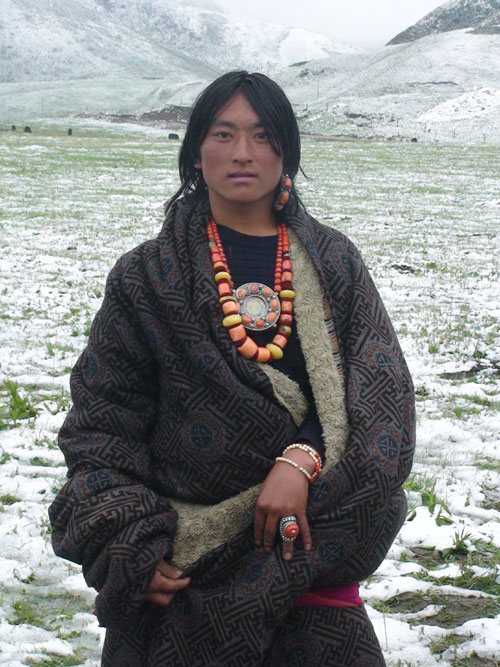
The Hegèni-Athalâ are a group of Kegani peoples that inhabit the length of the river Athalâ, with growing communities around its lakes and lagoons. The migration from the original Kegani Homeland happened a few centuries ago, but they still feel a close tie to their original homeland, Kega, and its people, with whom they interact frequently through their traditional practice of travelling trade. Like them, the Hegèni are usually tall, light-brown skinned with long, straight noses and high cheekbones. Though the hair of the Hegèni is mostly brown and black, Red hues are not unusual, and very prized. Their clothing is usually composed of plain white jute tunic - tied at the waist for men and under the breast for women. The men cover their head with dyed turbans, while the women leave their hair exposed. Once married, women have the custom of intricately braiding their hair, showing their conjugal tie.

If the Hegèni are a tranquil people, content with maintaining the balance of their life as it is, following their gods and their chiefs, they do have a warlike side to their culture. If fighting for the sake of demonstrating strength and virility is not common, they are indeed fierce when it comes to protecting their community from external threats. Their god of war, Halfèr, is highly revered, and every village has a War chief to rule next to a Priest Chief, taking his place in times of hardship. For the Athala, a hero is not a fearless, foolhardy or purely strong - a hero is pious, steadfast and a shield for his clan.

The Hegèni worship the six ancient gods of the Kegani: Thamòyn, Adamòs, Herî, Halfèr, Hentê and Èyt. According to their traditional mythology, these gods once held power all at the same time, leading to frequent and catastrophic wars. Thamòyn, the gods of waters, feeling pity for those who dwelled on the earth, called his fellow gods on the great mound, and wisely decided to divide their powers: thus with each moon, these six gods rotate their control of the universe, and the men honour them with new gifts. The Hegèni build great mounds made of earth, clay and shrubs in their honour, that priests use to perform their rituals.

There is perhaps nothing more important to a Hegeni than his family: every clan lives in a large courtyard house made of mud bricks and wood which is effectively a micro-village inside the macro-village, whose multi-generational structure creates tightly knit communities through marriage ties.

———————————

Starting techs list - Agricultural/Fishing

Claim Map

Detailed map of the Athal Valley


r/DawnPowers • • May 20 '18

Meta A Linguist Walks into a Subreddit [Intro and AMA, sort of]

20 Upvotes

Greetings!

A couple of you remember me from previous renditions of Dawn, no doubt; for a couple of others still, my (user)name might be buried somewhere deep in the recesses of your memory, perhaps from extended conversations about your tech posts and what you needed to fix, or about exploratory missions that often went awry...

I see a good number of new names on this sub as well, so I might as well introduce myself. Call me Eric--I don't mind, really, though most seem to default to Pinko. No, I'm not a real communist. I feel virtually every username on here has a long and often uncomforable history, or at least one that can only be understood through far more context than one cares to explain to strangers on the internet.

While I was an active player on Dawn Season 1 in particular, as well as on one or two other Powers subs, real life got in the way as I decided to go back to school after a hiatus and pursue a Master's degree in Linguistics. At first, I thought that I could keep world-building on the side, and if anything, becoming better-educated in this field would enhance my civilization-building, roleplaying, etc. in Dawn. (If anything, my early interest in history got me into world-building, because I essentially was reading about other worlds, and the combination of the two helped lead me into my current studies. A fair amount of my work on Dawn doubled as studying essentials of phonology, morphology, and other linguistic sub-topics in advance of my grad studies.)

Alas, that was kind of a stupid if well-intentioned idea: I got bogged down grad school rather quickly and ended up letting a burgeoning civilization crumble into dust to focus on my studies. I tried to stay somewhat involved in the Dawn community at large, at least at first, but even this became infeasible as I broke ground on my Master's thesis.

All of this said, I just walked at my commencement ceremony this morning. Between having completed my two-year program (minus the thesis, which I need to finish editing next week...), having taught English as a second language in multiple contexts, and working on ongoing studies that I intend to present and/or publish (I've already had one conference submission accepted), at this point I'm comfortable enough with referring to myself as a linguist of some sort.

Now we get to the part that's relevant to the Dawn community.

I still don't anticipate having time to stake a claim and run a civilization; as I said, I have ongoing projects as well as ones stewing in my head, and ideally I want to accumulate a suite of completed work before I apply for PhD programs. Having my name floating around in conference proceedings or even Google Scholar should give me something of an edge as far as applications go. On top of all of that, I'm planning to teach abroad for a while, but I still have to apply for positions.

What I can contribute to this community, however, is my two years' graduate-level training as a linguist. You're all building civilizations and cultures, yes? It should surprise no one that culture and language are essentially conjoined twins, and perhaps you're wondering how you can craft your tribe's language into something other than a cipher of English.

Out of interest in contributing to this community and getting back in touch with old friends, I'm offering my services to this sub as a linguistic consultant. Essentially, I can do anything from offering help with developing an interesting-yet-realistic language for your people, to helping you figure out which words and linguistic structures your people might realistically borrow from another culture, to answering broader questions about language, history, culture, etc. (My B.A. is in sociology, and I have quite a bit of background in history, psychology & anthropology as well, not to mention I've dipped my toes into natural history and various other topics.) Better yet, my emphases have been language contact, language shift and other linguistic changes resulting from contact between speakers of different languages and dialects, and historical linguistics--all quite applicable to Dawn, with its eon-spanning setting and plentiful opportunities for trade and conflict.

For the time being, feel free to ask me anything, whether in comments or PMs. Questions don't have to be limited to linguistics (though this is by no means a limiting topic of discussion); if you're curious about my past work in Dawn or anything else, really, fire away!


r/DawnPowers • • May 11 '18

Claim Abanye

20 Upvotes

Abanye Luturru

Demonym: Abanye

Color: #874bcc

TL;DR: Non-monogamous people with a gift culture and ceremonially significant boats that represent each community.

Maritime Primary:

  • Throw Nets

  • Advanced Carpentry

  • Basic Hand Looms

  • Trident, shrimp/crab traps, fishing spear

  • Clam beds (applies to any shellfish)

  • Plank Boat

  • Reed Boat

  • Timber Neolithic Longhouse

  • Short bow, used for hunting

  • Stone or Obsidian mace, used for combat

  • Javelin, for hunting

  • Basic Celestial Navigation

  • Domed ovens

  • Raised ovens

  • Salt curing

  • Mallet

Farming Secondary

  • Early agrarian practices

  • hoe

  • wheat, jute, mung bean domestication

  • grain flail

  • plant fiber clothing

  • raised ovens

  • Advanced Herbalism

Personality

  • Advanced Boat Design (long plank boats)

  • Hull Caulking

Map

North Sinid Phenotype: pale yellow skin, straight hair, medium tall to tall, mesocephilac, high square-shaped face, weak cheek-bones, thin lips


There is a small but content village situated near the beaches of a forested cove, somewhere in the Abanye lands. On the firmer land above the banks, sturdily build wooden longhouses and huts surround the longhouse of Watum Shen-Zultan, the leader of the village. A hundred meters down from the village center, a collection of fishing rafts and wooden boats have been pulled onto the sand, woven reed baskets for fish and mussels resting within some of the vessels. Across the calm waters of the sheltered cove, a sandy island with some salt-loving grasses sits easily within eyesight. During a day of active fishing, fishers would paddle the rafts and boats across to the island to dig for shellfish, while others remained at the village to tend plots of wheat and jute. However, this was not an ordinary day for Dhoyalam, the village of the Osprey.

On woven mats across the beach, a feast had been laid out. Salted fish, recently baked breads, and a whole boar that had been speared with great difficulty by Rru, one of the youth for whom the entire event was staged. For this was the Naming Day of Viyol's year, when Rru and his generation were to come of age and receive their full name. On the previous day the youth had embarked upon a hunt, and this day there had been trials of combat and agility staged to test the merit of the rising generation. For Rru the stakes were high, as both he and Banir, sons of the village's most important mother, were favored for succession to the Watum.

For Rru, becoming Watum was more than a profound honor or the right to lead the village. For the Watum means more to the Abanye than leadership of a village. The Abanye are, at their core, a people of the sea and waves. It is said that when the Abanye first set foot on the land after their very creation, they knew they desired to be at sea. The Abanye live by the sea and of the sea, with fishing being more important to their culture than nearly anything else. And when the time comes to visit their Abanye brothers, villages travel by sea in ships bearing trade goods and themselves.

And no boat is more important to an Abanye than his village's Rizukan. A village may have many vessels, but there is only one true boat of the village, and that is the Rizukan. Built to higher standards than any mere fishing boat or raft, a Rizukan is made to impress and built to last. Tha Rizukan is not just the pride of every village but also its symbol, and it is the village that is named for the boat. The Rizukan was very much the boat of a village, and the Watum was her captain.

The Rizukan of Dhoyalam, the beautiful rowboat Dhoya, was in the eyes of Rru the most majestic of the Rizukan he had seen. He had seen half a dozen Rizukan in his life, for men of other villages visited for trade, for festivals, and to fish in richer waters. The Rizukan of these villages were always impressive: plank boats with caulked hulls and stylized prows, sometimes with as many as a dozen men at the oars. But Dhoya was a cut above. At some point in the village's past, a true artist had carved the prow into the form of an Osprey in flight, the Aban (fey spirit) which watched over the village. The hull was sleek and smooth, kept clean and well maintained despite its frequent use. Rru desired little more than to be captain of that ship, to seek his destiny and the legacy of his people on the open seas, to travel to far off villages for trade and festivals, and to represent the people of his village.

As dreams and desires occupied Rru's thoughts, the time to ceremonially bestow names to the new generation approached. Rru and his fellows stood before Watum Shen-Zultan, nervously awaiting the culmination of the day's festivities.

"Rru Ken Dhoya! Banir Ken Dhoya! Step forward to me!" called out the Watum in a clear voice, with the practiced steadiness and volume of a man accustomed to giving orders at sea. Hearing what he said, the two favored sons of the village approached, knowing that one of them was now to receive a most coveted title.

"Banir Ken Dhoya," began the Watum, "you have proven yourself wise and capable. You know the Star Map bestowed to us by the Twins better than any of your generation. Where you more confident, the first name would surely be yours." Turning to Rru, the Watum continued. "Rru Ken Dhoya, you have proven yourself confident and decisive. You are clear of mind on land and at sea, and will not shy from even the most daunting task. This fine boar could attest, had your resolve not done him in."

The Watum lifted a necklace, from which hung a small carving of an Osprey. "Rru Ken Dhoya, I present you this gift: the name Viya-Rru is yours, to be forever symbolized by this necklace. Wear it as proudly as you will lead our clan." The Watum placed the necklace over Viya-Rru's neck, then turned to Banir.

"Banir Ken Dhoya, I present yo uthis gift: the name Sho-Banir is yours, to be forever symbolized by this necklace. Wear it as proudly as you will serve your Watum." The Watum placed the necklace over Sho-Banir's neck, then once again turned back to Viya-Rru.

"Viya-Rru Vor Dhoya, I present you this gift on behalf of the family: Sho-Banir Yan Dhoya, to be your navigator at sea and partner in life. Treat him with the same respect with which you treat the village."

The Watum called forward the next set of youth to recieve their names, but Rru was still reeling. He was a man, and also Watum! In the span of a few minutes, leadership of the village and captaincy of Dhoya had passed to him. He could hardly wait for that evening's ceremonial sailing of the boat with himself as Watum, and Banir his navigator.


r/DawnPowers • • May 11 '18

Claim Krioth, The Keepers of the Mountains

20 Upvotes

(Because reddit shat the bed and didn't put my claim post: https://i.imgur.com/huRz7zq.png )

Atop the Sune Mountains...

“Vatu anar fay’a, katka nalur…Nalur k’tarithfa parri n’luv tozanki. Gather around children, and listen to me. I will tell you of our origins.”

An old woman huddled around a campfire with crowds of children attentively looking up at her. The howls of the winds in the mountain peaks chilled their bodies and spirits alike, forcing them to huddle near the fire and beneath their mantles as closely as possible. Nearby, large groups of men and women sang and danced under the cover of the two full moons, heartily fighting back the chilling bite of the heights.

“Before us, before the world, there was nothing. There was no pain, no hunger, no cold. The gods lived beyond the tangible, beyond our comprehension. That was until the great flash of light,” the old woman accentuated the words with a flourish of her hands, creating distant shadows in the stones behind her, “a flash created by the clash of Cay, the Sun, and Nary, the Trickster God.”

Before any of the children could ask as to the why, the woman leaned back and looked up to the sky, “Nary had tricked Tay, Cay’s wife,” she pointed to the great white blotch in the sky, “tricked her into having hundreds of children with her. You see, he was a very clever one, and one night disguised himself as Cay to enter into their chamber. Soon enough, the children were to be born.”

An inquisitive child jumped and perked at the words, and blurted out, “People!” causing the woman to chuckle,

“Correct, little one. But it was not that easy. After realizing that Nary had tricked his wife, Cay attacked him with a great mace, and the moment the two touched, it created a bubble in their world - a physical realm.” The woman leaned in closer and her brow scrunched into a serious expression, “You see, Nary knew he was no match to the sun god’s strength. He used the only trick he had left - turn them both into stone.”

A gust of wind blew through the mountain peak, and all the children gasped, as if the mountains beneath them raged at the sound of the story. A younger woman with blue eyes grabbed a fur mantle and placed on the storyteller’s shoulders, receiving a nod and smile of thanks in return.

“Cay desperately tried to free himself of the trickster’s trap, pulling himself further up from him and into the sky. Eventually, he broke free and flew through the sky bubble, tearing a large hole that to this day lets the gods’ light shine through. And these mountains around us?” she asked rhetorically, looking from side to side, “These mountains are the skin of Nary pulled up by Cay, turned to stone. In fact, everything you see around us is Nary’s corpse, for he was to be forever trapped in the physical realm, and serve as life’s sanctuary. A fitting punishment, thought Cay.”

“But what happened to us?” asked a child.

“Ah, I haven’t gotten to that yet, little one.”

The same young woman from before handed the older shaman a steaming wooden bowl full of soup, and spoke in her place, “In his rage, Cay cast humans out of the god realm, throwing them into the bubble. Have you ever wondered why there are so many lights in the sky? Each one is a small tear of a person as they were cast down. But Tay decided to never patch them, to remind each and every one of us where we come from, and to see our light in the absence of Cay.”

Slurping the soup, the shaman stumbled on her words, “Very good, k’tai, sister, very good. Yes little ones, each one of our ancestors came through the sky and left behind their mark. Sadly, we had never learned to talk or how to make fires. We wandered and roamed through the cold and silence. Had it not been for the K’tai’a, the moons, we wouldn’t be here. The two true daughters of Cay and Tay were curious ones, and one day opened doors in the sky,” she remarked as she pointed with a bony finger to the moons.

“They came down to Nary’s corpse and found us shuddering by ourselves. Taking pity on us, they taught us to make fire, to speak, and to remember everything by storytelling. Each memory is sacred, children, remember this. Each story reminds us of where we came from.”

The singing from the distance grew louder, and the festivities were arriving at a crescendo. Some teenagers - both boys and girls - were gathered around the largest bonfire and made to dance holding hands. The younger woman sitting next to the shaman looked away with a frown, no longer wanting to witness the gleeful occasion, and instead continued the story, “The k’tai’a have always been curious. They always visit us - sometimes alone, sometimes together. When both of them come down to earth, the clans all gather here at the mountain peaks to celebrate and remember them. They might even be behind you right now,” she added with a sly grin to the children.

Several of the kids turned around quickly, some in hopes of finding the holy goddesses looking down upon them, but only the great wooden cliffs of the mountains stood behind them. The shaman clicked her tongue and looked disapprovingly at the girl, but later hummed, “Gods are all around us, it’s true. In fact, you will sometimes feel and hear Nary try to rouse himself from his own curse, shaking the earth and mountains themselves. If the day comes where Nary frees himself, it is said Cay will once more descend to our world and begin battle with him.”

A man covered in pelts approached the group, bowing his head heavily to the shaman, and then beckoned the children to join the bonfire. The shaman and the younger girl looked as the group partook in the inter-clan festivities. There was a stark difference from the warm smiling rivaling the fire emanating from the shaman’s face, and the younger girl’s longing, pitiful look.

“K’tai,” began the woman, turning to the brunette girl, “you are not Lur’amma, clan mother yet. Go, join them.”

Speechless, the girl stared at the shaman, wondering if this was a test to prove her resolve in one day becoming shaman, but the older woman smacked her back lightly, “Go k’tai, go. The K’tai’a didn’t give us all these gifts to sulk!”


The Krioth are peaceful people, self-proclaimed keepers of the mountains and the heart of the world. Originating from the Nyarloth migration from the north, the nomads mixed and eventually were integrated into the local populace, though most of the local religion and cultural structure remained intact.

In the Spring and Summer, the Krioth make their way out of their mountain dwellings to live in simple lodges in the valley while they harvest wheat and oats. Once harvest season is completed, the clans gather their things and make their way back to the mountains. Here, they live off the harvest and men venture into the treacherous alpine forests to hunt.

While men are in charge of hunting, the women essentially run society and oversee farming, trading, and religious customs. Each clan is led by a Clan Mother, and when she deems herself old enough, a girl born during twin full-moons is chosen to become her apprentice.

The winter is the same time where rites are held through society. Boys are left in the mountains in groups of two, and may not return home until they each have an animal’s pelt which they themselves have hunted. Naturally, the more dangerous the animal, the higher the esteem for the boy back home is. However, the journey through the mountains and forests is just as perilous and they must learn to follow and read the Mountain Cairns in order to find their way. Similarly, a young woman must complete a pilgrimage through the mountains’ highest peaks before she is allowed to marry, and once she completes it, she must do so again with her husband-to-be.

Every twin-full moons, all the clans gather at the highest peak, Cay’s Reach, where the clans celebrate the gift of story and fire, and where many young boys and girls will ask their suitors to dance.

Though they are not known for traveling far outside the mountains, the Krioth welcome foreigners heartily into their homes, especially those seeking to make the sacred pilgrimage through the mountains. Every foreign pilgrim is guarded by a Krioth woman who has married, both to guide the faithful, and to keep an eye that they may not desecrate any holy site, Cairn, or idol.

The “Vanagata”, or literally Sky Door/Gate, is the religious symbol of the Krioth. This symbol is painted at the entrance to villages and cliff dwellings, as well as throughout the mountain passages for pilgrims to know their way. Travelers making their way through the perilous cliffs will find these and be filled with warmth, knowing there is a small enclave of Krioth nearby with warm foods, and warm hearts. The universe is thought to be a bubble, and encompassed in it are the two moons (the K’tai’a, patrons of Krioth) and the stars, all represented within the symbol. During full-moon ceremonies, drums emblazoned with the symbol are played in honor of the gods. Every clan joins to practice a chant that travels across all the mountains, and is sometimes used to locate others within the forest and stones.

Finally, while most Krioth practice cremations atop the mountains, many of the Clan Mothers are left with their mantles and sacred objects on the highest peaks, where they mummify and serve as shrines for pilgrims.


Starting Techs


Primary: Agrarian


  • Polished Flint Maces. The stone maces were carved and polished in shapes of deadly animals, and seldom the Sun God represented by rays outstretching from the center.

  • Bident Stone Spear. Mostly used to hunt animals for their pelts. Hunters hold down animals with these while another deals the killing bow with a stone mace.

  • Simple bow. Carved from one piece of wood, using flax for string. Inaccurate and short range. Bows do not hold much significance, as many animals in the mountains can easily shrug off multiple arrows.

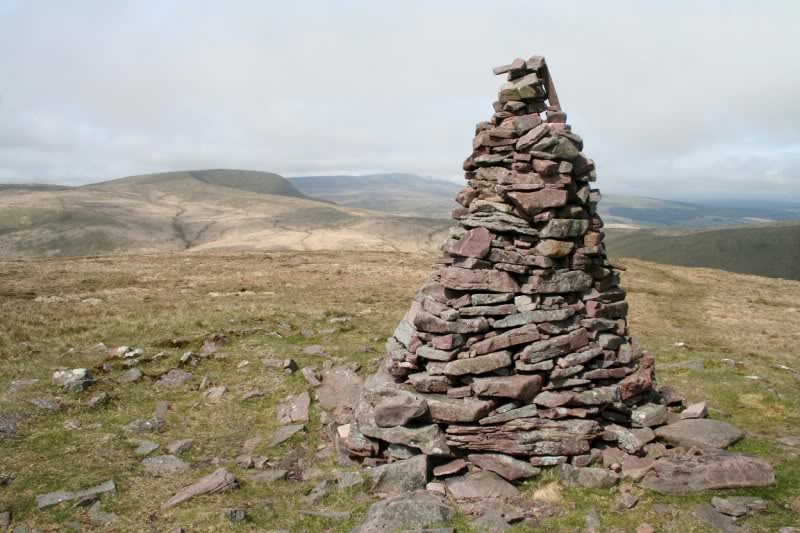
  • Cairns. More commonly used as markers through the mountains are stone cairns, painted in different colors. Mostly located in peaks, none of these are designed or painted the same, so they serve to locate oneself in the mountains. Some even double as burial sites for prominent Krioth figures, and are also referred to as such. E.g.: "King Erroth's Cairn."

  • Cliff Dwellings. These are simple dwellings carved into already existing cave systems. As such, they require no foundations.

  • Wooden Totemic Idols. The idols of the Krioth are carved from single trunks of felled trees. While some of these may be found through the mountains, their primary function is to be placed atop cliff dwellings so they may ward off evil gods. Each tribe brings their idol from between their winter and spring dwellings, and the history of the tribe is usually carved into the body of the idol.


Secondary: Montagne

  • Fur/Flax mantles. Women spin their own mantles, while men hunt for their own pelts. The more dangerous the animal, the higher the prestige and price.

  • Fur Ear-Flap hats


Personality Techs

  • Proto-Writing

  • Masonry


Phenotype


Finno-Ugric but similar to Polish due to the Nyarlothi migrations from the north. Male, Female


r/DawnPowers • • May 11 '18

Claim Senlin

20 Upvotes

Once there was nothing but the endless forests over which Da Shen ruled. But the forests were empty and lifeless, so from the roots of the trees He created the Shadows. These creatures spent their days underground, only to come out at night and corrupt the land they walked on. He looked upon His creation and saw that it was twisted. Da Shen got back to work and from the trunks of the trees He carved the Senlin: strong and unyielding like the wood from which they had come. But the Shadows were jealous of the Senlin, and betrayed Da Shen by killing him while he rested. His body swallowed large parts of the forest and became the sea. The Shadows have since retreated into the forests, where the ancestors of the Senlin fight them in glorious battle to this day. It is the destiny of every Senlin man to one day join in this battle, for the glory of their tribe, their ancestors, and Da Shen.


The Senlin are a tribal people on a subtropical forested peninsula dominated in the west by karst topography. The tribes are all concentrated in areas along the coast. While the sea surrounds the Senlin on almost all sides, there are seemingly endless forests to the east.

There are fourteen main Senlin tribes, all of which live in very small communities that rely both on hunting and rudimentary farming for subsistence. These communities are usually centered around one larger village where the chief resides.
As part of a chief’s duties, he is supposed to hand over his tribe to a younger man (usually his eldest son) while he is still in fit fighting condition. The chief’s choice of successor can be challenged by any man from the tribe in an unarmed fight to the death. When his successor is chosen, the old chief strips naked and walks into the eastern forests covered in mud. There he shall fight in the eternal battle against the Shadows and earn glory for his tribe. This ceremony is a great event for a tribe as when a chief chooses the battlefield, many of the older men of his tribe follow him into the woods. Only the honorable may choose to fight alongside their chief. Senlin who die honorably outside the forest are carried into the woods and left there. Those who die a dishonorable death are burned so that they may never know the eternal glory of the battlefield. Women who lived honorably may not participate on the battlefield but they are important as they are the messengers through which Senlin shamans communicate with their ancestors. These rituals often involve blood sacrifices and consuming large amounts of dangerous herbs.

The fourteen tribes are openly hostile to each other and conflicts for territory or resources are common. The currently most dominant tribe are the Zhi, who have been undefeated in battle for several generations. The centre of their power lies to the south where they have established the largest agrarian community in the Senlin territories. Where most tribes still depend heavily on travelling communities of hunters and gatherers, the Zhi manage to mostly sustain their population with rice and soybeans. Because of this lifestyle and their established position as the dominant tribe, the Zhi have generally better maintained structures and more refined arts than their fellow tribes, even at some point having invented the pottery wheel.

Summary
The Senlin are an aggressive people whose entire culture revolves around getting to avenge the death of their god on an eternal battlefield in the forests. They are a civilization in the transition from being hunter-gatherers to agrarians.


Technology

Primary group: Agrarian
  • Early agrarian practices;

  • Domestication of grains found in area: Rice;

  • Domestication of 3 non-grain crops: Soybeans, Hemp, Arhat;

  • Raised ovens;

  • Domed ovens;

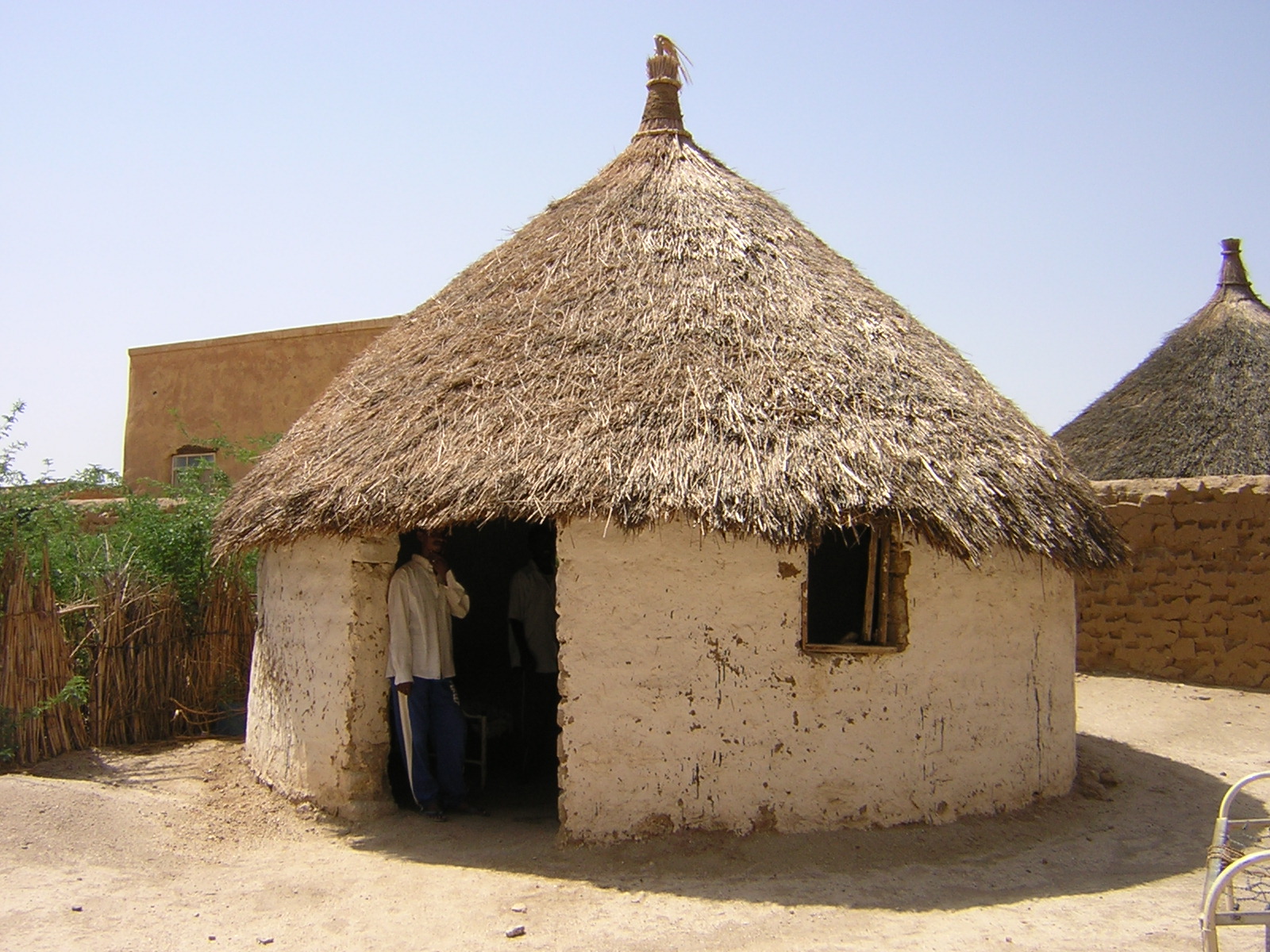
  • Housing: Small to medium sized round wooden houses with a thatch roof;

  • Basic carpentry;

  • 3 weapons: Adze, Mace, Serrated spear head;

  • Hoe;

  • Mattock;

  • Sickles;

  • Ditch irrigation;

  • Basic hand looms;

  • Pottery kiln;

  • 3 special building types: Wooden palisades, Rope bridges, Treehouses (used primarily as watchtowers or hunting cabins);

  • Smoke curing;

  • Advanced herbalism.

Secondary group: Jungle
  • True axe;

  • Netting;

  • Running loop (trap);

  • Bird snare;

  • Poison harvesting;

  • Blowdarts;

  • Advanced carpentry;

  • Mallet;

  • Camouflage.

Personality techs:
  • Self bow;

  • Pottery wheel.

Melanin/Ethnicity
The Senlin have a skin color comparable to that of modern Indians.

Map color preference
#7bb25f


r/DawnPowers • • May 12 '18

Claim The Sinsou People

19 Upvotes

The Sinsou People

At daybreak, the herders prepare for what they did every couple of weeks -- pick up and move. It had been the way of life for the Sinsou for as long as they could remember on the seemingly endless steppe they call home. There's about three dozen men and women in that tribe plus their herd of cattle.

After breaking their fast with some cheese and bites of smoked beef, they package up their hide tents -- simple tee-pee structures shared by a couple and their children, the walls adorned with images of nature from clay-based paints. The people themselves don't look much different than their tents, with long tanned tunics and crude moccasins. When temperatures drop, they wear heavy hide cloaks. They are all fair-skinned, skinny and of average height. Most of the men are bearded with long light hair kept back with decorative headbands. The women dress mostly the same, their hair braided and complemented by beautiful wildflowers behind the ears and tucked into their braids. The children, in simple hide rags, usually run around in the grass throwing rocks, playing with the dogs and searching for flowers but even they were expected to help pack for the next move.

They pack their scarce belongings into hide bags, two at the end of a short, crude rope, balanced in weight, to be thrown over the backs of their cows. They all take turns pulling wooden sleds which usually hold their meats and cheeses. They didn't have much, but nearly everything they took with them. In a day, the only trace of them ever being there would be the beaten grass and a couple small burn circles.

The tribe shares the fruits of their labor. The value of community is important, everybody is expected to contribute or be cast away from the tribe which, in almost every instance, meant death. Men and women are married around 14 to 16 years of age, set up by their fathers when they were just kids. Infidelity was strictly forbidden, the one thing a Sinsou doesn't share is his wife. Their marriage ceremonies are a day-long affair, starting with a hunting trip with the male, his father, his fiance's father and any of their brothers. To not return with a bounty was considered bad luck for the couple. The women do their hair with elaborate braids, pick flowers and weave small dream catcher-like ornaments to hang in their tents to fend off any unwanted spirits. A nightly feast for the whole community ends the night, with fresh boar or deer, cheese, yoghurt and milk, and all the adult males toast the new couple and throw knives at crude targets.

Funerals are considerably less festive and a somber affair. Bodies are usually buried the same day they are died in shallow tombs topped with stone cairns arranged into small towers and rings. Flowers are placed on the cairn and, similar to weddings, they toast the deceased members. When cairns are discovered, dotted across the landscape, it is standard for them to decorate them with flowers even if they don't know who they were, assuring that the body's spirit will never be forgotten or disrespected as they become part of the land.

There was little strife. At night, the men rotated watches over the cattle, armed with short bows and spears, against predators and the rouge wild man. Tribes generally avoid conflict with each other, but that isn't to say it doesn't arise. When they contact each other, they'll usually camp the night together, trade goods, talk of their tales and feast around a fire before going separate ways. Often times unmarried children, like in instances of no suitable partners, are married into the other tribes the next day in an even larger affair -- the female always goes with the male. All the adult males make the decisions for the tribe, generally the elder male's points respected the most, but they operate on a quasi-democracy.

Claim

Map

Hex: #FFF41F

Link to culture sheet

People

Culture NameThe Sinsou People
ComplexionFair skinned
PhenotypeNorth Pontid
HairBlonde to dark brown
Height (M)5'6" - 6'0"
Height (F)5'1" - 5'7"

Technology

MainPastoral
SecondaryGrassland
Extra OneBasic wooden sleds
Extra TwoTanning

Specific Techs

Weapon Choice 1Throwing knives
Weapon Choice 2Sling
Weapon Choice 3Spear (tipped with flint or cattle bones)
Housing MethodHide tents/tee-pees
Specialty BuildingBurial cairns
Extra Item (grassland secondary)Large packs (for cattle)

Resources

Crops (not domesticated)Flax, Oats, Wheat, Barley
Domesticated animalsDog (companionship, protection), Aurochs (meat, pack)
Other animalsBoar (hunted), Deer (hunted), Goats (vague knowledge of)

r/DawnPowers • • May 11 '18

Claim For Astro, the Sihanouk

19 Upvotes

Title: The Sihanouk People

RP: (Note: This RP almost certainly will be retconned, but I thought it was an interesting way to introduce a culture)

The students filed in, regretting taking a course that began at 8 in the morning. The professor was straightening the notes at the lectern, a powerpoint already being projected onto the screen behind him. The few students that remained after seeing that sight popped earbuds in, ready to zone out for another lecture by Dr. Boring. Well, except for those nerds that sat up front, pen poised to write down every word that poured out of the professor’s mouth. I would complain about them, but I think you got the point when I called them “nerds”.

Dr. Boring, (I wasn’t exaggerating, that’s his real name) after coming to the realization that, just like every other day, no more students were going to show up, launched right in to his lecture.

“The Sihanouk people are an interesting case study of what happens when you live at the crossroads of one of the most culturally diverse regions in the world. Located at the mouth of the Kalada river, these people lived due south of what would eventually become the Asorian Empire, just a bit east of the Senlin, and right on the edge of what was, for them, a vast unexplored ocean.”

Dr Boring advanced the slide, moving from a map of the area to a sketch of what appeared to be, at least to the people watching, a rudimentary village.

“Living in what has become such a key area for much of our history, it is difficult to find any records from their Neolithic period. Fortunately, when they were tearing down the parking garage downtown, I was able to secure a permit….”

Even the most attentive students began to fall asleep as he launched into another lengthy anecdote about his field work.

Even the most attentive students began to fall asleep as he launched into another lengthy anecdote about his field work.

“..Anyway, as I was saying we were able to find some rudimentary brickwork. The structure of the bricks have lead me to believe that this may have been one of the first fully artificial bridges built. We know that the Sihanouk were renowned for their irrigation network around the delta on which they lived. This bridge was probably built over a canal dug to irrigate crops in what is now downtown.”

The slideshow advanced again, this time moving to a map that showed several coloured blobs of the region.

“We believe this may have been the greatest extent of the Sihanouk kingdoms, but this hypothesis is still hotly contested. The greatest issue of studying the Sihanouk is a lack of information. Despite being at such a vital location, their culture is relatively unknown. This is due to their tendency to adopt the culture of whatever cultures the Sihanouk migrated to, resulting in any distinct cultural traditions fading into obscurity. Their closest cultural ties are to the Chien Kue people to the north, but it is unknown when their cultures started to diverge. That means this is an exciting frontier for anthropology. Now, any questions?”

Dr. Boring looked up at the class. Even the most attentive students were passed out, drooling over their once-meticulous notes. “I should have taken my wife’s name” he muttered, and returned to his office..

Map: https://imgur.com/xoB2fse (colour is 7f7038)

Techs: Primary: Agrarian 3 non grain crops: Hemp, Bamboo, White Jute Housing: Bamboo Stilt Houses Since I’m forested, I do get a Mattock 3 weapons: Don’t really know the restrictions on this, so I'll do this later Grain Flail (NOT sickle) 3 special building types: Post and Lintel, beehive dome, corbel arch bridge

Secondary: Fishing
Bonus Techs: Masonry and Canal Irrigation

Phenotype: Roughly-Vietnamese, as it is a midpoint between the Austo-Asiatic group (The group that wikipedia said came out of India and into SEA, eventually becoming the Mon and Khmer peoples) and the chinese group when it comes to genetics.

Why my culture is unique: The Sihanouk People are almost contradictory, as they have a very nomadic lifestyle (evidence being their rite of passage for adulthood and their constant emphasis on exploration and wanderlust in their culture), and yet live in a town-based agrarian society. This duality will give me lots of unique RP abilities, as well as allow me to have a diaspora without a total destruction of my culture.


r/DawnPowers • • May 11 '18

Claim Na Honded

19 Upvotes

RP: For many not deaths have the people of Na Honded wandered across the northern steppes. A tribal conflict with foreigners now far away, drove the Na Honded people out of their caves. Without a home the people turned to find a new meaning with life. Where they once had been not moving, now they would be not stationary. Na Bleded. So they started wandering aimlessly across the steppes. Continiously ending up in conflicts with other tribes who were not moving. Na Ge. Upon the loss of a great part of the tribe, it was decided they needed a goal. Something to hunt. On the march through the steppes only 2 things never died. The sky and the earth. Both things were pondered by the elderly of the tribe. It was then the decided that the not cold not two would be the goal. Instead of wandering aimlessly, they now wandered in a direct line. Not a constant travel, as they still exploited the lands they came through. They were Not Dead, Not Hunted. Na Honded.

Soon however they would hit the edge of the steppes. It was not mountains or not jungles they encounted. It was not not the sea. Instead of moving on, they will have to remain here until they figure out a way to defeat this barrier and continue their hunt.

Map

Techs: Primary: Pastoral. Secondary: Grassland. Personality: Tanning, Horse riding.

Custom Weapons: A spear with 2 points(Fork). A spear with a sharp side on the point. A blowpipe with rawhide decorations(Custom rawhide/fur tech).

Resources: Boar, Aurochs, Horse Subspecies 2, Barley, Hemp, Wheat.

Custom Buildings: A long triangular tent. A dug hole with a tent above it. An opposite - house, two dug holes connected by a triangular tent.

Ethnicity: Chinese

Hexcode: c7cbff

Speciality: Na Honded is a culture which decides to look upon to opposite of things and say it is not that. This leads to an intriguing nature where everything is questioned for an opposite. This is not done in a logical way and often these opposites make no sense. But it does give them a better understanding of how the world around them connect. They also have the goal of always having something to hunt, so that they always stay on the move. Currently the goal is the sun, but they have reached a barrier as the sea preventing further movement.


r/DawnPowers • • Apr 27 '18

News DawnPowers Season 3 Start Dates

19 Upvotes

Welcome back to all former DawnPowers players, and a warm welcome to all new players. I, and the rest of the mod team are happy to announce the official start dates for Season 3 of Dawnpowers!


  • May 7 - We will make all the player maps public, and players will have this time to write up their claims, ask questions about the maps, etc.

  • May 11 - We will officially open claim posts to the public at 11AM EST. Claims will be held in a first-come first-serve basis, and in the event that there are conflicting claims, we expect players to sort things out amongst themselves.


As we near these dates we will release more information regarding mechanics that may have changed. Of course, everything is subject to change until official release (and even then, the mod team might modify things as we see fit). Everyone is welcome to come into the discord channel and ask us questions at anytime!


I look forward to seeing everyones cultures and ideas! This is by far the team's most ambitious and professional work yet and many have put a multitude of hours this past year to bring this all together. We sincerely hope you all love what we've created.

See you all soon!


r/DawnPowers • • May 11 '18

Claiming boi The Macangin

18 Upvotes

The fiery snakes fought in the skyes, intertwined in a deadly battle only one of them could win. It was a chilly night, and the people of Ladina observed the battle with awe as the anihari chanted. Dacera and Monera had met with their brother and husband Dacata for the first time in living memory, and now the snakes had engaged in a fight the outcome of would mark the future of every single man and woman in the plains.

After what seemed like an eternity, the snakes vanished just as they had come and the anihari fell to the ground, panting. Angi, the tribe’s chief, kneeled by his side and helped the dazed man up. “What do the spirits say, oh, Aniharati?” All of a sudden, the anihari rose his hands in the air and proclaimed “Bunaci has defeated its evil twin Mami!” The crowd, silent until that very moment, erupted in victorious cheers.

The celebration lasted all night, but, by the time the Sun was up again, the men had already gathered at the centre of the village to listen to Angi’s words. The chief was a tall and broad man whose long black hair was always tied at the back. His eyes, cold and calculating, stroke fear in the hearts of his enemies, yet those who could call himself his friends knew him to be a generous and trustworthy leader. “The spirits have spoken,” his voice thundered “the people of Ladina shall rule over the Mecangin and I, Angi Gengihari, who was declared by the Lean Anatin to be the reincarnation of the Geati, will lead them to victory. Dacan! We will march and unite the people for the first time since Unauti Gei.”

And so, with celestial blessing, the Ladinagin went from village to village, rallying them under their chief. But only time would tell if he was to succeed in his ambitious endeavour.

Claim (green is a good colour for the claims map)

Chinese

techs

Pastoral primary
Farming secondary
Horse Riding
Copper Cold Working


r/DawnPowers • • May 11 '18

Claim Mendet Claim Post

18 Upvotes

[Claim Map] (https://imgur.com/TMxeWBF)


The day is hot. Up above Tsinki the noonday sun shines bright, illuminating the rugged valley. He is standing on the southern edge, near its crest. Above him, a scattering of pines stand. There is a rock outcropping beneath his feat, it gives him a good vantage of his herd of streme (plural possessive goats). He is dressed in loose linen clothing, he traded half a rack for last frost-moons in Abjare. His robes are light red and hang loose around him, he has loose trousers ending just below the knee and is wearing a long-sleeved, loose fitting kasjak. His head is wrapped in a blue mussaf. In his hand, he holds a tall carved staff of beautiful hardwood. The head depicts a wolf, worn smooth from decades of use but clearly well looked after. It shines as though oiled this morning. On hip, attached to the treated rawhide belt around his waist sit an atlatl and a quiver of darts, a sjatan, and an obsidian and cordage knife. On a similar cord around his left shoulder and attached to his belt lie a wineskin, bone flute, and a small pouch of tsaka (dried grapes).

His herd is quite large, perhaps 500 head. His brother, Issikh, is further down the valley, watching the herd from there. The valley slopes on the northern side are covered in grass and shrubs for the goats to graze on as they walk. Further down trees and bushes become more common, and at the very base a small forest surrounds the river running through. The other side of the valley is drier, less grass cover available for grazing and cut with many more gullies, the spring brings water to them.

They are heading up the valley from the frost-moons grazing sites of the lowlands to the summer meadows and planes of the high-mountains. Far in the distance the peaks, jagged and tinged with white at their peaks, stand; towering above anything else. They are going to their summer village in a lovely valley between Sir’aka and Hafasha peaks.

Tsinki whistles to his brother, “sereten” (we must go) [they are using a method of whistling used to represent sounds, think el silbo, which is used to communicate across large distances and rugged terrain]. Their father is further up the valley with their setme (plural possessive of yak) and camping gear, sete (plural of yak) make better pack animals than streé (plural of goat), he likely has found a good campsite by now.

He takes a swig from his wineskin then sets off at a walk, his dogs already responding to the whistling drive the herd onward.


Their camp this evening is in a good spot, higher up the ridge under the pine cover. A small stream flows parallel the valley nearby, before it drops further down into the region below. Their tent is a large, multi-poled affair of red felt. It is open to the clearing where a fire is set up. Over it they have a stre (goat) leg roasting, covered in oil and lightly salted with garlic and onion as well. They all have bowls of hirzin (yoghurt, chickpeas, ground walnuts, and barley). The stre crackles as the skin crisps. They take the stre off the fire and carve it. Bits of meat go into everyones bowl, then go the tsaka and skin.

They dig in.

The meat is tender and full of flavour, the yoghurt has a sweetness and bitterness to it and the grains provide some texture. The walnuts add a nuttiness to it which creates a richness in flavour.

As they eat, Tamada, their father, begins to speak. “Many many frosts ago, when the earth was new, there lived two brothers. Jasar and Hemed, born of mother Isif.” Upon saying Isif he pours out a small amount of wine from his cup as an offering to her. “These two brothers were great hunters. Every day they would hunt, every night they would feast. One evening, they were feasting and jedet (wolf) came to their camp and stole fire. Jedet took the fire and ran off. When the brothers awoke, they found their fire missing. But across the sky the wolf fled. Look above us, you can still see his path.” He gestures to the bright streak across the night sky. “And you can still see the brothers running across the sky, chasing the wolf and his fire. Some of this fire fell to earth and sank deep into the ground, where it burns to this day.”

There is silence after the tale is told. They have all hold it a thousand times, along with all the other stories of Jasar the Fierce and Hemed the Wise — how Jasar lifted the sky, how Hemed tamed the streé, how they stole the knowledge of wine and raisin from Surkuht (river) Jamal (Old Man, Grandfather).

They finish their dishes and drink more wine. As everyone else sips contentedly, Tsinki begins to play on his flute. A low, haunting melody. It tells the story of a daughter who’s father was cruel and would not accept any bride price for her. How she would beg him to let her go with a suitor, to get married and have a family. Then one year, a handsome, good hearted, and noble shepherd came and asked for her hand. Her father refused. But so overcome with love as she was, she arranged a plan with the suitor. He would sneak in and carry her off to freedom. The action sequence quickly becomes a series of staccato notes, too quick and varied to be understood as words. It then calms as it tells of a lush valley, of streé and jehe (sheep, plural). Of a home of sod and a happy family. His notes play long and mournful over the quiet valley. As he goes quiet, a wolf responds with a howl, soon joined by another, and another.

Above, the night-sky glistens, and the moons shine bright.


The grass is lush and thick, the air smells soft and pleasant. Wildflowers dot the many meadows of the highlands Trees dot the landscape, providing shade but never forming a full forest. Rock outcroppings stand out hear and there. The valley is nestled between two great peaks, Sir’aka and Hafasha and contains a small lake near the village of Murmut, their summer home. On these meadows march thousands of streé and hundreds of jehe and setere, grazing peacefully.

Murmut is a small village, perhaps 200 people. The homes are grass covered and dug into the small hills which surround the lake. a stream runs through the village. In the centre of the rough U facing the lake a raised earthen platform with a plank roof and wicker half-walls stands. In its centre is a giant hearth for a fire, on the eastern side three raised ovens sit, side by side. Benches and long tables extend down from them on both sides of the fire. Wood posts hold the roof up. The elder’s table sits at the far end, perpendicular to the others. The cooking area is busy. Young maidens, those who have come to find a husband at the kabat (clan meet/religious festival), kneed jossos (a special bread made with partially fermented red wine, raisins, ground walnuts, oil, sheeps milk, barley flour, and chickpeas), other loaves — long with delightfully crisp crust and walnut chunks sprinkled down the centre — are coming out of the ovens. They arrange them on the table beside stitsik (goat cheese), jitsik (young ewe cheese), and jitzinik (blue ewe cheese).

Over the fire roast two whole lambs, coated in misriff oil (mustard oil), cumin, garlic, onions, and fenugreek. Nearby, clay pans of oil fry spices. The smells of mustard, garlic, walnuts, fenugreek, radhuni, tejpat, satureja, sesame, and cumin fill the air as they are fried up. Large pots of wine and ewe’s milk with some ram’s blood sit being stirred on a simmer. The spices and their oil are dumped in and mixed in, creating a curry of sorts. Diced and fried onions are dumped in as well. Some flour of chickpea and barley is added as well, thickening the sauce. As the lambs roast, previously roasted streé is diced on a nearby table and dumped into the sauce. Delightful smells waft from the common area to the nearby field where a group of young men are playing Pishti.

Pishti is a game using balls and sticks. The sticks are longish and modelled after atlatls or halat, with a small cup at the end designed to fit the ball. There are posts set up with wood figurines on them at both ends of the field. 5 players on either side. The balls are thrown between people and caught using the hand. If it touches the ground it’s a turnover. The game is rough and competitive. If you throw the ball and knock the figurine off the post you get a point.

Around the game a crowd of men are gathered, watching. They are dressed in fine wool trousers, linen shirts, wool long coats and turbans.

As the game comes to an end, more people trickle out of the homes and surrounding areas, drawn by the delicious aromas coming from the cooking area. Groups of men sit at the tables, drinking wine taken from giant casks. A group of young boys start playing skin drums and flutes. As the music rings jaunty tunes the feast is served. Giant troughs of curry, beautiful and crackling racks of lamb, loaves of josso with rich and creamy cheeses, flatbreads to eat up the curry with. Before each person are two bowls, one of hirzin and one larger, flatter dish of barley, chickpeas, flaxseed, capers, and onions. Giant wood spoons are used to take the curry and poor it into the main dish. The red bread is dipped with relish into the cheese and devoured. The racks of lamb crackle as people bite into them. The legs are reserved for the elders who share them at the high table. Food scraps are thrown behind them to the dogs which lunge after scraps. Wine is run with relish.

The feasting continues late into the night. Dancing and more wine follow.

As the moon rises high and bright people celebrate on the grass.

When the sun rises the next morning, more are passed out outside than in their homes.


The Mendet are a primarily pastoralist people who engage in transhumance between small farming communities in the foothills and valleys and the high alpine meadows and woodland. The farming villages grow barley, chickpeas, and grapes and gather the wild herbs and spices of the area. These villages are typically near the many small rivers which flow down from the mountains. They tan hides and brew wine and beer and create linen cloth and clothes. Houses in them are typically dried mud brick with flat wood roofs. They are typically small, two room affairs oftentimes with a loft for storage. The more well to do families oftentimes have a series of rooms around an interior courtyard.

In the summer villages, houses are typically sod covered long halls with raised wood sleeping platforms. They are in the shallow valleys which dominate the highlands, oftentimes near lakes. These valleys are used for grazing by the sheep and goats. The sheering of sheep and weaving of wool products, as well as the production of felt, are very important. Cheese making is also primarily done in the summer months in the uplands, typically stored over the winter in caves.

The Mendet are arranged in a number of clans, each with their own animal totem. There are 2 main clan groups (collections of numerous clans) but 3 smaller ones as well. It is considered unholy to take someone from your own clan as your winter-companion (wife), thus at the summer solstice festival wherein all clans in a clan group come together at a standing stone circle winter-companions are chosen from other clans.

One of the most unique aspects of the Mendet is the way in which gender defines their society. Women are expected to remain in the winter-villages year round farming and tanning and brewing; meanwhile, men are supposed to tend to the herds and engage in the yearly migration. Oftentimes, people would also take a summer-companion of the same gender, traditionally hunting partners for the men, they have morphed into a more general relationship over the centuries — interpretations vary by clan but can be anythign from close friends to lovers. Small children usually stay in the winter-villages year round; however, once boys are old enough, they join the migration. Women typically make the migration only once, upon their 16th moon they travel to the mountains to find their winter-companion, who’s clan they will henceforth join.

Some clans have numerous villages both in the valleys and in the hills, some have only a few; in fact, some winter-villages, particularly those around the larger rivers, are mixed with multiple clans living in them in the winter.

The pastoralist groups mainly herd goats but there are numerous sheep herds as well. Yaks are also kept and used as beasts of burden for carrying loads and for riding, rarely does a family have more than a dozen yaks but oftentimes they have hundreds of goats.

Religiously the Mendet are broadly animistic believing in numerous spirits of the natural world; however, a few major figures have emerged. The first two are Jasar and Hemed who represent the twin moons, they feature prominently in numerous stories and are important cultural heroes. While not as common in myth, Aka (sky) is the most important deific being in the Mendet pantheon; he is considered chief among the spirits and the father of the world, he is said to live atop the peaks of the great peaks of the Mez (the mountain range the Mendet live in) and the sun is said to be his wondering eye, watching over his children. Mother Isif is the other primary deific being, she is a spirit of earth, fertility, motherhood, and farming; she is widely venerated as well, particularly in the farming communities.

The Mendet use isini, sjatan, and halat for weaponry as well as atlatls and bows.

Ethnically, their skin tones are generally middle shades of brown, generally 20-26. Eyes of brown are most common but green and a pale grey are present in roughly 6% and 2% respectively. Hair colour is most often black or dark brown; however, lighter shades of brown and even blond and red hair can be found in small amounts. Hair varies between kinky and wavy, the vast majority being slightly curly; however, kinky hair is considered very attractive to women and is more common among them.

Wealth among the Mendet is expressed primarily through the number of livestock one owns, with sheep considered more valuable than goats and yaks considered more valuable than sheep. Among the winter-villages wealth is mainly measured in the amount of textiles, jewelry, and wine one owns, as well as the size of their homes. Wealthy leaders of a community oftentimes have especially large and spacious sod houses, typically festooned with intricately dyed and felted wool rugs and tapestries — the most valuable those which are woven from died yarn. In the winter-villages, their homes typically have a courtyard, perhaps even a second floor room for a shrine. Within the courtyard a tree and a small shrine to a nature or protector spirit are common. Again, tapestries and rugs are an important way to display wealth. The vibrancy of one’s clothes and tents also display wealth. High-quality furs are also oftentimes worked into the garments of the very wealthy.


r/DawnPowers • • Jan 20 '17

Modpost Season 2 Claims Open: Maps Within

18 Upvotes

Overview

Please consult the following for how to make a claim:

Consult the following to help decide what techs you'd like to start with:

Read the following for a picture on sub rules regarding civility and conflict

Claim and Resource Maps

Post Types Allowed

  • Claim, Mythos, Lore and 'slice of life' type event posts are allowed

  • Anything that implies the passage of any significant amount of time, technological discovery or general 'advancement' in any way, shape or form is off limits, with the exception of what distinctly occurs in the past, for example how your people came to become agriculturalists prior to 5000BC or how they migrated to where they presently are.

All other post types will open on Monday the 30th, probably at the same time as this post (i.e exactly 10 days from now).

If you require Moderator input, please tag relevant mods (as described in the sidebar) in the sidebar or message us on Discord.

Conflicts Over Claiming Land

  • If two players want to claim the same land, two options are available to them. They can either RP the conflict (highly encouraged, A+++ you're off to a great start) or meta-agree to move/shift territories until there's no longer competing claims for the same land.

  • If no agreement can be made through either of the above methods, a moderator with arbitrate who gets the land based on who claimed first and/or who has the more substantive claim post, and everybody will be sad. Don't make everybody sad =(

A spoiler for a small Season 2 Feature


r/DawnPowers • • Jan 16 '19

Modpost Claim Procedure for DawnPowers Season 4

17 Upvotes

We have revamped claims this season in a number of ways, and the process is more comprehensive than you may remember it. This post should fill you in on all you need to make a claim, but feel free to ask questions on our official discord if you're still confused.

Basic Information

There are several things to consider when making a claim, which you will need to know at multiple steps in the process: subsistence type, size, and player count.

Subsistence Type

This describes the main way your culture collects food. Each culture has a primary subsistence type, chosen from four options. Every subculture also has a subsistence type, which can be the same as, or different to, that of the overall culture.

The four subsistence types are Agrarian, Pastoral, Maritime, and Hunter-Gatherer (which can include semi-sedentary horticulture if you so desire). Agrarians farm the majority of their food, and are sedentary. Pastoralists raise livestock, and are typically nomadic. Maritime cultures forage from the sea or rivers for most of their food, and Hunter-Gatherers hunt and forage for most of their food, rather than grow or raise the majority.

Claim Size

There are three basic claim sizes; small, medium, and large. Medium is the default size for a culture, and corresponds with 20k - 30k pixels. Small is only for those cultures that have a particular desire to be smaller than average, and is around 15k pixels. Large claims can only be requested by claims with at least two players, and are 40k pixels and up. Please choose one of these sizes when you claim.

Player Count

Multiple players can claim a single culture together! When sharing a claim, players can choose to each take exclusive control over specific subcultures, which can be a good way for two players to make closely related cultures. Alternately, it can be a way for two players with other commitments to cooperatively maintain activity on a single claim. Multiplayer claims must be broken into at least 2 subcultures. Multiplayer claims can choose to be Large, but can also choose the other two sizes.

Step 1: Core Territory

The first step in the claims process is to claim core territory. In DawnPowers Season 4, claimed cultures will be expanded to over 100,000 square kilometers before play starts, largely obsoleting the need for expansion posts. This initial expansion will be performed by mods, taking into account the other claims in the region, so that our start area is completely filled by claimed cultures.

Choosing Somewhere to Claim

When deciding where to claim, review all of our maps on the Maps Site, and choose somewhere with geography and biology that inspires you. Once you have done that, view the Regions Map and find what region your claim will be in. Our unofficial Dibs Map will be useful in checking where other players are planning to claim, but is not official and does not reflect the final state of claims.

Once you know the region you're considering, go to the Claims Spreadsheet, and check the column for that region. If that region is full (Remaining value is 0 or less), you'll have to pick another region. If this prevents you from claiming in the region you were most interested in, we apologize, but previous seasons have had an uneven distribution of players we hope to avoid in Season 4.

Making a Claim Map

In order to claim core territory, post a claim map in the comments of this post. This claim map should be made on the official map, though you can crop the image to only the relevant area. Please use a downloaded version of the map, not a screenshot, as this make editing easier. Your core territory should be a contiguous area of around 5000 pixels.

If you intend to claim subcultures that inhabit significantly different geography, you can break your 5000 pixel core territory into separate core territories, one for each subculture. Please keep these subculture cores in relatively close proximity.

If multiple players are sharing a claim, they can each place a 3000 pixel core for their mandatory subculture, or the claim can pool these separate cores into a single core (3000 pixels times number of players), and draw subcultures after seeing the final borders.

On your core claim map, you can also choose to provide the final territory you want to control. Only your core territory is guaranteed, but we will take any further requests you make into account when mapping. If you choose to indicate territory beyond your core you are interested in, do so in a different color.

In addition to providing your core territory claim map, provide the name of your culture, and a color for mapping. All colors provided should be in hex keys.

Lastly, if you want any special considerations to be taken later during expansion, include them here. Examples would be "I want my people to occupy all the mountains around my core" or "My people have an affinity for desert, so go for that first".

Step 2: Claim Post

Once your core territory claim has been accepted, your spot in the world is reserved. Mods will inform you of any notable metal or technological resources available to your people at the start of the game. With the knowledge of your location and resources, you can advance to describing your culture, if you have not already. This information should be made into a claim post, and also entered into our Claimed Cultures Spreadsheet. If you don't make a claim post within a week of claims opening, your core territory will no longer be reserved, so we recommend starting work on as much of your culture as you can now.

Claim Post

The post itself should contain the name of the culture and the primary subsistence type of the culture. Most importantly, it should contain a passage of RP, which will demonstrate the kind of posts you will make using this culture over the course of the season. Your RP should be at least 5 substantial paragraphs long, but there is no upper limit to length.

In addition, you should write a Tech Statement. This should be at least a paragraph where you provide an overview of the technological level of your people. It should focus on how your people feed themselves, how they travel, how they build houses, and some more specific cultural practices. When making this, ask yourself a few questions: 1. How do your people get food? (If you’re agrarian this should discuss crops you farm, farming methods, and irrigation techniques. If you’re maritime, discuss your nets, boats, and traps. If your pastoral, discuss the animals you herd, tanning, and such. If you’re hunter & gatherers discuss hunting tactics, traps, and such.) Don’t feel limited to just one sustenance type, even though you choose a main subsistence type when claiming. 2. What homes do your people live in? (Mud brick or log cabins? Wattle & daub or rammed earth? A specific tent type? How urban are they?) 3. Are there any things your people do particularly well? (This could be weaving, tanning, metallurgy, or writing) With these, review with the mod team on discord beforehand. If you’re uncertain of the general tech level you should be proposing, ask on the discord.

Info Page

In addition to making your claim post, you must supply an Info Page. This will be the most substantial part of your claim, so get started on it fairly early. The Info Page can be anything you can generate a link for which is publicly viewable on the internet. This can be a single document, or a link to a website with multiple pages/articles (don't feel limited to a single page of info; include as much as you want in any format, so long as we can access it). Recommended options are Google Docs, Google Sites, WikiDot, and World Anvil.

Your Info Page should at least contain info on cultural features/practices, and your people's faith or religion. Aim for at least 4 pages of material, but again there is no upper limit. If you have no idea of where to start, consider using the Ethnographic Questionnaire. Answering the questions you find relevant should get you most of the information you need, and may inspire you to enough to write the rest of your culture without its help.

Post List

You will also be required to maintain a post list as the season progresses. Copy the post list template and put a link to your copy in the Claimed Cultures Spreadsheet. Every time you submit a post, copy the link into your post list, and fill in the necessary information

Your claim will be considered complete only if all the above steps are performed. Submitting a claim post with a promise to fill in information later isn't sufficient. Once we have everything, you will be slated for expansion from your core territory.

Step 3: Sit back and wait for Launch

Once you have completed the claim process, you need only to wait for everyone else to finish so that our Map Mods can expand your territory. Once the majority of claims are completed, we'll do expansions, and make you aware of any notable land and resources you gained as a result.

If you want to participate during this period, feel free to write RP/OC and post it to the subreddit, though be aware that time is not yet progressing. You can also develop your culture further, or make modifications to what you said. Your Info Page is yours, and is not set in stone at any point. Try to avoid directly retconning information you have used in posts, but otherwise additions and changes are yours to make.

Step 4: Map subcultures

As soon as you get the final map of your culture, it’s time to add your subcultures. If you are playing anything but a small claim, you probably want at least one subculture, simply due to the size of the land your people occupy. Geographic or environmental differences may condition changes in subsistence type and lifestyle, which would also be a reason to consider subcultures.

If you intend to have subcultures, try to submit a map of them as soon as possible. You should add brief descriptions of each subculture and what makes them unique to your Info Site, as well as make a name for each one and choose a subsistence type.

Claim Timeline

Week 1 (Jan 16 - Jan 19): Core territory claims open (use the comments of this post). Claim Posts are not yet permitted. Week 2 (Jan 19 - Jan 26): Claims open in full, allowing the posting of claim posts. Expansions will be run on the last day of this week, so try to finish claim posts before then. Week 3 (Jan 26 - Feb 2): The game begins, and this is the first week where time progresses. Claims are still allowed, and will be for the entire run of the game.

If you join during week 2 or later, make a core claim first. As soon as a mod approves your core, you can move on to making a claim post. If you join in week 3 or later, you can begin normal play as soon as your claim post is approved.

Activity Standards

This season, the standard for activity is one post per week that is not mechanical in nature. So expansion and tech posts do not count towards activity. The need to make full posts concerning tech or expansion should be greatly reduced for most players, freeing you to remain active by focusing your energy on whatever most interests you.

Activity is measured by culture, not by player, meaning that for a claim with two players, only one post needs to be made a week to keep the entire claim active. For this reason, claims with multiple players are a good option for player that may be intermittently busy during the season.


A post with more details on our new technology policy will be available later today.


r/DawnPowers • • May 11 '18

Claim [Claim] ɛɯʍ

17 Upvotes

EDIT: Name is Ehuwa and the guy involved is Eayoo
EDIT 2: Formatting

1st things 1st:

Map
3d Render
Colour: B60078

Introduction to culture:

The great people of Ehuhwa have lived in isolation on an island for thousands of years, since their ancestors were transported to the island many years ago, and since then have mainly subsisted on the fish, birds and sea mammals that inhabit the calm waters off the west coast of the island, along with the odd coconut or edible fruit they find ripe in the sub-tropical rainforest with which the rainforest is covered. The majority of the people on the island live in raised cabins along the coast of the island, around the calmer, shallower bays of the western coast and the rougher, deeper seas on the south-eastern coastline. Whilst this south-eastern coastline is rougher and deeper in comparison to the western waters, it pales in comparison to the cliffs found beneath the mountains of the southern, north-western and north-eastern coasts, which are largely uninhabited due to the inaccessibility of the waters for fishing, and the difficulty of building houses on the mountainous terrain. Many of the residents live near the idyllic stream, where the water from the rainstorms which frequent the island flows from the mountaintops down into the sea, and the other residents of the island must travel to this stream to wash and collect fresh drinking water. Otters, sea lions and cormorants can regularly be seen drinking from the river, or hunting on the small fish which inhabit it. These small fish are usually left untouched by the islanders, except for in times of extreme need, as the coastal reefs offer much better opportunities for fishing, and the fish are of a larger size and so are easier to prepare for cooking.

The people of Ehuhwa believe that once upon a time, the animals on the earth were members of the thousands of gods who shone their light down on the uninhabited earth during the night, however one day the humans, along with the rest of the animals inhabiting earth, stole some of the light of the rest of the gods, angering them and forcing them to live in darkness. As a punishment, they were sent away from the rest of the gods, and only by journeying back to them and reigniting the gods can they redeem themselves. The ɛɯʍ also believe that by having monks dedicate their lives to the gods and by offering regular offerings of fruit found around the islands, they can ward off punishments from the gods. This theory was all but proved after a particularly dry year, with a low fruit yield, they stopped offering the fruit to the gods and ate it themselves. Not long after the offerings stopped, a giant wave swept the island, which the islanders believe was sent by the gods to wash away the impure. Since that day they have always offered what fruit they can, whenever they can. Whilst the monks don’t make up much of the population of the island – there are rarely more than 5-10 alive at a time, they are permitted by the islanders to have sole residency of the 2 southernmost peaks of the island, overlooking the village and being the closest people to the gods for miles around.

Culture Factfile:

Culture Name (IPA): ɛɯʍ
Culture Name (Romanisation): Ehuhwa

Island Name (IPA): ʇ
Island Name (Romanisation): Tsk

People Factfile:

North African Phenotype (Moroccan/Tunisian)

CharacteristicStatistic
Height (Male)5’3”-5’8” (1.60m-1.73m)
Height (Female)5’2”-5’5” (1.57m-1.65m)
Weight (Male)48kg-73kg (7st7lb-11st6lb)
Weight (Female)48kg-66kg (7st7lb-10st5lb)
Skin ToneLight Mediterranean
Hair ColourBlack
Hair TypeStraight, Fine
Eye ColourBlue-Grey to Blue

Tech Choices:

Tech TypeChoice
MainMaritime
SecondaryJungle
Flavour 1Advanced Boat Design
Flavour 2Hull Caulking

Specific Choices:

TechOption
Advanced Boat Designɐɑ (Sail Free Dhoni)
Fishing Method 1Freediving
Fishing Method 2Spearfishing
Fishing Method 3Seine Net
Simple Boat Designɐɔ (Yoal)
Very Simple Boat Designɐi (Outrigger Canoe)
Housing MethodStilt House
Weapon 1Sawfish Rostrum
Weapon 2Stingray Barb Dagger
Weapon 3Mace
Poison HarvestingCerbera genus, Stingray Venom
Dog DomesticationOpt Out (Island)
Woomera OR Atlatl OR BowAtlatl

Roleplay:

As he did every morning, Eayoo woke up with the first signs sun. He put on his reed skirt, left his house and began his walk along the grassy verge to the stream to wash. As he arrived at the stream, a family of otters could be seen heading out into the bay for their morning meal. While he washed, he took a moment to take in the serenity of the bay – he was the first up and the only sounds he could hear were the waves lapping and the gentle trickle of the river. He looked out over the bay – it was calm and still for now, without a cloud in the sky, however he knew it wouldn’t last long. He shook himself dry, and headed back to the row of stilt houses to wake his friends and fishing partners.

As the group set out on their ɐɑ, they took a look at their spears. It was, in essence, a simple tree branch with a swordfish barb attached at the end – a razor sharp blade with serrations that, when the correct technique is used, could resist the full force of a large shark. They knew that the chances of using them were low however – the sharks and rays only visited the bay once or twice a month, and they’d be lucky to see them from more than a few metres away due to the refractive index of the water. Setting their spears aside, they grabbed hold of their throw net, ready to find a shoal of mackerel or yellow-tail snapper to cast their net over, as they had many times before. After many hours of fishing in the bay, largely unsuccessfully, in the distance, Eayoo saw some splashing in the water. He signalled to the rower to head over, as this usually indicated a large shoal of fish being attacked, which would mean that they were close together and easy to catch a lot of fish quickly, or even better, they would have a chance to attack the predator – good meat for the whole tribe. As the approached, the attackers came into view. Unfortunately for Eayoo, it was not the shark or ray that he was hoping for, or even a tuna, however it was something big. The streamlined fish zoomed in and out of the shoal, shearing the fish in half as it went. The fish were moving quickly out to sea, and even with 2 rowers and a streamlined boat the crew struggled to keep up – they were certainly glad to have the streamlined boat that they did, they certainly wouldn’t have been able to keep up in a ɐi or even a ɐɔ. Eayoo grabbed his spear in anticipation, the barb at the end browned by the cerbera manghas fruit which had been rubbed on it to hasten the death of whichever creature it may end up in, and leaned over the edge of the boat and raised his arm ready. As the fish approached the surface he slammed his arm down towards the water. Red blood oozed out, and the shoal of fish quickly dispersed. The loss of these small fry didn’t matter to Eayoo, as he had caught a barracuda, a full 1.4m long, and potentially food for upwards of twenty people. It needed all three of the men to lift the fish onto the boat, and as they looked around, they realised just how far out to sea they had gone.

Spirits were high as the 3 men set off back home, however they had sailed out so far that their island was little more than a silhouette on the horizon, and they would have their work cut out to get back before the daily rains, which consistently came from shortly after the sun reached its highest point, which it was at now, and lasted a good while. The clouds loomed behind them as they rowed, getting ever closer and bringing darkness with them. After a few uneventful minutes, the wind came, along with the first drops of rain. As the boat rocked back and forth, the fishermen wondered if this glorious fish was worth potentially drowning, however they persevered over the waves. The water was almost coming over the level of the boat, and the men were glad that their boat was well built and the hull caulked, otherwise they would likely have been shark food by now. As they finally arrived back in the bay, all of the other fishermen had already retired to the coast. As they got closer to the shore, a crowd drew on the beach – the other members of the tribe had been worrying about where the trio had got to. Eayoo held the fish above his head, and cheers emanated outwards from the beach – this in addition to they smaller fish that the rest of the fish that had been caught by the other groups of fishermen would certainly make for a wonderous meal. Naturally, the prime cuts were ferried up the mountain to the monks, but the rest was free for the tribesmen to enjoy – and they did. After the meal had finished, Eayoo headed back to his cabin, wishing a safe night to each other member of the tribe. After the tiring day he had had, he fell asleep quickly, dreaming that another catch as bountiful as this one would come the next day, so that the tribe could continue to enjoy the beautiful richness of their island.


r/DawnPowers • • May 11 '18

Claim Jutai

17 Upvotes

Our land is one of contrast. Freezing Winter is replaced with Sweltering Summer. Our people have lived here since time immemorial. We have braved floods of the river as we knew that this was just the test of the Goddess Jua and our rewards will be much higher.For the floods allow us to grow our food and have allowed us to prosper, the price we pay is small compared to blessings we receive. Over time our small tribes grew into settlements and our fields expanded along with them. As our fields expanded, the need for the blessing of Jua to be washed over us strengthened and we began to make our own small canals to allow goddess to reach her blessing even further.

Of course over time we have discovered other similar tribes along the river. While some shared our similar way of life there were other way more peculiar tribes on the other bank of the river. It was only matter of time before feuds arose as we discovered who is around us. These feuds would never grow to more than 20 combatants but it did not mean they were not fierce feuds. We Jutai know that by showing martial prowess on the banks of Jua will make us immortalized in the soil of the land and with it we might find appreciation of goddesses that dwell in Taangokar.

In the lands where there is no blessing of Jua our mighty beasts dwell feasting on the produce of Earth. Our cattle have been great help in providing us with their meat, milk and hide. This abundance of food has shown a need for some type of measurement, for which many settlements have adopted runic representations, where 1 rune of barrel implies 100 barrels and so forth. People of Jua river have long lived in this area of space and it seems that times are changing and with it the fate of people.

Summary:

Subsistence: Agri-Animal

Personality Techs: Proto Writing and Canal Irrigation

Animals Domesticated: Cattle

Crops: Wheat, Oats, Barley, Carrots, Asparagus, Turnips

Weapons: Clubs, Axes, Knobkieries

Special Buildings: Palisades, Burial Mounds, Shrines

Ethnicity: Scandi-Chinese... if not then Scandinavian

Claim here

Map Color: Blood Red or any other available shade of red close to it


r/DawnPowers • • May 11 '18

Claim The Semitic People of the Volcano claim post

17 Upvotes

From the heart of the earth, our Father gave us form. Cold, dead rock was seized by He-Who-Is and given life. He dragged us into the crimson fires of molten earth, that primordial soup from which all that is was formed. When our cold, dead forms were infused with animating life, he pulled us from the molten fire and molded us in his hands.

When we were shaped as He desired, He-Who-Is hurled us from the fires into the cold air of the world. Here, amid his other creations, the trees, the ground, the very animals we hunt, we are left to cool.

We, as all things seperate from His fires, twist and bend as we cool. Even the very rock of the volcanoes does so. Those things which He crafted with the most care do so more slowly, but even the trees age and cool and bend.

Outside of His fire, nothing can endure forever. When age finally takes a thing, or tragedy or strife or pain, and the last of the heat given by He-Who-Is is gone, He reaches down and takes that thing, having been brought to its final form, and returns it to the fire, to be kept warm in His presence, where the sight of the completed work may please Him for all time.

https://imgur.com/a/Q4UXHoe

https://imgur.com/a/HQKjCjJ

Techs:

Primary: Pastoral Secondary: Montagne

Personality: Cold Copper Working, Proto-Writing

Ethnicity: Semitic/Middle-Eastern.

Unique summary: Pastoral folk living on the sides of volcanoes and the valleys between them. A life philosophy and code of ethics based around an eternal afterlife and a temporal life which exists to mold them into what comes after.

Obsidian tools and weapons are common accessories. Major disputes are settled by a pilgrimage to the foot of the volcano, with the goal of the disputing parties coming to peace before reaching the base by talking out the issue, seeing each other's point of view, or simply bonding together.

If they reach the foot of the mountain with the issue unresolved, they fight to the death at the place of the first murder in their culture.

Weapons:

Copper khopesh Obsidian terbutje

Special building: Tabernacle


r/DawnPowers • • May 11 '18

Claim The Astari

17 Upvotes

The birth of the Astari

The elders often told the story of when the Asu and the Tari clans were enemies, the unification of the two rival clans had happened many generations ago but the lessons it taught remained valuable. The Asu had migrated here a few centuries ago, hailing from beyond the horizon of the Stormy Sea, they had come on great long plank boats. Their hair is said to have varied in color as did their eyes. Their features were completely foreign to the local Tari people who were mostly dark of both hair and eyes. The Asu, hailing from a travelling tribe were also typically taller and stronger than the Tari who were mostly comprised of farming communities of extended families. Most of the details had been lost or distorted through the retellings, but the essence of the story was that during a many-moon-truce, after a long journey, a child carrying the blood of both chiefs was born. Whatever offense had caused the conflict was soon forgotten and the two clans began trading and mixing. There were still a few conflicts and skirmishes here and there for a time, but the elders from both clans understood that peace brought prosperity, safety and happiness to their people on a scale that raiding and fighting never had. The Asu and the Tari now mostly referred to their collective self as the Astari. It had now become a custom for young Astari to emulate the moon-journey of their forefathers and travel for at least a moon before finding a mate and bringing them home. Historically, the Tari had prospered along the large Moonward River and the Asu had settled the coast, there were a few larger settlements alongside each, but most people lived in small farming villages thriving thanks to the ingenious Tari irrigation canals.

The land of the Astari

The Astari have settled between the great Moonward River (the legends say that if you follow the river upstream or downstream you can reach the moons) and the Stormy Sea. The western half of the Astari lands along the Moonward River is blessed with especially fertile lands, bamboo forests and abundant game. The eastern half has gentler climate, large grazing lands for cattle and access to the Stormy Sea. The climate is easy to live in, the land fertile, especially thanks to the irrigation techniques, native edible crops and use of manure as fertilizer.

The features of the Astari

The average Astari is a bit taller and more muscular than people from neighboring tribes, a trait they attribute to their Asu ancestors. Most have features that are similar to those of our world’s Japanese people but with a whole lot more Ainu thrown in the mix. Their hair is usually brown or black and they have various eye colors but black is dominant and blue eyed individuals are highly sought after as mates as it is believed that blue eyes can see into the spirit world.

The Customs and Lifestyle of the Astari

The current leader of the Astari, Kato, is allegedly the descendant of Kora and Korce. People worship the many spirits of the lands along with their ancestors’. Wealthier men will often take multiple wives, women seldom have more than one husband and will usually remarry or join one of their sibling’s household if their husband passes and they have no children. Rice and cattle is most commonly grown in farming villages with irrigation canals whereas poorer villages tend to stick to growing peas, soybeans and raising a few cattle heads. Hemp is grown in most villages for its good barter value and usefulness for making clothes. Bamboo is harvested from the wild and used for making tools, fences and weapons. Grape, found almost exclusively in the eastern region is probably the least common crop, being mostly reserved for ceremonial beverages and dried for moon-journeys hunting trips and exploration. Aurochs and dogs are the only domesticated animals, Aurochs are kept for both their milk and meat, their horns and bones are used for tools and their skins used for clothing. It is often said that to honor an Auroch’s spirit, the sum of its parts should be given purpose. Astari dogs are mostly used for boar and bear hunting, usually keeping the prey in place while a hunter delivers a killing blow with a bamboo spear. The Astari mostly live in rammed earth dwellings, although their food and precious goods are usually kept in communal or familial storage clay silos. Each community has at least one altar or shrine for ceremonial purposes, usually built from large cedar trees, which take a lot of effort and cooperation to put together. Some border towns have built rammed earth palisades to discourage would be raiders and wealthier communities usually have at least one family living in a larger raised house surrounded by palisades where the community could take shelter in case of attack by outsiders or wild beasts, in larger settlements this can act as a form of city hall.

The tools of the Astari

In warfare, the able-bodied Astari would gather with their kinsman to form a loose fighting unit. The most commonly used weapon are the sling and bamboo spear, which almost every Astari has learned to use from childhood to hunt fowl and game. Most professional hunters are adept bowmen and spearmen. For farming and village life, the Astari use various farming and building tools. Most Astari women enjoy making pottery with the village kiln and decorating them with pretty stones, shells and jade. The most beautifully decorated vases and pots are usually reserved for precious medicinal herbs and remedies. Carpentry is a popular hobby amongst the men, most are skilled enough to make simple tools and repairs. A popular coming of age custom is to carve out a walking stick, adding notches and symbols as one advances through life.

  • Astari

  • Color: BD33A4 189/51/164

  • Primary Tech: Agrarian

  • Secondary Tech: Animal

  • Personality Techs: Canal Irrigation/Clay Silos

  • Housing: Looks a bit like this, but the rammed earth material is more primitive, the roofing is usually cut bamboo and the shape more oval for residences and easier roofing.

  • Buildings: Clay Silos, Cedar Shrines/Altars, Palisades, Raised Estate

  • Weapons: Slings: made from braided hemp cords and with leather reinforcing the cradle and finger-loop / Bamboo Spears: some are longer and used as staves, the basic hunting/fighting model has its blade split and reinforced with hemp cords. / Bows

  • Claimed Lands

  • Culture Sheet

Summary: The Astari is the result of two conflicting clans uniting into a single tribe. Interestingly, the more warlike tribe was mostly absorbed and their identifying features are now rare occurrences. They are mostly peaceful farmers and cattle herders with a penchant for hunting. They practice canal irrigation mostly along the Moonward River but are slowly spreading the practice inland. Their dwellings are made of rammed earth the same material they use to build their palisades, wealthier families live in raised houses. Their clay silo are used to store all sorts of foods and valuable. The Moonward River’s bank is rich in both natural lime and clay deposits.


r/DawnPowers • • May 11 '18

Claim Hyaoth

17 Upvotes

Claim

Culture Page

The Hya people live simple lives at the edge of the Ocean spread out before them, given to them by Laisir so they would remember their ancestor. It was a beautiful thing, the Ocean. Spread out to the horizon past the Great Bay reflecting the Sun, the Stars, and all that rested above it’s waters. Since before they were born, this land was made to be beautiful, not for them though. They appreciated its splendor anyway. They worshiped the gods in their mosaic pieces, depicting them creating the heavens and the earth. Giving life to those that would otherwise not exist. The Hya people were thankful for what they had been given and made their lives around that appreciation.

Their four chiefs, also serving as the shamans who showed respect to the Gods, led them through the chores and tasks of life. Building homes, shrines, canoes, and the means to survive among many other activities that had to be done. They watched the waters when the Sun rolled past the horizon, and they looked for Perianthis in the East to return it to the heavens once again. The Hya people lived simply, enough to survive and still be able to appreciate the world around them.

They had their fifth chief, called upon only to protect them, to lead them, whenever times got too tough or desperate actions had to be taken. He stood as the shaman to the one ancestor. But, the Hyaoth were more than their understanding of the world.

Most of them lived in the settlement known as Clemti, meaning birthplace, in an assortment of various homes made of stone and wood, and a shrine dedicated to the creation of the universe. The tallest building, the shrine, was filled with mosaic artwork of the creation of the universe, and the natural state of the universe. The priests were proud of their ancestor’s artwork and took pride in caring for the intricate stonework. Further down the gently sloping hills was the beach.

Propped on the surf were several canoes, fitted with extra timber to keep them afloat in the bay. A few buildings were down here, but none like those found in the main gathering. Just to store the catch before bringing it up to Clemti.

Past the southeastern hills, along the coast, comes the second settlement of the Hya, Kernth. This was a larger settlement, with two shrines dedicated to Xemnos and Laisir respectively. A field of wheat stretched out from the village down to a small lake opposite the Ocean. Following the coastline was an orchard of date-plumbs, gifts from newcomers long ago.

These two villages spoke, even traded. The four chiefs were respected in both settlements, and as such their word was law. Over the many years that they had been gathered in these lands, they had never formed cohesively with their neighboring tribe, but with changing times…

TECHS

Maritime Primary-

Three other fishing methods of your choice [Trident, Line Fishing, Spear]

One simple boat design of your choice [log boat]

One very simple boat design of your choice [Outrigger canoe]

One housing method of your choice [Stone Hut]

3 weapons of your choice [Macuahuitl, Stone Axe, Wooden trident]

Farming secondary-

three domesticated crops (Wheat, Proso Millet, Date-Plumbs)

grain flail

Culture techs

Masonry (Both for architecture and creating art)

Star Navigation


r/DawnPowers • • May 09 '18

Modpost Dawn's Night Sky

17 Upvotes

It is easy for us living surrounded by light pollution to forget just how stunning the dark sky can be. Rather than just reusing Earth’s, we wanted to give Dawn’s cultures a chance to see a new sky to project their culture and beliefs onto.

Dawn does not sit in the same place in space as Earth and thus has different stars in its sky. See here for an image of the celestial northern hemisphere.

Dawn has two moons. The larger of the two is ~ 20 arcmintues across (compared to Earth’s moon’s ~30). It has a orbital period of 40 days and can be observed to pass in front of the other moon. This moon appears reddish with regions that are discolored to yellow/orange/brown and has few visible craters, though the discoloration features can be generally distinguished by the naked eye. The other moon is ~ 5 arcminutes across with an orbital period of 60 days. Its surface appears much like Earth’s moon, grey and cratered with dark mares.

There are no total solar eclipses, as the moons are not large enough in the sky to completely cover the sun. There are still annular (ring) eclipses, where a ring of the sun’s photosphere is visible around the moon.

Your people will have noticed by now that not all of the stars follow the patterns of the others. Some appear to wander through the sky, even occasionally reversing direction! The brightest, brighter than any star, is white/light tan and only visible near dawn and dusk, never too far from the sun. Another much smaller one is only briefly visible because it is more dim and hangs even closer to the sun. A slower moving reddish brown colored wandering star does not seem tied to the sun in the same way. Two bright wanderers, one yellow orange and the other a light yellow move slower against the backdrop of the stars. A very dim blue one, visible only on dark nights, moves even slower.

Other odd features such as Bright lights with tails stretching across the sky appear in the sky many generations apart.

So that is what your people see when they gaze up at a clear night sky, but as to what it means or why any of it is there? That, they will have to answer for themselves.