r/DawnPowers • • May 21 '16

Exploration The Lost Island

1 Upvotes

As the population on the islands grew out of control, many cities struggled to keep up with the expansion. The result was widespread hunger and poverty. Badri Kaloa knew something had to be done about it and remembered the way his uncle had died looking for more lands.

The records of that exploration had been carefully stored away for future reference, and after some searching through the old library, Badri found the scrolls that described every single day of those months they were gone. Much of possibly slightly inacurate, as it was mostly written when the surviving crew had already returned to Nahit. The scrolls described how they experienced a storm and sailed too far east, making them believe that the island they found was not the one described on the ancient maps they attempted to follow.

Badri called together some navigators and they all agreed that the sailors back then must've missed the island supposedly closest to Nahit and sailed further away instead. With this new information, Badri had his men plot a new course which would hopefully lead them towards new islands.

Badri hesitated when Noru, his son, volunteered to lead the expedition, but he also knew that forbidding it would only scare off potential crew. They constructed new ships, equiped with the advanced junk sail plan that would allow them to sail almost directly into the wind and they set out towards the southeast.


There are 3 new proto-junks, carrying a total of thirty men.

  • Captain: Noru Kaloa (1)

  • Navigators (2) [to command the other four ships and map any islands they find]

  • Fishers (12) [to help the navigators sail and provide food if necessary]

  • Hunters (9) [to keep the group safe and provide food]

  • Herbalist/Pharmacist (2) [to take care of hurt crew and look for useful herbs]

  • Miners (2) [to look for useful ore veins or gems]

  • Farmers (2) [to look for potential farmlands and identify edible plants]

They carry water and smoked/salted meat that should last them a week, two if rationed properly.

Everyone has at least a small dagger to defend themselves.
The hunters all carry bows and hunting spears, the navigators carry iron swords and Noru carries a bronze sword. [The swords are mostly status symbols but they are sharp and will be used in self-defense if necessary.]


MAP


r/DawnPowers • • Dec 08 '15

Research Ongin Technology

3 Upvotes

3500 BC

Agrarian:

Tools: Hoe, mattock, sickle.
Cereals: Wheat, barley, oat, rye.
Other Plants: Chickpea, Bottle Gourd (available to all civs, I think).
Animal: Cows/Bulls.
Irrigation: Perennial. (After reading the Wikipedia article I think it's the only one that makes any sense for the Ongin).
Clothing: The Ongin wear tunics (are trousers available?), esparto sandals, mantles (for the winter) and straw hats.
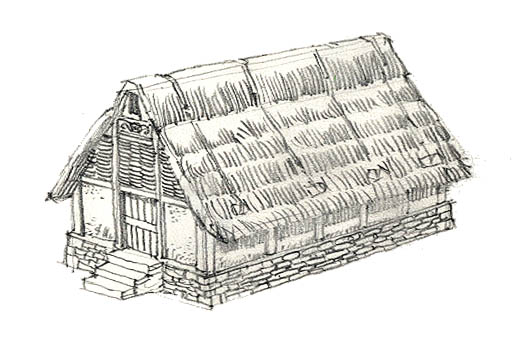
Housing: This one, if possible.
Culture: They make clay figures to represent their ancestors or nature spirits. The Ongin have different musical instruments such as flutes, harp and drums. They also use jewellery and make use of body paint
Other Stuff: Rudimentary agriculture, fermentation, linen clothing, backstrap loom, pile-driving, pile driving and doomed ovens.

Fishing:

Tools: Net (and netting), fishing spear, fish trap and paddles.
Other Stuff: Long boats and canoes.

Edit: As I apparently can add 5 more things to the list of starting techs I choose shortbow, selective breeding, pickaxe, insulation and carpentry. And I learn foundation-building and masonry from the Ashad-Naram.


r/DawnPowers • • Jun 11 '23

Lore HIU Classics: Final Assessment

1 Upvotes

HIU Classics: Final Assessment.
The following is a passage spoken by two traders from the ancient city of Bæn. It has been written in the Latin script using the "Choof" system.
Your questions will be on the content of the passage.

Tfwaik: Moagj Djyuag. Chaicz tfsriidj bzeubdaid kyiabs priif t'riit tfwoodz peazun noapun, Fustaid tseut scht'uapz kyiabs puj sringun. Fustaid xwoats gyeush t'æbdishp mweiptaid tfsoon, xwoats gyeush ngiinashk t'wong muzaid tfsoon. Teachaid fustaid bwiim traig ngweangan?

Djyuag: Vrubs dvich tfsoon, Tfwaik. Myoasch t'riit fustaid mukj fwiinuang bzimaungks. Tfsriidj chaicz mwafsch tfsoonun, vrubs t'riit fustaid pyim mwaung dvyeit nguamun czreamuangks. Fwiin dzneagj, fustucz dvyeabd gyeush psrij tfyead'ajmaid tfyuag schrifsujt scht'uapz scht'yeipz puj tfsoonuangks psrud'aungks. Tfyuag t'riit ziat' ngrot tfwaigj t'æbduvy fustaid peazuuk. Dvzrook prafschuangks.

Tfwaik: Schust dvzrook teibs? Vrubs miisuang fustucz næbs psrud'askj.

Djyuag: Fruadz fustaid xeip mrotiaths. Fustaid bzifsch czreamiis.

Tfwaik: Dyæt'. Scht'yeipz tsrikj dvich tfsoon, tfsriidj fustaid ksjipz vyudz ngoosj. Fustaid kreupt mrot, Djyuag. Tfiid mwuungaid znunuang t'riit mobs ngweipt, czuadhaid scht'yaungakt mobsuang myuat' meim tfyæniik.

Djyuag: Vrubs dvich tfsoon, Tfwaik. Fustaid vræbseichv mrotiv. Schustucz czuadhaid teikj xeip, czuadhaid myiam tsiidz tfsuudz xeipuvy, schid tfyuaguang xeipun. Czuadhaid boobs t'æbdujtiis.

Tfwaik: Boobs t'æbduangks? Heahæh. Fustucz pyiicz znuptaid gyuubs briing tsiidz dvzrook t'aebdiis.

Djyuag: Fustaid fwiik t'riit fustucz kyuuj. Fustaid ngwipuang bzrigj tfyeubd, proaths nipz traig tfsoonir. Fustaid tsroochuang sroam dvaipzir. Fustaid xeip-dzniimiv, fustaid tfwaigj pujaid japt dweatir. Teachaid fustaid ziat' ngiinashk tsraenajmaid reun t'wong muz beamir.

Tfwaik: Fustucz fwiik, t'riit fustucz kyuuj.


r/DawnPowers • • Feb 13 '16

Exploration North, Into the Sands

1 Upvotes

It was common knowledge that a desert was located to the north of Hanai Daram and Maboa, but besides that the Murtavira had an outpost in its far northern edges, nothing was known about these lands.

Xan Aren Hatang had been looking to expand his borders, and after the failed attampt at colonizing the islands discovered by his mother he sought to exploit resources closer to home.

Aren gathered a group of twenty men. Seven of them skilled in archery, seven skilled with the spear. The six others were two miners, two farmers and two herbalists. They would be protected by the others while looking for edible or otherwise useful plants, fertile lands or even possible mining locations.

The group had enough water with them to last up to five days, but their food would only last two, three if they rationed. This meant that they would have to hunt. Other than that they carried weapons, basic tools and knives.

They would leave from Maboa and continue along the foothills without going into the desert itself. If they couldn't continue through the hills, the group would go into the desert, but never more than half a day walking away from water.


[Map of exploration.]


r/DawnPowers • • Dec 15 '15

Research The Reach of Ura’ak [3250 BCE]

1 Upvotes

While the city of Ura’ak was rapidly gaining ground as a military power in Ashad-Ashru, its ability to assert its status as the cultural center of its sphere of influence was lagging behind by comparison. Sharush, the Ba’al Ura’ak, was well aware of this; his predecessor Daresh, conqueror of much of Eastern Ashad-Ashru, had used force, intimidation, and offers of protection to assure Ura’ak’s dominance in the region without considering how one city might successfully control or influence so many other settlements. In Sharush's view, the answer was to be found in the temples of Ba’al Adad.

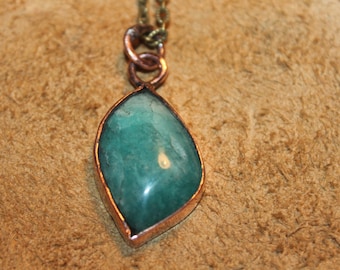
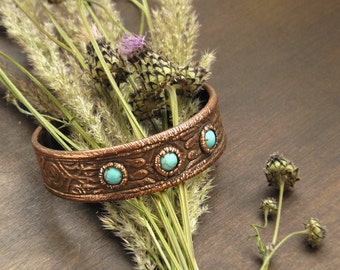
Partly because Ura’ak’s variety of Ashad religion venerated the Lord of the Sky far above all other deities, its priests made a point of actively suppressing the cults of other gods--and, in the process, taking valuable goods from these shrines and keeping said goods for themselves. Most prominent among these ill-gotten treasures were the pieces of damushu-Ninhur [native copper] enshrined in sanctuaries of Ninhur of the Earth. After priests of Adad accumulated significant stores of damushu-Ninhur, these priests sought to “openly express their piety and their vigilance against worship of lesser deities” [read: flaunt their wealth of copper]. They went to the lead-smiths and other artisans of Ura’ak; these craftsmen initially used their hammers to work their damushu-Ninhur into minimalistic shapes, but once they thought to put it in their kilns as they did with lead, they found they were able to heat the copper enough to make the more malleable. With this practice of copper annealing, the metalworkers of Ura’ak became able to craft copper jewelry of more intricate designs. It soon became common for the city’s priests to wear copper amulets and pendants, and other jewelry featuring sky-colored stones, simultaneously demonstrating their devotion to Adad and their assertion of authority over the lesser cults of Ninhur.

Example 1, Example 2, and Example 3


Meanwhile, two more practical developments came about to suit the purposes of priests, traders, and warriors who traveled to and from Ura’ak. As abaalu [cities] were able to support growing numbers of episu [specialized artisans], it became common for people from all walks of life to travel to the nearest abaalu in order to trade produce and meat for higher-quality tools, lead sling bullets, and luxury goods. Over time, enough travelers found hilltops and other elevated places to be safer than paths through forests or valleys, the latter hosting many more hiding points for ruffians; frequent foot traffic, combined with the already shallow soil on hilltops and crests, resulted in the development of ridgeways, natural trails that were easy to find and easy to drag sleds along.

Speaking of sleds, these increases in trade and travel consequently increased demand for useful pack animals. While male balu [cattle] generally proved useful for this purpose, their more immediately important uses for meat and livestock-breeding meant that relatively few were readily available for transporting goods. Seeking options other than piling increasing amounts of luggage onto the backs of wardu [slaves], Ashad farmers sought another animal that would be comparable to pack-bulls for such tasks. Wild akanu [donkeys], once regarded by balu-herders as little more than a source of competition for pastureland, became the next viable option. The beasts were already somewhat accustomed to humans (generally the balu-herders), and the Ashad have already tamed much deadlier animals before anyway. As a matter of natural cause and effect, donkey domestication rapidly became prevalent among the larger towns and cities of Ashad-Ashru.


r/DawnPowers • • Dec 28 '15

RP-Conflict The War for Ashad-Ashru [Western Front]

2 Upvotes

[Introduction]
[Map]

Somewhere around the time the Ongin commence their campaign in the east, the Radeti-Ashad forces are making final preparations outside the city of Eshun. Altogether, nearly one thousand men march eastward toward Ura'aq. It is impossible for an army of this size to move from one Ashad city to another without the notice of some villagers or travelers along the way, but the force has to decide whether to invest valuable time in subduing or gaining the loyalty of other Ashad settlements or march as directly for Ura'aq as possible, potentially catching the forces of Ura'aq relatively unprepared while making any retreat from the City of Smoke and Fire significantly more dangerous.

Emedaraq consults with his own advisors, mainly his own friends and high-status men of Eshun, along with the leaders of the Radeti warbands.


r/DawnPowers • • Jun 17 '23

State-Formation XyumgrinPosting™

2 Upvotes

Djobd, a former mercenary now turned loyal guard of Xyumvrin, found himself in the spacious chamber of D'uuth, his face creased with concern. D'uuth, now the de facto ruler of Xyumvrin in his grandmother T'eiv's old age, listened attentively, the dim torchlight casting a warm glow on the age-old bronze decor hanging from the cold chamber walls.

"Duuth," Djobd began, his voice heavy with years of experience. "Our state stands strong, especially now the Talmarakh are long dust, but the Sashk continue to loom over us. They control the Bay of Yeupfouts. Our boats... they're no match."

D'uuth leaned back against the wall, his brow furrowing at Djobd's words. "Indeed, Djobd. Our boats cannot hope to challenge the Sashk vessels in the open seas."

Djobd frowned, "That certainly seems to bring a peasant's duck to shit, doesn't it? But remember, D'uuth, we rose from the ashes of the Talmarakh's collapse, Sashk can fall, we are the evidence to prove that. We need to make our mark, to show the Sashk that we won't bow down easily to the new small-time raiders who ravage our lands."

"I remember, Djobd," D'uuth said, his voice echoing with unspoken memories. "I remember the fear and uncertainty. I remember my grandmother, Marvupt T'eiv, gathering us all, her voice clear and steady as she spoke about our shared plight. We stood together, formed Xyumvrin itself, and look how far we've come."

Djobd nodded in agreement. "True. Her legacy is burned in our hearts. But even T'eiv must know that the Sashk pose a substantial threat. Their control over the seas limits our trade; We can't let this continue."

"Agreed," D'uuth replied, his gaze turning steely. "We have to find a way to counter the Sashk, to assert our presence in the Bay of Yeupfouts. Our boats may not match theirs in terms of strength, but we have other advantages."

"The land," barked back Djobd. "We have armour; we have swords. On land they have a duck's shit. They can only fight at sea."

D'uuth cracked a rare smile at Djobd's remark. "Indeed, our strength lies in the land. The sea may belong to the Sashk, but the land is ours. Our soil, our labour, our toil has given us something they do not have - the ability to manufacture and maintain our own weapons, our own armor. They're nothing more than marauders, scavengers feeding off the spoils of others."

"True," Djobd echoed. "We have the ability to arm ourselves, but how do we deal with their naval superiority? How can we break their stranglehold over the Bay?"

D'uuth stared into the flickering flame of the torch, lost in thought. He considered the ways to turn their situation to their advantage. "We use our strengths, Djobd. They may control the sea, but even when they are uninvited, they are uneasy on land. We have the advantage of knowing the lay of our land, the vantage points, how to fight. Our best bet is to prepare for a raid on our shores, and we'll ensure that any Sashk who chooses to raid our city will find it being their last visit."

"That I'm sure it will be" responded Djobd.

Map of where Xyumvrin is

NOTE: I got the name wrong - it should be Xyumvrin, not Xyumgrin


r/DawnPowers • • Mar 02 '16

Diplomacy More Heathens?

2 Upvotes

The Bendez League now held eyes and ears in both Tek nations. They had slowly tried to mend the animosity, allowing them almost entire autonomy, but resentment still held true. Regardless, the Murtaviran generals and Bendez League still held to their desire to shape the world around them to be more like them. As such, they had heard of other neighbors of the Tek, and set out to meet them.

Kazul, much like his father, set out with an armored camel guard to meet these new folk. Hopefully there would not have to be a second war, but that was entirely up to them.


[A heavily armored guard of 100 warriors arrives near your borders. 50 camels, 50 foot soldiers. All equipped with advanced Bronze weaponry and armor. They do not come with bad intentions, however their discipline and organization might come off like its aggressive.]


r/DawnPowers • • Aug 26 '18

Expansion Eidaci the Builder (3200-3300)

3 Upvotes

3289

This would be his last winter, Gengiona Eidaci knew that much. He had caught a cold not a white moon ago, and everything had gone downhill since. He smiled. At least he had been a good King.

Before Father died, a lifetime ago, he had been named the heir, and distinguished himself in the conquest of the Lower Noutezu. However, he knew that was not enough, so when the time came for him to inherit the royal saddle he organised an expedition to the western borderlands. The practical goal was putting some land between the border and the capital to prevent incursions from reaching it, but the underlying reason was also a propaganda campaign. The Miecans followed power, and if Gengiona was to prove he was worthy of following Onera’s tail, he had to lead a grand conquest of his own.

The campaign was a success, and by 3231 Gengiona returned to the great Nadonebu in triumph. From there onwards, he stopped his expansionism and put all his efforts in securing the legacy he had built with his Father endured. He ordered the laying out of roads to connect his growing empire, the improvement of mills and irrigation, and had great stone walls surround every large border settlement. He built fountains and squares for the people of his cities, and tracks for the herders to move between winter and summer pastures.

He still faces the occasional rebellion or foreign incursion, but all were repelled with success. Then, in 3263, he declared Mera Uroni, his second oldest son, as his heir. This angered his firstborn, the popular Mera Eidaci, who rallied his supporters and almost succeeded in unseating his father, achieving early victories in the campaign. Yet, in the end, he died of illness besieging the walls of Angaebu1.

Despite his rebellion, Gengiona had loved Eidaci, for he loved all his children, and the end of that war saw him lose much of his strength, which would only wither until his final days. This allowed Uroni to take the lead and ensure the Miecans would be loyal to him after his Father’s passing.

And so Gengiona lingered until the winter of 3289, where he was laying in his great longhouse palace, surrounded by his heir and his remaining family. Before the turn of the century, Uroni would go on to conquer many of the eastern steppe tribes, but that was something Gengiona would not live to see. He had lived a long life, but now it was time to dismount and pass the torch to the next generation.

1The original Angaebu was the capital of the Anginite Dynasty


r/DawnPowers • • May 01 '16

Research Radeti Research 1000-900BCE

2 Upvotes

Current Techs

Basically RP is behind but TL;DR of the rhyme/reason behind these is enforced people movement, agriculture, central hegemony and military reform.

  • Anvils

  • Welding

  • Chains

  • Census

  • Olive cultivation

  • Garlic cultivation

  • Mouldboard plough

  • Single-tube seed drill

  • Single-bitted battleaxe

  • Pelte shield


r/DawnPowers • • Feb 22 '16

Meta Reminder: Update your wiki!

2 Upvotes

Just a friendly reminder to update your wikis, especially techs and known nations. Also don't forget your population spreadsheets, and make sure that the graph is useing the right one.


r/DawnPowers • • Feb 02 '16

Expansion Kassadinian Expansion

2 Upvotes

The Ayatollah after years of preparation is ready to claim more land for the country of Kassadinia. The province to their south has been claimed. Kassadinia will defend it to the last drop of blood.

Map


r/DawnPowers • • Jan 22 '16

RP-Conflict Dominating the local tribes: The Bennaria

2 Upvotes

Suparia will become a known around the world as a force to be reckoned with. The first order of business was to consolidate to local tribes and force them to bend the knee to the Suparians.

As it stands, Suparian influence is limited to the immediate area surrounding the village. The rest of the territory is controlled by a series of disjointed tribes. Fortunately, the Suparians are the largest tribe in the area and the most well armed. Taking control of the tribes will expand Suparian influence and culture as well as provide much needed resources and manpower.

Chief Dai Arctura was the brainchild behind the campaign and will lead the men into battle.

500 men will take part in the subjugation. Most of which are armed with spears and shields, the rest use primitive shortbows.

The Bennaria

The Bennaria are the closest of the tribes to the Suparia. Nearly one thousand people strong, they often traded herbal remedies for rice with the Suparians. Known for their archers, they have a range advantage over the Suparian warriors.

It was mid-morning when the Suparian envoy arrived at the village with the ultimatum. Either bend the knee and allow the Suparians to take control, or control will be taken by force.

The Bennarian chief laughed at the threat. The idea of conquest was unheard of. This would be his last mistake.

Within the day, the Suparian warriors had surrounded the village, completely unnoticed in the jungle.

Night fell and the warriors were upon the village. With a cry of "Attack" the men rushed from the jungle and started killing every man in sight.

Within the hour, the enemy chief's head was on a pike and and the Bennaria were under Suparian control.


r/DawnPowers • • Mar 14 '16

Research Radeti Research 1400BCE

2 Upvotes

Edit: Current techs.

[In the future relative to where my RP is]

In the aftermath of what would come to be known as Radet-Ashru's Second Liberation, the Radeti quickly refostered contact with those refugees who had made enclaves in neighbouring nations.

Among the first adoptions was Urban Planning, which seemed widespread. As the city-states quickly refostered their old rivals as their common enemy was defeated, disaffected Radeti whose philosophy was one of integration, cooperation and nation building set out in an effort to discover the Land of Horses, the source of the Ashad-Ongin alliance's domination. There they would construct their own city with forethought and preplanning, away from petty rivalries. Those with less wanderlust or less confidence in finding the rumoured but unconfirmed land instead founded the city of Unone in the oft-disputed lands between Santu and Konome.

In addition, to repair ships during the voyage, the practice of tar collection was adopted.

To further aid this effort the Unone borrowed from the Ongin cartography. Although unable to obtain any maps indicating the location of the Land Of Horses (for they were guarded jealously, if they even existed), conceptualization of distances was nonetheless invaluable for prospective travel. So too was the practice of Raven Capture-And-Release employed primarily by the Ongin and Daal-Tet enclaves, utilised to find land more easily on journeys between the two groups.

Although the Radeti had previously studied botany, anatomy and even utilised a small number of plants medicinally, they had no formalised process to test other plants for this purpose. Borrowing Ongin understanding, this was rectified with the formal adoption of herbalism.

With order reestablished, it was essential that Radet-Ashru recommence trade with foreign powers to ensure that dwindling resources once most flowed into the land. With Radeti glasswork culminating in enameling just a few months after their freedom from Hunadi rule, they hoped their glass arts would be in high demand. To accommodate hopes for trade expansion, the Radeti began to breed their own donkeys rather than import them from Ashad-Ashru.

Sluice gates meanwhile found employ as a means to better control water into and out of fields, particularly during the annual floods.

With more Radeti living near to the coast and making a living off the sea than previously, more advanced fishing methods were employed, replacing ancient nets with the seine.


r/DawnPowers • • Jan 14 '16

Research Are we still sailing? [2400BCE]

2 Upvotes

1. Current Navigation:
A thing the Ongin learnt from their expedition up north was, besides celestial navigation, that currents could take a boat out of its route. It wasn't long before they figured out how to use these currents to their advantage.

2. Decking:
Another thing they needed to improve their boats was decks, as the river campaign had not yet been forgotten after 600 years (although now it survives only in the form of legends) and trade with the Tao-Lei made it necessary for Ongin boats to be able to carry more goods.

3. Boat Bench:
Sailing further also meant having to row more, and rowing was an extremely tiring activity, so benches were added to the boats for oarsmen to sit there and be able to row for longer amounts of time.

4-5. Yoke and Ard Plough:
Looking for a way in which to maximise donkey's and bull's carrying potential the Ongin managed to create yokes and, a bit later, ard ploughs, turning farming into an easier job.

6. Copper Jewellery:
The invention of copper weaponry and contact with neighbouring cultures, plus the natural beauty of the red metal, made the Ongin start creating decorative objects out of copper that would now coexist with previous forms of jewellery.

Stolen Techs:

Cleat:
Trade with the Tao-Lei made the Ongin notice that cleats were extremely useful and the design was so simple that they quickly incorporated them in their own boats.

Currency:
Again, the Tao-Lei forced the Ongin to develop a currency of their own that would allow them to trade with them. To this end, a series of stones [I don't know which ones can be found in my area] were turned into balls and copper melted in round shapes that could be exchanged for goods in the south. At first the system was limited to international trade, but it wasn't long before it made its way into commercial exchanges among the Ongin themselves.

True Axe:
The need of more boats meant that more trees had to be cut. Knowing that the Ashadians had some sort of axe that was extremely used for that the Ongin copied their design and developed their own true axes.


r/DawnPowers • • Dec 18 '15

Event The Great Ziggurat of Lluna | The Three Great Ziggurats - Pt.1

3 Upvotes

Centuries ago, the High Shamans of the Moon, the Sun, and the Earth received a mandate from their respective trinities. They and their followers were to build large temples to worship and serve in. Thus the High Shamans went about working with the High Chieftain of the Tenebrae and the Elder of Telebra to locate good areas and build mighty foundations.

Many years later, the Tenebrae finally had the means to build upon the large foundations. They had amassed great knowledge in the art of masonry and building. They had invented useful tools such as the sled to move the large blocks that would make up their temple. And also smaller tools such as the chisel which would carve and smooth up the bricks.

Great Ziggurat of Lluna

The construction of the first temple happened in Telebra. The foundation that was built there was located on the largest island apart of a mini archipelago at the mouth of the river delta. The people of Telebra mainly worshiped Lluna, the dirty of the Moon and of the waters. They were also the most plentiful in Tenebrae Society so there were many willing to help construct the Temple.

They began digging up large amounts of material from outside the large town and began to heat it up into bricks. Once done, they chiseled at them before moving them towards the construction site on sleds. It rained often so making bricks and chiseling them was tedious. However, thanks to the amount of manpower, they were able to make up for it and build until the temple resembled a large Pyramid.

Despite having great joy at their work, they continued to build upon the step pyramid to make a great Ziggurat on top of it. The Manpower began building many secret passages, large stairs, and other fascinating architectural wonders. They made compartments for the Shamans to live in, worship, sacrifice, and many other things. There were even some parts of the Ziggurat that all workers did not know about. In the end, the Ziggurat of Lluna took about six decades to be complete. It measured about 150 M in length, 120 M in width, and 54 M in height. It also had several smaller Ziggurats besides it, each having the measurements of 120 M in length, 90 in width, and 30 M in height.

Great Ziggurat of Lluna

Mood Music


r/DawnPowers • • Jun 15 '16

Event Unlocking the secrets of Iron

3 Upvotes

On their ventures into the Murtaviran lands, the Arathee had encountered a group of Tekatans who gave them some knowledge as to a metal known as Iron. The metal had been known about, but few pieces had made it into Arath, much less any of the secrets required to smelt it.

Iron had been wide spread in Murtavira, and so the basic instruction of the Tekata was augmented by studying the designs of Murtaviran forges. After the Army returned, one of the finest smiths in Arath was commissioned to forge the first piece of Iron.

What he made was a mass of slag.

Several attempts were made, experimenting with different variables, trying to make something usable out of the metal. Despite eventually getting to the point where a mass could be hammered into shape, a knife made out of tin would have been more effective.

Frustrated with the slow rate of progress, a seeker was sent with all the knowledge that they had accumulated so far to the Vraichem City of Smiths. There, is was hoped that swifter progress could be made.


r/DawnPowers • • Mar 13 '16

Event The First Kingdom of Daal-Tet

3 Upvotes

Elder Menes had always been the trouble-maker.

The land rush prompted by the discovery of Enshri-Tet did not go totally smoothly. The chaos of thousands of people leaving the cities had a measurable impact on daily life. Many land-related disputes ended in savage duels. The lack of organization has left many settlements hap-hazard and leaderless. Menes abhored this turn of events, and blamed the weak council for allowing it to happen.

Though he was the youngest of the elders, Menes managed to sway half of the council with his impassioned speeches. He called for sweeping reforms, the creation of a centralized government, a tax collection system, and an organized military.

With only half of the elders on his side, he could not put his ideas into action. Menes became frustrated, and gathered some of his followers. In the night, they went to the house of one of the dissenting elders, and set it ablaze. Frightened, some of the elders came to Menes' side. He now had the support he needed to put himself into power.

On the winter solstice, Menes proclaimed the First Kingdom of Daal-Tet, with himself as absolute ruler, the Pharaoh. Under him were three Viziers, one for each region of the kingdom. Each Vizier would appoint Nomarks to rule over cities and the areas surrounding them.

Pharaoh Menes I began implementing sweeping changes, creating the basis of a unified military structure, based on the Radeti and Arathee wars. A certain amount of harvest were to be collected for government use, a priest structure was established to caretake shrines and temples to the gods, and an official team of scribes was created.

There were objections to this new change, and some force was necessary to keep people in line. After an initial period of unease, the new government was mostly accepted by the general populace. The main issues came with some local elders, which were deposed due to their non-compliance.

The Wadjet was adopted as the official symbol of the Pharaoh, and thus Daal-Tet as a whole.


r/DawnPowers • • May 08 '16

Research The Toils and Spoils of War [900 BCE]

3 Upvotes

As much as the Hashas-Naram claimed they were involving themselves in the Depelli War for the sake of stabilizing Onginia, they sure were doing a lot of looting and plundering. As in any conflict such as this one, the Hashas soldiers were sure to meet their own interests as well. As the war progressed in ways the Ongin would hardly be able to anticipate [more posts to come; /u/presidentenfuncio and I are currently working on the series], the Hashas were able to press Ongin of various walks of life into their service. With this, Hashas botanists learned the art of grafting from their Ongin contemporaries.

Also during the course of the war, the Hashas army fought alongside rebel Ongin cavalry, and in doing so were exposed to the latter’s practices. Though the Hashas manly used chariots, and only a few actually knew how to ride horses, mounted messengers and scouts were becoming more common in the post-Ashad nation. With this, the Hashas readily adopted the Ongin use of cloth saddles as well--an innovation they barely batted an eye at for the time being, as Hashas gentry would hardly stoop to the level of riding directly on the smelly beasts when they could instead ride prestigiously in chariots.

Naturally, the war invited plenty of innovation on the parts of the Hashas as well; it wasn’t all theft and coercion. Facing at times daunting fortifications in Onginia (built using principles of defensive architecture borrowed from the Ashad/Hashas, naturally), General Zamaher Mar-Ilahiim devised appropriately daunting weaponry to assail these places. Drawing inspiration from shadufs and other crane-like devices, as well as the staff-slings that saw use in earlier Ashad wars, he ordered his siege engineers to create crane-sling combinations that would launch heavier projectiles much farther than before. Employing the power of three men with a three-pulley crane, the manaqelum1 , experimental as it was, proved capable of striking terror into soldiers atop even the best Ongin fortifications.

In the long run, Zamaher’s battlefield innovations, along with a perceived need to improve the accuracy of his weapons, catalyzed the Hashas study of trigonometry. While the Hashas and their ancestors had long used the ashlu [groma] to survey land for road-building and other construction projects, and geometry had been known to their mathematicians since ancient days, it was in the aftermath of this conflict that geometers’ studies received truly generous support at the state level. As Hashas Sharu were intent on building a legacy for their fledgling culture, more sophisticated studies of angles and triangulation soon saw use in the construction of monuments and estates as well.

Developed with less fanfare than the manaqelum but important nonetheless, scale collar-guards [see this picture] were an important Hashas martial innovation as a natural response to, well, one of their previous martial innovations. While the tarahum helmet’s conical design caused deadly blades to glance off of one’s head rather than land with great force, those weapons that glanced off at less-an-optimal angles tended to find their ways into Hashas shoulders and collarbones, merely converting a certainly lethal blow into a possibly lethal one. As the Hashas didn’t especially want to revert to the days of having their heads knocked in by vertical blows, they thought it more effective to use the existing design of scale armor to guard their collars and shoulders, causing falling weapons to glance off these as well and with much less harm.

If one thought that the changes brought about in Nawaar-Ashru by its participation in the Depelli War were significant, the changes that would follow in Onginia itself would be downright shocking.


1 No, I didn’t deliberately borrow this from the name of a real-life siege engine, nor is this weapon really comparable to that one. Manaqum is the Hashas word for sling, and el/elu appended to the end means tall or of high stature.


Research Summary:

Originals: manaqelum, trigonometry, scale collar-guards
Diffused: grafting, cloth saddles


r/DawnPowers • • Feb 18 '16

RP-Conflict [1] Dissent within the court - 1700 BCE

3 Upvotes

Map of the conflict. Red are pro-Diin cities.

For years people had been unhappy with the rule of the Rangatira, his rule had become increasingly savage with the growth of the nation. However, the people were not powerless, and would not stand for their oppression. They looked to their neighbours, the Aquitinians and the Tao-Lei for inspiration, meetings were held within the city of Epo-Kaan discussing the future of the nation. They knew that they had to act, for the good of the people. Eventually, after sleepless nights they came to an agreement. The coming years would be known as the silent war. The Diin, as they were known spread their message throughout Epo-Kaan, “Down with the Rangatira” they would say, “Up with the people”. This phrase became common throughout the city in the coming months. It was clear that the powder keg of rebellion had been set, now all they needed was a spark. Luckily that spark came relatively quickly from the newly formed Diin, in the form of an assassination. In reality it was less of an assassination and more of a bloody massacre. The Ake was a sympathiser to the Diin cause and had been giving them aid for years. He would be willing to help their cause and finally cast of the shackles of oppression. On the day of harvest, the Ake met with his council to discuss the matters of the city, however, one notable change was the lack of honour guard. Not that this mattered to the council, they had grown fat and lazy off the work of others and to them, these mere guard did not warrant their attention. This would ultimately be their downfall. Sometime into the meeting several men equipped with strange looking blades and curiously enough, shields. An astute observer would note that these crafts are from the Ongin, not that it would matter. The figures stormed in and cut the council down without hesitation. Swiftly after, the new Diin made a speech to the people of Epo-Kaan, they spoke of the Rangatira’s greed and of injustice and oppression. They urged the populace to cast off their shackles and fight for their freedom. They sent runners to the capital, and to every other major city, urging them to do the same. Either way, a new fledgling nation had emerged with minimal bloodshed. Over the coming months similar coups happened within the west, although, not unsurprisingly, the west remained strongly loyalist. Strangely enough it almost appeared as if the loyalists had not even acknowledged the west’s rebellion. Certainly no counter offensive had happened save for the occasional raid on a village. Soon, cities and towns in the west started to fly flags of linen over the city walls. Linen had always been a rare commodity for the nation, the only way to acquire it was trade with the Ongin. So flags made out of it boasted the Diin's wealth.

Flag here


r/DawnPowers • • Oct 29 '16

Diplomacy An Offer You Can't Refuse

3 Upvotes

Epga looked more and more the gleaming capital of the Arrashi as the years passed. All salt, gold and western goods found their way to its bazaars, a supply that attracted Ixandu arrived there, however, his gaze couldn't be pulled from the west.

Hearing of the Theopolitan advance into Arrashi lands, he quickly sent out diplomats to sort out the finer details and assess the situation for hostilities. Those unarmoured, unarmed men would arrive at the Theopolitan Capital in 111BC, eager to discuss recent occurrences.


r/DawnPowers • • Apr 26 '16

Lore Tychocracy

3 Upvotes

What are the chances? II

Tychocracy; Chance determined governmental system.

Smallpox doesn't discriminate. Rich, poor, middle class, dying affects everyone equally. Its first victims were the richest of all the Tekata, their trade leaders, the Izalo1 .

The various Izalo of the Tekata had assembled for Kzaj's funeral. Many wished him personal goodbyes whilst others comforted the bereaved in this perfect breeding ground of disease. Very few of the attendees survived the month.

The Kzara2 were faced with a shortage of leaders in Tekatan towns, and unless they wanted to oversee an anarchist state they would have to take drastic steps in strange directions. For the twelve years of the pandemic, Kzara priests ruled the Tekata.

A curious thing, to be ruled by a state religion. Many Tekata thought little of the cities outside their own and as such many expected them to hate the idea of being ruled by strangers from other towns.

However, they shared two things with the rest of the Tekata; a common tongue and a common Goddess, which the Kzara used to their advantage. They would rule through religion, which all Tekata agreed was better than no rule at all.

The worst of the days of pox were over; men and women began to return to their pre-disease lives, fishing and farming with little more than the painful memories and the scars on their skin. The Kzara were left to decide the fate of the country for better or worse.

Kzara had integrity. They truly believed what they preached and after the success of the T'zara3 most of the Tekata did too. To most people the Kzara were heroes, stemmers of the tides of anarchy. The post-pox years were some of the most stable in decades, with the Kzara dictators maintaining control, but of all the people upset by the state of affairs the Kzara were the most. They hadn't been elected by Zara. They were frauds in their own eyes.

Each Tekatan town of city has four 'families' which each citizen is a part of; Luthua, Rajeti, Thoza and Ata (in order of increasing importance), which are responsible for paying taxes and the upkeep of the Kzara. It was only fair that they get to vote on their leaders.

Kluix constructed a voting mechanism that would satisfy the people's traditions AND Zara. It would work as follows (sorry, it's a little dry...)

  • Family Drowning

'Breath-holding competition within family, winner is familial candidate.'

  • Candidates collected

'Candidates herded up, removed from families.'

  • Voting

'Families decide on who they're voting for. 1st vote gets 3 tokens, 2nd gets 2 tokens, 3rd gets 1 token.'

  • Votes collected

'Kzara collects tokens anonymously and throws them into a geared shuffling machine.'

  • Izalo decided

'All families join the ritual as the Izalo is selected by Zara. Wine drinking, feasting and celebration.

The losing candidates are returned home whilst the winners are removed from their families to perform as Izalo. They are taught to read and write if they cannot, they are taught the history of the Tekata. They are expected to attend solitary Lala4 lessons, become an Utikya5 champion. Whilst they learn the ropes the Kzara keeps the cities stable. All this investment was worth it; Izalo serve for life.

Y'know what? It worked pretty well. People respected Zara's will, and the votes of families were kept secret enough that no one questioned whose name was pulled out the tumbler. It really was the first and only TYCHOCRACY.


1 Tekatan trade leaders, one for each city.

2 Church of Zara, worshippers of chance.

3 'Bad Luck', instructional book on how to dodge smallpox.

4 Tekatan martial art.

5 Tekatan board game.

Edit: dieing for dying


r/DawnPowers • • Oct 30 '16

Event The Exodus

4 Upvotes

The beginning of the new year had come, and with it, a great sense of anticipation. The Viziers all across the Tetseg Aous had been making preparations for a full year for this migration. Citizens had been told to cull their weakest animals to salt them for traveling food, crops had been grown and dried, saddles made and repaired, and a stockpile of everything that would be needed had been set aside. In addition, most of the city states celebrated the final month of the old year with a return to nomadic ways, punctuated with a destruction of all they had wrought in the desert. In Maryam, the great date plantations were burnt to the ground, the ashes scattered to the winds. In Kanatun, the stables were broken apart, with the best horses being given to family, and the weakest killed, so that no one would have the secrets of their blood. In Maselhun, the kilns and smelters were smashed to pieces. Most of the iron had been worked already, but some couldn’t be taken with them. When the smelters burned, they burned hot and high and hard, hotter than any furnace to date. In order to stop the fires raging too hard, they put the fires out with water and sand. What they found in the rubble was something that none of them expected; the leftover iron had become something entirely different when cooled quickly by water. This method is something that was noted by those leaving, but they couldn’t use it very effectively - the monks noted the shape of the iron and the method by which it was cooled, hoping that after they found their new home, this process could be employed more effectively.

All the houses, tiles, and gardens were destroyed in a unified act of frantic joy and deep hatred, mixed in the way of bittersweet things. Many were sad to be leaving, but many more were eager, and there was a great up-swelling and revitalization of enthusiasm for the old way of life. Many who had never spent any time out in the wilds were scared but eager, eager to test themselves on the march. All that could be taken was taken, on sleds and horses and camels and backpacks. All that couldn’t be taken was destroyed, leaving nothing behind for the demons who would no doubt move in. The final two weeks were dedicated to the destruction of al-Baqma and Muqqadas A’yun. Thousands of people reveled in the destruction, drunk on abundant palm wine and danger.

There were two city-states that refused the call of the Caliph to leave the Tetseg Aous.The Viziers of Bidzak and Cuduc would not destroy their buildings, or encourage their people to leave. In fact, they told the people that the Caliph was a heretic, abandoning the holy desert that was given to them by Q’ae. But the locations of these cities made the real reason clear enough; both cities were very close to the Ehrteht border, and many of the Missae there had intermingled with the infidels, some going to far as to espouse them. They were wealthy cities, despite the harsh desert, that much was true, but it was on the fat of the infidels, and that could not be permitted. Both sides believed that each had abandoned the true faith; those who remained knew the Tetseg Aous to be the holy desert, while those who went on knew that Q’ae was the Sender of Men and that He could send His people again, and they were obligated to follow wherever He led them.

And so it was on the first day of the fifteenth year of the reign of Caliph Khonsu al-Marju and Gebirah Liena al-Indri that the greatest procession of the Na’Missae began. They began counting this year as a new year: year 1 WE, at the head of the column rode a hundred priests and a hundren Sayyadun, dressed as if for glory and battle. The soldiers wore helmets with long curling horns which were wrapped in red silk that matched their bloodred shirts peeking out from underneath their armour. In the center of the column rode the Caliph and Neshika, along with the Sheikh and Gebirah, guarded carefully by the newest military division, created from the exiled Aria who had sworn to protect the royal family, the Seraphia. It had been decided that these resplendent people had been given to them by Q’ae as angelic protectors. Thus, over time, their armour has come to be all in white, with wings attached, made with a wooden frame and the pale white-grey feathers of local falcons. They all rode on white mounts with specially bleached leather.

All around them rode people, people, people. Men, women, children, horses, and camels. Ownership one one’s own mount is ubiquitous, even children rode smaller horses or donkeys if they had nothing else. Only the poorest walked, and then most covered their shame by assisting with the baggage trains that stretched as far as the eye could see. They left from the ruins of Muqqadas A’yun, heading south. The singing has never been louder, nor has it ever left the sands of the Tetseg Aous. During the trip it was determined that there needed to be a way for messages to travel back and forth along the column without riders constantly rushing back and forth. A system of banners was employed; on a tall piece of wood, a cloth would hang with symbols drawn on it that meant various things: stop for rest, careful, speed up, and so forth. These started out very simple, but quickly grew more complex as the journey progressed.

—————

After many months of travel, the Na’Missae found a wide and fertile river, fast and strong. They spread out along its banks, creeping southwest between the mighty river and the new sea. They saw many people along the other coast of the river, and sent over diplomats to make contact. Their few ships and few sailors followed along the coast, going slowly and carefully until they saw the beginnings of Na’Missae settlements and sacrificial fires. In a few short years, they had taken root and children grew up hearing tales of the Tetseg Aous who would die without seeing it. A bittersweet time, but the people looked ahead to a bright and bountiful future in these lands that were much kinder to them than the Tetseg.


I'm taking all of those territories as Satellite 4's, not cores yet, but I couldn't figure out how to get the lines right. Exception: the northernmost territory is a Sat 3, shared with Quentin.


r/DawnPowers • • May 26 '16

Meta My Phone Refuses To Cooperate

4 Upvotes

Ok, so this only affects Eric because he's the one I'm currently RPing the most with, but my mobile phone is doing weird stuff and I don't know if I'll be able to reply to messages on Line (if at all), so if anyone has anything that requires my immediate attention PM on reddit, as it's more likely that I'll be able to reply here.

In the meantime I'll have to fight 1v1 against my phone to read the conversations about my awesome hair, Bag's fuckboi looks and Discrete's neat Balkan charm. :'c


r/DawnPowers • • Nov 23 '15

Meta Summary of Week 4 [4500bc]

4 Upvotes

This week's summary is a bit late so let's get started right away.

This week the Crisis system was introduced and everyone is loving having their carefully crafted cultures torn apart by a cold careless chance! (Joking, we all love it)

This week we've also lost a few players, but we've gained others! Get them quick before they have time to research!

1 Urryyhun /u/ValleDaFighta

Starting of as always with the number one culture on board. The Urryyhun meant to explore the land to the east of them, but would you believe me if I said I accidently wrote west in my post? Land was explored anyway. The Urryyhun did little else this week, except responding to the Hurricane crisis, which they handled pretty well. The Urryyhun researched nothing this week! However this will be remedied this week after discussion with mods, thanks mods.

2 Radeti /u/Admortis

The people of Radeti had their own problem, large amounts of different displaced people, their response was to train their people to be more ready for battle. This lead to an early form of caste-system among the Radeti. Radeti lore posts told of the exotic Radeti word for twelve moon cycles, namely a "Yer"... Where does he come up with this stuff? The Radeti people researched Rawhide Armour and Wooden Shields, as well as Water-Collecting Tarps and the Gold (sweet sweet gold) Pan. They also wanted to research several boat techs, but were turned down.

5 Ashad-Naram /u/Pinko_Eric

The Ashad-Naram people researched granaries, axle, the pottery wheel, kilns, salt-curing, lime plaster and the counting system. Bask in the glory of this nerd. They also started taking Itaal people as wards (slaves). The Ashad-Naram also found Copper and realized that this, this was something real nice. The myth of the twelve names of Adad was told, I will not recite the names here.

6 Kassadinians /u/Dr_John_Dee

The Kassadinians researched abacus, rationing, shields, Localized calendar, and currency.

7 Tao-Lei /u/SandraSandraSandra

The Tao-Lei researched Pictograms, Catechu, Chanel Irrigation, Terracing, Back Strap Loom and Shrimp Trap.

8 Hooshmon /u/ComradeMoose

The Hooshmon researched Oracle bones, Smoking, Earthen preservation dugouts, Proto-writing, Hard stone carving and Dugout watercraft. These guys really like predicting the future by staring into bones.

10 Halvari /u/air_moose

(May I remind you we now have two players with the word moose in their username, this surely spells our doom) The Halvari came into existance! Huzzah! These peopel love coconuts and, they did a few thousand years of research but for 4500 it was the basic wooden shield, the axle, carpentry, erhu, drag nets and crop rotations.

15 Murtavira /u/chentex

The people of Murtavira researched Planks, Mortisen and Tenon, Balangay, Locus Bean Domestication, Clay Silos, Raised Ovens and Rawhide CLothes. They also saw a whale drift ashore and was thoroughly spooked. The Murtavira peopel tried to settle lumber outposts, but it ain't easy.

18 Reinttion /u/CaptainRyRy

The poeple of reinttion researched Animal Glue, Lamination, Composite bows, masonry, foundations, and pulley systems. Reinttion had it's first empire! And also it's fall. The people of Reinttion rode into combat on an ass, yo moma's ass! But no.

20 Zefarri /u/JToole__

The Zefarri came into existance! Let's go watch them on a Zefarri-safari! In 4500 their research was Abacus, Kilns. Granaries, Currency, Bone saws, Stone Cutting, Chisels. They had a battle soon after becoming a thing. The Zefarri were hit by the cyclone, but it was fine I guess. They then expanded.

21 Eplon /u/un-gato

The eplon came into existance!

22 Vraichïm /u/TanisHalf-Elven

The Vraichïm came into existance! In 4500 their research was Storage pits Mortisen and tenon, Reed boats, Pickaxes, Linen cloth, Shields, Double seat boats


Sorry if this week's summary has been worse than other, I feel like I missed a bunch of stuff, do fill me in on it. Been a lot going on this week, but that seems to be the case fore everyone.

I'm still very much enjoying this game, hope you also are!