r/CreationistStudents • u/stcordova • Feb 09 '19
Macro State vs. Micro State in Thermodynamics and Design Theory

1
Upvotes
r/CreationistStudents • u/stcordova • Feb 09 '19
r/CreationistStudents • u/stcordova • Nov 21 '20
My second lecture on the SFT youtube channel on Protein Probabilities:
r/CreationistStudents • u/stcordova • Jan 02 '19
The study of biochemistry for a biologist or chemist entails a foundation of a total of about 1600 hours of study (General Chemistry, Organic Chemistry, Biochemistry).
But for creationists who are non-biologists and non-chemists, the essentials can be learned in about 1% of that time, or about 16 hours.
Here is a little kid reciting the DNA alphabet and singing in 15 seconds.
You can memorize this pretty easily can't you? If you learn this, you're starting on a nice journey of learning basic biochem for Creationists (non-biologists, non-chemists).
The little kid says:
A is for Adenine
C is for Cytosine
G is for Guanine
T is for Thymine
Now I know my ABCs, next time won't you sing with me.
Repeat this several times and you won't forget. Easy! Child's play.
NOTE: Technically these are the nucleobases of DNA. We colloquially call "A", "C", "G", "T" the DNA alphabet.
r/CreationistStudents • u/stcordova • Jan 05 '19
Cells arise only from the division of existing cells.
Biochemistry: Molecular Basis of Life, 4 edition McKee and McKee, page 6
r/CreationistStudents • u/stcordova • Dec 28 '19
Supposedly the Eukaryotic cell (of which we are made) evolved from a creature that didn't have a cell nucleus.
But how can the nucleus work and not kill the cell if all these parts weren't there to begin with?
See for yourself in this 5-minute video:
r/CreationistStudents • u/stcordova • Oct 25 '23
I rebroadcast it on my channel, with permission: https://www.youtube.com/watch?v=SzRmImfjp4s
This coming Friday will be Part 2. I think Part 2 will be even better. We recorded this 10/18/23.
r/CreationistStudents • u/stcordova • Jul 27 '19
This is interesting, and something in my intuition says this could be of value to students of creation, but I don't quite know how. It does raise issues of genetic entropy as this kind of reproduction is through somatic cells, which have high incidence of mutation:
https://www.reddit.com/r/askscience/comments/ciewxz/how_does_seedless_produce_get_planted_and/
r/CreationistStudents • u/stcordova • Jan 03 '19
I'm thinking of weekly giving a 12-minute (or so) biochem lesson. After 50 weeks, that's about 600 minutes of study or 10 hours of one's life. Biochem is best learned in small pieces because there is a lot of rote memorization.
What I see in both research and debate over Creation/Evolution is that less than 1% of what one might study in formal college biochemistry foundations (General Chemistry, Organic Chemistry, Biochemistry) accounts for 99.9% of the issues in the Creation/Evolution controversy.
My goal is to teach that 1% of essentials to creationists who are willing and available to learn that 1% but who are not biologists nor chemists.
I want students Creationism who are not biologists or chemists to feel empowered.
r/CreationistStudents • u/stcordova • Nov 08 '19
r/CreationistStudents • u/stcordova • May 08 '20
I hope this quasi-debate will be instructive:
Even an athiest had these accolades for the presentation:
SpeedOfSoundOfGravity I must add. Salvador Cordova is the very best guest you have had on from your side of the tracks. He provided clear sources. He is a very pleasant and humble yet intelligent man. Bravo guys.
r/CreationistStudents • u/stcordova • Jan 03 '19
What I see in both research and debate over Creation/Evolution is that less than 1% of what one might study in formal college biochemistry foundations (General Chemistry, Organic Chemistry, Biochemistry) accounts for 99.9% of the issues in the Creation/Evolution debate.
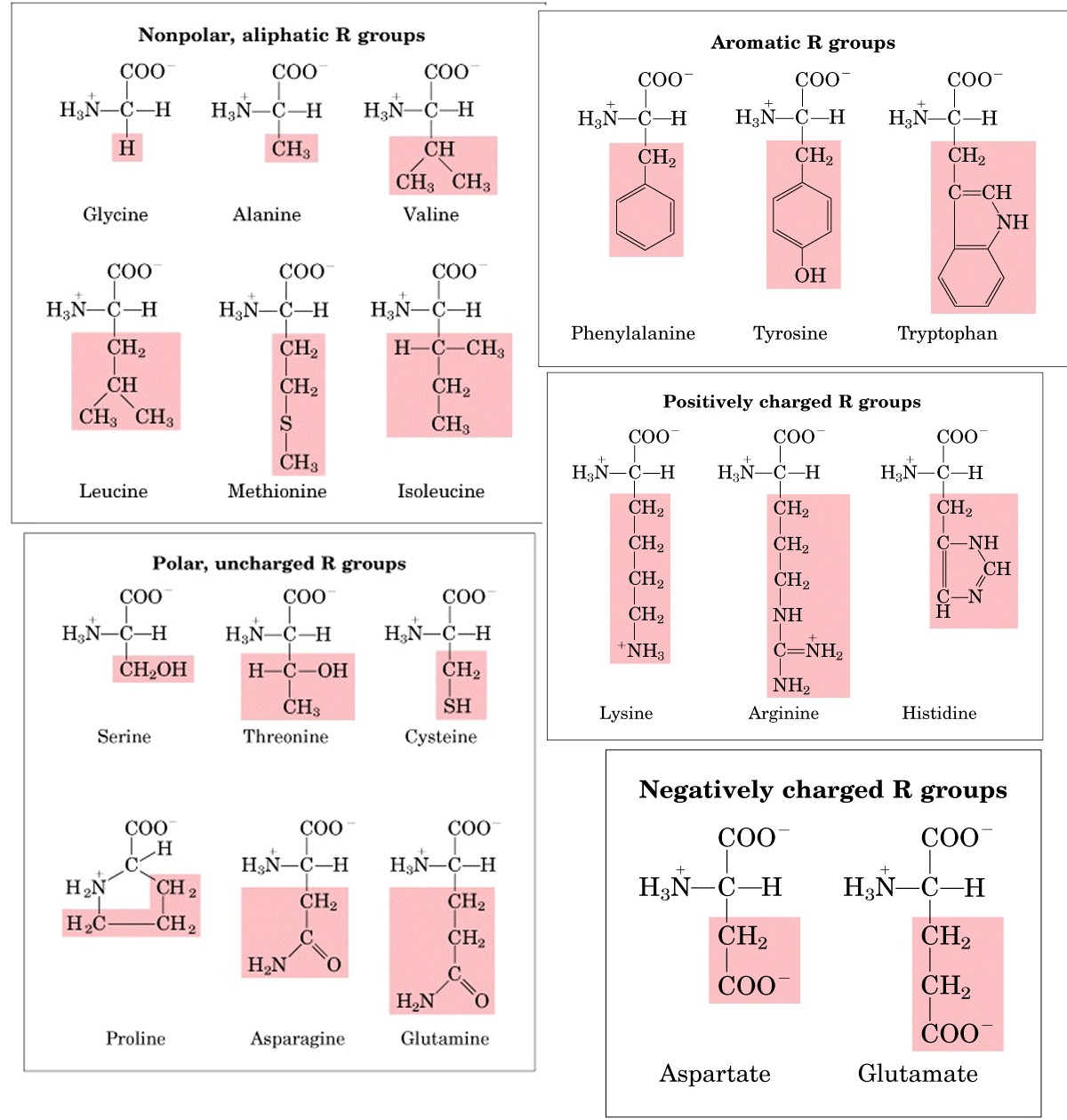
Amino acids, like DNA have an alphabet. There is the standard alphabet with some additional variants.
There is an accepted, somewhat concocted alphabet to represent 20 of the major (canonical) amino acids. Here it is:
A Alanine
C Cysteine
D Aspartic acid
E Glutamic acid/Glutamate
F Phenylalanine
G Glycine
H Histidine
I Isoleucine
K Lysine
L Leucine
M Methionine/Start codon
N Asparagine
P Proline
Q Glutamine
R Arginine
S Serine
T Threonine
V Valine
W Tryptophan
Y Tyrosine
==== There are some specialized amino acids that are outside the canonical 20:
O Pyrrolysine
U Selenocysteine
===
Here are specialized symbols that aren't amino acids, but you'll see them in description of proteins
X any amino acid
* translation stop symbol
- gap of indeterminate length (when an amino acid is "missing")
Now, one may ask, it didn't take long to get the gist of this, what's so hard, and why does it take so long to learn this in school?? In traditional chemistry/biology the professor often will ask student to memorize the chemical drawings of the amino acids like this. For example, I had to draw from memory this diagram for one of my exams!
https://amit1b.files.wordpress.com/2012/09/20-types-of-amino-acids1.jpg
The chemists will then obsess over the properties of each amino acid. Take for example the wiki entry on Glutamic Acid/Glutamate alone (YIKES):
https://en.wikipedia.org/wiki/Glutamic_acid
Get the picture? Most evolutionary biologists I know don't give a flip about the fine details of biochemistry. I seriously doubt most of them could remember how to draw all the chemical diagrams and describe the properties in detail of each amino acid.
If you can at least get familiar with the alphabet or where to look up the alphabet or abbreviations, that's usually good enough.
Here is a link to help you in the future for the amino acid list, alphabet, and abbreviations :
https://molbiol-tools.ca/Amino_acid_abbreviations.htm
I pray the Christian reader will feel empowered by learning these things at this simple level. It's not that hard. It's like learning ABCs.
r/CreationistStudents • u/stcordova • Feb 06 '19
We're getting close to having just enough biochemistry to start studying some awesome arguments in favor of Intelligent Design and Miraculous Creation of Life, but unfortunately we need to suffer through a few more mundane details to become comfortable with biochemical terms and concepts so we can appreciate God's designs in nature.
Protein Quaternary structure is the topic in this episode of Biochemistry for Creationists who are non-biologists/non-chemists. The Collagen Protein is used to introduce ideas such a multi polypetide protein complexes like the collagen helical homo trimer. This is a prerequisite for studying in upcoming episodes some arguments in favor of Intelligent Design and Miraculous Creation of Life.
r/CreationistStudents • u/stcordova • May 01 '19
r/CreationistStudents • u/stcordova • May 22 '19
This is even better than Part 1!
r/CreationistStudents • u/stcordova • Jan 15 '19

r/CreationistStudents • u/stcordova • Jun 08 '19
Excellent article by a biochemist!
https://crev.info/2019/06/crossing-guard-found-in-mitochondrial-membranes/
r/CreationistStudents • u/stcordova • Jan 03 '19
Astonishing as it may seem, it wasn't until after I got an MS degree in physics that I actually got a definition of what physics is! "Physics is a mathematical description of nature." That's about as good as a definition as I've read.
So what is biochemsitry? "Biochemistry is the molecular basis of life." That's about the best definition I heard so far.
There are 4 major classes of molecules in biochemistry, the molecular basis of life. There are plenty of molecules in life that don't fall into the 4 major classes, but the 4 major classes account for a lot of the molecules in life. Here they are below.
Carbohydrates: [from wiki] The term is most common in biochemistry, where it is a synonym of 'saccharide', a group that includes sugars, starch, and cellulose.
Examples of sugars are table sugar (sucrose), fructose (in soft drinks), glucose (in honey). Examples of starch is corn starch. An example of something with lots of cellulose is paper.
Amino Acids: Amino acids have many roles, not the least of which is that amino acids are the molecules that connect together to make proteins. An example of a food rich in proteins is meat or tofu.
Lipids: [from wiki] Although the term "lipid" is sometimes used as a synonym for fats, fats are a subgroup of lipids called triglycerides. Lipids also encompass molecules such as fatty acids and their derivatives (including tri-, di-, monoglycerides, and phospholipids), as well as other sterol-containing metabolites such as cholesterol.
Examples of foods rich in lipids are fats, cooking oil, butter. Cholesterol is a lipid.
Nucleic Acids and their components: [from McKee and McKee an Lehninger] There are two major nucleic acids DNA and RNA. DNA is what genes are made of. One of the roles of DNA is to serve as a template for RNA. One of the roles of RNA is that it is used as a template for things like proteins.
DNA and RNA are made up of nucleotides, nucleotides contain nucleosides, nucleosides contain nucleobases. Are you confused enough? :-) Unfortunately the meaning of these terms is only understood by learning more. However, here is a 15-second video of a little kid reciting the names of the nucleobases that found in DNA, and these are called the alphabet of DNA.
The little kid says:
A is for Adenine
C is for Cytosine
G is for Guanine
T is for Thymine
Now I know my ABCs, next time won't you sing with me.
Repeat this several times and you won't forget. Easy! Child's play.
A lot of biochemistry is memorizing names of things you don't understand right now, but which makes sense later!!!! Just memorize the names and how its connected in the big picture. DNA is made up of an alphabet, one of the uses of DNA is to make genes.
BONUS: There are 500 Quadrillion biochemical reactions in your body each second! One can only hope understand a few of those reactions! Just focus on a few reactions and wonder at what God has made from the little sample of things you do understand.
Here is a 4-minute video visual introduction to biochemistry that's just meant to convey a sample of how humans are "fearfully and wonderfully made" just as it says in the Psalms. The music is by Hans Zimmer. Beautiful.
NOTES:
I couldn't figure out all the scene in the video but, here are some things I think I identified in the video which I hope to cover in future lessons.
0:48 is RNA transcription, but that little machine that looks like a readhead is an RNA polymerase
0:51 The nuclear pore complex
0:54 a nucleosome
0:57 microfibrils
1:16 is clearly a lipid bilayer of some sort, and a transmembrane molecule and the molecules docking with it
1:30 a synapse
1:37 neurons. Shortly thereafter it looks like a signal travelling down an axon where there is depolarization because the voltage gated sodium channels open. Then there is re polarization
1:48 ATP synthase molecule
1:58 that looks like a kinesin protein walking down a microtubule carrying a vesicle
2:13 a top view of Gro-EL complexes of 6 chaperonins
2:30 is some sort of endocytocis
2:33 some sort of receptor
3:10 that looks like platelets
3:12 the hairs on the Organ of Corti in the ear
r/CreationistStudents • u/stcordova • Jan 07 '19
Here is something worth getting familiar with if you're a student of the Creation/Evolution controversy.
Unfortunately, the eras and names get revised from time to time, so don't assume this chart will necessarily reflect the names of the eras you find in the literature since terminology constantly changes (argh!):
http://www.detectingdesign.org/wp-content/uploads/2011/05/Geologic-Column-with-Fossils.jpg
r/CreationistStudents • u/stcordova • Mar 13 '20
I wanted to make a video on this topic, but someone did it sooo much better. It's only 7-minutes
r/CreationistStudents • u/stcordova • Dec 27 '19
r/CreationistStudents • u/stcordova • Mar 13 '20
Understanding these systems should raise immediate questions of evolvability!
Basic (high school level): https://youtu.be/pFaBpVoQD4E
More advanced level: take note of the ATP Synthase machines in this video:
https://www.youtube.com/watch?v=PiAUPg4UrrE
Now look at the ATP Synthase machines in this diagram. Even though the same part has been "co-opted" it doesn't really prove this is evolvable!
https://debateevolution.files.wordpress.com/2020/03/2011_0079_szarka_basic_biochemistry.jpg
r/CreationistStudents • u/stcordova • Jul 06 '19
This was one of the better episodes in the series.
https://www.youtube.com/watch?v=WR51OrawqIg&feature=youtu.be
r/CreationistStudents • u/stcordova • Jan 22 '19
The original plan was for weekly biochem lessons, but in an effort to deliver better quality, I decided to relax that schedule somewhat.
I also realized since biochemistry entails lots of memorization, many of the lessons would benefit the viewer by seeing them more than once anyway, so there will probably be an improvement in the learning experience by viewing lessons more than once even if the lessons are posted less frequently than once a week.