r/taichi • u/Wise_Ad1342 • Aug 07 '26
Gracie Jujitsu embodies the classical philosophy of Tai Chi

0
Upvotes
r/taichi • u/Wise_Ad1342 • Aug 07 '26
r/taichi • u/Strange-Front-9472 • Aug 24 '26

r/taichi • u/ShorelineTaiChi • Dec 22 '24

r/taichi • u/Chi_Body • Aug 25 '26

Blocking a punch with just your arms makes your structure weak. The key is learning how to compress the body as one connected unit when receiving force.
In this demonstration, I show how whole-body compression supports the arms and elbows when defending against hooks and punches. Instead of becoming an “empty shell,” the body closes, compresses, and absorbs the incoming force through a connected structure.
This is an important internal martial arts principle: the defense doesn’t come from the arm—the whole body is behind it.
#InternalMartialArts #TaiChi #BodyMechanics #MartialArts #WholeBodyPower #ChiBody
r/taichi • u/TheBodyPolitic1 • Nov 25 '25

r/taichi • u/Due_Mastodon_9951 • Aug 31 '25
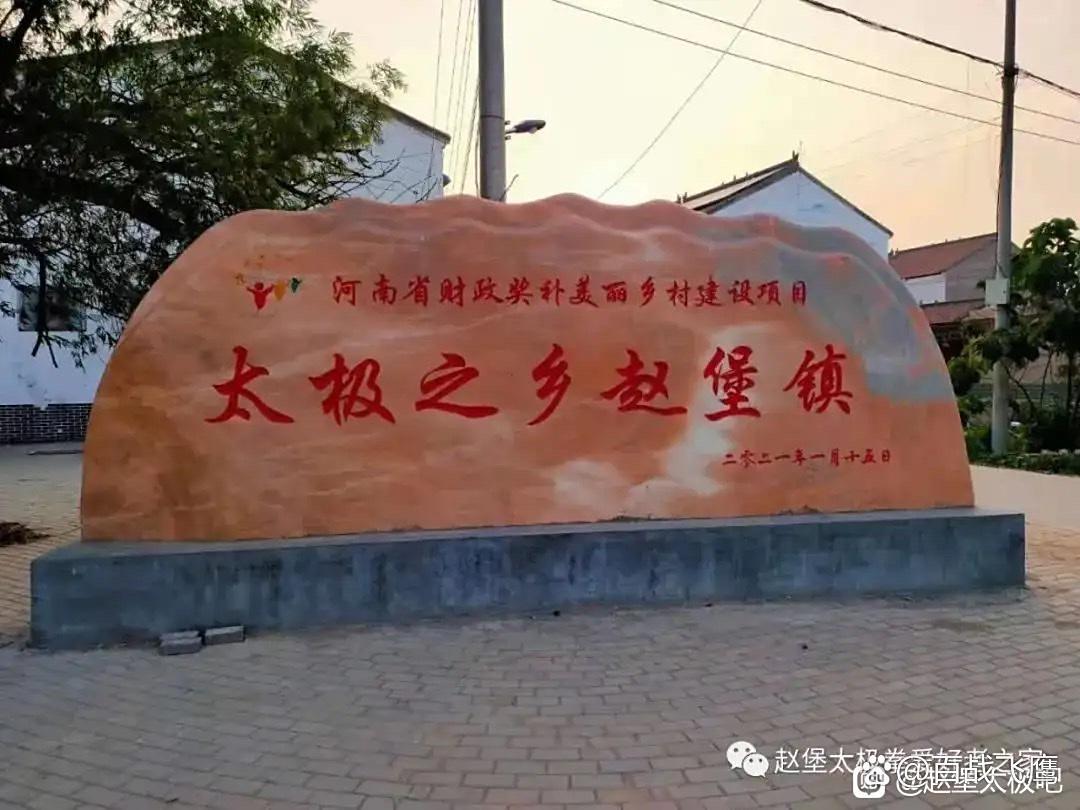
作者:李万斌
"青山遮不住,毕竟东流去"。 正像发生在民国初年的"宋书铭事件",不是子乌虚有的杜撰,而是真实存在的武林往事一样。不管宋书铭多么神龙见首不见尾,他讲述的历史多么可疑,《宋谱》的文字从文史角度有多少漏洞,但他所传授的拳艺,却是真实存在且确有实效的。如果这不是事实,我们实在想像不出来,当年许禹生、纪子修、吴鉴泉这些拳学大佬,有什么理由为一个并不出名的宋书铭当"托儿",并在以后为推行宋的主张而不遗余力。所以说,视而不见或不予承认是不行的。
争论归争论,广大实践者不是没有鉴别力的傻瓜。所以,我以为以宋氏太极拳为代表的众多的源流有序、另有出处的诸家太极拳,还是应实事求是地正视为好,不能因"太极拳起源地挂牌陈家沟"而终结或停滞不前。而且,随着研究的深入,认识会不断的深化、提高和更新,从而产生质的飞跃。
(1)、据《宋氏太极功源流支派论》宋远桥记:"自余而上溯,始得太极之功者,授自唐代于欢子许宣平。至余十四代"。"所传太极功之拳名三世七。因三十七式而名之。又名长拳者,所云滔滔无间也。总名太极拳三十七式"。"俞氏太极功,名日先天拳,亦名长拳。得唐李道子所传"。"缘余游江南泾县访俞家,方知俞家先天拳亦如余之三十七式。太极之别名也。俞家太极功系唐时李道子所传"。"莲舟与余常与张松溪、张翠山、殷利亨、莫谷声相往还。后余七人再往武当山拜李祖师未遇,于太和山玉虚宫见玉虚子张三丰。三丰盖张松溪、张翠山师也。洪武初即在此山修炼。余七人在山拜求请益者月余而归。松溪翠山拳名十三式。亦太极功之别名也。"
宋书铭约生于1840年,清末文人,拳技绝伦,他练的太极拳取"人有三世(即天前、地后、人今三世),拳分七品(即门外、入门、阶及、当堂、入室、开窍、神化七个层次)"之意,名日"三世七"。因由三十七个拳势组成,又称"三十七势"。民国初年(1912年),许禹生(33岁)偕同武术界享有盛名的纪子修(67岁)、吴鉴泉(42岁)、刘恩绶、刘彩臣、姜殿臣等,与古稀之年的宋书铭(72岁)相会切磋拳技,"皆随其所指而跌,奔腾其腕下,莫能自持。
其最妙者,宋氏一举手,辄顺其腕与肩,掷至后方寻丈以外(引自王新午著《太极拳阐宗》)",获得惨败,遂被折服,钦佩之至,磕头请为弟子。同时,说明宋的太极拳技不是从杨露禅那里学来的(杨氏父子也不承认有宋书铭这个弟子),是出自家传。宋书铭太极拳技高深莫测,技折武术名家的真实事件,至今传颂武林,为习武人所乐道。
r/taichi • u/Desperate_Mirror5617 • Jan 25 '26
Do ya'll experience a lot of gossip in your tai chi groups? I realize that it's a reality for any small group but it seems to be toxic.
r/taichi • u/RJ_Says • Mar 06 '26
r/taichi • u/Chi_Body • Aug 15 '26

Tai Chi Walking is suddenly everywhere—but is it actually a traditional Tai Chi practice? In this video, I explain the difference between Tai Chi stepping and Bagua walking, then teach you a traditional internal martial arts practice specifically built around walking: Bagua Circle Walking.
Circle walking may look simple, but slowing down each step while continuously turning around a circle challenges your balance, stability, coordination, mobility, and whole-body awareness in a completely different way from ordinary walking.
You’ll learn how to coordinate the lifting and landing of each foot, keep the legs connected, press downward through the palms, elongate and twist the spine, and gradually make the circle smaller as your practice develops.
As you become more comfortable, the practice goes beyond simply walking in a circle. You can slow everything down, reduce unnecessary tension, deepen your awareness, and begin exploring stillness within motion—one of the internal qualities developed through Bagua practice.
If you’ve been seeing “Tai Chi Walking” all over social media, try this traditional Bagua walking practice and experience the difference for yourself.
00:00 Introduction
00:40 Is Tai Chi Walking Real?
01:38 What Is Bagua Circle Walking?
03:47 Bagua Circle Walking Basics
08:41 Spinal Twisting & Mobility
12:37 Breathing & Important Details
15:23 From the Circle to Your Center
17:17 Finding Stillness in Motion
#Bagua #Baguazhang #TaiChi #TaiChiWalking #Qigong #CircleWalking #BalanceTraining #MobilityTraining #MindBody #ChiBody
r/taichi • u/phosphorescent_glow_ • Dec 01 '24
r/taichi • u/Oseterics • Sep 08 '25
Looking to hire teachers (50+ age) for recording videos for our platform
r/taichi • u/Zz7722 • Feb 01 '26
Founded 1000BC in Beijing. Lee style is probably the oldest Tai chi style! Popular in the UK I believe ;D
r/taichi • u/CM_Shortwave • Apr 15 '24
r/taichi • u/KlutzyGanache978 • Sep 07 '25
Not just waving hands around in the clouds….
r/taichi • u/goldenglory86 • 17d ago

r/taichi • u/RiverdaleRelife • Oct 05 '25
I ask AI and it said since I'm unblocking the flow of chi that I will be tired since I'm adjusting. Is that accurate?
r/taichi • u/hjstern • Oct 02 '25
I’ve tried for six months now. Can’t even get beyond the movements.
r/taichi • u/FishingTrue1851 • Feb 27 '26
Over time, reading discussions and listening to practitioners, I’ve noticed a recurring theme.
Many beginners seem to approach Tai Chi as something to memorize — long sequences, precise choreography, specific sensations.
But from what I’ve observed, the shift often happens somewhere else.
In balance.
In structure.
In simply learning how to stand and move without tension.
I’m curious:
From your experience, what do beginners tend to misunderstand most when they start?
Is it the purpose of the practice?
The pace?
The internal aspect?
Would really appreciate hearing different perspectives.
r/taichi • u/MycologistOk210 • Jun 07 '26
On April 28th, 2026, China announced that Taijiquan has been officially included as one of the 38 newly added undergraduate majors for the 2026 academic year.
I find this particularly exciting. It represents a massive step forward in the modernization of Taijiquan. It is now being treated as a formal academic discipline, sitting right alongside new AI-related majors.
It might signals a shift in how the field is viewed—not just as a traditional exercise or fighting skill, but as a "field understanding the mind-body interaction during physical movement, which may be universally applicable to everyday human life."
The "modern Taijiquan era" seems to be arriving in China at a faster pace than we anticipated, although we still have a long way to go before its development direction is truly clear.
r/taichi • u/Newt_Wrong • Oct 23 '25
(A playful but possibly time-saving compass for beginners)
Intro:
I’ve recently geeked out on MBTI and cognitive functions, and started looking at everything through that lens — even Tai Chi and Nei Gong teachers.
Turns out, it explains a lot: why some teachers feel intuitive and others sound like algebra.
Maybe this framework can help others find the right entry point too.
(My MBTI: INTP. Bruce Frantzis has the framework and step by step I love)
Ever wonder why one Tai Chi or Nei Gong teacher feels crystal-clear to you but baffling to your friend?
It’s rarely about “real vs. fake” — it’s about how your mind learns.
A quick (free) Myers-Briggs or “16 Personalities” test online will show which functions you naturally favor:
Sensing (S) → learns through direct experience and body feel
Intuition (N) → learns through concepts, metaphors, and patterns
Thinking (T) → wants logic, structure, cause-and-effect
Feeling (F) → values authentic connection and atmosphere
None is better; they’re just different doors into the same house.
| Teacher | Typical MBTI Flavor | Teaching Vibe | Best For… | Caution If… |
|---|---|---|---|---|
| Mark Rasmus | Se / Fi (Sensory + Feeling) | Experiential, elastic-body drills, “feel the wave.” | Kinesthetic learners who want to sense energy directly. | You crave structure or step-by-step logic. |
| Bruce Frantzis | Ti / Ni (Thinking + Intuitive) | Analytical, system-heavy, lots of internal maps. | Logical minds who like frameworks and precision. | You get bored with theory before you feel it. |
| Adam Mizner | Fe / Ni (Feeling + Intuitive) | Transmission style, devotional, “trust and yield.” | Relational or empathic learners who learn by resonance. | You want biomechanical explanation first. |
| Damo Mitchell | Ti / Ni | Detailed, anatomical, scientific-mystical bridge. | Those who love understanding every mechanism. | You prefer quick experiential payoff. |
| Mike Sigman / Dan Harden | Ti / Te (Analytical + Practical) | Physics-driven, testable power. | Engineers, skeptics, people who like proof. | You enjoy poetic or spiritual framing. |
| Serge Augier | Ni / Fi (Intuitive + Feeling) | Holistic life system—body, breath, and philosophy. | Big-picture seekers, lifestyle integrators. | You want martial focus only. |
Most internal-arts arguments online are really learning-style mismatches.
A Ti-type wants an equation; an Se-type wants a feeling; an Fe-type wants relationship; an Ni-type wants meaning.
All valid, just different gateways into the same internal mechanics.
Find the voice that matches your cognition and you’ll progress faster, happier, and saner.
Take a quick MBTI / 16 Personalities test.
Read a few pages or watch clips from the teachers above.
Notice which ones instantly make sense — that’s your learning-style fit.
This isn’t dogma or ranking.
It’s a map of translation, not a scoreboard.
Every lineage has truth; every teacher has blind spots.
Use whatever helps you learn how you learn. Some teachers will be much better for your learning style.
r/taichi • u/Chi_Body • May 06 '26

In Tai Chi and internal martial arts, one of the most important body mechanics is cross-connection — the relationship between the shoulders and the Kua through twisting, opening, and closing. This is how the body becomes integrated instead of moving in disconnected parts.
The left shoulder connects with the right Kua.
The right shoulder connects with the left Kua.
When one side folds/closes, the opposite side stretches/opens. The shoulders and Kua must coordinate together through twisting and compression.
Most people throw punches using only the arms and shoulders. But real power comes from whole-body connection. This is why the same body mechanics trained in Tai Chi and internal arts can directly apply to boxing and striking.
This is not just “turning left and right” as an exercise. The torso must actively twist, compress, and connect the upper and lower body into one integrated structure.
Without this relationship:
* Punches lose grounding
* Balance breaks apart
* Power leaks out through disconnected movement
But when the body closes and opens correctly:
* The punch becomes rooted
* The structure stays stable
* Force travels through the entire body as one unit
When you throw a punch, the lower body and upper body must coordinate through opening and closing. One side stabilizes while the other releases force.
Without this diagonal cross-connection, large punches often throw the body off balance. But with proper opening, closing, twisting, and compression, the punch becomes grounded, connected, and structurally supported.
#TaiChi #InternalMartialArts #Boxing #BodyMechanics #WholeBodyPower #Kua #MartialArts #InternalPower #Structure #GroundForce #PunchingPower #Neigong #CrossConnection #Taijiquan #MovementTraining
r/taichi • u/Due_Mastodon_9951 • Sep 03 '25


