r/serverless • u/Veuxdo • Jul 24 '19
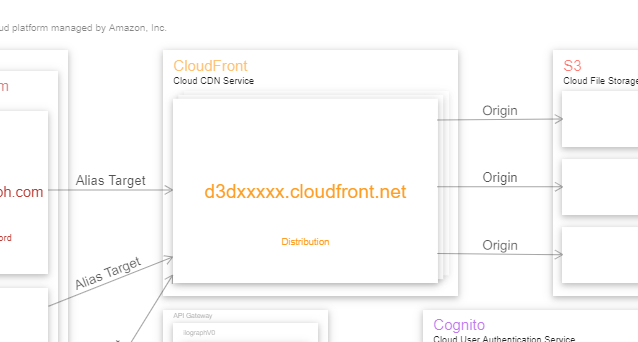
An interactive walkthrough of my (simple) serverless architecture
https://app.ilograph.com/demo.ilograph.Ilograph/Request/_walkthrough/11
u/aada_715 Jul 24 '19
Awesome man. Did you use a framework for the frontend?
1
1
1
u/BraveNewCurrency Jul 24 '19
Very nice, and beautifully done.
These examples are fairly trivial though, in the real world, you might have 100's of servers or 100's of lambda functions. How does it handle that? Also, does the user have to create your YAML, or is it automatic from an AWS account? (Oh, and what about people who have things spread over multiple accounts?)
I know, annoying questions. Best of luck, this is really cool!
1
u/Veuxdo Jul 25 '19
Hi, thanks for the kind words.
Your questions are far from annoying; they're astute and pertinent. I hope my answers can do them justice.
you might have 100's of servers or 100's of lambda functions. How does it handle that?
The key feature that makes this manageable is perspectives. In addition to showing resources from "another angle", like done in this example, you can have "high-level" perspectives that describe your architecture in a very abstract way, and "low-level" perspectives that get into the details. Hopefully, in most cases, there's a way to break up those 100s of resources into many low-level perspectives (say, by application). Meanwhile, in the high-level perspectives, you'd "group" similar resources together like so, since the differences between them wouldn't matter at that level. Grouping isn't implemented yet, but in yaml I'm thinking that'd be done with brackets (i.e. [resource1, resource2, resource3]).
Now, there still may be some very busy perspectives that can't be broken up. In these cases, when resources get too small on the screen, they'd "collapse" into their parent, if they have one. When selected (clicked), or related to a resource that is selected, they'd be expanded again. When a resource is selected, unrelated resources disappear, so there should be room. Hopefully, between collapsing and grouping the vast majority of perspectives become doable.
Also, does the user have to create your YAML, or is it automatic from an AWS account?
The user has to create the yaml for now. I have some prototype code to generate a resource tree from CloudFront templates, but haven't released it yet. In any case, you'd have to create the yaml for the perspectives.
Oh, and what about people who have things spread over multiple accounts?
Did you mean when it comes to importing? When displaying, accounts can certainly be used as context (background) resources, depending on the perspective. The same is true for regions, VPCs, and services (like the first perspective in this example).
Anyway, hope these answer your questions. Let me know if something was unclear or you'd like to know more!
1
u/trurl7 Jul 25 '19
This looks awesome. I especially like that it's driven by a declarative language (IDL).
1
Jul 24 '19
[removed] — view removed comment
1
u/Veuxdo Jul 24 '19
Sure. Since it's still in closed beta, traffic to the api portion is light enough that usage is covered by the "free tier" allowance. Static resources are cached against CloudFront, so the costs there are negligible.
3
u/djolord Jul 24 '19
Dude! I wish I could upvote this 50 times! I am trying to learn and understand serverless architecture, and this not only helped me understand all of the moving parts, it gave me something to present to other stakeholders at my company so that they could understand the vision. Well done!