Ethereum produces blocks every ~12 seconds, creating L1 latency: users must wait not only for transaction confirmation, but also for credible assurance about how their transaction will actually execute.
Latency is a major bottleneck for both traditional and based rollups built on Ethereum.
Traditional rollups can reduce perceived latency through a centralized sequencer. That solves speed, but not credible state guarantees, while also introducing trust assumptions, centralization risk, and a single point of failure.
Based rollups avoid that separate sequencer and align transaction ordering with Ethereum, but they still inherit Ethereum’s latency.
Puffer Preconf breaks this trade-off.
• For traditional rollups, it replaces trust-based soft confirmations with economically enforced preconfirmations.
• For based rollups, it adds the fast execution layer needed to make Ethereum-aligned sequencing practical.
Ethereum validators preconfirm transactions ahead of the L1 block, reducing latency from ~12 seconds to ~100ms, while preserving Ethereum’s decentralization. This means rollups no longer have to choose between fast UX and trustless infrastructure.
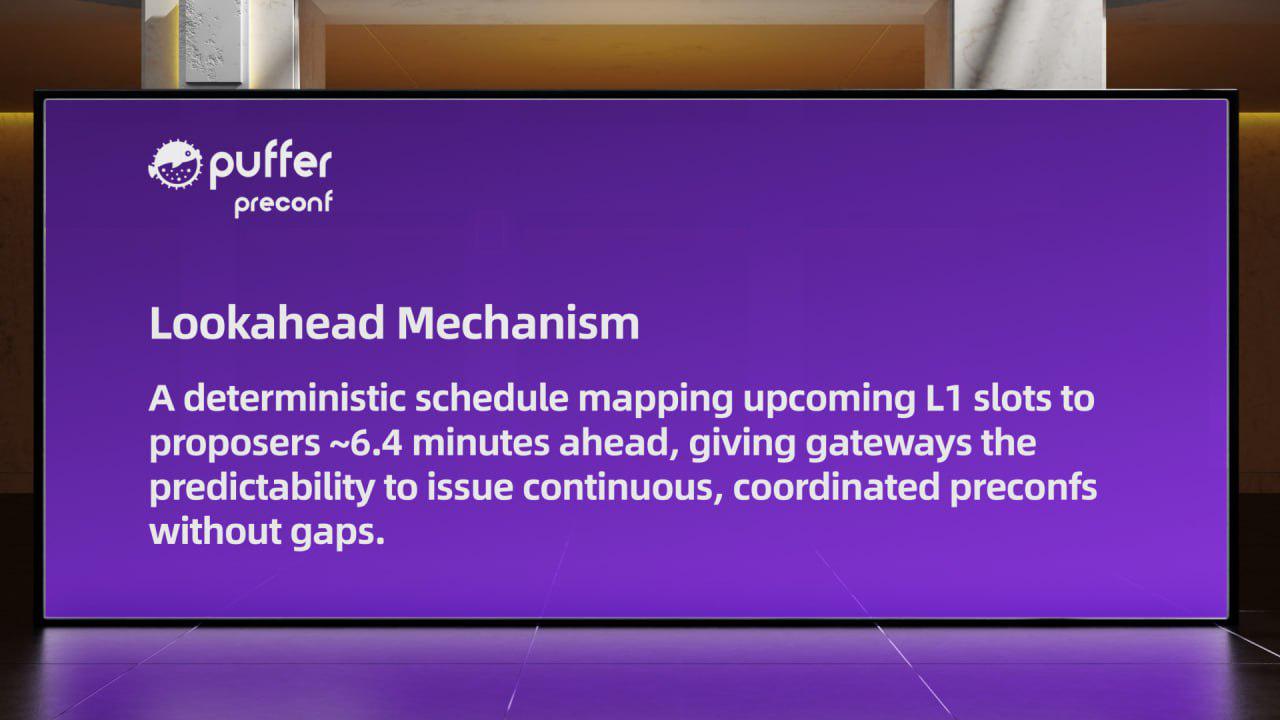
Instead of a single sequencer, validators opt in, restake ETH, and delegate to gateways that provide preconfirmations under a deterministic schedule.
All guarantees are economically enforced. If commitments are not honored, restaked ETH is slashed.
Today, more than ~3.18M ETH secures this system.
Puffer Preconf is the infrastructure rollups have been waiting for.