r/pathbrewer • • Jul 01 '20

Shop catalog for pathfinder 1e

31 Upvotes

https://homebrewery.naturalcrit.com/share/pkkNmZncs

I wanted to make a way for my players to know what items are available and where and for how much without bargaining with me or having to look through tons of stuff to string it together. Figured it might help someone else too.

Has some homebrew items and shop options as well.


r/pathbrewer • • Apr 26 '20

Class 1e Base Class: The Unchained Fighter

27 Upvotes

At the end of Pathfinder 1e's lifecycle, the fighter is finally doing well from a power level perspective. That said, the class is still unarguably clunky, bland, and non-noob friendly. For these reasons, I created my version of the Unchained Fighter. It's a complete overhaul of the fighter class, and represents my interpretation of what the fighter would look like if it was made today instead of being grafted over from the lackluster DnD 3.5 version.

I came into this project with a few set design goals:

  1. Add unique and exciting class features to the class to give a greater sense of identity. Bonus feats were reduced in importance as a result, but still play a big role in defining the class.

  2. Reduce the class' reliance on somewhat obscure splatbook content like Gloves of Dueling, Armor Specialization, and Armed Bravery. The class' power floor is much higher due to this.

  3. Reduce the 'pidgeonholeing' the class invariably imposes on players. The new 'training' bonuses allow competence with multiple weapon groups at once, and the fighter can quickly switch weapons on the fly.

  4. Bring important archetype abilities back into the fold. The release of advanced training options has retroactively made the majority of fighter archetypes very weak by comparison. The inclusion of the 'sword secret' class feature allows players to organically build up their playstyle by selecting many abilities that were once hidden inside dead archetypes like the Two-Weapon Warrior and Titan Fighter.

Let me know what people think with a comment either here on on the linked google doc. Would you change anything presented here? Would you allow this class in your home games? Let me know.

-Crossposted from the helpful folks at r/Pathfinder_RPG. Thanks for the advice there, and was looking for more advice after incorporating their suggestions into this second edition of the class!


r/pathbrewer • • Jul 02 '21

Item Hotlinks to all Tables: A complete list of every D&D and roleplaying trinket table (Over 100, d100 of them) I've created for quicker access. Now featuring "The Omni Table", a d109 table where each result is another d100 loot table, so you'll always roll something new.

22 Upvotes

-The Omni Loot Table: A loot meta-table that allows the user to roll randomly on the 109 tables I've collected. This grants a DM literally millions of unique trinkets, equipment and items that players can find to enrich their world and playing experience.

-All Unique Armors: Splint mail, studded leather and sturdy shields of all shapes, sizes and mysterious backgrounds. Distinctive armors that can serve as the basis for family heirlooms, legendary artifacts and magical or masterwork weapons.

-Masterwork Armor Bonuses: Over a dozen homebrew armor improvements, enhancements and modifications created though superior craftsmanship. These masterpieces though more powerful than ordinary armor would not be considered “magic” or “+1” objects.

-Random Armor + Random Masterwork Armor Bonus.

-Random Unique Armor + Random Masterwork Armor Bonus.

-All Unique Minor Magic Weapons: A collection of flavorful weapons of artifact level quality suitable for low level characters. Much like the Minor Weapon Enchantments that some of them draw inspiration from, they provide small bonuses and combat options that are restrained by limited uses, niche situations or come with risky drawbacks.

-Minor Weapon Enchantments: A collection of minor bonuses that are weaker than a standard +1 weapons, as they come with trade-offs, risks, prerequisites, limited uses or niche benefits. These enchantments provide feat-like bonuses, low level class abilities, modify damage types, provide short bursts of power or replicate the effects of low levels spells. Rollable Minor Weapon Enchantments Table.

-Random Weapon + Random Minor Weapon Enchantment.

-Random Unique Weapon + Random Minor Weapon Enchantment.

-All Minor Magical Items: Semi useful magical objects (If not always useful to an adventurer) that have little to no drawbacks associated with their use and are perfect for low level characters.

-All Unique Weapons: Blades, bludgeons and bows of all shapes, sizes and mysterious backgrounds. Distinctive weapons that can serve as the basis for family heirlooms, legendary artifacts and magical or masterwork weapons.

-Masterwork Weapon Bonuses: Over 20 homebrew weapon improvements, enhancements and modifications created though superior craftsmanship. These masterpieces though more powerful than ordinary weapons would not be considered “magic” or “+1” weapons. Compatible with Pathfinder, D&D 5e and other D20 systems. Rollable Masterwork Bonus Table -Running the Numbers: On Balancing Homebrew Masterwork Weapon Bonuses

-Random Weapon + Random Masterwork Weapon Bonus.

-Random Unique Weapon + Random Masterwork Weapon Bonus.

-Wild Magic Surges: A collection of Wild Surge options for DMs and PCs who find the published tables limiting, repetitive or boring, three things wild magic by definition, should never be. Rollable Wild Magic Surge Table.

-All Sealed Glass Vials: Faulty potions, weak elixirs, alchemical supplies, spell components, ritual elements, enchanting materials, crafting ingredients and magically preserved biological samples.

-All Books: An eclectic library of dusty tomes, fictional textbooks, pocketbooks, paperbacks, hardcovers, booklets, leaflets and magical manuals.

-All Rings: Enough rings and bands to wear three on every finger and toe while still having dozens to spare. These small circular pieces of gems, metal, wood or bone always add more to the story than the sum of their parts.

-All Necklaces: Pendants, amulets, lockets, chokers and other “Neck Slot” jewelry that grant an immediate glance into the bearer’s personality, wealth, rank or social class and often serves as an iconic part of that character’s look. While a locked metal torque can instantly mark the bearer a penniless slave and a string of lustrous pearls mark their owner a flauntingly wealthy noble, so can an adventurer’s necklace mark them as a creature to bestow quests upon.

-All Artifacts: Artist masterpieces, rare magics and opulent combinations of jewels and precious metals. These objects can be found in the throne rooms of kings, the demiplanes of archmages and the pinnacle of a dragon’s hoard.

-All Valuables: More useful than regular trinkets, these items have either a clear purpose, a reliable ability or are made from a fairly costly material.

-All Trinkets: Interesting baubles or semi magical items that have little to no practical in game or mechanical use for an adventurer.

-All Worthless Trinkets: Vaguely interesting garbage, vendor trash and junk loot. Not magical or mysterious like regular trinkets or worth anything more than a copper piece or two even if you could find someone to buy it in the first place.

-All Mottos: Whether they’re called adages, maxims or creeds, these simple statements are essentially promises made to oneself, family, or institution. A character’s motto can be a goal in itself or a moral anchor that centers his life and guides his action. A mixed collection of real life and fictional mottos that can aid a DM to quickly expand the history of the campaign or to aid a PC in a richer character creation.

-All Battle Cries: Simplistic and bone chilling warcries, complex and inspiring calls to arms and primal wordless screams of rage that shakes the enemy down to their iron-shod boots. A collection of simple phrases, threats, insults and violent promises for creatures to yell before and during combat to add verbal spice to each attack.

-All Reference Tables: When a trinket calls for a Random Weapon, Random Color or Random Godly Domain and you can’t think of one offhand, just go here and either roll a die or select one of your own choosing.

Random Weapon Tables: Sometimes you just need a weapon and literally anything mildly lethal will do the trick. These lists give a DM the ability to quickly look through different options when generating loot or as a paired resource when an trinket from another table asks you to “Roll a Random Weapon”. Rollable Random Weapons Table. -Random Sword Table

Random Godly Domains Tables: Depending on your system and in-game universe, there may already be a pantheon, singular or lack of Gods. However, people are superstitious wherever your players go and these tables allow a DM to generate a domain, theme or patronage to quickly flesh out a trinket with a “Random Godly Domain”.

-Random Good Domains

-Random Evil Domains

-Random Neutral Domains

-Random Chaotic Domains

-Random Lawful Domains

Random Nightmares: Unspeakable, nonsensical night terrors, worse than the strongest of bad trips on mundane hallucinogens, exist to prey on adventurers who have seen more than their fair share of trauma. A cleric’s healing words can mend the flesh but nothing truly mends the mind from the aberrant horrors, monstrous beasts and undead abominations, whose defeat is an adventurer’s main source of income. Rollable Nightmares Table.

Random Musical Instruments Table: There are a surprisingly large number of ways to pluck a string, blow through a tube or hit something with a stick. This table represents a collection of real life instruments all capable of being created with pre-industrial techniques. Furthermore they are all small to medium sized and could be easily be stored, carried, maintained and played by a traveling adventurer. Rollable Musical Instruments Table.

-Random Color Table: Pretty self explanatory and it’s basically only here because many of the trinkets reference it. Roll for colors or just use it as a reference while handing things out if you don’t have a color wheel handy.

-Random Creature Type Table: A quick guide to the various creature types for reference purposes.

-Book Descriptions: A short list of quirks, physical descriptions and eccentricities to add additional personal characteristics to the book trinket list. Rollable Book Descriptions table


r/pathbrewer • • Feb 25 '17

[Design][Feat] Announcing the first Pathbrewer Design Contest! Create a feat! Winner gets bragging rights or something!

22 Upvotes

From now until next Saturday, this thread will stay open to receive entries.

To enter the contest, just post your feat as a top-level comment, and DO NOT EDIT. Edited comments or feats not in top-level comments will be disqualified. Likewise, any plagiarism will also result in immediate disqualification.

Feats will be judged by the following criteria:

  • Properly formatted, with no spelling or grammatical errors. Bonus points for following the Paizo style as closely as possible.

  • An interesting, unique idea, or a unique or useful twist on an existing idea.

  • Proper execution of the idea. The feat should be concise and clearly worded, so that it actually functions as intended.

  • Is useful by itself, and in combination with other feats or abilities without becoming totally overpowered.

Use this format for your feat:

Name (Type) Combat, Teamwork, etc.

Prerequisites: what you need to qualify for it

Benefit: what the feat gives you.

Normal: If the feat alters an existing feat or ability, describe the difference.

Special: specific interactions with other feats or abilities.

Have at it! The winner will receive a special flair and have their feat stickied at the top of the subreddit until the next contest.


r/pathbrewer • • Aug 23 '17

[Item] A bunch of weapons from around the world, stated and organized by geographic area

19 Upvotes

So I am planning on lumping all of my homebrew stuff from my games into a PDF soon, and I figured this might be a good first installment to get feedback on.

Not every weapon is uniquely stated; some are weapons that are iconics from one region that would probably be stated the same as another weapon, to give some thematic flavor changes just in case you were unhappy with the asthetic of a certain weapon. (For example, Kukri are from Nepal, which one of my players, a crit-fishing Barbarian that was Viking themed, didn't like the look of. So we decided to reskin the Kukri as a Seax, a utility knife used by the vikings that could be any length between a knife and a sword. They both have a similar shape and cutting edge (with a cutting edge where one would expect the spine to be), and similar historical purposes, but illustrating two very different cultures ways to bypass the same issues.

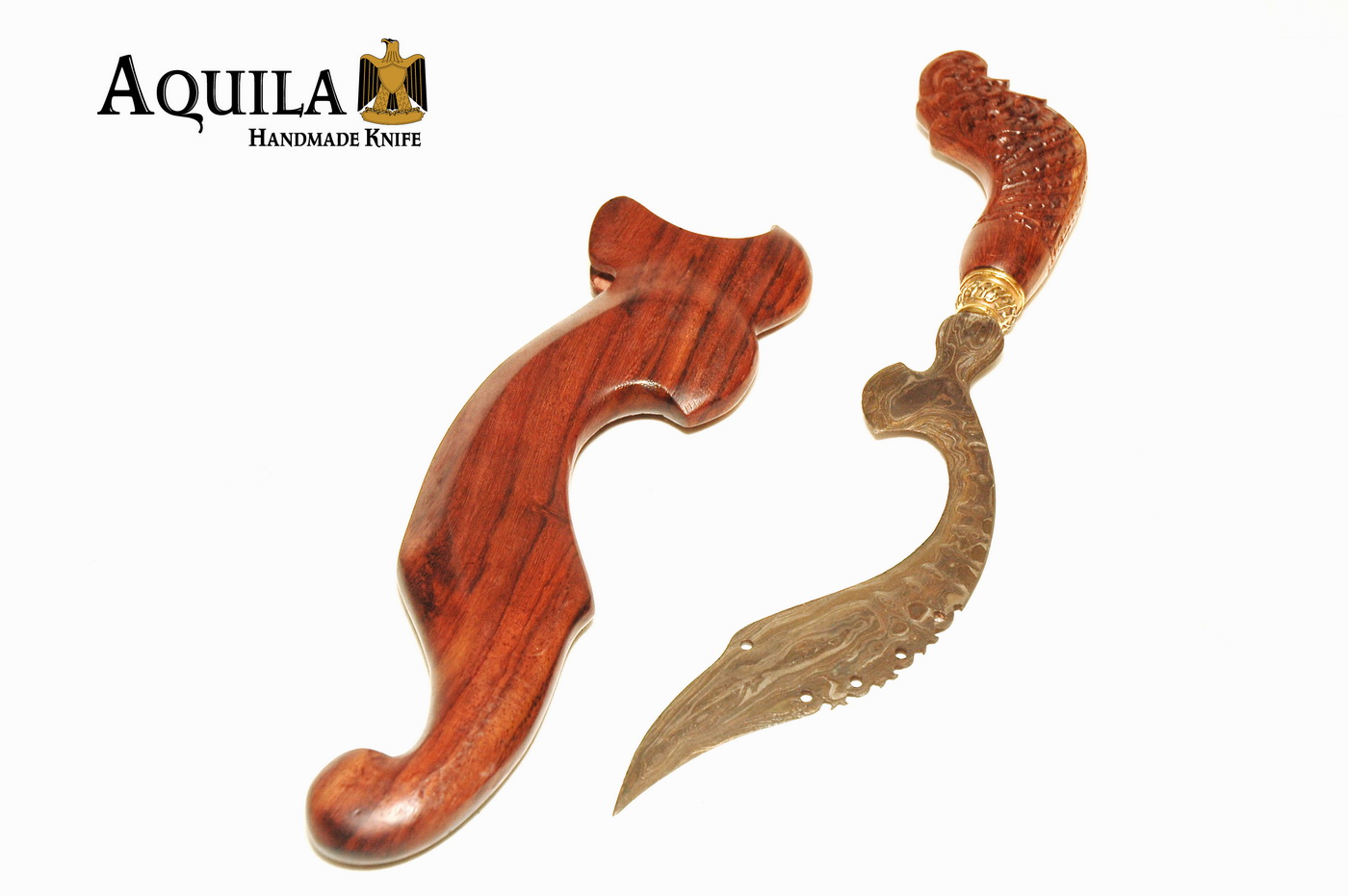
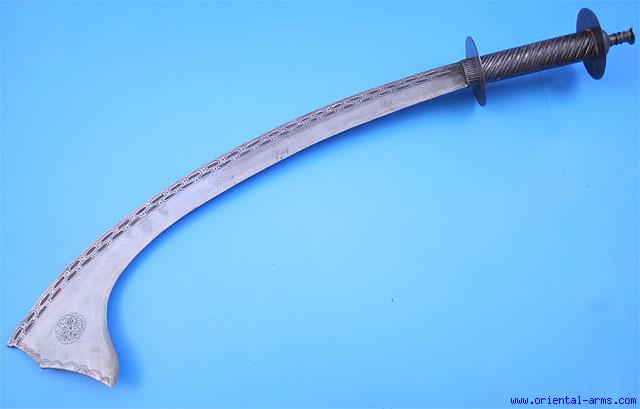
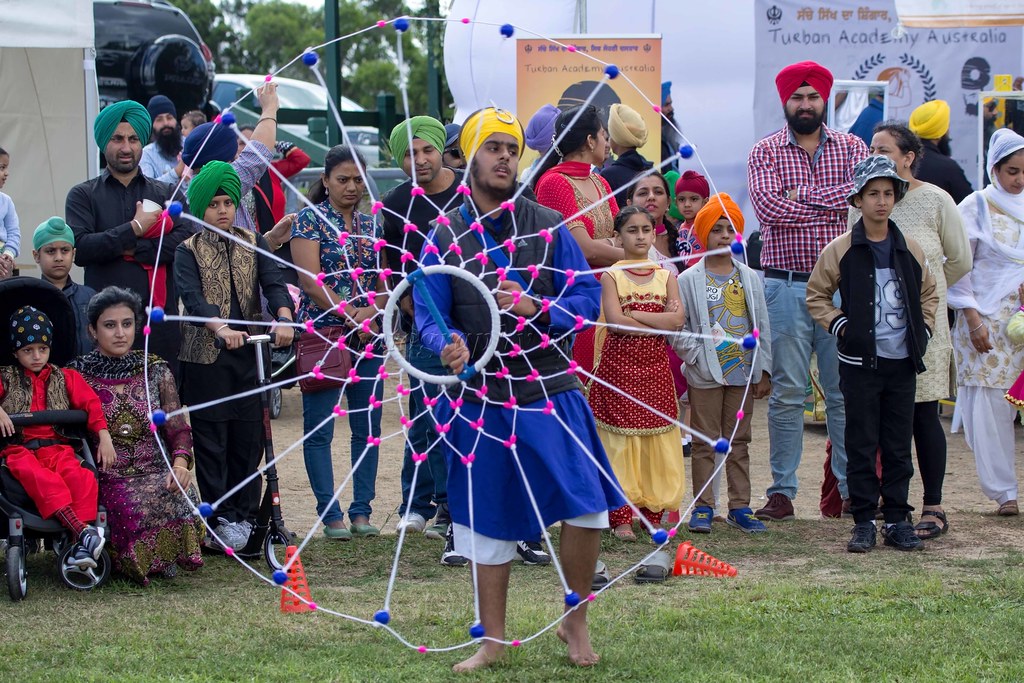
I have linked an image to each one, just for fun. If you want any info on where the weapons come from, or why I stated them up the way I did, comment below!


Africa


Light

Ararait [Martial / 1d4 / 19-20 x2 / P or S / Monk, See Text / While wearing an ararait, you are considered armed and your unarmed attacks deal lethal damage. If you are proficient with an ararait, you can have your unarmed strikes deal slashing or piercing damage. When using an ararait, your fingers hands are completely unhindered, allowing you to wield or carry items in that hand. An ararait cannot be disarmed.]

Sjambok [Use stats for Sap]

One-Handed

Iklwa [Martial / 1d8 / 18-20 x2 / P or S / Finesse, Deadly]

Ngombe Ngulu [Exotic / 2d4 / 19-20 x2 / S / Deadly, Sunder]

Nzappa Zap [Use Dwarven Maulaxe statistics]

Tetela Dagger [Martial / 1d8 / x4 / P or S / Deadly, Cannot wield in 2 hands for 1.5x Strength to damage]

Two-Handed

Makrigga [Martial / 1d10 / x4 / PS / Range: 20 ft / Brace, Deadly]


Americas:


Light

Ulu [Use Punching Dagger statistics that deal slashing damage]

One-Handed

Ball-Headed Warclub [Use statistics for Heavy Mace, but made of wood]

Gunstock War Club [Martial / 1d6 / x2 / B or P or S / Ranged: 10 ft (P damage only)]

Ranged

Great Blowgun [Simple / 1d3 / P / Range: 50 ft / Special: The sheer length of this weapon requires it be wielded in two hands like a bow]


Asia


Light

Blakas [Martial / 1d4 / x4 / S / Sunder]

Buntot Pagi [Simple / 1d3 / x2 / S / Nonlethal]

Wind and Fire Wheel [Exotic / 1d8 / x3 / PS / Performace]

One-Handed

Kujang [Exotic / 1d6 / 18-20 x2 / S / Finesse, cannot be wielded in two hands to get 1.5x damage]

Kora [Martial / 1d8 / 19-20 x2 / S / Deadly, Sunder, Etc / cannot be wielded in two hands for 1.5x strength damage]

Two-Handed

Nagamaki [Exotic / 1d10 / 18-20 x2 / S / Deadly]

Panabas [Martial / 2d4 / 19-20 x2 / S / Deadly, Sunder]

Sodegarami [Martial / 1d4 / 19-20 x2 / P / Reach, Grapple]

Tsukubo [Martial / 1d3 / x2 / B or P / Reach, +4 on Reposition manuvers]

Zhua [Iron hand-shaped polearm used for grabbing shields, then smashing them. [Exotic / 1d8 / x4 / B or S / Bypass Shield Bonus to AC with a successful Disarm CMB] (still figuring out the exact mechanics for this one)


European:


Light

Seax [Use Stats for Kukri]

Cinquedea [Martial / 1d4 /19-20 x2 / PS / Range: 10 ft]

Spring Loaded Triple Dagger [Exotic / 1d4 / 19-20 x2 / P or S / Range: 10 ft / Disarm, Sunder, Blocking / Use as a Dueling Dagger]

One Handed

Bull Slayer Sword [Martial / 1d10 / x3 / S / Trip

Nagyka [Exotic / 1d3 / x2 / B / Disarm, Nonlethal, Reach, Trip]

Two-Handed

Ahlspiess [Martial / 1d12 / 19-20 x2 / P / Brace]

Godendag [Simple / 2d4 / x2 / B or P]

Falx (Used against Romans by Dacians to chop through shields and helmets) [Martial / 2d4 / 19-20 x2 / S / Sunder]

Voulge (Polearm with an axeblade that tapers drastically into a spear point, crates trifecta with Halberd and Horsechopper) [Martial / 1d10 / x3 / P or S / Reach, Brace]

Military Fork [Martial / 1d10 / 18-20 x2 / P / Brace, Disarm]

Ranged

Soliferrum (Javelin made of pure iron) (Use statistics for Javelin, but if you have EWP [Soliferrum], you take no penalty on fighting in Melee with the weapon (as a one handed weapon), increase the Damage Die by one step, and it gains the Brace weapon quality)


India


Light

Haladie [Martial / 1d4 / 19-20 x2 / P or S / May treat as a Starknife with no range increment for the purpose of feats]

Otta [Martial / 1d3 / 19-20 x2 / B or P / Nonlethal, Blocking]

Trehsool Muhk [Simple / 1d2 / 18-20 x2 / P / +4 to conceal weapon with Slight of Hand]

One-Handed

Khanda [Exotic / 1d8 / 19-20 x2 / S / Performance, Sunder]

Two-Handed

Chakari [Exotic / 1d3 / x2 / BS / Blocking, Disarm, Performance, -2 on attack rolls]

[Shield Stats: Armor Bonus +1; Max Dex Bonus —; Armor Check Penalty -1 Arcane Spell Failure Chance 20%; Speed —/—

In most situations, the chakari can hang to ones side like a net, and provides the indicated shield bonus to your AC. As a standard action, however, you can use a chakari to grant you total cover against ranged and thrown weapons until the beginning of your next turn. When using a chakari in this way, you must choose one edge of your space. That edge is treated as a solid wall for ranged attacks targeting you or adjacent creatures. You gain total cover for ranged attacks that pass through this edge and no cover for attacks that do not pass through this edge (see cover, Core Rulebook 195), and other creatures receive partial cover. The shield does not, however, provide cover against spells; a spellcaster can cast a spell on you by targeting the shield you are holding. The web-like nature of the chakari also allows enemies to have direct line of sight with you at all times, and the temporary wall you create provides no protection against any visually activated effects such as gaze attacks. You may not use a hand holding a chakari for anything else.

A Chakari requires Tower Shield Proficiency to use properly. You do not need to take Exotic Weapon Proficiency to wield a Chakari as a weapon if you have Tower Shield Proficiency.]

Chakridang (This is not an actual image of a Chakri Dang, a polearm with a small chakram as the head, but it is the closest image I could find to one) [Exotic / 1d3 / 18-20 x2 / S / Finesse, Reach]

Gada [Exotic / 2d10 / x3 / B / If your Strength is less than 19 (or 17 for a Small or smaller gada), you take a –2 penalty on attacks with it, as you’re unable to maneuver its daunting size and weight.]

Saintie [Exotic / 1d8 | 1d6 / x3 / P or B / Blocking, Brace, Double, Monk]

Ranged

Chakram Bangles [Slashing Shiruken]

Cumberjung [Statistics for Dire Flail, but with BS damage]

Vada Chakram [Exotic / 1d10 / x2 / S / Range: 30 ft / You can wield the vada chakram as a two-handed melee weapon, but it is not designed for such use; you take a –2 penalty on your attack roll with the weapon and must succeed at a DC 15 Reflex save or cut yourself on the blade (half damage, no Strength modifier). You do not need to make this save if wearing heavy armor.]


Oceania / Pacific Islands


Light

Ka'ane [Exotic / Stats & rules for Garotte, but allow melee strikes with cat-o-nine-tails statistics]

Ku'eku'e (Simple / 1d3 / 19-20 x2 / P or S / Rules from brass knuckles)

Maka Pahoa (Double Eye Dagger) [Martial / 1d2 / 18-20 x2 / P / Grapple]

Two-Handed

Maka Pahoa Ko'oko'o (Double Eye Dagger Staff) [Martial/ 1d4 / 18-20 x2 / P / Grapple]

Tao [Use stats for Barbed Spear]

Tewhatewha [Exotic / 1d10 / x3 / B / Finesse]

Ranged

Woomera [Exotic / Use as Atlatl stats and rules for ranged. Can be used in melee - 1d4 / x2 / S / Blocking]


r/pathbrewer • • Dec 18 '19

Creature Playable Race - 11-14 RP - Harefolk "rabbit people"

18 Upvotes

I've been on a spree with my home brewed stuff lately! Dropping another creation for sharing and improving.

I present to you, the Harefolk race.

There are a number of home brewed playable rabbit races out there as well as some pseudo rabbit races like the Hengeyokai, and I'm adding to that list with this entry. What's different about mine? Well, my Harefolk is medium sized with the assumption that "rabbitfolk" are small (might make them later). They are more outgoing than rabbitfolk, so they are more viable as adventurers. Harefolk uses E. Aster Bunnymund (AKA the Easter Bunny from Rise of the guardians) as a model of appearance with a racial society akin to hobbits. so the race are civilized and hardworking, with the very rare adventurer heading out to make their story.

Theme: Jumping and agility as well as detecting danger and weather. Big feet usable as natural attacks, and some utility and versatility options thrown in to give each PC that uses this race a flair of individuality should that take the alternate traits.

I did my best to adhere to RP and keep it close to a Tieflings RP. Please feel free to comment on the page and provide feedback here. I plan to use this race as a backup in a 20th lvl campaign my friend is running with the 3rd party "legendary samurai" class. Note, the GM of that game has approved 3rd party content and gave me a pass on my Homebrew stuff sense he likes it and he wants us to break the game for shiggles.

Link:

https://docs.google.com/document/d/1pdKErzfzOsZK1RUono_aof3It1lpAIDDKRpWi9xtHbo/edit?usp=sharing


r/pathbrewer • • Aug 15 '17

Class [Class] New Base Class: Pyromancer

18 Upvotes

Greetings! I figured I should take the plunge and actually get some of the custom content I’ve worked on for the past few years out into the community to see what people think of it. I've mostly playtested these with local groups and bounced them off of people I already know, but I want to hear the opinion of the community as a whole. Any feedback on these would be greatly appreciated, whether through mechanical observation or through your own testing and experiences. I'd love to hear it all.


The formatted Pyromancer class document can be found here: The Pyromancer

For those looking for the original, whether through appreciation of the initial posting or curious as to how it has changed, the original document can be found here: The Original Pyromancer

The text breakdown follows below:


A worshiper of flames, causer of explosions, and master of fire manipulation, a pyromancer has an intimate understanding of fire, able to delve deep into its power and harness the abilities of the sacred flame. While wizards may conjure fireballs and clerics call down holy flames, none garner the same deep understanding that pyromancers hold.


Game Rule Information

Pyromancers have the following game statistics.

Role: Pyromancers are masters of fire, both in lighting things on fire, and making attacks that deal in fire damage. They tend to function best at closer ranges, so they can reach enemies with their sacred flame, and many take to combat offensive through arms and their fury of flame. Many of their firekeeper secrets serve as assistance to themselves and other group members, making them good support casters.

Abilities: Charisma dictates the magic a pyromancer controls, and enhances the effectiveness of sacred flames and firekeeper secrets. Due to their lighter armor, Dexterity increases their AC and allows them to better aim their sacred flame. Constitution keeps a pyromancer hearty.

Alignment: Any

Hit Die: d8

Starting Wealth: 2d6 x 10 gp (average 70 gp). In addition, each character begins play with an outfit worth 10 gp or less.


Class Skills

The Pyromancer’s class skills (and the key ability for each skill) are: Bluff (Cha), Craft (Int), Intimidate (Cha), Knoweldge (arcana) (Int), Knowledge (nature) (Int), Perform (Cha), Profession (Wis), Ride (Dex), Spellcraft (Int), and Use Magic Device (Cha).

Skill Points at Each Level: 4 + Int modifier.


Main Progression Chart

Table 1–1: The Pyromancer

HD: d8

Skill Points: 4+Int

LevelBase AttackFortRefWillSpecial Abilities
1st+0+2+0+2Firekeeper secret, fury of flames, sacred flame 1d8, spark
2nd+1+3+0+3Fire bomb, firekeeper secret, torchsight
3rd+2+3+1+3Fire resistance 10, sacred flame 2d8
4th+3+4+1+4Firekeeper secret
5th+3+4+1+4Overwhelming heat, sacred flame 3d8
6th+4+5+2+5Firekeeper secret, fury of flames, insight of flame
7th+5+5+2+5Fire resistance 20, sight, sacred flame 4d8
8th+6/+1+6+2+6Firekeeper secret
9th+6/+1+6+3+6Insight of flame, sacred flame 5d8
10th+7/+2+7+3+7Firekeeper secret, improved sacred flame
11th+8/+3+7+3+7Melting grasp, sacred flame 6d8
12th+9/+4+8+4+8Fire resistance 30, firekeeper secret, fury of flames, insight of flame
13th+9/+4+8+4+8Sacred flame 7d8, sculpted scorch
14th+10/+5+9+4+9Firekeeper secret
15th+11/+6/+1+9+5+9Fire resistance 30, insight of flame, sacred flame 8d8
16th+12/+7/+2+10+5+10Firekeeper secret
17th+12/+7/+2+10+5+10Fire immunity, sacred flame 9d8
18th+13/+8/+3+11+6+11Firekeeper secret, fury of flames, insight of flame
19th+14/+9/+4+11+6+11Sacred flame 10d8
20th+15/+10/+5+12+6+12Body of fire, dancing dragon inferno

Spell Progression

Table 1–2: Spells Per Day

Level123456
1st1-----
2nd2-----
3rd3-----
4th31----
5th42----
6th43----
7th431---
8th442---
9th443---
10th4431--
11th4442--
12th4443--
13th44431-
14th44442-
15th44443-
16th444431
17th444442
18th444443
19th444443
20th444444

Class Features

All of the following are class features of a Pyromancer.

Weapon and Armor Proficiencies: A pyromancer is proficient with all simple weapons and with the battleaxe, handaxe, throwing axe, and torches. Pyromancers treat torches as a simple weapon. They are proficient with light and medium armor. Because their spells are relatively simple, a pyromancer can wear light or medium armor without incurring the normal arcane spell failure chance. A multiclass pyromancer still incurs the normal arcane spell failure chance for arcane spells received from other classes.

Bonus Languages: A pyromancer may select Ignan as a bonus language at first level.

Spells: The pyromancer casts arcane spells drawn from the pyromancer spell list. When she gains access to a new level of spells, she automatically knows all the spells for that level on the pyromancer's spell list. She can cast any spell he knows without preparing it ahead of time. To learn or cast a spell, a pyromancer must have a Charisma score equal to at least 10 + the spell level. The Difficulty Class (DC) for a saving throw against a pyromancer’s spell is 10 + the spell level + the pyromancer’s Charisma modifier. Pyromancers must get at least 8 hours of rest, and then spend 15 minutes focusing their minds to prepare their spells each day. Pyromancers often spend their time focusing their minds each day in front of a fire or open flame.

Like other spellcasters, a pyromancer can cast only a certain number of spells of each spell level per day. Her base daily spell allotment is given on Table 1-2: Spells Per Day. In addition, she receives bonus spells per day if she has a high Charisma score.

A pyromancer need not prepare her spells in advance. She can cast any spell she knows at any time, assuming she has not yet used up her allotment of spells per day for the spell’s level.

Sacred Flame (Su): A pyromancer’s dedication to fire surpasses that of others, allowing them to connect with a more primal source of fire and harness the powers of the sacred flame. This energy is stored in numerous ways, often unique to each individual pyromancer, such as within a ruby amulet, stored within a series of charms, or more openly displayed within glass orbs that house tiny flames. A pyromancer can call upon the sacred flame a number of times per day equal to her class level + the pyromancer’s Charisma modifier.

Drawing upon the sacred flame can be manifested in a number of ways, each of which requires a standard action to activate. An attack with sacred flame deals 1d8 points of fire damage, plus additional damage equal to the pyromancer’s Charisma modifier. This damage increases by 1d8 at every odd pyromancer level. If a sacred flame attack offers a save, the DC is equal to 10 + ½ the pyromancer’s level + the pyromancer’s Charisma modifier.

  • Fire Stream: You manifest the sacred flame into a gout of fire that streaks from your body. This takes the form of a 30-foot line of fire. A successful Reflex save halves this damage.

  • Fire Wave: You manifest the sacred flame into a cone of flames that streaks from your body. This takes the form of a 15-foot cone of fire. A successful Reflex save halves this damage.

  • Fire Bomb: Starting at 2nd level, a pyromancer can condense the energies of a sacred flame into a small orb that can be hurled. The maximum range on a fire bomb is equal to 5 feet per pyromancer level. This is treated as a splash weapon, requiring a ranged touch attack to hit a specific target. A direct hit deals normal sacred flame damage. This damage is multiplied by 2 on a successful critical hit. Splash damage is always equal to the minimum possible damage. For example, a pyromancer with a sacred flame that deals 2d8+4 fire damage on a direct hit would deal 6 points of damage to those effected by the flame’s splash. Those caught in the splash radius can attempt a Reflex save for half damage. Since this is a manifestation of fire and not an actual weapon, fire bombs cannot be enhanced by spells such as Magic Weapon, abilities such as wild flame, nor can they be selected for feats such as Weapon Focus or Improved Critical. The bonus to attacks from the fury of flame ability do increase attacks made with fire bombs.

Firekeeper Secret (Su): Pyromancers develop a deep, nearly spiritual connection to fire. Their dedication to flames leads them to unearth ancient secrets of fire, allowing them to manifest astounding abilities related to flames. A pyromancer can manifest a firekeeper secret for a number of rounds per day equal to 4 + her Charisma modifier. At each level after 1st, a pyromancer can manifest secrets for an additional 2 rounds each day. Manifesting a firekeeper secret requires a standard action unless otherwise stated, but maintaining a secret can be done as a free action each round. A free action ends a manifested secret. Only one firekeeper secret may be manifested at any time, and manifesting a new secret ends the effects of a current secret. A secret cannot be disrupted, but it ends immediately if the pyromancer is killed, paralyzed, stunned, knocked unconscious, or otherwise prevented from taking a free action to maintain it each round. At 7th level, a pyromancer can manifest a firekeeper secret as a move action instead of a standard action. At 13th level, a pyromancer can manifest a firekeeper secret as a swift action. If a secret allows a saving throw, the DC of this save is equal to 10 + ½ the pyromancer’s level + the pyromancer’s Charisma modifier. A pyromancer gains Fury of Flame as her first secret at 1st level.

  • Fury of Flames: Starting at 1st level, a pyromancer can draw upon the energy of fire, channeling it into an intense fury. When in this fury, a pyromancer gains a +2 morale bonus to her weapon attack rolls, as well as a +10 foot morale bonus to her speed and a +1 dodge bonus to AC. In addition, all of her weapon attacks deal an extra 1d4 points of fire damage. Ending a fury leaves the pyromancer exhausted for 1 round and then fatigued for a number of rounds equal half the number of rounds spent in the fury -1. Starting at 6th level, this extra fire damage increases to 1d6, and the dodge bonus increases to +2. At level 12, the speed bonus increases to 20 feet, the dodge bonus increases to +3, and the fire damage increases to 1d8. At level 18, the pyromancer gains concealment so long as they are in their fury, the attack bonus increase to +4, the dodge bonus increases to +4, the speed bonus increases to 30 feet, and the fire damage increases to 2d6. In addition, ending a fury leaves the pyromancer fatigued for only a single round.

A pyromancer gains a new secret at level 2 and every two levels thereafter. A pyromancer may select any secret she meets the prerequisite for.

  • Bind Flames: Through this secret, a pyromancer may attempt to target a creature with the fire subtype, either taking control of such a creature or binding it in place. If the creature fails a Will save, the pyromancer may control the creature’s actions so long as she maintains the manifestation of this secret. Controlling a creature in this fashion requires a standard action each round. They may alternatively leave the creature paralyzed so long as this secret remains active. The creature may make a new save each round on its turn to attempt to break free from these effects as a full-round action that does not provoke an attack of opportunity.

  • Blaze Bending: Under the powers of this secret, a pyromancer is able to control the motions of fire. She may target any open flame within 60 feet, manipulating one 5-foot cube’s worth of fire per two levels. As a move action, she can move the fire up to 30 feet, snuff the flames in this area, or make them burn hotter, dealing twice the damage they would normally deal and increasing any saving throw to resist their effects by 2. This includes any fire spells or abilities produced within this area while the secret is manifested. Additionally as an immediate action while this secret is being manifested, a pyromancer may make an opposed caster level check against an enemy spellcaster to make a 5-foot pocket of safety in a fire spell as it is being cast. She may make a number of these pockets equal to her Charisma modifier. The pyromancer must have the pyre flow secret to select this one.

  • Blessing of Embers: Some pyromancers learn a more controlled variation of their flames, and can grant those they trust with a resistance to their own fires. As a standard action, the pyromancer may touch up to 8 adjacent willing creatures, expending 1 round of secret per creature touched, granting them immunity to her sacred flame for 24 hours. She may instead expend 3 rounds of secret to grant a creature immunity to all of her fire attacks for 1 hour per pyromancer level.

  • Blinding Light: This secret enhances the brilliance of flames. Any creature that fails their save against a fire effect created within 60 feet of the pyromancer is blinded for 1d4 rounds.

  • Burning Brand: Through her secrets a pyromancer can mark a foe with a brand, making them more susceptible to fire. She may target one creature within 60 feet of her. If the target fails a Will save, they are branded with her mark. They gain vulnerability to fire damage and take a penalty to saves against fire effects equal to ¼ the pyromancer’s level. In addition, each round they take fire damage equal to the pyromancer’s Charisma modifier. If the creature targeted has immunity to fire, they instead must make a saving throw against any fire effect they are subjected to, utilizing the normal save required by the ability or spell. Abilities that do not offer a save instead offer a Reflex save.. If they fail this save, they take half damage from the fire despite their immunity. Against attacks made by the pyromancer, they take full damage on a failed save. Creatures with fire immunity are not subjected to the other effects of a burning brand. These effects last so long as the pyromancer maintains the manifestation of this secret. The pyromancer must be at least level 8 to select this secret.

  • Dancing Dragon Inferno: Upon reaching level 20, a pyromancer uncovers one of the greatest secrets of pyromancy. She may manifest the secret of the dancing dragon inferno, allowing her to manifest its effects anywhere within 100 feet of herself. So long as this secret has been manifested, she may use a standard action to expend one use of her sacred flame. In doing so, she creates an immense streak of fire, covering one 5-foot cube per pyromancer level. Each cube must be adjacent to at least one other cube, but they may be placed in whatever fashion the pyromancer desires. Creatures caught within one of these cubes or creatures entering their space during the round they are manifested take twice the pyromancer’s sacred flame damage and catch on fire. A successful reflex save halves this damage and prevents the creature from catching on fire. The flames remain for the round they are manifested in and for 1 additional around, in which they deal half of their initial damage to anything remaining in the space. A reflex save can reduce the damage by half again. Creatures whose area intersects with more than one cube do not suffer any additional damage.

  • Deep Study: A pyromancer’s flame can reveal secrets kept by even more powerful casters. Selecting this secret allows the pyromancer to add a single spell of any level up to one level lower than the highest spell she is capable of casting to her spell list. This spell can be taken from the Wizard spell list. This secret may be taken multiple times.

  • Embodiment of Fire: The intense dedication to fire can often alter the pyromancer as a person. Pyromancers who select this secret are treated as if under the effects of a permanent endure elements spell. In addition, they may expend 4 rounds of manifestation to treat all allies within 30 feet as if they were effected by endure elements. Manifesting additional secrets does not end the effect of this secret.

  • Ensorcellment of Dancing Flames: With this secret, a pyromancer may create mystifying visions of dancing fire before the eyes of creatures. She may select one creature within 80 feet, and one additional creature for every four levels beyond 1st to ensorcell with this secret. Creatures must make a Will saving throw or be fascinated so long as the pyromancer maintains this secret.

  • Firestride: Pyromancers are deeply attuned to the presence of fire in many locations. As such, certain pyromancers learn to travel between sources of flame. By expending 5 rounds of manifestation, a pyromancer may step into a flame and use it to transport herself to another source of flame in the area. A fire she enters must be big enough to cover her body. Large sources of heat such as pools of lava do not count as fire for these purposes. Once inside a fire, the pyromancer becomes aware of all other suitable sources of fire within 1 mile per pyromancer level. Using a fire to transport requires a move action. Additionally, a pyromancer may expend an additional 5 rounds of manifestation to allow another adjacent creature to follow her through a fire. This secret does not provide fire resistance or protection from fire. The pyromancer must be at least level 8 to select this secret.

  • Flaming Blade: Through the use of this secret, a pyromancer may draw forth a blade composed entirely of fire. This functions as a scimitar, and the pyromancer is considered to be proficient with it. All damage this blade deals is treated as fire damage. Attacks made with this blade are made against Touch AC. Since the blade is immaterial, bonus damage from Strength does not apply. Instead the pyromancer adds her Charisma modifier to her damage. This functions as a casting of Flame Blade for the purpose of feats such as Flame Blade Dervish Combat. Charisma is only added once, and you utilize the higher reduction of fire resistance.

  • Flicker: While this secret is manifested, any time the pyromancer is targeted by an attack roll and missed, she may immediately make a 5-foot step. She may additionally, as an immediate action, make a 5-foot step prior to the attack being rolled. She must be aware of this attack to utilize this ability.

  • Glimpse of Firelight: By manifesting this secret, a pyromancer may peer through flames to see distant locations. This functions as Clairvoyance, but allows the pyromancer to see from any source of flame within 40 feet per pyromancer level. At level 14, this includes sound as well. The pyromancer must be at least level 6 to select this secret.

  • Heat Shell: A pyromancer can balance the temperature of the air around her, dulling flames and staving off cold. When manifested, this secret creates an aura around the pyromancer with a radius of 30 feet. All creatures within the aura gain resistance to cold or fire equal to the pyromancer’s class level. This stacks with any resistance the creatures affected may already possess. She may change which type of damage this affects as a free action each round.

  • Inextinguishable: A pyromancer’s mastery of flame is unparalleled, so much so that the fires around them can burn indefinitely. Any active flames within 40 feet, including torches, lanterns, bonfires, or other objects currently on fire, as well as any creature presently on fire remain on fire so long as this secret is manifested. Fires may not be put out through magical or mundane means, even through submersion in water.

  • Mirage: Through this secret, a pyromancer can use the refraction of light to interact with waves of heat, creating illusions. This ability functions similarly to Silent Image, allowing for the visual illusion of objects, forces, and creatures. The pyromancer gains one 10-foot cube per pyromancer level of illusory space. The maximum range these illusions can extend is 200 feet from the pyromancer. These illusions can include sound but not intelligible speech. Any creature interacting with the illusions notices a palpable heat emitting from them. The illusion lasts as long as the pyromancer maintains this secret. A pyromancer must be at least level 8 to select this secret.

  • Obsidian Wall: With their understanding of fire and its effects on the world, pyromancers who learn this secret are capable of crafting temporary walls of obsidian glass. This functions as a Wall of Stone spell, except the wall is composed of obsidian glass. The wall persists as long as the pyromancer maintains this secret or moves beyond its maximum range, after which it crumbles into an ashy dust. A pyromancer must be at least level 10 to select this secret.

  • Perfect Twin Secrets: Through the use of this secret, a pyromancer may manifest two secrets at once, utilizing the same action to manifest both, and expending rounds as if she were manifesting only one secret. The pyromancer must have the twin secrets secret to select this one.

  • Pyre Flow: A pyromancer can manifest the secret of pyre flow to control the flow of fire around them. Each round the pyromancer makes a check to control the movement of flames around her, adding her class level + the pyromancer’s Charisma modifier to a d20 roll. Any ally within 30 feet of the pyromancer that has caught on fire or is affected by a fire effect or extreme heat can use the pyromancer’s check result in place of its saving throw against that fire. Any ally within 30 feet of the pyromancer who is suffering from heatstroke can ignore the fatigue from heat exposure so long as the pyromancer maintains this secret. At 11th level, the range increases to 60 feet. As an immediate action while this secret is being manifested, a pyromancer may make an opposed caster level check against an enemy spellcaster to make a single 5-foot pocket of safety in a fire spell as it is being cast.

  • Rising Heat: Through intense understanding, a pyromancer may utilize the updraft of heat to lift herself off of the ground. This functions as a Fly spell, and may only affect the pyromancer. If this effect is ended while the pyromancer is airborn, they immediately fall. A pyromancer must be at least level 6 to select this secret.

  • Roar of Flames: With the help of this secret, a pyromancer can call a fierce blaze to ignite her enemies. She may target one creature per 4 pyromancer levels. So long as these targets are within 60 feet, each round they take fire damage equal to twice the pyromancer’s level. A successful Reflex save cuts this damage in half. This effect occurs once a round at the start of the pyromancer’s turn, so long as she continue to maintain this secret. This counts as continuous damage for the sake of effects requiring concentration. A pyromancer must be at least level 8 to select this secret.

  • Scorching Cloak: With practice, a pyromancer is able to manipulate fire into a swirling cloak. She may target up to two creatures within 40 feet, and one additional creature for every three levels beyond 13 she possesses. The targeted creatures are swathed in flames, granting them fire resistance 20 and a bonus to saves against fire effects equal to ½ her level. In addition, any such creature hit with a non-reach melee attack causes 3d6 points of fire damage to the attacker. The pyromancer must be at least level 13 to select this secret.

  • Searing Riposte: Pyromancers who learn this secret channel the aggression of flames in the heat of combat. Any time she or allies within 30 feet are struck with a non-reach melee weapon, they may use an immediate action to make a melee touch attack to deal 3d6 points of fire damage to their attacker. Additionally, any attacks of opportunity allies make within this area gain an extra 1d6 fire damage.

  • Shimmering Heat: With this secret, a pyromancer can create a heavy displacement of heat and light around allies. She may target one creature within 60 feet, and one additional creature for every four levels beyond 4th she possesses. Each creature targeted by this secret gains concealment. At level 13, this increases to total concealment. The pyromancer must be at least level 4 to select this secret.

  • Smoky Haze: With this secret, a pyromancer can create a bank of choking smoke. She may create one 10-foot cube of smoke per pyromancer level. These cubes may be placed in any formation as desired, but all cubes must be adjacent to one another and at least one cube must be adjacent to the pyromancer. The smoke obscures sight beyond 5 feet, providing total concealment. A creature within 5 feet has concealment. At level 12, creatures within the haze must make a Fortitude save or be sickened so long as they remain within the smoke. The smoke dissipates when the pyromancer ceases to manifest this secret.

  • Steamcasting: So long as this secret remains active, the pyromancer and allies within 30 feet may cast spells and use abilities with the fire descriptor while underwater without the need for a caster level check.

  • Sweeping Blister: While this secret is manifested, any time the pyromancer makes a melee attack she may deal an additional 2d6 points of fire damage to her target and any one adjacent creature of her choosing. For every four levels beyond first, an additional adjacent creature may be selected.

  • Twin Secrets: Through committed study, some pyromancers learn to manifest more than one secret at a time. Upon learning this secret, a pyromancer may manifest two secrets. She must use a separate action to manifest each secret and must expend rounds for each secret separately. The pyromancer must be at least level 10 to select this secret.

  • Unstoppable Fire: Upon reaching her peak, a pyromancer becomes capable of creating truly devastating flames. When manifesting her sacred flame, or casting a fire spell within 100 feet, she may double either the area affected by the effect, or double the damage the effect deals so long as this secret is active. In addition, the save DC to resist these effects is increased by 4. The pyromancer must be at least level 20 to select this secret.

  • Wild flame: A pyromancer can inspire the powers of fire around the weapons of their allies. All allies within 60 feet can benefit from the manifestation of this secret. Each weapon attack made by the pyromancer or her allies deals an extra 1d6 points of fire damage. This is in addition to any other fire damage this weapon may deal. This damage increases to 2d6 at 5th level, and by an extra 1d6 every six levels beyond that.

Spark (Sp): Starting at 1st level, a pyromancer can use the spark cantrip at will as a spell-like ability.

Torchsight (Ex): Starting at 2nd level, a pyromancer gains low-light vision so long as the light source comes from some form of fire. At level 10, this distance increases to three times the normal distance. At level 17, this increases to four times the normal distance.

Fire Resistance (Ex): The pyromancer becomes so attuned to the scorch of flames that they build up a resistance to fire. Starting at level 3, they gain fire resistance 10. This increases to 20 at level 7, 30 at level 12, and immunity to fire at level 17.

Insight of Flames: Starting at level 6 and every 3 levels thereafter, a pyromancer may learn a single spell from any class list with an energy descriptor (such as acid, cold, electricity, or sonic) and instead treat the spell as a fire spell, adding it to her list of spells known. This is in addition to the number of spells known normally gained by her class. She may choose to add one spell of any level lower than the highest level she can cast to her list of spells known. The spell chosen must have an energy descriptor. When she learns this spell, it loses its former energy descriptor and gains the fire descriptor, dealing fire damage instead of its former energy type. The pyromancer may instead cast the spell using its normal energy descriptor by expending a spell slot one level higher.

Overwhelming Heat (Ex): A pyromancer’s understanding of fire allows her flames to burn even hotter than those controlled by others. Starting at 5th level, she can ignore 5 points of fire resistance with any fire damage she deals. This increases to 10 points at level 10, and 20 points at level 15. In addition, creatures with immunity to fire take ¼ damage from fire attacks made by the pyromancer. At level 10, this increases to ½ damage. At level 20, she may ignore fire immunity with any fire damage she deals.

Fire Sight (Ex): A pyromancer is so attuned to fire and smoke, she can see through it without effort. At level 7, she can see through fire, fog, and smoke without penalty, as long as there is enough light to otherwise allow her to see normally. Such effects do not grant any degree of concealment against the pyromancer.

Improved Sacred Flame (Su): By level 10, a pyromancer’s bond with the sacred flame increases. The range of the fire stream increases to 60 feet, while the range of the fire wave increases to 30 feet. When using a fire bomb, the flames linger in the area for 1 round, causing splash damage to those within the area. In addition, any creature damaged by the sacred flame must save or catch on fire.

Melting Grasp (Sp): Starting at 11th level, any weapon a pyromancer wields is treated as if it had the flaming special ability. In addition, the pyromancer may touch an object and attempt to melt it. She may use this ability a number of times per day equal to her Charisma modifier (minimum 1). This object or portion of the object may have a volume of up to 5 cubic feet per pyromancer level. She deals normal damage equal to her sacred flame damage to the object she touches, ignoring hardness. This damage is not reduced against objects despite being energy damage.

Sculpted Scorch (Ex): A pyromancer has unparalleled control over her flames. Starting at level 13, whenever she creates a fire effect that targets an area, she may create pockets of safety (often to protect allies from harm). She may designate one 5-foot cube for every 3 pyromancer levels she possesses as unaffected by her fire effects.

Body of Flame (Su): At 20th level a pyromancer has become one with the flame. She gains the fire subtype, gaining immunity to fire and vulnerability to cold. Any fire damage she would normally take instead heals her ¼ the amount of damage she would take. She may assume the form of a fire elemental at will, as the spell elemental body IV, except the size assumed is the size appropriate for her natural form.


Spell List

Pyromancers choose their spells from the following list. They may choose any spell with the fire descriptor from the lowest available level. The full, interactive spell list can be found here: Pyromancer Spell List

1st Level: All spells with the Fire descriptor, Aura Against Flame1 , Blurred Movement, Breath Flare1 , Burning Rage1 , Cloak of Shade, Endure Elements, Faerie Fire, Flare Burst, Gentle Breeze, Hypnotism, Light, Obscuring Mist, Produce Flame, Summon Monster I5 , Sunstroke1 , Touch of Blindness, Wall of Smoke1 .

2nd Level: All spells with the Fire descriptor, Blur, Boiling Blood, Burst of Radiance, Communal Endure Elements, Continual Flame, Dust of Twilight, Fear the Sun, Fog Cloud, Gust of Wind, Hypnotic Pattern, Incendiary Slime1 , Pyrotechnics, Resist Energy, Smoke Stairs1 , Summon Monster II5 .

3rd Level: All spells with the Fire descriptor, Communal Resist Energy, Daylight, Displacement, Elemental Body I2 , Protection from Energy, Quell Energy, Rage, Summon Monster III5 .

4th Level: All spells with the Fire descriptor, Communal Protection from Energy, Elemental Body II2 , Fire Stride1 , Firewalker’s Meditation, Hallucinogenic Smoke, Healing Warmth, Rainbow Pattern, Summon Monster IV5 .

5th Level: All spells with the Fire descriptor, Antifire Sphere1 , Blood Boil, Elemental Body III2 , Flame Strike, Form of the Dragon I3 , Summon Monster V5 , Unearthly Heat1 .

6th Level: All spells with the Fire descriptor, Delayed Blast Fireball, Elemental Body IV2 , Energy Absorption1, 4 , Energy Immunity1, 4 , Fiery Body, Fire Storm, Form of the Dragon II3 , Hellfire Ray, Summon Monster VI5 .

1 Spell comes from an official Wizards of the Coast 3.5e source.

2 Fire elemental only.

3 Red, Brass, or Gold dragon only.

4 Fire only.

5 Creatures with the fire subtype only.


Favored Class Bonuses

Instead of receiving an additional skill rank or hit point whenever they gain a level in a favored class, some races have the option of choosing from a number of other bonuses, depending upon their favored classes. The following options are available to the listed race who have pyromancer as their favored class, and unless otherwise stated, the bonus applies each time you select the listed favored class reward.

Dwarf: Add +1 to the total number of rounds of firekeeper secrets that can be manifested each day.

Elf: Add +1/3 to the fury of flame’s dodge bonus to AC.

Gnome: Add +1/3 to saves against fire effects.

Goblin: Add +1/4 to the save DC of the sacred flame.

Half-Elf: Add +½ to the number of sacred flames that can be accessed each day.

Half-Orc: Add +½ points of damage made by sacred flame attacks.

Halfling: Add 5 feet to the maximum distance a fire bomb can be thrown.

Human: Add one spell known from the pyromancer spell list. This spell must be at least one level below the highest spell level the pyromancer can cast.

Kobold: Add +½ point of additional fire damage to attacks made while your fury of flames is active.


Archetypes

The following are archetypes and alternate class features for the pyromancer class.

Blackfire Pyromancer: Pyromancers who wield a cold, dark flame.

Devotee of Dragonfire: Pyromancers so deeply devoted to dragons that they are able to manifest some of their qualities.

Master of Thunder and Flame: A pyromancer capable of manipulating the destructive powers of fire and honing it into a control over the raw energies of lightning.


New Feats

The following feats are new and often meant for pyromancers.

Extra Firekeeper Secret

You have delved deeper into the understanding of fire.

Prerequisite: Firekeeper secret class feature

Benefit: You may learn an additional firekeeper secret. You must meet the prerequisites for this secret.

Special: You can take this feat multiple times. Each time you may learn a different secret.

Extra Sacred Flame

You can tap into the sacred flame more often.

Prerequisite: Sacred flame class feature

Benefit: You gain two extra uses of sacred flame per day.

Special: You can take this feat multiple times. Its effects stack.

Extra Secret Manifestation

You can tap into the secrets of pyromancy to an even greater extent.

Prerequisite: Firekeeper secret class feature

Benefit: You gain 6 additional rounds of manifestion per day.

Special: You can take this feat multiple times. Its effects stack.

Overheat

The heat of your fire drains the vigor of those it burns.

Prerequisite: Ability to cast spells with the fire descriptor of at least 3rd level.

Benefit: You create flames that are more heat than flame. As a free action, you may convert the damage of a sacred flame or a spell with the fire descriptor to deal nonlethal damage instead. Any creature who fails a saving throw against this damage is fatigued. If the attack does not normally offer a save, it grants a Fortitude save at the appropriate level to negate the fatigue.

Sacred Fire Beam

You can conjure your sacred flame as a potent ray.

Prerequisite: Sacred flame 4d6

Benefit: When you conjure your sacred flame, you can choose to manifest it as a ray of concentrated energy. This ray requires a ranged touch attack to hit and has a range of 20 feet per pyromancer level. If the ray successfully strikes a target, it deals its normal damage. This damage is not multiplied on a critical hit.

Sacred Flame Burst

You can conjure your sacred flame as a burst around you.

Prerequisite: Improved sacred flame class feature

Benefit: When you conjure your sacred flame, you can choose to manifest it as a fire burst, making it fill a 20-foot-radius burst centered on you. A successful Reflex save halves the damage.

Splintering Sacred Flame

You can conjure your sacred flame as a ray that fractures upon impact.

Prerequisite: Sacred Fire Beam

Benefit: When you conjure your sacred flame using sacred fire beam, you can cause it to fracture and streak to additional targets upon impact. If the ray successfully strikes a target, it can jump to a number of additional targets within 30 feet of the original target. The number of additional targets is equal to ½ your pyromancer level. These additional rays require ranged touch attacks to hit and deal half of the damage the original target received.


r/pathbrewer • • Jun 30 '17

MMO style wands

18 Upvotes

In fantasy MMOs wands are the ranged weapon for caster-type characters. These doesn't really exists in Pathfinder, so I gave it a shot:

Simple version: blaster wand

Blaster Wand (simple ranged weapon) Price: 35 gp; Dmg (s): 1d4; Dmg (m): 1d6; Critical: x2; Weight: 1 lbs; Range: 50 ft; Type: P; Special: Mind's Eye Coordination

Mind's Eye Coordination: Replace Dex mod with Wis mod, when calculating to-hit with this weapon

A wand is a short wooden stick with a grasping mechanism for a charge-stone at the end.

Charge stone; ammunition of a blaster wand. Can be recharged with 20 charges for 2 gp. A common charge stone can contain 60 charges.

A fired charge deals damage like an arrow (which is magically untyped), and special charges can be purchased similar to specialized arrows. These charges fills up a charge stone like normal.

A blaster wand and a charge stone can receive any and all enchantments and weapons modifications of other ranged weapon if applicable. Like with a bow and arrow, damage modifications must be purchased separately on the ammunition rather then the blaster wand. A single charge stone can thus hold many different charges, just like a quiver can hold many types of arrows. When about to fire, other characters might recognize what charge you are about to use (the charge stone lights up in a specific manner), just like a character might recognize a specialized arrow being pulled from a quiver

Slightly more complex version

Like a compound bow, wands can be acquired with a +1-+5 stat mod, but instead of requiring and adding strength, these are tied to a mental attribute. Dependent on attribute these can be differentiated as:

Blaster Wands, which requires and can be modified to deal more damage with higher intelligence scores

Totems function like blaster wands, but instead gets their damage modified by Wisdom

Charms functions like blaster wands (or totems), but are instead modified by Charisma

Pros

  • This system will give players the option to focus on mentally skilled characters, without having to be completely useless with a weapon

  • If your players run through much combat during one day, the caster characters will not be deadweight in the end of the day

  • It can allow caster characters to focus on spells that aren't damage dealing and not be defenseless

  • Will give casters some early level tools, before they have many spells

Cons

  • Magic is usually seen as a pretty strong mechanic, and you might fear giving casters more tools

  • Magic users are usually weak in the early levels, where they don't have many spells. Some game groups may enjoy that players prefer this time, where martial characters are more in focus

  • May make the world feel more high-magic than the players and GM want

Possible changes

  • Like ranged weapons are dependent on dex, this system is reliant on Wis, which some already feel is a powerful stat, given its increases of will saves and perception. You could make it tied to another stat (possibly tie Blaster Wands to Int, and Charms to Cha)

  • If you think they are too powerful, you could change them to deal only 1d4 damage

  • Since they fire magic, you could give each blaster wand an elemental typing. This was not done originally to put it inline with bows which are instead reliant on Fire Arrows and similar to deal elemental damage

  • Since they fire magic, you might decide that they deal the same damage die, regardless of size

  • Since divine casters have a particular bond to their divine focus, the blasting power of a totem could be an additional feature of a divine focus

Hope you like it, and feedback is very welcome


r/pathbrewer • • Mar 05 '17

Class Homebrew Class: The Engineer (x-post from /r/Pathfinder_RPG)

18 Upvotes

Hey. I went and done did make a thing. I'd love feedback on it. https://docs.google.com/document/d/1HmJAD3lSja47q9rCdY0MEyHNB0XTTLpqa1icQsvf7mo/edit?usp=sharing


r/pathbrewer • • Jan 18 '21

Powder Mage Class homebrew from Brian McClellans Powder Mage trilogy

17 Upvotes

First time posting. This is an attempt to create a class that replicates the feel of the powder mages from the Powder Mage series by Brian McClellan.

Powder Mage

A blend of alchemical and martial power powder mages strike terror into the heart of the enemy on the battlefield. Supernaturally accurate marksman gifted with strange power over black powder. Able to sense nearby gunpowder, and can ignite it at will. They can control the direction and shape of a gunpowder blast.

By consuming gunpowder they enter a powder trance enhancing their senses and accuracy. Consuming large amounts of gunpowder can enhance their physical abilities as well but with the risk of addiction. Powder mages are easily identified by the strong odor of gunpowder that accompanies them. (Note: This class is intended for settings in which firearms are more prevalent and assumes Commonplace Guns availability)

Role: Powder mages are master marksmen able to strike deadly blows from an incredible distance but can also use their enhanced physical abilities in close combat.

Alignment: Any.

Hit Die: d8.

Starting Wealth: 5d6 x 10 gp (average 175gp) In addition, each character begins play with an outfit worth 10 gp or less, and the powder mage begins with a starting firearm of their choice: blunderbuss, musket, or pistol. Their starting weapon is battered, and only they know how to use it properly. All other creatures treat their gun as if it had the broken condition. If the weapon already has the broken condition, it does not work at all for anyone else trying to use it. Their starting weapon can only be sold for scrap (it’s worth 4d10 gp when sold).

📷

Class Skills

The powder mage’s class skills are Appraise (Int), Acrobatics (Dex), Bluff (Cha), Climb (Str), Craft (Int), Handle Animal (Cha), Heal (Wis), Intimidate (Cha), Knowledge (arcana) (Int), Knowledge (local) (Int), Perception (Wis), Profession (Wis), Ride (Dex), Stealth (Dex), Survival (Wis), and Use Magic Device (Cha).

Skill Ranks per Level: 4 + Int modifier.

📷

Class Features

All of the following are class features of the powder mage.

Weapon and Armor Proficiency

A powder mage’s are proficient with all simple and martial weapons, and with all firearms. They are proficient with all light armor.

Gun Training (Ex): Starting at 1st level, a powder mage gains a bonus equal to their Dexterity modifier on damage rolls when firing a firearm; their bonus to damage cannot exceed their class level until they reach 5th level.

Furthermore, they reduce the misfire value of firearms by 1 (minimum 0) and when they fire a broken firearm, the misfire value of that firearm increases by 2 instead of 4.

Powder Magic

The magic of the powder mage is activated by consuming gunpowder and expressed through the mages arcane pool, powder trance and powder surges. These abilities are addictive and many powder mages have been destroyed by overuse of their power.

While powder mages detect as arcane casters powder magic is very distinct from traditional casting. Many of their abilities are at-will and others consume points from their arcane pool but they are most closely associated with spontaneous casters and should be treated as such for the purpose of feats and abilities where this would be relevant.

They have a distinct scent of gunpowder that is immediately noticeable in their presence. Anyone in close contact with them can make a DC 15 Knowledge: Arcana check to identify them as a powder mage.

Arcane Pool (Su)

At 1st level, you gain a reservoir of mystical arcane energy that you can draw upon to fuel your powers and enhance your weapons. Your arcane pool has a number of points equal to 1/2 your powder mage level (minimum 1) + Wisdom modifier. The pool refreshes once per day after you take an eight hour rest.

At 1st level, you can expend 1 point from your arcane pool as a swift action to grant any firearm you are holding a +1 enhancement bonus for 1 minute per level. For every four levels beyond 1st, the firearm gains another +1 enhancement bonus, to a maximum of +5 at 17th level. These bonuses can be added to the weapon, stacking with existing weapon enhancement to a maximum of +5. Multiple uses of this ability do not stack with themselves.

At 5th level, these bonuses can be used to add any of the following weapon properties: flaming, flaming burst, frost, icy burst, nimble shot, shock, shocking burst, or speed.

Adding these properties consumes an amount of bonus equal to the property’s base price modifier. These properties are added to any the firearm already has, but duplicates do not stack. If the weapon is not magical, at least a +1 enhancement bonus must be added before any other properties can be added. These bonuses and properties are decided when the arcane pool point is spent and cannot be changed until the next time you use this ability. These bonuses do not function if the weapon is wielded by anyone other than you.

Powder Trance (Su)

By consuming a dose of black powder, which is a standard action, you enter a powder trance for one minute per level. There are several benefits that you receive while in a powder trance. The first is increased accuracy with firearms. You treat all one handed firearms as if they had a range of Close and two handed firearms as if they had a range of Medium.

Close: 25 feet + 5 feet per 2 levels.

Medium: 100 feet + 10 feet per level.

Long: 400 feet + 40 feet per level.

While in a powder trance you have a constant detect black powder ability which functions within close range, you can use detect magic at-will, within the same range, but must make a DC 15 Fortitude save after using it or you are sickened for 1 round. When detecting magic you simply sense whether or not something is magical but cannot determine the school or any additional details but you also detect spell casters, with their aura strength based on their caster level, and you can distinguish between alchemical, arcane, divine and psionic casters. You gain low-light vision and darkvision with a range of 60 feet while in a powder trance.

While powder magic has no verbal or somatic components it does have a costly material component, gunpowder. A powder charge costs 10gp and a bullet 1gp though this can be reduced through the Gunsmithing feat to 1pg and 1sp respectively. The only ability that does not require that you consume gunpowder to use it is remote detonation as it uses the targets gunpowder to supply the material component.

Powder Addiction and Blindness:

Powder magic is addictive. Whenever you expend one or more arcane points from your pool, you must pass a Fortitude save against powder addiction DC 15 + 5 for each save previously made that day. Thus, the first roll would be a DC 15, the second a DC 20, the third a DC 25, etc.). After an eight hour rest the DC of the Fortitude save to resist powder addiction resets. While in a powder surge you ignore the penalties of your addiction.

If you fail your daily powder addiction save, you gain a minor addiction, suffering a -2 penalty to Constitution. Once you fail a save and gain a minor addiction the DC to resist increasing the severity of the addiction to a moderate addiction increases to 10 + 1 for each roll previously made. This gives you a -2 penalty to Constitution and Strength. The Fortitude save DC to resist increasing the severity of a moderate addiction to a severe addiction increases to 15 + 1 for each roll previously made. When you fail to save against increasing the severity of a moderate addiction in addition to retaining the penalties of the moderate addiction your addiction becomes a severe addiction giving you the powder blind condition where you can no longer enter a powder trance or use any of your supernatural abilities. Consuming a gunpowder charge automatically nauseates a powder mage when they are powder blind.

The save DC to resist powder addiction or increasing the severity of an existing addiction is separate from the save DC to overcome a powder addiction. While the save to increase the severity of the addiction resets each day after an eight hour rest the save to overcome powder addiction is set when the first save is failed. The DC of the Fortitude save to overcome is equal to the highest daily save to resist increasing addiction since your last failed save.

For example if you fail a DC 15 Fortitude save to resist addiction and then have a daily save of 20 even if you pass that save and do not increase the severity of the addiction the DC to overcome the addiction is now 20.

At the end of each day you do not use your powder surge ability; you may make a Fortitude save against your addiction DC to overcome the powder addiction. Unlike normal addictions, an addiction to magic cannot be cured with magic, although the Heal skill can be used to help overcome addictions similar to overcoming diseases.

Powder Surge (Su)

You can consume a gunpowder charge to gain increased physical abilities for one round per point of Constitution modifier plus ½ powder mage level. You gain a +2 bonus to hit with melee weapons and a +2 bonus to damage with melee and thrown weapons. You also gain a +10 foot bonus to your base speed and fast healing 1. At the end of the surge you are fatigued for one minute.

You can use your powder surge ability once per day at 1st level and an additional time per day at 5th level and every 4 levels after. Once you have reached your maximum number of powder surges per day you can still enter a powder surge by expending 1 arcane point from your arcane pool but each time you spend an arcane point to enter a powder trance you must make a save against powder addiction.

Ignite Powder (Su)

Powder mages can ignite any powder they can sense. You can ignite all powder on an individual as a standard action. Each dose of black powder deals 1pt of damage or a powder horn deals 2d6+6 damage.

This can be used to remotely fire a firearm even if another creature is wielding it or to make a firearm misfire giving it the broken condition; destroying it if it was already broken. This ability cannot be used on the black powder that a powder mage is carrying or on the powder in a firearm they are wielding, as they will reflexively negate the ignition, unless they are caught by surprise and flat-footed (or suffering from powder blindness).

Push (Su)

When a powder mage shoots a firearm that is not making a scatter shot, they can burn an extra dose of gunpowder to magnify the force of the shot, adding 1d6 points of extra damage. This is piercing damage and is not multiplied if the attack is a critical hit. This piercing damage increases by 1d6 every odd level to a maximum of 10d6 at 19th level.

The damage can be increased to 1d6 per powder mage level for one shot per round by also expending 1 point from your arcane pool (minimum 2d6). Push can be altered by one target ability and one type ability.

Wild Shot (Su)

At 1st level, as a standard action, the powder mage can burn a powder charge that they are carrying to propel a bullet as if they fired it from a gun. This is done at a -4 non-proficiency penalty to hit as it is much more difficult to aim when firing a shot this way. The first time this ability is used against a target they are considered flat footed.

This ability can be used to make a full attack using each of their iterative attacks, including attacks granted from feats such as the two weapon fighting feats. The -4 non-proficiency penalty stacks with all other penalties that apply to the attack rolls.

Specialty Shots

While many of the powder mages abilities use their arcane powers to accomplish amazing feats they are capable of making extraordinary shots without their arcane abilities as well. At 1st, 3rd, and every 4 levels after you may select two specialty shots. After 11th level you may instead select one specialty shot from the advanced specialty shot list.

When a specialty shot calls for a save the DC is equal to 10 + 1/2 your powder mage’s level + your Wisdom modifier. All specialty shots are extraordinary abilities. You may only make one specialty shot each round.

Utility Shot: The powder mage can perform all of the following utility shots. Each utility shot can be applied to any single attack with a firearm, but the powder mage must declare the utility shot they are using before firing the shot.

• Blast Lock: The powder mage makes an attack roll against a lock within the first range increment of their firearm. A Diminutive lock usually has AC 7, and larger locks have a lower AC. The lock gains a bonus to its AC against this attack based on its quality. A simple lock has a +10 bonus to AC, an average lock has a +15 bonus to AC, a good lock has a +20 bonus to AC, and a superior lock has a +30 bonus to AC. Arcane lock grants a +10 bonus to the AC of a lock against this attack. On a hit, the lock is destroyed, and the object can be opened as if it were unlocked. On a miss, the lock is destroyed, but the object is jammed and still considered locked. It can still be unlocked by successfully performing this deed, by using the Disable Device skill, or with the break DC, though the DC for either break or Disable Device or the AC increases by 10. A key, combination, or similar mechanical method of unlocking the lock no longer works, though knock can still be employed to bypass the lock, and the creator of an arcane lock can still bypass the wards of that spell.

• Scoot Unattended Object: The powder mage makes an attack roll against a Tiny or smaller unattended object within the first range increment of their firearm. A Tiny unattended object has an AC of 5, a Diminutive unattended object has an AC of 7, and a Fine unattended object has an AC of 11. On a hit, the powder mage does not damage the object with the shot, but can move it up to 15 feet farther away from the shot’s origin. On a miss, they damage the object normally.

• Stop Bleeding: The powder mage can pour a powder charge into their wound or the wound of an adjacent creature and ignite the powder to staunch bleeding. Instead of dealing damage, the powder ends a single bleed condition affecting the creature.

Extend Scatter Shot: You can increase the scatter range of a firearm you are wielding by 5 feet for 1 round as move action.

Slowing Shot: In addition to dealing damage on a hit on a failed Reflex save the targets speed is reduced by half for 1 round per 2 levels. You must declare that you are using this ability prior to rolling to hit.

Disarming Shot: In addition to dealing damage on a hit you may select one held object for the target to drop on a failed Reflex save. Objects locked into a gauntlet are immune to this effect. You must declare that you are using this ability prior to rolling to hit.

Blinding Shot: You may make an attack in melee range without provoking an attack of opportunity which in addition to dealing damage the target must make a Reflex save or be blinded for 1 round.

Deafening Shot: You may make an attack in melee range without provoking an attack of opportunity which in addition to dealing damage the target must make a Fortitude save or be deafened for 1d4 rounds.

Tripping Shot: In addition to dealing damage you may make a shot which trips the target as well, the target must make a Reflex save or fall prone. Creatures that have four or more legs or that are immune to trip attacks are immune to this effect. You must declare that you are using this ability prior to rolling to hit.

Stunning Shot: In addition to dealing damage you may make a shot which stuns the target for 1 round, the target must make a Fortitude save or be stunned. You must declare that you are using this ability prior to rolling to hit.

Demoralizing Shot: When the powder mage hits an opponent with a firearm they can choose to use Intimidate to demoralize that opponent as a swift action instead of a standard action.

Improved Demoralizing Shot: When using Demoralizing Shot ability add the damage the target takes as a bonus to your Intimidate check.

Parry Shot: Once per round whenever a ranged attack is made against them, the powder mage can make an opposed attack roll as an immediate action. If their attack roll is higher, they shoot the projectile in midair, deflecting the ranged attack harmlessly. Unusually massive ranged weapons (such as boulders or ballista bolts) cannot be deflected, although they can expend 1 point of arcane from their pool to be able to deflect these types of ranged attacks.

After a successful use of Parry Shot the powder mage may expend 1 point of arcane from their pool to riposte making an attack of opportunity against the creature whose attack they parried as an immediate action provided they are wielding a firearm with a loaded barrel or they are able to reload as a free action.

Advanced Specialty Shots

At 11th level the powder mage can access more powerful specialty shots.

Dead Shot: As a full-round action, you can take careful aim and pool all of your attack potential into a single, deadly shot. When you do this, you shoot a firearm at a single target, but make as many attack rolls as you can make that round, including any granted by the effects of feats and abilities which grant additional attacks such as the Two Shot talent and Snap Shot feat. You make the attack rolls in order from highest bonus to lowest, as if you were making a full attack. If any of the attack rolls hit the target, the attack is considered to have hit. For each additional successful attack roll beyond the first, you increase the damage of the shot by the base damage dice of the firearm.

For instance, if an 11th-level powder mage firing a musket hits with both attacks, they do 2d12 points of damage with the shot, instead of 1d12 points of damage, before adding any damage modifiers.

Precision damage, damage from the Push ability, and extra damage from weapon special abilities (such as flaming) are added with damage modifiers and are not increased by this deed. If one or more rolls are critical threats, they roll once and on a confirmation the attack is treated as if an additional attack hit. The powder mage only misfires on a dead shot if all the attack rolls are misfires. They cannot perform this deed with a blunderbuss or other scatter weapons which attack creatures in a cone.

Precise Critical: You may choose to reduce the critical multiplier of a firearm you are wielding to a minimum of *2. For each point by which you reduce the critical multiplier, increase the threat range by one. This takes effect after any other effect which increases the critical threat range and no weapon can have a critical threat range greater than 15-20.

Lightning Reflexes: You threaten all squares within 5 ft. while wielding a firearm. If the powder mage would already threaten while wielding a ranged weapon, such as due to possessing the Snap Shot feat, this specialty shot increases that range by 5 ft.

Head Shot: When you score a critical hit, you may choose to forgo dealing damage and instead the target must succeed at a Fortitude saving throw with a DC equal to 10 + 1/2 your level + your Wisdom modifier. On a failed saving throw, the target dies. This is a death attack.

Eagle Eyes (Ex): Powder mages have extraordinary sight allowing you to make precise shots and scout distant targets. At 2nd level, you receive an alchemical bonus on Perception checks equal to 1/2 your class level.

Talents

At 2nd level and every 2 levels thereafter, a powder mage gains a talent. Except where otherwise noted, each talent can only be selected once.

Combat Training (Ex): Select any one combat feat for which you meet the prerequisites from the following list: Craft Specialty Ammunition, Rapid Reload, Point Blank Shot, Rapid Shot, Deadly Aim, Precise Shot, Gunsmithing, Improved Precise Shot, Weapon Focus, Quick Draw, Improved Initiative, Improved Critical, Extra Arcane Pool, Dodge, or Mobility. This talent may be selected multiple times.

Aim: You may increase the damage of your Push to 1d6 per powder mage level when you make 1 attack as a full round action.

Guided Shot (Target) (Su): Expend 1 point from your arcane pool to control the path of a bullet between multiple targets. Choose a number of targets no greater than 1 + half your powder mage level (minimum 2 targets total). Make a ranged touch attack against each of them in order. No target can be farther than 10 feet + 5 feet per 5 powder mage levels from the previous target and no target can be selected more than once. Should any of the targets fail to take damage, either by a missed attack, resistance, or other method, the chain stops and no further targets are damaged. This attack is a full round action.

Two Shot (Su): You may load two bullets into one barrel of a firearm so that your first attack that round fires two shots, if the attack hits both bullets hit. Apply precision-based damage (such as sneak attack) and critical hit damage only once for this attack.

Focused Aim (Ex): You may expend 1 arcane point from your pool to treat your class level as your base attack bonus on a single attack made as part of a full-round action. Only one attack can be made but this attack can be combined with other abilities such as Push, Two Shot, or Deadly Aim as long as no more than one attack is made.

Musket Master (Ex): You may reload a two-handed firearm as if it were a one-handed firearm.

Deadly Display (Ex): Whenever you reduce an opponent to below 0 hit points you may make an intimidate check to demoralize all foes within 30ft of that opponent.

Quick Clear (Su): As a standard action, you can remove the broken condition from a single firearm you are wielding, as long as the condition was gained due to a misfire. Alternatively, if you expend 1 point from your arcane pool you may perform quick clear as a move-equivalent action instead of a standard action.

Scatter Burn (Target) (Su): You may expend 1 point from your arcane pool to add the damage from your Push to a scatter shot but targets receive a Reflex save, on a successful save they take only half of the damage from the shot.

Precise Detonation (Su): You can control explosions fueled by black powder, within the range of your ignite powder ability, you may choose to exclude one target in the blast radius per point of your Wisdom modifier.

Mass Ignition (Su): When igniting powder you may select multiple targets within the range of your powder sense. Choose a number of targets no greater than 1 + half your powder mage level (minimum 2 targets total).

Negate Misfire (Su): You can feel when your gun misfires and can burn away the powder in the shot to prevent the misfire; expend 1 point from your arcane pool to negate a misfire as an immediate action but you may not make further attacks with the firearm until you clear the round from the chamber, which is a move action.

Quick Trance (Ex): Powder mages learn to consume powder doses quickly and you can ingest a dose of black powder as a move action.

Improved Powder Sense (Su): The powder mage is able to sense and ignite gunpowder within Medium range.

Wild Shot Proficiency (Su): Practice has increased the accuracy of your Wild Shot ability. You have honed your skill and are considered proficient with your Wild Shot ability. You no longer have a non-proficiency penalty when you use the ability.

Fast Healing (Su): Powder mages recover swiftly from injuries. You recover 1 hit point per minute. In a powder surge your fast healing increases by 1 hit point per round.

Long Shot (Su): The powder mage can make shots over incredible distances. They treat all one handed firearms as if they had a range of Medium and two handed firearms as if they had a range of Long.

Grenadier (Target) (Su): The powder mage may magnify the force of a remote ignition or grenade targeting a 5ft square. The blast deals 1pt of splash damage per die in a 5 foot radius. This ability cannot effect an explosion out of the range of your powder sense ability.

Powder Brute (Su): The powder mage may use their arcane points to enhance their unarmed attacks or melee weapons as a magus of the same level.

Explosive Burst (requires grenadier) (Su): Expend 2 points from your arcane pool to increase the area targeted with the grenadier ability from a 5 foot square to a 10 foot radius burst + 5 feet per 5 powder mage levels. Targets in the area of the blast receive a Reflex save for half damage. This ability is limited to the range of your powder sense.

Razor Blast (Type) (Su): On a hit with a Push the target takes 1 point of bleed damage per damage die from the push.

Alchemical Ammunition (Su): You may infuse firearm ammunition with an alchemical weapon such as an alchemist’s fire, acid flask, or tanglefoot bag as a standard action. On a successful attack using the infused ammunition, in addition to the regular damage that would be dealt by the shot, any effects of the alchemical item go into effect as well. However, alchemical weapons with the splash property lose that property when this ability is used.

This combination is permanent and while it is incredibly rare this specialty ammunition can sometimes be found for sale in firearm specialty shops.

Alchemical Blast (Type) (Su): By infusing ammunition with an alchemical item you can make a specialized Push. The blast requires a round of alchemical ammunition infused with the alchemical item listed in the entry. (This ability does not technically require the Alchemical Ammunition talent but this ammunition is rarely for sale so it may be of limited use without that talent.)

Corrosive Blast (Acid Flask): Change the damage type of the Push to acid and any creature damaged by the Push takes 1 point of acid damage per damage die the following round.

Deafening Blast (Thunderstone): Change the damage type of the Push to sonic. On a hit the target must make a Fortitude save or be deafened 2d4 rounds.

Fiery Blast (Alchemists Fire): Change the damage type of the Push to fire and increase the damage die to d8s.

Entangling Blast (Tanglefoot Bag): In addition to the regular damage the targets must make a Reflex save or be entangled.

Frost Blast (Liquid Ice): Change damage type to cold and target must make a Fortitude save or be staggered for 1 round.

Shocking Blast (Bottled Lightning): Increase damage dice to d8 against foes wearing primarily metal armor or wielding a primarily metal weapon.

Force Blast (Type) (Su): Expend 1 point from your arcane pool to change the damage type of a Push to force and reduce the damage die to d4. On a hit the target must make a Reflex save or be knocked prone.

Advanced Talents

At 10th level a powder mage may learn advanced talents.

Vengeful Blast (Su): You may apply your Push to attacks of opportunity for one round by expending a point from your arcane pool.

Legendary Sniper (Su) (requires Long Shot and Snipers Eye): Extend the range of two handed firearms to 1000ft +100ft per caster level. Expend 1 point from your arcane pool to make a shot with unlimited range.

You may also spend a full round action to make a perception check and ignore 1000 feet per powder mage level of distance before taking penalties to perception checks for distance. This only applies to visual checks.

Arcane Parry (requires Parry Shot)(Su): You can expend 1 point of arcane from your pool and fire a bullet imbued with arcane energy to deflect a ranged attack generated by a spells effect. It must be a spell that requires an attack roll to hit. Make an opposed attack roll as an immediate action. If your attack roll is higher, you shoot the spell effect in midair, dispersing its energy.

Following a successful Arcane Parry you may expend another point of arcane from your pool to riposte with an Push, making an attack of opportunity, against the creature whose attack you parried as an immediate action provided you are wielding a firearm with a loaded barrel or that you are able to reload as a free action. You may spend an additional arcane point to increase the damage of the Push to 1d6 per powder mage level.

Snipers Eye (Su): Powder mages are capable of seeing over incredible distances and you ignore the first 1000 feet of distance before taking penalties to perception checks for distance. This only applies to visual checks. Powder mages with this ability may use Targeting at the increased range granted by Long Shot and Legendary Sniper if they possess those talents.

Improved Fast Healing (requires Fast Healing talent) (Su): Recover 2 hit points per minute. In a powder surge your fast healing increases by 2 hit points per round.

Legendary Powder Sense (Su) (requires Improved Powder Sense): This incredibly rare ability is terrifying when used. The powder mage is able to sense and ignite gunpowder within Long range. They may ignite all powder within Long range by expending 5 points from their arcane pool.

Cheat Death (Su): Whenever you are reduced to 0 or fewer hit points, you may expend all of your remaining points in your arcane pool (minimum 1) to instead be reduced to 1 hit point and immediately enter a powder surge.

Evasive (Ex)

At 7th level, the powder mage gains the benefit of the evasion and uncanny dodge rogue class features.

Greater Powder Surge (Su)

At 11th level a powder mage increases the bonuses granted by their powder surge ability by 1. They gain a +3 bonus to hit with melee weapons and a +3 bonus to damage with melee and thrown weapons. They also increase the other benefits of the powder surge; gaining a +20 foot bonus to their base speed and fast healing 2.

Improved Uncanny Dodge (Ex)

At 15th level, the powder mage gains the benefit of the improved uncanny dodge rogue class features. If a character already has uncanny dodge from another class, the levels from the classes that grant uncanny dodge stack to determine the minimum rogue level required to flank the character.

Legendary Powder Surge (Su)

At 20th level a powder mage increases the bonuses granted by their powder surge ability by 1. They gain a +4 bonus to hit with melee weapons and a +4 bonus to damage with melee and thrown weapons. They also increase the other benefits of the powder surge; gaining a +30 foot bonus to their base speed and fast healing 3.


r/pathbrewer • • Jul 20 '20

Creature Monster Monday - Ultimasaurus

16 Upvotes

This monster is from the Jurassic Park franchise, but has only ever shown up in toys. Presenting the ultimasaurus!

This was a pretty straightforward design - a lot of it was just combining various dinosaurs. He's a little beastly on the offensive side but lacking in defensive abilities as a balance. He originally had powerful bite but that ended up being a bit too much damage, so I removed it.

I started a blog a while back for Monster Monday that, while it has a focus on monster making, is all about homebrew content for any system you play - the design, discussion, and posting of it. If that sounds like it might be up your alley, come check us out: https://discord.gg/W4THAs5

Have a Monstrous Monday!


r/pathbrewer • • Dec 15 '19

[2e] Star Wars Lightsaber Forms as Feat Chains

16 Upvotes

Hit a bit of inspiration today to try to develop some sort of Feat chain for each of the Seven Forms of Lightsaber Combat. I've never been one for Star Wars EU lore, so I'm trying as best as I can to translate the themes and styles from Star Wars to PF2e's mechanics, hitting the themes rather than outright duplication. I'm not sure if the final product will be a series of Dedications, a simple Uncommon/Rare feat chains or something else.

I just started, but wanted some feedback on an early version of Form I to make sure I'm starting in the right place.

For those unfamiliar with the content (like I was a couple days ago): Form I is a generalist beginner's fighting style that's focused on non-lethally subduing foes through "Victory without Injury" (nonlethal, disarms, etc.), and was noted for its seemingly sporadic pacing. It has no particular strengths, and is notably weak against single opponents.

♦ Form I: Shii-Cho: Feat 2.

[Uncommon][Stance][Concentrate]

Prerequisites: trained in Occultism or Jedi Lore.

Requirements: You have not taken the same action twice since you last regained actions.

Benefit: You adopt a balanced stance and let your instincts guide you in a chaotic and unpredictable manner. While in this stance, you gain a +1 circumstance bonus on Athletics checks made to Disarm and on your Reflex saves against such checks. You do not take a penalty on attack rolls when you deal non-lethal damage with a lethal weapon. Your weapon attacks and unarmed strikes made in this stance gain the Sweep trait and a +2 circumstance bonus to any non-lethal damage dealt.

For the purposes of this Stance’s requirements, actions taken as subordinate actions still count against this limit. Attack actions, such as Strikes, only count as being the ‘same action’ if made against the same target. For example, using the Rogue feat Skirmish Strike counts as having used both the Step action and the Strike action (against that opponent) in addition to the Skirmish Strike action.

I think this does a good job of capturing the chaotic nature of Form 1, it's emphasis on fighting multiple foes, and non-lethal disarming of foes, but it's hard to predict what the severity of the requirement is and if it makes the rest of the stuff worth it.

Form I is designed to be a simple combat style, so I figured that could by done by just making there be few feats to cover the whole flavor. I have the additional feats:

(Re) Disarming Slash: Feat 4

[Attack]

Prerequisites: Form I: Shii-Cho, Trained in Occultism or Jedi Lore

Requirements: You are in Form I Stance

Trigger: An enemy critically fails an attack against you

Benefit: Make a Disarm attempt against the triggering foe. This Disarm attempt does not count against Shii-Cho Stance's requirements.

Simple, low-level feat to Disarm foes, even if you've tried to disarm them this round already. Using Disarm as a reaction is surprisingly useful, since you get to actually take advantage of the "-2 penalty on attack rolls until the beginning of their next turn".

And the other feat:

♦ Way of the Sarlacc: Feat 8
[Concentrate]
Prerequisites: Form I: Shii-Cho, Expert in Occultism or Jedi Lore.
Requirements: You are in Form I Stance.
Benefit: You let your instincts guide you into a more chaotic, idealized Form. While you remain in Form I, you can a +1 status bonus on all STR and DEX-based checks and DCs and to Force DCs. If you are a Master in Occultism and Jedi Lore, you can use this action a second time to increase the status bonus to +2. If you are Legendary in Occultism Jedi Lore, you can use this action a third time and the bonus increases to +3.

Now this is definitely going to raise some eyebrows: A +3 status bonus to all STR/DEX-based checks and DCs? That's a huge bonus. But, I feel it's actually not too crazy:

  • The requirements of Shii-Cho Stance prevents you from using this action more than once per round, so you can gain its max benefits at round 4 at the earliest. Since this is an [Encounter] mode action, you can't just pre-buff this and start the fight with it online. If you do find a way to get four rounds of buffing in, it's nothing that an equivalent level caster can't do with four rounds of buffing.

  • During those four rounds, you're at a severe action disadvantage. The numbers balance out (-33% of your actions, but gain +30% chance of improving degree of success at Legendary), so you don't really see a net gain until round 8 or 9, on average, because one degree of success is typically as powerful as one extra action.

  • At the levels these benefits become available (8, 15), spells can provide analogous benefits already.

  • The requirements of Shii-Cho prevents you from using these actions to their maximum effectiveness. You can only take one Strike against any particular opponent per round. You have very limited mobility (at best, Stride + Leap + Step). Many actions will be directed into other actions like Shove/Trip/etc which help but don't directly help deliver the Death status condition.


r/pathbrewer • • Dec 08 '18

Campaign Our LWC has created a huge conversion of the From Software game Bloodborne, hope you enjoy!

Thumbnail
fiendsreach.wikia.com
15 Upvotes

r/pathbrewer • • May 03 '22

Class 1e Psionics: Halo Knight archetype as base class

Thumbnail
spoonbendergames.wordpress.com
14 Upvotes

r/pathbrewer • • Jun 22 '17

Archetype Lovely Knight - an archetype for sexy Paladins

14 Upvotes

The recent discussion of the Seducer Witch archetype inspired me to create this nonsense. I have no regrets.


Lovely Knight

Although most paladins are stoic and powerful warriors of the faith, many churches have come to appreciate the appeal of less grizzled warriors. Paladins-in-training who distinguish themselves as more attractive or charming (if not particularly learned of blade or doctrine) are sometimes selected to become the public faces instead of highly-trained slayers of evil. These lovely knights often find this an agreeable change in career, if they even noticed at all.

Code

In addition to the paladin's normal code, a lovely knight must practice immaculate hygiene and keep themselves presentable at all times.

This alters the paladin's code.

Class Skills

A lovely knight does not gain Knowledge (Religion) or Sense Motive as class skills, but instead gains Bluff and Perform.

This alters the paladin's class skills.

Beautiful Warrior (Sp)

A lovely knight can cast prestidigitation and light at-will.

This ability replaces detect evil.

Awesome Smite (Su)

Lovely knights are so beautiful and inspiring in combat that those witnessing their battle may become awestruck. Once per day, a lovely knight can attempt to impress a creature who can see them. As a swift action, the lovely knight chooses one target within sight to smite. If this target is evil, the lovely knight adds his Charisma modifier (if any) to his attack rolls and to his AC against attacks made the the target of the smite. Regardless of the target, attacks automatically bypass any DR the target of the smite might possess.

In addition, while awesome smite is in effect, once per round the lovely knight can attempt to impress one intelligent creature who can see him as a free action. The creature must succeed at a Will Saving throw or be fascinated for 1 round. The DC is equal to 10 + 1/2 the lovely knight's level + his Charisma modifier. The attacks or actions of the lovely knight do not break the fascinate effect, but the attacks or actions of other creatures may do so.

If the target of smite evil is an outsider with the evil subtype, an evil-aligned dragon, or an undead creature, they suffer a -2 penalty on this saving throw the first time they are targeted during that smite.

The effect remains until the target of the smite is dead or the next time the lovely knight rests and regains his uses of this ability. At 4th level, and at every three levels thereafter, the lovely knight may use awesome smite one additional time per day, to a maximum of seven times per day at 19th level.

Awesome smite functions as smite evil for the purposes of spells, abilities or other effects which affect smite evil, but it never adds damage to the lovely knight's attacks.

At 11th level, the lovely knight can expend two uses of awesome smite to fascinate all opponents within 30ft. for 1 round as a swift action. Their allies are excluded from this effect, and their actions or attacks do not break the fascination effect. In addition, if a creature is an outsider with the evil subtype, an evil aligned dragon, or undead, the penalty to their saving throw against the effect increases to -4.

This ability replaces smite evil and aura of justice.

Charming (Ex)

Starting at 3rd level, the lovely knight can choose one type of Perform skill. He can use his bonus in that skill in place of his bonus in associated skills, as the bard's versatile performance class feature. When substituting in this way, the lovely knight uses his total Perform skill bonus, including class skill bonus, in place of its associated skill's bonus, whether or not he has ranks in that skill or if it is a class skill. At 9th level and 15th level, the lovely knight can select an additional type of Perform to substitute.

This ability replaces the mercies gained at 3rd level, 9th level, and 15th level.

Stunning Beauty (Su)

At 20th level, a lovely knight becomes so glamorous his foes can only watch as he enters battle. His DR increases to 10/evil. His first attack against the target of his awesome smite stuns them for 1 round. In addition, whenever she channels positive energy or uses lay on hands to heal a creature, she heals the maximum possible amount.

This ability replaces holy champion.


r/pathbrewer • • May 22 '17

[Class] The Zealot - A Barbarian/Cleric Hybrid Class (x-post from r/pathfinder_rpg)

14 Upvotes

With all the interest that the Hybrid Class thread by u/PreferredSelection generated, I figured I would share the classes I've been working on for the last year or so. First up is the Zealot, a Barbarian/Cleric hybrid. The class serves as both a divine analogue to the Bloodrager and as a Paladin replacement with more flexible alignment requirements.

The class chassis is very similar to a Bloodrager's, with the core features being.

  • 4th-level casting based off of Charisma

  • A pool of Zeal, which functions similarly to an Arcanist's arcane reservoir, or to grit/panache.

  • Reflavored Rage, which grants scaling resistances as the Zealot increases in level

  • A significantly toned-down version of a Paladin's smite ability

  • Divine Favors based on the Zealot's domain, and which function very similarly to Cleric domain powers and Warpriest blessings.

  • A set of 3 abilities that make the Zealot increasingly hard to kill as it levels.

The class itself is technically complete, though untested. I have no tweaks in my own head anymore, but do have a few concerns about balance and power level.

  • Rage + Smite: The smite ability this class gets is much more limited than a Paladin's, and a Zealot can't Rage + Smite their way through every encounter during a day. However, the combination of these two abilities gives the class a very strong ability to nova difficult encounters.

  • Fury's Favors: Certain domains absolutely grant more powerful abilities than others. That's not much of a concern, as the same applies to domains, blessings, bloodlines, arcane schools, etc. I do wonder if some of the powers that mimic high level spells are too much for a martially-focused class.

I'd love to hear what everyone thinks!


r/pathbrewer • • May 08 '17

Racial Alternate Racial Ability Score Modifiers and Racial Traits

Thumbnail
docs.google.com
14 Upvotes

r/pathbrewer • • Mar 14 '17

And the winner of the Feat Design Contest is...

14 Upvotes

/u/decamonos! Congradulations!

The winning submission:

Exciting Display (Combat)

Prerequisites: int 13, Craft (Alchemy) 5 ranks

Benefit: Your knowledge of the use of explosives fills others with terror and awe! You may expend one item that can explode (Such as a grenade, firework, or keg of black powder) to fascinate every creature within a 30 ft. Radius as per the bardic performance (Will save DC 10+your ranks in craft (alchemy)).

Special: If using an Alchemists bomb, you may instead use the bomb save DC for fascinate.


Honorable mentions go to the well deserved /u/Sir_Lith:

Rudimentary Magic (General)

Prerequisites: Levels in a class that grants spellcasting ability, no levels in a class that grants the Orisons or Cantrips class feature.

Benefit: Pick a class qualifying you for this feat. You treat the chosen class as if it had the Cantrips (if it's arcane) or Orisons (if it's divine) class ability. Those spells use the preparation method and caster level of the chosen class.

Use the Wizard spell progression for the purpose of determining how many 0-level spells you know or can prepare. When determining what spells you know, use the Wizard/Sorcerer list for Cantrips and the Cleric list for Orisons. Those 0-level spells are added to your chosen class spell list.

Special: This feat qualfies the chosen class for feats or traits that require it to be able to cast cantrips or orisons. If you gain levels in a class that grants the Cantrips or Orisons class feature, you can immediately trade this feat for the Extra Cantrips or Orisons feat.

Example: Thrashinator is a 3rd level Paladin with this feat. He can prepare four 0-level spells from the Cleric spell list and cast them without expending.

and also to /u/Yazkin_Yamakala:

Unconventional Warrior (Combat)

Prerequisites: Deemed weapon proficiency (see benefit), Cha 13

Benefit: Choose any object and deem it as a weapon type (Hammer, Longsword, Scythe, etc.) The object is considered that weapon as long as the player is wielding it. The object gains all the properties as it's deemed weapon, including damage dice and type of attacks available (An Anvil deemed as a Warhammer gains a 1d8 damage dice, deals blunt damage, and gets x3 critical damage)

The weapon can be upgraded like regular weapons, giving the player the ability to make it a MasterCraft weapon, or have it imbued with properties like Cold Iron.

Normal: Improvised weapons do not count as regular weapons and cannot be used proficiently.

Special: If the player has the feat Improvised Weapon Mastery (Combat), increase the damage dice of the weapon by one stage.

Thanks to all who participated, I greatly enjoyed reading your ideas and the ensuing discussion, and I hope you all did too (you guys sure love Furious Focus and Dex-to-damage). See you all in the Spell Design thread!


r/pathbrewer • • Feb 17 '17

The Shaper, a full BAB Martial Shapeshifter

Thumbnail
docs.google.com
14 Upvotes

r/pathbrewer • • May 14 '21

Class Option I've made an Oracle Mystery! This is one of the biggest homebrew things I've done so far, so I hope you like it. Any advice you can give me on how it could be better balanced is appreciated, as I tend to not be amazing at balancing.

13 Upvotes

Blood

An Oracle of the Blood mystery has their powers tied to the vital fluid of their body and can even harness that power to manipulate the blood of others.

Class Skills: An Oracle with the Blood mystery adds Intimidate, Knowledge(Nature), Perception and Survival to their list of class skills.

Bonus Spells

Blood Money(2nd), Blood Armor(4th), Waves of Blood(6th),Blood Tentacles(8th), Blood Boil(10th), Redcap’s Touch(12th), Expel Blood(14th), Blood Mist(16th), Transmute Blood to Acid(18th)

Revelations

An Oracle with the Blood mystery can choose from any of the following revelations.

Bloodrush(Ex): Whenever you take damage or deal damage to a creature with blood, you gain a +1 bonus to attack and damage rolls for 1 minute(maximum of +5 bonus); at 10th level, the maximum increases to +10; at 15th level, the maximum increases to +15.

Sanguine Mending(Su): You gain Fast Healing equal to half of your missing hit points. You must be at least 7th level before selecting this revelation.

Bloodletting(Su): As a swift action, you can make your attacks deal 1 point ofBleed damage on hit. At 5th level, the amount of Bleed damage increases to 1d6. At 9th level, it increases to 1d10. You can use this ability a number of times per day equal to 3 + your Charisma modifier.

Feast(Su): As a swift action after dealing at least 5 points of damage with a piercing or slashing weapon to a creature with blood, you may drink the resulting blood out of the air, regaining hit points equal to 1d10 + your Charisma modifier(minimum = damage dealt by the attack which triggered this ability). Excess hit points are gained as temporary hit points. This ability can be used an amount of times per day equal to 3 + your Charisma modifier.You must be at least 5th level before selecting this revelation.

Crimson Shield(Su): You can activate this ability as an immediate action upon taking any amount of slashing damage or by dealing 1d6 points of slashing damage to yourself with a weapon in hand. Upon activation, your blood creates numerous small shields of calcified vital fluids which float around you, granting you a +6 armor bonus to AC. At 7th level and every four levels thereafter, this bonus increases by +2. At 13th level, this armor grants you Damage Reduction 5/bludgeoning. You can use this armor for 1 hour per day per oracle level. This duration does not need to be consecutive, but it must be spent in 1-hour increments.

Eruption(Su): As a standard action, you can cause the blood of a heavily wounded(1/2 hit points or less) creature to erupt out of its body, killing them instantly if they fail a Fortitude save. If they succeed, they suffer 1d6 points of damage per Oracle level you possess, possibly killing them anyway. This ability can be used on a target at 3/4 hit points or less if they are suffering at least 5 points of Bleed damage. This ability only works on creatures with blood. This ability can be used an amount of times per day equal to 3 + your Charisma modifier.You must be at least 11th level before selecting this revelation.

Heartbeat Sense(Ex): You become acutely aware of the sounds of beating hearts. You gain Blindsense out to 60 ft., but you can only sense creatures with beating hearts.

Sanguine Reaper(Su): You become exceptionally skilled at killing bleeding creatures. As a full-round action which provokes an attack of opportunity, you may make a coup de grace against a creature that is cowering, dazed, entangled, pinned or stunned as long as they are suffering from any amount of Bleed damage. You must be at least 7th level before selecting this revelation.

Devour Heart(Su): As a swift action after a successful coup de grace or as a full-round action targeting a creature who died no more than an hour ago, you may tear out and devour the target’s heart, gaining a bonus equal to your Charisma modifier on attack rolls, damage rolls, skill checks, ability checks and saving throws for 1 minute; bonuses from further devoured hearts do not stack, though the durations do. This ability only works on creatures with blood.

Bloodhunt(Su): You gain the ability to track creatures you’ve recently wounded with supernatural prowess. After concentrating for 1 minute, you may pinpoint the location of any creature to whom you’ve dealt Bleed damage within the past day as long as they’re within 1 mile; you remain aware of their location if it’s to change during this ability’s duration. You may only track one creature at a time in this way. You may dismiss this ability as a free action.

Final Revelation

Upon reaching 20th level, your own blood and that of others is completely at your control. Any damaging spell you cast deals bleed damage equal to your Charisma damage for each damage die. In addition, bleeding creatures suffer a penalty to saves against your spells equal to twice their bleed damage and the Fast Healing from your Sanguine Mending revelation changes to Regeneration.

Thank you for reading this far! I hope you enjoyed it. Have a wonderful existence!


r/pathbrewer • • Jun 13 '19

Creature I was disappointed with the Owlbear, so I renamed it "Lesser Owlbear" and made some higher CR versions of it. Feedback is welcome!

Thumbnail
docs.google.com
13 Upvotes

r/pathbrewer • • Apr 27 '19

Homebrew class based on the concept of the Mystic Theurge PRC. Feedback and suggestions welcome!

Thumbnail
docs.google.com
13 Upvotes

r/pathbrewer • • Apr 17 '19

I decided to do a megathread with all my dark RPG playlists and update it periodically, rather than post one at a time (for ease of reference).

13 Upvotes

Sci-Fi Atmospheric: Spotify | Apple Music

Dreamy: Spotify | Apple Music

Disturbing: Spotify | Apple Music

Mesmerizing: Spotify | Apple Music

Eerie: Spotify | Apple Music

Hypnotic: Spotify | Apple Music

Haunting: Spotify | Apple Music

Suspenseful: Spotify | Apple Music

Unsettling: Spotify | Apple Music

Unnerving: Spotify | Apple Music

Magical: Spotify | Apple Music

Exotic: Spotify | Apple Music

Futuristic: Spotify | Apple Music


r/pathbrewer • • Mar 13 '19

[1e Homebrew] [Joke Item] The Deck of Many Doors

Thumbnail
self.pathfinder_rpg
13 Upvotes