r/megafaunarewilding • u/Rickcroc • 10h ago
News Spain’s brown bears: a recovery that still faces genetic risks

52
Upvotes
r/megafaunarewilding • u/Rickcroc • 10h ago
r/megafaunarewilding • u/kjleebio • 11h ago

r/megafaunarewilding • u/Top-Lengthiness-9589 • 16h ago

r/megafaunarewilding • u/LionExpose • 17h ago

The Baboon Plan and their City of Cape Towns forced removals is in full force. It is real, and it is happening. We bare witness to this. The City of Cape Town has declared War on our Baboons. Apologies for our absences here but we & others are fighting against it we need global intervention
r/megafaunarewilding • u/GlitchSolver • 22h ago
These walruses normally rest on sea ice above the shallow seabed where they feed on clams. With less ice available over their feeding grounds, large numbers now haul out on land instead.
Dense haulouts can be dangerous as it may cause stampede and calves can be crushed. A new conservation agreement with local village corporation aims to reduce disturbance and protect the area.
What do you think matters most for protection here? Limiting air and boat traffic, securing more habitat or something else?
r/megafaunarewilding • u/Prestigious_Prior684 • 1d ago
r/megafaunarewilding • u/kjleebio • 1d ago

r/megafaunarewilding • u/smilodon25 • 1d ago

Neopanthera spelaea*: Na minha opião e considerando que o Leão moderno é o parente mais próximo; eu usaria o Leão-asiático (também chamado de Leão-indiano ou Leão-persa) com genes de Leão-das-cavervas; possibilidade nascimento para 2045.
Sibreian tiger
Spotted hyena
Yak (Wild)
Yakutian snow sheep
Paracoelodonta antiquitatis*: Apesar do Rinoceronte-de-Sumatra ser o parente mais próximo, é a menor espécie de rinoceronte viva (1,50m de altura no ombro e 960 kg), os únicos rinocerontes que podem ser usados como "barriga de aluguél" são o Rinoceronte-branco e possívelmente o Rinoceronte-indiano.
Homotherium latidens*: Seria o mais difícil e o último a ser desextinto por não possuir parentes atuais, o que dificultaria seu 'recurgimento'; porém levando em conta suas dimensões, os únicos felinos que podem ser utilizados são o Leão e o Tigre.
*:Animais modernos geneticamente modificados para se asssemelharem aos seus parentes extintos
r/megafaunarewilding • u/smilodon25 • 1d ago

Altai argali
Altai elk
Amur leopard
European bison/Wisent (o único macho faleceu na primavera de 2022.)
Guanaco
Paraelephas primigenius sibiricus* (Elefante-asiático com genes de Mamute-lanoso; proposto para nascer em 2030)
Saiga
Tibetan antelope
Tundra wolf
*: Animais modernos genéticamente modificados para se asssemelharem aos seu parentes extintos
r/megafaunarewilding • u/smilodon25 • 1d ago

Bactrian Camel (Domestic)
Edilbaevskaya sheep
Eurasian brown bear (Atualmente não reside fixamente no parque)
Eurasian moose
Kalmykian cattle
Muskox
Orenburg fur goats
Plains bison
Reindeer
Yak (Domestic)
Yakutian horse
r/megafaunarewilding • u/Lover_of_Rewilding • 1d ago

r/megafaunarewilding • u/Fantastic-Draw3003 • 1d ago

(sorry if source is turkish)
(Also dont get excited to much theres a chance its not a re-wilding)
After going extinct in 1928 bisons gone extinct in turkey and caufcasia (sorry if ı mispelled it) but after 130-200 years bisons got introduced to şahdağ National Park in Azerbaijan (their population is now 92) after this now in 2026 bisons are gonna introduced to kars turkiye! To make this project succesfull our turk profs and poland profs (Prof. Dr. Wanda Jadwiga Olech-Piasecka and Prof. Dr. Daniel Klich) come together the current situation in the project is now finding habitat in kars and seing if bisons can adapt to habitat as a turk (especially a turk who wants bisons back to turkey) ı'm Happy:D
r/megafaunarewilding • u/piebald_bison37 • 1d ago
Summary:
>> A shifting climate poses threats to alpine-adapted species including mountain goats. We used long-term (12 years) citizen science monitoring data and Bayesian N-mixture modeling to estimate population trends and drivers of population metrics among mountain goats in Glacier National Park (GNP). Median goats per site (n = 37 sites) declined by 45% (95% credible interval [CRI] = 32%, 57%) from 77.8 (95% CRI = 64.4, 95.1) in 2008 to 42.3 (95% CRI = 34.3, 52.2) in 2019, with consistent declines from 2008 until 2015, when the number of estimated goats stabilized. The decline exceeds IUCN criteria for classifying a population as vulnerable, >30% declines over only two generations. Across years, relatively few goats occupied northwestern GNP. Goat numbers declined the most at northeastern sites, trended toward decline in most southern sites, and increased at only two west-central sites. The proportion of permanent snow and glaciers, the presence of natural mineral licks, and habituation strongly increased the initial abundance of goats in the area. Weather variables had the greatest influence on population growth rates, particularly precipitation between May 15 and June 15 of the previous summer, the neonatal period. Lower growth occurred with less snow water equivalent and lower mean winter temperature, early summer temperature, and early summer precipitation. Projected reductions of permanent snow, increasing spring and summer temperatures, and insufficient and variable spring precipitation raise concerns for the future of native goats in this region. Our analyses reveal ways to improve detection rates of goats during surveys, which is important for optimizing the precision of estimates and the power to detect future trends. Detection increased with goat habituation, retention of observers with experience, use of binoculars, and conducting surveys at lower temperatures and earlier dates. Improving detection will be particularly important given the lower number of goats currently observed in the park. Research to estimate park-wide population size, evaluate genetic structure and diversity, assess changing habitat, human recreation levels and forage, and forward-project climate effects on persistence will be crucial to understanding the context of these results and conserving this iconic, metapopulation at the southern edge of the distribution of native mountain goats
r/megafaunarewilding • u/Careless-Bicycle-173 • 1d ago

Nagarahole Tiger Reserve INDIA 🇮🇳
r/megafaunarewilding • u/Ben10-fan-525 • 1d ago

r/megafaunarewilding • u/Terjavez2004 • 2d ago

Very interesting in how these two separate maths overlap in some regions. As well, I believe some are more following historical trends ie the second one .
r/megafaunarewilding • u/Emmyfishnappa • 3d ago
r/megafaunarewilding • u/Top-Lengthiness-9589 • 3d ago

r/megafaunarewilding • u/rzabomut • 4d ago

1.seychelles swamphen † (extinct Porphyrio sp.) (P. madagascariensis on picture)
2.aldabra brush walbler † (Nesillas aldabrana)
3.marianne white eye † (Zosterops semiflavus)
4.locally extinct birds † (Agapornis canus, Papasula abotti, Sula sula)
5.saltwater crocodile (Crocodylus porosus)
some species (especially unnamed and obscure ones) may be missing, tell me in comments if you know species that is missing
there are many species that went extinct only in part of seychelles but those are not counted there even if the extinct population was its own subspecies
2, 3 and possibly 1 lived only on certain islands in seychelles but making a separate lit for all of those islands would make no sense so they are combined there
I DONT KNOW HOW BUT 4 IS REPEATED, I REALLY CHECKED IF EVERYTHING IS FINE BEFORE POSTING I HAVE NO CLUE HOW THIS HAPPENED
r/megafaunarewilding • u/Top-Lengthiness-9589 • 4d ago

r/megafaunarewilding • u/Careless-Bicycle-173 • 4d ago

r/megafaunarewilding • u/Lover_of_Rewilding • 5d ago
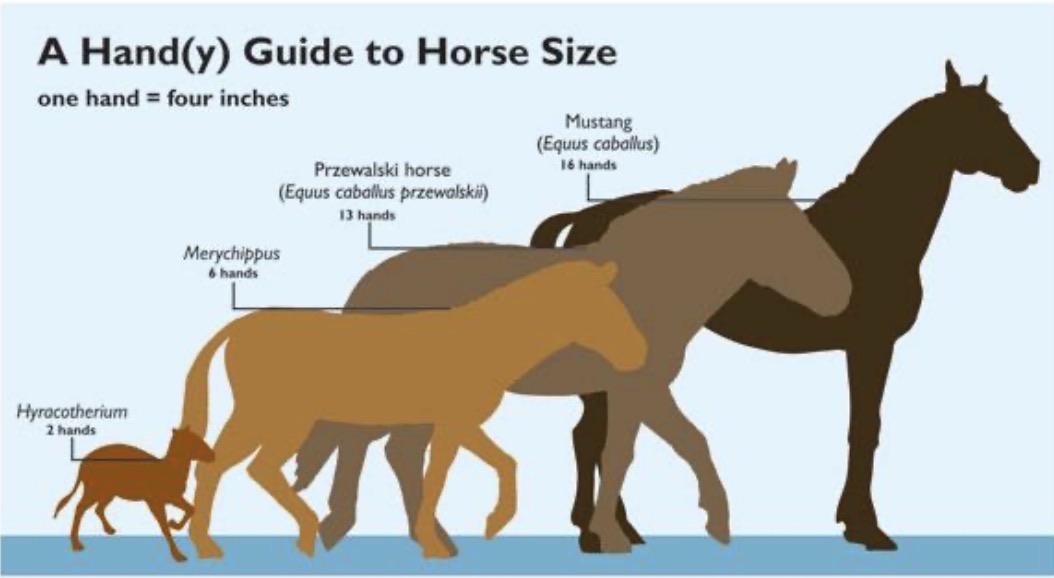
Image from Kelly Milner Halls and the Wonders of Weird.
Before we begin, there are some things I should address because this is a very touchy subject on this sub. All I ask is that the reader please forgo their contentions, set aside their biases and review the simple, plain facts and information presented about Mustangs and Przewalski’s Horses (P-Horses), all of which is easy to look up and find for yourself. This isn’t a proposal for any kind of rewilding, rather, it is a report of basic fact that could be used in future discussions regarding this topic. Please be civil, but I welcome calm debates and would like to hear any thoughts you may have and information that I may have missed (I know I most certainly have). With that out of the way, let us begin!
Appearance:
Mustang:
Lankier. Varying coat patterns and colors. Draped mane.
P-Horse:
Stockier. Bay Dun coat with occasional striping.
Short, upright mane.
Size:
Mustang:
Variably stand between 52-60 inches and weigh between 700-1,000 lbs. Lengths can vary by herd but typically fall between a range of 5.0-6.5 ft long excluding the tail.
P-Horse:
Generally stand between 48-56 inches and weigh between 440-750 lbs. Measured at 6.9-8.5 ft long excluding the tail.
Diet:
Mustang:
80-90% of diet consists of grasses with supplements of browse consisting of sedges, shrubs, leaves, bark, and forbs. Depending on conditions and season, more or less browse can be included in their diet. Specific species of grass and browse vary by region.
P-Horse:
Just like the Mustang, nearly 80-90% of a Przewalski’s horse’s diet is made up of grasses. On the steppes they don’t have many opportunities for consuming browse however they do eat it when it is available. This behavior is mostly observed in European reserves. Specific species of grass and browse vary by region.
Behavior:
Mustang:
Stallion guards a harem of mares. Chases away rivals and younger males. Flight response typical but will resort to violence if cornered. Spend most of their day grazing. Not as wary around humans and can still be tamed by them. Regardless, it is not recommended to approach a wild mustang herd. They are still quite dangerous and not automatically friendly pets despite their domestic ancestry.
P-Horse:
Stallion guards a harem of mares and chases rivals away. Also typically runs from danger but can put up a fight. They too, spend most of their day grazing. Unlike mustangs, they see humans as an immediate threat, and will run away upon spotting humans. Nearly impossible to tame as they are truly wild animals. More aggressive than mustangs.
Life Expectancy:
Mustang:
On average live around 15 years but depending on conditions, they can live as long as 25-30 years.
P-Horse:
Typically live between 20-25 years.
Breeding & Gestation:
Mustangs:
Mares become sexually mature at around 12-15 months but do not breed naturally until 2-3 years of age. Stallions become sexually mature at 15-18 months but often are unable to breed due to older males restricting access to females. Young stallions typically have to wait until around 5 years of age before they can start breeding. Breeding occurs in the late spring or early summer to time their births at around the same time the next year. Warmer climates can allow for slightly earlier breeding while colder climates restrict the time window to the summer. The gestation period is roughly 11-12 months.
P-Horses:
Mares become sexually mature at around 2 years of age but usually don’t have foals until around 3-4 years of age. Stallions become sexually mature at around 2.5-3 years of age, but due to older males restricting access to females, often do not breed until around 5 years of age. Breeding occurs during the late spring and early summer. They too have an 11-12 month gestation period. This too, aligns the births with the warmer seasons of the following year.
Again, please keep the discussions civil, but feel free to add anything that could further progress the conversation such as extra information or counter arguments. I look forward to seeing all that is said.
Edit: Mixed up the Mustang and Przewalski’s horse lengths. Have now fixed. Apologies.

