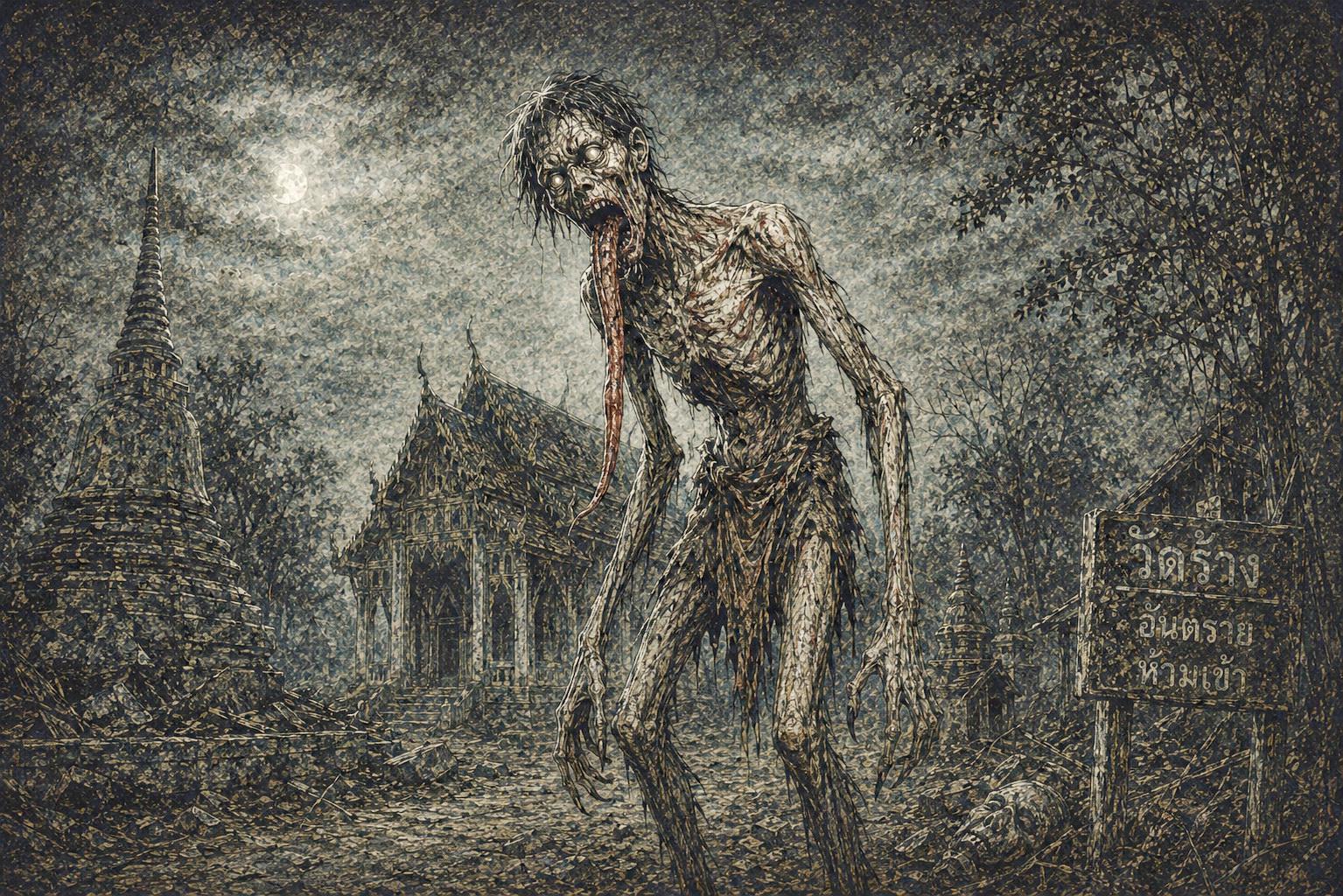
Among the many supernatural beings found in Thai Folklore Ghosts, few are as haunting—or as culturally significant—as the Preta, known in Thailand as Phi Pret. More than a terrifying Thai Ghost story, the Preta represents a deeply rooted moral and spiritual concept shaped by centuries of Buddhist belief.
To many Thais, the Preta is not merely a monster of the night, but a tragic symbol of suffering caused by the consequences of one’s own actions. This Thai Hungry Ghost serves as a powerful reminder of the law of karma.
The Terrifying Appearance of the Hungry Ghost
In traditional Thai belief, Pretas are described as enormous, skeletal beings, sometimes said to be as tall as a coconut or palm tree. Their skin is dark and dry, stretched tightly over thin bones, giving them an almost corpse-like appearance.
Yet their most unforgettable feature is their tiny mouth—often described as being “as small as the eye of a needle”. This cruel deformity condemns the Hungry Ghost to endless hunger and thirst. No matter how desperately they seek food or water, they can never consume enough to satisfy themselves.
Where to Find These Thai Folklore Ghosts
According to local legends, Pretas often wander at night near temples, cremation grounds, or abandoned places. People say they announce their presence with eerie cries or long, shrill wails carried through the darkness.
In some stories, these Thai Folklore Ghosts stretch out giant hands toward the living, begging for merit and compassion from those still alive. This interaction highlights the connection between the spirit realm and human morality in Thailand.
The Origins of the Thai Hungry Ghost in Buddhist Belief
The origin of the Preta comes from Buddhist cosmology, particularly the concept of rebirth according to karma. In Theravada Buddhist belief, the Preta Realm is one of the unfortunate states of existence into which a person may be reborn after death.
Unlike demons or evil spirits, these ghosts are not inherently malicious. They are suffering beings trapped by the consequences of their past deeds. Thai tradition commonly associates rebirth as a Thai Hungry Ghost with acts of:
Cultural Significance and the Southern Thai Ghost Festival
The Preta occupies an important place in Thai culture beyond ghost stories alone. For generations, tales of the Thai Ghost have been used to teach moral responsibility, gratitude, and compassion.
This belief remains especially visible during the Southern Thai Ghost Festival, known as the Tenth Lunar Month Festival. During this period, descendants perform ceremonies such as Ching Pret to relieve the suffering of their wandering ancestors.
Conclusion: The Timeless Warning of the Thai Ghost
For foreign visitors, the Preta offers more than a glimpse into Thailand’s ghost lore. It reveals a worldview in which morality, family duty, and spiritual consequence are inseparably connected. Behind the frightening image of the Thai Hungry Ghost lies a timeless warning: that human desire without compassion may ultimately become a form of eternal hunger.