r/flagfootball • u/Beneficial-Log9472 • Sep 20 '26
Highlight Great Eyes tell Great Lies.
101
Upvotes
r/flagfootball • u/bloomberg • Oct 08 '26

r/flagfootball • u/Level_Watercress1153 • Oct 22 '24

Our season ended last night after a great journey that started at the end of July. We ended the regular season 9-1 and earned the 2 seed in our leagues playoffs. We advanced to the Championship after a crazy ending in the Semi’s. We scored with just under a minute left to go up by 4. The other team on a sweet hook and ladder broke one that should have ended it, but our far sided corner chased the kid down at the 3 and then a 4 play goal line stand sent us to the Finals against the team that handed us our only loss.
We found ourselves down at halftime 22-0 and my kids were crushed. I spent all of halftime calming them down and convincing them to just win one possession at a time instead of trying to come all the way back. Down 22-18 on the final drive we come up with a huge interception with 30 seconds left (they were in the no run zone at midfield) and 2 time outs left (coaches save your time outs!) We get down to the 10 and I run the clock down to 3 seconds and call our last time out and it’s 4th down (this is where the picture is from.) We ran a jet sweep with our fastest kid, and our teams only selected All-Star. The entire defense collapses on him like we knew they would, and he pulled up short and fired a perfect strike to a wide open receiver to win the game 24-22 and we pulled away with the Championship!
To watch these kids grow from where we started on July 20th to where we ended last night has been simply amazing. My family and I moved to SE Alabama from Colorado knowing no body and we signed up for football the next morning. Our entire team had to be drafted as all the other teams had the bulk of their rosters from previous years minus 2-3 players. The way these kids came together was simply amazing and I couldn’t be prouder of them. This is why I love coaching.
r/flagfootball • u/No_Secretary_6515 • Mar 15 '26

Hey everyone I’ve been working on a prototype for something I’m calling Smart Flags, and I’m trying to figure out if there’s actually a useful application for flag football leagues or pickup games.
The idea is pretty simple:
• Each flag has a magnetic pull sensor inside it
• When the flag is pulled, it instantly detects the event
• It sends a signal to a phone/app
• The system can also capture the GPS position where the flag was pulled
So essentially it can detect:
•	when a flag is pulled

•	which player it belonged to

•	where on the field the play ended
I originally started building this for a real-world game platform I’m working on, but the more I thought about it the more I wondered if flag football itself might benefit from something like this.
Some possible uses I’ve thought of:
• Automatic play-dead detection
• Tracking where a runner was de-flagged
• Pickup games without referees
• Training drills for coaches
• Player stats / run tracking
• Youth leagues where refs miss plays
But I honestly don’t know if those are actually useful to real players or league organizers.
So I’m curious:
If you had flags that could detect when they were pulled and where it happened on the field, how would you want to use them?
r/flagfootball • u/[deleted] • Dec 13 '25
I’ve coached 5th/6th grade NFL Flag for 4 years now, year round. Tonight’s game had a 10:14PM start time, which I already found wild for 10/11 year olds, but whatever. It is what it is. Most of our games are Friday nights between 7-8:30 start times. One late game isn’t going to kill these kids. 11 out of 12 of my kids show up. 1 kid from the other team shows up. 1!
No email from the league. No text. No nothing. I walked into the office and asked the guy who runs the program if he heard anything at all from the other team and he said no.
So we get a free win via forfeit but who does that?! I find it so very disrespectful to the kids, to their parents, and to me. Who does that?
r/flagfootball • u/Playdoemixer • May 07 '23

I’m making some 7 on 7 flag football plays(non-blocking).
Any tips?
r/flagfootball • u/ComplicatedGuy_0514 • Sep 12 '26
My son had one passing and one throwing today. Unfortunately we took the L, but the boys played hard!
r/flagfootball • u/Round-Arachnid287 • Mar 21 '26
Watching this on Fox right now. The US team is humbling these NFL guys right now. I think they're going to come out of this with more respect for those guys
r/flagfootball • u/FuhgitAboutIt • Apr 06 '26

First year coach with limited tackle experience in my youth. I have a team where there are some decent athletes on. No strong arm quarterback but decently accurate for this age. Quick players but not the best hands and a handful of players that have nearly never seen a sport until this year. We just had our first game and it went ok. Lost 7-21. Our short passing routes, running and play action worked best for us. I’m running only 2 formations to simplicity (just added a third).
Any tips on how to improve my playbook? Quarterbacks can’t run. Rush has to stand 10 yards behind the LOS. Big picture I just want the kids to have fun and a couple wins throughout the season. Everyone gets essentially equal playing time
r/flagfootball • u/joshtaco • Nov 21 '25
I will simply call the pass-rusher PR here.
To give background: In our 6v6 league, blitzers start 7 yards back from LOS. Blitzers must identify themselves. May blitz every play if desired.
Before anything, you need to know the QB you're facing:
Are they right- or left-handed?
Do they like to scramble?
Do they focus on getting the ball out fast?
If they scramble, are they good at it? Can they outrun you in open field?
Do they prefer certain plays over others?
Do their plays change if up/down by multiple scores with little time left?
Do they incorporate RBs into their plays regularly?
Do they panic under pressure?
Do they get in their head if they throw interceptions?
Do they have the arm strength to send a deep pass?
Do they commit penalties more regularly?
Do they ever have trouble in the rain/snow?
After this, we need to examine their line:
Is the center blocking?
Is the snap count delayed/silent?
Do they line up a RB every single play?
Do they have any players on offense that also play defense?
With this information in hand, I want to examine the PR themselves before talking about tactics:
Lining up: -This may sound basic, but I see these failures all the time and they hold back defenses. If your team is pass-rushing, then do it correctly or else you'll just make the situation worse.
If possible, only play your PR on defense. I know in many leagues this isn't possible, however, so do what you can with this info. I sit out every offensive drive, so when I go out, I'm never gassed and can sprint the 3-9 plays needed. Contrast this also with the QB you're facing: Do they also play defense? What position on defense? Are you noticing them be winded at all as the game goes on? This may limit their desire/ability to take off full-speed.
Make sure the PR is always checking with the line judges to ensure they are not incurring penalties. Same goes for indicating they're rushing if needed. This should go without saying, but make sure they're ready for the snap. I often see offenses doing no-huddles, especially if down by points at the ends of the halves. The PR is caught off guard or not lined up properly and the offense will capitalize if they know that's the designated PR.
I will usually vote to not overcomplicate this part: understand what hand the QB is throwing with and have your PR understand the concept of strong vs. weak side. Most QBs are right-handed (not all, obviously), so if they get pressured to their left, they will likely favor the short/medium passes on the left side of the field as they will have trouble not only airing it out to their right, but opens up the opportunities for interceptions most often. This is not always the case: some QBs excel throwing on the run, and while not as effective, it can still operate as a basic rule of thumb. When in doubt, stick with pressuring their weak side.
With the above said, your PR should rpactice moving around the LOS depending on what rush they want to throw. Most of them should be pressures on the weak side, but mix it up with strong side pressures, wider-arced pressures, and fakes. We'll talk about these later.
The snap itself:
Have your PR watch the ball. Not the cadence. This is one of those points that I think gets overlooked as 99% of the time it's not a factor. Most teams say "Ready...HIKE" and the ball is snapped. No biggie. Let's talk about some things the PR should watch for on the snap. These are also ways to BEAT the PR of the opposing team.
How far can the center snap the ball? Every foot further that ball is snapped, the more time they have before the PR gets to them. It's as simple as that. With that said, can it be accurately done? There is nothing a PR can do with this specific item except be ready to run a lot in a game. If you're looking to defeat a PR, your answer likely starts with trying to snap it further for more time.
Delayed/silent snaps. Some teams don't operate normal snaps in an attempt to make the PR jump early and then snap it, rendering a PR unable to actually rush. This effect can be lessened by peeling off to assist with man/zone coverage, but then the issue becomes integrating that support in the middle of a play while a QB is all of a sudden able to throw with all the time in the world. A note here: in our league, if the blitzer jumps early and then the ball is snapped, they can become eligible again by returning back from that blitz line 7 yards back from the LOS. Obviously, this is time consuming and typically the ball is already out before that can happen, but worth mentioning in emergencies. These are typically signalled by the offense agreeing to move as one unit off of a modified snap, as they can't be moving off of verbal clues alone. With a delayed snap, the QB will often call out a cadence, and then the center snaps it at a time of his choosing afterwards. With a silent snap, there is no cadence whatsoever. With both of these, watching the ball becomes paramount. In certain circumstances, an experienced offense will even mix these cadences up (i.e. 1st and 2nd plays are delayed snaps, 3rd is normal, get the first, 4th play is silent, 5th play normal, etc.). What I'm describing is quite high-level though and unlikely to be seen, but it's worth noting as it's one of the top 3 things imho that will negate PR effectiveness.
Addressing blocks:
With most leagues, the center is allowed to either block or step in the direction of the PR. If you have a decent ref, there should be nothing extracurricular going on here, and these PR will simply have to ran around the center. That is the whole point of the center existing. From my viewpoint as well, the bigger the mass of the person at center, the more effective that block is as well. Sometimes I will see them spread their elbows out a little bit to catch me, but it's seldom.
The PR needs to define a run lane at the point of setting the line. It's not necessary, but I highly advise it as there's a better chance of getting flag called and an offensive player runs into you while they run their route. For example, if I run straight at the QB from the off-center front of him, there will often be no traffic. However, if I come from a wider angle or further back for some reason (having another player show a fake blitz instead for example), then the chances of a WR running a route straight into my blitzing lane is higher. The ofense needs to avoid the blitzer, but ONLY if the blitzer is running a straight bee line at the QB. To further impart this point (and I've learned this the hard way), if you start on a straight line to the QB and then choose to run parallel to the QB before crossing the LOS and that causes you to collide with a WR, that is actually DPI and will be called.
If the QB hands off to a RB, the QB can then stand still and provide a block for the RB. This is a another rarity as typically the RB is running, grabbing the ball, and taking off, but there are situations where I've seen the QB and RB run together to the side, QB hands it off, and then RB takes off in that direction further, putting the QB between himself and the PR. This is legal as the QB is not making extra movements to put themselves in front of the PR.
Other team assignments on defense:
This is likely more for the team as a whole to decide, as obviously this can go one of a million directions depending on how the team wants to incorporate a PR into their team.
As a matter of numbers, if you don't send a PR, you have an extra guy on defense to assist with coverage. Obviously, sending a PR means that element is missing. Some teams think not sending a PR means their defense will actually be better because of this numbers game - I highly disagree. SEND A PR. EVERY. SINGLE. TIME. The trade-off of an extra man in coverage is negated by the QB getting to take his time and direct his receivers to spread the defense. This is a recipe for disaster.
The only thing I'll say on this is have backup PRs that are highly fluid in changing coverage with the main PR. Keep them on the blitz line as often as possible, although their placement may change depending on coverage fluctuations in play. This is the difference between an average PR just doing so-so in the face of change and a lethal overall defense. This takes coordination and is not for the faint of heart. The backup PR needs to understand at least basic PR concepts and be able to change depending on who is calling the change-ups in play. In most cases, the person making this call should be pass-rusher 1. They can read the defense and make that call. Typically, communicationg should be kept to a minimum so as to not arouse suspicion on the offense's side of things. Some examples I've used before:
Regular pass-rush: No need for any communication. This should be your default package
Double-rush: Typically PR1 will just point in the direction they're rushing. To the offense, they will just guess you're indicating that's where you're rushing (and you are), however, PR2 will see this and understand I'm asking for PR help and that we are sending two at once at them. Furthermore, the rest of the team should understand at least the basics of this being done. EVen if they don't see the pointing in the chaos of the setup between plays, they should at least be able to see PR2 take off running and be able to either adjust the zones or play a higher man. As indicated with the numbers game above, obviously a second PR now means the receiving corps now has a leg up. If the QB is able to read the double blitz, then this can be a problem, but only if you let it. Typically, the double-blitz package is meant to more intimidate the QB when they need to make longer, accurate passes for a critical down. This is much less effective if they only need short gains. Use these sparingly or else a good ofense figures it out fast.
Playing the run: This one is easy to signal - the PR will actually move from the blitz line and play almost on the LOS. This is a highly recommended coverage for teams that spam the run or have QBs that seem to crutch on their running abilities only. The key for this is that obviously PR1 can't go after the QB as they're over the blitz line. They will need to watch for the hand-off and then they will be in a great position to attack them with very little ground that they need to cover. If the QB does not hand-off, my recommendation to just tear off with the RB and play man on them. Sometimes you can let them run into existing zone coverage, but that can be tough on the defense. Now, big reason I bring this up under team assignments is understanding where the PR2 fits into this picture. If PR1 does indeed need to tear off with the RB, then I recommend sending in the PR2 instead as the main PR package. This is often quite unexpected by the QB as they just saw PR1 lurking near the LOS and then leave them alone, only to find PR2 gunning at them from somewhere else. Big key for this run coverage is seamlessly transitioning into of these two paths, depending on if the hand-off does/does not occur.
If the ball comes out into a short pass, the PR should be ready to turn around after the ball is out of the QBs hands and be ready to assist the LBs with tackling. Often I hear from PRs that they are too far away to help at that point. I can't count how many tackles I've made running down the field. Even if they gash you, it's not a TD and you can setup for another stop. Every tackle counts!
Attacking the QB:
Many will argue that this is the meat of PR strategy, but as you can tell above, everything needs to be set-up to support this. Attacking the QB varies by PR, and I recommend catering to the strengths of your PR. Some thoughts on the matter:
Send the PR everytime - your PR needs to have the stamina to just get after it every single play and be ready to run at full speed
They should work on getting off the blitz line as fast as possible. Slow starts to runs is just giving the QB too much time
The default blitz should just be running headlong into the QB and being ready to pivot if they need to. It's my belief that too many coaches focus on breaking down before reaching the QB to get at the flags better, when in reality, this is mainly a psychological game. The QB is sensing another player running as fast as they can at them, and they are not assuming this player will miss pulling their flags, so they now need to process extra variables. (Do I evade? Do I pass early? Where's the WR I wanted to hit when we discussed in the huddle?) The PR is there primarily to get in the QB's prescence. Everything else comes after getting into the QB's bubble.
To speak on breaking down: There is a time and a place for this, but you don't want to be letting the QB bail out to their strong side repeatedly in an effort for the PR to take their time in accurately pulling the flags. It's a fluid motion and sometimes, the PR may miss or run past the QB. This happens because of the speed involved, especially in rainy weather. The PR shouldn't get down because of these misses. They're still effective in displaying to the QB they were there and will be there next time. Instead of breaking down, try rushing with a bit of a wider angle.
To speak on jumping: I see a lot of advice given about not jumping in front of the QB at all. I think there is a time and a place for it depending on the QB and what they like to do. If they're mobile or have a nasty fake, then the jumping will obviously have limited effectiveness. They will simply just pump fake and then bail and you have lost that battle. However, if the QB is intent on just getting it out as quick as possible and you've been able to establish that they won't be moving too much, then jumping up to try and swat the ball can yield limited rewards. I wouldn't count on actually swatting the ball (every time I have swatted the ball has almost always been by accident) but the more important past of doing so is that you are effectively making them arc the ball at the last second to try and avoid you. I find these often result in some tasty interceptions for your defense. Have your secondary be aware of this too if they see your PR jump!
Even if the PR gets their hand on the flag and the ball is out a millisecond before the flag is pulled, pull it anyways. There's no harm in doing so (as long as it's legitimately at the same time). Worst case, they give the flag back and the QB understands that they were literally a breath away from being sacked. Best case? A ref calls it as an actual sack.
If you know the QB is going to be mobile, try and note where they like to bail out to. Most of the time it's their strong side so that they can have more of an arm to use. Objective is to stop this. Feel free to take a quick cut pre-emptively in the direction you beliueve the QB will go, just understand that this is a gamble. The QB could do several things to counter this: step up, bail to their weak side, or simply throw as you're giving them a little extra time. These are all trade-offs though if you're getting burned by a scrambler.
Pulling the actual flags. Some people think this is an exact science and will recommend to always aim for the root of the flag attached to the hip. In practice, it's almost never this simple. The aim is simple: Pull the flag as any costs and at any speed. Both the PR and QB/RB will be moving at extreme speeds and theory only goes so far. This is something I can't really give advice for. Every PR is different and they need to aim for flags however it works for them: breaking down, sprinting headlong, coming at them from an angle, etc.
If I had to give any advice on the above, when the QB starts to move, their flags will start billowing in the wind behind them. Same thing if they choose to spin. If you can anticipate this, you can be going for a part of their body where the flag isn't, but will be.
Oftentimes my sacks are coming from the ends of their flags, with very little to grab. For this reason, I recommend gloves most of time, except in rain.
Penalties:
An interesting topic for sure, but in a nutshell, the PR needs to be aware of what penalties can be called on you/in your favor. A lot of this relies on the ref and their tendencies to call
If a penalty legitimately looks to have happened on the opposing team (e.g. QB goes across the line of scrimmage), I always make it a point to make a motion of shrugging in the air with my hands up to signal I'm confused about why it wasn't called. FINISH THE PLAY BUT DON"T SAY A WORD. Refs don't look kindly upon players telling them they need to do a better job of calling the game. What you can do is signal your confusion and then silently go back to the line and get ready for the next drive and hope they call it more in your favor next time. IT DOES YOU NO GOOD TO EVEN SAY A SINGLE WORD TO THE REFS. Instead, look to maximize the advantage of a potential flag in your favor:
As mentioned above, a QB can't go beyond the line of scrimmage. This is way its important for a PR to finish the blitz. If the QB does dodge your blitz, then continue moving from behind them. Most QBs tend to start running towards the sidelines to maximize their window to throw. If you're comign from behind them after you missed from them sidestepping, try to cut them off by running at an angle towards the sideline as well, anticipating that they'll be doing the same. I see many PRs who act like a dog chasing a car and try to tackle in open field. Not only does this take longer, but the QB has you in their peripheral vision to act off of. Make them guess a little and there's potential for them to cross that LOS for a flag.
Impeding the blitzer: in many leagues, the offense cannot interfere with the blitzer. They need a clear lane. Maximize the potential for one fo them to run into. Not on purpose mind you! The refs are smart and won't call it unless it's legitimate. But for example, if they run trips on one side, you can attempt to come off at an angle and make a straight beeline for the QB. I have had runners sprinting headon just blindly run into me and I get the call. Remember: the offense is repsonsible for avoiding the PR, but this does not mean the PR can be running weird routes themselves to the QB, it NEEDS to be a straight line.
Offsides: Obviously a reminder to be back behind the blitz line. I usually check in with the ref before the game to let them know I'm the main blitzer and I will always look their way to make sure they aren't giving me a look to move back or anything. Getting a sack just to find out you were past the blitz line is the worst feeling in the world.
Roughing the passer: This is a good one to look out for. It can happen easily, especially if the QB has a long throwing motion. If the PR is jumping in front of the QB, then they need to be incredibly careful that momentum doesn't carry them into that throwing motion. This is another reason why I just avoid jumping most of the times, it's not worth it. You will also need to make every effort to avoid contact with the QB. If I am coming at them head-on and they releas the football, I will just throw my body away from the QB to avoid any possible calls from the ref. Some light contact may happen, but good refs won't call that as its not intentional.
Weather considerations:
Rain - the most likely condition to be encoutner outside of the norm. I actually like the PR in the rain and I think the benefit is in defense's favor here. The ball is wet and when pressured, the QB is throwing awful balls, sometimes without the laces properly lined up. Sometimes I see them just straight-up drop the ball when they panic. This can also happen with the center! Teams will often play the run more often on offense in the rain, and if so, it's important to play the line closer. If the center is stressed/gassed, if you line up at the blitz line and then quickly get up to the line to get in their face to then play the rain, I've seen some mishandled snaps come out of those. They're rare, but they happen. Another big tip for the rain is to watch your gait. Small steps will win over speed here. The QB and receivers are dealing with the same issues and they will likely be utilizing small throws. Let your linemen deal with those and focus on pursuit.
Snow - while rare, I have played in at least a half dozen now in the driving snow. I will say the opposite of the rain above: I hate the PR in the snow. You slip, you fall, you can't plant whatsoever. It's miserable and you just honestly just do what you can. Some teams may honestly even consider abandoning the PR altogether to drop more into coverage. It's not a bad idea, but be aware of the big thing you'll give the QB: time. That will be the one resource that they'll want in the snow and, agan, if you can pursue at all, they will be a little more likely to be sliding and I've found they love bailing to the sidelines immediately
Wind - I love the windy days as PR. I can still plant and pursue, but the QB needs to be factoring these variables into their throws on the run. Just use your normal tactics and let the pressure speak for itself. The big item to keep in mind with the wind is which way it's blowing after halftime. If it's to the QB's back, they can air it out easier. If it's in their face, they will prefer the short throws. If it's coming across the field, they're going to want precision and you may have another second on the pursuit.
Sun/the heat - The points above about where the sun is and what direction you're driving comes into play here. I've foudn the sun in the QBs eyes doesn't really affect them too much, it's the receivers when they need to look for the ball coming to them. This is important! If the receivers are looking at the sun for the ball, you almost want the QB to be throwing a deep ball so that the receivers need to catch a contested sun ball. Most receivers will fail these tests as it disappears straight into the ball of fire. Because of this, as a PR, you will actually want to prefer some jumping here. Your aim is to have them put too much air on the ball when they throw downfield - you want them to arc that sucker as much as possible to put it up high. Obviously, don't abandon the pursuit, but don't let them bail as easy. Almost let them feel comfortable with the pass. Especially in the heat, they will get sweaty fast and will just want to get it out and be done with the ball as the game goes on. The heat will be pressing the PR, they are sprinting every play after all. But it's just getting it done, stamina will be see it through here. Stay hydrated kids.
Ways to defeat the PR - to summarize, I want to give perspective as to the tactics that make life as a PR hell:
Delayed/silent snaps - these are my worst enemy. If a center/QB/line can pull these off, it will easily gain you a good quarter of a second extra to throw. The offense will need to be disciplined though, as I find some teams attempt these and they commit false starts 1 our of every 6 times. Need to be operate this cleanly.
Snapping the ball back as far as possible - if your QB takes snaps in shotgun, then you are a tasty meal for the PR. Get the center to practice snapping as far back as possible and to a point where it can be replicated each time. The further that distance is, the further the PR needs to run.
Having an effective center - if you have a larger person, then make him the center and have him block after the snap. He will help slow the PR down to a certain extent. After the PR is past, just have them be the bail-out option.
Running? Work on jet sweeps. Anything else is the RB taking off from a stand-still and a good PR will be right there. If you have a good RB that can beat the PR, then by all means, abuse it. If the PR is not coming up on the line, abuse it.
Passing? I hate the short passes. The PR works best when the passing game is accounting for 3+ seconds of route formation. At that point, the PR is on the QB and causing them all sorts of headaches. The QBs I sack the least are the ones who get it out in 2 seconds and consistently do so each and every time. Even if they are only picking up a few years, as long as they're moving the ball down the field, what they're doing is causing the PR to sprint for about 7-8 plays. This is where the offense can save the PR: if the offense can extend a drive AND the PR is able to rest (some times have the PR as a WR as well keep in mind), then the offense should focus on lengthening the drives if possible.
Evading the PR - the QB should get good at bailing to their strong side if they need to. Many QBs take the bait and start to just run away from the PR: this is exactly what a good PR is planning on happening and why they attack that side. A good QB should be either adept at sidestepping to avoid a head-on rush or be able to start to their strong side ahead of time before the PR is there. By doing so, they can buy themselves another second or so and extend that play until a WR can get open.
Feel free to PM or comment with any questions - happy to give my perspective on anything!
r/flagfootball • u/Sonnyboy35aa • Feb 13 '24
r/flagfootball • u/Responsible-Snow-589 • Jun 05 '26

I only started flag my beginning year of high school on an inaugural team- I didn’t even know how to throw a football before that. I’m a rising junior now and I’ve done several exposition camps, including a couple with the Chicago bears. I’m incredibly grateful for the sport and the opportunities it’s presented to me, so I just thought I’d share some cool pictures from then. To any girls thinking about joining, I’d say you absolutely should!! Best of luck to everyone this upcoming season <33
r/flagfootball • u/EntryParking • Mar 17 '26
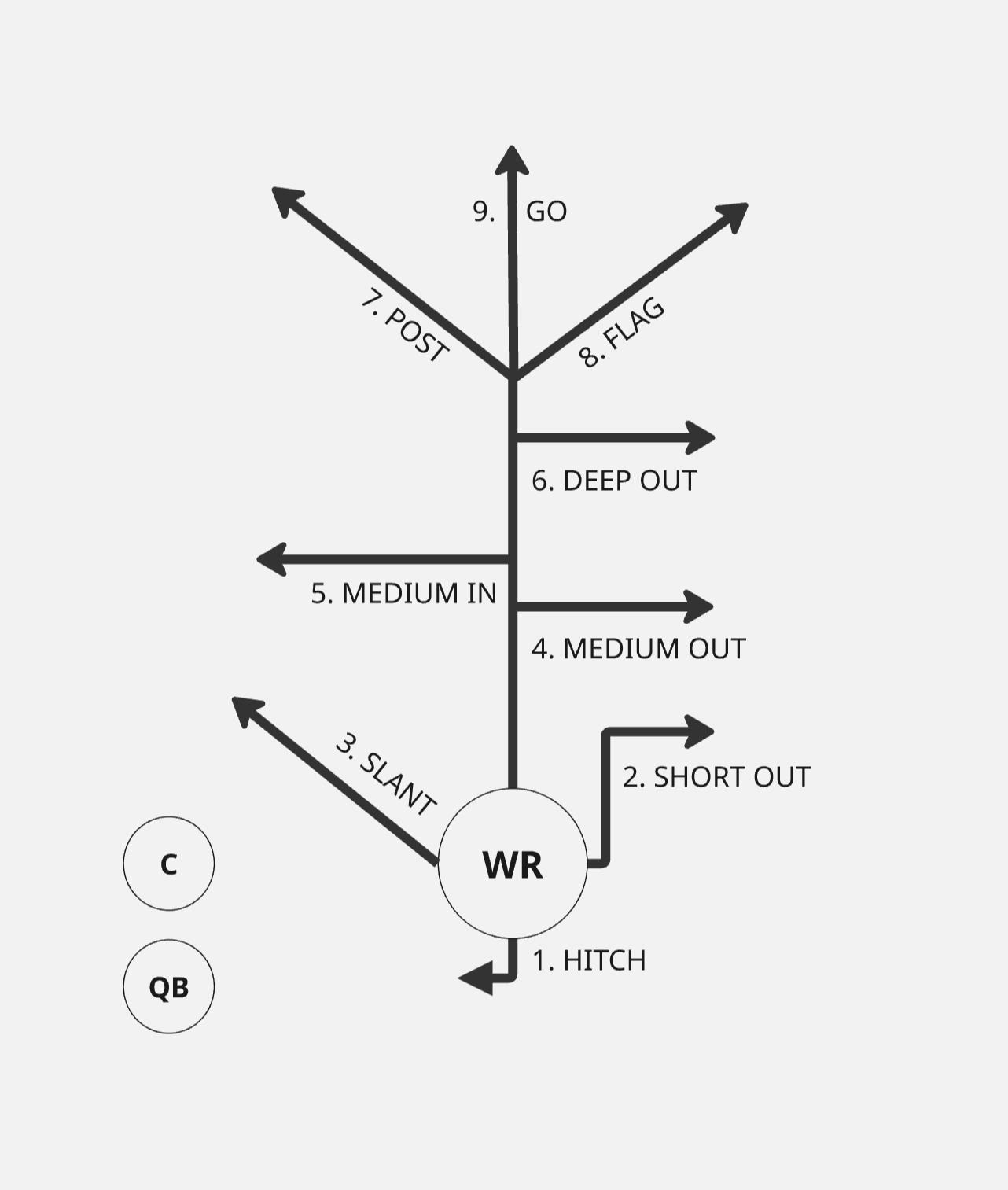
This is what I'm doing for 9 and 10yr olds, removing the curl route since it created easy picks, and have "go" and "return" options on everything 3-8.
r/flagfootball • u/Negative_Ad7379 • Feb 16 '26
r/flagfootball • u/OffendedBoner • Jun 03 '25
When DBs try to stop thi
r/flagfootball • u/Tweedledee72 • Jun 02 '25
Had a parent tell me their kid wants to play flag football again in the fall, but ONLY if he gets to play for a team I'm coaching.
Y'all can't tell me anything, I'm on top of the world.
r/flagfootball • u/Bsclassy • Apr 04 '23
The obvious differences with flag football and tackle football are the flags themselves. While the general idea is to just throw on a flag belt and some flags and go to work, there are a number of things seasoned vets will do to make the simplest part to understand of flag football much more difficult to perform
In my previous Upping Your Game post, we went over equipment and some of the best places to upgrade your gear. In this post, we want to focus on how they work compared to what they are.
The Belt
You want to ensure that your flag belt fits your waist properly. Too short and the belt will fall off easier (this is incredibly important when using Triple Threat flags instead of poppers). Too long and in many leagues the defense will have a something to hold you with without getting called for holding.
The Popper connectors
These are the inserts located along your flag belt that your flags will insert into. Overtime these will begin to expand from use and will cause your flags to fall out more frequently. You can replace these (along with the poppers themselves) for around $10-15, but there are some clever (and legal) tricks to keeping them tight:
Using a beer bottle or wine bottle to insert those female connectors into will keep them tight between games
Using hose-clamps while not in use to re-tighten the connectors
Using PVC couplings or sockets to insert the connectors into
Essentially, the idea is to find a hard object that the connectors can insert into to squeeze the female cups back to their original shape.
The Poppers
Poppers will degrade over time and, unfortunately, the only way to really get the most out of the majority of them is to purchase new ones
The flags
It's worth it to note that flag material does make a difference under certain situations. Some material are much more slippery or stick to the leg in wet conditions, whereas some material fly around much more easily and unpredictably or are light enough to make pulling a flag more difficult, but durable enough to not just tear. For the general audience, pick yourself up some flags (I'd recommend at least two sets) that are in your budget, comfortable, and fit to your taste/style.
Some forms of flag (5v5 versus 8v8, for example) have different size regulations for your flags. Generally speaking, the shorter your flags are, the harder they are to pull.
It's best to read the rulebook for your league/tournament to understand what you can/can't do regarding flag length and material, as many leagues/tournaments have made certain materials/lengths illegal for play.
There are some insane athletes out there doing some crazy moves in flag football that would never be done in a normal football setting. While some moves are far more advanced for a casual player, the simple idea of these innovative moves are to put your flags (thus, your hips) at a level the defenders will have a more difficult time pulling them.
What is it? Probably the most popular and one of the most difficult to perfect, the dip move consists of you getting as low to the ground as you can in a lunge or squat motion, without having your knees touch or falling over. Most dips that have forward movement will happen with a lunge movement, whereas most stationary dips will just be squats with hip thrust to come out of them. Some other dip variations consist of jump cuts using a dip and using your off hand to balance/push off the ground. I do not recommend this style of dip unless you are extremely skilled as even those who master this style of dip are prone to getting called for a flag guard using their off-hand to balance/push off the ground.
How do I do it? You need to have strong legs, a strong core, and excellent balance to master the dip. Workouts to maximize your dip potential would be lunges with weight, explosive jump lunges at body weight, hang/power clean for explosiveness from both legs & core, and finally single leg RDLs with dumbbells. Stretching and keeping your muscles loose is extremely crucial for any explosive-style workout or move, so keep on top of your body with daily stretching. For what its worth - your body weight does matter for any explosive work, but it's not impossible to do. I'm 250+ and frequently perform dip moves, however I do some form of leg workout almost every day. You know your body better than anyone else, so if you attempt to perform a dip, you do so at your own risk and within your own limits!
How do I stop someone from doing it to me? The downside of a dip (especially one where the defender(s) are closing down on you), is that you generally have to continue to move forward to be effective. The proper way to shut this down is to simply get in front of the runner. You, as a defender, have just as much right to almost any spot on the field as the offense. The catch here is similar to basketball, where you need to establish your position that area (you can't simply sprint straight into the area and be given a charge; this is up to ref discretion) to be given the charge (Rule 6, Section 3, Article 5)
Hip Thrusts
What is it? A hip thrust just involves you moving your hips away (or towards) a defender to put your hips (and flags) in a position the defender wasn't expecting. Hip thrusts work exceptionally well against players with smaller arm lengths & hands, as they have much less wiggle room in regards to ensuring they pull your flag once they've committed.
How do I do it? Keeping your hips explosive and well-stretched is key. On top of this, keeping your spine healthy is also vital in any explosive movement. I would recommend incorporating stretches & movements such as lunges with a spinal twist, knee-to-chest, figure four, lunging hip-flexor, and a-skips into your stretching repertoire. I always use the "karaoke" running drill early during my warmups to get my hips rotating & warmed up early.
How do I stop someone from doing it to me? The worst part of an offensive player doing hip thrusts is that it tends to lead to jammed fingers for the defense. The smart way to play this is to locate the flag belt connector and aim for that rather than any part of the flag. Swipe down from that area instead of grasping towards a moving flag.
Jumps
What is it? A jump is exactly what it says, you jump up. Probably the easiest overall to perform, it must be understood that some leagues/tournaments actually banned the basic jump as the interpretation of a jump is/was frequently exploited with dives. Most jumps are coupled with mid-air hip thrusts or spins to put you hips at a spot high, then twist in the air to keep your flags moving and more difficult to pull.
How do I do it? If it's a legal move in your league, you essentially just want to do basic explosive work. You don't need to jump out of the building to be effective, so find a balance between how high you jump and the ease of coming back down without losing momentum. Box jumps, depth jumps, squats, and bounding are some exercises to perform to be effective at jumping. Keep in mind that any time you leave your feet you're prone to not landing correctly (you're running through hands trying to get your flags that can easily throw you off balance), so if you plan on doing this sort of move be sure to be aware of your surroundings. If you've ever played in the paint in basketball, you'll know exactly how it is to go up with nothing but bodies underneath you. It can be dangerous and it's best to focus on where you land to stay comfortable.
How do I stop someone from doing it to me? Similar to a dip, if you can establish a stationary position prior to the defender making the move, then they can't just run through you with any move (you also can't hurdle players in flag football). It's tough to defend against someone leaving their feet, but the best you can do is locate the belt connector and aim for that.
The Reverse Spin
What is it? The spin move in tackle football is an exceptional move to master, where you will spin away from a defender attempting a tackle. In flag, you generally want to do the opposite: spin into the defender. Visualize how flags move when you run/perform a move: if you move left, the wind & momentum pushes them right. When you spin into the defender, you're moving the closest flag to the defender away from them and behind you. In a bang-bang situation, this will put the defender a step behind where you're going, so the flag coming towards them will automatically be near-impossible to come back to.
How do I do it? It's difficult to teach this, as you simply just need to spin. I would recommend working on balance-related exercises to keep your balance while you spin.
How do I stop someone from doing it to me? The best way is to play smart. Again, locate that flag connector and aim for that while swiping down. When I go for pulls where I can simulate a "wrap-up", I will do so. So long as I am attacking that flag belt, pulling the flag, and not holding anything other than the flag belt/flag itself, then I'm not holding the player. This is one of those that are up to ref discretion, but I've never been flagged for going for both flags at once.
r/flagfootball • u/laceyourbootsup • 21d ago
Just a shoutout to this sub and its members and posts.
I’ve been coaching for 3 years (1-2 seasons per year for a total of 5 seasons). Our teams have made the title game in every season, and we won this fall season for our 3rd ring even though our team was full of kids almost 2 full years younger than some rosters.
This sub was a huge help. Our kids have never been the best/most athletically gifted team. The only constant roster player has been my son who is never one or the best or worst players. Outside of one season and lucky roster assignment, I have not had any “cheat code” level of players on the team.
We have won through effective and appropriate play calling and installing defensive strategies that work vs the type of offense we play.
There are no secrets. Pulling flags and being in the correct spot to pull them is how we’ve shut down teams.
Using the rules to build the best defense possible and then running offensive schemes that kids can grasp but also create defensive gaps.
I really credit this sub for explaining how to have a good physical playbook (I laminate about 6 formations in a small binder and write on the page with a dry erase marker). It takes a split second in the huddle and its very easy for kids to follow what you draw as long as the formations stay consistent
r/flagfootball • u/Overall_Tie_6997 • 14d ago
Sorry I am about to go on a little bit of a rant here. I am a 18 year old coach and I coach 7/8th graders. And I coach by myself no assistant or nothing which isn’t a problem since I have been coaching since I was 16. It was the fall season so most of my usual players were in tackle or busy with another sports commitment. So this was a newer experience for me.
I posted something after week one saying that I felt that we had no chance against the team we played in the championship if I was being realistic (which i said with emotions high). They finished 7-0 all mercy rules including us twice except one game. They also had a straight bye into the championship. We on the other hand finished the season 4-3 won our first playoff game to make the championship.
So it is us against this 7-0 team who had won gold playoffs in our location 2 straight seasons playing against us who they mercy ruled twice.
I wanted to give our team the best chance to win which was to snap the ball as soon as the ref counted down to one. Which we did. We started the game off with a 4th down sack and a touchdown which had never happened before. Then every tome we had the ball we would snap the ball at the last second and never really try anything risky on them. I am talking EVERY drive of the game. The opposing coach as expected was getting frustrated with that. Parents started yelling at my team to play and the other coach said something about “playing real football.” With some lucky ass plays like the opposing team jumping a pick bouncing off a players cleat and we catching it for a touchdown we somehow won the game 19-18.
We shake hands after the game and the other coach says something like thats not a real win which was surprising to me because usually we are cool to each other.
What made me the most upset was when we are getting celebrated by the director taking photos and handed our rings a parent walking back to their car are yells and says we played like babies. Literally anything to try and take away our moment.
Is running the clock really like unethical? I can see maybe it was too much doing it in the first quarter but still we made plays to win the game and if they wanted the ball they shoulda stopped us. If i could go back id probably do the same thing I am still pumped off from this win and it was on friday 😭. like it doesnt feel real js doesnt feel right or that serious that parents are yelling at my players who are tryin to celebrate a championship win.
r/flagfootball • u/TIAnalytics • Aug 14 '26

Japan’s 5v5 offensive framework at the IFAF World Championship is a masterclass in structural efficiency. After deep-scouting their matchups against Canada and Austria, here is the breakdown of their timing matrices and clock management.
1. Clock Management & Elite Game Management
Against Austria, Japan utilized tactical spikes to save time and completely eliminate coverage sacks under heavy pressure to secure their 42-41 win. Conversely, against Canada, they instantly shifted to a flawless compressed "chew clock" strategy to freeze the game and milk the clock away. High-level adjustments in both scenarios.
2. The Timing Matrix (TTT)
The engine behind this system is execution speed. Film grading confirms Japan operates with a TTT (Time to Throw) consistently under 2.95s in their RPO sets. They deliver the ball before the 1-man rush can even clear the 5-yard mark, completely neutralizing defensive pressure
3. The Seam-Slant RPO Concept
[Look at the schematic layout pinned in the comments]
It's a slot snap straight to #0, who immediately throws a lateral pitch to #5. From there, #5 has the option to run, pass down the field, or give it right back to #0 running to the sideline. Super clean and tough to defend.I’m currently coding this entire system, and the definitive Team Japan Tactical Guide will drop right after the tournament ends this weekend.
r/flagfootball • u/NiteNurse619 • May 15 '25
r/flagfootball • u/TheBoNix • Sep 14 '26
Second overtime 2pt attempt to stay in the game. They won on the third yardage based attempt.
r/flagfootball • u/FlagFootBallLife • Mar 04 '26

I drew up what I thought I saw (no video to confirm). How would you defend against these plays