r/fallacy • • Aug 06 '26

Why is No True Scotsman a fallacy?

12 Upvotes

The classic example of the No true Scotsman fallacy is to say

"No Scotsman puts sugar in their porridge."

"My uncle Angus is Scottish and puts sugar in his porridge"

"Well no true Scotsman puts sugar in their porridge."

To me, this doesn't seem like a fallacy. It just seems like a breakdown in communication as the two interlocutors are speaking over each other and are using different definitions to describe something. After all, what is a Scotsman? Is it based on someone's ancestry? Where they were born? Where they were raised? What their passport is? There's no objective definition. So if someone wants to say that the presence or absence of sugar in porridge is an integral part of Scottish identity then that's just a rather niche and unique definition, but I don't think it can in good faith said to be wrong. Just poor use of language. Consider this counter example.

"Stars are huge balls of hot gas going under fusion reactions"

"Matt Damon is a star and he's not a huge ball of hot gas."

"True stars are huge balls of hot gas."

The two people are just using the same word or phrase to describe two distinct things. It's poor communication to treat them as if they're the same, but it's not like the actual argument is incorrect. The argument being "this is the criteria something needs to be X and if something does not match this criteria then it is not X", which is kind of how we make definitions in the first place.

I'm sure I'm not the first person to use this reasoning and that this has been discussed at length before. So tell me why I'm wrong.

r/fallacy • • Oct 07 '25

The AI Slop Fallacy

0 Upvotes

Technically, this isn’t a distinct logical fallacy, it’s a manifestation of the genetic fallacy:

“Oh, that’s just AI slop.”

A logician committed to consistency has no choice but to engage the content of an argument, regardless of whether it was written by a human or generated by AI. Dismissing it based on origin alone is a fallacy, it is mindless.

Whether a human or an AI produced a given piece of content is irrelevant to the soundness or validity of the argument itself. Logical evaluation requires engagement with the premises and inference structure, not ad hominem-style dismissals based on source.

As we move further into an age where AI is used routinely for drafting, reasoning, and even formal argumentation, this becomes increasingly important. To maintain intellectual integrity, one must judge an argument on its merits.

Even if AI tends to produce lower-quality content on average, that fact alone can’t be used to disqualify a particular argument.

Imagine someone dismissing Einstein’s theory of relativity solely because he was once a patent clerk. That would be absurd. Similarly, dismissing an argument because it was generated by AI is to ignore its content and focus only on its source, the definition of the genetic fallacy.

Update: utterly shocked at the irrational and fallacious replies on a fallacy subreddit, I add the following deductive argument to prove the point:

Premise 1: The validity or soundness of an argument depends solely on the truth of its premises and the correctness of its logical structure.

Premise 2: The origin of an argument (whether from a human, AI, or otherwise) does not determine the truth of its premises or the correctness of its logic.

Conclusion: Therefore, dismissing an argument solely based on its origin (e.g., "it was generated by AI") is fallacious.


r/fallacy • • Aug 21 '26

If all property is theft, give me all your stuff

0 Upvotes

Looking for the name of this fallacy. A asserts all property is theft. B then demands A's possessions, presumably to illustrate there's something wrong with the claim.

It's something around expecting A to behave as if society were structured around A's premise, rather than recognising that A is expressing an ideological preference which may or not be valid and which B could engage with rationally.

I'm thinking maybe there's some ad hominem going on, and probably others. Curious to hear what you think.


r/fallacy • • Jul 10 '26

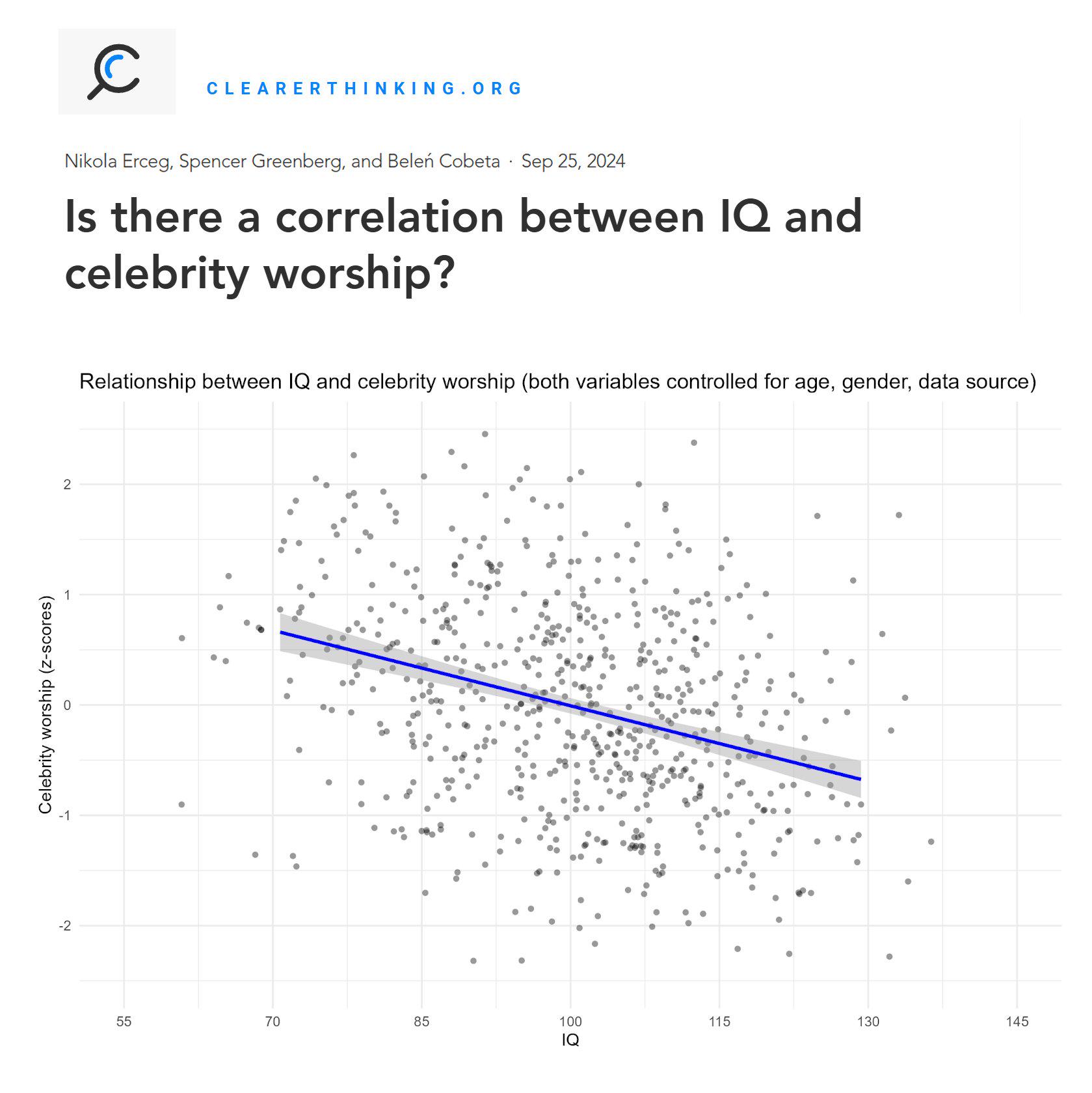
challenge of the day: imagine if you're running a celebrity stan account on social media. someone appears in your comments and says you're stupid and attaches the graph to support their claim (ecological fallacy). What's your response? (you must use a fallacy).

Post image
0 Upvotes

It might be worth clarifying that to avoid feeling gatekept by terminology, you don't need to name the fallacy you use. just perform it and let others guess.

EDIT: Some people in the comments are just mad. for no reason. Just mad. this is a hypothetical scenario, and they're just mad. they give an answer that actually works, but when you compliment their answer, they get mad again. LMAO. this sub is crazy.


r/fallacy • • Sep 22 '26

Why is ad hominem used in court if it's a logical fallacy?

3 Upvotes

Is it that bad of a logical fallacy?

If a lawyer cannot disprove a witness testimony, the next best thing is to attack that persons character and credibility with ad hominem.

Meanwhile on reddit, ad hominem is banned form many subs. Or if not banned, is considered to be an instant loss of the argument.


r/fallacy • • Feb 14 '26

The 'fallacy' fallacy

4 Upvotes

Its occurs when one scrutinizes any argument for a fallacy which is certain given there are over 100 known fallacies and new one can be made up ad hoc. Secondly the person labeling an argument a fallacy rarely explains how the fallacy occurred. An argument can fall into the category of a fallacy and not be fallacious.

- A fallacious argument can have a true conclusion.

- A fallacious argument can even have other, non‑fallacious supporting reasons.

- A fallacy shows that a particular inference is bad, not that the entire position collapses.

It can be an argument with an argument while not denying the conclusion.


r/fallacy • • Oct 09 '26

The non sequitur of personal aversion.

Post image
0 Upvotes

Your objection seems to conflate subjective aesthetic dissatisfaction with an actual criticism of the rhetorical mechanism. i understand that the semantic inflation may come across as irritating to you, but that reaction alone doesn't establish any deficiency in its conceptual construction. you're describing your personal reception of the formulation, not demonstrating why the rhetorical device fails to achieve its intended effect.

The distinction here is between evaluative preference and analytical substantiation. you're entitled to find the execution tedious, but subjective aversion isn't, by itself, a sufficient criterion for dismissing the underlying technique. semantic inflation can function as deliberate rhetorical exaggeration, particularly when the disproportion between linguistic complexity and conceptual simplicity constitutes the very basis of the humor.

In short, your response establishes that the stylistic execution doesn't appeal to you; it doesn't necessarily establish that the mechanism itself is defective. you're critiquing its subjective effect rather than demonstrating a substantive flaw in its rhetorical function.


r/fallacy • • Feb 13 '26

The “ignoring implicit context” fallacy

0 Upvotes

A type of exchange I often see:

Party 1: “Fuck fascists!”

Party 2: “Why are you attacking Trump, he is a great president?”

Party 1: “I never said Trump, so you admit he’s a fascist!”

-

I think it’s clear by implicit context (in the cases where this type of exchange occurs) that party 1 is referring to Trump/MAGA, and not just like, the general concept of fascism, and so the reply isn’t really an effective “gotcha”. What do you think?


r/fallacy • • Apr 26 '26

What fallacies are in this comment?

1 Upvotes

For all those Iran supporters that follow blindly. TAKE A LOOK AT WHAT YOU ARE BACKING BECAUSE OF YOUR HATRED FOR ONE MAN. No Kings protesting to support this kind of crap. 🫏 🫏 🫏 🫏


r/fallacy • • Sep 07 '26

Zeno's Paradox Fail?

0 Upvotes

I think Zeno's proof that motion is impossible is fundamentally flawed because it assumes the thing it denies to prove that denial.

I.e. he's trying to prove that motion is impossible, and to do so he allows an object to travel half of the required distance, which is something he is claiming is impossible.

What's the name of the error/s here? Something around assuming the consequent? Simple inconsistency?


r/fallacy • • Feb 14 '26

Is the "my steak is too juicy" response a fallacy?

4 Upvotes

Been seeing a lot of people use the "my steak is too juicy and my lobster too buttery" in arguments or as a reponse to opinions. Is this a fallacy, possibly Thought Terminating Cliche?

If its not a fallacy, could you explain why and possibly what it is instead?


r/fallacy • • Mar 13 '26

What fallacy is it when you assume one option is more likely to happen than another because it would be worse?

0 Upvotes

Best example I can think of is Pit bulls. they are often perceived as more aggressive than other dogs. An angry Pit Bull is definitely a threat, but most are just chill dogs that love people. People tend to think that Pit Bulls are naturally aggressive just because they can cause more damage when they are aggressive.

I guess a way to put it would be “Situation X is worse if it applies to group A than if it applied to group B. Therefore, A is more likely to have X than B.”

I hope I explained it well idk

Edit: New example (since the pit bull one apparently wasn’t very good):

“Being in a plane crash is worse than being in a car crash. Therefore, you are more likely to be in a crash in a plane than in a car”


r/fallacy • • Nov 06 '25

The Steelman Fallacy

11 Upvotes

When someone says “Steelman my argument” (or “Strong man my argument”), they often disguise a rhetorical maneuver. They shift the burden of clarity, coherence, and charity away from themselves, as though it’s our responsibility to make their position sound stronger than they can articulate it.

But the duty to strong-man an argument lies first and foremost with the one making it. If they cannot express their own position in its most rigorous form, no one else is obliged to rescue it from vagueness or contradiction. (This doesn’t stop incompetence from attempting the maneuver.)

Demanding that others “strong man” our argument can become a tactical fallacy, a way to immunize our view from critique by implying that all misunderstanding is the critic’s fault. (Or that a failure to do so automatically proves that a person has a strong argument— no, they must actually show this, not infer it from a lack of their opponent steelmanning their argument).

Reasonable discourse doesn’t require us to improve the other person’s argument for them; it only requires that we represent it as accurately as we understand it and allow the other person to correct that representation if we get it wrong.

Note: this doesn’t mean we have a right to evade a request for clarity, “what do you understand my position to be?” This is reasonable.

UPDATE

While steelmanning can be performed in good faith as a rhetorical or pedagogical exercise, it is not a logical obligation. The Steelman Fallacy arises when this technique is misused to shift the burden of articulation, evade refutation, or create an unfalsifiable moving target. Even potential good-faith uses of steelmanning do not excuse this fallacious deployment, which must be recognized and addressed in rational discourse.

Deductive Proof:

P1. The person who asserts a claim bears the burden of articulating it clearly and supporting it with adequate justification.

P2. The Steelman Fallacy shifts that burden to others by demanding that they reconstruct or strengthen the unclear or weak claim.

P3. Any reasoning pattern that illegitimately transfers the burden of articulation or justification commits an informal fallacy.

C. Therefore, the Steelman Fallacy is an informal fallacy.


r/fallacy • • Sep 03 '26

What is the Point of a Strawman Argument?

11 Upvotes

I've come to realize that my primary debate style is the steelman method, where I clarify and reinforce the opponent's viewpoint or claim before challenging it. It's not always necessary, of course, but it seems logical to understand your opponent before proceeding.

This led me to wonder about the straw man fallacy, which is essentially the exact opposite. What is the point of purposely misinterpreting your opponent, and then arguing that weaker perspective that is not representative of them?

For example, the original claim could be "Religion should be kept out of public schools, to adhere to the separation of church and state."
Strawman: "Streets are state-funded; should we then ban all churches that are connected to a road?"

The original claim is discussing First Amendment rights to keep public schools neutral, while also allowing the freedom to follow any doctrine you wish. The point is that it's not endorsed by the government. The rebuttal takes that claim and advocates against the First Amendment, by restricting access to places of worship.

To me, the strawman fallacy just seems, immature? What's the point of using it when they can just clarify a second time? And if you "win" an argument using it, the topic of discussion effectively changes once that framing is accepted. It just seems so easy to counter that it should never be worth using, unless your opponent isn't very experienced. But at that point, why are you debating them?


r/fallacy • • Jan 22 '22

What fallacies are most commonly associated with politically correct and woke thinking?

0 Upvotes

Some of the first ones that come to mind are appeal to consequences and appeal to emotion (people will be hurt or offended or unsafe if we don't support this narrative) and jumping to conclusions (you disagree with X therefore you must be a racist/sexist etc.)


r/fallacy • • Dec 12 '25

Argumentum ad hysteria fallacy

Post image
32 Upvotes

r/fallacy • • Dec 11 '25

Did I commit a fallacy?

3 Upvotes

Someone on another subreddit wrote:

"Are you really a convicted felony [sic] if you don't serve any prison time for 34 convicted felonies?"

This struck me as such an absurdity that I did not know how to even begin. So I tried to give an analogy:

"Was Hitler a bad person if he was never punished for his crimes?"

To which they replied:

"Apples and oranges my them they he she, one was so bad he killed himself...let that sink in..."

Now, setting the personal attack and self-serving bias in their response aside, I wonder whether "Apples and oranges" does not actually apply here.

Their point was that legal punishment is needed to maintain conviction [charitably interpreted in some metaphorical sense that transcends the literal definition of "convicted felon"] whereas my analogy involved a person who was never convicted in a court of law.

On the other hand, in a broader sense that, again transcends the literal definition of the relevant terms here, it does illustrate the idea that lack of punishment does not negate guilt.

So, on one level the argument implied by my rhetorical question seems like the fallacy of false analogy, but in a more general sense, it seems like valid reductio argument.

So what do you think and is there a general principle that can be used to cut through such ambiguities?

As an aside l, I learned two things already from the above exchange:

  1. Reductio ad absurdum is not an effective strategy if you attack an argument that is already absurd to begin with.

  2. I was starkly reminded of Voltaire:" Those who can make you believe absurdities, can make you commit atrocities."


r/fallacy • • Jul 06 '26

Just because you think I'm wrong doesn't mean I'm actually wrong. I'm right from my perspective, and you're right from yours

Thumbnail reddit.com
1 Upvotes

r/fallacy • • Sep 07 '22

Everyone is bad at logic

1 Upvotes

This is going to sound like a rant, but I promiste there's a kernel related to fallacies.

I've debated fallacies for several years now, and it has become clear to me that everyone commits them, even the most famous public intellectuals known for their rationality. (If you want examples I would be glad to provide them).

Let's start with the most quintessentially basic argument: P → Q, P ∴ Q. This is called affirming the antecedent or modus ponens.

This is so idiotically simple that it shouldn't even be worth mentioning, except for the fact that there's two fallacies that directly spawn from it.

In a recent debate in Twitter public intellectual Nicholas A. Christakis argued that at the time COVID-19 vaccines seemed to be extremely efficacious, giving up to 95% immunity, and could not be harmful. We now know that this isn't true, but at the time it was a reasonable conclusion, especially given the evidence available at the time, or so he argued.

Can you spot the problem in this argument?

If COVID-19 vaccines are extremely efficacious (P), then we would expect to see see a reduction in illness after applying them (Q). Well, we saw a reduction in illness after applying them (Q), what can we conclude?

Certainly not P.

Given P → Q and Q, we cannot assume P, to do so is a fallacy called affirming the consequent, which is perhaps the second thing you learn in logic, right after modus ponens.

Has Nicholas A. Christakis never heard of of affirming the consequent?

Perhaps we can't expect even rational public intellectuals to figure out that P → Q, Q ∴ P is a fallacy, even though it's the most quintessential fallacy. It's too technical.

Except there's an aphorism about this almost a millennium old: "all that glitters is not gold".

Yes Nicholas, if COVID-19 were efficacious (gold) we would expect them to reduce illness (glitter), but the fact that we see some something reducing illness (glittering) doesn't mean it's efficacious (gold).

It cannot be any more obvious, and yet this famous public intellectual still doesn't get it. And he has a reputation to maintain.

What hope does the rest of the people have?


r/fallacy • • Jun 29 '21

What are the philosophical implication of the fallacy fallacy regarding the nature of paradigm dependent knowledge?

0 Upvotes

Does the fallacy fallacy mean that all paradigm (like Naturalism and Supernaturalism, Strong Atheism and Strong Theism) which are unprovable, can not be claimed by (1) refuting the arguments in favor of the competing paradigm, nor (2) erecting arguments in favor of the given paradigm?

For example, are these also the fallacy fallacy:

  1. Strong Theists made the arguments A, B, C and D, which I can refute with the refutations E, F, G and H, and hence Strong Theism isn't true and God doesn't exist.

  2. Strong Atheists made the arguments A, B, C and D, which I can refuted with the refutations E, F, G and H, and hence Strong Atheism isn't true and God does exist.

Also, since they are paradigms (Naturalism, Supernaturalism, Strong Atheism, Strong Theism that is) what does this mean regarding the knowledge inside of these paradigms? Like if these paradigms are unprovable and if proving the paradigm by just refuting arguments in favor of the competing paradigm is a fallacy, then what does that do to the nature of the knowledge inside the paradigm? Does this mean that we should all just be agnostics and/or does this mean that we should also define Theism as just a lack of faith position, like Atheism is defined? Like Theism could be defined as lack of faith in Naturalism and Atheism lack if faith in Supernaturalism.

Also if refuting the other paradigm by refuting arguments for it is the fallacy fallacy, then this would seem to leave us just with the situation of producing own arguments for the particular paradigm which the other competing paradigm can not explain. This however also seems to commit the fallacy fallacy becasue even positive arguments for our own paradigm contains claims about the competing paradigm failing to do something, and hence it would seem like even positive arguments for the paradigms are also fallacious in nature because they contain the same fallacy fallacy which arguments from refutations of the competing paradigm contain.

Example 1: The first cause of the universe had to be due to God because it couldn't have been Natural because it operated before nature was, and hence God must exist.

Example 2: If God would exist He should have already showed Himself to us, so that there wouldn't be any doubt, and hence God doesn't exist.

As you can see, even the positive arguments for given paradigm are basically arguments from failures of the competing paradigm, and hence they would also seem to be based on the fallacy fallacy. In other words, because the reasoning was

Example 1: Because Naturalism failed explaining this, Naturalism must be false.

Example 2: Because Supernaturalism failed explaining this, Supernaturalism must be false

the arguments commit the fallacy fallacy and hence these aren't actually valid arguments for the given paradigm.

Now then, if my reasoning from arguments and disproofs regarding paradigms in the context of the fallacy fallacy is valid, then what does this mean regarding the nature of knowledge inside of these paradigms? It would appear that it can be only assumed and nothing but assumed, because all arguing eventually commits the fallacy fallacy in some way or another.

Any thoughts?

  • Can the knowledge inside of these paradigms be just assumed and nothing but assumed?

  • Should Theism be defined as lack of faith in Naturalism and Atheism as lack of faith in Supernaturalism?


r/fallacy • • Nov 24 '21

Ad hom bad hom

0 Upvotes

Hello, I'm new here. Just wanting some input.

I've had many debates where people bring out the insults and if I state that's an ad hom they just respond no because it wasn't a part of their argument. It's to the point where i think it's a waste to bring it up. I still 100% beleive it's a fallacy. Just because their argument isn't 2+2=4 because you're an idiot doesn't mean they are not committing an informal fallacy of irrelevance. Even if they are saying 2+2=4 because here is this mathematical proof and also you're an idiot.

It would be like writing the equation: 2+2 (irrelevant insult)=4. That is not perfect logic because it contains irrelevant statements.

When you're debating with someone everything they say is concious within you and the audience and I just find the argument of "well what i said between this period and this one isn't a part of my argument" is absolutely irrelevant to the point in question.

Am I wrong?


r/fallacy • • Oct 30 '20

Freedom of speech fallacy

0 Upvotes

Do you agree this is a fallacy?

  • Freedom of speech is contrary to cancelling

  • Freedom of speech laws allow cancelling

  • Therefore, cancelling is compatible with freedom of speech

I argue in this blog post that is an equivocation fallacy.


r/fallacy • • 8d ago

200k karma and made a brutal fallacy, plus digging their heels in even more after being proven wrong

Post image
0 Upvotes

am i right on this position?


r/fallacy • • May 18 '26

“Well, I wasn’t talking about you then!”

1 Upvotes

Unsure if this counts as a fallacy but is something I see a lot in arguments online

Somebody makes a very general claim / assumption ->. when argued or questioned, they resort to either saying

“well, I wasn’t talking about you”

OR

Adding more and more context to explain their original statement, which was not there in the first place

———
Example:

Person 1: People who buy CDs are so stupid, CDs are just a waste of space and money!!!

Person 2: No, my CDs are second hand

Person 1: Oh, but I bet your room is all cluttered

Person 2: No, I store my CDs neatly

Person 1: Oh, okay, then I wasn’t talking about you. I was talking about people who spend so much unnecessary money on CDs and hoard them!!!

Person 2: why didn’t you say that in the first place

———-

This argument could’ve been easily avoided if person 1 simply did not make such a generalized claim.

Thoughts?


r/fallacy • • Feb 23 '22

Not strictly a fallacy, but I think it's close enough to warrant a discussion.

1 Upvotes

To the best of my understanding, the person here says that anyone who argues against a well-established point must have malicious intentions. I think this is logically fallacious. I would argue that the truthfulness of a statement is completely irrelevant to whether or not a person is exhibiting 'bad faith' behavior. (Insofar as the truthfulness of a point alone can be a determining factor of whether or not someone is arguing in bad faith).

What do you think? Am I out of touch, or it's the children who are wrong?

https://np.reddit.com/r/MurderedByWords/comments/szdht8/facts_are_truly_scary_things/hy2zgwg/?context=3