r/emotionalintelligence • u/starlux33 • Jan 30 '25
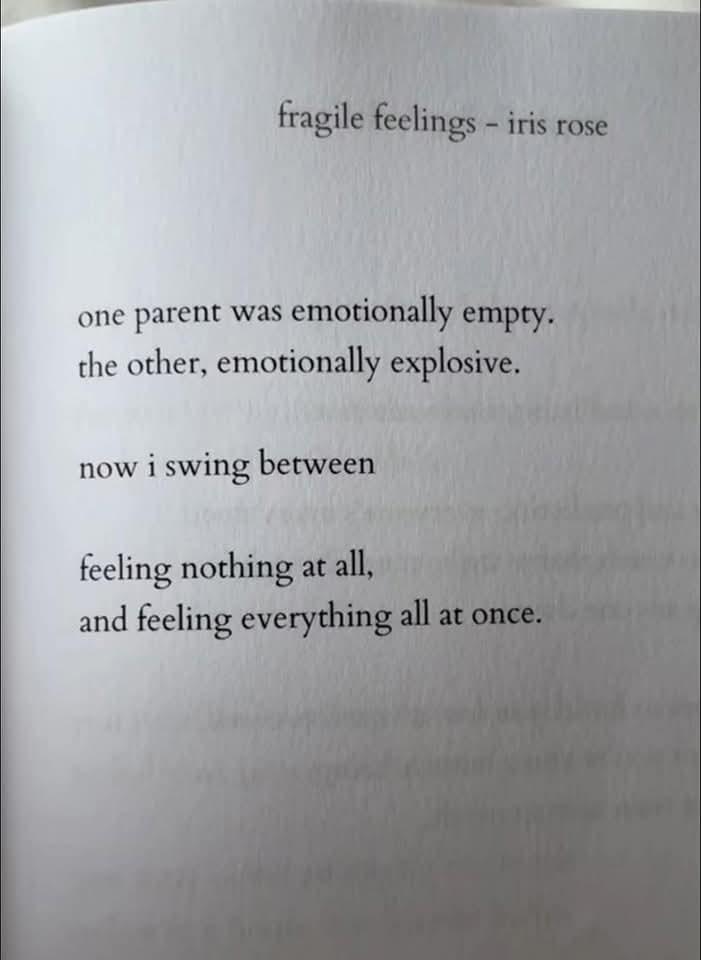
Does anyone know someone like this?

7.8k
Upvotes
r/emotionalintelligence
•
u/Confection-Status
•
Jan 23 '25

I (21F) feel as if I am a fairly emotionally intelligent being. I am empathetic to the point where it hurts me. I can quickly pick up on things like social cues, mood shifts, manipulation, subtle ridicule, hidden motives, and etc.
I always thought of my emotional intelligence and my ability to empathize as a strength. However, i’m starting to realize how miserable it makes me and I sometimes wish I was blind to it all so that I wouldn’t need to care. The harsh reality is that I am overly aware to the point of misery.
It’s honestly very draining mentally, to be able to dissect people’s words and actions, and understand their deeper hidden motives along with how it directly hurts people, who then suffer silently as a result of this kind of treatment. Whenever I sense a negative mood shift within someone following an interaction, I empathize so hard to the point where I can feel my stomach and heart drop with them, that taste of blood in your mouth, the painful sharp tingles in your nose you feel before you’re about to cry. You can imagine how often I feel this way, considering no one knows how to treat eachother nowadays.
It makes you realize how awful, self-centered, and manipulative people are. Of course i’m not a saint either but compared to how i’ve seen other people act I would say i’m a pretty decent and empathetic human being. I’m having a hard time maintaining friendships and relationships because I start to see people for how they really are and my resentment for them grows to the point where even just conversing with them makes me angry. In my life there isn’t a single person I can rely on and fully trust just because I can always easily see right through people and am over-aware of the motives people hold and manipulation tactics.
Superiority complexes are on the rise and conversations and relationships are growing more meaningless. No matter where I place myself, people are eager to be superior to everyone else. All my past friend groups were fueled by the need to be superior to everyone else in it. It felt like we were always competing against eachother and that pretty much sums up every relationship i’ve ever had. Every single relationship including familial and friendship has tried to make me feel inferior in some sort of way. It’s not that I feel threatened, I don’t care for being the best, or better than someone, I crave genuine human connection that betters both parties involved. I want uplifting and meaningful relationships but people desiring those are rare. I want to be proud of someone for growing as I want someone to be proud of me. It seems as though people only crave relationships to fuel their superiority complex nowadays.
What makes me especially miserable is realizing how awful people you once looked up to are. It could be parents, siblings, your closest friend, an older figure in your life. When you grow up you realize how inherently evil people can be. It is a part of free will after all.
I’m angry at everyone who has taken advantage of my innocence and desire to spread love. I used to be the most giving, innocent, and optimistic girl that believed in the good of people. Now I understand that being nice gets you basically nowhere and people will see it as a weakness they can benefit from.
However, no matter how many times i’ve been wronged I still try to believe people can be good and change. Maybe that is my biggest flaw after all and the reason i’m always left disappointed. I give people countless chances and no matter what i’m always left hurting. I wish I was 4 again when the scariest thing to me was monsters under my bed, rather than the free will humans possess.
Is there anyone else that feels this way?
EDIT: Thanks for all your comments, I appreciate every single one of you for your input and want you to know i’m opening my eyes to these new perspectives you all have to offer. I realize I still have a lot to learn, mainly within my own emotions and how I let it control me along with my extension of too much energy into the uncontrollable.
I didn’t expect this post to blow up so I don’t believe I can respond to all of you, but just know that I am reading all these with an appreciative and open mind. Thanks for helping me, and others who feel the same way feel understood, or for offering advice and new outlooks.
r/emotionalintelligence
•
u/Maverick_3189
•
Jul 08 '26

I used to think infidelity started with a kiss, a date, or sleeping with someone else.
Now I think it starts much earlier.
It starts when you find yourself hoping for that text. When a simple compliment from someone else stays in your head for hours.
Nothing physical has to happen. Sometimes nothing inappropriate is even said. That's what makes it so easy to justify. You tell yourself it's harmless because no lines have technically been crossed.
But emotional attachment rarely appears overnight. It grows in small, innocent-looking moments. You start looking forward to their attention. You enjoy how they make you feel.
As a married man, that realization changed the way I think about infidelity. I don't think the biggest threat to a relationship is always another person. Sometimes it's becoming addicted to the feeling of being seen, validated, or excited by someone new.
The physical affair is often just the last step. The emotional one usually starts long before anyone notices.
r/emotionalintelligence
•
u/[deleted]
•
Jul 29 '25


One of the most important lessons I’ve learned in my relationship is this: not everything needs to be rational to matter. In fact, when it comes to love, emotions often matter more than logic.
At first, I used to handle every concern with reasoning. If my partner felt upset or uneasy, my first instinct was to explain or defend myself. I’d say things like, “I didn’t do anything wrong,” or “That doesn’t make sense,” or try to break it down like an argument I needed to win.
But then something happened that changed the way I saw things.
My girlfriend once told me she didn’t like how I joked around with a girl from our class. From my point of view, it was totally harmless. I tried to explain: “It’s just a joke,” or “You know I love you,” or “You’re overthinking this.” I thought I was being honest and logical, but instead of helping, it made her feel worse like her feelings didn’t matter, like she was “wrong” for being hurt.
That’s when I realized something powerful: she wasn’t asking for proof, she was asking for comfort. She wanted to feel safe and valued, not debated. Logic can explain things, but only empathy can heal emotional wounds.
So the next time something similar happened, I responded differently. I said, “I get it. If this makes you uncomfortable, I’ll stop. Your peace matters more to me than any joke.” And the way her expression softened in that moment I could tell it meant the world to her.
Relationships aren’t about who’s right. They’re about making each other feel secure, heard, and loved. Logic has its place, but emotional safety is what makes love last.
Have you ever had a moment where you realized emotions mattered more than logic?
(M19) in a relationship with my partner (F19) for 1 year.
r/emotionalintelligence
•
u/[deleted]
•
Jan 14 '25
When I was 15 years old, my father took my siblings and I to the mall and handed each of us $20. At the time, that felt like a lot of money because we grew up poor. I remember walking around the mall to different stores and while my sister bought some new clothes, my brother bought a game GameStop. I became frustrated because I was itching to spend my money, but nothing seemed worth it. Eventually, my father was fed up with my indecisiveness and dragged us into a Barnes & Noble. He let us roam free through the store while he was busy shopping. As I explored the different genres, one book in particular caught my eye: Emotional Intelligence 2.0 by Travis Bradberry and Jean Greaves.
I was a lifeguard that summer saving up for my first car and because I worked a lot, I had a lot of free time on my hands. Scrolling on my phone had become repetitive, so I figured I’d try reading instead. I brought the book to the register, and my father glanced at it, laughed, and said, “That’s what you’re spending your money on? Self-help books are a scam.”
Even at a young age, I knew both my parents struggled with emotional regulation. Those same habits were passed down to me and siblings, which led to frequent outbursts over small disagreements. My home was chaotic and unpredictable so I found solace in going to work to sit in the blazing heat for 8 hours. But I knew it would eventually come to an end. I'd have to be home during the school year and live amongst the chaos and dysfunction. I was tired. Tired of feeling like my emotions controlled me, tired of fighting the stress and anxiety that comes with living in an unpredictable environment. So I decided to do something about it.
Over the course of the summer, I spent hours reading, completely immersing myself into my new book, fantasying about the new woman I would become once I mastered my mind, imagining myself in scenarios where my emotions would be tested. And they were. I vividly remember one incident at the pool where a grown man began arguing with me about pool passes. He glanced at my book and loudly mocked me, saying, “Emotional Intelligence? An emotionally intelligent person would just let me into the damn pool!” He was trying to embarrass me, but I remained composed.
I told him firmly not to curse at me and explained that if he had an issue with the pool rules, he could take it up with the front desk. I followed him to the front desk, and while he became irate, I calmly explained the situation to the manager. Management was appalled by the way he spoke to me and decided to ban him from the pool for the summer. Later that day, a woman who had witnessed the situation approached me and commended me for how well I handled myself. It was incredibly rewarding to witness my own transformation.
That was one of many instances where emotional awareness and regulation allowed me to rise above intimidation, disrespect, and attempts to undermine my confidence.
Fast forward 11 years, and the principles I learned from that book still hold true today. My family still struggles with their emotions. Especially my father, who struggled the most, which has contributed to a string of failed relationships and marriages. Meanwhile, I’ve built a solid foundation for myself. To this day, people—especially men—try to play on my emotions, only to find themselves frustrated when they realize I am unshakable. My confidence is rock solid, and my mind is bulletproof against manipulation and exploitation.
I thank my 15-year-old self for following my intuition and taking the initiative to grow. Because of her, I can confidently say I know who I am, and no one can tell me otherwise.
r/emotionalintelligence • u/PrincessTiaraLove • Jan 15 '25
I used to be this way. Going out of my way when people didn’t ask me, in hopes of getting what I want from them, and instead I got the complete opposite. Why? Because people view people pleasers as controlling. Nobody asked you to solve their problems and it can be quite frustrating, suffocating and belittling.
Fight the urge to think you are know how to solve peoples problems better than they do, especially if they didn’t even ask. Even if they do ask, people still usually have boundaries about that.
The best you can do is ask if they want help, if the answer is no, accept that. Then do nothing and make them stand on that. See how exhausting this is to try to fix people’s problems. You’re only seeking control, and one thing I’ve noticed is people don’t like to be controlled, even when someone says they want to be, that can be a form of covert control, so make it a rule to not go crazy trying to fix people’s problems, especially when they didn’t ask you to.
r/emotionalintelligence
•
u/stellbargu
•
Mar 29 '26


I was mid-rant. Ten minutes into explaining everything that was stressing me out. Work deadlines, a conversation I'd fumbled the day before, uncertainty about a decision I had to make next month.
She let me finish. Then she asked:
"Right now, in this exact moment, is anything actually wrong?"
I stopped. Looked around the room. Felt my feet on the floor. Noticed I was breathing fine. The chair was comfortable. The temperature was fine. My body wasn't in danger.
"No," I said. "Not really."
"Then where is all that stress coming from?"
I didn't have a good answer. Because the stress wasn't coming from the present moment. It was coming from a story I was telling myself about the past and future. Replaying what already happened. Rehearsing what might happen. But right there, sitting in that chair, nothing was actually wrong.
That question rewired something in me.
I started using it whenever I noticed my chest tightening or my thoughts spiraling. I'd pause and ask: "Right now, in this exact moment, is anything actually wrong?"
Most of the time, the answer was no. The present moment, stripped of the narrative, was usually fine. Neutral at worst. Often even pleasant.
The anxiety wasn't about now. It was about a mental projection I was treating as reality.
What I read to understand why this question worked so well:
Eckhart Tolle's work on present-moment awareness, particularly in "The Power of Now," gave me the philosophical framework that the question was pointing at. His core argument is that virtually all psychological suffering is generated by mental time travel, either guilt and regret anchored in the past or anxiety and dread projected into the future, and that the present moment itself is almost always tolerable when stripped of the narrative layered on top of it. His documentation of how the mind constructs a continuous story about reality that it then mistakes for reality explained exactly what my friend's question had interrupted. I wasn't experiencing stress about my actual circumstances. I was experiencing stress about my mind's running commentary on my circumstances, which are two completely different things.
Jon Kabat-Zinn's clinical research on mindfulness-based stress reduction gave me the neuroscience behind why the pause worked. His decades of studies at the University of Massachusetts Medical School documented that directing attention to present sensory experience, feet on the floor, breath in the chest, temperature in the room, reliably interrupts the default mode network activity responsible for rumination and worry. His research showed that the default mode network, the brain's narrative-generating system, is the same network that produces both mind-wandering and depressive rumination, meaning the antidote to anxious storytelling isn't thinking better thoughts but shifting attention to direct experience entirely. That clinical finding made the simple grounding question feel less like a trick and more like a documented neurological intervention.
Daniel Gilbert's research on affective forecasting, particularly in "Stumbling on Happiness," filled in the piece about why mental projection produces so much unnecessary suffering in the first place. His studies showed that humans are systematically terrible at predicting how future events will make them feel, consistently overestimating both the intensity and duration of negative emotional responses to anticipated problems. His documentation of the impact bias, the tendency to believe future difficulties will be more devastating than they turn out to be, explained why rehearsing what might happen next month generates more distress than the actual event typically does. The future I was anxious about was almost always worse in anticipation than in reality, and Gilbert's research showed this isn't a personal flaw but a consistent feature of how human projection works.
Around the same time I started using BeFreed, a personalized audio learning app, to build a more structured understanding of mindfulness, stress psychology, and the neuroscience of rumination. I set a goal around understanding why the mind defaults to past and future rather than present experience, and it pulled content from clinical psychology, neuroscience research, and contemplative practice into structured audio I could work through during commutes. The virtual coach helped me go deeper on specific questions, like why knowing you're catastrophizing doesn't automatically stop the catastrophizing, and what actually interrupts the loop at the neurological level rather than just the intellectual one. Auto flashcards kept concepts like default mode network activity, affective forecasting, and present-moment anchoring accessible so I could apply them when the chest tightening started rather than only understanding them in calm moments.
I'm not saying real problems don't exist. They do. But I realized how much of my suffering was manufactured by a mind that wouldn't stay in the present.
The present moment, it turns out, is almost always more peaceful than the story about it.
Has anyone else had a single question completely shift how they experience stress?
r/emotionalintelligence • u/sshsq92 • Jan 10 '25
You taught me something invaluable: choosing a partner is equivalent to choosing your entire life, it’s the most important decision of your existence. Yet, you didn’t choose me, and that alone tells me you are not the one for me. A man who is truly meant for me will be all in, fully, wholeheartedly, and unapologetically. He will see me not just as a partner but as his greatest asset and investment, someone worth every ounce of his time, effort, and devotion.
Through this experience, I’ve gained profound wisdom. Choosing a partner shapes the course of our lives in ways that few decisions can. Your failure to choose me reflects your inability to recognize my worth, but it says nothing about the immense value I hold. A man who is truly for me will see my worth not just in material terms but emotionally, spiritually, and intellectually. He will know, without a doubt, that I am the best decision he’ll ever make and will commit to me with unwavering certainty.
I am valuable beyond material things, beyond anything tangible. The right person will never need convincing of this. This clarity is my guide now, reminding me of the life and love I deserve. I will not settle for less. I am worth it all.
r/emotionalintelligence
•
u/ethereal-amanita
•
Mar 24 '26

I was wondering what this sub’s thought process is on this article?
The headline jumped out at me because my boyfriend has been pushing me for almost 2 years now (along with my family and therapist) to seek out friendships. They all say that I’m very kind and not a single person has ever had anything bad to say about me.
They all offer me the same advice about going out and meeting people, and I try very hard to do that. I get people’s contacts all the time to start a friendship, but it never lasts more than one conversation. The article acknowledges this problem in me to a T, but it doesn’t offer any actionable tips on how to improve.
I feel like I try to offer vulnerability. But I recognize that I only ever do it when specifically asked, or when I feel like a situation I went through is similar to someone else’s so I can share what wisdom I gained from the experience.
That said, I never do this unprovoked. I will listen and ask questions and help to problem solve, but I’ll never offer my own vulnerabilities or ask for advice around them. I’ll go to any lengths to help a friend but I’ll never ask for help in return. I’m not good at voicing discomfort over things I convince myself I don’t have control over.
TL;DR:
My question is, how do I go about fighting the visceral gut feeling that what I’m doing is socially unacceptable and wrong? And how do I know when I’ve been too vulnerable to a point of trauma dumping, vs a healthy level of vulnerability? Has anything overcome this feeling? What were your baby steps towards it, and was there any media you consumed that helped your perspective on it?
r/emotionalintelligence
•
u/sixtynighnun
•
Jun 24 '25
This is a hard pill to swallow but my heart hurts every time I read posts about people trying as hard as they possibly can to cater to their partner only to be met with a barely half assed response. Then the person says “how do I get my avoidant partner to meet my emotional needs”. If this sounds like you I just want to say: emotional maturity means pursuing your own needs. If your partner doesn’t meet those needs no matter how many times they say they will, than you need to understand that they never will and they do not care to. They’re not emotionally mature enough to give you what you need. You can’t beg someone to give a fuck about you. If you’re wondering “how come they say they will and don’t follow through” it’s bc saying they will is easy and actually showing up is hard. They don’t want to sacrifice their convenience for you. If you’re wondering “why do they treat me like this?” It is because you let them. They know they can do it and you won’t leave. They know you feel obligated to cater to their “attachment style” while never ever having to put in the work to do the same for you. Sometimes it helps to think about hearing it from a friend. If your friend described dating someone emotionally distant, you would probably wish for them to leave and be with someone more compatible for them. You should be nicer to yourself. Being alone is better than with someone who will jerk you around emotionally.
r/emotionalintelligence
•
u/Pretty_Solution_7955
•
Oct 10 '26

Somewhere along the way, humanity decided that if you're not traveling, partying, starting a business, running a marathon, healing your inner child, or drinking coffee in another country, you're wasting your life. Personally, I think sitting in a chair and experiencing absolutely nothing is one of civilization's greatest achievements. Our ancestors spent thousands of years fighting wolves, surviving plagues, and dying at 34 so that I could spend a Sunday staring at a ceiling fan without consequences. And now some guy named Brandon with a podcast wants me to wake up at 5 AM and optimize my potential? Absolutely not. I have reached the top of the food chain specifically to avoid unnecessary activities. We invented machines to do our work, medicine to extend our lives, and smartphones to entertain us, only to develop a culture where relaxing makes people feel guilty. At this point, doing nothing without feeling ashamed might be the most rebellious thing a human being can do. Maybe the real winners in life aren't the people constantly chasing experiences. Maybe they're the ones who can sit alone in a room for three hours without needing to turn it into a personal growth journey.
r/emotionalintelligence
•
u/StefanosKapa
•
Dec 01 '24


A friend sent me this quote the other day, and it really got me thinking.
In a lot of male-oriented posts and reels, the focus is on grinding. The “work will save you, even if you suffer” mentality. It’s the classic Batman approach: tough it out, push through, no excuses.
And sure, it works—for some. Jeff Bezos and Elon Musk would probably swear by it.
But here’s the thing we don’t hear enough: not all solutions work for all men. It’s not a one-size-fits-all deal.
If you’re not passionate about the process, that “brute force your way through life” approach will burn you out. What they never tell us is that the guys who succeed with this grind mentality? They’re usually passionate about what they’re grinding for, even if they don’t fully realize it.
So, yeah—nobody’s coming to save you. I agree. But I think there’s another side to that.
If you hate your job, your relationship, your life… nobody’s going to fix it for you. It’s on you to take responsibility.
But here’s the twist: asking for help is part of that responsibility. Lighting that flare and saying, “I need support,” isn’t weak—it’s brave.
What’s your take? Do you think the grind culture really works for most men, or is there a better way?
EDIT: Based on the amazing responses, I’m hosting a workshop on this topic, on 23rd Jan 2025! Register here!
r/emotionalintelligence
•
u/Pretty_Solution_7955
•
Apr 01 '26

A person can waste an entire life by becoming impressive at absorbing what should have stopped them cold. You can become highly skilled at swallowing resentment, postponing yourself, explaining away your own dissatisfaction, performing competence inside a life that is fundamentally wrong for you. From the outside it can even look like maturity. But there is nothing mature about turning self-betrayal into a personality. I think a lot of people do not need more discipline. They need revulsion. They need that clean, sharp moment where they finally see what they have been training themselves to live with and feel ashamed of how long they called it normal.
r/emotionalintelligence
•
u/Mundane-Country-3486
•
Apr 05 '25


I never realized how deeply my attachment style shaped my relationships until I started losing the very connections I thought I could handle. I used to think I was just independent, emotionally self-sufficient, low-maintenance. I wore it like a badge of honor. But the truth? I was avoidant. I was scared. I kept people at arm’s length, not because I didn’t care, but because deep down I feared I’d eventually let them down or worse, they’d discover I was never enough and leave anyway.
Over time, I noticed the pattern. The relationships I did have followed the same cycle. I’d be cool, guarded, composed. I wouldn’t open up emotionally, but I could listen to your pain all day long. I was good at being there for others while avoiding my own vulnerability. Long-distance relationships were my comfort zone. I could control the pace, the exposure, the vulnerability. But when things got serious, when expectations and emotional intimacy deepened, I would panic. The “what ifs” would eat at me. What if I couldn’t keep up? What if I failed them? What if, after giving everything, they realized I wasn’t what they truly wanted?
I’d get overwhelmed. Not by them, but by my own overthinking. Suddenly, everything would feel too much. And instead of communicating, I’d shut down. I’d distract myself. I’d start to pull away quietly and slowly. I wouldn’t end things right away. I’d fixate on their flaws, convince myself they weren’t right for me, ask for space, then slowly go silent. Sometimes it would take a month or two before I found the courage or justification to say, “This isn’t working.” And during that time, I’d bury the parts of me that still cared. I’d highlight all the things that made them wrong for me and push my feelings down so deep that I could pretend I never had them at all. I made myself believe it wasn’t my fault. That they were the reason I left. That I didn’t abandon them, I protected myself.
I saw my pattern the moment someone I was finally willing to fight my fears for did the same thing to me. Instead of chasing him, I gave him the space he needed and in that space, I started to confront my own attachment style. When I uncovered the root of it all, everything began to make sense. That’s when I started reparenting myself. I’m still a work in progress. Reaching out to someone who made you feel abandoned especially as a Dismissive Avoidant feels like jumping off a cliff. But I did it. I broke no contact not for closure, not to win him back, but to test myself. Because someone with a secure attachment doesn’t fear sending a message. They don’t spiral or overthink. They just reach out when they care, without needing anything in return. That’s what I did. And when I hit send, I didn’t feel regret I felt free. He saw the message but didn’t reply, and for the first time… I didn’t feel rejection. Just peace.
I’m still attached to this person, but I’m not waiting. I’m not expecting a reunion. I know now I fell in love with his potential, not the man he is today. I chose him, fears and all. But he didn’t choose me. And I’ve made peace with that. Because lust isn’t love, and avoidants often confuse the intensity of desire with emotional connection. I’ve never ghosted anyone, but that doesn’t make me better than him. We’re just different sides of the same wound. Being DA, FA, or AA doesn’t make us flawed. It makes us human. It’s about balance. It’s about ownership. It’s about not letting those patterns run your life. Self-awareness is key, and the willingness to be better and that’s the real work.
I don’t hate him. I’ve been him. But I don’t want to excuse it either. I just want to heal, and I’m learning how to choose love, even when it terrifies me.
And for those who are healing from a relationship with someone like me, a Dismissive Avoidant. I hate to break this to you, but once we pull away, you have to let us go. I know how brutal that sounds, especially when your love was real. But the truth is, your love, your openness, your desire for connection, it feels like a threat to someone who’s spent their whole life avoiding emotional risk. It doesn’t feel safe. It feels overwhelming.
It’s rare for someone with a DA attachment to want to face their fears, let alone heal. Most of us don’t change until we’re forced to face the very thing we’ve spent years running from, rejection, abandonment, the fear of not being enough. That’s usually what triggers the awakening. Not comfort. Not security. But collapse.
The painful truth is, if you’re not whole within yourself, if you’re still looking to be completed or saved, you won’t feel safe to a DA. But if you are secure, grounded, emotionally independent, they’ll be drawn to you. And still, even then, that connection will scare them. Expectations feel like cliffs. Marriage can feel like prison. And that’s why even the deepest love often ends in a slow, silent exit… or a divorce.
So please, don’t chase. Don’t try to fix us. You deserve someone who doesn’t have to unlearn how to love you.
r/emotionalintelligence
•
u/shads_1
•
Dec 22 '24
It's become so normalised to laugh or hate on people suffering. People nowadays no longer try to put themselves in other people's position. I've heard someone talk about current situations and I’ve even heard people say things like, “Well, someone’s gotta take the pain,” or “As long as it’s not me.” It’s sad how people brush off others’ suffering so easily, like empathy doesn’t matter anymore.
How did we get here? Is it because of social media, or are people just too focused on themselves? Either way, it’s scary to think what this kind of attitude could lead to. We’re all connected, and ignoring someone else’s pain now doesn’t mean it won’t come back around later.
r/emotionalintelligence • u/Beginning-Arm2243 • Jan 05 '25
Probably this post is going to get me in trouble!
We’ve all heard it: You should talk about your problems. And yeah, sometimes that helps. But.... what if talking about your struggles over and over is actually keeping you stuck?
the thing is: when we keep replaying the same story, it can start to define us. Instead of moving forward, we get caught in the loop of retelling, revisiting, and reliving. And after a while, that story becomes who we are.
Of course, processing emotions is important, but there’s a difference between understanding what happened and becoming stuck in it. In other words, between therapy and venting.
Sometimes, instead of talking more, we need to take a step back and ask: Am I reprocessing this, or am I just reinforcing it? That’s where having something structured, like therapy or a step-by-step workbook (DM if interested or find it here) can really help. It keeps things intentional, rather than turning into a loop.
Have you lovely people ever felt like talking about a problem made you feel worse? Or has it always helped you move forward? I’d love to hear your take.
r/emotionalintelligence • u/Legitimate_Joke_4878 • Jan 23 '25
When someone considers how their actions and words are going to impact you, they are demonstrating their ability to put you first.
The little things like picking up your favorite snack at the grocery store or having the temperature set to your preferred preference when you come home after a long day speaks volumes to how much thought they put into making you happy. It's the little things that matter the most.
r/emotionalintelligence • u/RXDee1115 • Jun 23 '26

Ctto: WakeUp People
r/emotionalintelligence • u/[deleted] • Jan 18 '25
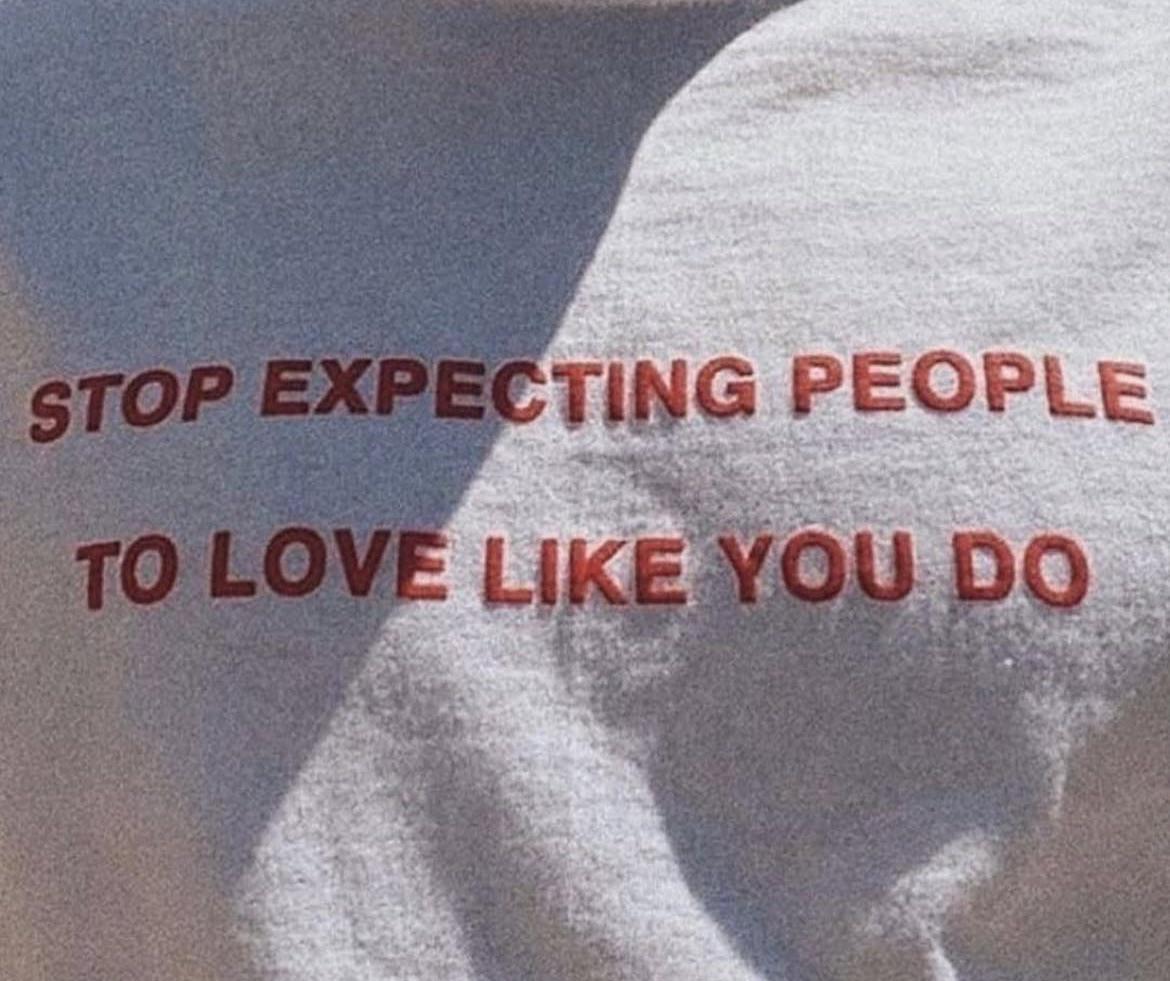
So I should I love not expecting any love in return?
People don’t love the way I do?
What am I missing here
r/emotionalintelligence
•
u/Mundane-Country-3486
•
Apr 08 '25


Confrontation doesn’t scare me because I’m afraid of you… it scares me because I’m afraid I won’t be able to make you understand me. And when it’s you someone I care about deeply that fear multiplies.
It’s draining. Not because I don’t want to work things out, but because every time I try to speak, it feels like the words will come out wrong. I want to explain what’s going on inside me, but I feel like you’ll take it the wrong way… like you’ll think I’m cold, or dismissive, or that I don’t get you.
But I do. I understand you. I feel your emotions deeply, sometimes too deeply… and I want to respond in a way that makes you feel safe. But when the moment comes, my brain short-circuits. What I want to say never matches what I actually say. So I go quiet. I shut down. I nod along. I agree, not because I don’t have anything to say, but because everything feels too much.
I’m not trying to avoid you… I’m trying to avoid the shame that comes up when I realize I’m failing you emotionally. I don’t want to invalidate your pain. I just don’t know how to meet it in a way that doesn’t make you feel like I’m disappearing. There’s so much going on in my head… so many thoughts I want to explain, layers I want to unpack, reasons I want to give. But every attempt feels like it might come out wrong… or worse, hurt you more. So I say nothing.
And I hate that. Because I want to stay. I want to make things right. I just don’t know how to do it without drowning.
I shut down not because I don’t love you… but because my nervous system goes back to that scared version of me. The one that learned it’s safer to be quiet than to be misunderstood. I retreat, not because I don’t care, but because I care too much and feel unequipped to show it. You deserve clarity, and I give you silence not because I want to hurt you, but because silence is the only thing that doesn’t feel like a threat when I’m overwhelmed.
I care about you, too deeply this is why It’s even worse. Because the guilt is heavier. The shame runs deeper. The silence feels colder. And I know I’m the one who brought it in. If I could explain it in the moment, I would. But most of the time, I only find the words once you’re already gone.
To anyone who’s been on the other side of this… I’m sorry. We don’t shut down to punish you. We shut down because deep down, we feel like we’ve already failed you. We return to that inner child who just wants to hide under the table again. Who doesn’t want to be seen not because we don’t want connection but because we’re scared it will slip through our fingers the moment we open up.
We are not victims of the world… we are just cowards.
The truth is, we chose our darkness because it was easier. Choosing you would have meant facing our fear, and we weren’t ready. We weren’t brave enough. And no, we weren’t worthy of your love. Not because you said so, but because we let the darkness pull us in. The same darkness we kept calling solitude. We mistook silence for strength. We mistook distance for peace. And we convinced ourselves we were safer alone. But the truth is, we were just hiding from the kind of love that required us to show up. Because we are cowards.
r/emotionalintelligence • u/Beginning-Arm2243 • Feb 21 '25
So I'll give you a minute to unpretzel your brain and maybe read that again:
Wanting positive experience is a negative experience; accepting negative experience is a positive experience. It's what the philosopher Alan Watts used to refer to as "the backwards law" — the idea that the more you pursue feeling better all the time, the less satisfied you become, as pursuing something only reinforces the fact that you lack it in the first place. The more you desperately want to be rich, the more poor and unworthy you feel, regardless of how much money you actually make. The more you desperately want to be sexy and desired, the uglier you come to see yourself, regardless of your actual physical appearance. The more you desperately want to be happy and loved, the lonelier and more afraid you become, regardless of those who surround you. The more you want to be spiritually enlightened, the more self-centered and shallow you become in trying to get there.
P.S. A very relevant topic is the shadow (Carl Jung) which i put a workbook together, and I am offering for free - just DM me if interested or find it here!
r/emotionalintelligence • u/SimpSniff • Dec 18 '24
Sorry if the title is a little antagonistic, I’m more trying to be proven wrong here.
From personal experience I’ve noticed that everyone I meet, myself included, with a high level of Emotional Intelligence has experienced firsthand some form of abuse, be it personally or witnessing it.
I’m curious if my thoughts are accurate at all?
With this opinion I find myself being okay when people just “don’t get it.” If what it takes to “get it” is to suffer, I’m okay with people not understanding.