The main ethical arguments against dairy farming appear to be:
Male calves: Male dairy calves are expendable and are either killed immediately or sold to veal farms. Sexed sperm and the use of beef sperm can minimize this issue, but they are far from the standard practice.
Female cows are sold to slaughter when their production drops. So, instead of living out their natural lifespans (~20 years) they are killed without even reaching middle age.
As dairy farmers, how do you feel about these concerns?
So many posters on this sub talk about how much they love cows. Please help me understand.
I’m looking for a brand of milk avaliable in Woolworths or coles that doesn’t seperate and kill the baby cows. Struggling to find info, any info is appreciated!
Hi I've just moved to Cornwall, there are plenty of farms here but does anyone know where I can source a few gallons of raw milk?
I'm really into cheese making and want to start doing it again, you can make it from goldtop but I'd really rather contribute locally. Can anyone offer any suggestions?
I’m Ofier Langer, founder of the Israeli Dairy School. I've spent 20+ years in dairy herd management, including 14 years leading international seminars for farmers, consultants, and feed companies across the globe.
Despite our hot, dry climate in Israel, we've achieved 12,000 liters (3,170 gallons) of milk per cow per year. Here are five key strategies that might help your farm increase productivity and herd health, no matter where you're located.
5 Real Lessons from Israeli Dairy Farms:
1. Centralized TMR Feeding Systems We use centralized feeding stations that deliver pre-mixed TMR to multiple farms. It reduces errors, improves consistency, and lowers labor costs.
2. Protocol-Driven Management From calf care to milking, every task follows a strict SOP. It’s about minimizing variability, which is significant for teams with multiple workers.
3. Smart Tech & Data Alerts Most farms use tools like AfiFarm to monitor real-time data: heat stress, production drops, and health issues. Early alerts lead to early action.
4. Adapted Genetics for Heat & Yield Israeli Holsteins are bred for high milk yield and heat tolerance. Investing in climate-suited lines pays off even if you don’t use the same genetics.
5. Invest in People, Not Just Cows Our seminars teach managers and teams how to work better together. Protocols are only effective when everyone’s trained and aligned.
I recently came across a TikTok about a milking robot. I suddenly had a naughty thought. I immediately check the comments section. I wasn't the only bloke. What would does it feel like to have your dicker be sucked on by a milking machine?
Being perpetually horny, I have now become infatuated with this idea of hopping in for a go in a milking robot. I don't know what sort of operational challenges I would face, but I can imagine how this all would logistically play out in fantasy land. Like obviously unethical to contaminate with bad milk, the robot has cleaning and disinfecting features.
Like people who've worked around these machines, could you kindly indulge me with your experiences? What sort of details could I add to fantasy land to make it more realistic and feeling in-reach? like any particular sensors, expected programming, where the E-stop is etc.
My questions is, have any of you farmers have had a naughty thought around a milking machines.
Hey everyone! I’m currently doing a from-scratch diversified farm playthrough, starting off with a heavy focus on goats.
The grind has been real, but in my latest session, I finally managed to secure my grass harvest, set up a chicken coop for some passive egg income, and hit the ultimate goal: bottling the very first goat milk! Seeing that first bottle actually get produced felt incredibly rewarding after setting everything up.
Has anyone else tried running a primarily goat-focused farm yet?
I’m actually recording the whole journey for YouTube. If anyone loves watching from-scratch progression series, I'd be honored if you checked it out. You can start the journey right from the beginning here:
I grew up on a beef farm of my parents over in Europe. I always wanted to get into dairy but didn't have a farm to be handed down to me.
I am a veterinarian and I currently live in Canada and have dual citizenship.
I've visited farms in multiple states in the US.
I could go back to Europe and milk 50 cows on my dad's farm but I've always hoped to go to the US and lease 1500 cows or partner with someone else.
I am 38 years old and waiting for the right opportunity to come along. How can I achieve this? I work with cows and farmers every day but can’t achieve to take over a bigger dairy farm.
I grew up working on dairy farms in Northern Ireland and England, and I'm currently studying Aerospace engineering. I've been developing a concept for an autonomous robot that could clean and re-bed cubicles during milking and amongst cows, with the aim of reducing the time spent each day sweeping and bedding cubicles.
The idea came from seeing first-hand how repetitive and time-consuming cubicle maintenance can be, but before taking it any further I'd really like to hear from dairy farmers to find out whether it's actually something that would be useful in practice.
I've put together a short anonymous survey (around 2 minutes) asking about herd size, bedding systems, time spent maintaining cubicles, and whether a robotic solution would be of interest.
If you run a dairy farm, I'd really appreciate your input.
The survey is completely anonymous. There's also an optional box at the end if you'd like to leave an email address to receive updates or hear about prototype trials in the future.
Thanks in advance for any feedback, it's invaluable to hear directly from the people who would actually use something like this
Yesterday I picked up a little pamphlet aimed at proselytizing to kids considered Jewish by Orthodox Judaism despite their lack of familiarity with Jewish practices (it was at a sketchy part of Tel-Aviv). It mentioned a rather strange story by a ‘famous rav living in Britain’, explaining that Jewish witnesses need to witness the milking process when buying milk from idolators (this includes Christians), because back in the Middle Ages they could mix the kosher milk with some milk from non-kosher animals. At the end of the story the rav mentions a non-Jewish farmer who explains that British authorities deem milk up to standards by its fat content, concluding it’s been mixed with water and therefor unsellable if it’s too low, which is why je sometimes puts some porcine milk in the bovine to make sure it gets the all clear. (The point of the story is to show the wide reach of rabbinical thought, which proves itself surprisingly relevant even in present-day situations.)
Is there any truth to such claims? It sounds very strange to me, considering skim milk is a thing.
(For those of you who speak Hebrew and whose interest I piqued, the pamphlet in question has a picture of a young boy sitting on an elephant’s trunk with the title ‘תינוק שנשבה’ and the name יעקב קמחי on the cover, but the summary in the back contradicts the contents, so it might have been a misprint. It’s in pages 21–3.)
Having the dairy farm in NY because of high milk prices. Probably just going to work for a dairy farmer, built trust with him, then he’ll give me his farm. Going to start with a few Holstein cows, then keep on expanding. Tractor choice: John Deere 9620R (Gotta have my big green tractors!) Going to get some pigs, hogs, and chickens.
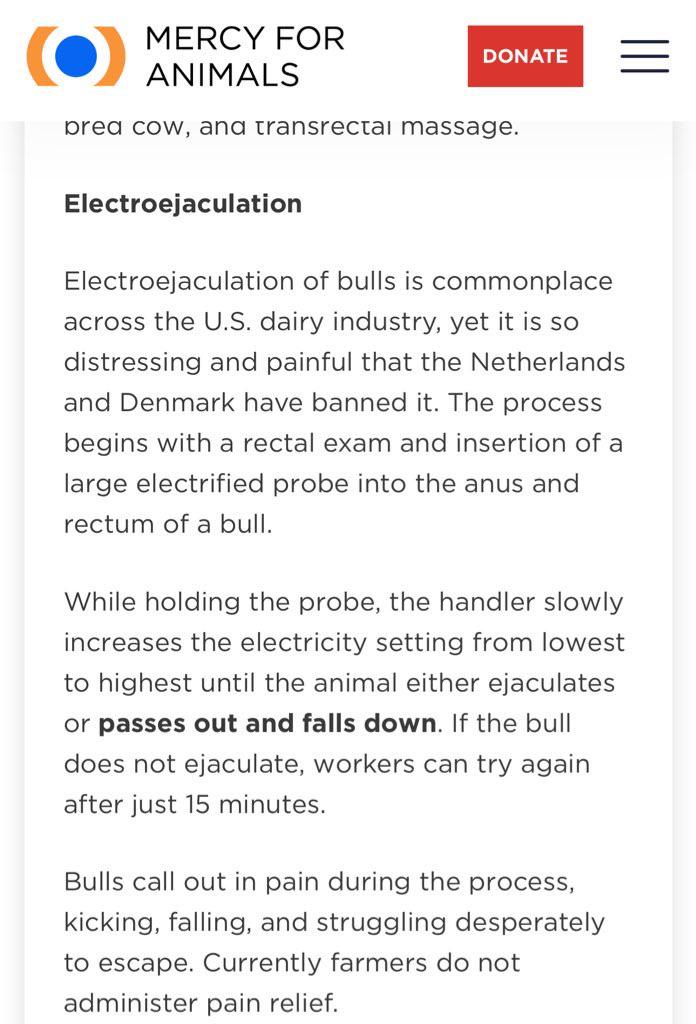
Hi I’m not part of this type of industry at all but I’ve been doing research on the subject matter for a project and came across an animal rights website talking about how electroejaculation works for bulls. Is there any important information they are missing or leaving out? How accurate is this? I’m trying to get as much information as possible so any input is greatly appreciated.
Running a dairy is not complicated in theory, but in real life it gets messy. Milk comes in early morning and evening, different people handle collection, and the owner is expected to know exactly what happened if something goes wrong. Most problems don’t start with bad intentions. They start when too many people have too much access.
In many dairies, the same login is used by collectors, office staff, and sometimes even temporary helpers. One person makes a change, another person edits it again, and by the end of the day the owner is trying to figure out what actually happened.
This is where Hamari Dairy’s agent-based permissions quietly make a difference.
What Actually Changes When Permissions Are Set Properly
Once permissions are set, each agent gets access only to what their daily work requires. An agent can view reports, but only for the milk farmers assigned to them by the dairy. They can check entries and totals, but they cannot edit the data. This helps them stay informed without risking unwanted changes. Agents can also add new farmers when needed, but they cannot modify details of existing farmers.
This keeps farmer records stable and avoids accidental updates. The rate chart is visible to agents so they understand the pricing, but editing rates is restricted to the dairy owner or authorized staff only. Because of these limits, agents can work confidently, and owners don’t have to worry about critical data being changed.
Fixed Collection Time Makes a Big Difference
One small feature that dairy owners appreciate is time control. With Hamari Dairy, the owner can decide when each agent is allowed to collect milk. The agent can enter milk data only during that fixed time window. Once the time is over, entries are blocked automatically. This sounds simple, but it solves many real problems. No late-night edits. No backdated entries. No “I forgot to enter earlier” situations.
Milk collection stays tied to actual collection hours.
Pickup Collection Becomes More Reliable
Many dairies now collect milk directly from farmer locations. Agents go village to village, pick up milk, and enter data on the spot. With time-based access, these pickup entries stay clean. The agent can only enter milk while they are on their route. When the route time is over, the system doesn’t allow further entries. For dairy owners, this means pickup collection that matches reality, not estimates or adjustments done later. Farmers also trust the system more because entries are done in front of them, at the time of pickup.
Less Supervision, More Clarity
Once roles and time limits are set, owners don’t need to keep calling agents or checking logs manually. If something looks wrong, it’s easier to understand where it came from. Not because the system is strict, but because it’s clear. This helps owners focus on pricing, expansion, and farmer relationships instead of fixing data issues.
Works the Same for Small and Growing Dairies
Whether a dairy has one collection point or several pickup routes, this setup works without change. You add agents as needed, set their permissions and timings, and let the system handle the rest. As the dairy grows, control stays the same.
Control Without Daily Stress
Hamari Dairy’s agent-based permissions don’t try to control people. They control the process. When everyone knows what they are responsible for and when they are allowed to work, things move smoothly. Data stays clean. Farmers get clear records. Owners sleep better. In dairy work, that kind of control matters more than fancy features.
Hi, me again. I wanted to share that my startup has an initiative to 'save small farms'. The key is to model large family farms, and then use that to help guide small family farms adapt/improve. or rather, find the farms that are thriving and use that info to help guide the ones that are struggling. I have done a ton of digging on the issue, and there is a lot more to go. If you are a seasoned data scientist, or just learning, you can help out with the project, or follow along. All the dashboards will be open source, and any data science used in the project, as well as the draft and published research paper(s).
We’re a small team working on new technology for dairy farms, and we’d really value your guidance in shaping the features we build.
Feel free to leave a comment below or join our short 3-minute survey. Your experience will help us understand what works, what’s missing, and what farm technology should focus on next.
Running a buffalo dairy farm in India right now is an operational nightmare. Our farm follows a basic setup: Owner → Manager → Workers (milking, feeding, cleaning). Because of a massive labor shortage, this entire system is breaking down:
No new workers: Young people avoid physically demanding farm work, preferring city jobs after getting basic degrees.
Labor blackmail: High demand gives workers total leverage. If called out for incomplete work, they pick a fight and threaten to quit immediately. Owners are forced to stay quiet because replacements are nearly impossible to find.
Egoistic managers: Good managers are also scarce, leading to unchecked egos. Mine makes reckless decisions without my permission, including giving the wrong medicine to sick buffaloes.
Automation fails on buffaloes: Unlike standardized Western cows, Indian buffaloes have varied teat sizes, making automated milking machines ineffective. We remain 100% reliant on manual labor.
The owner takes all the financial risk while being held hostage by both the manager and the workers. Fellow farm owners—how are you surviving this labor crisis? Any guidance on how to overcome this situation.
We have a cow that has been bagging up to get ready to calve, the membranes are hanging out, but she doesn't appear to be in labor anymore. We tried reaching in but couldn't feel a calf in her birth canal. She's an older cow, probably 5th-6th calf, and hasn't had trouble before.
Any advice? Should we be concerned? We haven't experienced anything like this before in our herd.
I’m Apoorv Joshi, a farm owner from India. I may not know exactly how dairy farmers abroad handle their business, but I’ve got an idea that could change the game for anyone serious about dairy.
Right now in India, people are starting to boycott A1 milk from foreign breeds like Jersey and HF, because it’s seen as lower in nutrition and harder to digest. On the other hand, our indigenous breeds—Gir, Sahiwal, Rathi, Kankrej—produce pure A2 milk, which has higher nutritional value, better digestibility, and proven health benefits.
Here’s where it gets interesting—A2 ghee is in crazy demand worldwide. In fact, India is already one of the biggest exporters of it, but the global market is still wide open. That’s your opportunity: instead of being stuck with A1 milk, you can bring in Indian A2 breeds, start producing A2 milk and ghee, and build a premium brand in your country.
Think about it: • Consumers are becoming more health-conscious every year. • Parents are willing to pay premium for better nutrition for their kids. • Ayurvedic and holistic health movements are pushing A2 ghee as a superfood.
This isn’t just farming—it’s tapping into a global health trend. Whoever moves early, builds trust, and scales it, will own this market in the coming decade.
So, if you’re looking for the next big shift in dairy—A2 milk and A2 ghee is the future, and India’s native cows are the foundation.
As many dairymen continue to embark on large projects and hire their friends to build on very loose terms and contracts, along with “trust deals,” as a consultant, I just recently caught a well-respected farm builder mishandling over $6M in funds. Please get ahold of me if you want to minimize the significant risks that farming families are unaware of and don't have the staff or resources to manage correctly. This market sector is filled with egregious risks that farmers have no clue about.