r/VR180Film • u/AppealMundane5486 • Oct 06 '25
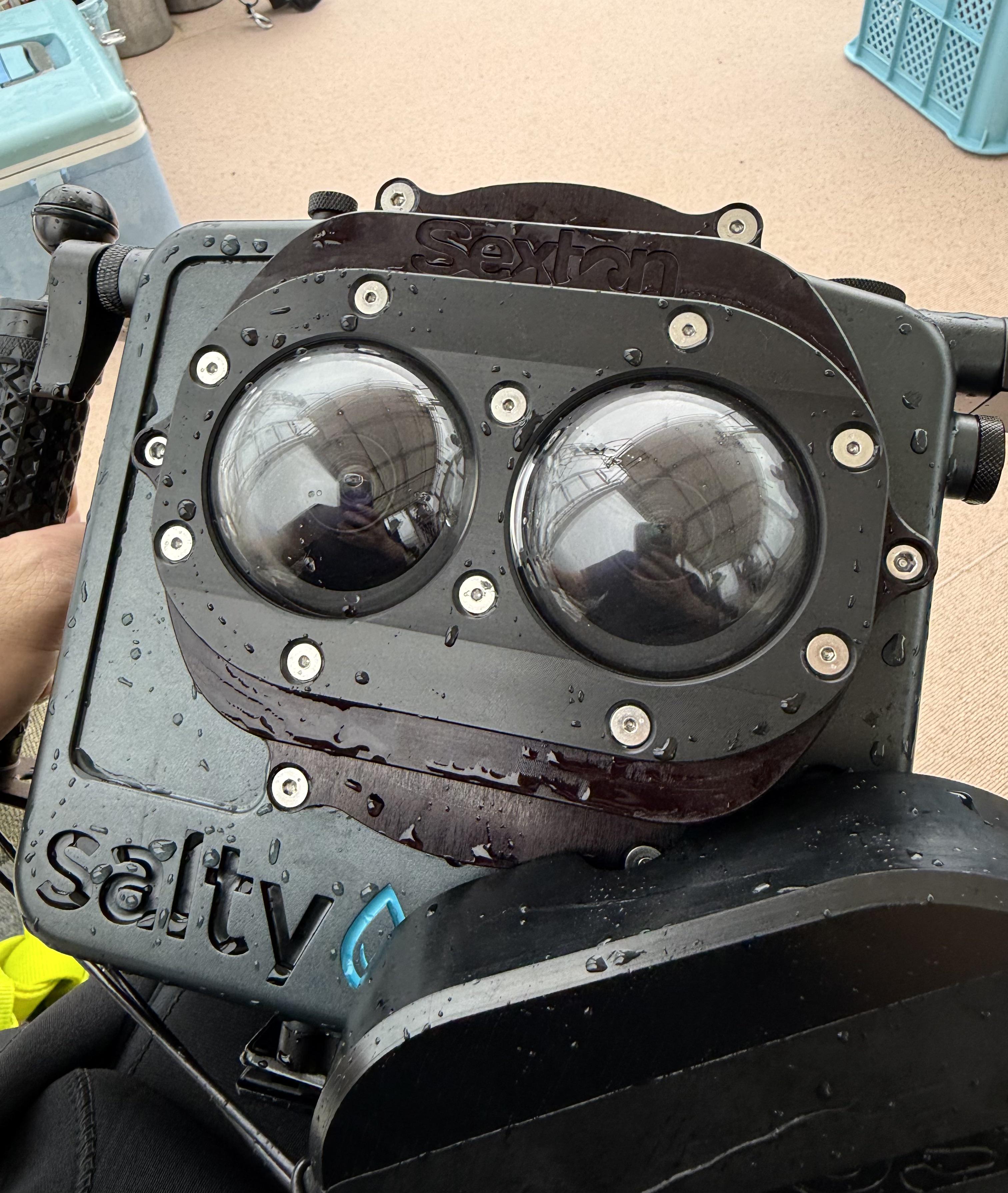
VR180 Cameras/Hardware The Era of Compact 12K VR Filmmaking has come, Pyxis 12K + Canon Dualfisheye + 3D printed plate = 12K60p VR180 beast at only 2kg

Initial B-raw test footage and full res screenshots: https://drive.google.com/drive/folders/1x-QEGtz3Ir0IU2AvTdcOoc6ynSrG_qoz?usp=sharing
Real world NYC Streets gimbal shot: DeoVR, Youtube, 12K high quality file for Vision Pro and 8k file for Quest 3(still looks better than native 8k because of oversampling)
I've been playing with Pyxis 12K + Canon Dualfisheye for a few days and I'm quite happy with the result! it's not cine immersive qulity but is a major step up from what r5c can produce at 8k. It's not a super sharp image, but very robust and detailed with all the great BMD color and dymamic range.
The Pyxis can shoot braw 12,288 x 6480 at 50p and 12,288 x 5112 at 60p, so you can have full canon dualfiseye fov (about 190°) at 50p, while shooting at 60p, the top/bottom will be cropped but you still get around 170° vertical fov which I find totally accetable for VR180(apple does even more crop in their immersive video). So this 60p mode will probbly be my go to setting. I included footage shot at each mode so you can judge for yourself.
Also, I'm super happy to be able to have a whole lightweight gimbal setup ready! it consist of DJI RS4 mini, BMD PYXIS Monitor and SmallRig HPS 99Wh battery grip. I got the camera to balence on the gimbal very well and the the weight distribution of the whole rig is qute even too. It feels great in hand and the total weight is 8.4lbs, quite managable considering its capability.
The solution is avalible as a 3d printed plate plus necessary tools/screws DIY kit, price would be $149+Shipping. So if you already have a canon dual-fisheye lens, just get a pyxis 12k and my kit and you'll have a 12K baby cine-immersive!
Now, a little bit about how this works. it goes back to 2 years ago, when I found out that canon's dualfisheye lens can retain its aperture after detach from a canon body while the camera is on, and its focus adjustment is completely mechanical. Based on this premise, I made a converter that fixed on dualfisheye's back that made the lens work on Nikon Z8/Z9 and got very good result with it, but this is a story for another day.
So this time, to get the lens work on the Pyxis 12k, I did something similar, by replacing the 4 screws on the dual-fisheye's back with longer ones, I'm able to sercurely fix the 3d printed plate behind the dualfisheye lens, the whole piece can then be screwed onto the Pyxis body, by replacing the exsiting L mount plate. The back plastic cover of the dual-fisheye need to be taken out to clear the IR filter on the pyxis, but all in all it's a quick process that took only about 5 mins to complete(might void warrenty though, need futher clarification/verification from the manufactures.).
Because of everything is screwed in and 3d prints have very good accuracy and surface flatness, I find the end result to be quite robust and consistant, with zero play/wobble and accurate allignment with the sensor plane. I used PLA tough+ for this mount plate, which is as the name suggust, very hard to break and very importantly, has almost 3 times the layer adhesion strength compare to other options. I tested each screw on the mount can hold the entire rig+metal connector (about 9lb), and I've tested the camera's temperature after 50mins of continuous recording, the camera body and mount part is not hot at all, so heat deformation is very unlikely.
That's it for now! like I said, this is probobly the start of the 12k era for our prosumer VR180 people. Stay tuned for more updates on this project!