I think its incredible that my simple pro-Palestine comment had more downvotes than many my posts with Turkic content had upvotes. I guess it tells enough about priorities of this sub. Few people care about culture or history. When I shared video with rarest Siberian Turkic language or was probably first person here to actually mention Kryashens, barely anyone noticed it but after I revealed my pro-Palestine stance, I got this: "even culture meaningless to you?" Short memory, I guess? Yes, as a person from tormented North Caucasus I will always support tormented Palestine.
The suffix “-stan” originates from Persian and means “The Land of”. This suffix was heavily used by Turkic tribes as they passed through Persian territories—by the Ghaznavids, Seljuks, Khwarazmians, Qara Qoyunlu, Aq Qoyunlu, Safavids, Afsharids, Qajars, and others.
That’s why Uzbekistan literally means “Land of the Uzbeks,”Turkmenistan“Land of the Turkmens,” and Kazakhstan“Land of the Kazakhs.” and so forth.
A side note: Under Arabic influence—through the Ayyubids, the Mamluk Sultanate, and the Ottomans—the “-stan” suffix gradually gave way to the Arabic “-iyye” suffix, which means “state of” or “institution of.”
Examples include: Konstantiniyye (the Ottoman name for Constantinople after the conquest), Türkiye*,* Şifaiye (a medical complex in Sivas), Adaliyye (court house in Turkish),Harbiyye (military academy in Turkish),Mülkiyye (civil service mostly used in Ottoman era), etc.
After the conquest of Istanbul and during Ottoman rule, Turkic tribes from the east kept migrating into Ottoman lands. Among the common people, the city began to be called “İstanbol.” Here, Stan Bol literally means “Plenty of "The Land Of""; which in meaning translates to metropolitan where many cultures and people exist plentily.
Over time, since the people kept saying it that way, Sultan Mustafa III changed it to “İslâmbol,” meaning “the place where Islam is plenty.” Of course, that name (and the propaganda behind it) never really stuck, and the city continued to be known as Istanbul. In texts from that period, you can actually find Konstantiniyye*,* İslâmbol*,* and İstanbul being used interchangeably. But in the end, Istanbul is the one that made it into official usage.
But
According to Wikipedia, the name supposedly comes from Greek εἰς τὸν βουλή (is ton bule), which means “towards the city.”. Meanwhile, while all the lands Turkic peoples passed through are full of “-stan” names, in Ottoman Turkish the city’s name was written St-nbol (since Arabic and Persian scripts have no vowels). Yet some people shamelessly claim it comes from Greek and means “towards the city.”. And funnily enough, Turkish historical resources also reference THIS?!
Come on now—why would they change a city name that was already in Greek into another Greek phrase? If that were the case, they would have just kept Constantinople*,* which also carried historical weight. Mehmed the Conqueror even gave himself the title Kayser-i Rum(“Caesar of Rome”), which made far more sense to keep the name.
Why on earth would we downgrade the historical and prestigious weighted name to just a simple Greek phase“towards the city”? Only reason to make that name change would be if you want to convert it to your own culture.
And where is the Turkish Historical Society (Türk Tarih Kurumu) in all this? Atatürk founded it precisely to protect our history from being distorted by propaganda. Yet they’re asleep at the wheel.
Wikipedia, meanwhile, can be edited by anyone who’s bored. I still remember a Bulgarian lady who spent years editing Turkish history and falsifying there—she even made it into the news.
So in the end, it’s up to us, brothers and sisters. It’s our responsibility to protect our history. Nobody cares about the actual truth, but about what is benefiting them in their propaganda.
EDIT :
No further explanation will be given by me. Translate below if you wonder, I am exhausted.
Daha fazla açıklama yapmacayağım.
Yorumlarda tartışmalardan net 3 örnek vereceğim:
Atina ve İstanbul'un yazılışları neden farklı? Atina harfi harfine yabancı kelime olduğu için osmanlıca yazılmışken madem Yunanca olan İstanbul neden Farsça + Türkçe yazılıyor.
Farsça Tajikistan تاجیکستان ile İstanbul'un استانبول istanlarının yazılışının aynı oluşu. (Tajikistan'ın stan'ı) ستان ve استان (İstanbul'un İstan'ı) Başında harf olmadığı için elif ile başlıyor + harflere dikkat edin arapça farsça ve osmanlıcada harfler pozisyonlarına göre şekil değiştirir ama harfin ne olduğu aynıdır nun ise nun + Türkçe bol بول . Yunanca olsaydı neden Farsça + Türkçe yazılsın diğer bütün yabancı isimler harfi harfine yazılıyorken. Charles'a Chorlos denmesin diye.
Türk Tarih Kurumunun bişi yapmaması ve wikipedia'da dezenformasyonun almış başını gitmiş olmasından ötürü bunu yaptım. Bulgar kadının örneğini verdim postta. Japonlar da yaşadı bu sıkıntıyı, Yasuke Japanese Goverment falan yaz çıkar. Bu post benim uydurduğum bir şey falan değil bildiğin Türk Tarih Kurumunun onaylı kitaplarından ve Halil İnalcık'tan.
Ama herkes bana sallıyor, wikipediaya bakıyor yok böyle bişi diyor. Yorumlarıma bakarsan farsça + osmanlıca yazmadığım da kalmadı, 3. Mustafa döneminden akçe atmadığım da kalmadı. Ama Yunan wikipedia'ya öyle yazmış ya hiç anlamı yok sunduklarımın. Sunduklarım da benim bir şeyim değil, tarihçilerimizin yaptıkları.
Yani detaylı bu kadar anlatımı umursamayıp, wikipedia'ya bakıp he böyleymiş bu ne sallıyor diyip saldırılması gerçekten çok yazık. Ben bir şey değilim sadece kaynakları toplayıp derleyip paylaştım. Yani güvendiği kaynak benim kadar açıklamıyor bile neden isim o demekmiş. Ama sanki bütün varlığı bütünlüğü o Wikipedia'dan öğrendiği şeymiş gibi saldırıyor. Böyle çok Ahaber de izler milletimiz, sonrasında anlatanlara da saldırır.
Biz 100 yıla Türk diye bişi yoktu Kürttük aslında hepimiz de deriz, biz yunanız ya da deriz. Sonrasında bak yazılı var diye açıklayanlara da aynı şekilde saldırılır. Neden Kürdüz ki, neden Yunanız ki peki bu taraf bu lafı neye göre diyor sorgusu yapmadan.
EDIT 2:
Dostlar zaten diğer çoğu şehirlerimizin Yunanca,
Smyrna > İzmir
Kayseri > Kaiseria
Iconium > Konya
Ama onların yazılışı ile istanbul'un yazılışı farklı, bunun üstünde durmaya çalışıyorum. Konstantinniye de kalabilirdi. Neden değişti ve neden Farsça + Osmanlıca yazılmaya başladı konumuz bu.
Farsça (Elif harfi) -stan + Osmanlıca Bol ile yazılıyor istanbul. Vav hem o hem u sesine geliyor Osmanlıca'da. Istanbol/Istanbul. (İlk editte de gösterdim)
Ama dediğin tüm şehirler harfi harfine üstün esre ötre ile yazılıyor. Çünkü yabancı kelime. Bodva yerine Budva'ya gidilmesin diye.
Atina yazılırken ELIF esre ile (yani kesin e) tı ile T Elif etre ile (İ) nun ile N ayın esre ile (A) şeklinde yazılır ve en sonda da H ile yazmışlardır. أَتِينَه
Sen Roma'nın adını latince şehre doğru anlamına gelecek şekilde değiştirir misin? Böyle prestijli Constantinople adını neden kaybedersin? Lokalleştirmek için Moğollar ve Çinlilerin çok yaptığı gibi. Yani keşke Konstantiniyye kalsaydı "into the city" olacağına. Ne anlamı var ki değiştirmenin? Bu bir cepte dursun.
Aynı zamanda da şehrin adı Farsça + Osmanlıca yazılmış. Tajikistan Özbekistan vb'deki stan'ın yazılışını alıyorsun aynen yapıştırıyorsun (başına elif konuluyor ama arapça yazım kuralı yüzünden selam-islam gibi)
Sonrasında da kalanı Osmanlıca yazılıyor. Vav osmanlıcada O U harfidir, farsçada v'dir. böyle farklılıklar var dilde ve net gözüküyor İstanbul'da. Ve İzmir Selanik gibi yazılmıyor.
Hani amacım böyledir her yer türk huu değil, gerçeğe ulaşmak. Halil İnalcık'ın İstanbul Tarihi Araştırmaları kitabında da bu bahsediliyordu, yazılışında da bu belirgin ve dediğim gibi Romanın adını "şehre doğru" ile değiştirmek yine aynı dilde saçma olurdu. Prestijli Roma'nın başkenti olmuş Yunan'ların kabesi denilecek şehir adını gidip şehre doğru yapıyorsun yine yunanca.
İşte bu denk gelen şeylerden ötürü böyle olduğunu düşünüyorum, daha doğrusu Halil İnalcık düşünüyordu ben de katılıyorum. Karşı tarafın açıklaması da sadece şundan ibaret : "şehre doğru gidelim diye diye şehre doğru olmuş". Peki İslambol diye sorduğunda cevap veremiyorlar. Gizlemeye çalışıyorlar. Bir ajanda var yani. Ek: İslambol yazılışı 3. Mustafa dönemindeki sikkelerden:
EDIT 3: Kanuni'nin Hürrem'e yazdığı şiirde Stanbulum geçmesi:
My understanding is places such as Turkmenistan, Uzbekistan, Tajikistan were largely Iranic made up of Sogdians, Khwarezmians, Persians, Bactrians, Parthians and other Iranic peoples however after the 12th century it seems as if these Iranic cultures died out and we saw Turkmen, Uzbeks, Kazakhs becoming the dominant peoples on Central Asia.
Prior to this time, Turks were largely nomadic and based around Kyrgyzstan, Mongolia, and Western China.
It also appears as if Turks and Iranic peoples had a largely symbiotic and mutually beneficial relationship, with Iranic empires keeping Turks as mercenaries and soldiers.
My theory is:
Turkic expansion begun around the 4th-7th century away from the Altai steppe into Central Asia proper and Eastern Eurasia (Volga) however were never the majority.
Around the 9th century the relationship between newly Islamicized Central Asian Iranians became more positive with reliance on Turkic military services and further Turkic settlement occurred in Iranic lands
During this period (approx 9th century) of Islamization, Persianization occurred where Persian replaced Sogdian, Bactrian, Khwarzamian as the default language. Central Asian Iranic cultures became 'Persian' and Non-Persian Iranic peoples were absorbed into Central Asian Persian culture.
Turks retained their unique ethnic identities with Oghuz/Kipchak being dominant Turkic groups.
12th Century Mongol invasions largely destroyed the Persian culture of Central Asia and promoted further movement of Ohguz Turks into Central Asia. Turks adapted to the Mongol world easier than urban Persians.
Post-Mongol invasion Central Asia became a hybrid Persian-Turkic society.
It seems as if the defining reason was Mongol conquests which destroyed much of the Persianate population. Turks, being nomadic, survived and flourished. Post-Mongol Central Asia became dominated by Turks.
I am building a playlist with nasheeds (islamic music) from around the muslim world. I would love to hear some uyghur nasheeds, as well as nasheeds from other turkic countries/peoples. I used to have some uyghur nasheeds in my playlist, but they sadly got deleted by youtube. Can you guys help me with finding some?
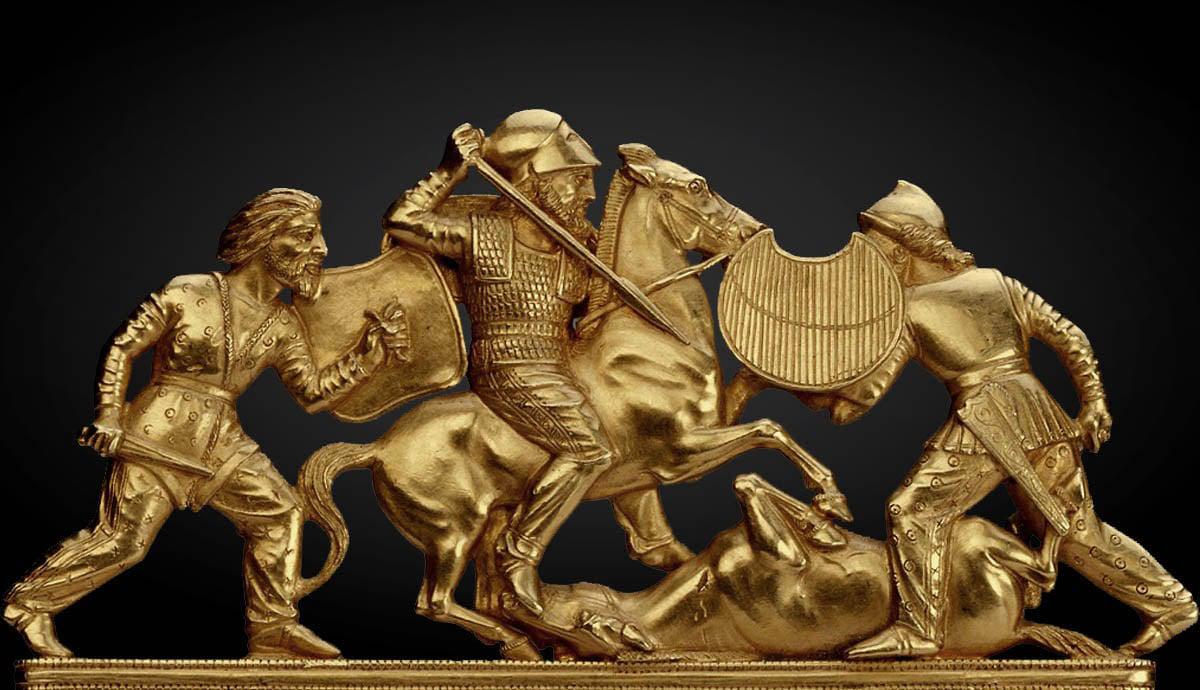
For decades, mainstream history taught us that the Scythians and the indo europeans were close cultural and linguistic cousins. But modern science just flipped that script. While linguistics proves some of the Scythians spoke an Indo-Iranian language, recent breakthroughs in ancient genomics have completely dismantled the idea that they were ethnically connected to the indo europeans. Instead, the data reveals that "Scythian" wasn't a single race, but a diverse nomadic confederation whose genetic and cultural roots trace back directly to indigenous East Asian and Paleo-Siberian populations.
This school of thought argues that the original founders of Scythian culture were genetically and geographically indigenous Siberians who underwent a language shift, adopting an Indo-Iranian language from their western neighbors
Historians and geneticists who back this theory outline a specific sequence of events:
The Indigenous Siberian Core: In the Early Iron Age (around 1000–900 BCE), the people living in southern Siberia (Tuva, the Altai, and the Minusinsk Basin) were ethnically and genetically East Asian/Paleo-Siberian. They spoke non-Indo-European languages—hypothesized by some researchers to be early Proto-Turkic, Yeniseian, or Uralic.
The Birth of Scythian Culture: These Siberian populations were the first to fully master nomadic horse riding, developing the earliest "Scythian-style" animal art, weaponry, and burial mounds (like the famous Arzhan kurgans in Tuva).
The Indo-Iranian Language Shift: As these Siberian horse lords expanded their trade networks and territory westward across the Eurasian steppe, they came into intense contact with Indo-Iranian pastoralists (descendants of the Andronovo culture). Over generations, the Siberians adopted the Indo-Iranian language as a lingua franca (trade language) because it was highly useful for cross-continental communication.
The Westward Sweep: This newly mixed population Siberian by blood and material culture, but Indo-Iranian by speech swept westward into Ukraine and the Black Sea region, becoming the "Scythians" that the ancient Greeks eventually met.
The Scientific Evidence Supporting This:
The Oldest Tombs are Siberian: Archaeologically, the oldest Scythian sites are in eastern Siberia, not the western lands closer to Iran or Europe. If the culture was purely an offshoot of western Indo-Iranians, the oldest sites would be in the West**.**
Genetics Show High East Asian DNA: Modern paleogenomics regularly reveals that the earliest Eastern Scythians (the Saka) carried massive amounts of indigenous Siberian and Northeast Asian DNA.
I don't understand this. If they Turkified Turkey how are they not Turks themselves or were the Seljuks of Anatolia were also Turkified Turks themselves? So many historian including Ottomans claim they were not Turkic or they were ethnically mixed to the point they were not true turks? Is this what they are trying to say
" Ottoman historian Mustafa Âlî (1541 - 1600) commented in Künhüʾl-aḫbār that Anatolian Turks and Ottoman elites are ethnically mixed: "Most of the inhabitants of Rûm are of confused ethnic origin. Among its notables there are few whose lineage does not go back to a convert to Islam."[55] "
However this only gets even more confusing.
( 896–956 AD) Al-Masudi described Yangikent's Oghuz Turks as "distinguished from other Turks by their valour, their slanted eyes, and the smallness of their stature".
Over time, Oghuz Turks' physical appearance changed. Rashid al-Din Hamadani stated that "because of the climate their features gradually changed into those of Tajiks. Since they were not Tajiks, the Tajik peoples called them turkmān, i.e. Turk-like (Turk-mānand)"[a].
Uzbek Khiva khan, Abu al-Ghazi Bahadur, (1603 – 1663) in his Chagatai-language treatise Genealogy of the Turkmens, wrote that "their (Oghuz Turks) chin started to become narrow, their eyes started to become large, their faces started to become small, and their noses started to become big after five or six generations".
In a movie called yahşi batı from Cem Yılmaz, it is said that Kızılbaşlilar are from Turkic descents. I understand it is a komedi movie, but it could be true because the land was connected before ocean water levels rised. And some characteristics may be the same, also with eskimos or inuits
Other than kazakhs, central asian have predominantly west eurasian Y dna haplogroups, but my question is did they get mostly from the pre-turkic indo european or turrkic men since even early on Ancient turks had a high amount of R1a,J etc.
Hello r/Tiele , I was wondering what you guys thought of this.
I am interesting in Persian and Turkic language speaking cultures and always wondered why a widespread use of a consistent Perso-Arabic script never caught on like the Latin and Cyrillic scripts despite centuries of contact between said cultures.
Perso-Arabic scripts for Turkic languages were riddled with inconsistent spellings unlike their Latin/Cyrillic counterparts, and the scripts that were consistent aren't widespread.
I tried to design a Perso-Arabic script that would work for all Turkic languages based off the Common Turkic Alphabet:
As the title suggests, 2-3 years ago I was really interested in panturkic ideology, was fascinated with language similarities(I'm a linguist) was watching various videos, mainly Kazakh ones like the Oguz Dogan and some Russian panturks like "Turkic revolution front" or something. But for a while already I noticed how Islamophobic most of the panturks are. Mostly they reject Islam even as a part of culture, glorify раgаn(no connotations intended) rituals and traditions. I think this fact made me more cautious of this movement and I think it's relatable to a lot of people. Uzbeks, Uighurs for example are quite pious and it's rooted in them, they aren't able to relate to the panturkist ideas because it contradicts with major part of their identity. This drives me to the idea that maybe Central Asians except Kyrgyz can cooperate together without taking out Islam and pushing раgаnism. You might argue that not all Turkic people are Muslim and mention Gagaus, Khakas, Yakut but let's be realistic, all independent Turkic countries are Muslim, we should base our common identity based on language similarities and shared religion. If not then it will be pretty hard to gain support among majority of Turkic people especially Uzbek and Uighur. I know that here are mainly English speaking liberal urban youth but we shouldn't be living in a bubble. I'm sorry if my point isn't clear. I'm Kazakh btw
I was thinking of writing long but then I gave up. I am writing briefly, we can talk to those who want to talk in the comments.
I think the distinctive term for the Turks of Turkey should be Rumlu (yes, like a tribal name) or Rumi. Because the difference of the Turks of Turkey is that they conquered the Roman Empire and settled in (u)Rum -Anatolia- and Rumelia -Balkan- lands. The name Turk covers all groups such as Lipka, Kazakh, Saka, Uzbek, Tuva, etc. Turkic is a new and invented word.
If Kayı or Bayındır had become widespread, these could also be used.
How many turks support nationalism or islam? What about turks who support integration with EU?
Do turks who live on western part of Turkey have sympathy towards balkan countries or EU? Because of shared culture history, blood ties or looks?
Do turks who look like they are from Balkans or look european/white tend to support west, europe?
What about turks on eastern side of Turkey who share blood and culture ties with arabs, iraqis, armenians, syrians and so on tend to support islam and arabic, levant, mesopatamia culture?
I still have no clue about Turkey. Do people who support Turkic union, blood and language ties with turkmens, kazakhs, uzbeks, azerbaijanis are majority?
The under title of the book is a Survey on the earliest Turks. The book is questioning common idea about the sintashta culture, that it was a Indo-European settlement. I like the book you can download the book on the website. There is Turkish version as well. If you check the publications there are books in Turkish, English, Kyrgyz and Kazakh too.