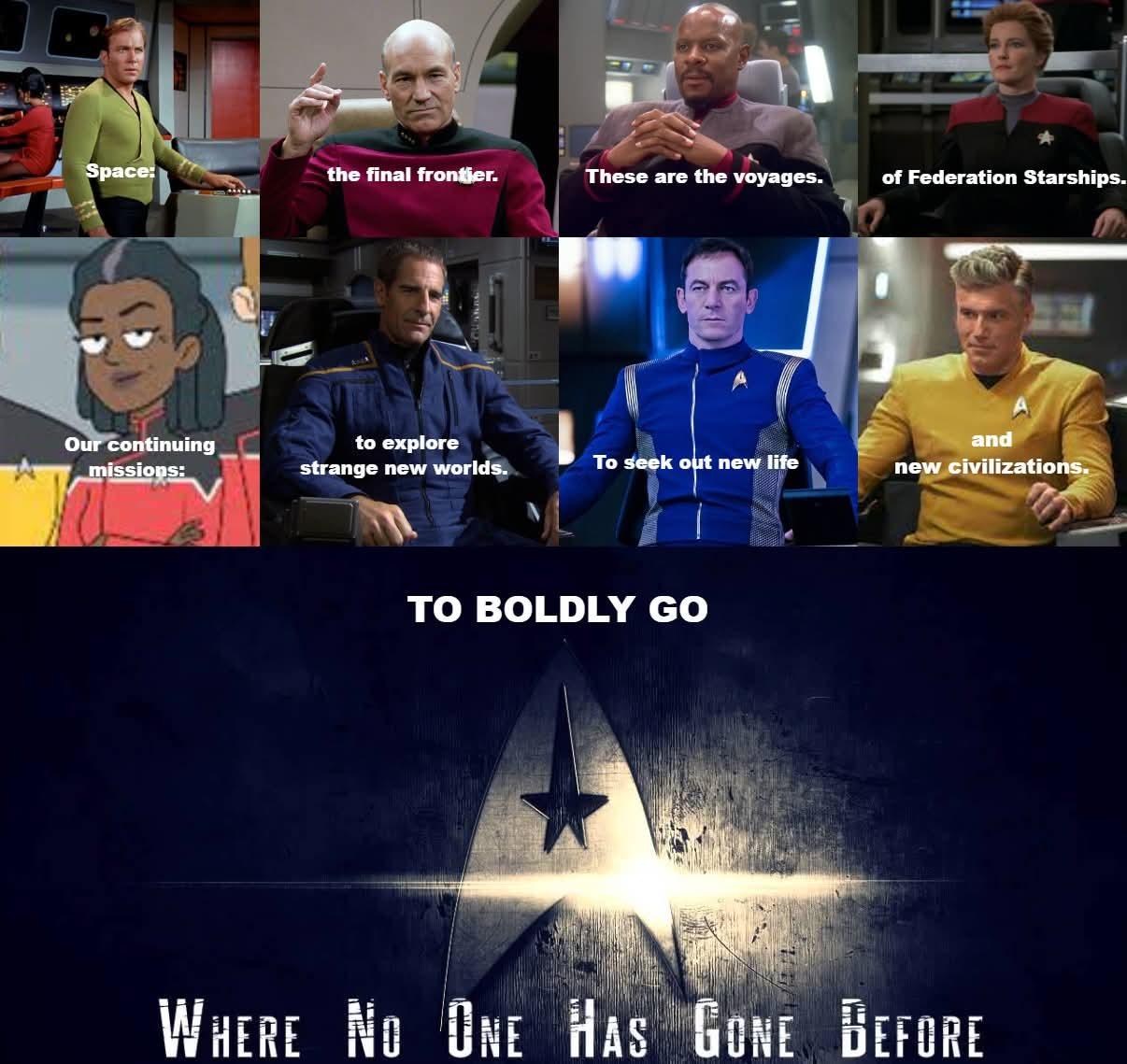
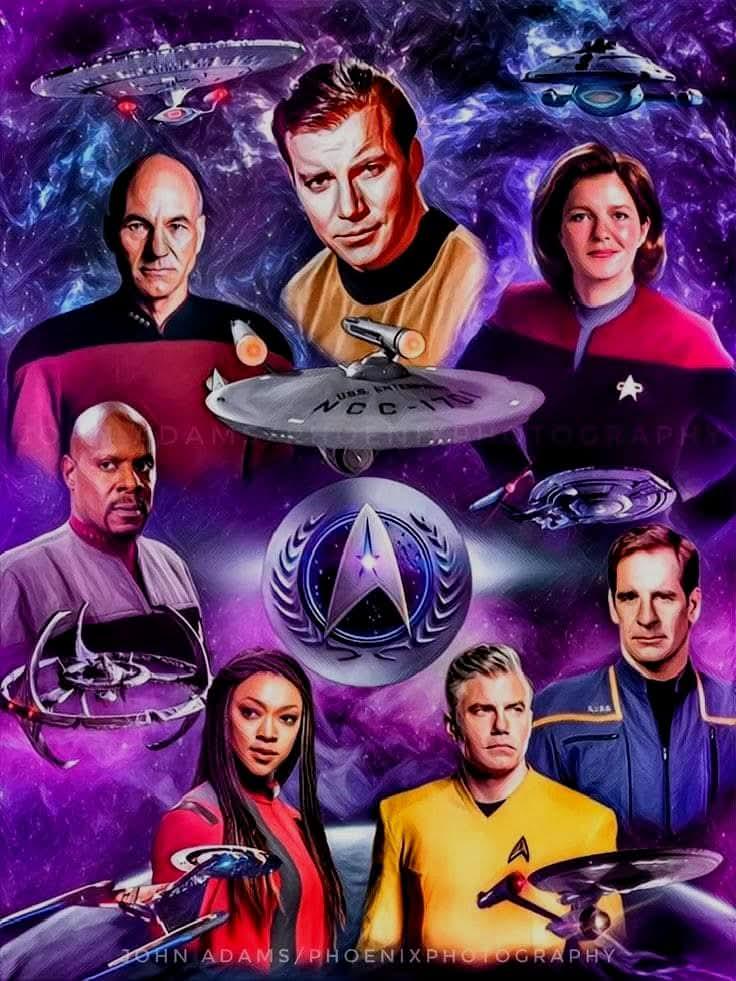
TL;DR - Lower Decks breaks verisimilitude with the rest of Classic Trek (TOS, TNG, DS9, VOY, ENT) and doesn't feel like it really exists in the same universe. The characters act like they've seen Star Trek as a TV show and like they know they're on a TV show themselves, and it just doesn't feel like they really exist alongside Classic Trek, despite being told that they ostensibly do. It should have been marketed openly as a parody/spoof and never been called canon.
EDIT: Apparently there are several people who missed the point and were seemingly unaware that the show's creator, Mike McMahan, has explicitly stated that the series is entirely canonical and takes place in the Prime timeline, directly after the events of Star Trek: Nemesis. So if you're arguing "but it is parody", you are incorrect. It should be parody. It is officially canon, and shouldn't be.
So in writing, good writing anyways, there's a term called "verisimilitude". It basically means 'believable realism' without being actual realism. A story with verisimilitude gives the impression of being real, even if the audience knows it is not. We know that warp drives and transporters aren't real, but when the characters act like they are and the universe those characters live in respond to them like they are, it adds to the verisimilitude.
Verisimilitude is akin to realism, but it is not realism. "Realism", or the lack thereof, is often used in disingenuous strawman arguments to give a free pass to anything and everything any author wants to throw on the screen. It's a "Vulcans and Klingons aren't real, so why are you expecting anything else to be?" sort of spurious argument meant to distract from bad writing.
Verisimilitude is the correct term because it fully acknowledges that the things on screen aren't actually "real" while lending credence to the authentic feeling of them. A good writer strives for verisimilitude. It is that feeling that makes the audience feel like these could be real people in a real universe doing real things and acting/reacting the way real people would, even though we know they all aren't actually real. Star Trek has historically done a fairly above average job at capturing verisimilitude. When we see a character mentioning a piece of technology, or a Starfleet regulation, or a historical event in one series, and then it's brought up as still mattering in another, that adds to the verisimilitude. We see the Khitomer Accords in Star Trek VI, and then when they're referenced in TNG or DS9, the audience knows that this is a 'real' universe with its own rich history and timeline with consequences. When we see Starfleet officers leaving Starfleet to join the Maquis in one series, and then later we see those same sort of Starfleet turned Maquis officers having to work with Starfleet again, we know there is reasonable tension and conflict behind it.
It even comes down to small things like seeing characters wear their dress uniforms for some diplomatic event in TOS or TNG, and then in DS9 when there's another diplomatic event, here come the dress uniforms again. A character be reprimanded for talking back to a superior officer carries weight and consequences. We see Kirk reprimand a young officer in Trouble with Tribbles for giving him an overly casual response to being made to stand guard. We see it again when Picard reprimands Ro Laren for giving him attitude. And again when Acting Captain Data reprimands Worf in the ready room. And again when Tuvok corrects the former Maquis he's training in Voyager, and again and again. There is a throughline in all of Classic Trek that has a "if XYZ happens in one series, it will probably happen pretty much the same way in another".
Verisimilitude is more and less than realism, but arguable more important than it in both directions. It's also more important than plot holes or continuity. We see Chief Obrien with the wrong rank pips in early episodes of TNG. The real world reason is because he was a minor character and they handed him a costume with the wrong insignia and no one thought it would matter. When it later became apparent he was going to be a major character, they retconned a vague story about field commissions and him assuming the rank of a particular post. The plot hole is canon, but the fact that they addressed it adds to the verisimilitude. The Star Trek universe felt like it could have been a real place with real rules and real people in it. The writers back then knew that verisimilitude mattered enough to the audience that they had to at least try to give something like that a plausible explanation on the surface as to not break the suspension of disbelief.
Lower Decks takes a shit on verisimilitude. Every episode has at least one, if not several, moments where the "is this really happening in the same universe" feeling is shattered. Characters do not act like they would have if they were in any of the other series. Events do not occur like they might have in the other series. The rules, even the ones that can be broken, just don't work the same way as they worked in the other series. Lower Decks fundamentally lacks verisimilitude, where TOS, TNG, DS9, VOY, and ENT did not. It's far more than just plot holes or fixing them, continuity or the lack of it, references, callbacks, cameos, and memberberries. It is the fundamental feeling of "are all of these different stories happening in the same universe? And does that universe feel like it could be real with real people in it?" The answer to those questions with Classic Trek is yes. The answer to those questions with nuTrek, including Lower Decks, is no. Classic Trek characters don't engage in orgies, or laugh at the gruesome deaths of friends as a punchline, they shouldn't be aware of events that were secret or classified just because the audience knows about them. They shouldn't be fanboying over Star Trek lore like they've seen the shows, or acting in unprofessional ways that would get them reprimanded or thrown out if they were on any other show. LD does all of these things and more.
it is one thing to write a deliberate spoof and parody of Trek in which the audience is in on the joke and can laugh at Trek from the outside. But for those stories to actually believably exist in the same universe as the rest of Trek, the characters inside that same universe cannot be laughing at Trek in the same way the audience is from the outside. And Lower Decks breaks this immersion. We can laugh at the humor because we've seen the TV shows. But they aren't supposed to act like they know their lives are just a comedic TV show. And in LD, they do. It should have been marketed from the start as a totally separate and self-contained good natured lampooning of Trek for the fans, not treated like it actually exists alongside the rest of Trek.