r/SpiritWork_Witchcraft • • Nov 08 '22

Spirits- general info Little guide for basic and general spirit contact

95 Upvotes
  1. Make an invitation. Let them know they are welcomed and leave something for them (water is the basic to go to, if you are not sure of the nature of the entity/spirit). If you want to get their attention, do research and leave personalised offerings.

  2. Set boundaries. Make sure you set the general rules of the place, what is permitted or not. Be ferm about limits if it is your teritory (your room/house for example) and be respectful and try to discuss unconfortable things if it is a neutral/their place (let them know you would prefer to not get spooked out by random noises or light flickering for example and offer an alternative you are confortable with). Respect their home and be polite.

  3. Respect the boundaries decided. If you do not agree with their terms (on neutral/their teritory), say good bye and leave. If they do not respect your terms, banish them from your place. Apologise. If you make a mistake, like understanding the rules wrong or disrespect the entity, say sorry and try to not repeat it.

  4. After the comunication is over, say good-bye. Thank the entities for joining you and invite them (or not) to come visit again. Be polite and treat them like you would treat an invisible guest. If you went to visit them, express gratitude for being hosted so well and ask if you can visit again.

  5. Prepare the ground for further interactions. Make them a space on your altar, or dedicate a corner for them. Leave fitting offerings or anything that will make them feel welcomed.


r/SpiritWork_Witchcraft • • Oct 09 '22

Spirits- general info Spirit guides :)

93 Upvotes

The info I am about to share is from my practice, and things may differ from witch to witch. That being said, let's jump into it:

What are spirit guides?

In my opinion/self gnosis a spirit guide is a being that is there for one purpose: to guide you. They can be anything, having as many forms as they want and needI mostly consider a guide a spirit that is there from birth to death (or even before and beyond death) or that comes in moments of need for a certain period of time.

I would include them somewhere between humans and the divine creatures. This doesn't mean they are less powerful. They just have a different mission.

Let me answer some of the general questions:

Why are they helping you?

There can be many reasons. From soul contracts to helping you fulfill your mission on this dimension, or simply because you asked for guidance, they are there to provide it.

They are as they need to be. Some will be gentle. Some will be rough and rude. Always there for your benefit, respect them all like a best friend. Also, state your needs too. Boundaries are important. Although they might be there to support you, you are the one that can require ajutments in techniques they use to teach and guide.

What can I offer them?

In my practice, spirit guides don't need any offering. Excluding of course deities, demons, angels and ascended masters (and/or ancestors, since I don't work with them; dragons too, since they're technically divine beings, although there might be exceptions). Spirit guides are here to serve and help you achieve your potential.

But, since practices differ, and spirits too, better ask. Giving them a place on your altar, or among the plushies you sleep with works too if you want to kinda have a visual representation of their presence.

How to contact mine?

Divination. Any type. Ask for signs. Be specific, like 'if you are there, show me a pink unicorn' and look out for the sign. When I first encountered them, I asked for a blue butterfly and I got a random TikTok with blue butterflies. Open your mind and you'll receive the message. It can come from surprising places.

There is the need to mention that they might not always answer to our requests. That is a good moment to ask yourself why: maybe you already have the answer you seek and they want to see you working on your own. Getting dependant on spirits and their help is never a healthy way to do things.

How to bond with them?

Talk with them. Not just for help and guidance. Say hi to them in the morning, good night before bed. Ask them about themselves. Invite them to watch a video with you, a movie or do some day to day activity. Comunication is key.

Use your clair senses (or any other divination method of choice) when you ask mundane questions (and not only) but don't always expect an answer. They listen, but sometimes the answer is no. Still make the invitation and create opportunities for them to come to you outside their 'job'.

Hope it was helpful. Blessed be. :)


r/SpiritWork_Witchcraft • • Jan 30 '23 Diamonds are Forever

Ancestors Working With, Venerating, and Worshipping Ancestors

72 Upvotes

Terms and Brief Background

The term “ancestor” is pretty straightforward for most people. It ultimately comes from the Latin meaning “those who have gone before.” Ancestors are generally taken to be the people we are descended from, either on our mother’s or father’s side.

You might also encounter the terms “Beloved Dead” and “Mighty Dead” in witchy and Pagan circles. There isn’t a clear-cut definition of either term, but generally the former is taken to mean all those spirits of deceased humans that we resonate with, whether we’re biologically related to them or not. The latter term is generally taken to mean the spirits of deceased humans that achieved some level of fame, legend, or notoriety.

Ancestor veneration is found in cultures all over the world and throughout time. Many witches are familiar with venerating or honouring the ancestors on Samhain, which also overlaps with the Mexican observance of ancestor veneration, Día de Muertos. Observant Hindus will perform śrāddha for their ancestors, called pitrs. Most ancient pagan cultures also venerated the dead, from the akhu of the ancient Egyptians to the nine-day February festival of Parentalia among the ancient Romans.

Do I Have to Work with My Ancestors

Absolutely not!

There are plenty of perfectly competent witches who never work with their ancestors, for whatever reason.

Sometimes you’ll find a certain attitude in online witchy and Pagan spaces that seems to suggest that only those who work with their ancestors are “real” witches or Pagans.

This attitude is bullshit.

Who you choose to work with or worship, whether your ancestors or angels, demons, deities, the fey, nature spirits, pop culture entities, etc. is entirely up to you. No one should force you to do something that you don’t want to do, nor should they belittle you for your spiritual choices.

So, Why Even Venerate Ancestors?

This is a question that doesn’t get as much attention in witchy circles as it probably should. Like, sure, it’s easy to appreciate the sacrifices and lives of our ancestors, but why venerate them as spirits?

Well, for one thing, your ancestors have more of a vested interest in your success than most any other entity will. You are the legacy of your ancestors, one which they wish to see flourish. Many witches report that some of their strongest spiritual protectors are their ancestors. Ancestors are also felt to be powerful intercessors in any family matter, whether that be in terms of luck and money or otherwise.

Your ancestors, being the spirits of deceased humans, are also thought to be more “in touch” with the realities of human life. Nature spirits, gods, demons, angels, the fey, etc. have never lived a human life (barring a few deities that are divinized mortals, etc.). Most witches report that ancestors can be much more involved in a palpable way in the lives of their descendants.

Difficult Ancestors and Complicated Family Dynamics

Many people have the experience of having had difficult relationships with their ancestors while they were alive. Some people also notice, upon doing genealogical research, that their ancestors did things that they consider unethical or otherwise problematic.

To be clear here, even if you decide to work with your ancestors you are not obligated to work with all of them.

If Uncle Henry was abusive, then you can intentionally call out his name as an exception to offerings. For example, you might say, “I offer this candle and water to all of my ancestors except for [Uncle Henry’s full name].” You are in charge of your spirituality.

Another option, if you’re feeling charitable, is to do ancestor elevation work for problematic ancestors. There are different forms that this work can take, but basically it might consist of special prayers and offerings to the problematic ancestor to help them “see the light,” as it were. This type of work might not resonate with you, and if it doesn’t that’s totally fine.

Ancestors of Adopted Persons

Sometimes people who are adopted can feel unsure about who they should be venerating. Should it be their adopted family ancestors or their biological ancestors.

I would say that it’s entirely up to the person in question. If they only want to work with their adopted family ancestors, that’s perfectly valid and vice versa. If they wanted to, they could also honour both sets of ancestors.

Ancestors of the Heart

Sometimes we also want to venerate the spirits of deceased humans whom we feel strong connections with, but who aren’t our biological ancestors. We may never have met these people during their lives.

These types of ancestors are often called “ancestors of the heart.” It’s perfectly acceptable to include such ancestors on an altar for your biological or adopted ancestors. In fact, if you chose to, you could decide to only work with ancestors of the heart and not your biological or adopted ancestors. Again, it’s your spirituality and you’re in charge.

Setting Up an Ancestor Altar

An ancestor altar is not unlike most other altars. It could be on any flat surface such as a dresser, nightstand, table, desk, etc.

Certain traditions will tell you that you shouldn’t set up your ancestor altar in your bedroom or the bathroom. I think most people can agree that the bathroom might not be a great idea, but what about the bedroom?

Frankly, I feel that if the only space available to you is your bedroom, then go ahead and set it up there. If privacy is a concern, you could get a cloth of some type to drape over the ancestor altar when you’re not working it.

Many people like to use white as the main colour for their ancestor altars. You could choose a white altar cloth, a vase of white flowers, and white candles. But other colours are perfectly fine if you aren’t part of a tradition that prescribes how an ancestor altar must be set up.

Most people will put photos of their ancestors on their altars, along with personal mementos and keepsakes that their ancestors owned or liked.

What to Offer Ancestors

Offerings to ancestors can be extremely simple. Some people offer a candle and a glass of water, and that’s it. Other people like to include incense of some type.

Some people offer food, with bread, fruits, sweets, and portions of the family meal being common. Beverages like coffee, tea, water, and alcohol (if appropriate) are also common offerings.

Non-food items like coins, flowers, tobacco products, and art or the written word could also be offered.

Further Resources

A few great books that go in-depth on all things related to ancestors are:

The following is an oracle deck specifically designed for communicating with ancestors. There are others like it out there, so if the concept interests you, do a search and see what comes up.

As for websites, Sphere and Sundry has an excellent guide to the dead and ancestral worship that I highly recommend, here. Of particular interest will be the rites for honouring one’s paternal and maternal ancestral lines.

Another helpful and interesting article on setting up an ancestor altar and connecting with them comes from, of all places, NPR. Check out the article here.

If you have any questions, feel free to leave a comment!


r/SpiritWork_Witchcraft • • Nov 15 '22

Spirits- general info Creating, Maintaining, and Deepening Spirit Relationships

64 Upvotes

This post is a response to the Week 2 prompt for discussing ways to create and maintain a bond with an entity of choice. I'll be using the term "spirit" to mean any non-corporeal entity: so, the spirit of a deceased human, an angel, demon, elemental, animal spirit, familiar spirit, spirit of a place, house spirit, pop culture entity, fae, saint, deity, etc.

For any spirit, there will be some things that will apply and other things that won't apply. Likewise, this post isn't the final, definitive statement on the topic. It's more so my perspective and a glimpse at my experiences. If yours differ, that's fine too.

Foundations

For me, the first step would be to lay down a foundation, building on much of the same work that was discussed in many people’s posts for Week 1. So, I would say it’s a good idea to begin by researching the entity in question and making simple offerings as a demonstration of interest and goodwill. Repeated, regular offers can be thought of as creating a reciprocal gifting cycle or exchange of energy.

At some point, you may want to formally welcome the spirit into your life. How you might do this will depend on your own preferences as well as that of the spirit in question. Generally though, you would write a short prayer or statement introducing yourself, welcoming the spirit into your life, and making an offering.

Offerings

From then on, you can continue to give offerings to the spirit as you both become more familiar with each other. There are many things that can be offered, including fruit, dried fruit, nuts, honey, water, wine, coffee, tea, other alcoholic beverages, tobacco, cannabis, candles, incense, bread, flowers, sweets, poetry, song, and dance. Your spirit will likely make it known to you if they have any specific likes or dislikes as you continue your relationship with them.

Some spirits take meat and hard liquor, but others don't. Your research, divination, and communication with the spirit in question will be your best guides here to know whether you should or shouldn't offer these items.

You could also dedicate an activity to a spirit as a devotional offering. You might donate to a charity related to veterans for the spirit of someone who died in combat, for example. You could spend time doing textile magic like knitting, crocheting, sewing, or weaving for a spider spirit, as another example.

How often you give offerings and how to dispose of offering remains will depend on your means, ability, circumstances, and the preferences of your spirit and yourself. Some people give daily offerings, others do so weekly or less frequently. Some people compost compostable offering remains, others leave them outside or at the foot of a tree (if it's safe for wildlife), and still others respectfully dispose of them in the household trash.

Names and Houses

As you seek to deepen your relationship with your spirit, you may wish to give them a name if they don’t already have one. The spirit may also wish to be known by a seal or a sigil. These can often be learnt by resorting to divination, especially scrying, automatic writing, and dream work. You may also wish to dedicate a specific item or container to house the spirit, if you haven’t already done so. You might choose a bottle, jar, statue, stuffed animal, doll, bird house, or some other item to be determined by yourself and your spirit.

Daily Remembrance

Bringing your awareness of your spirit into your daily life can also help in deepening a relationship with them. So, you might write a simple, short prayer to the spirit and remember to say it throughout the day, perhaps every time you wash your hands or touch a doorknob. Or you might choose to wear a certain colour related to them on their special days. You might choose to read books, fiction or non-fiction, that remind you of your spirit in some way. The same can be done with music: many people enjoy creating music playlists that remind them of their spirit.

Oaths, Vows, and Pacts

A significant step in the relationship with spirits for many people is to make formal oaths, vows, or pacts with their spirits. This part probably deserves its own post. Essentially, it entails negotiating between yourself and your spirit about the things each of you will do or provide for the other. Considerable time should be spend thinking about all the ramifications of oaths or vows before making them, as well as what the consequences might be for failing to uphold your end of the bargain. Some people vow to observe certain taboos or other prohibitions in honour of their spirit. Again, spending time thinking about these matters deeply, communicating with your spirit, and divination will be important guides at this stage.


r/SpiritWork_Witchcraft • • Aug 29 '25

Spirit Memes TGIF: Cause it’s been one of those weeks.

Post image
59 Upvotes

Seasonal depression can also happen in the summer!


r/SpiritWork_Witchcraft • • Dec 06 '24

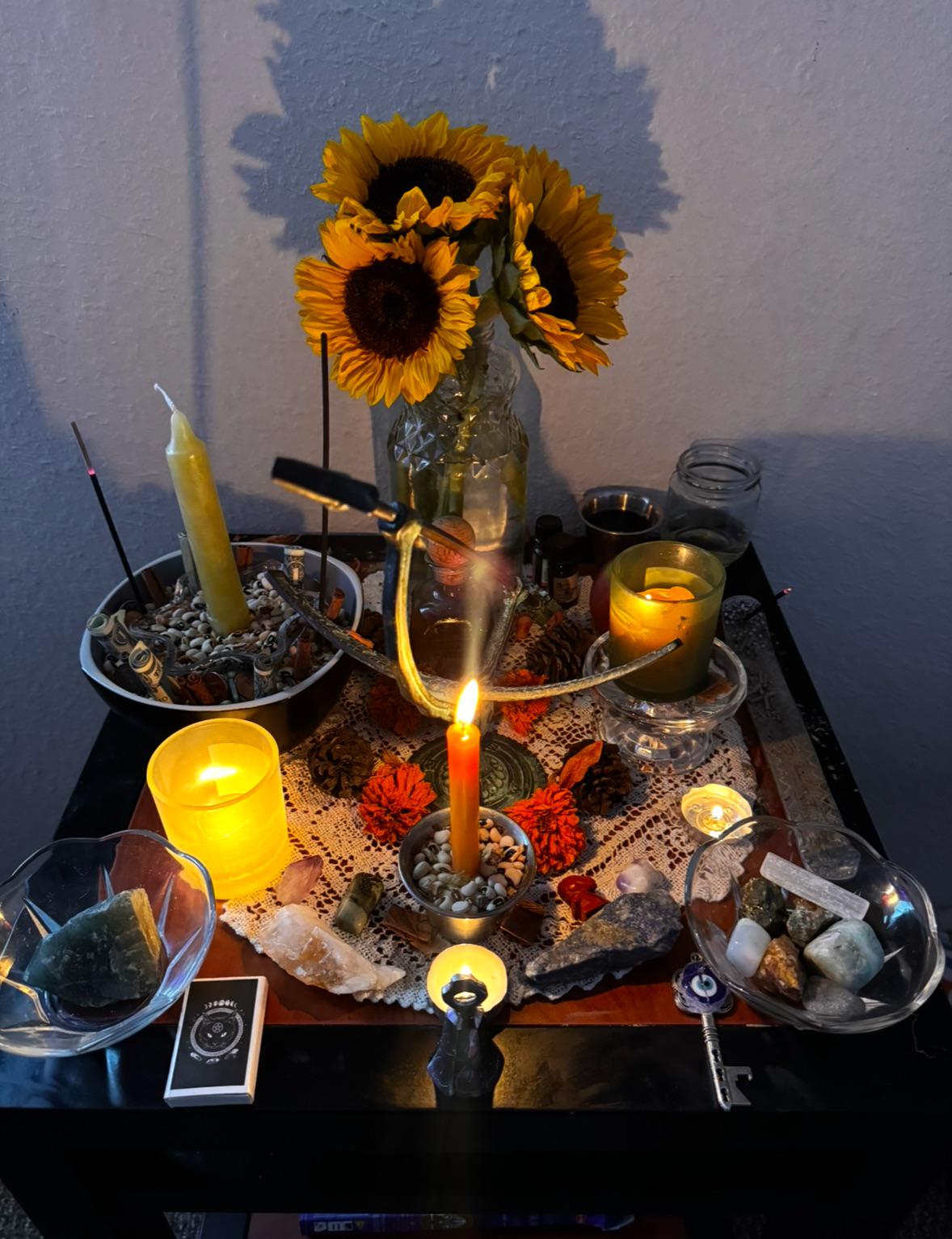
Altars, Offerings and Magic Corners alter set up from New Moon and Sag szn

Post image
52 Upvotes

r/SpiritWork_Witchcraft • • Nov 09 '22

House Spirits House Spirits: a how to guide

52 Upvotes

There’s been a lot on here about spirits in general or spirit guides but I thought I’d write a bit about my personal favourite spirit I work with: the house spirit.

Most of what I’ve studied about spirits and the supernatural comes from Slavic sources so I will be slightly skewed in that sense but I feel this can be applied universally.

House spirits (and other home-based entities) are very helpful beings and if you get in well with them they can become your first line of defence for your home.

Many cultures believe that all spaces have a spirit, while others believe such an entity must be invited in. Either way, they can be fickle. For instance, the Slavic domovik can be incredibly helpful and protective of the home, but if the house is kept messy or there’s a lot of tension, they can harm people or damage the home.

So how do you know which kind of spirit to welcome to your home? You can choose either to welcome a spirit from the culture/faith you follow (ie “I follow Celtic practices and choose a Celtic spirit), a “local spirit” (“I live in the UK so I will welcome a spirit local to the UK”) or one that your ancestors would have welcomed (“I do not live in the UK but my ancestors did and I will invite a spirit from that culture”).

How do I start? Always do your research. Once you choose a spirit find out as much as you can. What sort of offerings do they like? What conditions do they like? Do they usually require an altar? Do they need a lot of attention?

Next, plan a welcome ceremony or ritual. This can be as elaborate or simple as necessary. Whatever tradition or culture you follow may have recommended rituals. Research that.

I opened a window and set out a temporary altar with food, drinks, incense, and a candle. I prepared what I wanted to say and was as specific as possible to avoid inviting something else. I also protected myself just in case. Then I meditated and when I felt a presence I used a pendulum and tarot cards to speak with the spirit. I asked questions took note of the answers and made sure everything seemed good.

Then I asked if the house spirit would like to stay in my home. When he said yes I set up a proper space.

How does one bond with a house spirit? Provide them with offerings, spend time with them (play music, invite them to cook with you etc) and get their help with divination. Make sure to look into other things that specific spirit might like.

What if I move? Be sure to tell the house spirit you’re moving. Make a point to invite them. When you set up their space again in the new house make a point to re-invite them.

What do I do if my spirit is mad at me? Spirits, especially house spirits, can be like friends. If you mistreat them or ignore them they may leave or act out. If they leave invite them back and make sure to make amends. Talk to them. If they are acting out try to divine what has upset them and fix it.

What if I have a house spirit that I don’t want? Sometimes homes come with spirits and sometimes they aren’t happy about new people. Your first point of call should be to kindly ask it to leave. Open a window or door and tell them they are unwelcome and they have to leave. Should they refuse then you can try again or resort to a banishing.

Anyway this is already really long so I’ll stop here but if you have questions feel free to leave them in the comments and I’ll try to answer them.


r/SpiritWork_Witchcraft • • Apr 28 '23

Joyful Weekends 'To tame is to create connections'- a gentle heart finds friends in the most unexpected places.

Post image
48 Upvotes

r/SpiritWork_Witchcraft • • Mar 17 '23

Altars, Offerings and Magic Corners My beloved altar

Thumbnail
gallery
46 Upvotes

Bet you can't guess all the gods represented.


r/SpiritWork_Witchcraft • • Jan 23 '23

Nature spirits Working With and Worshipping Nature Spirits

43 Upvotes

Terms and Types of Spirits

The term “nature spirit” covers a vast range of different types and classes of spirits, many with further subclasses. It might be helpful to go over some of the terms that you might encounter in your studies.

Note that, much like deities, some witches will choose the specific nature spirits they work with, while others will say that a particular nature spirit represents their higher self or is in some other way predestined. Either way is valid.

The first type of spirit to mention are animal spirits, which are pretty much what you would except. These are the spirits of particular animal species. For some people, the term refers to an individual animal spirit (e.g., the spirit of the dog Spot), for other people it can refer to the spirit of all individuals within that species (e.g., the spirit of Dog).

One term you often hear in relation to animal spirits is totem. The word “totem” comes from the Ojibwe language "doodem,” meaning a “clan.” At its root is the word “ode’,” meaning “heart,” and so the literal meaning of the term can be something like, “having to do with one’s heart.” It has basically come to mean the animal tutelary spirit of an individual or group of people. The word “totem” is used quite often in anthropology and by some alternative spirituality authors, but as it refers to a specific cultural belief, I prefer to use other terms.

Another form of animal spirit you sometimes hear about are the nagual. The nagual are the animal spirit counterparts of humans in Mesoamerican religions. It is believed that sorcerers are able to assume the form of their nagual by shapeshifting either physically or spiritually. The Mayan term for the nagual is the way.

Another class of nature spirits are plant spirits. Again, like animal spirits, this term can refer either to the spirit of an individual plant (e.g., the spirit of this pine tree) or to the spirit of all individuals of that species (e.g., the spirit of Pine). Although technically unrelated to plants, fungus spirits are often included together with plant spirits. The most commonly-worked with type of fungus spirits are mushrooms, but other types like yeasts or moulds are also worked with.

One term to keep in mind in relation to plant spirits are devas. The term comes from the Sanskrit for “deity,” and was popularized by writers of the Theosophy movement. Devas are generally taken to be the spiritual forces behind species.

Another class of spirits are the spirits of places, often known by the Latin term “genius loci” (plural, “genii locorum”). These are spirits tied to a specific place, and while that can include urban and man-made places, it often is taken to mean the spirits of places in nature. Such spirits could be river spirits, mountain spirits, the spirit of a grove, the spirit of a hill, etc.

Elementals are another large class of spirits within themselves. They are generally understood to be the spirits related to each of the four classical elements. (Witches working with different models of the elements may have different conceptions of the subdivisions of elemental beings.) Traditionally, each element was associated with a particular type of elemental being: sylphs are the elemental beings of Air, undines are the elemental beings of Water, gnomes are the elemental beings of Earth, and salamanders are the elemental beings of Fire.

In many models, the elemental beings are said to be organized by authority or power hierarchically. In the most well-known of these models, each element has an elemental ruler, often called a “king” or “emperor.” The most common names for the rulers of the elements are Paralda for Air, Nicksa for Water, Ghob for Earth, and Djin for Fire. The origin of these name is unclear to me, and the furthest back I’ve been able to trace them is the work of the famed French occultist Éliphas Lévi.

The final type of spirit to mention is the familiar spirit, which often overlaps with the “fylgja.” Some witches consider their pet to be their familiar spirit, while other witches only consider a pet that demonstrates uncanny intelligence to be a familiar. Still other witches believe that a familiar spirit is an incorporeal, non-physical spirit only. Any of these views may be valid for your own Craft. “Fylgja” is an Old Norse term that refers to the spirit that “follows” a person or family and is often said to take the form of an animal.

Suggestions on Incorporating Nature Spirits into Your Craft

In very practical terms, relationships with nature spirits can be started the way that you would with most any other entity: being by researching, reaching out to them, and perhaps occasionally making offerings.

Depending on tradition, some witches may already invoke the elemental rulers when casting a circle.

Other ways to include them in your Craft could be to assign a certain spirit to each Sabbat, and to cultivate relationships with them for the entire time following that Sabbat until the next one. This is what I do. For each Sabbat, I assign one animal and one plant or fungus spirit. I spend the weeks following that Sabbat studying the actual animal/plant/fungus that spirit is related to, I have images of these spirits I set out on an altar (animal and plant oracle decks are great for this!), and I say prayers, leave offerings, and otherwise commune with them.

In working with nature spirits more closely, you may feel called to include something from that animal/plant/fungus/etc. on your altar. This might mean collecting bones and furs, growing a plant in your garden, or growing mushrooms, etc. Keep in mind that if you live in the United States, the possession of certain animal parts is prohibited, especially for native birds like hawks and crows (see the Migratory Bird Act). In all instances, efforts should be made to only collect items from your spirit allies in a way that they can be ethically sourced and sustainably harvested.

If the plant or fungus spirit allies you work with are safe for consumption, you could also consider eating their fruit, drinking them as a tea, bathing in a tea made from them, or taking their flower essence, all in a ritual way. The same could also be done for animal spirit allies if they are commonly consumed. In all cases, it’s best to check with the spirit to see if they would approve of such actions beforehand.

Further Resources

A great general book that covers working with nature spirits and familiars is:

For books dealing with animal spirits, check out:

For information on incorporating animal bones into your Craft:

For books on plant and fungus spirits, check out:

Two books on familiar spirits that might interest you are:

Two books that include information on elementals are:

As always, if you have any questions, leave them in a comment below and I'll answer them if I'm able to.


r/SpiritWork_Witchcraft • • Nov 08 '22

Spirits- general info Basic precautions before engaging with the spirit realm

42 Upvotes

Feel free to add your own advices and techniques :)

So, as it was requested, these are a few things to do before engaging with the spirit realm. This is just a base line, feel free to add, ignore, create, develop as you see fit to this sort of raw material. Note to the board, not everyone believes in tricksters (me included) so you can skip the safety measures if you feel like it (I personally only do grounding, when I remember for example). Also, the next methods are also to be used to banish unwanted lurking beings.

Grounding

I find important the 'stay aware' part of every interaction with anyone, not just spirits. Grounding can help us remain focused and not give it to impulse during an argument. Also it is useful to keep you aware that the physical world is the thing to come back to in order to not fall into delusions.

Crystals: I am sure that are many that fit, but I am a tiger eye enjoyer. Just wear it on you and, when you feel like drifting away, hold on tight to it to come back.

Visualisation: This is a technique I kinda find difficult, to imagine roots coming out of your feet and deep in the floor under. If it works for you, do it.

Actions: Reposition your feet steady on the ground, like you would want to rebalanced yourself in a shaky subway. Take a few deep breaths. Lay on the floor on your back. Drink some water, take a break.

Protection

Crystals: obsidinian is basic with the snowflake variation too, black tourmaline are usually what I use

Spells: Usually a general protective spell will do just fine. Pinecone.pub for ingredients based on intent, good site. What I used to use: salt, dirt, cinnamon, black pepper, coffe and I forgot the rest. Haven't crafted a spell in a long time.

Rituals: Casting circles, sigils, visualisation of energetic shields, etc. Go with your gut. Some might like asking the entity for ID confirmation with questions about their miths.

Defense

Some entities just won't respect anything you try to comunicate to them. So, there is no other way than kicking them out.

I like to use my wand for this, or plain hands. Gather the energy and force it in one corner/place. You are in control. Show it the window (should be opened just for the symbolism) or the dor. If it doesn't want to leave on its own, stomp on it. Once I used matches to burn it (the first 2 it didn't let me lit them or kill the flame in the next second so be insistent).

You can scream at it or swear, especially if it's just there to fuck around. Don't stop until there is no sign of presence left.

Do you use any other methods?


r/SpiritWork_Witchcraft • • Feb 02 '25

Altars, Offerings and Magic Corners New Moon tings 🌙

Thumbnail
gallery
41 Upvotes

rabbit hole of enrichment 🐇💫


r/SpiritWork_Witchcraft • • Aug 27 '23

Learning Resources Why Closing your third eye is more important than opening it

40 Upvotes

Finally, you’ve opened your third eye! You’re exploring the spiritual, observing how the energy flows around us. Maybe you’re meeting spirits or parts of your psyche, receiving new understanding about life and the dynamic nature of consciousness.

Everything is new and exciting, but you’re starting to get sidetracked when you should be focused on the physical.

A spirit interrupts your breakfast with an “important” message, you notice on your daily walk a car accident and know that the driver had died due to the energy that hovers over the scene, which leaves you disturbed for days. Maybe, you’re getting an increase in nightmares and sleep paralysis. You suddenly get a download or dream about your family member, who then shortly passes and you agonize on what you’ve could have done. Perhaps, you notice the unsolicited energy of a client glomming onto you at work.

You’re getting headaches, feeling sick, off center, having trouble visualizing and concentrating. If you’re not just getting sick, you could be experiencing psychic blowback. This happens when we practice ungrounded. You can actually damage your third eye by being too enthusiastic in your practice. I experienced psychic blowback when I was a kid and last year when I first started out.

Maybe you’ve already mastered the art of Ground, Center, and Shield and have noticed this has helped you, but you still observe these things and they’re causing interference in your life, now.

In this post, I’ll go over the importance of dialing down for our mental well-being with resources on how to do it. I am not a professional practitioner. I’m a witch who happens to be psychic since early childhood. I’ve been practicing spiritually for over a year, now. I also struggle with c/ptsd and trauma. While my practice has greatly improved my life, it had also further aggravated my existing trauma because I didn’t know when to walk away. Ignorance is bliss, right?

Everyone needs to step away. Everyone.

Let’s start with dialing down.

How you close down doesn’t matter. What matters is that it should have the association of closing down your awareness.

I’ll give you some examples. Feel free to create your own.

In Matt Auryn’s Psychic Witch, He talks about meditating on a dial that represents your awareness. Tune it to lower it and feel your awareness shrink, the noise gets quieter until all you’re aware of is your physical reality, your thoughts and feelings. Nothing else.

When I first started playing with types of shields, I started to visualize a metal dome over my head, blocking out every noise, nothing could see in and nothing could hear my thoughts. The immense sense of peace was like nothing I had ever experienced. For the majority or entirety of my life I was receiving so much of something. Most of which, I couldn’t translate, so it bombarded me like static. Putting up that shield made everything quiet- even in a crowded room.

Nowadays, when I’m distracted by energy or entities, I’ll picture my third eye in my mind and shutting it, feeling my awareness shrink with it.

It’ll start out like a short meditation. The more you do your chosen method, the quicker you’ll be with it. Right now, it takes me about a minute to 30 seconds to finish closing down, but when I first started it took several minutes.

To open back up, reverse whatever method you chose. Your abilities won’t be lost.

At the end of my practice, I’ll spend time closing down. I was doing this before bed as well since I have a heightened psychic awareness in the beginning phases of sleep. Sometimes, I talk to people or entities in my dreams. Currently, I lack the lucidity to do this safely most times, but I’m working on getting better. Whenever you close down in your practice will be in accordance to your needs.

These examples are very visual. For those who struggle with this, pick a sense that’s natural for you. For shielding, I like to focus on a satisfying click as the shield is in place. Feel the weight that assures you of its impenetrability.

For the dial exercise, focus on the texture ridges of the dial, feel your wrist turn it as your awareness decreases. You hear a click as you’ve reached the point where your awareness is off.

If you lean more crafty, you can associate an item or action with being open. Mark Auryn uses the action of taking off his hematite ring with going into a trance state. He started out whenever he started meditation, he would take it off, then when he would close down, he would put it back on. Using this ring so much in practice, he started to associate twisting it off with being open that he can do it out in field fairly quickly.

I also have trouble staying in my body. This paragraph is for those like me. My dissociative nature has made it easy to start astral projection (and so, so much harder to be safe about it :) ). I know dissociation and astral projection are different, but they are in the same family. It’s easy for someone like me to pop out, while others try for years and still struggle. Trust me when I say that the ease of which I pop out is not a good thing.

Closing down in this way for me involves a grounding technique I’ve learned in therapy, though modified for my spiritual practice. .

I’ve already grounded, centered, and shielded, and cleansed before my astral journey. I had already called in the Four Quarters to set up my circle and invited them to travel with me and ensure my safety.

I shut all portals previously opened.

When I’m ready to step into my body, I do so, making sure my spirit aligns with my physical form. I’m centered, right arm goes to the right, left arm goes to the left. Each leg steps into itself. It’s like I’m putting on a suit.

I’ll focus on three things I feel physically, three things I hear. I open my eyes and note three things I see. I’ll point out three things I smell. I meditate on being present in that exact moment in time, who I am, where I am, and that I’m safe. I’ll stay in that awareness for as long as I need before dismissing each Guardian I’ve called in and closing that circle and then “shutting my third eye”.

But why close down?

We’re physical beings and need to do physical things. Doing too much spiritual practice can leave us ungrounded in reality. The universe is a beautiful, but an indifferent place. It will give you more than you can handle and you definitely can break if you let it. If you’re like me who struggle with mental health, it can add an extra challenge. If I’m open all the time, I’m dissociative, missing out on life. A year ago, I was open in a spiritually unsafe environment and I allowed a spirit to mop the floor with me, which has left me and my partner with additional trauma we didn’t need. In my early posts about the risks of astral projection, you can probably feel the instability in my words. It’s because I was still so scared.

Working with more spirits of various sizes and complexity, I’m no longer scared of the entity that was attached to me. It feels so small and I’m happy my guide stepped away so I could learn to defend myself on my own.

To me, the scariest things are not the dark or chaotic entities, but parts of my own psyche that had been locked away for so long. Those can shake me to my core. Being open and exploring your mind can lead you to frightening places you might not be ready for. If you lack the tools to face it, this can exacerbate trauma and absolutely destroy your mental health.

It might be exciting to see so much improvement in yourself when you do parts work, but pace yourself. Be gentle. Seek professional help if it’s accessible. A good resource for doing mindfulness with trauma is Trauma Sensitive Mindfulness by David Trevealen. Nearly word for word, his book described what plan my Psychologist at the time laid out for me. Good stuff.

I have a soft spot for nature spirits and get excited when I see my favorite ones. There was one time when I was very sick, still pushing myself to work when I stumbled upon a familiar spirit in her grove. I hadn’t seen her in a long time, felt energy spark at the base of my spine, tingle up my back and arch over me. I was excited and felt partially out of my body at becoming aware of her presence. Suddenly, I felt concern from her that caused me to doubletake.

“You need to rest.” She told me. And that was all she said, cutting the interaction short.

It might be obvious to those more experienced, but I’m coming to the conclusion that it’s vital for us to energetically rest when we’re sick. While struggling off and on with sickness, my guides would insist I needed to be present in my body and to put the spiritual aside. My body needed that energy more than anything else.

My partner is an advanced lucid dreamer. Astral projection is a new concept for her she has been curious to explore. We both listened to the book Illusion of Method by Mark Gurrian.

One night, she decided to go through time and into Bardo where her dad was going through a life review and they communicated with each other. When she woke up, she told me she felt weird, like she wasn’t in present reality.

“Did you close down and integrate?” I asked her.

“No.”

To make matters worse, because her dissociative state was distressing, she took an edible. Getting drunk or high will only prolong the integration process (ask me how I know :) ). All my attempts to walk her through the grounding process were unsuccessful. She couldn’t focus. I got her something hardy to eat instead and we spent the day trying to make things comfortable for her.

Most people (including myself, which is why I prefer to project while awake) have trouble closing down in their sleep, however my partner has such great lucidity that she definitely can close down. She got lucid, decided to go to Bardo, decided to exit Bardo, and then chose to wake up. She just didn’t integrate and close down properly. Looking at her, I could see she wasn’t fully present in her body. She didn’t fully come back until the next day after she integrated back into her body in a lucid dream that following night.

Sometimes, it’s just not the right time to practice. What going too far and then stepping away has taught me, is that there’s a time to practice and a time to decide not to. When I’m already dissociative it is absolutely the worst time to practice because grounding is difficult. Not only that, but my unresolved emotions can create hurdles in my practice. I’ve gotten stuck in the astral because I didn’t want to go back to my body.

Luckily, I was in a safe place and those who were there helped me get unstuck. Still, the experience was distressing as I didn’t think that could happen.

I’ve learned that if I practice anyway, it doesn’t do me favors. It extends that time I’m dissociative as if I have one foot in the spiritual and a foot in the physical. It’s not a good feeling.

The best thing for me when I’m dissociative is to pay attention to the physical, talk to people I love, be with our animals, go outside, and treat mindfulness very, very carefully.

What if there’s information I need to know?

Let it go. Your mental health matters. You need to put yourself first as a priority in order to grow. You are no help to others or yourself if you aren’t well.

When I was closed down something terrible happened to someone I loved. Normally we feel when each other isn’t well and check in. This was the first time I was completely blindsided by the text messages that morning of her in the ICU. My partner had a dream about her, but this person wasn’t even on my mind before I got the texts that morning.

I felt horrible, like it was my fault.

However, what could I have done if I was open?

Nothing.

There was no difference between being open and knowing something was wrong and reaching out versus me receiving messages stating she was in ICU blindsided. She would have gotten sick either way.

Being closed down during that time helped me focus on her, giving her the love and comfort she needed while she recovered. It helped me stay grounded and focused on what actually mattered.

(edit in italics to make the conclusion more clear)

I noticed numerous posts asking how to open your third eye, how to increase psychic ability, how to astral project, but I hardly see anyone asking how to close down. It’s concerning because in my own experience it’s more important to my mental health to know how to dial down than anything else. When we're sick, we need to close down and focus on healing. We can get so lost on the spiritual that we put family and friends on the back burner. By putting space aside for the physical, we become more well-rounded. Psychic doesn’t mean instability, instability doesn’t mean you’re psychic. You don’t have to be both, but you definitely can.

Good reads:

Matt Auryn’s Psychic Witch <- Everything I talk about, he talks about and so much more!

David Treleaven’s Trauma Sensitive Mindfulness

Free reads:

How to close your third eye: https://digestfromexperts.com/3781/how-to-close-your-third-eye-can-you-close-your-third-eye/

(Removed unnecessary source)

Discernment:

(Removed unsafe source)

https://www.reddit.com/r/RicottaPuffs/comments/12yugvl/guidance_for_new_or_young_people_who_wish_to_be/


r/SpiritWork_Witchcraft • • Mar 20 '24

Nature spirits A Wild Crow Is A Friend To A Child

37 Upvotes

r/SpiritWork_Witchcraft • • Mar 14 '23

God Spousing Godspousery and Spirit Marriage

36 Upvotes

At the outset, it’s important to note that the forms that godspousery, spirit marriage, and other such arrangements can take vary considerably. Just as the forms of devotion different people can have with an entity can be vastly different, so too can their relationship of godspousery or spirit marriage. This post will discuss some of the more common ways these relationships have been expressed, but shouldn’t be understood to be the “only way” that things can be done.

Also, this post shouldn’t be understood as an invitation to debate the validity or merits of godspousery or spirit marriage. Such debates have happened many times in many other spaces over the years, and so if they interest you, I suggest doing a search online or on Reddit to find out more.

The bulk of this post will be concentrating on examples of the phenomenon of godspousery or spirit marriage from around the world. As such, it’s intended as more of an informative post than a “how to” post.


Terms

The most common term for the type of entity relationship being described in this post is godspousery. The use of “god” in this term should be understood to be gender neutral: in other words, it includes feminine, non-binary, and masculine deities. The second part of the term refers to the relationship between the human and the god. Both parties are understood to be the spouse of one another.

Another term quite common is spirit marriage. This term is pretty straightforward, as it refers to a marriage between a human and a spirit of any type. Common types of spirits that are said to maintain spirit marriages with humans include gods, the Fae, demons, angels, and familiar spirits.

Isn’t This Just a Modern Social Media Phenomenon?

In a word: no.

The practise of spirit marriage has become most well-known through social media. Those claiming to be in such a relationship are often considered to have a tendency to overshare, to say the least. Considering that these types of spiritual relationships are extremely personal and intimate, it does seem unlikely that many people would be willing to discuss them in great detail.

Many social media personalities claiming to be godspouses or to have married a spirit have been criticized for making light of sacred things, taking their imaginations and wishful thinking to be reality, and for being attention seeking. When others are making spiritual claims online, a certain amount of skepticism is always advisable.

Here are a few examples from cultures the world over, as well as historical examples, of the phenomenon of godspousery or spirit marriage.

This first example of spirit marriage describes the beliefs and practices of the Baule people of West Africa.

Erotic dreams of mortal lovers are as common among Africans as others, but their dreams may also include unions with deities and spirits. The Baule of the Côte d’Ivoire share intimate relationships not only with human partners but also with blolo, “otherworld” partners. Each person is thought to have either a blolo bian, an otherworldly male lover, or a blolo bla, an otherworldly female lover. These partners are ranked above one’s mortal partners and are encountered primarily in dreams and by way of statuettes called waka sran. These statuettes are fashioned in response to dream descriptions and divinatory consultations. Comparable in some respects to fertility dolls, waka sran are considered living entities. Once ritually seated in one’s home, they must be saluted, fed, and caressed, as blolo lovers can bring prosperity or disaster, depending upon the respect or reverence they are given.

Connor, Randy P. “Sexuality and Gender in African Spiritual Traditions.” Sexuality and World Religions. Edited by David W. Machacek and Melissa M. Wilcox. ABC-CLIO. pp. 26-27.

The famous Romanian scholar of religion Mircea Eliade included this account from a Goldi (also known as Nanai) Siberian shaman. The Nanai live in the Far Eastern Federal District of Russia and northeast China.

“Once I was asleep on my sick-bed, when a spirit approached me. It was a very beautiful woman. . . She said: ‘I am the “ayami” [tutelary spirit] of your ancestors, the Shamans. I taught them shamaning. Now I am going to teach you. The old shamans have died off, and there is no one to heal people. You are to become a shaman. . .’

Next she said: ‘I love you, I have no husband now, you will be my husband and I shall be a wife unto you. I shall give you assistant spirits. You are to heal with their aid, and I shall teach and help you myself. . .’

She has been coming to me ever since, and I sleep with her as with my own wife, but we have no children. She lives quite by herself without any relatives in a hut, on a mountain, but she often changes her abode. . . Sometimes she comes under the aspect of an old woman, and sometimes under that of a wolf, so she is terrible to look at. Sometimes she comes as a winged tiger. I mount it and she takes me to show me different countries.”

Mircea, Eliade. From Primitives to Zen: A Thematic Sourcebook of the History of Religions. Harper & Row. pp. 437-438.

A similar type of relationship to a spirit marriage is that between a human and a leannán sídhe. “Leannán sídhe” is Irish for “fairy lover,” and its Scottish Gaelic equivalent is “leannan sìth.” The term was popularize by W. B. Yeats during the Celtic Revival. Yeats connected the leannán sídhe to the Belle Dame sans Mercy, which has lead some contemporary Pagans to dismiss the concept outright. However, the concept of the fairy lover predates Yeats by centuries, as in folklorist Robert Kirk’s 1692 The Secret Commonwealth:

. . . for in our Highlands, as there may be many fair ladies of this aerial order which often tryst with lascivious young men in the quality of succubi or lightsome paramours and strumpets, called lennain sith…

Kirk, Robert. The Secret Commonwealth of Elves, Fauns, and Faeries.

The fairy lover is also discussed by Emma Wilby in her work on witchcraft and magic in Early Modern Britain.

We also find references to sexual relations and marriage in later fairy beliefs: in nineteenth-century Scotland, for example, it was believed that the fairy folk named the ‘Men and Women of Peace’ would contract marriages with humans. Several scholars have pointed out the fact that such beliefs have ancient origins, George Kitteredge, for example, linking them to an ‘old Teutonic belief in elves or trolls or hillmen that woo or abduct mortal women.’

Wilby, Emma. Cunning Folk and Familiar Spirits: Shamanistic Visionary Traditions in Early Modern British Witchcraft and Magic. Sussex Academic Press. p. 107.

Spirit marriage is also found in Haitian Vodou as “maryaj lwa.” Maryaj lwa is a ceremony in which a Vodouisant is married to one or more lwa. Which lwa a person can be married to depends on the willingness of the lwa in question, something to be determined by a houngan (priest) or mambo (priestess). It is worth mentioning that there are instances in which male lwa are married to men and female lwa are married to women.

Beyond this type of spiritual union exists another that may bear an even closer relationship to erotic relationships: that between a worshipper and a god/dess. This type of union- which one finds especially in the Mami Wata cult of Togo and Benin and which has become increasingly central in the African-diasporic religion of Vodou – may even be formalized with an elaborate ceremony, complete with marriage contract. Included in this contract is an agreement that the worshipper must periodically abstain from sexual relations with his or her mortal partner to be ready to receive [his or her] divine partner. The worshipper typically creates a shrine in which this divine union may occur. As with the Baule blolo dream lovers, these relationships must be taken very seriously, since they may engender prosperity or disaster.

Connor, Randy P. “Sexuality and Gender in African Spiritual Traditions.” Sexuality and World Religions. Edited by David W. Machacek and Melissa M. Wilcox. ABC-CLIO. p. 27.

This type of relationship has even found expression among Christian mystics. The following is an account from Blessed Bernardo Francis de Hoyos de Seña, where he describes being mystically married as the husband of Jesus. It represents a surprising example of a same-sex marriage between a young male priest and Jesus:

Always holding my right hand, the Lord had me occupy the empty throne; then He fitted on my finger a gold ring. . . ‘May this ring be an earnest of our love. You are Mine, and I am yours. You may call yourself and sign Bernado de Jesus, thus, as I said to my spouse, Santa Teresa [de Ávila], you are Bernardo de Jesus and I am Jesus de Bernardo. . . Consider My glory that of your Spouse; I will consider yours, that of My spouse. All Mine is yours, all yours is Mine.

Cherry, Kittredge. "Bernardo De Hoyos: Mystical Same-sex Marriage with Jesus." Q Spirit.

So, from these few examples, it should be apparent that the phenomenon of godspousery or spirit marriage is not a recent innovation unique to social media. Rather, humans the world over have experienced such relationships with spirits.

Why Do People Do It?

Really, people may have any number of reasons for agreeing to a spirit marriage. Generally though, it’s often thought of as being mutually beneficial in some way. The spirit protects and guides the mortal, and the mortal gives regular offerings and helps to manifest the spirit’s will in the material world.

In some cultures, as was suggested in the above account by the Nanai shaman, marriage to a spirit may be an initial step towards becoming a shaman. In cultures that practise shamanism, a potential shaman frequently experiences what is sometimes called “shaman sickness.” This is often said to include physical and mental unwellness that can only be cured by that person being initiated as a shaman, which may include a spirit marriage.

Is It Like a Marriage Between Humans?

In some ways it can be similar, but there are a number of important differences. The lack of physical touch is a significant difference. Spirits will also have different wants, desires, and needs than a human being will, so learning to navigate these aspects of the relationship with also be different.

How Do People Do It?

Very often, a spirit marriage happens after a person has been working with or otherwise devoted to a spirit for a significant period of time: usually some years if not decades. Spirit marriage is not generally something that fledging witches or Pagans need concern themselves with, despite what online trends might suggest.

There is no single way or format for a spirit marriage to be contracted. Generally though, there will be an exchange of vows or oaths between the person and the spirit. Whether the ceremony is simple or elaborate will depend entirely upon the individual practitioner and the spirit in question.


As always, if you have any comments, questions, or suggestions for resources, don’t hesitate to leave them in a comment below!


r/SpiritWork_Witchcraft • • Dec 27 '22

Spirits- general info How do you know it's real?

32 Upvotes

An occurring question I see sometimes asked and not very much explained is: how do you know what you experience is a spirit/entity and not just "in your head" or just pure imagination?

It's hard to explain how you may 'just know' or 'figure out as you go' and it can become very discouraging when you also deal with things like mental and physical health issues that have similar symptoms as what we may describe as spirit presence.

The incapacity to discern between health issues and spirit presence makes you doubt that it is something real and not something that needs discussed with a doctor.

Another difficulty is for people that for whatever reason can't do the usual visualisation, meditation or have problems focusing. What are you supposed to do then? Stay away from spirit work?

Also, what if you're just imagining things? You want something so much that your brain decides to mix up some things up there and make it seem that something paranormal is taking place. At the end of the day, if we set our mind to see signs, we could start to see things everywhere.


PERSONAL TIPS:

FOCUSING/MEDITATION

I have big time difficulty focusing on stuff. If a magical task takes more than a few minutes, I have to take breaks, it's hard for me to get back on track and so on so forth. It's a mess. In spirit work, meditating the 'regular' way is a big impossible task almost all the time (I think I successfully meditated following a guided thing only once).

I also can't just go out and be in the nature. In the city is very hard to keep myself not having a meltdown in crowds so usually blasting music in my ears is the only way to go out. As an autistic person music is a big stimming thing for me.

So, how I found a way around this is putting the safe songs on repeat till they become background music. I can't hear the birds, the nature around (as much as it is in a big city) but I can see it perfectly.

I watch birds, especially crows, study their behaviour. Crows are a sign of one of the spirits I work with și I like to imagine that they are the spirits secret spies. Same with butterflies. I see them often, I interact with them a lot, they have somehow a place in my practice.

I also like to high five trees, especially willows or others that have a tendency to touch me when I pass by. It keeps me connected with the freedom of the natural world.

GROUNDING TECHNIQUE

I also lay down a bunch. Having some minor heart issues, sometimes it's hard to breathe or my chest hurts. So I lay on the ground, on my back. Well, at least I try, especially when at home on the floor but, when I am outside and surrounded by cement I just sit down and push my feet on the ground like I would want to force them it as roots. It's perfect for quick recovery and stopping meltdowns/panick attacks.

RECOGNISE THE FEELING

When spirit talks to me, I have this external feeling, like the one you get when you have your eyes closed and someone gets on the seat next to you. They said nothing but the air changed. This is how I recognise my internal voice from the spirit voice. Feels like a heavyness on my shoulder, like when a teacher comes by to check how you're doing during a test.

That I figured out while doing divination with entities. It was a long process of understanding and getting to know my body better.

DAYDREAMING

As a child coming from a very religious background, I developed an unhealthy daydreaming habit. I would have this endless talk and scenarios with my favourite people, characters, over and over again. Still do.

So, since I can't go for various reasons to get that checked out with a therapist or something, figure out a better way to do things, I turned those 'sessions' into offerings. So, as I can't stop myself from doing it, I would start just talking with a projection of the spirit/source (heh, advantages of working with pop culture entities), as an invitation for the spirit to join. Got some good new information I did not know about the lore but I can't guarantee it's efficient. Just started using it.


Now is your turn: what are you doing differently because you had to adapt your practice to your needs? Share tips and tricks to help others discover new methods of separating a spirit interaction from anything else that might look like it.


r/SpiritWork_Witchcraft • • Jun 24 '23

Joyful Weekends This is how I imagined Death collecting the souls in my novel too. It's fun to see someone with a similar concept in mind.

Post image
31 Upvotes

r/SpiritWork_Witchcraft • • Jan 08 '25

Pantheons- deities, spirits, myths This is a story of my work with deities.

30 Upvotes

I a single mother. I have been through a traumatic life, and have come out the otherwise relatively normal considering. I come from a line of spiritual women, though we are nomadic. We do not usually share, join communities, or even talk about anything to do with this. This has been something that my own mother and grandmother have requested. HOWEVER, moving into craft, Everything I learnt about witchcraft I learnt on my own.

Anyway, In late 2020, I was called by the Goddess Hecate. Working with goddesses at this time was not something I was actively seeking so this came as a surprise to me. She appeared to me in the frame of my bedroom door. I spent a few days researching, as I knew nothing about mythology. When I was comfortable and certain it was not a trickster, I placed a candle upon my altar for the goddess and began to work with her.

She had asked me to purchase a pomegranate and place it with her candle. Which seemed a little bit outside of her symbolism, but I obliged. After a few days of a cut open pomegranate sitting on her area of the altar, I advised her that I would need to throw it away at some point as at this time my daughter was quite small and curious little thing and I did not want her to choke on the seeds. Hecate agreed and had asked me to throw it on the lawn outside, where I would usually throw out scraps for the birds.

Within a year two pomegranate bushes bloomed on either side of my front door. They fruit every year without fail, and they thrive.

She appeared to me again after a traumatic event with one of my children, to soothe and console me. It has been another year since then and she has actively given me strength and encouragement through the absolute best and most productive year of my life.

Recently, she had asked me for another pomegranate. There didn't seem to be any that I believed she would like on the tress so I purchased a beautiful one. I was like ok, that's cool, bet. But there seemed something strange about it.

I bought it, and as soon as I did, it's almost like hecate was finally pleased, and she had passed me over to Persophone, which I also knew nothing about. So again I did my research, to discover that Hecate was a companion to persophone, and that the three goddesses, persophone, hecate and demeter were often depicted together in worship.

And that's when the floodgates fell. I work in retail and one time I saw three of the most extraordinarily beautiful women I've ever seen in my entire life, came through my till and they purchased wine only. The middle the tallest and the others still taller than me. There was something about the way they spoke and held themselves that almost seemed unreal, but in a beautiful way. They spoke a very key word to me and At this time I thought hecate was presenting herself as the triple goddess, as she does this often when I call on her for advice or support . I sent her my sincerest thank yous and went on my day. Now, after a lot of research into hecate, persephone and demeter, I can see that what they present are representations of the things that I have dedicated myself to work upon to be the best version of myself. And I believe now that they presented to me that day, to show their support and to encourage me to continue to pursue my goals. As sometimes the road becomes hard and we all slip.

Now I must eat my pomegranate, and accept the call from Persephone.

Hecate vibe has been a dark feminine vibe, very helpful and kind, but also a mother. She has presented during the time I wrestle with myself, to ask me "is this how you want to be?", because she knows it is not and just that from her is the perfect way to communicate with me.

Persephone seems to be quite a divine feminine vibe, right now she is showing my pale pink roses blooming, herself smiling with a flower crown. She is known also as the goddess of spring, so this makes sense. I am excited for this journey and I hope to one day work with Demeter aswell.

I thank the goddesses for their patience, understanding, and for allowing me to take my steps one at a time. I trust in their plan for me.


r/SpiritWork_Witchcraft • • May 12 '23

Nature spirits Butterfly from my spirit guides. He moved around on my body before finally flying away quite a while.

Post image
30 Upvotes

r/SpiritWork_Witchcraft • • Jan 16 '23 Diamonds are Forever

celtic paganism Working With and Worshipping Celtic Entities

30 Upvotes

Terms

The origins of the Celts are debated by scholars, with many supporting the theory that they have their origins in the Urnfield culture in central Europe ca. 1200 BCE, and the later Iron Age Hallstatt culture in modern-day Austria ca. 1200-500 BCE, followed by the La Tène culture in modern-day Switzerland ca. 450 BCE. From these areas, it is thought that the Celts migrated, with some going east all the way to Anatolia (modern-day Turkey), and others going west to Ireland, Britain, and the Iberian peninsula.

The Celts are often divided linguistically into two groups: the Insular Celts, referring to Ireland and Britain, and the Continental Celts, referring to continental Europe. Some of the most well-known Continental Celtic peoples were the Gauls who inhabited modern-day France and the Celtiberians, who inhabited modern-day Spain and Portugal.

There are six surviving, modern Celtic nations: the Irish, Scottish, Manx, Welsh, Cornish, and Breton. These are all Insular Celtic peoples. (While Bretons occupy Brittany in modern-day France, they originated as Celtic Britons in Britain and migrated due to Anglo-Saxon invasions from the 3rd-9th centuries CE.)

Following on linguistic terms, the Irish, Scottish, and Manx are sometimes known by their ethnolinguistic designation of “Gaels” or “Gaelic,” while the Welsh, Cornish, and Breton are sometimes referred to as “Brythonic.”

So much for “Celtic.” One other term that might be helpful to define is “Druid.” Historically, the Druids were a priestly caste among the ancient Celts. Their roles in society were thought to be something like a combination of philosopher, lawyer, doctor, and priest. The historical Druids were persecuted by the Roman conquerors, and so what little we know of their practices comes from largely polemical writings, as well as archaeological inferences.

Modern Druidry has its origins in the 18th century Romanticist movement and Celtic Revivalism. Some of these Druidic orders were modelled on Masonic lodges, while others eventually adopted a more Celtic reconstructionist model. Well-known modern Druidic orders include the Order of Bards, Ovates, and Druids (OBOD), the Ancient Order of Druids in America (AODA), and Ár nDraíocht Féin (ADF).

Types of Entities

One of the most well-known types of Celtic entities are the gods. Much of our information for the Celtic gods was written down by Christian scribes after the Christianization of these cultural areas, so it can sometimes be difficult to sort out the who’s-who of Celtic gods.

One of the most well-known Gaelic (i.e., Irish, etc.) deities is the goddess the Morrígan. The Morrígan is a goddess of war, fate, and sovereignty. The Morrígan is also understood to comprise three sister goddess, called the “three Morrígna.” The exact identity of these three goddesses varies, but the most commonly cited names are Badb, Macha, and Nemain. Many Contemporary Pagans and witches have observed that the Morrígan is an “active” goddess, in that she appears to be actively calling many modern people to her worship and service.

Another well-known Gaelic deity is Brigid, also known as Bríde or Brighde. Brigid is associated with wisdom, healing, protection, blacksmithing, and domesticated animals. The popularity of Brigid among the ancient Irish is thought to have been so great that the Roman Catholic church adopted the goddess as a saint in order to facilitate conversion to Christianity.

Perhaps the single most well-known Celtic deity is the antler-headed, Continental Celtic god Cernunnos. The name “Cernunnos” is only known in association with a depiction of an antler-headed figure from one inscription, but the figure itself is rather commonly found among the ancient Celts. Because we do not have any surviving Gaulish literature describing their myths and views about the gods, exactly how the ancient Gauls understood this god is a bit of a mystery. Many associate him with the forests, wild animals, fertility, and death.

Possibly even more well-known among Contemporary Pagans and witches than the Celtic gods are the fae. There’s so much to say about the fae that they need their own post, so for now I’ll just go over the highlights.

The fae (or “fay,” “fey,” “fairy,” etc.) refer to a class of spirits whose exact nature is a bit hard to pin down. Throughout time, people have believed them to be fallen angels, pagan gods abandoned during Christianization, spirits of the dead, personifications of the forces of nature, or a class of divine sprits somehow still distinct from gods.

When properly respected and propitiated, the fae are believed to bestow good luck and well-being. However, they are also believed to be potentially quite capricious, with slights and insults against them resulting in bad luck, lost objects, or worse.

While belief in similar spirits is found the world over, the fae are most commonly associated with different types of spirits found in Celtic cultures. In Irish, the fae are most commonly called the “aes sí,” or “people of the mounds.” They may also be referred to euphemistically as the daoine maithe,” or the “good people,” as a way of showing respect and trying to avoid undue attention.

Among the Welsh, these spirits are called the “tylwyth teg”, meaning the “fair family,” or the “bendith y mamau” meaning the “blessing of the mothers.” In Breton, the general term for fae is “boudiged”, with the most well-known type being called “korriganed”.

A final class of entities you may encounter in Celtic pagan circles are often referred to as the “Outsiders.” These beings are often identified with the Formorians or Fir Bolg of Irish myth and are thought to be personifications of the chaotic and dangerous forces of nature. These spirits are propitiated to keep their presence and influence at bay, rather than asked to join in ritual, for example.

Further Resources

Two great books with a more scholarly focus are:

  • Gods of the Celts by Miranda Aldhouse-Green is an excellent overview of the religion of the Celts, their gods, rituals, and sacred places.

  • Celtic Gods and Heroes by Marie-Louise Sjoestedt is another excellent overview of the myths, heroes, and gods of both the Insular and Continental Celtic peoples.

The main sources for the mythology of some of the Celtic peoples are:

For two great books on working with or worshipping the Irish or Welsh gods:

For three books focusing on the fae:

Recommended websites include:

  • Dun Brython, an excellent resource for Brythonic polytheism, with examples of rituals and articles on the gods.

  • Deo Mercurio for a look at Romano-Gaulish religion and practices.

  • Senobessus Bolgon, a resource for Gaulish polytheism, with examples of rituals.

  • Tairis. The website isn’t as sleek as it used to be, but the information is pure gold. An excellent look at the beliefs and practices of Gaelic polytheism, with a Scottish emphasis.

  • The website for the Order of Bards, Ovates, and Druids, or “OBOD”

  • The website for the Ancient Order of Druids in America, or “AODA”

  • The website for Ár nDraíocht Féin, or the “ADF”.

For works dealing with modern Druidry:

There are other resources I could give, particularly in regards to specific deities or customs and folk beliefs of different Celtic cultures. Because of the length of this post already though, I'll limit myself to the above. If you have any requests for other resources, let me know in the comments, and I'll see if I can provide you with any.


r/SpiritWork_Witchcraft • • Nov 19 '22

Spirits- general info Interpreting signs

29 Upvotes

When comes to divination, everything is subjective, even the methods that have structure, like runes or tarot. A good friend of mine said: when you ask for a sign, the universe (spirits, higher self, etc) will answer in your language (not english, spanish or whatever language you're speaking but -insert your name- language, something unique like a secret alphabet between two friends). This means that every one of the signs will have, just like a letter at the post office, someone who sends it and someone who receives is. Nobody but the one receiving it can open the letter so a sign is only addressed to you as an individual.

It's alright if you don't get it immediately. Intuition and the mastering of 'opening letters' is something that comes with time. A thing that helped me the most was literally just searching up 'X spiritual meaning' and see if the sign was just a coincidence or an actual answer or warning.

Not everything is a sign. Most of the time, if you did not ask for one, the probability is that is just a random event or a simple 'hi, I am watching you'. Sometimes signs come unasked for when we confront with danger (like a heads up) or we need reassurance that we are not alone. You will know. In my case it feels like a tingling in my stomach that goes up in my chest and stays there till I get it.

Another thing I love to talk about when it comes to interpreting signs is the 'why' behind them. What can I say, knowing yourself is to understand your unique language you speak back to the whole universe. And, being unique night turn it into some sort of method of self-reflection. So, I will leave you with some interesting questions to meditate upon:

What is the animal that brings a message with it almost every time? What does this creature say about my personality?

What is my best way of communicating with the universe through my clairsenses? What does using mainly this 1 or 2 senses say about me? How do I express myself best?

What's my divination method of choice? Does it have rules? Is it abstract and random? What does it say about me? Am I more in for structure or am I spontaneous?

Do my emotions have impact on the signs I recieve? Does my interpretation change with my present feelings or is it stable in time? Am I an emotional person or do I tend to be cold and rational? Maybe a mix?

How can I use the things I found about myself to better my connection with the universe around? How do my past experiences influence the way I currently connect with the energies around?


r/SpiritWork_Witchcraft • • Mar 31 '24

Nature spirits Meet the happiest nature spirit: Grass!

Post image
28 Upvotes

Grass smiles at you. Smile back too!


r/SpiritWork_Witchcraft • • Apr 04 '23

Slavic spirits Working with and Worshipping Slavic Entities

28 Upvotes

Terms

“Slavs” refers to an ethnolinguistic group who live in central and eastern Europe and who speak Slavic languages. The term “Slav” is thought to ultimately come, via Medieval Latin and Byzantine Greek, from the Proto-Slavic *sloveninu meaning simply “a Slav,” which in turn is thought to derive from *slovo meaning “word, speech.”

The Slavs were known to the ancient Romans and are thought to have originated as a diverse group of tribal societies around the area of Polesia, which spans from eastern Poland, across Ukraine and Belarus, and into Russia. From there, they migrated in all directions during the Migration Period through the Early Middle Ages (ca. 5th-10th centuries CE).

The Slavic languages are divided into three main groups:

  • East Slavic languages, which include Russian, Ukrainian, and Belarusian.

  • West Slavic languages, which include Polish, Czech, and Slovak.

  • South Slavic languages, which include Bosnian-Croatian-Serbian, Macedonian, and Bulgarian.

Another relevant term to discuss is the name used by many for contemporary Slavic paganism. This is usually known as Rodnovery (Ukrainian: Рідновірство, Polish: Rodzimowierstwo). It derives from the Proto-Slavic words *rod, meaning “ancestral,” and *vera, meaning “faith.”

Types of Entities

There are a large number of entities that come from the various different Slavic groups. Some entities were common to multiple groups, while others might be more specific to a single group.

As for the gods, one of the most well-known and beloved Slavic gods is Perun (Cyrillic: Перун). Perun is one of the most-mentioned Slavic gods in surviving historical sources. Perun is the supreme god of thunder and lightning, as well as justice and authority. Common symbols of Perun include a hammer or axe, the eagle, and a cart or wheel.

Another popular Slavic god is Veles or Volos (Cyrillic: Велес). Veles is also mentioned in surviving historical sources on Slavic paganism. He is a god associated with the earth and water, as well as magic and trickery. Scholars have reconstructed a mythic narrative in which Perun and Veles are, if not enemies, then at least competitors. Common symbols of Veles include the wolf, snake, bear, and willow tree.

Jarilo (Cyrillic: Ярило) is another popular Slavic god. In Jarilo’s case, there are fewer surviving historical references to him. Much of the information about Jarilo comes from records of folk beliefs and practices that survived among Slavic peoples up until the 19th century. Festivals which were usually celebrated during the last spring or early summer were called “Jarilo.” Jarilo is most often understood to be a god of fertility and springtime. As with Veles, scholars have reconstructed a mythic narrative, which in Jarilo’s case describes him descending into the underworld and either being reborn or returning to usher in the spring.

A final Slavic deity I’ll mention is the goddess known in Polish as Marzanna, in Russian as Marena (Cyrillic: Марена), and by other similar names in different Slavic languages. Marzanna is a goddess associated with winter, cold and death. A number of traditions involve creating a doll or effigy of Marzanna during the winter and either drowning or burning it, likely to symbolize the overthrowing of winter and to herald the beginning of spring.

Another type of Slavic entity are the domovoy (Cyrillic: домовой). These are household spirits that protect the family. They might be represented as an old man, a snake, other animals, or other forms besides. The domovoy were given sacrifices and encouraged to participate in the daily life of the household. In some cases, a foundation sacrifice to the domovoy would be made when building a new house. Similar to the domovoy is the spirit of the private or public bathhouse (bannya) called the bannik (Cyrillic: банник). Various rituals would be perform in order to keep the bannik appeased, such as offering it branches, water, and soap.

The leshy (Cyrillic: леший) is another well-known Slavic entity associate with the forest and hunting. Leshy are often said to appear similar to the Horned God or Green Man in other cultures or traditions. The leshy is often understood of as being protective over the forest and treating humans positively or negatively depending upon how they interact with the forest. Other stories tell of the leshy’s propensity for abducting and spiriting away children.

Further Resources

The surviving historical sources for Slavic paganism are unfortunately pretty fragmentary. That said, folklore and folk traditions have provided us with a lot of information to work with.

A few excellent books, both academic and those geared towards magical practitioners, include:

A few great blogs and YouTube channels worth checking out are:

  • Solntsa Roshcha - Mainly focused on East Slavic beliefs and practices.

  • Witia - A great blog and (somewhat irregular) podcast.

  • Lamus Dworski - Mainly focused on West Slavic beliefs and practices.

  • Lug Velesa - Mainly focused on Serbian (South Slavic) beliefs and practices. The channel is in Serbian, but the videos have English subtitles. They also have an associated website Rodnoverje but to my knowledge, it’s only available in Serbian so far.

This is, frankly, unrelated to entities, but some really great Slavic folk music groups you might like to listen to are:


As always, feel free to leave any comments or suggestions for further resources!