r/Shinto
•
u/Objective_Session_82
•
Dec 31 '25

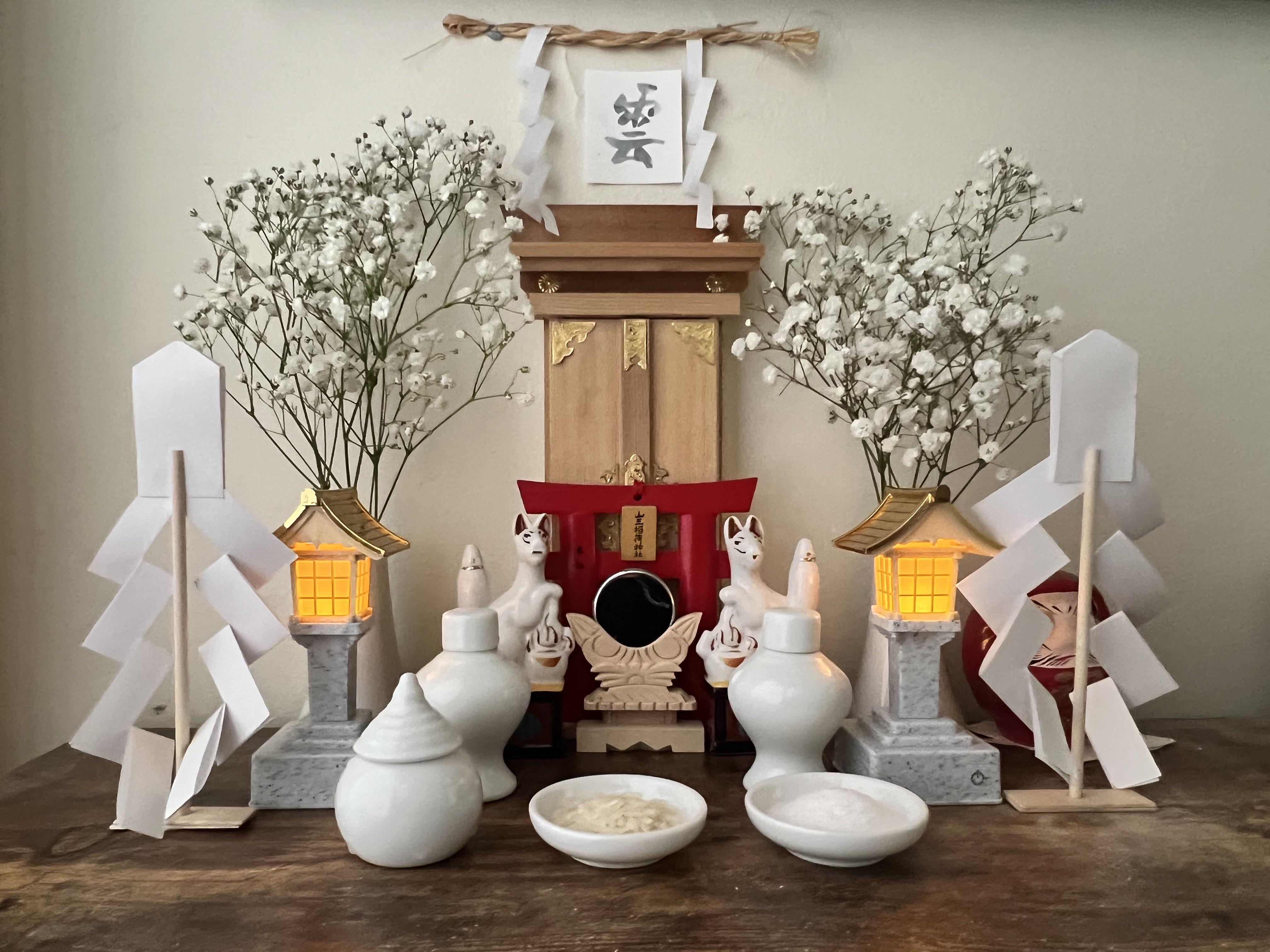
Happy new year to everyone!
285
Upvotes
I hope
r/Shinto • u/False_Evening_739 • Feb 26 '26
I'm Japanese (born and raised in Japan), and I wanted to share how most of us actually experience what the rest of the world calls "Shintoism".
Statistically, Japan ranks as one of the most "irreligious" countries in global surveys — yet almost everyone participates in shrine visits, New Year's hatsumōde, shichi-go-san, ground-breaking ceremonies, weddings at shrines, etc., without a second thought.
The key reason this isn't contradictory is that, to the average Japanese person, this isn't experienced as "religion" in the Western/Abrahamic sense.
There is no founder, no sacred scripture everyone must read, no creed to recite, no requirement to "believe in" anything to be part of it, no salvation-or-damnation narrative, no orthodoxy vs. heresy debates.
It's simply part of the cultural default setting — like taking off your shoes indoors or saying "itadakimasu" before meals.
As kids, many of us were taught things like:
- "O-Tentō-sama ga miteru yo" (The sun/heaven is always watching you) — a gentle moral reminder that isn't tied to any specific god, but implies an all-seeing natural order.
- "Okome hitotsubu ni mo nanatsu no kami ga iru" (Even a single grain of rice has seven gods living in it) — this kind of animistic worldview is baked into everyday life and language from childhood.
These aren't "doctrines" we actively believe or debate; they're just background assumptions about the world being alive with kami (spirits/gods/divine presences) everywhere — in nature, in objects, in food, in ancestors.
The English term "Shintoism" (with the "-ism") makes it sound like a systematic ideology or organized belief system with exclusive membership — which is exactly what it isn't for 99% of Japanese people.
It's more accurate to call it a "way" (michi), a set of customs, seasonal practices, and a diffuse sense of reverence for the sacred in the everyday.
So when I see phrases like "Shintoism teaches..." or "Shintoists believe...", or people saying "I'm converting to Shintoism", it unintentionally projects a structure and exclusivity that doesn't match lived reality here.
What do people who study comparative religion think about this gap?
Does the "-ism" label bother other Japanese folks too, or am I overthinking it?
Non-Japanese folks: how does this explanation change (or not change) the way you see "Shinto"?
r/Shinto • u/spideylovescake • Jan 26 '25
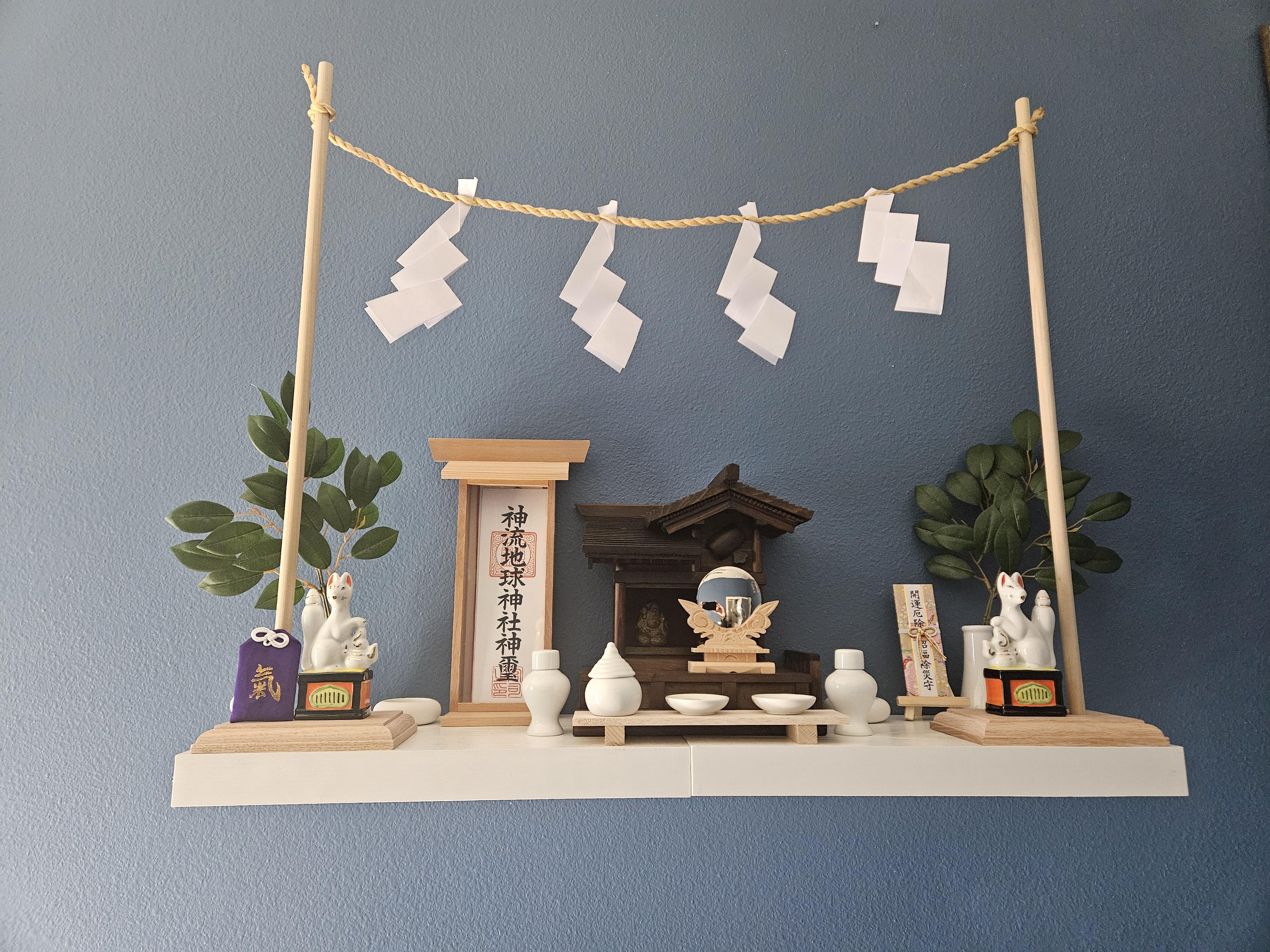
Konnichiwa and konbanwa to all. 🙏 My sensei made a Shimenawa for my home kamidana, and I am overjoyed by how much it ties my kamidana together.
I hope everyone is having a wonderful weekend.
r/Shinto • u/level9000warlock • Jan 27 '22

r/Shinto • u/HufflepuffPanda93 • May 19 '25

I know it’s not the best set up but today I received my Kamidana and 3 ofuda. I have Amaterasu Omikami, Sarutahiko Okami and Ame-no-Uzume-no-Mikoto. I still have a way to go, still need a proper white offering set and some evergreen plants but I know Kamisama understands that I cannot get those things yet, and knows I will in the future. But with my sincere heart I set up my first Kamidana and set offerings of rice, sake, water and salt. I even said 3 Norito prayers today from Rev. Ann Evans book. My Kamidana might not look above eye level but I ensure you that it is and I was raising my phone higher to get a better picture.
r/Shinto • u/mitsueshiro • Jul 09 '22
I am just making a quick post addressing the most common repetitive questions for the time being while I work on a larger resource for the subreddit; unfortunately, my health is abysmal at the moment so I am writing this resource in between hospital admissions while I have some downtime; I appreciate everyone's patience.
I am currently part-way through the queue and expect to have it completely resolved by the end of the 3rd of November 2022. Do not contact me about your post until after the 3rd of November.
Moderator queue last cleared: 10/10/2022, 14:00 UTC
If you posted since then and your post has not been approved, please do not resubmit your post or message me regarding your post; please be patient. If you posted before then and your post has not been approved, please feel free to message me to ask for clarification as to why.
You can practice Shinto even if you are not living in Japan or ethnically Japanese.
There are a number of Shinto shrines outside of Japan. Those without Japanese ethnicity frequently make omairi (sacred pilgrimage) to these shrines or are suukeisha (shrine parishioners) and participate in their ceremonies and festivals, and some have even served as miko or shinshoku. In Japan, there are no signs outside of shrines asking foreigners not to enter. Foreigners are welcome to pray at shrines and participate in festivals, receive sacred items (including ofuda for private home worship), and request private ceremonies. There are exceptions in the case of specific regional or lineage-based Shinto traditions, but this does not apply in the vast majority of cases.
There is no "Shinto stance" on sexuality, same-sex marriage, abortion, or identity.
Shinto is not dogmatic and does not offer a strict moral framework; there are no commandments or precepts. Political beliefs will vary wildly from practitioner to practitioner, and Shinto practitioners and clergy have a wide variety of nationalities, ethnicities, identities, sexualities, and other circumstances. Shinto is open to everyone and does not discriminate on the basis of one's personal circumstances.
There are no dietary restrictions placed on lay practitioners of Shinto.
For Shinto clergy, in some traditions, it is customary to refrain from the consumption of animal meat during the period of saikai—abstinence from the mundane in preparation for a ceremony—but this is on a temporary basis and does not extend to lay practitioners of Shinto. You are free to keep to any diet as a practitioner of Shinto.
If your post is a straightforward question falling under one of the above, it will not be approved. Sincere questions that have more nuance or invite genuine discussion (keeping in mind the rules of the subreddit) will still be approved.
Thank you.
r/Shinto • u/suzukaze_s • Sep 11 '22
I am Suzukaze Sora, the Director of Video Production and Live Ceremonies at the Shinto Shrine of Shusse Inari in America. I work directly with Rev. Izumi Hasegawa who some of you may know from our YouTube videos or Website. I wanted to reach out on behalf of the shrine to your community.
To start, we are always happy to see so many people interested in or actively practicing Shintō. If anyone has any questions about Shintō they would like to ask Rev. Izumi Hasegawa or myself, please feel free to ask, we are always glad to answer questions and clear up any confusion you may have. If you have watched any of our content on YouTube you may already be aware of our Inari Dojo Mini series in which we try to answer your most frequent questions about Shintō. If you have any topics or questions you would like us to cover in a future video, please let us know.
We also make instructional videos that help participants or anyone interested in learning more about the proper etiquette and processes involved in Shintō ceremonies, praying, seasonal festivals, Japanese traditions and culture, etc.; If you have any topic or process that you feel like we should make an instructional video for, please let us know and we can try our best to create a suitable video if we don't already have one.
Feedback is something that everyone needs in order to improve and if anyone would like to give us feedback on the Content we provide, please feel free to give us your constructive feedback/ criticism so we may take that into account as we move forward.
The Shrine requires a lot of work from volunteers in order to keep going, make our videos, ceremonies and spread our message on living a nature friendly lifestyle. That's why we would like to ask for your help. If anyone would like to volunteer for our Shrine, in-person or remotely, then it would be a huge huge help. If you are a student, then volunteering for the Shrine is a great opportunity for Volunteer School Credit and learning more about Shintō. If you would like to become a Volunteer, please visit our website: https://shintoinari.org/ or you can contact me directly at [email protected]
I would also like to say that the work and resources available in this community are wonderful and should not be overlooked either. It's clear to me that the moderators are passionate, very knowledgeable and work hard to provide as much information as possible. I am very glad there is a community like this available on Reddit and that it's reached so many people.
Thank you for reading my message. Stay safe and be well.
May the Kami-sama be with you!
ありがとうございました。
r/Shinto • u/Shobai-hanjo • May 22 '22

r/Shinto • u/medievalpeasant_ • Mar 13 '26

I recently noticed an interesting resemblance between Japanese torii gates (especially the simpler small ones) and the spirit gates used by the Akha and other hill tribes in northern Thailand and Laos.
Torii gates mark the entrance to sacred spaces in Shinto shrines in Japan. Meanwhile, the Akha spirit gates are placed at the entrances of villages and are believed to mark the boundary between the human world and the spirit world. Visually they look surprisingly similar: two vertical posts with a crossbeam marking a spiritual boundary.
Is this resemblance purely coincidental, or are there any theories about shared cultural origins, diffusion, or similar religious ideas between Japan and Southeast Asia? I’m curious whether historians or anthropologists have studied this comparison.
r/Shinto • u/Lets_Go_Marines • May 26 '25

r/Shinto • u/Aliwhatever • 19d ago

Looks like it is damaged but I think I can fix it up. Does anyone recognize it? Or is it one of a kind? I wasn't sure what used to be on the railing posts.
I've always wanted to have one of my own so I was super excited to stumble upon this. Where can one get an Ofuda other than going to Japan?
Thanks!
r/Shinto • u/akihiromasatoshi • Apr 12 '22

r/Shinto • u/horselegs85 • Jul 07 '26
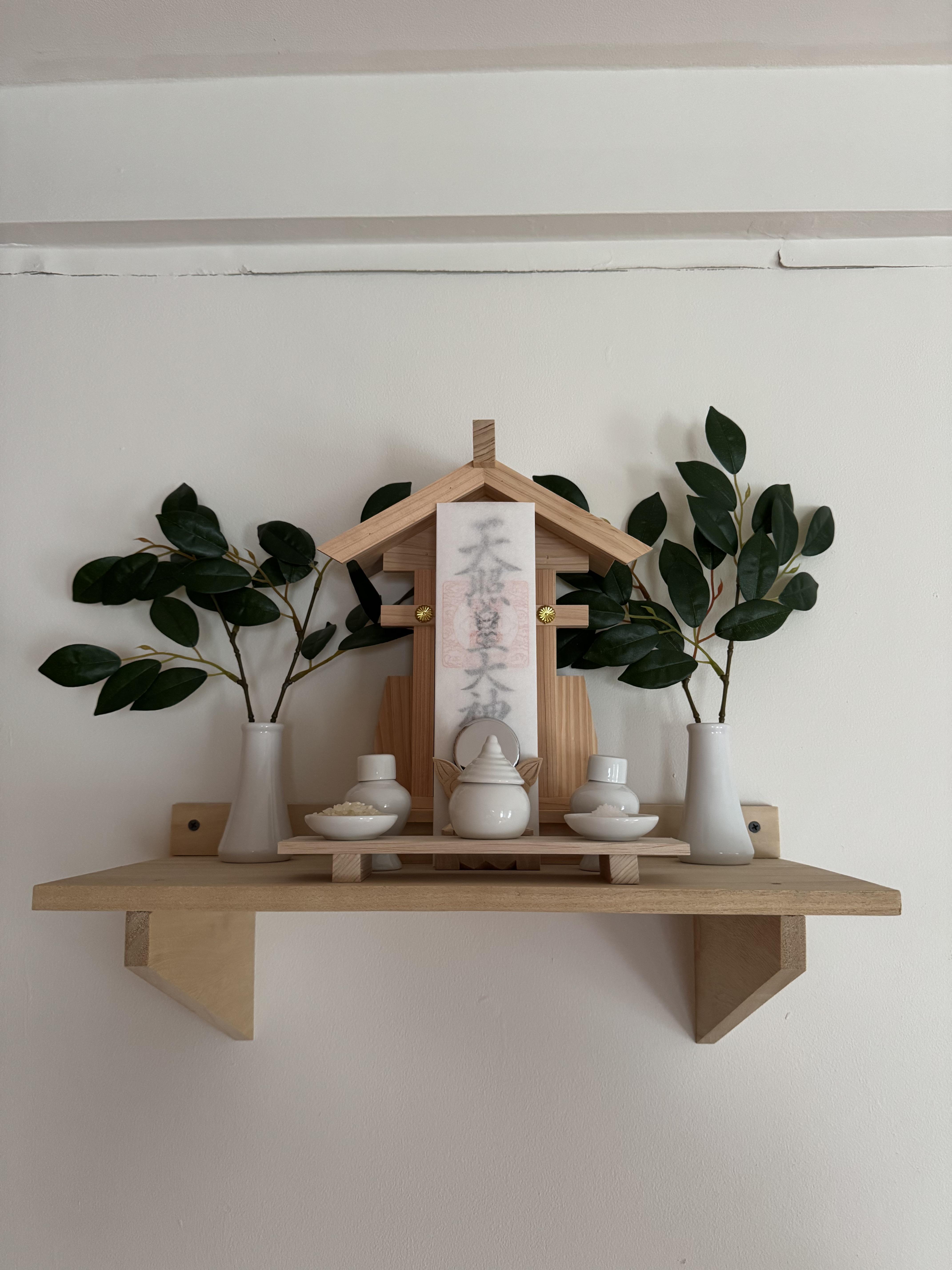
Hi folks,
I recently set up my first Kamidama, and received a Jingu Taima Ofuda for it - but unfortunately found out that the Ofuda itself is too large to fit inside (even with removing the entire front of the Kamidama). I reached out to Shusse Inari for guidance but haven’t heard back, and haven’t been able to find much online about Ofuda placement in these instances. Should it go behind the Kamidama? In front (like in my picture)? Somewhere else?
Thanks in advance!
r/Shinto • u/Shellnanigans • Oct 20 '26

hello, i would like to know alot of information about these red orbs
thank you.
r/Shinto • u/MoninaMun • Dec 30 '25

I started practicing Shinto this year, didn't have the money to buy a Kamidana so I decided to create my own. It started quite simple but as the months went by I added more and more details, the last one I added was the "bell" under it, I wanted to add sound for my prayers 𖹭
Just wanted to share, happy new year everyone ᐠ( ᐕ )ᐟ
r/Shinto • u/MunakataSennin • Dec 31 '23

r/Shinto • u/Urban-Leshen • Nov 07 '25

I lost my omamori last week and I've been desperately looking for it. This morning I found it run over in a car park. I'm so happy I have it back but I'm so scared I've eternally disrespected the kami. Is there any way i can clean and repair this to make amends?
r/Shinto • u/Exact-Armadillo-6660 • Jan 09 '26

r/Shinto • u/Seeker-404 • Sep 07 '26
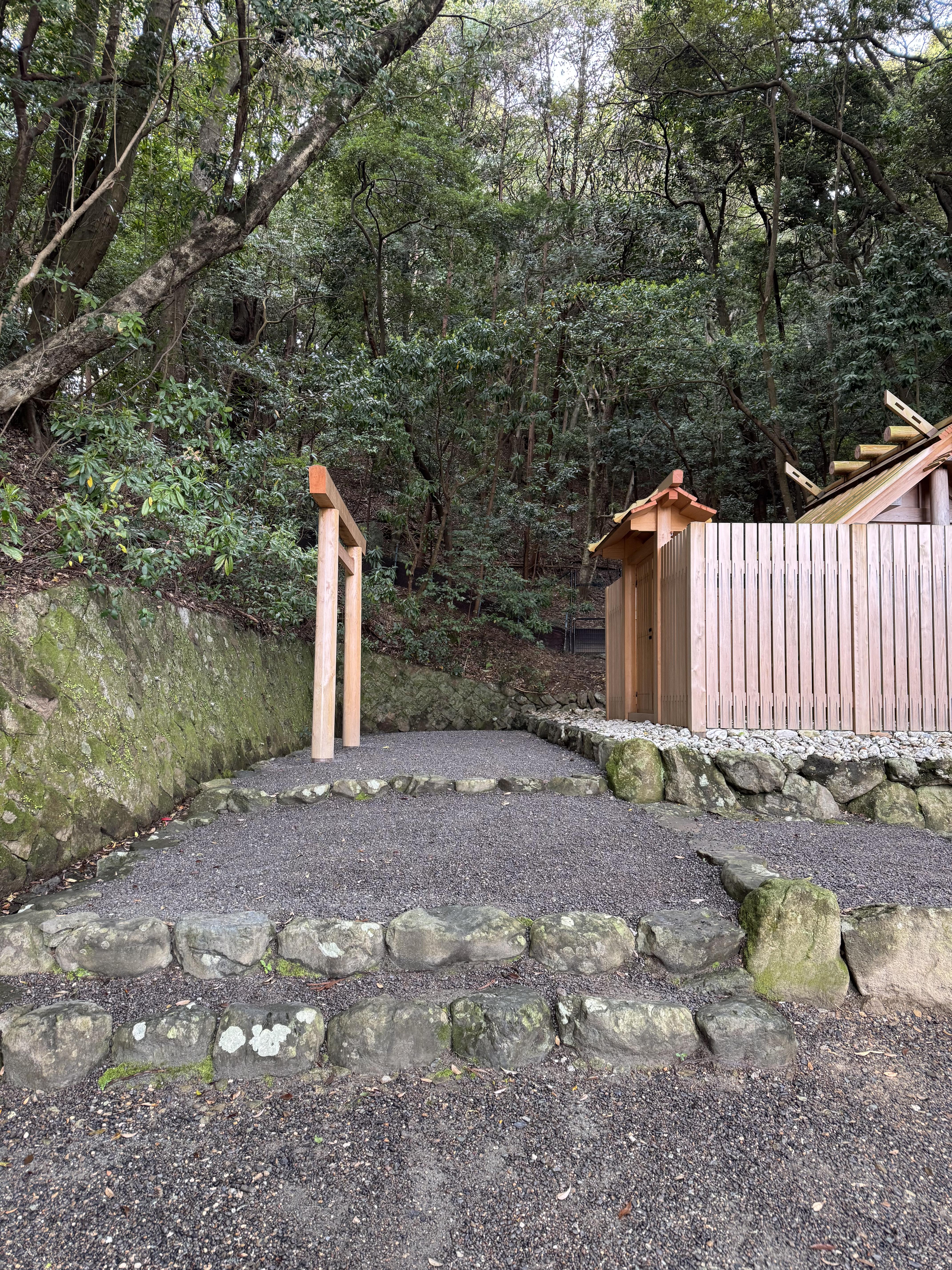
This is Yamasue Jinja, one of the subsidiary shrines of Ise Jingu’s Geku.
At Japanese shrines, the path leading toward the shrine buildings is called a sando, and torii gates are often placed along that approach.
As you can see in the photo, there is definitely a torii gate here.
But what feels strange is that there doesn’t seem to be any approach path on the outside of it. Beyond the torii is simply the edge of the forest.
Normally, you would expect to walk through a torii and continue toward the shrine, so this sight caught my attention.
Even as a Japanese person, I found it a little puzzling.
I’m not necessarily looking for a definitive answer — I just found the sight itself strangely fascinating.
r/Shinto • u/[deleted] • Jun 15 '25
I was recently informed that there is a "Shintō Grimoire" being passed around in some circles claiming to be a legitimate example of magic in Shintō. I have been unable to acquire said copy but such a thing if it does exist is an example of a forgery.
Eastern religions transmit esoteric knowledge, which would include mysticism, in private lines that are generally not breached because it might be only a small number of people who might actually know about it and it would be easy to ascertain the identity from that.
Not only that, but magic is not a major feature of mainstream Shinto practices. Rather, it's something limited to esoteric, syncretic practices like Onmyodo. Nothing like that would ever get actually leaked online and it certainly would not be written in a book as a coherent collection. I say this as a Daoist student of a line in which some esoteric magic was once practiced. These things are never compiled as a book, and rather are usually only included in master-student q/a style novels as asides or tangents. Often times the information is scant in general about it as you're already assumed to be familiar with the material and much of it would have been only transmitted verbally from person to person.
I need to warn people against trusting stuff that people are "inducting" you into. There's a lot of cults out there and people who are bad actors.
If anyone has evidence of such a thing actually existing including snippets or a full copy of it I would be more than happy to break it down specifically as to why it's wrong/a forgery. The fact it would be in perfectly understandable and readable English is generally a good clue though because most Shintō texts remain in Japanese or Classical Chinese.


