r/ScientificArt • • 8d ago

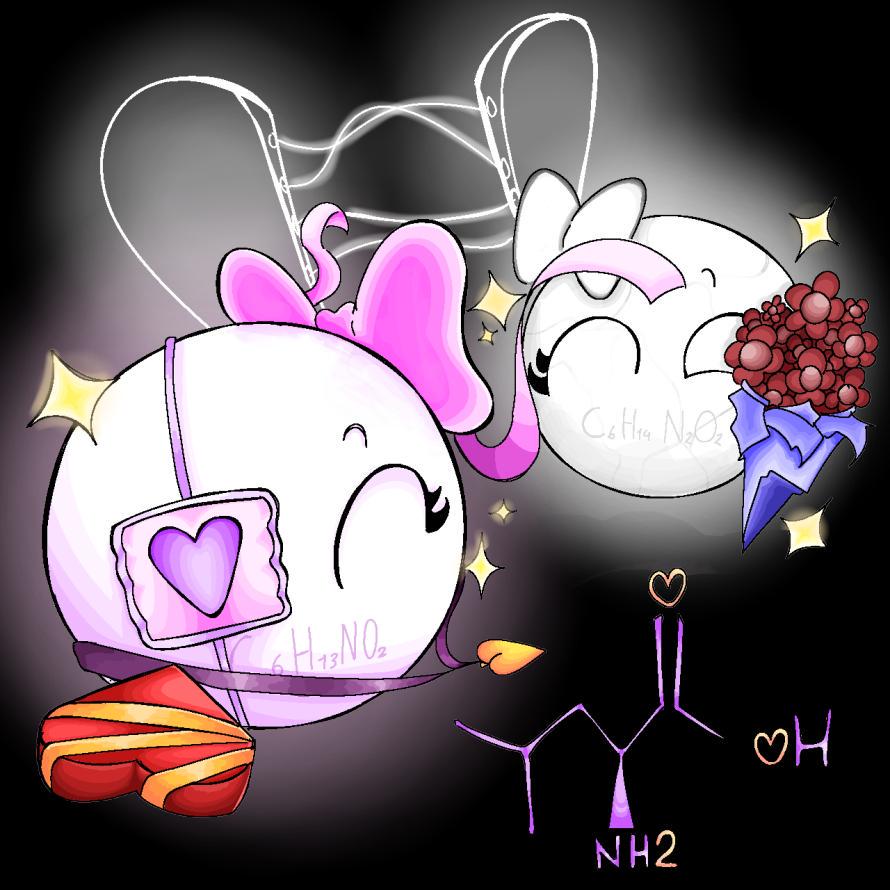
Chemistry Leucine Chemistryball (Not my art)

Post image
0 Upvotes

Leucine Chemistryball Artwork from Chemistryball Series

Lore: Leucine, also called by her nickname, Lucine. She is lesbian and she fell in love with ⁠Lysine. They are both romantic partners. She has a sister: ⁠Isoleucine and often speaks softly and is hydrophobic (hates water). She is also quite stable and calm!


r/ScientificArt • • Mar 29 '23

Zoology American coots, acrylic

Post image
5 Upvotes

r/ScientificArt • • 10d ago

Anatomy/Physiology The creator of the periodic table, Dmitri Mendeleev, tested the color vision of painters. Russian landscape artist Arkhip Kuindzhi broke all records, reportedly distinguishing up to 50 shades of green. Mendeleev tested the color vision of artists — and Kuindzhi broke all records

Post image
6 Upvotes

In the 1870s, Arkhip Kuindzhi didn't just paint luminous landscapes — he seriously tried to understand how the human eye perceives light and color. Together with Dmitri Mendeleev and physicist Fyodor Petrushevsky, the Peredvizhniki (The Wanderers) artists participated in experiments measuring visual sensitivity to subtle color shades.
According to the memoirs of Ilya Repin, artists and scientists would gather at the university to study the properties of paints and the mechanics of the human eye. For their experiments, they used a device that determined how accurately a person could distinguish between closely related tones.
Kuindzhi was the record holder
Repin wrote that Kuindzhi "broke the record in sensitivity to ideal subtleties." According to a widely shared account, the artist could distinguish about fifty shades of green — although the exact details and scale of that specific experiment are difficult to fully reconstruct today.
This doesn't mean Kuindzhi had sci-fi "super vision." But his exceptional sensitivity to color nuances likely helped him construct those legendary lighting effects that sometimes made viewers suspect he had secretly hidden lamps behind his canvases.
Science in the artist's studio
Mendeleev introduced the painters to the physical properties of pigments and participated in research on color contrasts. Kuindzhi also worked in Mendeleev's laboratory, experimenting with paints and studying how different chemical compositions behaved on canvas.
Fyodor Petrushevsky, in turn, studied the effect of light on color and even created the device for evaluating the eye's sensitivity to shades. It was exactly these ideas — complementary colors, color contrasts, and the perception of light under different conditions — that formed the basis of the "Kuindzhi effect."
Why his "Moonlit Night" looked impossible
In his masterpiece Moonlit Night on the Dnieper, Kuindzhi achieved the sensation of real light not through magic, but through a precise understanding of optics: the lighter areas physically reflected more light, neighboring colors intensified each other, and small dark brushstrokes created a vibration of illumination.
Mendeleev was so profoundly impressed by the painting that he dedicated an article to it — the only one of his roughly 500 scientific publications devoted to an artistic phenomenon.
Kuindzhi and Mendeleev were not just acquaintances: the artist participated in scientific experiments on color and light perception, while Mendeleev helped him understand the chemical and physical properties of paints. Perhaps it was this exact fusion of painting and science that allowed Kuindzhi to create artworks that still look as if they glow from within.


r/ScientificArt • • Oct 09 '26

Mathematics A simple geometric method for drawing this geometric pattern 2

Post image
7 Upvotes

r/ScientificArt • • Jul 12 '22

Anatomy/Physiology Corticospinal tract + JWST's Carina Nebula ( [OC] + NASA/ESA/CSA/STScI)

Post image
55 Upvotes

r/ScientificArt • • Jun 22 '22

Chemistry I drew this progress flag using textile, food, and other natural dye molecules. [OC]

Thumbnail
gallery
214 Upvotes

r/ScientificArt • • Apr 17 '23

Biology Glitch #4

Post image
50 Upvotes

r/ScientificArt • • Mar 01 '21

Medicine/Health Dr. Patricia E. Bath, the Mother of the Laserphaco Probe used for cataract surgery! Although this was part of my black history month series, I’m happy to celebrate some women’s history month!

Post image
147 Upvotes

r/ScientificArt • • Jun 24 '20

Zoology Kelp / Urchin / Otter by Celestial Whale Studio

Post image
138 Upvotes

r/ScientificArt • • 5d ago

Mathematics Riemann Hypothesis "Solved" on a 19x19 Rubik's Cube

Thumbnail
gallery
20 Upvotes

r/ScientificArt • • Feb 10 '22

Zoology Mouse Faux Taxidermy

Post image
36 Upvotes

r/ScientificArt • • Feb 06 '23

Anatomy/Physiology Language, mind and brain

Post image
1 Upvotes

Is $32 a normal price to pay for a 8-page-long article?

Friederici, Angela D., Noam Chomsky, Robert C. Berwick, Andrea Moro, and Johan J. Bolhuis. "Language, mind and brain." Nature human behaviour 1, no. 10 (2017): 713-722.


r/ScientificArt • • Apr 23 '23

Engineering Absurd – a new print platform designed specifically for tech/science artists. We're currently in beta and have a few spots left for you to try out our beta version. Register here https://www.absurd.nyc/profile/path

Post image
1 Upvotes

r/ScientificArt • • Jun 27 '26

Cellular/Microbiology Protocryptomonas Skvortsov ex C.E.M.Bicudo, 1989

Thumbnail
gallery
1 Upvotes

I previously posted some illustrations of species from the genus Cryptomonas, which belongs to the family Cryptomonadaceae. Of course, this isn't the only genus described for that family. There are others with a more "mysterious" background. Such is the case of Protocryptomonas, which, although taxonomically accepted, is actually based solely on illustrations made by its describer, the botanist Boris Vassilievich Skvortsov, in 1960 and then again in 1968, without reporting where the actual specimens are deposited (if they ever existed).

Protocryptomonas is notable for its lack of chloroplasts, furrow/gullet system, and ejectisomes. Instead, it has starch granules, whose shape varies depending on the species. In this post, I present illustrations of three species: P. mukdenensis (the type species) with a single, large starch granule; P. ellipsoidea (with several starch granules of various sizes); and "P. obovatus", not validated in AlgaeBase, with numerous small starch granules in the anterior region of the cell.

r/ScientificArt • • Aug 12 '21

Chemistry Does tea make you stay awake? [OC] alchemysciviz

Post image
89 Upvotes

r/ScientificArt • • May 01 '21

Anatomy/Physiology Implantable cardioverter-defibrillator (ICD)

Post image
122 Upvotes

r/ScientificArt • • Aug 08 '22

Astronomy/Astrophysics Solar Storm

Post image
2 Upvotes

r/ScientificArt • • Apr 09 '26

Cellular/Microbiology Cryptomonas phaseolus Skuja 1948

Post image
2 Upvotes

Cryptomonas phaseolus is a species of cryptomonad algae, which has two reddish chloroplasts without pyrenoids. Instead, its cell contains several starch grains. It is the smallest species in the genus. Interestingly, however, there is another name (C. phaseolus (Skuja) Hoef-Emden 2007) that has the same characteristics as the main one (Skuja 1948), except that pyrenoids have been reported in this one. I have decided to represent both in the same image, with the latter depicted in a simplified form.


r/ScientificArt • • Jul 09 '23

Mathematics [OC] Sunday morning intro to sorting

Post image
58 Upvotes

r/ScientificArt • • Apr 14 '23

Anatomy/Physiology Practice in Songkran day 😂

Post image
19 Upvotes

I'm not very good at drawing. So I use HB and 2B pencils. 😂😂 Happy Songkran day 🙏🎇🔫


r/ScientificArt • • Sep 22 '22

Medicine/Health Xanax and sunflowers and chill

Post image
167 Upvotes

r/ScientificArt • • Apr 17 '25

Chemistry The Elemental Tower of Influence

Post image
30 Upvotes

r/ScientificArt • • Apr 18 '23

Zoology What do you think about this vampire bat puzzle designed by me?

Thumbnail
gallery
3 Upvotes

r/ScientificArt • • Jul 11 '22

Biochemistry Artificial intelligence (AI) made an enzyme that can solve the problem of Plastic waste [OC]

Post image
171 Upvotes