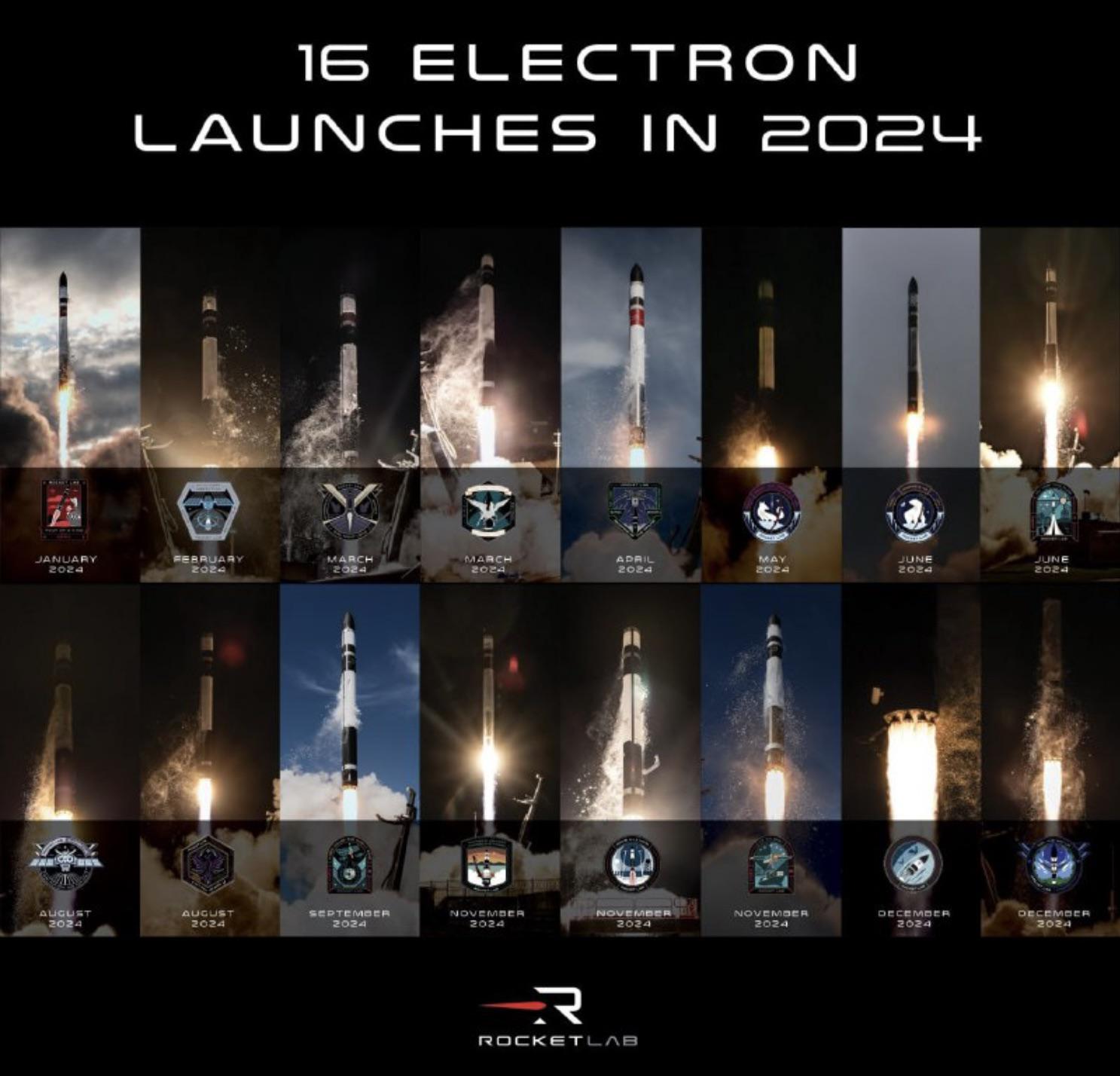
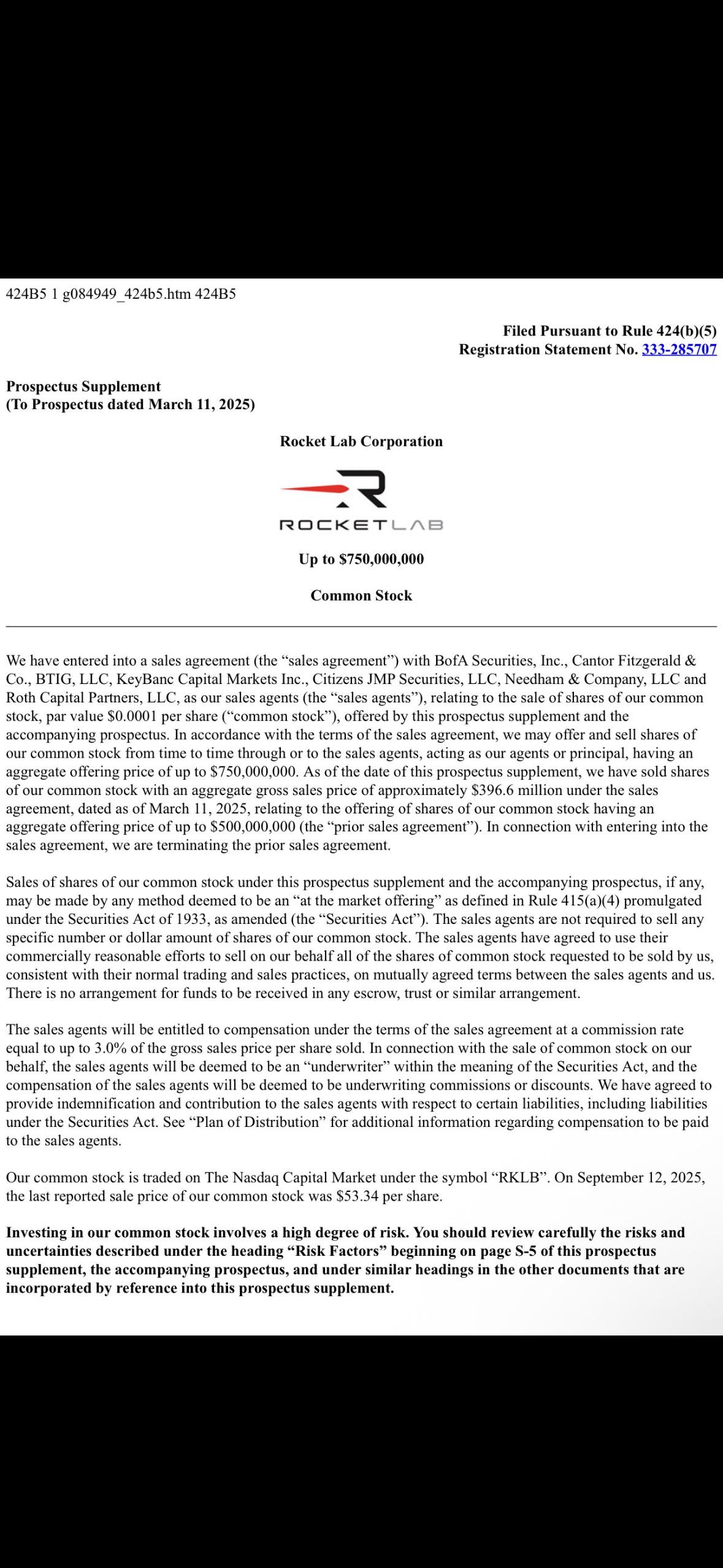
The stock has already exceeded my wildest dreams. My only regret was not pouring all my money into it, but do we expect it to keep rising? Every drop of news is positive from them, they’re bound to hit a snag eventually, right?
Whether Neutron launches in 2025 or early 2026 doesn't really make a difference.
There are 2 key catalysts for RKLB,
1 Neutron launches successfully, hopefully 1st time, which opens up a large market opportunity. Many RKLB built spacecraft are too heavy to launch in Electron, so those customers can't get an end to end service from RKLB currently.
2 they achieve reusability. Using SpaceX example, they should ultimately be able to fly >8X with each booster, so with only 3 boosters you could have 24 launches per year. They say incremental cost for SpaceX maybe $15m. So it then becomes highly profitable. Neutron is designed to maximise what can be reused, so possibly even more profitable for RKLB.
When the market believes RKLB can achieve this, you could then justify $75-100 share price
A large Government contract would also be nice, but the 2 points above will move the price much more.
“I can confidently say this second space age has only just begun. Space holds unparalleled potential for breakthroughs in manufacturing, biotechnology, mining, and perhaps even pathways to new sources of energy,” he wrote. “There will inevitably be a thriving space economy—one that will create opportunities for countless people to live and work in space. At NASA, we will passionately pursue these possibilities and usher in an era where humanity becomes a true spacefaring civilization.”
Rocket Lab announced its intention to acquire Munich-based Mynaric AG (a specialist in laser/optical communications terminals for satellites, such as the CONDOR Mk3) in March 2025. The deal is structured as a definitive stock purchase agreement signed on September 25, 2025, valued at an initial $75 million (payable in cash or stock), plus up to $75 million in additional earn-out payments tied to performance milestones (primarily revenue-based) through 2027.The primary blocker has shifted entirely to regulatory approval under Germany's foreign direct investment (FDI) rules, overseen by the Ministry for Economic Affairs and Climate Action (BMWK), due to the dual-use (civilian and defense) nature of Mynaric's laser communications technology. This tech is considered strategically important for secure satellite links, including military/defense applications, amid Germany's increased space defense investments (e.g., parts of broader €35+ billion programs).Mynaric's financial restructuring (under Germany's StaRUG process) was completed in August 2025, wiping out existing shareholders and clearing the path for the sale—eliminating that as an ongoing issue.Current Status (as of early 2026)The acquisition remains pending and has not closed. It faces ongoing scrutiny in Germany's FDI review process (Phase II), with no public announcement of approval or denial. Key points:
Delays documented: Multiple review milestones and decision points have been postponed, as covered in German space media (e.g., Klartext Raumfahrt) from late 2025 into early 2026. Active scrutiny continues, with no automatic approval triggered by regulatory silence.
Sovereignty concerns: German outlets and analysts highlight risks to "technological sovereignty" and potential dependency on a U.S. firm for critical infrastructure. This ties into broader EU/NATO dynamics, though as allies, mitigation measures (e.g., agreements on data/security controls) could address issues.
Recent commentary: Rocket Lab executives (e.g., in earnings calls and conferences) express continued confidence in closing, but no specific timeline beyond general expectations of Q1 2026 or 1H 2026 in some investor discussions. No updates in recent SEC filings or PRs indicate closure as of January 2026.
Investor/X sentiment: Posts from space investors (January 2026) note the deal is still "in the hands of the German Government," with speculation on geopolitical factors (e.g., U.S.-EU tensions, tariffs) potentially influencing outcomes—though this remains opinion-based. Some anticipate closure soon (e.g., January/early 2026), while others flag ongoing limbo.
Strategic RationaleRocket Lab views the deal as key to vertical integration in its space systems business—adding in-house laser comms to complement existing capabilities (e.g., satellite buses, solar cells via prior acquisitions). This supports ambitions in constellations, defense contracts (e.g., SDA-related work), and end-to-end services. Comparisons to securing critical suppliers (e.g., ASML-like strategy) hold, especially for high-speed, jam-resistant satellite-to-satellite links.The deal strengthens RKLB's position in both commercial and defense satellite markets, but regulatory headwinds tied to defense relevance persist.Key Sources & Timeline Milestones
March 2025: Non-binding LOI announced.
August 2025: StaRUG restructuring completed.
September 25, 2025: Definitive agreement signed.
November 2025: SpaceNews highlights "sovereignty test" and FDI approval need.
Late 2025–Early 2026: Ongoing BMWK review with reported delays; no closure reported.
Analyst/Investor Views: High probability of eventual approval (e.g., 85%+ in some estimates), given Mynaric's prior distress and mutual NATO interests, but not guaranteed.
In short, the acquisition is advanced but stalled purely on German regulatory approval—no major changes from late 2025 reporting, and it remains in limbo as of January 2026.