r/ReflectiveBuddhism • • Mar 10 '24

When you construct a Buddhism out of prejudice

33 Upvotes

Dear Dhamma family, we need to talk. Have a read below:

I want us to take a look at the features/details of this comment (and others by the same OP) and contextualise it historically.

Let's start with some excerpts from the poem White Mans Burden:

...Take up the White Man's burden — Send forth the best ye breed — Go bind your sons to exile. To serve your captives' need; To wait in heavy harness. On fluttered folk and wild — Your new-caught sullen peoples, Half devil and half child...

...Take up the White Man's burden — The savage wars of peace — Fill full the mouth of famine. And bid the sickness cease; And when your goal is nearest. The end for others sought, Watch Sloth and heathen Folly. Bring all your hopes to nought....

Let's look at excerpt from a Protestant piece on idol worship:

God created human beings to be worshippers. The question is not “will we worship?” but “what will we worship?” We will all pursue something as the antidote to our emptiness, our insufficiency. We will all look for meaning, for fulfillment, for satisfaction. J.I. Packer says it like this: “It is impossible to worship nothing: we humans are worshipping creatures, and if we do not worship the God who made us, we shall inevitably worship someone or something else.” Of course “the truth is that our supreme fulfillment, as moral beings made in God’s image, is found and expressed in actively worshipping our holy Creator.” No wonder, then, that the first 3 of the 10 commandments deal with proper worship of God.

(Note the very clear theological points reproduced in the quote as well)

Now, look at the quote below from the OP and take another look at his other comment I shared at the start. You can scroll through hundreds of Christian and Muslim sermons on this topic and find almost verbatim, what this OP is saying...

Now let it sink in that the OP claims to be Buddhist...

So, why is the OP, who claims to be Buddhist, making standard Christian Evangelical arguments? How he is reproducing Protestant theology but would shout from the rooftops that he isn’t?

The reason is that the OP believes that his arguments are common sense, logical and based in "facts about the world" rather than theological. He is unable to see how he is simply parroting colonial Christian discourse that is roughly two centuries old.

The through-line from the poem, to the sermon, to the OP is unmistakable.

All roads lead to...

S. N. Balagnagadhara the author of The Heathen in His Blindness traces the development of notions of the secular by doing a deep dive into the theological development of the Christian Church.

Jakob De Roover, author of multiple papers of notions of secular law and religion has extensively explained how courts of law reinforce specific theological understandings of what a religion is and how it should be practiced.

In a addition to this, there are dozens of scholars who have been able to trace our current understandings of notions of the secular to Protestant theology. When many of us Buddhists who are decolonising bring this up, we are not trying to level an insult, but to bring attention to facts that impact understandings of the Buddhist tradition.

From S. N. Balagangadhara:

...Ever since the birth of Christianity, I won’t bother you with the history, there has been two faces to the expansion of Christianity: one is a well known conversion where people are converted into Christian religion, doctrine, and practices but there is the second, which today is the dominant form of conversion, which is secularised translation of Christian ideas, which we all have accepted, I mean, every one of you has accepted in the name of science, modernity, rationality, and so on.

This is secularisation, I will explain in the course of this talk with some examples. This is the first problem that confronts us; the second problem which has to do with 1000 years of colonialism, both Islamic and British, because of which we suffer, we all of us suffer, from what I call colonial consciousness...

Of Purity

"The suttas are the key teachings of the Buddha"

Let's unpack that. The EBT Mogwais (who have now inadvertently spawned Fundamentalist/ Literalist Gremlins) would have us believe, that embedded within the Tipitaka and corresponding Agamas etc are a select set of "authentic suttas" that represent the core teachings of the Buddha. But there is an elephant in the room here: the suttas cannot function as time machines.

What we have, are what was preserved by various sects, so what we have to work with is how those sects portrayed the Buddha and his sasana. We simply cannot have an unmediated experience of any part of Buddhist history. There can be no Buddhism today, revisionist or otherwise, that can plausibly exist in an idealist vacuum. Ontologically impossible. You might as well claim you saw Big Foot.

The claim that "authentic suttas" simply lay passively waiting conceals the fact that what is actually happening is the active, intentional, construction of notions of purity and authenticity.

"Early Buddhism" / "True Buddhism" / "Pure Buddhism" is being constructed. It is being made by the agents (modernist scholar monks / or scholar monks responding to modernity) who seek out purity and authenticity. We, as agents are actively impinging on the texts.

There is no other way to relate to them.

The discourse of purity and authenticity blinds us to how we are actively making a Buddhism out of our search for historical truth. Something that an Indic tradition like Buddhasasana is not even concerned with. So even there, we've shifted our epistemic framework to historical realism and away from the emic (insider) perspective of our Sasana. (kusala and akusala dhammas)

This is besides the fact that the very impulse to place "True Scripture" as the ultimate authority as to what can be considered Buddha Dhamma is in fact anti-Buddhist.

It is at its foundation a Christian theological impulse. In fact Buddhists consider oral tradition, avadanas, jatakas, masters etc just as authoritative and valid as our textual traditions. These strands of knowledge making have always been balanced (with shifting tension) among each other.

Epistemic violence as a prelude to actual violence

Idol worship does not exist. It is in no way a an anthropological / social fact about human behaviour.

"Idol worship" is a theological construct prevalent in the doctrines of semitic monotheisms. It enjoys the veneer of fact, via the secularisation and universalising tendencies of Protestant Christianity.

It was buttressed within colonial legal systems (India, Sri Lanka, Burma etc) and thereby force Buddhist, Hindu etc traditions to reframe themselves into the theological moulds these courts would recognise.

When we allow the hideous, maleficent sermons of purity, espoused by the OP of that particular post to go unchallenged, we set the stage for normalising epistemic violence against our Buddhist traditions. Which inevitably lead to actual violence levelled at Buddhist communities.

The OPs call of hatred for "idol worship" is in no way the innocent mewlings of a curious onlooker, but the shriek of righteous religious prejudice a century in the making. Literally no different from Evangelicalism and the theologies that spawned them.

Keep calm and worship idols

I believe there is no direct response required, rather an earnest call for us Refuge Takers (Buddhists) to relook our relationship to our textual traditions. The rise of logical fallacies has been incredibly seductive to those besotted with notions of textual purity. Leading to ever more regressive and aggressive takes on our traditions. The danger is great, since lack of exposure to heritage communities allows these violent ideas to fester online.

In the lopsided appeals to show openness and build bridges with others we often asked to give up the right that we, just like anyone else, get to exist in ways that others do not approve of. This includes "worshiping idols".

If the logic is that it is more important to center the feelings of one group (those repulsed by iconography ) at the expense of everyone else, then we have participated in the perpetuation of a dehumanising system that grants freedom of religion and conscience to one group at the expense of another...


r/ReflectiveBuddhism • • Aug 16 '25

Orientalism deprives people of actual Buddhism.

Post image
31 Upvotes

Orientalism is a serious problem. Since the 18th century, many Westerners have projected their own desires onto Buddhism, forcing it to conform to their fantasies. This has nothing to do with authentic Buddhism. Instead, Orientalism reshapes Buddhism into a Western construct, blending rationalism, Protestant purity, Romantic mysticism, and colonial superiority, while erasing actual Buddhism and Buddhists and appropriating the tradition to invent a new Western religion.

Some outdated views held by certain people include:

1 - The Buddha was a rational philosopher, not a religious teacher. He never founded a religion. Buddhism is a philosophy.

2 - Buddhism is atheism. There is no place for gods, spirits, or ghosts within it. Rituals, devotion, heaven, and hell were not originally taught by the Buddha but were later inventions.

3 - Buddhism became corrupted through cultural practices, and the only way to recover "pure" Buddhism is through textual study, much like how Protestants sought to "rediscover" Christianity directly from the Bible while rejecting the Catholic Church.

4 - Zen was reduced to minimalism, Tibetan Buddhism turned into exotic wisdom, and Theravada into a spa. Orientalism reshaped Buddhism into a reflection of Western concerns and desires.

5 - Buddhists themselves were erased. Their voices, lives, and practices were sidelined as Westerners claimed authority by privileging texts, declaring their interpretation as "This is Buddhism." As a result, Buddhist teachers addressing Western audiences often had to adapt their teachings to fit Western frames shaped by Orientalist assumptions.


r/ReflectiveBuddhism • • Jan 17 '25

The Wheel of Reddit - Same Questions, Almost Daily, For 10 Years

Post image
30 Upvotes

r/ReflectiveBuddhism • • Nov 13 '24

Insightful thoughts by u/Bodhiquest on Westerners' attempts at rejecting Hell by psychologizing it and how it distorts actual Buddhist practices

Post image
30 Upvotes

r/ReflectiveBuddhism • • Oct 10 '24

If Budhicurious folks (who asks "Hey, I'm Atheist. I don't believe in this and that. How can I be a Buddhist and what school is right for me?") ask what they are asking, but in OTHER FIELDS:

29 Upvotes

A guy entering a steak house: "Hey, I would like to order a lobster and steak plate. Oh and I'm vegan, so please remove lobster and steak please."

A bald guy going to a hair salon: "Yeah please curl my hair but let's first dye it blonde." Hairdresser: "But sir, you're bald". Guy says "Yeah I'm bald. I want a hair cut and color. Hurry. Chop chop."

A teenage boy going to a pub: "Hey I'm 13, can you please remove that sign outside that says 'no minors allowed' and please give me a glass of bourbon, on ice."

A husband to his wife: "Honey, I don't believe in this marriage anymore. I want a divorce. Oh and cook my dinner and give me sex on demand please."

A guy paying taxes to the IRS draws a monkey on the tax forms and says "Sorry government. I don't really believe in taxes. So here's a drawing of a monkey."

A girl approaching Islam "Listen, I don't really believe in all that no pork thing so teach me how can I make a Halal bacon sandwich."

Absurd. Ridiculous. Unthinkable.

And yet, only in Buddhism do we find people with this high level of entitlement, approaching the religion like colonizers, demanding, discarding, altering, and commoditizing things for their own benefit.


r/ReflectiveBuddhism • • Feb 14 '25

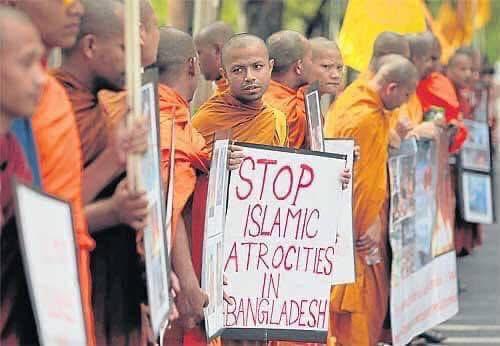
Stop saying "Buddhist is not a Religion" for the sake of Persecuted People.

Post image
27 Upvotes

r/ReflectiveBuddhism • • Mar 14 '24

What Buddhism actually looks like in reality - Presenting Buddhism as it really is and the lives of Buddhists IRL (One of the best posts at r/Buddhism, heavily downvoted. 5 stars)

Post image
27 Upvotes

r/ReflectiveBuddhism • • Apr 27 '26

Holy Cow! Why Puja isn’t Worship and Why That Matters.

26 Upvotes

A quick primer on how theological concepts become secularised and how that prevents us from accessing our own experience.

A quick caveat, I'm not advocating for abandoning words or using Sanskrit or Pali or even other Buddhist vernaculars really when we communicate in English. Although that would be an interesting experiment.

What's in a word?

Take the english word 'worship'. It has deep theological connotations but everyone tends to use it in english language spaces. Singaporean and Malaysian Buddhists and Hindus tend to use many theological terms they learned in fancy Catholic and Jesuit Missionary schools: idol, worship, prayer, merit, heaven etc

So lets quickly unpack the theological roots of the term worship as an example.

In Christianity, all humans were created with the desire to worship the true god. But Satan and his minions deceive humans beings to direct their worship to the false god (Satan and his minions). The Christian project then is to get humans to redirect their worship to the true, Biblical god.

This theology presupposes a belief of what a human is (a from of Christian anthropology): a creature created by a god to give true worship to the Biblical god. In the secular account, which is the secular sublimation of this is that all human cultures have and create religion (true or false worship).

We're also told that there are different ways that religion shows up: animism, deism etc.

So then we learn that there are humans who worship cows, worship ancestors, worship trees, worship stones etc. To explain why people worshiped things/objects, it was explained via a concept called 'concrete thinking'. Certain humans in Africa, Asia and Americas were only really capable of concrete thinking.

We're then told that the religions that developed in the Near East (semitic monotheists) and the West, were rooted in abstract thinking, producing religions that worshipped a sophisticated, abstract conception of a deity. These religions directed their worship to something more sophisticated than a tree.

They worshipped the tree maker, the stone maker. Whereas other people worshipped cows, those within these sophisticated religions worshipped the creator of cows.

This is why 'worship' as a term can be so misleading and deny us access to our own experience.

So for Buddhists, among ourselves, we get what we mean by puja and even the english word worship. We make/do puja to a particular buddha rupa, we recite its associated katha/gatha to receive the merit from that act.

Buddha recollection is not even a form of puja, much less worship. To recite Amitabha Buddha's name is a form of anussati, rooted in the development of the heart to attain awakening (in His Buddhafield) for the sake of all sentient beings.

But all of this, we label as 'worship'. Which gives outsiders basically no clue as to what we're up to.

[Puja (honor) and vandana (to revere/bow to) as concepts, are found throughout our suttas and sutras, with Lord Buddha over and over stressing that this forms the basis of learning and development of the Path.]

So we can see a few things here:

Non-buddhists / the Buddhi-curious have no context for ideas and ways of being that developed way outside of their cultural milieu. They see Christianity not simply as a religion, but as being what religion is. All other religions are simply versions of Christianity.

Why? Because they learned that all humans are creatures that do worship. And all religions developed to support this "universal" human desire to worship. This is how secularism expands Christian theology way past the sphere of explicit religion. See the hokum from Kabbat-Zinn, Batchelor et al.

So here we can see clearly WHY arguments of idol worship (worship directed to the false god) are so contentious in Buddhist online spaces. The memes of Lord Buddha not wanted to be worshiped (since that would be false worship) are rooted in the outdated Orientalist Indological (the study of India) projects.

Translating Buddhist using Biblical terms created lots of confusion and entrenched long-expired zombie facts within the academic and cultural soil. This is simply one of the reasons we recommend learning sutras / suttas via well trained, educated monastics. This puts us on the right footing from the start, allowing us to discover what Buddhist traditions have to say, rather than running in place reproducing Christian theology.


r/ReflectiveBuddhism • • Nov 01 '25

Commentary: Although Buddhist monasteries are welcoming, they are not a free lodging escape for Westerners struggling with existential angst or suicidal thoughts. The last thing monasteries need is a psychologically unstable, highly privileged Westerner who makes monks’ life a living hell.

Post image
26 Upvotes

r/ReflectiveBuddhism • • May 12 '25

A struggle of newcomers / explorers of Buddhism when they turn to Reddit.

Post image
26 Upvotes

It would be smart if they are actually critical like that. (That not all answers given to them are correct.)

But I bet many would think all responses are valid or worse, the most upvoted replies are the best path to follow.

And then a cycle of Westernized Buddhism confusion continues....


r/ReflectiveBuddhism • • May 25 '24

When We Step Outside Our Own Private Idaho

26 Upvotes

This comment is a good opportunity to think about the range of perspectives that Buddhist traditions represent and how on Reddit, there are a few assumptions about what should be normative in Buddhist discourse here. So let's unpack.

Where atheists, skeptics and others flee with their cognitive dissonance

Aside from Zen Buddhism, Theravada is one of the most abused and misunderstood traditions out there. At this point on Reddit, Zen and Theravada flairs can be considered red flags for anti-Buddhist rhetoric.

In Theravada Buddhism dedicating merits to ghosts was taught by the Buddha himself. As well as the Parittas (protective verses), distributing relics etc. All this was going on during his lifetime. Buddhist magical traditions may go right back to the Buddha Himself. None of this is exclusive to the Mahayana. And pretending it is, is neither honest nor psychologically healthy.

It's perfectly fine that the commentor uses Buddhist practices as a mental wellness regime, but he is actively occluding entire repertoires of Theravada Buddhist practices that conflict with his world view and is then surprised that that is not seen as normative across all traditions, in including Thai Theravada.

The issue has never been about individuals taking a certain position that is "out of step" with Buddhist traditions. The issue has always been that this usually this ends up going much further, into truth claims about historical Buddhist traditions themselves.

At the heart of our traditions lies the Awakening of Gotama Buddha, clearly laid out in the three watches of the night: knowledge into the kamma of sentient beings, recollection of past lives and liberation from all kilesas. The liberation of kilesas were dependent on the other two knowledges. Since what counts as vijja (knowledge), is how living beings are trapped in repeated birth, sickness old age and death.

And central to that, are the kilesas and what fuels, you guessed it: ignorance (avijja)of...how living beings are trapped in repeated birth sickness old age and death.

Sorry folks but all of Buddhism is cultural and metaphysical

What this means is that historically Buddhists have placed their faith in the Awakening of Gotama Buddha as a foundation of cultivating the other Path factors. Here I stress Buddhists, rather than those who withhold their faith in the Triple Gem, or shape their practices around their scepticism and doubt (rather than resolving them) who can't be surprised when they hit the dead end of nihilism.

For about a generation now, foundational misinformation about Buddhist traditions have spread (in certain places) to the point where people genuinely believe Buddhism is empty of content. Atheists and others are now to some extent in a state of shock when Buddhists end up responding to their uninformed claims about our traditions.

People of all backgrounds continue to be welcome to practice to the extent they are comfortable, but we've seen the steady rise of antagonism toward Buddhists by the so-called seculars etc. And as a response, Buddhists like me have simply begun to take what they say seriously and begun deconstruction of their ideologies.

The recipe for conflict was there right from the start: non-Buddhists claiming moral high ground and intellectual superiority ( a form of epistemic violence) was never going to result in a peaceful conclusion. Unless they believe they should be protected from the consequences of their speech?


r/ReflectiveBuddhism • • Sep 12 '25

No One Mourns The Wicked

24 Upvotes

Let no one think lightly of evil, saying unto themselves 'it shall not come nigh unto me'. As drop by drop the water pot is filled, so the fool becomes full of evil, though he gathers it little by little.

Dhammapada - Twin Verses

--------------------------------------

Please read the below:

Now mind you, as far as I can see, no one on Buddhist Reddit was celebrating gun violence, (at least not without deserved pushback) but the OP felt the need to post this anyway. So if that isn't even what's happening, why would some rando create a post like this? As a black Buddhist, I have answers...

The heinous life and influence of Kirk would be nothing without the bands of liberals who actively downplay the horrors he espoused...

And more! They demand the public performance of mourning from the very people/communities he targeted. This Dhamma friends is not Buddhism. This is white supremacy / anti-blackness.

Right now, HBCUs in the US South are on lockdown because black people are being targeted for retaliation. He targeted Black academics and mobilised mobs to threaten them. Stacy Patton is one of them.

-------------------------------

Will no one think of the Nazis?

One thing that's interesting to observe about whiteness on Buddhist Reddit, are the moral experiments white men want us to engage in. And it's very eye opening that they seek to push notions of acceptance, compassion etc specifically towards groups and individuals who espouse Nazi ideas.

Not in the sense that we should hold compassion for all sentient beings, (which is correct) but that truly enacting Buddhist compassion means you allow all this heinous shit and heinous people like Kirk to thrive. This is how they do the racist bait and switch here.

What they're really trying to pull on us is this:

Buddhist compassion and ethics means, you have to endure all the evil shit racist white people throw at you. This is why they so desperately try to police Black and Asian bodies here on Buddhist Reddit. It absolutely comes down to control. Not compassion.

--------------------------------

So how do I feel about Kirk?

I don't feel anything.

In fact, my first thoughts were about Tamir Rice, Breonna Taylor, Trayvon Martin, the Asian women shot in that massage parlour. I thought about that kid who had both his parents deported while he was at school. I thought about the men in Al Salvador, about the children in Alligator Alcatraz. I thought about the Black congregation wiped out in that church. About the black man shot in his own apartment eating ice cream on his couch...

So now let me get this straight, me, as an evil Black, needs to be rolling on the floor crying for a Nazi otherwise, I'm not a good Buddhist. Am I getting this right?

This is why Peter Thiel, Pete Hegseth, Elon Musk, Lara Loomer et al don't really have to do much. All they need to do is spew the rhetoric, white (and others) liberals will happily do the work of enforcing it.

In my view, people like that OP are not in the same league as Kirk. But they are a version of him. They're his enforcers and disciples. Their first task is to virtue signal how compassionate they are for loving Nazis and how evil everyone else is.

They set the moral premise against the victims of Nazism and White Supremacy.

Pay attention to what they're saying (and implying) Dhamma friends.

Pay attention...


r/ReflectiveBuddhism • • Apr 06 '25

I'm a vegan who eats bacon.

Post image
24 Upvotes

r/ReflectiveBuddhism • • Nov 06 '24

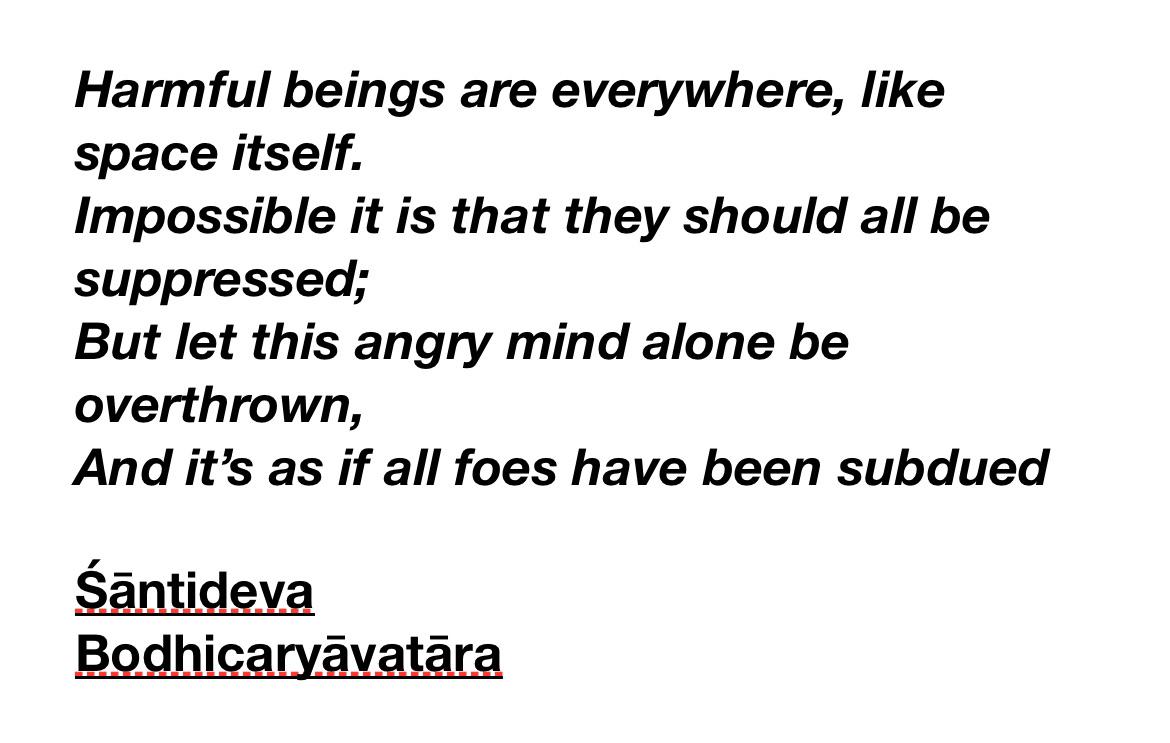
Let this angry mind alone be overthrown

Post image
24 Upvotes

r/ReflectiveBuddhism • • Jul 01 '24

Supression of born-buddhist, buddhist cultures and buddhist ideas are a reflection of the opression white supremacy have imposed on asian peoples for centuries. Bad western "buddhist " internet forums are a microschasm of this racist power structure.

Post image
24 Upvotes

r/ReflectiveBuddhism • • Mar 25 '26

Confused about non-cultural Buddhism in US

23 Upvotes

I’ve been trying to wrap my head around American convert Buddhism. For context I’m Asian and came to the States as an adult so I only knew a bit about convert Buddhism in the US, like the rise in popularity in the 60s and 70s.

I have some folks in my extended family by marriage who are white American, mostly in the boomer or Gen X age bracket and have ‘converted’ to Buddhism at one point or other, mainly from Catholicism.

What I have observed/heard is that they say Buddhism is the best religion (often painting other faiths as being quite the opposite) and is simply just about being a good person, being kind to everyone, and being humble and non violent. Well and good on the being a good person etc.

Where I get confused is that a lot of the aspects of Buddhism especially the ones I grew up around, seem to be lost. Buddhism does involve concepts such as karma, rebirth, various realms, a whole host of devas, yidams, mythologies, ghosts, hells and heavens, mantras, rituals and so on. Non of these in laws participate in any kind of ritual or merit making activities, no giving of offerings or doing puja or observing holidays, any Asian cultural tradition basically (except for yoga and basic meditation usually in a setting of mainly white Americans).…Which to me begs the question, why do they get so attached to calling or branding themselves as ‘Buddhist’?

Of course there are white American Buddhists out there who I’m sure do respect, study and wholeheartedly participate in the cultural traditions of the form of Buddhism they practice, so I’m not speaking about those people. But for those who don’t try and learn about any traditional Asian Buddhist practices and even make arguments against the necessity of doing so, I wonder why they choose it in the first place. Versus just saying they are agnostic/atheist (with a sprinkle of inspiration from Buddhism or Taoism i suppose), a belief system of their own making, or even some basic form of Christian principles and call it a day? I get that some people like my in laws want to distance themselves from Catholicism specifically, but ironically it seems like some of convert Buddhists are in some ways more just aligning with the teachings of Jesus - i.e: love thy neighbor, practice humility, unconditional forgiveness, help those in need. Which there’s nothing wrong with.

Is this style of ‘convert Buddhism’ because of what’s taught in school in the US about Buddhism? Pop culture? Star Wars? The Internet? Local access to sangha and language barriers? I struggle genuinely to understand the point of converting to a religion and not observing it.


r/ReflectiveBuddhism • • Oct 01 '25

Just wanted to give a thanks to this sub and all of its members

23 Upvotes

I appreciate the consistently contributing members of this sub and the work all of you do to tackle the overwhelmingly cis, white male narratives of the r/Buddhism subreddit. I was going a little insane from seeing how non-compassionate a lot of the takes on that subreddit are in that they do so much to basically erase the problems of oppressed minorities and basically chalk it up to “attachment” that people experience racism, talking about how white supremacy is just a perception and that you should stop acting like it exists, or wax poetically about “no-self” when a trans person is trying to figure out how to work with gender dysphoria while still practicing Buddhism. Or how the genocide of Palestinians is just “the world being dragged by the three poisons”, spoken in a cold, matter-of-fact way that seems to lack any compassion whatsoever.

It always blows my mind to see how social issues and politics is discussed over there when irl Buddhist spaces outside of the US very much have concern for the world around them. Why are Buddhists in the US so obsessed with being “apolitical” (not a real thing) and basically just pretending that dependent origination and non-self means they don’t have to care about the things going on in the world. I see this a lot in white Zen spaces and I don’t get it. Isn’t Bodhicitta a core factor for anyone practicing the Mahāyāna path? You can’t just jump to Ultimate Bodhicitta without cultivating its relative aspects.

Sorry for the ranting, but I feel like this is one of the few places that I can maybe vent some frustrations with online Buddhist forums. I do have a Sangha that I go to but I’m still getting to know people there and am not sure how discussing these matters in those spaces would go. I’ve had good discussions when talking about some of the more polarizing subjects and it seems so much more grounded than any discussion I’ve had on the main Buddhist subreddit ever.

Anyways, I hope anyone reading this has a wonderful day. I’m really happy you’re all here, pushing back against what many of us sense is the pervading dominant discourse and narratives found in Buddhist spaces. Please put me in my place if I’ve spoken falsely or wrongly or need a perception change about something. Thanks

May you be happy, healthy, safe, and liberated from suffering


r/ReflectiveBuddhism • • Jul 26 '25

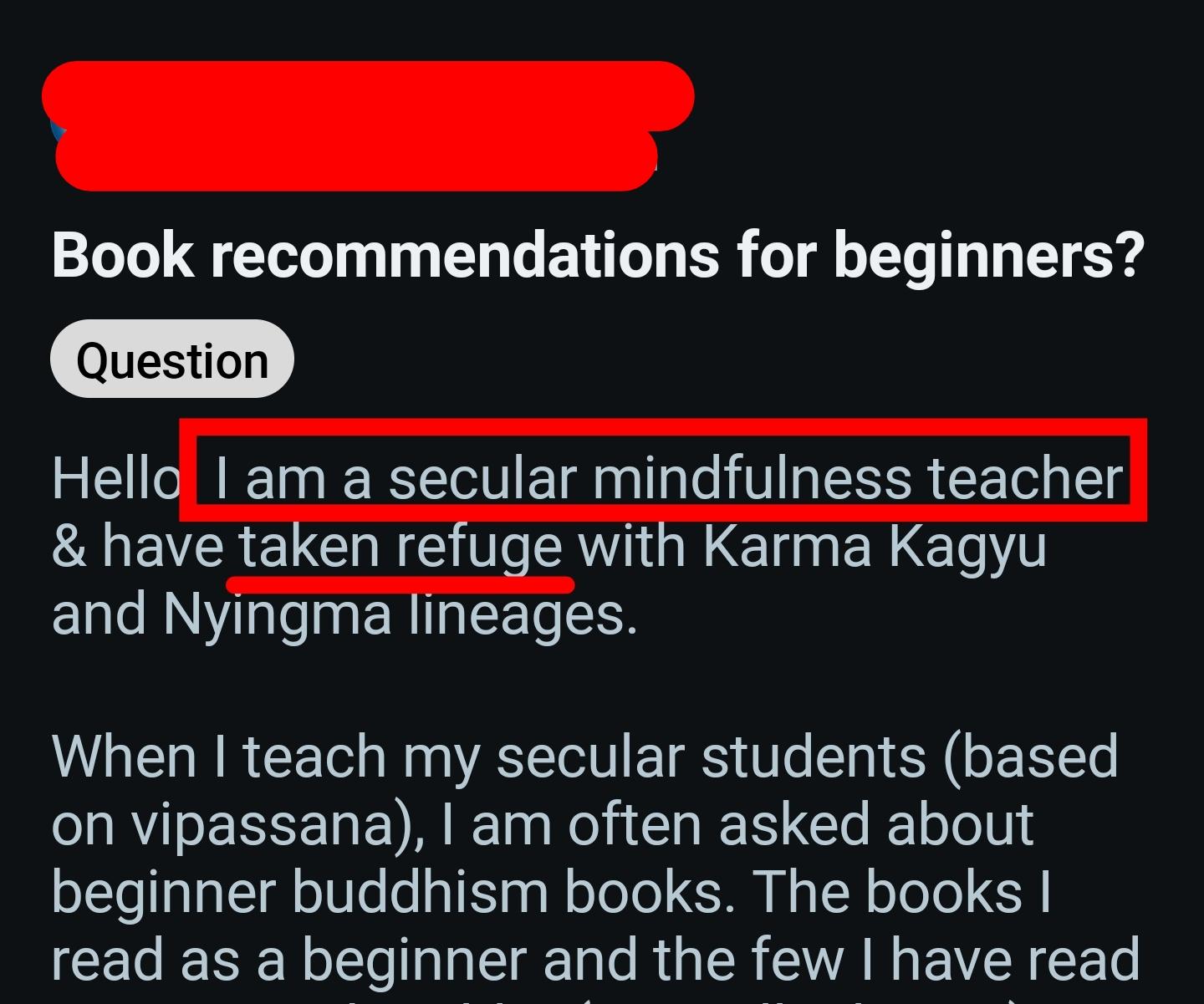
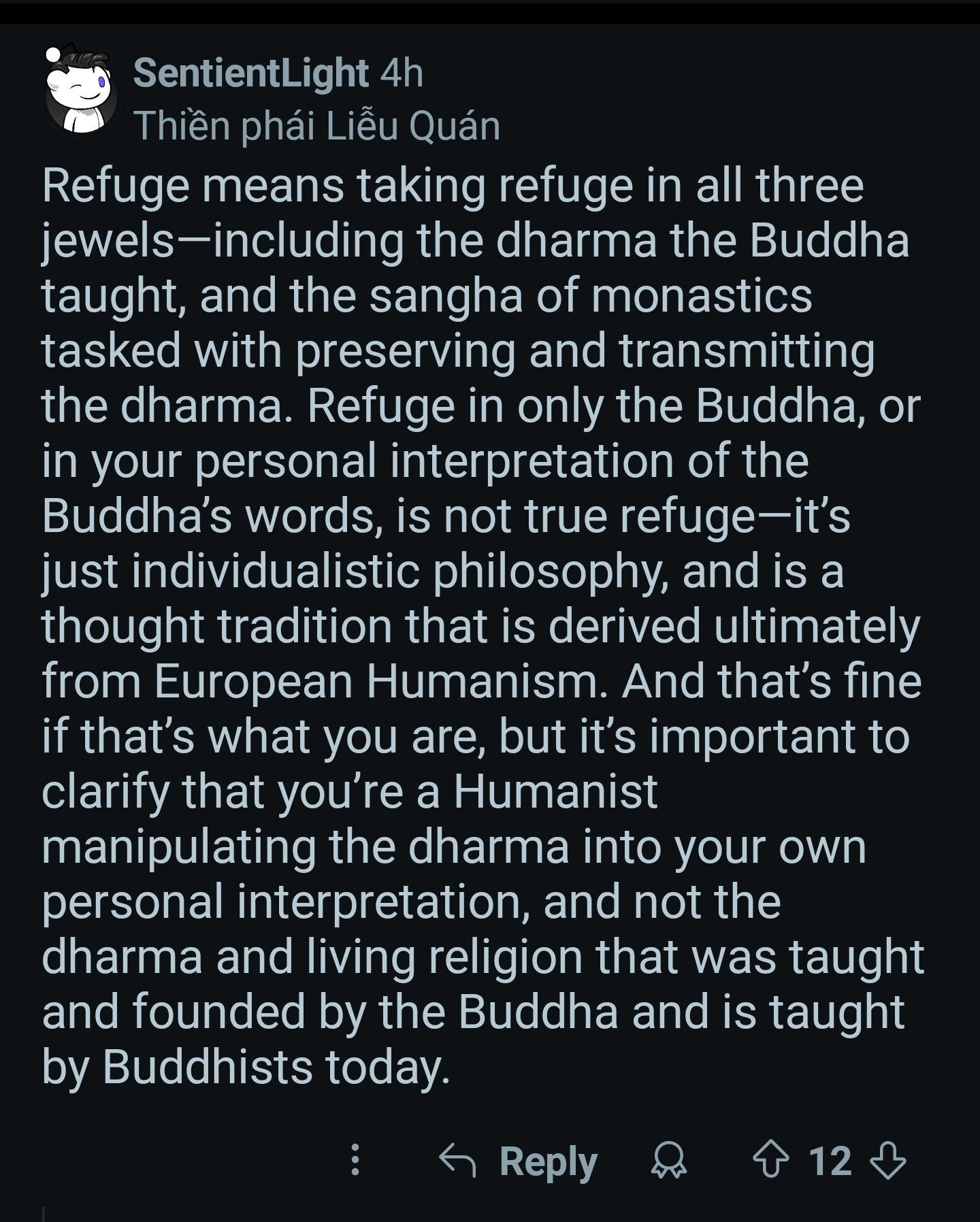
Good post: Just because you've taken 'refuge' doesn't necessarily mean you're a Buddhist. The term 'refuge' has a specific meaning as taught in Buddhism. It's not just whatever you personally think it is.

Post image
23 Upvotes

r/ReflectiveBuddhism • • Apr 16 '25

Beginners on Reddit are now getting exposed to a version of Buddhism that's been colonially edited, rebranded to impress white audiences and win their validation.

Post image
23 Upvotes

r/ReflectiveBuddhism • • Feb 19 '25

The Three Types of Buddhists in the World (answer to the question: "How do Buddhists live their religion?")

23 Upvotes

This is written for someone who recently asked how Buddhists practice their religion.

The Three Types of Buddhists in the World

Buddhists can generally be categorized into three groups: Devout, Casual, and Secular.

Devout Buddhists (likely 10–30%)

This group consists of monks, nuns, and dedicated laypeople who closely follow Buddhist teachings. Their practices include observing moral precepts, regularly participating in temple or monastery ceremonies, attending pujas, receiving blessings, and receiving Buddhist teachings. They frequently visit temples, donate to monastics, and, if they follow Mahayana traditions, particularly as monastics, adhere to a vegetarian diet.

At home, devout Buddhists maintain personal altars and engage in daily rituals, reciting mantras and prayers. Many take part in temple programs, attending regular classes and deepening their understanding of Buddhist teachings and practices.

Most aspire to be reborn in Buddha Amitabha's Pure Land, while others aspire for favorable next rebirth.

Casual Buddhists (around 50–70%)

This is the majority of Buddhists, those who identify as Buddhist but do not strictly follow religious practices. If you ask someone in Thailand, China, Korea, Taiwan, or Japan about their religion, many will say “Buddhist” without necessarily practicing it in a devout way.

Casual Buddhists still engage in Buddhist traditions to some extent. They may visit temples a few times a year to make merits or receive blessings, especially during major holidays or important life events. Many keep Buddhist statues, amulets, or altars in their homes for good fortune. They might pray occasionally, even if they are unsure of the correct words. Some may also donate food or money to monks from time to time.

What they lack in formal religious practice, they make up for in cultural and behavioral expressions. Their worldview is shaped by Buddhist values, such as resilience in the face of adversity, they hold strong belief in karma, they avoid excessive greed, anger, and unethical behavior. Even without actively practicing Buddhism, they internalize its teachings in their daily lives, maintaining self-restraint, and seeking to live life more harmoniously with others.

Secular or Irreligious Buddhists (10–30%)

Not to be confused with the Western concept of "Secular Buddhism" (which is not Buddhist at all), these secular irreligious individuals may identify as Buddhist but have no connection to Buddhist practices, beliefs, or philosophy. This is especially common among younger generations in urban, cosmopolitan areas of developed Asian countries.

For them, Buddhism is more of a cultural background than a personal faith. They might attend a funeral at a temple out of obligation but otherwise have little to no engagement with Buddhist teachings. When they visit a temple, they might as well be tourists, as they have no familiarity with Buddhist concepts such as karma or reincarnation.

The only real connection they have to Buddhism is a general respect for its cultural significance. They may participate in Buddhist festivals or ceremonies out of tradition, but they do not see Buddhism as relevant to their personal lives.


r/ReflectiveBuddhism • • Nov 28 '24

Answer to the question: "I came from a Christian-Secular society - what biases should I address first before delving into Buddhism?"

23 Upvotes

A few weeks ago, I witnessed a beautiful example of the right attitude from a beginner.

This is the right attitude when approaching Buddhism. Below, I will provide a rough draft response that briefly summarizes the key points. I’ll tag this person to assist them, and in the coming days, I will elaborate on each point in more detail.

These points are also valuable for all of us coming from the West, whether born and raised in the U.S., Great Britain, or formerly colonized countries like Sri Lanka, India, and other parts of the world. These will help us recognize the many Protestant roots that influence our Western biases.

So here we go

The following are the five Solas of Calvinist Protestant Christianity, which have significantly influenced the broader secular West:

  1. Solo Christo (“Christ alone”)

  2. Soli Deo Gloria (“to God’s glory alone”)

  3. Sola Scriptura (“by Scripture alone”)

  4. Sola Fide (“by faith alone”)

  5. Sola Gratia (“by grace alone”)

Here are the ways these doctrines have evolved to shape and influence broader Western culture.

  1. Solo Christo (“Christ alone”) → Skepticism or rejection of social structures, forms, conventions, and organizations.

  2. Soli Deo Gloria (“to God’s glory alone”) → Exaltation of intellectual knowledge and an overemphasis on academic-style learning.

  3. Sola Scriptura (“by Scripture alone”) → Dogmatism over written texts, fundamentalist rationality, and selective verse readings.

  4. Sola Gratia (“by grace alone”) → A human-centric focus on "this-worldly" concerns, with an increased emphasis on mundane, ordinary world.

  5. Sola Fide (“by faith alone”) → European Romanticism, an inward quest for meaning, emphasis on personal expression, and the rise of hyper-individualism.

In the context of a Western beginner approaching Buddhism, these biases often manifest in the following ways:

  1. Rejecting or downplaying the role of the Sangha and the importance of monastic clerics.

  2. Prioritizing "What books should I read?" and independent self-directed studying.

  3. Viewing sutras as Bible and quoting verses as if they are absolute authorities.

  4. Dismissing or undermining doctrines like karma, rebirth, Buddhas, gods, and hell, with a fixation on the ordinary, material world.

  5. Treating meditation as the ultimate cure-all and the paradigmatic Buddhist practice.

As I mentioned earlier, I will elaborate on each point in the coming weeks. For now, here are some quick recommendations for Western beginners to help overcome these biases:

  1. Connect with the Sangha (monks or masters) immediately: Whether online or offline, build a relationship with them and rely on their guidance.

  2. Avoid rushing to read books, sutras or any text: Focus instead on observing and engaging with Buddhists and their practices in the real world.

  3. Leave the "Bible attitude" behind: Let go of the Protestant tendency see Biblical texts as the authority. In Buddhism, prioritize learning from the Sangha rather than relying solely on self-study of the written texts.

  4. Take Buddhist cosmological views as working hypothesis: Concepts like karma and rebirth are crucial to the Buddhist worldview and play a critical role in shaping daily attitudes and behavior. Dismissing them leads to a wrong understanding of Buddhism.

  5. Do not meditate. As a beginner, without FIRST understanding what Buddhism actually teaches, any meditation you practice, no matter how relaxing or therapeutic, is NOT actually Buddhist meditation.


r/ReflectiveBuddhism • • Jun 05 '24

An observation to the REPLIES TO the thread "Do you need a Buddhist temple" in a major Buddhist sub

23 Upvotes

Around 25 replies said no, you don't need a temple, and promote self practice, or are even critical of temples.

Around 7 said yes. You do need the temples.

This highlights one of the major issues why Buddhism in the West continues to be highly misunderstood.

Autodidactic approach is the primary method people use to engage with Buddhism.


r/ReflectiveBuddhism • • Aug 18 '25

"The Buddha Said" Puppet Show

Post image
22 Upvotes

Many Westerners who fancy themselves as Theravada or secular-boothists treat the Buddha like a ventriloquist’s dummy. Using the Pali Canon, they pull out carefully selected lines, quote them with confidence, and make the Buddha’s mouth move as if the Buddha saying “I’m the Buddha and this is my teaching.” Yet the voice we hear is not actually the Buddha’s voice at all but the puppeteers’, with their biases, assumptions, and Protestant cultural frames.

Much like Christian pastors making God “speak” through selective Bible quotes, these western Pali Sherlock Holmes cherry-pick and decontextualize Pali verses, projecting their own distorted ideas into the texts. Just as Protestants, lacking the legitimacy of a priesthood, elevated the Bible to lend authority to their views, these Westerners prop up their own positions through selective readings of the Pali Canon, all while dismissing the Sangha.

What we see online with these puppeteers endlessly quoting the Pali Canon is not Dharma. It is a puppet show staged for themselves and for those unfortunate enough to be deceived by it.


r/ReflectiveBuddhism • • Apr 10 '25

A typical westerner "Buddhist" library

Post image
22 Upvotes

r/ReflectiveBuddhism • • Dec 17 '24

Etic vs Emic View: Who Really Gets To Speak About What Buddhism Really Is?

Post image
22 Upvotes