r/PeterAttia • • 10h ago

Phase angle 5.0 in lean, healthy 26 year old woman?

0 Upvotes

I did a body scan at my doctor's office today and I have excellent stats. Very lean body fat with plenty of muscle mass. I can show a photo, but I just have a question about the "phase angle" being 5.0. I have read that this is slightly abnormal/low for a young healthy woman. What does this mean? There is nothing abnormal in my scan or bloodwork and I have no health conditions.


r/PeterAttia • • 17h ago

Puede subir el colesterol después de un cirugía laparoscópica de miomas? Es que mis número no estaban bien, hice ejercicio y seguí la dieta antes de la operación, ya después de la operación casi no, pasaron 18 días después de la operación y me los volví hacer y el total subio de 234 a 266 y el LDL d

Thumbnail reddit.com
0 Upvotes

r/PeterAttia • • 1d ago

What’s the difference between LP(a) and LP(a)-Cholesterol

Thumbnail gallery
2 Upvotes

r/PeterAttia • • 1d ago

Personal Experience Zone 2 need advice

3 Upvotes

I’m having a hard time getting consensus on how important zone to is to my mitochondria health

I currently do the 4 x 4 once a week and do 3 to 4 strength sessions weekly but these don’t typically hit a consistent zone too. They range from zone 1 to 3. Finally I play pickle ball averaging once a week, but somewhat inconsistent where I range between zone two and five.

How much of a priority do people make for zone?


r/PeterAttia • • 1d ago

The Labs I Run on Every Patient. Print This. Bring It to Your Doctor.

Thumbnail
dagmarabeine.substack.com
0 Upvotes

r/PeterAttia • • 2d ago

Non Zero CaC 43M, 2.5mg crestor and 5mg Zetia pushed LDL down to 44.8 mg/dl and APOB to 46. Any sense trying to push lower ?

Thumbnail reddit.com
5 Upvotes

r/PeterAttia • • 3d ago

Lab Results Started creatine a few months ago and my latest creatinine is higher

3 Upvotes

Creatinine came back at 1.34 mg/dL, compared with 1.05 last year. My doctor is arranging another blood draw and a urine test.

I'm 40, back to lifting regularly, and started taking 5 g of creatine a day about three months ago. Forgot to include it on the supplement list at my appointment, but I've told my doctor now. I tend to think of supplements as the bottles in the bathroom and somehow forgot the tub I scoop from every morning. I've been reading about cystatin C. Goodlabs has it as a separate test, so I'm going to ask my doctor whether it would help here. I started lifting consistently and taking creatine around the same time, which makes comparing everything with last year's results a bit confusing.

If you've had this come up, what did your doctor end up tracking over time?


r/PeterAttia • • 3d ago

Discussion Give me your hardest longevity questions and I'll answer them using 22,000+ recently published, peer-reviewed medical articles as its foundation

0 Upvotes

Hey all,

I built a tool that uses only the best cited peer reviewed medical sources published from the last couple of years. It’s a curated collection of open-access medical research articles from PubMed Central that the Longevity Assistant can search when answering health, longevity, exercise, nutrition, and prevention questions. The corpus favors higher-evidence publication types: systematic reviews, meta-analyses, randomized controlled trials, clinical trials, practice guidelines, cohort studies, and Mendelian randomization studies.

Btw: If you want to check it out yourself, you can do so here: https://www.modernmedlife.com/longevity-assistant

Go ahead and give me your hardest questions and let me know what you think of the tool's response!


r/PeterAttia • • 4d ago

Here’s how a coronary CTA shows and explains why your CAC score can rise on statins

17 Upvotes

The clip is a CCTA heart scan. The 3D heart at the start mostly looks impressive, wanted to add it because as a layperson it really fascinated me when I first got my own CCTA. But even on the view of the heart you can see the bulging of the arteries as an indication of plaque build up.
The part that matters is the second half: each main artery is digitally straightened and traced end to end. That’s where a reader measures three things along every segment: how narrow the channel is, how much plaque there is, and what kind. Calcified plaque shows up bright, and soft plaque shows up dark against the contrast they put into your body. 

That last measurement, the kind of plaque, is where most of the interesting research is:

  1. A calcium score of zero isn’t zero plaque. The Miami Heart Study scanned 2500+ people aged 40-65 with no symptoms. 49% had plaque, and 16% of those with a calcium score of 0 still had plaque on CCTA.

  2. The soft plaque predicted heart attacks best. In a SCOT-HEART analysis, the amount of low-attenuation plaque, the lipid-rich and least calcified kind, was the strongest predictor of heart attack. It added information beyond the calcium score and beyond how narrowed the arteries were. People above 4% were about 5x more likely to have one.

  3. Statins seem to turn soft plaque into calcified plaque. Paradigm followed 1255 people with repeat CCTAs. On statins, non-calcified plaque grew about half as fast (0.49% vs 1.06% a year), calcified plaque grew faster (1.27% vs 0.98%), and new high-risk plaque features appeared less often. So a rising calcium score on a statin may partly reflect plaque stabilising, not just disease progressing. It’s observational, but it’s a pattern a calcium score alone can’t show. For this part obviously, a consultation with a preventative cardiologist is the most important. 

  4. Seeing the plaque changed outcomes in people with symptoms. SCOT-HEART randomised 4146 people with chest pain. Adding CCTA cut coronary death or heart attack at  around 5 years from 3.9% to 2.3%, probably because more people were started on prevention once their plaque was visible. Whether that holds for people without symptoms is still an open question.

I wanted to share this research with the clip for anyone still confused about or considering CCTAs especially debating between a CAC and a CCTA. I had to learn a lot of this myself when I figured out I had a genetic propensity towards heart attacks, so wanted to pass on the knowledge and discuss it a little. 

Let me know if you all want to see more clips or images of these scans or if this helped at all.


r/PeterAttia • • 4d ago

Be honest: what do you actually do for longevity?

0 Upvotes

Be honest: what do you actually do for longevity?

I'm 26M. For about a year now my week looks like this:

  • Cardio: 200+ min. Running and cycling, mostly zone 2-3. I try to add some hard anaerobic stuff too.

  • Strength: around 150 min, different kinds of training.

  • Food: no diet. I just try to eat as many different foods as I can.

  • Supplements: omega-3, vitamin D (2000 IU), magnesium.

That's all. Nothing fancy. Just my own routine, N=1.

What about you?

  1. What do you really do every week?

  2. Do you follow studies, or just do what feels good?

  3. What is the one thing that made a real difference for you?

And what would you add from your own experience?


r/PeterAttia • • 4d ago

Crestor 5mg - Symptoms within a few days?

Thumbnail reddit.com
0 Upvotes

r/PeterAttia • • 5d ago

Has anyone tried using near-infrared light in their bathroom?

4 Upvotes

I was thinking about moving my red light routine into the bathroom just to make it easier to fit into my day. But then I started wondering if the humidity from showers could be an issue, especially with near-infrared panels.
Do you need a panel specifically made for humid environments, or is it better to keep it in another room altogether? Curious if anyone here has tried this setup and how you went about it.


r/PeterAttia • • 5d ago

Recommendations/Analysis

Post image
2 Upvotes

31, Male, 6’3”, 179 lbs

Hello all,

Recently after falling off the wagon the hardest I have in a long time (drinking around the clock, lack of eating towards the end of the “bender”) I was hospitalized. My bilirubin was extremely high and had pancreatitis. I have a history of alcohol use but never complications of this nature. I believe much of it had to do with lack of nutrition, as my electrolytes were in an alarming place (I.E. Sodium level of 114 when first admitted.)

This is no sob story, I am completely sober and receiving assistance for a month and a half now (incident was early October after drinking for 3 months straight (hard seltzers). My blood work continues to improve with every lab result I have received since. Thankful to move forward in better health.

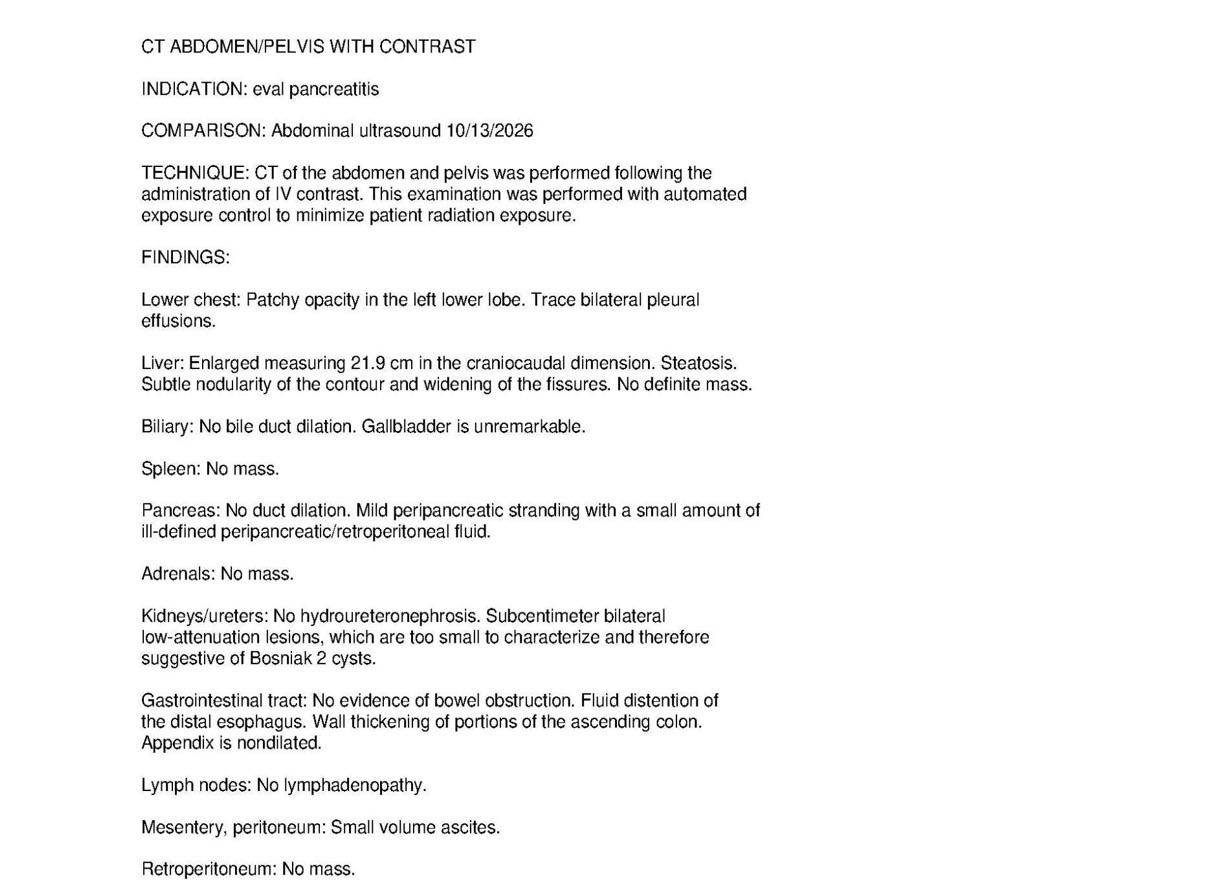
As someone not well versed in medical terminology. I did receive this CT scan of my abdomen and was wondering exactly what it entails. How screwed I am potentially, etc. While I was shortly briefed on it, there was a lot going on and I’m not sure I retained all said information.

I understand this is not a recovery sub and I am strictly seeking info, as this sub appears very knowledgeable and dedicated to understanding health and health related risks

Appreciate any input. Attached is the Abdominal CT results.


r/PeterAttia • • 5d ago

APOE4: how do you know if your interventions are working? What Dr. Heather Sandison told me about retesting p-tau217

Thumbnail
youtu.be
0 Upvotes

I'm a Doctor of Pharmacy and I carry APOE4/4, so I see a lot of people in my position retesting plasma p-tau217 every few months to check whether their protocol is working. I put that question to Dr. Heather Sandison, a naturopathic doctor who runs a memory-care practice and wrote Reversing Alzheimer's. Her answer is more cautious than the way the test is often marketed, so I'm curious how this sub sees it.

What she said

  • "We do not know how to interpret serial markers of p-tau217. Nobody knows how. Not a neurologist, not me."

  • A change in either direction can't yet be read for one person, so it can't tell you whether an intervention is working.

  • She says it shouldn't be used as a screening test in people without symptoms. A raised result means higher risk, not a diagnosis of dementia.

  • What she tracks instead: cognition, sleep, energy, how the person feels. "I think we shouldn't use surrogate markers."

  • On getting a baseline: measure it if data makes you more proactive; skip it if every rise or fall would keep you up at night.

What the literature adds

  • Across large groups, higher p-tau217 goes with higher risk and predicts decline, so it's a real risk signal.

  • What it lacks is validation as a within-person progress marker. Insel et al., JAMA Neurol 2025 (PMID 40853684): in people without symptoms, baseline p-tau217 predicted decline, while its change over time was only modestly linked to concurrent cognitive change.

  • The 2025 Alzheimer's Association guideline on blood biomarkers (PMID 40729527) covers people with symptoms in specialist care, not screening people without symptoms.

The rest of the hour is practical: start with one change, and if you try keto, measure blood ketones and get HbA1c, fasting insulin, hsCRP and lipids first, with lipids again at about 12 weeks. A "zero carb" matcha blend spiked her blood sugar to 170 on a CGM.

My question for this sub: if you test p-tau217, what would a change in your number actually make you do differently? Or do you treat it as a one-time risk read and track function instead?


r/PeterAttia • • 5d ago

The Thanksgiving Pill Check: 7 Medicines I'd Question in Anyone Over 70

Thumbnail
afshine.substack.com
0 Upvotes

r/PeterAttia • • 6d ago

Lab Results blood results trend

Thumbnail
reddit.com
1 Upvotes

r/PeterAttia • • 6d ago

How should we interpret the STREAM trial (discontinuation of statins in older adults)?

Post image
6 Upvotes

r/PeterAttia • • 5d ago

Afraid to take my first shot of Repatha

Thumbnail reddit.com
0 Upvotes

I get anxious about how medications might affect me because I already have panic attacks and bad anxiety. I saw a few people on Reddit say their heart rate or blood pressure went up after Repatha, and now I’m worried about it.


r/PeterAttia • • 6d ago

Zetia Experience for elevated LDL

1 Upvotes

Has anyone experienced migraine type headaches on Zetia ?


r/PeterAttia • • 6d ago

Critique my research for supplements for aging parents (healthy aging and longevity)

4 Upvotes

So my parents are in their early 60s, pretty healthy overall, although my father underwent neobladder surgery for bladder cancer and my mother got hemithyroidectomy for thyroid cancer. They are doing fine now, although my dad is blood pressure med and metformin for prediabetes (A1c improved to 5.8 after working on lifestyle). 

I have already advised them thoroughly on the importance of exercise, healthy diet, sleep, stress management etc. They currently take the following supplements which appear to have the best body of evidence : Vitamin D, Omega 3, Coq-10. 

I recently did a lot of research online (but also applying some critical thinking as someone with a medical degree) to determine what I could consider adding to this regiment. 

Strong candidates to add

Magnesium glycinate for both:  Mg may help insulin sensitivity in those with hypomagnesemia, magnesium deficiency might not be fully detected by serum magnesium. The glycine aspect also may provide benefits through multiple processes including lower AGE formation.

Creatine 5 mg for mom: muscle and brain and mitochondrial health. Since my dad has a neobladder and tracking kidney function, I will hold off on creatine for him for now, because this may lead to abnormal lab values.

Psyllium for dad especially:  Benefits for blood glucose, LDL, and apo-B. Will instruct him to take this before lunch (he takes other supplements at dinner)

I will also talk to them about the timing of the supplements, for example taking fat soluble ones with meals and ensuring 4 hours after thyroid medication before taking another pill. 

Things I considered but ultimately decided against

Taurine, glucosamine for various reasons

Senolytics such as fisentin: still early stages and speculative

NMN: still speculative and may potentially be tumor growth promoting 

Rapamycin: side effect burden, suppresses immune system which may have adverse effects

Transdermal estrogen: I would have started this for mom a few years ago, but it has been around 10 years since menopause for her and risk/benefit is no longer there unfortunately. 

GLP1 agonists: Probably will consider them in the future. Promising in terms of preliminary research in terms of longevity and healthy aging. SGLT-1 inhibitors are also a consideration.

I would deeply appreciate any feedback on this - anything else I should consider, any dissenting opinions etc. 

Thank you!


r/PeterAttia • • 7d ago

Discussion Peter Attia content "feels" repetitive and recycled every episode?

21 Upvotes

I've been thankful for Peter Attia's content on The Drive, on JRE, and his book Outlive. Without his information I don't think I would've ever been as fit I am now. I'm not sure if this is something just post Epstein files but I'm starting to notice that nearly every episode is just a regurgitation of something mentioned in Outlive or his previous podcasts.

Almost every topic he discusses with said guest is usually something all of us or those that are interested in the longevity space, have already heard.

Most of us are already adherents to intermittent fasting, regular strength & zone 2 training, mastering a deep/REM specific sleep schedule, ensuring we have adequate protein for muscle building, even some some of us going so far to have GCM attached to us even though we're not diabetic.


r/PeterAttia • • 7d ago

Can correcting an abnormal hormonal environment support reverse remodeling in pre-existing dilated cardiomyopathy?

0 Upvotes

I’m 28M and trying to understand whether improving hormonal balance can contribute to cardiac recovery when left ventricular dilation and reduced ejection fraction existed before testosterone use.
Cardiac history before testosterone (August 2019, age 21)
LV internal diameter: 6.7 cm
Biplane EF: 46%
Reported EF: 42%
Global longitudinal strain: −15.1%
I also recall possible rhythm abnormalities around that time, although I haven’t confirmed the type of arrhythmia.
Hormonal history
October 2024–July 2026: Supraphysiologic testosterone exposure, at times approximately 600–650 mg/week, plus HGH.
May 2026: Total testosterone above 1,500 ng/dL; estradiol approximately 102 pg/mL.
July 13, 2026 onward: Reduced to testosterone cypionate 150 mg/week, divided into two 75 mg injections. Testosterone propionate discontinued.
August 21, 2026: Total testosterone 1,146 ng/dL.
Latest laboratory results — November 11, 2026
Hormonal markers:
Total testosterone: 814 ng/dL (reference 249–836)
Calculated free testosterone: 20.74 ng/dL (4.60–22.40)
Calculated bioavailable testosterone: 507.6 ng/dL (110–575)
SHBG: 25.7 nmol/L (16.5–55.9)
Estradiol: 26 pg/mL (11.3–43.2)
LH and FSH: Both below 0.30 mIU/mL
Other relevant markers:
Hemoglobin: 15.3 g/dL
Hematocrit: 44.4%
LDL cholesterol: 146 mg/dL (elevated)
Total cholesterol: 214 mg/dL (elevated)
hs-CRP: 0.76 mg/L
Creatinine: 1.38 mg/dL (elevated)
CK: 657 U/L (elevated)
AST: 56 U/L and ALT: 53 U/L (mildly elevated)
TSH: 1.760 µIU/mL
My testosterone has decreased from above 1,500 ng/dL in May to 1,146 in August and 814 in November. Estradiol has decreased from approximately 102 to 26 pg/mL.
The November values are within the laboratory’s reference ranges for total testosterone, calculated free testosterone and estradiol. However, I understand that the timing of blood collection relative to injections matters.
November 2026 cardiac findings
LV internal diameter: 6.2 cm
Biplane EF: 50%
Visual EF: 35–40%
QRS duration: 96 ms
Compared with 2019, the reported LV diameter is 0.5 cm smaller, while biplane EF is four percentage points higher. However, the visual EF estimate remains concerning, and I understand that measurement differences may affect the comparison.
Functional improvements
Since reducing testosterone exposure, I’ve experienced improvements in:
Mood, motivation and spontaneous enjoyment
Libido and erectile responsiveness
Sexual confidence and partnered sexual function
Physical comfort and exercise performance
Emotional engagement and general well-being
However, I recognize that these improvements do not prove that my cardiac function has normalized.
I’ve also experienced recent palpitations or strong heartbeat sensations, making rhythm evaluation particularly important.
My questions
Can reducing supraphysiologic androgen exposure and achieving a more appropriate hormonal environment contribute to reverse remodeling when cardiomyopathy existed before testosterone treatment?
Could chronic stress or previously undiagnosed hormonal abnormalities contribute to ventricular dilation? How would cardiologists distinguish these possibilities from genetic, inflammatory or arrhythmia-related cardiomyopathy?
How should I interpret a biplane EF of 50% compared with a visual EF estimate of 35–40%?
Could a historical arrhythmia have contributed to the ventricular enlargement identified at age 21? Would ambulatory rhythm monitoring help investigate this possibility?
Would cardiac MRI, including assessment for myocardial fibrosis, and genetic testing help clarify the underlying cause and potential for recovery?
My November testosterone and estradiol levels are now within laboratory reference ranges. Does this meaningfully reduce cardiovascular risk compared with my previous supraphysiologic exposure, and what additional factors should be monitored?
Has anyone with pre-existing ventricular dilation experienced measurable improvement after correcting hormonal exposure while receiving appropriate cardiac treatment?
I’m following up with cardiology and understand that hormonal normalization, improved emotional well-being and exercise performance do not replace evidence-based heart treatment.
I’m particularly interested in clinical research, cardiology perspectives and firsthand experiences involving ventricular reverse remodeling.


r/PeterAttia • • 7d ago

Low ferritin with intermittent fasting?

2 Upvotes

Hi,

Wondering if anyone has had a similar experience. I have been using GLP1 and intermittent fasting for about a year and a half. Going good, now 175#, 5’ 9”, BMI at the top end of normal range. Lost about 40# nothing crazy. I eat yogurt and fruit for lunch and a normal meal at dinner. I eat some red meat but not more than maybe once per week. Ferritin was steady, 66 in Jan, then began to fall, now 13. TIBC, MCV, hemoglobin all normal. No evidence of bleeding on fecal blood test or colonoscopy. Anyone else. Is it believable that iron stores became depleted over a year and then began to show up in low ferritin, all related to diet? I am about to add some Fe Biglycinate to my already massive stack. Any other ideas?


r/PeterAttia • • 8d ago

About a quarter of weight lost by dieting alone is lean mass. Adding resistance training cut it to 17.5% in a 2026 meta-analysis of 20 RCTs

12 Upvotes

Three sources that line up, with their caveats.

  1. Heymsfield et al., Obesity 2024 (897 non-exercising adults, MRI): models predict skeletal muscle is about 26% of weight lost in men and 14% in women when there is no exercise. The model uses sex only; age and BMI effects are untested.

  2. Eisa & Barood, Diabetes Obes Metab 2026 (20 RCTs): lean mass was 26.2% of weight lost with lifestyle change alone and 17.5% with resistance training added. On incretin drugs it was 25.4 to 35.2%, not clearly different from diet alone (p=0.42).

  3. Binmahfoz et al., BMJ Open Sport Exerc Med 2025 (25 RCTs): resistance training during a diet attenuated fat-free mass loss (moderate certainty) and increased fat loss (high certainty).

Where we are, in Singapore, the 2020 National Population Health Survey found 33.8% of adults aged 18 to 74 do muscle-strengthening work at least two days a week. For ages 60 to 74 it is 25.5%.

Citations and our longer write-up: catalystperformance.sg/blog/healthspan-audit-muscle-loss-dieting

Disclosure: we run a training studio in Singapore and the write-up is ours.

For those who have dieted both with and without lifting: did you measure the difference, on DEXA or otherwise?