r/Pessimism • • Sep 11 '25

Discussion The more ethical a person becomes, the less they enjoy life.

1.2k Upvotes

The moment one begins to think about ethics is the moment one’s pleasure diminishes.

The moment you realize that you are not eating a tasty pork fillet but the flesh of a slaughtered pig with whom you share 98% of your DNA, your enjoyment begins to fade.

The moment you realize that you are not watching a kinky adult video but the filmed rape of a drug-addicted woman who was sexually abused as a child and who now pretends to enjoy being humiliated in front of a camera, your enjoyment begins to fade.

The moment you realize that you do not truly love your children but rather enjoy controlling them, giving orders, and molding them in your own image because you are terrified of your own mortality, your enjoyment begins to fade.

The more ethical a person becomes, the less they enjoy life.


r/Pessimism • • May 12 '20

Quote There are two kinds of people - one who realise that this world is hell, others who are drunk on optimism

Post image
596 Upvotes

r/Pessimism • • Feb 06 '20

Insight The fact that most people are content with life as it is frightens me

499 Upvotes

I confronted my parents about me living in a third world country and having to work all my life for nothing and only to see things worsen due to climate change, economic collapse, etc. They of course said I was being ungrateful for everything they did to help me. The fact remains that my life is one of pointless need and worry. I don't want to study anymore. I don't want to work to make some capitalist richer. I don't want to feel boredom, loneliness. I don't want to feel like an outcast and I don't want to accept society as it is. I want to go back to the void. This is too much for me to handle.

I'm "blessed" by a surplus of consciousness. This is not the same as surplus intelligence, at least not that I'm aware of. My life could be tolerable if I didn't understand the uselessness of it all, the exploitative mechanisms of society, the pathetic social expectations we have and the sheer ignorance of the common folk.

Most people appear to be content. They probably are. Their mental biases destroy any chance of pessimistic thought patterns repeating. Is pessimism just the lack of or the distrust in these brain mechanisms? Is it a matter of not seeing the wider picture "clearly enough"? Is it a matter of societal indoctrination keeping them hopeful and optimistic? Whatever the case, I sometimes think I'm crazy and that I just "don't get it". Damn, many people appear to appreciate life in these miserable details like watching the sunset, flowers blossoming or talking with other people. I just get more hateful and I remind myself about the suffering and the tedious reality of life being incredibly more complicated. The schopenhauerian phrase about the animals, the one that is eating the other, comes to mind. This fact I cannot get rid of. It survives any positive experience.

I've had many attempts at finding a more "healthy" lifestyle, an optimistic worldview and following my passions: they didn't last long. I just don't believe in that bullshit. It's like asking an atheist to believe in God. I can't go back. That's why people who believe depression is a mere mental illness (complicated term in itself) can "get better" (i.e. entering a new "stimulating" environment and easily coping): they never renounced their hopes about society and life. I did. That's why I liked concepts like the death drive and desire being unsatisfiable too much: they were telling me something about life I already suspected: it's pointless and it's a rat race looking to reproduce itself. That's why I also dwelled in Buddhism a bit. I knew there was something wrong to begin with. Life is out of joint. Antifrustrationism was possibly my life phisilophy for a long time and I'm glad seeing many young people like me (millennials and gen Z) having a more "entitled" personality which cannot accept the sacrifices and the bullshit. Still we're talking about a minority and many people still can't get out of capitalist realism.

The best thing one can do is not to bring anyone to this hellhole. The second best is giving them a good smack in the head so they can't think too deeply about things. Although, I doubt anyone could cope with life without any form of anchoring, distractions. Some people are immune to alienation or can't alienate themselves so hard that they keep pessimism "at bay". We're the leftovers. We're "defficient". Not that being a defficient member of a psychopathic species is bad or anything, but this is what is: we're the minority who accepts cold truths and doesn't dwell in delusions.


r/Pessimism • • May 25 '20

Art Édouard Manet - Le Suicidé (1877)

Post image
418 Upvotes

r/Pessimism • • Jun 23 '21

Quote Buddhism is very interesting as a philosophy.

Post image
412 Upvotes

r/Pessimism • • May 19 '20

Quote The Bible Says It Is Better Not to Be Born

384 Upvotes

"And I declared that the dead,
who had already died,
are happier than the living,
who are still alive.
But better than both
is the one who has never been born,
who has not seen the evil
that is done under the sun.

~King Solomon
Ecclesiastes 4:2-3
The Bible


r/Pessimism • • Aug 14 '22

Quote the best quote I found

Post image
362 Upvotes

r/Pessimism • • Jun 05 '20

Insight When people say "you're too negative," what they mean is:

362 Upvotes

Is translated into:

"You're far too realistic in your interpretation of the world and I need to avoid any real introspection as well as criticism of harsh inalienable truths about our physical reality, so I will attack you to protect my extremely frail sense of purpose and ego, the only thing that helps me operate day to day and prevent myself from sinking into a deep depression and therefore being unable to survive, make a living, or maintain a social presence - all three of which are codependent."


r/Pessimism • • Apr 12 '20

Quote Emil Cioran - “Only optimists commit suicide...”

Post image
344 Upvotes

r/Pessimism • • Jul 07 '25

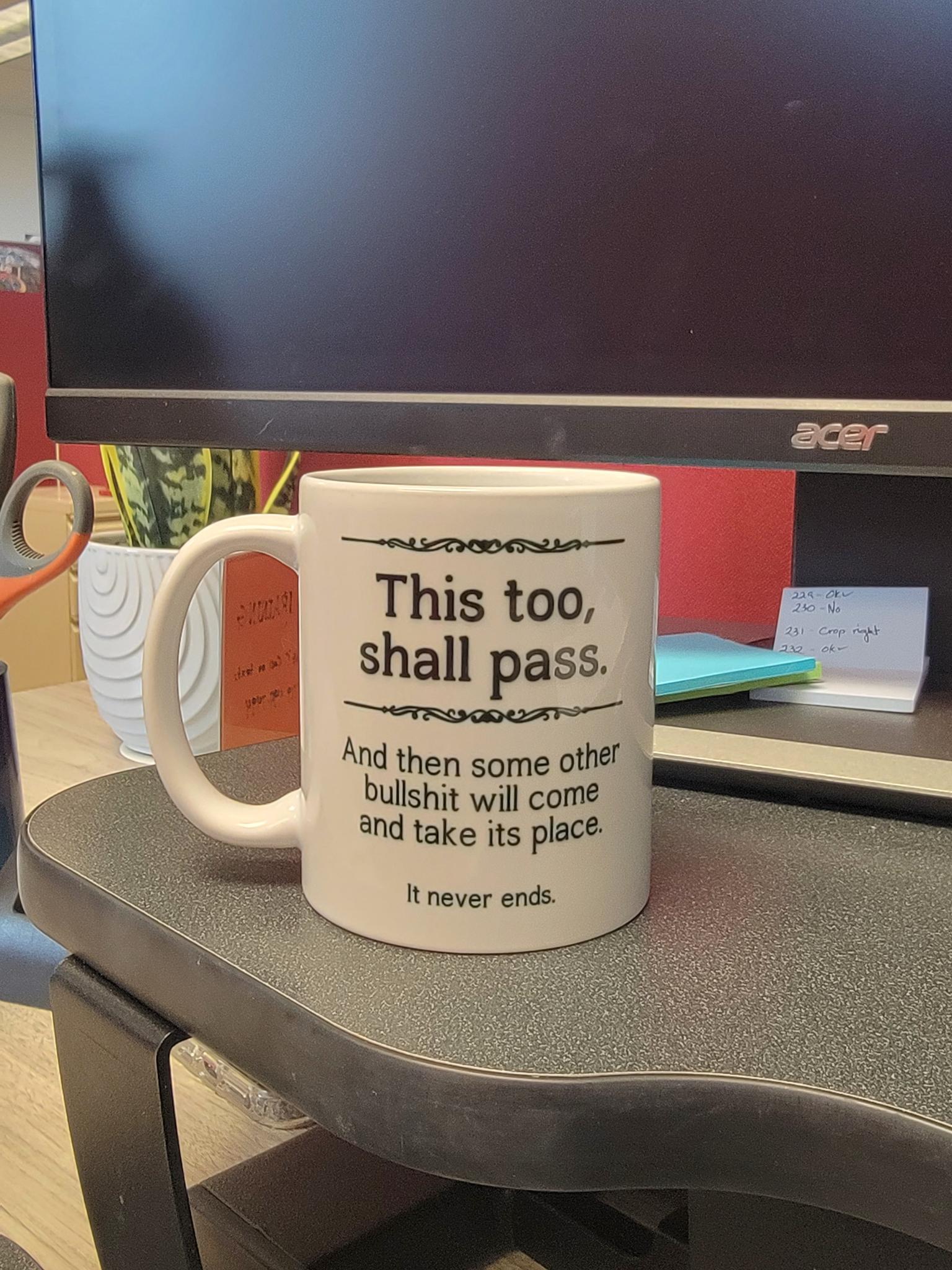
Humor My coworker is one of us

Post image
327 Upvotes

r/Pessimism • • Dec 28 '21

Discussion A Dialogue on Antinatalism

326 Upvotes

N: Congratulations on your wedding! I hope you deliver the good news soon.

AN: Good news?

N: I’m talking about babies. How many do you want?

AN: None.

N: Why? Do you prefer a childfree lifestyle?

AN: Not quite. Word “childfree” is associated with a lifestyle adopted by some couples who don’t want their freedom restricted. Motives of childfree people mainly pertain to saving time, money, and energy. My motives are different.

N: What other reason can anyone possibly have?

AN: Before I tell you my motive, why don’t you give me a good reason to have children?

N: Reason for having children? Why should one have a reason for doing something so obvious?

AN: Do you comply with a norm without questioning it?

N: I never gave it a serious thought, let me think. Don’t you want someone to take care of you when you’re old?

AN: I would prefer not treating a person as an insurance for old age.

N: Don’t you want someone to keep your bloodline alive and carry it into the future?

AN: I don’t see what that achieves exactly. We have a longing for immortality but making copies of my DNA would not carry my particular consciousness into the future. My death is my end.

N: But aren’t your children an extension of yourself?

AN: Though I am not going to have children, I would like to see my children as individuals who have their own will, not as extended copies of myself.

N: Majority of people have kids. If you don’t, you will be the odd man out. You will have less in common with other folks and it's not a good idea to deviate from the status quo.

AN: I do not have the heart to tell my children that their existence is a consequence of society’s pressure and expectations. Besides, falling birth rates in some countries indicate that people are beginning to realize that procreation is a choice, not a default.

N: You asked for reasons to have a child, but at times, people engage in procreation simply because it is an instinct, a desire to have a baby. And desires by their very nature are inexplicable.

AN: I agree. But the reasons you stated for procreation were all an expression of desire. A desire to have someone to care for you in old age, a desire to create someone resembling you, a desire to escape from societal pressure. So do you admit that all reasons for procreation, whatever they may be, are rooted in self-interest?

N: I’m not sure. The child brought to existence gets the gift of life, so the motives of parents do not stem from pure self-interest, it's for the benefit of the child too.

AN: How so?

N: Obviously, existence is better than non-existence.

AN: Do you realize the absurdity of what you just said? Only living people can say this. I haven't heard of any non-existent people saying “Hey, I would like to get out of this void and get some existence”. One cannot make such a comparison unless they have experienced or imagined both the states of existing and not existing.

N: Well, I can imagine what non-existence feels like. It feels like a black void, devoid of any sensations.

AN: You are confusing absence of experience with experience of absence. When you say that existence is better than non-existence, what you’re actually comparing is someone being alive vs. someone imagining themself being dead. Of course a normal living person, owing to their survival instinct, would prefer continuing to exist over dying. Making such a statement from a non-existent being’s point of view is absurd, because there is no point of view to speak of. I would be surprised if any newborn child feels anything close to “Wow, I am relieved. I am so glad I exist now after experiencing non-existence for so long”.

N: Makes sense.

AN: So do you acknowledge that any reason for procreation cannot include the interest of the potential child, and that any reason for procreation, has at its basis, the desires of parents and society?

N: It seems so.

AN: But are our desires worth chasing if it creates pain and brings misery to someone?

N: Certainly not, that would be a selfish thing to do. But how is it relevant to what we are discussing?

AN: No life is free from misery and pain. By bringing a child here I would be subjecting it to life’s suffering, and ultimately, sentencing it to death, just to fulfill my desires rooted purely in self-interest. I don't want to be responsible for someone’s suffering and death. As Peter Wessel Zapffe said: “To bear children into this world is like carrying wood to a burning house.”

N: That’s so pessimistic.

AN: So?

N: Gloomy attitude like that makes you so negative.

AN: Does calling a statement “Optimistic” or “Pessimistic” affect how true or false that statement is?

N: Being Positive or Negative refers to mindset and temperament. A statement is different, it has a truth value i.e. it is either true or false.

AN: Consider this sentence: “Everyone dies.” Is this a mindset or a statement?

N: It’s a true statement, which makes it a fact.

AN: How about this sentence “Suffering in life is guaranteed.”?

N: Suffering is subjective. It depends on how you define it.

AN: Suffering is that which you strive to avert as far as possible, and do not want to experience regardless of its severity. Unpleasant bodily sensations constitute physical suffering. Unpleasant thoughts, mood, and emotions constitute mental suffering. Health issues, emotional distress, stress due to work, grinding 40-50 years of your life at work to ensure survival, losing loved ones, and torment caused in moments preceding death are some of the instances of suffering that no one escapes.

N: That doesn’t sound like a big deal. Most people don't even think of these experiences as suffering. More severe problems exist, like terminal diseases, mental health issues, poverty, war, racism, rape, murder, violence, human trafficking, etc. and you are complaining about trivial things like having to work and minor health problems?

AN: Certainly, the issues you mentioned are more severe, but comparing smaller issues against the major ones does not invalidate the smaller ones. Also, creating a new being means exposing it to the risk of getting involved in one of these severe misfortunes you just mentioned. I am not willing to expose my potential children to such risks.

N: But most of the people live normal lives without getting involved in any of these crimes, and chances of suffering from a terminal disease or having a serious accident are pretty low.

AN: Magnitude of probability is irrelevant. The mere possibility, regardless of the probability, constitutes risk. It is as if while deciding to procreate, people place their bets on a safe future for their child and roll the dice. As if they were playing Russian roulette with their potential child, with poverty in one chamber of the revolver, illness in another, and so on. Either that, or they are oblivious to these misfortunes.

N: Every action has some risk associated with it. Would you stop driving because of the risk of an accident every time you drive?

AN: Your analogy is not valid. When I drive, or do anything dangerous, I expose myself to these risks. I am aware of the possibilities and I know what I am signing up for. When someone procreates, they expose someone else i.e. their child to these risks.

N: What you say is correct, but I am sure that your future children won’t mind if you took these risks on their behalf.

AN: Let's say you have a plan to execute which involves a person, but it might harm them. Would you attempt to have a discussion with that person and seek their consent before executing your plan, or would you apologize to them after that risk manifests into real harm and hurts them?

N: Seeking consent would be a better idea. How is this relevant?

AN: Is it possible to receive consent from someone who does not exist yet?

N: Don’t speak nonsense.

AN: Exactly. An unborn child cannot consent, or rather, there is no point of view of an unborn child. But what we are concerned with is receiving consent, which is impossible.

N: You’re being paranoid, you should relax a bit. I admit the presence and risk of suffering, but that should not influence you to not have a child. There are good things in life as well.

AN: What does an average good life look like?

N: It is subjective and depends on what you consider pleasant.

AN: Does having pleasant things or experiences compensate for my pain?

N: What do you mean by compensation?

AN: Having these pleasant things in life does not erase my suffering. Pain and pleasure are not analogous to positive and negative numbers of mathematics that balance each other out when added. Would it be acceptable if I were to deliberately inject someone's body with a deadly virus and offer them loads of money as compensation, especially if I do this without their consent?

N: If you believe that good things in life do not make up for the bad things and vice versa, then it logically follows that just as you are responsible for your child’s suffering, you are also responsible for your child's happiness. And being responsible for someone’s happiness is definitely a good thing.

AN: Can you define Happiness or Pleasure?

N: Happiness is a pleasant feeling or mood felt when one fulfills their wishes. You enjoy your tasty meals, have loving friends and family, consume various forms of media for entertainment, and now you’re even married, and yet rant about suffering. What more could you ask for? Doesn’t having these things make your life happy and fulfilled?

AN: To me it seems that the things which you mentioned just help me fulfill my wants and needs, which, if unfulfilled, will cause pain and frustration. I naturally become hungry, so I eat to avoid the pain of hunger. I appreciate my friends and family, but in their absence, I’ll experience loneliness which hurts. I watch TV, read books, play games, etc., to avoid boredom, which is also a form of pain. Hunger, loneliness and boredom are the default states of existence. If you sit idle and do nothing, these come to you naturally by default. You need to constantly make an active effort to keep them away, and there is no guarantee of your effort being always successful. What you call happiness is simply an absence of these default states of pain. What happens when one’s needs and desires go unfulfilled?

N: The person gets frustrated or feels dejected. How is this relevant again?

AN: If I procreate, my children will have these needs, wants, and desires. When their needs are fulfilled, they will experience pleasure, or happiness.

N: That’s correct. You would be creating happiness, and that's a good thing.

AN: Creating children means creating their needs and wants that are unfulfilled by default. I would be responsible for creating their needs of food, shelter, entertainment, etc., which have no guarantee of always getting fulfilled throughout their lives. Condemning children to unfulfilled needs so that they could experience joy when those needs are fulfilled seems tantamount to deliberately creating a problem for the sake of experiencing relief when it is solved.

N: You are correct, but isn’t that the beauty of life? Suffering is a necessary part of life, it makes life meaningful. Overcoming hardships builds character. It makes us wise and virtuous. As a famous philosopher said: “What doesn’t kill you makes you stronger”.

AN: That is a rationalization people use to cope with the pain they couldn't avoid. What purpose do virtue and wisdom serve?

N: They make us resilient and prepare us for life’s greater battles.

AN: A direct implication of this line of argument would be that we all should impose suffering on other people to make them virtuous. We should tell them, "If you don't suffer a little right now, you'll suffer greatly in future. The strength you derive from your present suffering will help you combat future suffering of greater severity. Therefore, you should be happy about your present suffering."

N: I don’t see the point you’re trying to make.

AN: Suffering only has instrumental value, it is useful only insofar it helps combat future suffering of greater intensity. It is not an end in itself. Consider a person who isn’t under any circumstantial restriction or compulsion, would they freely choose to impose suffering on themself when doing so accomplishes no other end? In other words, is suffering desirable in itself?

N: A normal person won’t do that, but a Masochist will.

AN: Exactly.

N: I get what you’re trying to say, but not everyone shares your opinion. If you bring someone to this world and they don’t find their life worth continuing or enjoyable, like you, they always have the option of leaving by killing themself.

AN: Although I admit that it is the most logical step one could take if they find their life unbearable, my survival instinct overrides my rational mind. But that’s not what we are discussing. A life worth starting is different from a life worth continuing. A living person’s survival instinct can be seen as an interest in continuing life. Whereas for an unborn child, we cannot speak of a point of view as discussed earlier. Also, suggesting suicide to someone who finds life unbearable is like adding fuel to fire. Contemplating suicide leads to immense internal struggle and the act of suicide itself causes suffering.

N: If everyone starts thinking like you Humanity will go extinct. Whoever supports human extinction is a nutcase.

AN: What’s so bad about extinction? Anyway it's only a matter of time. Do you think humanity is immortal?

N: We do not know. Maybe humanity will achieve immortality with progress in science and technology. But as humans it is our moral duty to ensure humanity’s survival.

AN: What do you mean by moral duty?

N: It is something that everyone should do. You must be crazy to think that extinction is okay. No normal human would wish something terrible like this.

AN: Why is extinction terrible?

N: Humans are highly evolved creatures and we have made it so far. If humanity goes extinct our progress, culture, legacy, achievements, everything will go to waste!

AN: And why is that a bad thing? There will be no one around to experience the loss of things you mentioned.

N: You just don’t get it.

AN: Practically speaking, I am 100% certain that not everyone shares my thoughts. I have had similar discussions with several other people before and none of them agreed with me. So you can rest assured that people won't stop reproducing anytime soon.

Edit: Word Doc/PDF Download of this Dialogue


r/Pessimism • • Oct 17 '21

Quote Mother, help me

Post image
326 Upvotes

r/Pessimism • • Sep 29 '22

Quote I am not well.

Post image
305 Upvotes

r/Pessimism • • Apr 20 '20

Essay Subs like r/depression jeopardize the discussion about existential suffering and do more harm that good

291 Upvotes

Reddit is filled with memes, posts, subs about several types of "mental illness" such as depression, ADHD, anxiety, social anxiety, bipolar disorder, etc.

In most discussion in these subs, the horizon of debate is closed: you have a chemical disorder in your brain. This is the general opinion of society as well. For example: any person who is depressed is not "in their right mind" sort to speak, and feeling unmotivated, hopeless and defeated are "bad attitudes" towards life. Even if we took the "chemical imbalance" theory to be true: what would justify that chemical balance or state of things? As far as I understand it, humanity is narcissistical and psychopathic to some degree.

This existential inquiry doesn't appear because people in general remain content, and "only" get unmotivated, anxious about work or sad after a breakup (not downplaying this issues, but they can be remedied). They don't dwell further. Once they "get better" and "no longer suffer from depression" they take on business as usual, and their opinions don't go much deeper than reflections on handling their "mental illness", seeking good therapists, taking the right medication. Existence, social life, their own desires and ideologies mostly undisturbed.

Having these subs appear the first whenever you feel something's wrong, prevents many people from inquiring deeper issues with existence, or the need for existence at all. And counting on the fact you don't encounter someone who thinks himself or herself virtuous for sharing some useless hotline number, of course... Every social system has deployed mental regulatory mechanisms, be they religions, ideologies, psychological and psychiatric treatment, common-sense, philosophies like stoicism or confucianism, etc. that "keep people in their place", reinforce mental biases, improve contentment or alienate people further.

How many people then can really inquire at an existential level? Even philosophers like Camus said "we should imagine Sisyphus happy", but why? He writes:

I leave Sisyphus at the foot of the mountain. One always finds one’s burden again. But Sisyphus teaches the higher fidelity that negates the gods and raises rocks. He too concludes that all is well. This universe henceforth without a master seems to him neither sterile nor futile. Each atom of that stone, each mineral flake of that night-filled mountain, in itself, forms a world. The struggle itself toward the heights is enough to fill a man’s heart. One must imagine Sisyphus happy.

And in a sense, it's true. Even the most pathetic stuff can fill a person's life and keep them anchored and motivated. Even wondered how our modern Sisyphean wage slaves can feel "happy"? But this isn't a real refulation of suicide nor the pointless nature of life, I'd argue. If anything, it highlights the magnitude of our symbolic delusions, our abstraction and our biases.

Even when getting to existential philosophical problems, thinking about existence requires honesty, honesty which we rarely have; clarity we certainly lack. Was Camus aware of the implications of his paragraph about Sisyphus? Was he aware he was pointing not at a reason to go on, but at the evil mechanism of delusion, or maybe that which Nietzsche called "the worst evil", that which prolongs the torments of men?

Can we blame people for not taking into account their own biases? I don't know, it ties into the debate about determinism. It's clear some of us appear to have "cracked the code" and taken the ruthless implications of nihilism to the end with respects to life. Once life loses it's aura, it reveals itself to be a vessel for suffering. Once society loses it's aura of justice and we overcome the just-world fallacy, we see the corruption and inequality inherent to it. Once nature becomes "a bitch", we can no longer think about living "in accordance" to it. It just seems logical to assume pessimism lifts a veil. Most people, then, still have a veil in front of them.

The mere fact that people have to constantly satisfy needs, be they basic or about self-actualization, should be enough to see life is, at best, a temporal situation of experiencing insatisfaction and relations both to people and objects to satisfy this craving, and in reality, incorporating other forms of suffering. Think about a capitalist having to accumulate capital in an autopoietic process, never stopping to understand why this process continues or why our lives are attached to that constant increment. As Julio Cabrera argues, life is a negative and every human action is a reaction to this negative loss that's always happening. Why then continue the process, why then birth more children, why then continue on with activities we now know produce suffering?

We are a minority who just can't be content. Trapped in a game we know is rigged. Like Marx would say about bourgeois economists: people are still trapped inside a Camera Obscura. They debate with scientific vocabulary, inmersed in common sense, about the despair present in a life, and they gain the appearance of an expert. In the end the purpose of psychology is still a mystery for many, what is the goal? To adjust the individual to the social body? To stabilize the individual, to make him or her enter a better hedonic setpoint? To avoid suicide? To teach the individual to gain awareness over his or her actions to function better and accomplish more (i.e. avoiding bad states like panic attacks)? Our collective thought process is very much still in the superficial level, never inquiring deeper about why we need to stabilize our being to suit a system we don't find ethically justifiable, or find a new hedonic setpoint at the cost of awareness (I've yet to find a "happy" person who is not in some way neurotic or psychotic, and this coming at the expense of other humans or life forms). No existence is moral. "Finding meaning", preaching some form of stoicism and meditation is the deepest Reddit goes, and the deepest most academics and philosophers go as well, often citing existentialist philosophers. Basically "do your duty, become a successful neurotic, attach to something (your 'meaning')" or "enter a mental state of total detachment to stop feeling bad about things, to replace emotion with observation". Escapism. We are always running away from our neutral state, our problems, our thoughts. Even positive thinking is a simple technique that promotes affirmative action to avoid suffering. It's obvious.

And I for one can't but feel helpless and alone. There's no easy way out, and the ways to "solve" suffering our societal structures and communities offer us are bleak, have existed for thousands of years without ending it, and don't allow for critical thinking to have a positive quality. There's basically no value in complaining, there's no value in critique. We are all inmersed in a hedonistic calculation. Thought is bad when not used for productive endeavours or distraction (thought as sublimation). "Don't think so much!", "enjoy life", "life is filled with good things!", "stop thinking and live"... It's as if people recognized their own need to delude themselves, again.

We have to keep this in mind, and I'm certain a lot of us here do, when talking to others. I've received the platitudes, the "life is a gift", the faces of worry, pity. This condescension hurts, and can mislead one further into the rabbit hole of society's "remedies", feeling one is truly flawed and wrong. Falling into pits of despair, self-hatred, wasting the potential for change and reduction of suffering for ourselves and others. Don't mistake seeing the truth for seeing what society wants us to think is the truth. What a way to prove depression is taboo and even when it's "openly talked about" it's still from a viewpoint of rejection. Depressive realism? Doesn't even appear in the vocabulary. Rejection of common-held beliefs will never be the norm. And I hope those of you who are reading don't fall for these traps. I wish none of you embrace suffering either. You do what you have to do, but go higher than the usual level of debate, and focus on existence. If we are for diminishing suffering, reproduction of suffering, and against the supression of states of anguish, despair and hatred towards the world, that could lead us to act positively... We need to change the status quo on this matter, the matter of so-called "mental health". If we don't do this, societal and cognitive mechanisms will go on unchallenged, undisputed, in molding our own lives, our thoughts and our bodies to suffer, as they are doing now in most cases, to keep reproducing the state of being and society.

If one becomes free from these societal constrictions to inquiry, and allows oneself to overcome many biases in their thinking, one then sees the world a far different place. Suffering becomes unjustifiable because it doesn't need to arise, ideologies become mechanisms of control, anchoring (like religion being "the opium of the people", enchanting a disenchanted reality), relationships between people become pathetic, naive, held by strings, a primitive need for company and adoration. People themselves become children with varying degrees of consciousness, the normal being no better than your average 10 years old. What else can explain our ridiculous warrying history of competition, exploitation, manipulation, nationalism, racism? Most sources of meaning are neurotic anchoring, and alienation runs rampant. Common-sense appears naive in extremis. You no longer tolerate people telling you what to do, how to do things, why to do things, or wanting you to adjust to a sick society or come to terms with life because you can see the ramifications of doing so, and you are just skeptic. Life is then a soulless, careless process of endless adaptation and reproduction, where sentience arose, to give the space to suffering and displeasant states. With sentience, comes problems. No sentience, no problem. There are no cries on Mars. Even so, people think of themselves as heroes when bringing a new sentience into this world, instead of despicable manipulators. Everything is upside down.

What is there to do? Well, you can always end your life, but the damage of birth is already done. The last thing I'd do is tell you some platitude to uphold the myth that suicide is always wrong. I wouldn't say I'm pro-mortalist though, as dying could imply more suffering. When I say we're trapped, I mean it. That's why the common question, "if you hate life so much why don't you kill yourself?" is not only as insensitive as the average human, but wrong in its logic. Of course making the process of death better would encourage more people to end their suffering (like with euthanasia), but it's still a process of loss, abandonment, that few people can tolerate. Just see how Jehovah witnesses easily bank on this sense on loss and fear of death. Humanity's demise wouldn't even solve "the problem", though. It of course can put an end to specific forms of human suffering, but suffering will still go on in other forms of life, and maybe give rise to new forms of intelligence. Our voluntary extintion will do no other favour to living beings, but that of guaranteeing the reproduction of suffering for hundreds of millions of years more. This only taking into account terrestrial life as unique in the Universe.

In the end, we're alone and condemned. There's no clear answer, and that's the crude reality of things. That's the simplest answer too. Thousands of years trying to solve our "condition", and we never got anywhere close to sparing suffering for us, less avoiding creating more suffering. Even in the most dire of situations, childbirth becomes a ray of hope instead of a tragedy, a proof we're still incredibly pathetic. From this condition we shouldn't derive the simple "create your own meaning!" like it were a bulletproof solution. If we know sources of meaning to be false, aparent, illusions to which we anchor, the process will become unconscious, and we will never be content. The problem of need, desire, never dissapears, as it structures the whole of sentient life. "My faculty for disappointment surpasses understanding. It is what lets me comprehend Buddha, but also what keeps me from following him", writes Cioran. He was aware of the insatisfactory nature of our reality. Even in the utmost satisfaction we know "this is not it", and we are only circling, grasping surplus-enjoyment as a capitalist grasps surplus-value out of the also autopoietic process of capitalist accumulation. We're condemned to suffer, and most of us can't manage to stop this suffering, with reason.

The only real solution is that which can never occur once you're "here": that of never having been born. Birth creates an insourmountable fracture: creates both a being and a conciousness. Gives rise to suffering by creating a vessel for it, prolongs it and extends it. We're fucked.

In a honest reflection on the history of mankind, on the relations present in nature, of the nature of suffering, on our society past and present, what else could really arise but discouragement, pessimism, disenchantment, desilussion, resentment, hatred?

"What good does pessimism do? It makes me sad..." That question is already part of the problem. Why do we need to keep moving on like nothing's happening, answering only to our need to satisfy ourselves? Why do we need to "solve" depression? On another topic, why do we need to create more need? Why do we keep creating more attachments, more desire, more objects, and we think this process of accruing is good?

What good can pessimism, antinatalism, skepticism, existential inquiry and rejection of the status quo over issues like "mental health" bring to our own condemnation we call life? Once we are out of the cycle, sort to speak, we can not only reconfigure our lives to best suit our needs, but we can prevent justifying suffering for ourselves and for others. This is turn makes others aware of the fact that they can ease their predicament. We can stop pursuing certain goals in favour of others, and in turn reduce our suffering, which is what we are after in any case. It's paradoxical, in a way. Of course, avoiding reproduction is key, but everyone agreeing with this post most probably is already an antinatalist. Coming to terms with life's pathetic, grotesque, somber, harmful nature can, ironically, be the best way to actually make a conscious change and reduce suffering significantly for all sentient life, despite common-sense advice would like to tell us. "You have to think positive to do stuff". Well, maybe that's not the case.

The conviction that the world, and therefore man too, is something which really ought not to exist is in fact calculated to instil in us indulgence towards one another: for what can be expected of beings placed in such a situation as we are? From this point of view one might indeed consider that the appropriate form of address between man and man ought to be, not monsieur, sir, but fellow sufferer, compagnon de misères. However strange this may sound it corresponds to the nature of the case, makes us see other men in a true light and reminds us of what are the most necessary of all things: tolerance, patience, forbearance and charity, which each of us needs and which each of us therefore owes.

- Schopenhauer.


r/Pessimism • • Jul 05 '26

Discussion Sisyphus isn’t happy

Post image
281 Upvotes

Any and all points at trying to rationalize his waking hellscape have been thwarted, as any answer he receives, he also eventually rejects, as his infinite mind must continue thinking. There really is no point in what he is doing. He only does it because he cannot refuse. It really is all futile, for the rock will never reach the top. His task will forever remain unaccomplished, and the only companion he will ever have is the agony of his own soul. He can scream at the universe, but it will not respond. It is truly bleak, but if that’s the answer, then what of it? One can only wish to not be. An unfortunate reality. Absurdism is just an attempt at coping with being that fails. Thoughts?


r/Pessimism • • Apr 24 '20

Insight It is a gift to die young

273 Upvotes

It is my belief that best years of our life are the first 20 or so years after we are born, during this time we get to be free from the darkness and bleakness of adult life, isn’t it therefore a great gift to leave this life at its zenith instead of staying only to see the blunge in to the drearyness of existance.

”There is no shame in leaving the party early, and we will all soon follow you”


r/Pessimism • • Mar 17 '20

Art Alfred Kubin - Epidemic (1901-1902)

Post image
270 Upvotes

r/Pessimism • • Nov 06 '24

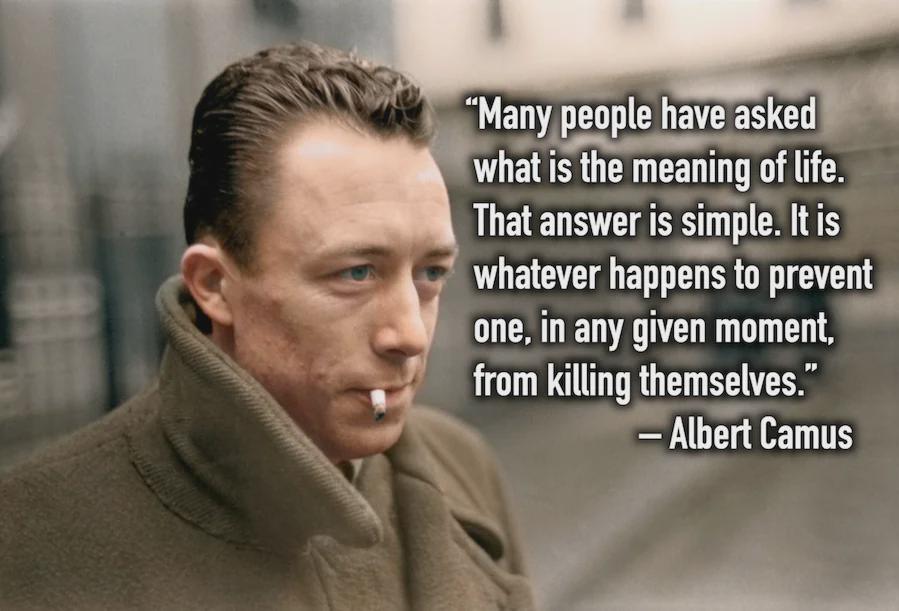
Quote Do you think he was right? Is having a meaning in life, no matter how made up and trivial, the only thing that keeps us from suiciding ourselves?

Post image
264 Upvotes

r/Pessimism • • Nov 29 '19

Video Interview with a WW1 veteran in which he describes killing a man in the trenches with a bayonet: “I felt that the culture we boasted so much about is only a very thin lacquer which chips off the very moment we come in contact with cruel things like war.”

257 Upvotes

r/Pessimism • • Oct 07 '20

Quote From Zapffe's The Last Messiah

Post image
254 Upvotes

r/Pessimism • • Dec 21 '20

Image I love the Italian cover of Conspiracy Against The Human Race.

Post image
246 Upvotes

r/Pessimism • • Apr 15 '21

Insight The answer is to distract yourself until you die.

240 Upvotes

Grant Cardone has a saying: "If you want to meet the devil then have white space on your calendar." That devil is existential dread (see Zapffe's essay The Last Messiah). To avoid existential dread set an arbitrary goal(s) and pursue it as if it were the most important thing in the world and fill your calendar with activities to achieve that goal and then keep setting goals until you die. Jocko Willink says "Discipline is freedom" and he is correct. Discipline is freedom from existential dread. Because while working toward something might be painful, nothing hurts as much as staring into the abyss that is the meaningless suffering of existence.


r/Pessimism • • Aug 09 '20

Quote Emil Cioran On Work

239 Upvotes

"I made a decision: Not to work. To live as a parasite. I never worked in my life. I never had a job, except for a year, in Brasov, as a high school teacher. And it was a complete failure. I realized I could not practice a profession. I have to wander around in life. To avoid any responsibility. I have to do everything in order to save my freedom. Freedom to not work in the proper sense of the world. All my life, I calculated how I can be free in a complete sense. Life is only worth living if you are free. I don’t want to be a slave in any way. This is the only absolute certainty that I’ve had in life. I don’t want to be subordinate. I can succumb to any humiliation. On the condition that I am free."

-Cioran


r/Pessimism • • May 01 '20

Art Untitled painting by Zdzisław Beksiński (1979)

Post image
230 Upvotes

r/Pessimism • • Nov 14 '20

Quote "People... don't understand that when you're seriously depressed, suicidal ideation can be the only thing that keeps you alive. Just knowing there's an out--even if it's bloody, even if it's permanent--makes the pain bearable for one more day." -- Manic, Terri Cheney

227 Upvotes