r/OrthodoxGreece • • Jun 12 '24

Prayer Rope Anthem (Revised lyrics)

211 Upvotes
  I will hold my prayer rope, till I rise up to heaven; The Prayer is so short, but strong and can defend.
 As I say the Prayer more, my enemy will lose the war.  

 The Prayer I say first, you will hear in every place; Most Holy Trinity, save us all by thy grace.  
 As I say the Prayer more, my enemy will lose the war.  

 I will say out loud again, the second prayer sets us free; Lord Jesus Christ, have mercy on me.  
 As I say the Prayer more, my enemy will lose the war.  

 Third Prayer I proclaim, to the Mother of our God; Most Holy Theotokos save us.  
 As I say the Prayer more, my enemy will lose the war. 

 Fourth to thee Saint John I pray, to purify my decay; Baptiser of Christ, intercede for us all.  
 As I say the Prayer more, my enemy will lose the war.  

 Fifth I pray to all the saints, who struggled hard and not in vain; all saints of God intercede for us all. 
 As I say the Prayer more, my enemy will lose the war.  

 At the end I pray to thee, O holy angels I cannot see; Archangels of God, intercede for us all.  
 As I say the Prayer more, my enemy will lose the war.  

 I will hold my Prayer rope, till I rise up to heaven; The Prayer is so short, but strong and can defend
 As I say the Prayer more, my enemy will lose the war.

r/OrthodoxGreece • • Feb 03 '25

Saint Paisios the Athonite

Thumbnail
gallery
46 Upvotes

r/OrthodoxGreece • • May 05 '24

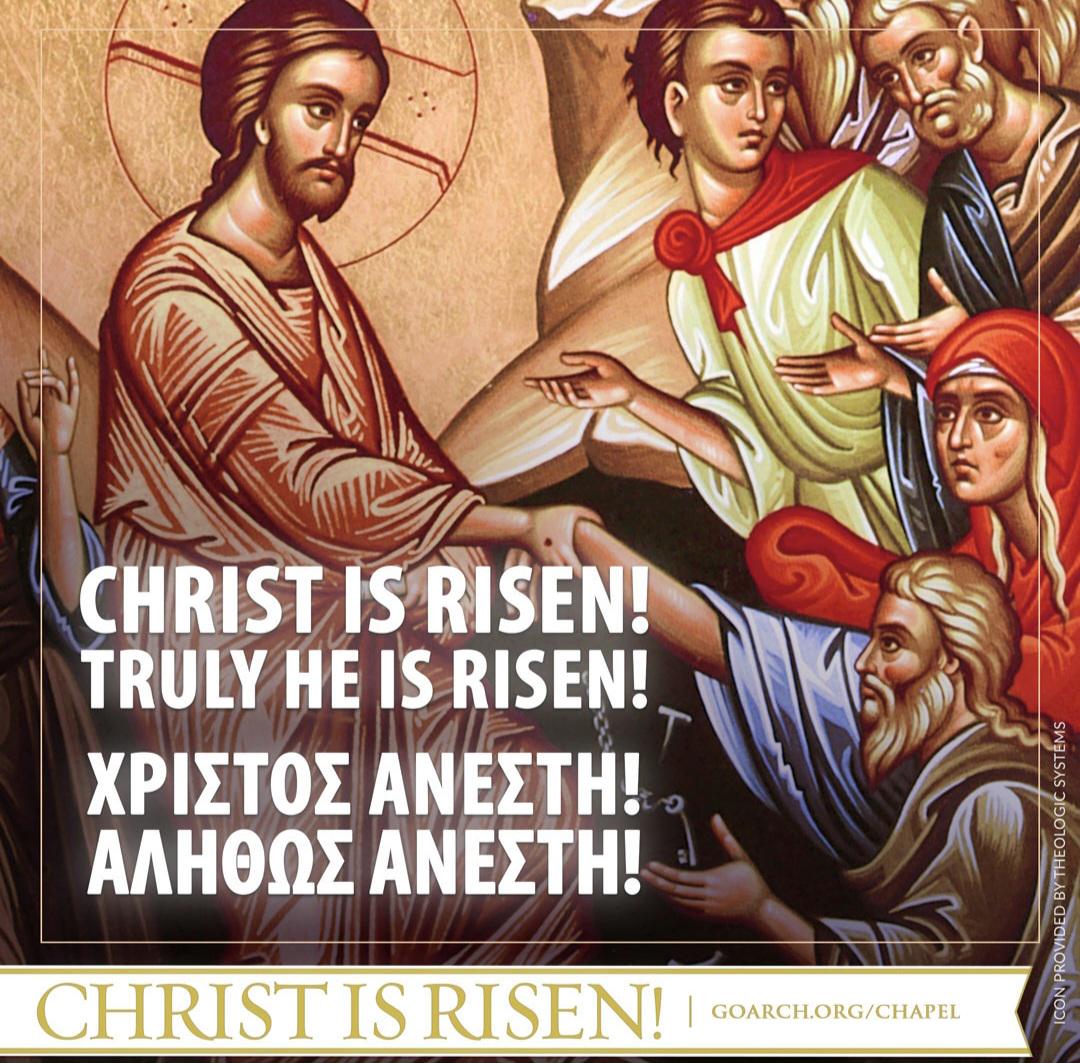
Εορτή Christ is Risen! Truly He is Risen!

Post image
43 Upvotes

r/OrthodoxGreece • • Nov 15 '24

Orthodoxy and Animals

Thumbnail
gallery
42 Upvotes
  1. “Once a dog was dying from thirst in the desert. A monk went by and gave him the water he was keeping for himself. That moment Heaven opened and a voice was heard: ‘He who saved the dog will have a multitude of his sins forgiven’.”

  2. Blessed Gabriel the Confessor and Fool for Christ was a gentle Saint of our times, compassionate for all Creation. In his youth, he had an unusual entertainment; he used to take a small stick in his hands and run away. Chirping birds sat on it and followed him all the way. This surprised everyone. Vasiko (the Saint's given name) was a soft-hearted child. He did not allow putting a trap for mice, but caught them in a cage alive and afterwards set them free out of the yard.

  3. Father Herman recalls a quiet moment when he was with Father Seraphim [Rose] and their animals came up to them: Svir [the monastery dog] looking up devotedly and wagging his tail, and a lovely, white-pawed cat named Kisa standing quietly by. "From your point of view,” Father Herman asked in a reflective mood, “what are animals all about?” Father Seraphim replied: “They have something to do with Paradise.”

  4. “Abba Xanthios said, ‘A dog is better than I am, for he has love and he does not judge.' ” — Sayings of the Desert Fathers

  5. “Geronda, how do animals sense a person’s goodness?”….. “They can instinctively sense if you love them. The animals in Paradise felt the fragrance of Grace and served Adam. Since the transgression, nature groans together with man” -- Saint Paisios the Athonite

  6. "My mind tells me that even the animals are better than me; so, I humble myself and obey them. Very early this morning, being tired from praying all night and exhausted because of my illness, I lay down to rest. After a while, I heard a kitten meowing outside my cell as if she needed something. I really wanted to rest, but I humbled myself and went against my own will. I obeyed the kitten and replied to her calling. I went to open the door. It had started to rain and I let her in so she wouldn’t get wet. What do you think then? Should I obey the animals or not? My thoughts tell me I should.” – Saint Paisios the Athonite

  7. "All these things connected with nature help us greatly in our spiritual life when they are conjoined with the grace of God. When I sense the harmony of nature, I am brought to tears. Why should we be bored with life? Let us live life with the Spirit of God, the Spirit of Truth. The person who has the Spirit of God, who has Divine Wisdom, sees all things with love of God and notices all things. The wisdom of God makes him grasp all things and delight in all things.” -- Saint Porphyrios of Kavsokalyvia

  8. Father Ilarion and the Suffering Horse (from Father Arseny: A Cloud of Witnesses)

A peasant with a heavily laden cart was walking along the road that passed through the village. The road was muddy after the melting of the snow. Mud was knee deep! The horse could barely pull its load and was exhausted. Suddenly the wheels plunged into a deep hole and the cart stopped. The man started beating the horse on its back, tried to push the cart; several men tried to help, but they could not budge the cart.

The owner got beastly angry and started to whip the horse on its stomach, leaving a bloody welt after each hit. The people around him started begging him to take pity on the horse. The horse was trembling and tears were running from its eyes, but the man kept on beating it. The horse tried to pull, but was unable to move the cart. The local people tried to take the whip from the man's hands, but then he took an ax and started walking toward the people, seized the whip again and kept on striking the horse. I myself tried to take the whip from him, but he hit me in the chest and I fell into the mud. The people helped me up. The man shouted, "This is my horse, can beat it if I want!" Everyone realized that he was going to destroy the horse, which was ready to fall.

Just at this moment, nobody knows from where, Father Ilarion appeared. He took the whip from the man and hit him in the face with its stock and, without looking at him, went over to the horse. The peasant grabbed his ax and raised it to strike Father Ilarion on the head, but the ax fell out of his hands, flew over the cart and fell into the mud. Turning to the man, Father Ilarion said, "So, your snout hurts from the whip?"

"Why did you hit me on the snout? That hurt."

"You hurt? And what do you think the horse feels?"

He walked over to the horse, gently patted it on the back and, pulling out his handkerchief, swabbed the bloody welts. Then he told a woman who was standing near by, "Aksinia, please fetch me some linseed oil." She did and, after wiping away the blood, Father Ilarion poured some oil onto his hand and anointed the welts. The horse calmed down, and the tears stopped running from its eyes. Father Ilarion took hold of the bridle and told the peasant, "You there, push the cart just a little!" He blessed himself with the sign of the cross several times, pulled lightly on the bridle, and the loaded cart came easily out of the deep muddy hole and moved onto the road.

Father Ilarion walked over to the peasant and said, "You know, Vassily, forgive me for hitting you so hard, but I could not stop you any other way! Go in peace and with the help of God. When you get home, put some more oil on the horse's welts and give it two days rest. And don't let this happen again! Understand?" And, having blessed everyone, he left.

The peasant went over to his horse, patted her on the back, and turning to the onlookers said, "Brothers, who was that?"

"That was our priest, Father Ilarion. All the villagers around here know him. But who are you? You are not from around here."

"No," he said and continued, "How is it that I wanted to hit a priest with an ax? What a sin!"

orthodoxcityhermit.com


r/OrthodoxGreece • • Sep 16 '25

Patriarch Theodoros Baptizes 100 in Madagascar

Post image
41 Upvotes

On Monday, September 15th, Patriarch Theodoros II of Alexandria performed the sacrament of baptism for 100 catechumens of all ages and also assisted with the prison ministry for the Diocese of Toliara and South Madagascar.

At the baptism, the Patriarch stated:

“Baptism is a new birth and an entrance into the life of the Church, where heaven meets earth and where man becomes a child of God. From today onwards, you are not alone; you belong to the family of Christ that is the Church and you will have as your guide the light of the Cross and the hope of the Ressurection”

The Patriarch also visited the men and women’s prison nearby and offered these words of consolation:

”Prison is not the end; it is a trial, a Cross that can become a path leading to the freedom of the soul. Have patience and trust in God. He sees your pain, hears your prayer and will not leave you alone. No one ever loses their dignity in the eyes of God. We are all his children and the Church stands by your side.”

Afterwards, his holiness distributed food to the prisoners.

The below link to the (Greek) news report has some photos of the events: https://www.nyxthimeron.com/2025/09/100.html?m=1


r/OrthodoxGreece • • Sep 10 '26

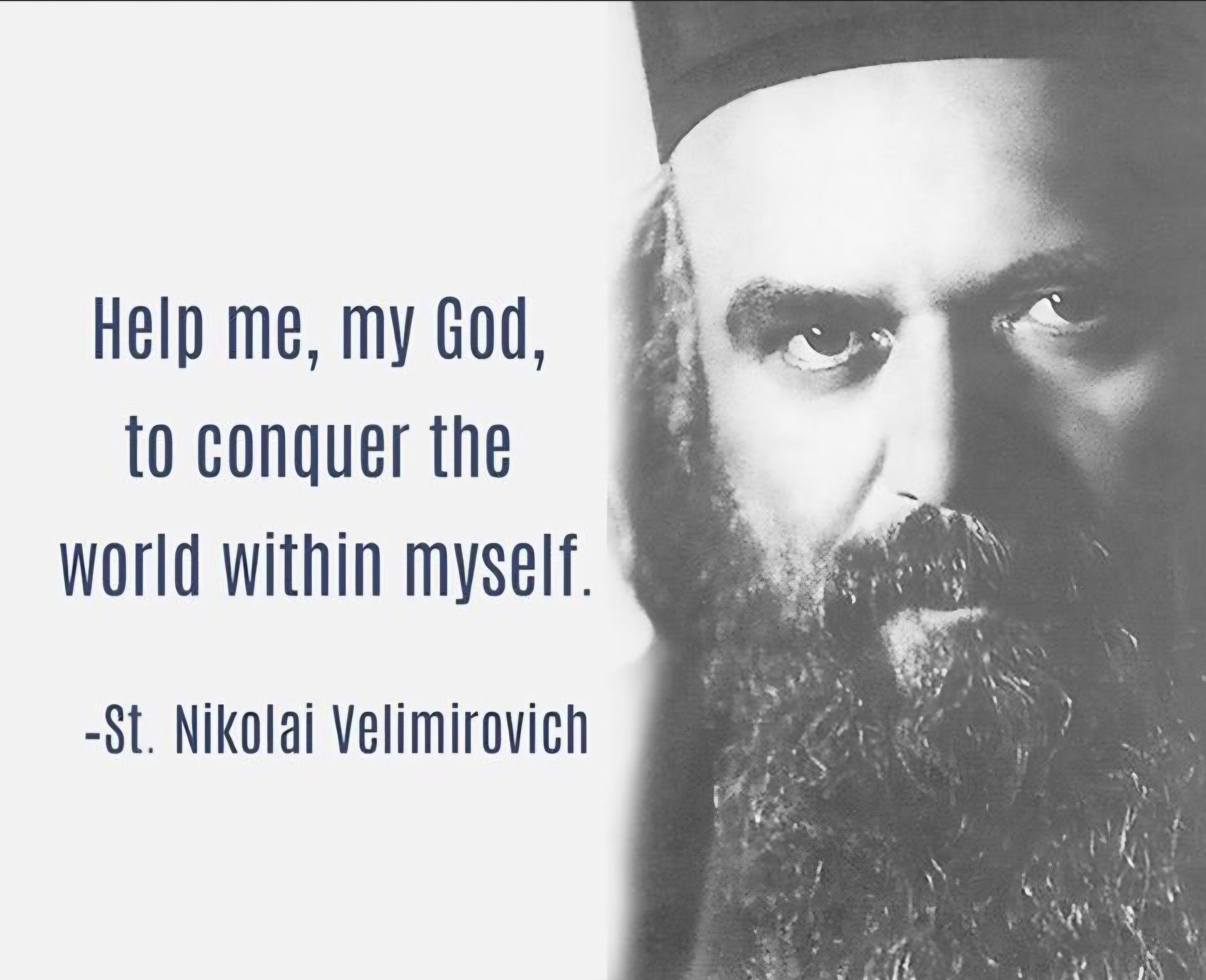
Αποφθέγματα Saint Nikolai Velimirovic

Post image
40 Upvotes

r/OrthodoxGreece • • Mar 12 '25

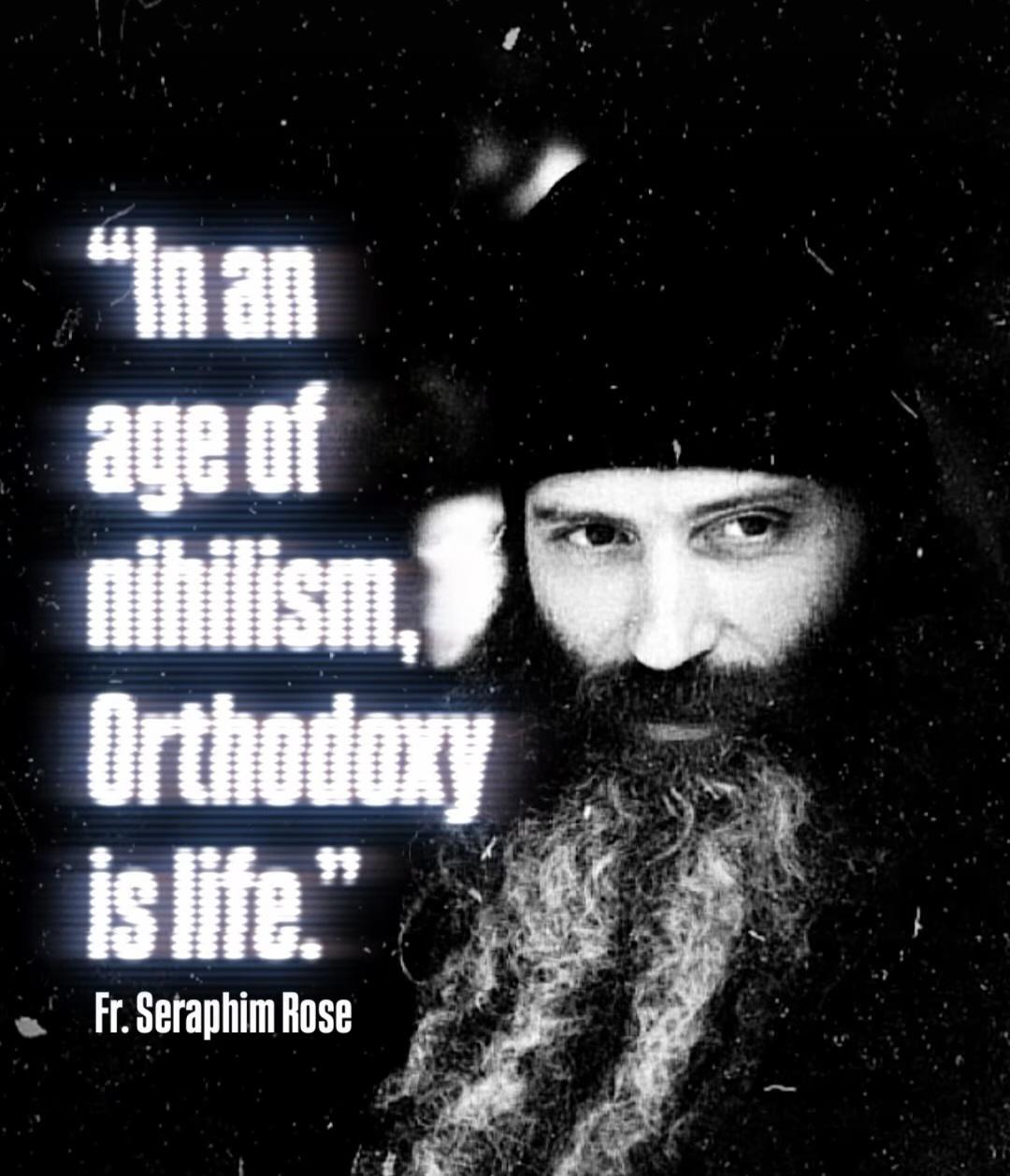
Αποφθέγματα Father Seraphim Rose

Post image
40 Upvotes

r/OrthodoxGreece • • Feb 20 '25

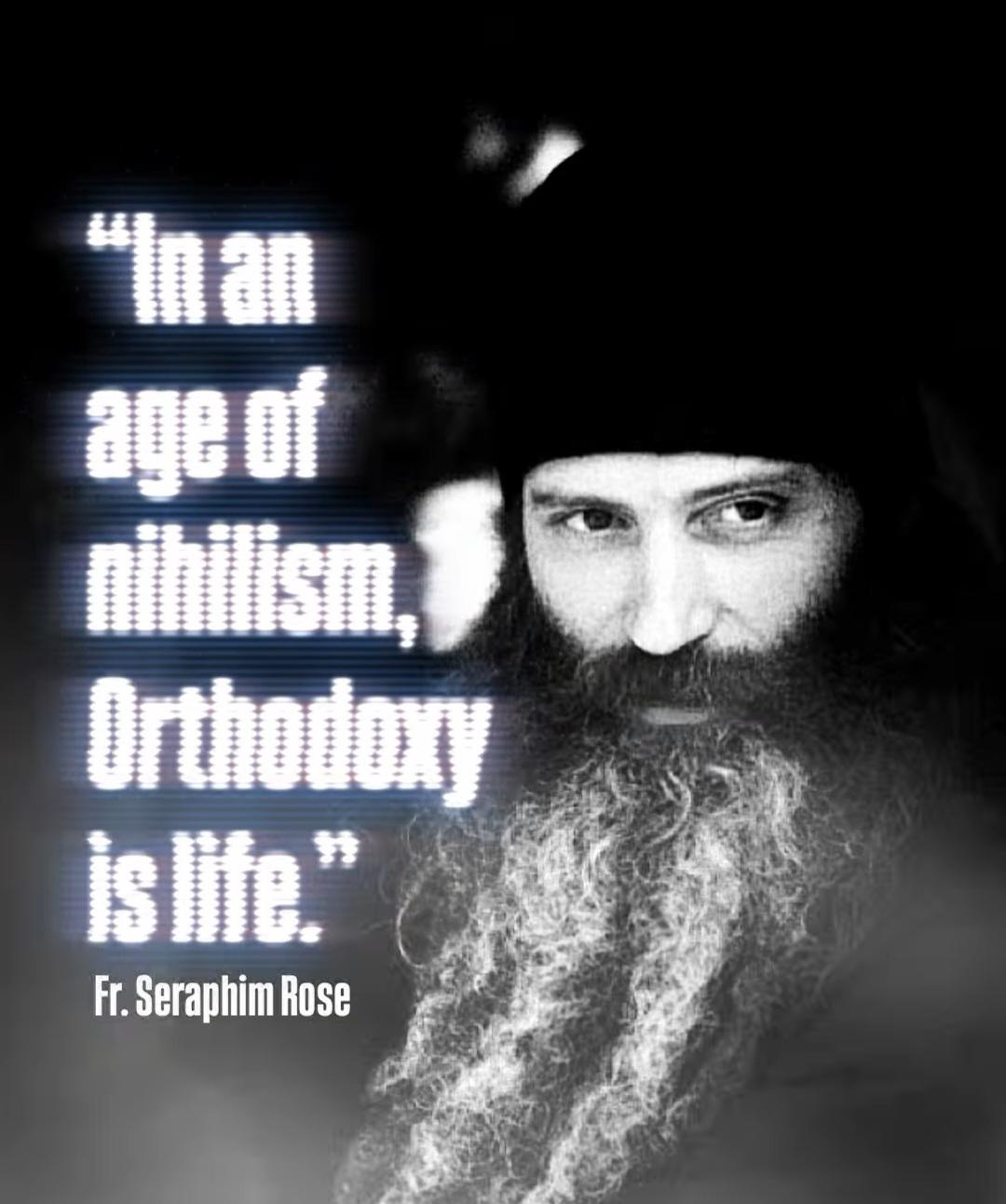
Αποφθέγματα Father Seraphim Rose

Post image
39 Upvotes

r/OrthodoxGreece • • Jun 11 '25

Anonymous

Post image
37 Upvotes

r/OrthodoxGreece • • Aug 25 '26

Αποφθέγματα Saint Gabriel of Georgia

Post image
36 Upvotes

r/OrthodoxGreece • • May 11 '26

Αποφθέγματα Saint Paisios the Athonite

Post image
36 Upvotes

r/OrthodoxGreece • • Apr 15 '23

Χριστός Ανέστη! Χρόνια πολλά ✝️

Post image
36 Upvotes

r/OrthodoxGreece • • Dec 29 '25

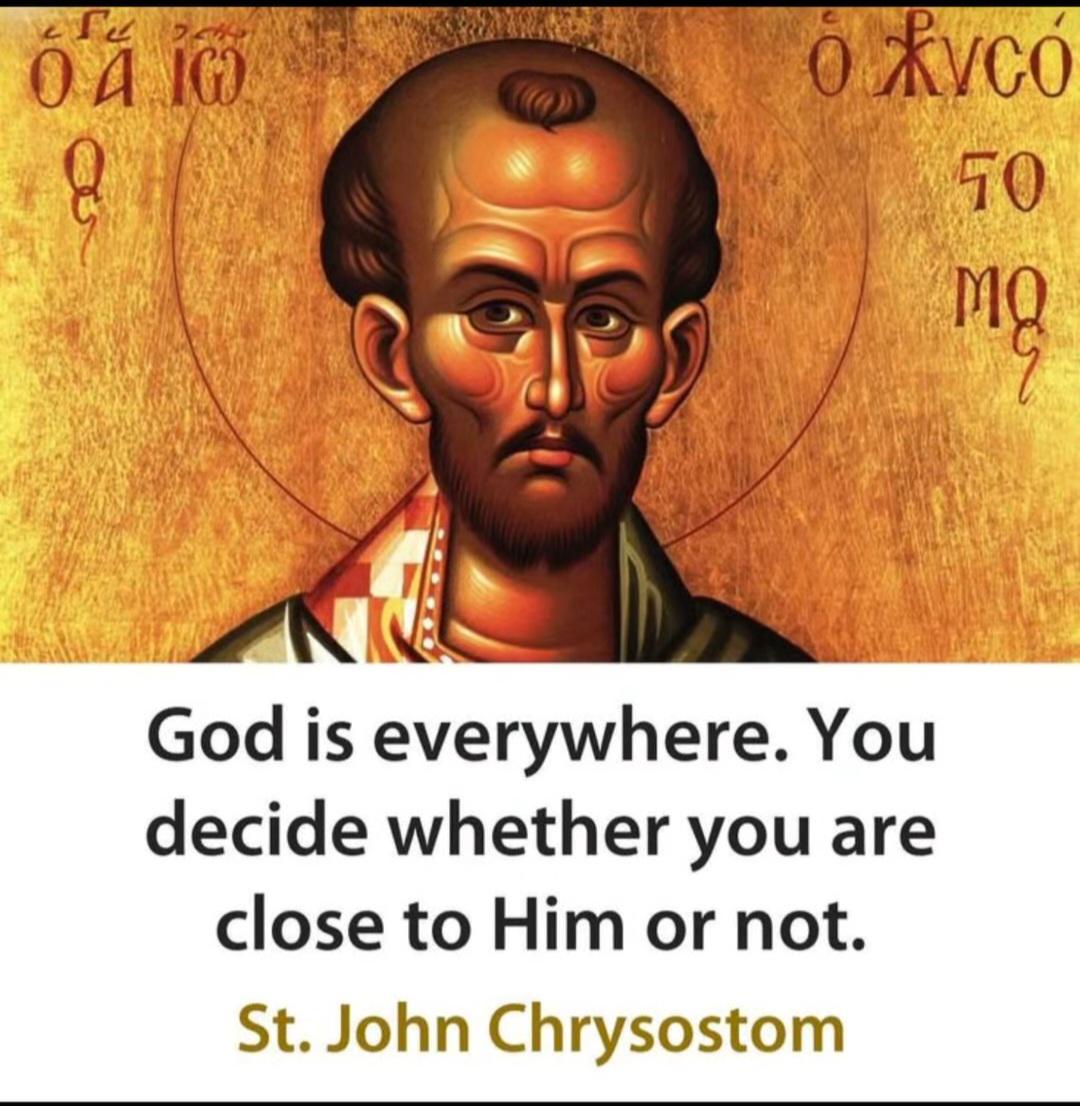
Αποφθέγματα Saint John Chrysostom

Post image
35 Upvotes

r/OrthodoxGreece • • Oct 09 '25

Αποφθέγματα Saint Arsenie Papacioc

Post image
35 Upvotes

r/OrthodoxGreece • • Mar 10 '25

Αποφθέγματα Father Seraphim Rose

Post image
35 Upvotes

r/OrthodoxGreece • • Sep 16 '22

Link Free Orthodox Study Bible (PDF and other formats)

35 Upvotes

https://archive.org/details/the-orthodox-study-bible

I can't find the old link I downloaded the PDF orthodox study Bible a month ago, but this link seems to work as well. An alternative for those who would like to have a free PDF version if they can't buy it.

Although I have the PDF file if someone needs it if they find it difficult to download it from the internet. So, just send me a message and ask me to send you the PDF file.

P.S. There are also other websites where you can get it in electronic/digital format online and download it for free. You can search for it on Google.


r/OrthodoxGreece • • Mar 09 '26

Αποφθέγματα Saint Theophan the Recluse

Post image
34 Upvotes

r/OrthodoxGreece • • Jul 26 '25

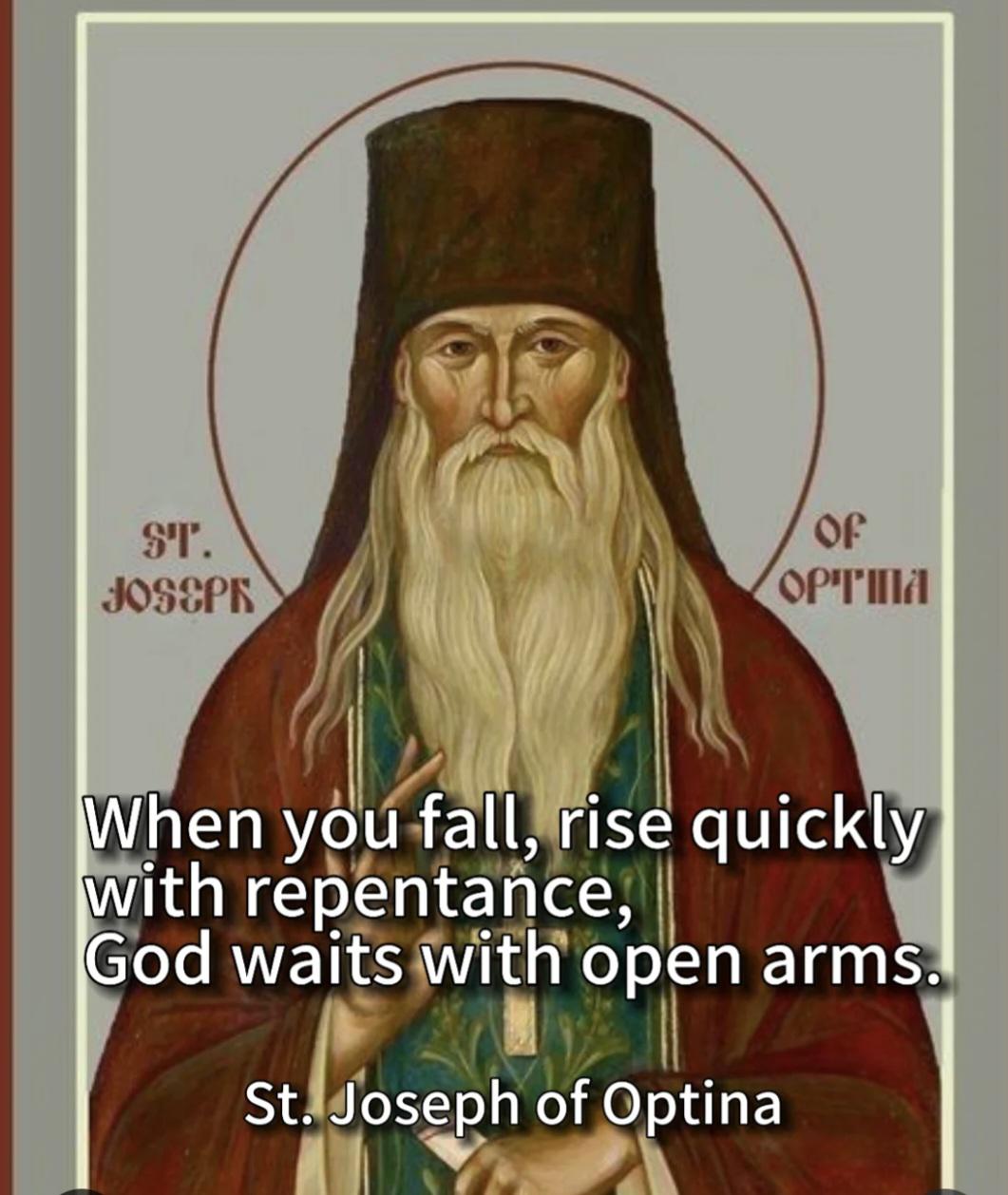
Αποφθέγματα Saint Joseph of Optina

Post image
34 Upvotes

r/OrthodoxGreece • • Oct 07 '24

Αποφθέγματα Saint Basil the Great (2)

Post image
34 Upvotes

r/OrthodoxGreece • • Jun 30 '24

The Story of Elder Joseph of Vatopaidi and the Eternal Smile

Post image
34 Upvotes

Dear Mr. Papanikolaou,

Shortly after the interment of Elder Joseph, you published on your site an article entitled ‘The funeral of the late Elder Joseph Vatopaidinos – a smile from eternity’, with a brief description of the event, accompanied by photographs. The photograph of the deceased, smiling not only with his lips but also the whole of his face, has made a great impression on people and we’ve realized this from the many articles and comments on a number of web-sites.

It’s true that we do encounter deceased persons with radiant faces, with a peaceful expression, at profound rest, but with a smile? On the one hand, all the spiritual Fathers agree that the moment of death is terrible for people, and, on the other, we learn from the writings of the Elders that those who have been most advanced spiritually, do not, out of humility, take any liberties before they pass on to the next life, where there is no longer any danger. Besides, Elder Joseph had a heart condition because of which he suffered considerably. So how did he die with a smile?

The answer is that he didn’t depart this life with a smile on his face, but that he smiled after his demise.

Following a discussion with some of the fathers of the Monastery, we can bring you the narrative of the way the events unfolded.

There were two monks who were with him until his last moments and they hurried to tell Elder Efraim and the other monks. So they effectively abandoned the deceased, who lay for some time with his mouth half-open.

Then everybody came to prepare him in accordance with the monastic rule. Elder Efraim gave the order to leave his face uncovered. They actually tied some gauze to keep his mouth closed, but once they removed it, his mouth fell open again. This was about 45 minutes after his demise.

'Elder, he looks bad with is mouth open. What should we do?’

‘Leave him as he is. Don’t cover his face’.

As is customary, they sewed him into the monastic cloak. The whole process of placing him in the cloak and sewing it took about another 45 minutes. After this, they cut away the cloth around his face, as they’d been told to do, and it was then that they all found the Elder smiling. Had he heard them and done them this favour so that they wouldn’t be sad? Or did he want to give them some idea about what he saw and the situation in which he found himself after his departure from the present life?

Elder Joseph's smile is the first supernatural event to occur after his demise and has been a great consolation to everyone.

(by Panagiotis Koutsou)


r/OrthodoxGreece • • Apr 11 '26

Αποφθέγματα Saint Paisios the Athonite

Post image
33 Upvotes

r/OrthodoxGreece • • Feb 27 '26

Αποφθέγματα Saint Silouan the Athonite

Post image
33 Upvotes

r/OrthodoxGreece • • Feb 16 '25

Εορτή Sunday of the Prodigal Son

Thumbnail
gallery
33 Upvotes

The Sunday of the Prodigal Son is the second Sunday of a three-week period prior to the commencement of Great Lent. On the previous Sunday, the services of the Church began to include hymns from the Triodion, a liturgical book that contains the services from the Sunday of the Publican and the Pharisee, the tenth before Pascha (Easter), through Great and Holy Saturday. As with the Sunday of the Publican and the Pharisee, the theme of this Sunday is repentance, and the focus on the parable of the Prodigal Son leads Orthodox Christians to contemplate the necessity of repentance in our relationship with our Heavenly Father.

The name for this Sunday is taken from the parable of our Lord Jesus Christ found in Luke 15:11-32. The parable is the story of a man and his two sons. The youngest of the sons asks his father to give him his inheritance. The father does this, and soon after the son leaves and journeys to a distant country (vv. 11-13).

After the younger son arrives, he squanders all of his possessions with “prodigal” living. Within a short period of time, he wastes everything. A severe famine comes, but he has nothing and falls into great need (vv. 13-14).

He is able to find work feeding swine, but this does not improve his situation. The Scriptures say, “He would gladly have filled his stomach with the pods that the swine ate, but no one gave him anything” (vv. 15-16).

The parable says that in the midst of his dire conditions, he came to himself. He realized that his father’s hired servants have enough to eat and food to spare, while he perishes with hunger. He says, “I will arise and go to my father and will say to him, ‘Father, I have sinned against heaven and before you, and I am no longer worthy to be called your son. Make me like one of your hired servants’” (vv. 17-19).

He arose and returned to his father. But as he approached, his father saw him at a great distance. The father had compassion on his son, ran to meet him, embraced him, and kissed him. The son admitted his sinfulness and his unworthiness to be called a son, but in his joy at the return of his son, the father called his servants to bring the best robe, a ring for his son’s finger, and sandals for his feet. He also called for the fatted calf to be killed for a feast. He exclaimed, “For this my son was dead and is alive again; he was lost and is found” (vv. 20-24).

While they were feasting and celebrating the return of the prodigal son, the older son comes and inquires about what is happening. He is told that his brother had returned and that his father has received him with a feast. The older brother becomes angry and will not go in to the feast. The father comes out and pleads with him, but the older son answers by saying he has been faithful to his father for many years and yet the father never gave him the opportunity for such feasting. He expresses his anger and jealousy over his brother who was received in such a manner after he squandered his inheritance (vv. 25-30).

The father responds by telling his oldest son, “You are always with me, and all that I have is yours. It was right that we should make merry and be glad, for your brother was dead and is alive again, and was lost and is found” (vv. 31-32).

The parable of the Prodigal Son forms an exact icon of repentance at its different stages. Sin is exile, enslavement to strangers, hunger. Repentance is the return from exile to our true home; it is to receive back our inheritance and freedom in the Father’s house. But repentance implies action: “I will rise up and go…” (v. 18). To repent is not just to feel dissatisfied, but to make a decision and to act upon it.

In the words of our Lord, we also learn of three things through this parable: the condition of the sinner, the rule of repentance, and the greatness of God’s compassion. The reading of this parable follows the Sunday of the Publican and the Pharisee so that, seeing in the person of the Prodigal Son our own sinful condition, we might come to our senses and return to God through repentance. For those who have fallen into great despair over their sins thinking that there is no forgiveness, this parable offers hope. The Heavenly Father is patiently and lovingly waiting for our return. There is no sin that can overcome His love for us.

Finally, this parable offers us insight into the world in which we live. It is a world where the activities of people are disconnected and not ordered toward the fulfillment of God’s divine purpose for life. It is a world of incoherent pursuits, of illusory strivings, of craving for foods and drinks that do not satisfy, a world where nothing ultimately makes sense, and a world engulfed in untruth, deceit and sin. It is the exact opposite of the world as created by God and potentially recreated by his Son and Spirit. There is no cure for the evils of our age unless we return to God. The world in which we live is not a normal world, but a wasteland. This is why in the Slavic tradition of the Orthodox Church the reading of Psalm 137 is added to the Matins service for this and the following two Sundays. This nostalgic lament of the Hebrew exiles states: "By the streams of Babylon we sat and wept as we remembered Zion. On the willows we hung our harps, for how could we sing the Lord’s song in a strange land” (Psalm 137).

Here we can see the challenge of life in this world and the alienation from God that can happen when sin reigns in our lives. As a result of sin in our lives, we lose the joy of communion with God, we defile and lose our spiritual beauty, and we find ourselves far away from our real home, our real life. In true repentance, we realize this, and we express a deep desire to return, to recover what has been lost. On this day the Church reminds us of what we have abandoned and lost, and beckons us to find the desire and power to return. Our Heavenly Father is waiting and ready to receive us with His loving forgiveness and His saving embrace.

The icon of the Sunday of the Prodigal Son shows the prodigal being received by his father upon his return. We are presented with an image of a warm and loving embrace, the son showing his need for his father, an attitude that represents repentance, love, and hope for renewal and restoration. The father is shown full of compassion for his son, having born the burden of his sin and suffering, but now filled with joy that he has returned.

The Sunday of the Prodigal Son is celebrated with the Divine Liturgy of Saint John Chrysostom, which is preceded by the Matins service. A Great Vespers is conducted on Saturday evening. The hymns of the Triodion for this day are added to the usual prayers and hymns of the weekly commemoration of the Resurrection of Christ. The naming of the Sunday is related to the reading of the story from the Gospel at the Divine Liturgy.

Scripture readings for the Sunday of the Prodigal Son are: At the Orthros (Matins): The prescribed weekly Gospel reading. At the Divine Liturgy: I Corinthians 6:12-20; Luke 15:11-32.

For the week that follows the Sunday of the Prodigal Son, fasting is observed on Wednesday and Friday. This is the last week that meat is allowed on non-fasting days. The next Sunday is the Sunday of the Last Judgment, also known as Meatfare Sunday. It is the last day that meat can be eaten prior to the fast of Great Lent.

goarch.org


r/OrthodoxGreece • • Sep 21 '26

Αποφθέγματα Saint Gabriel of Georgia

Post image
32 Upvotes

r/OrthodoxGreece • • Jul 20 '26

Αποφθέγματα Saint Matrona of Moscow

Post image
32 Upvotes