r/MeditationRelax
•
u/AlienArcs
•
Jul 26 '26

Iykyk
904
Upvotes
r/MeditationRelax • u/LiliaFuxia • Jan 18 '26

Cobra Pose (Bhujangasana) felt deceptively easy the first time I tried it. Lying on the mat, pressing the palms down, lifting the chest — simple enough. But after holding it for a few breaths, I noticed how clearly my spine reacted. The gentle backbend woke up muscles along the back that usually stay silent during the day, especially after long hours of sitting.
With regular practice, Cobra Pose started to loosen stiffness in my lower and middle back. My shoulders slowly dropped away from my ears, and breathing became deeper without effort. There’s also a subtle effect on energy: opening the chest creates a feeling of alert calm, not excitement, but clarity. When done without forcing the lower back, the pose strengthens spinal support muscles and improves posture over time. For me, Cobra became less about flexibility and more about learning how to move with control and awareness.
#CobraPose
#Bhujangasana
#SpineHealth
#BackbendPractice
#YogaExperience
#PostureAwareness
#MindfulMovement
r/MeditationRelax • u/LiliaFuxia • May 28 '26

Mayurasana, or Peacock Pose, places intense demand on the wrists, arms, and core. The body weight pressing into the abdomen strongly stimulates digestive organs and increases metabolic activity.
This pose builds functional strength and improves balance while training focus under physical stress. Because it requires full-body coordination, it enhances neuromuscular control.
Practiced carefully, Mayurasana increases confidence and internal heat.
#Mayurasana
#CoreStrength
#ArmBalance
#DigestiveFire
#FocusTraining
#YogaStrength
#BodyControl
r/MeditationRelax • u/LiliaFuxia • Apr 07 '26

Marichyasana I deeply stretches the hip flexors and lower back while gently twisting the spine. Tight hip flexors are commonly associated with anterior pelvic tilt and lumbar discomfort.
The compression and release pattern in this posture improves circulation around the kidneys and abdominal region. This can enhance metabolic waste removal during recovery phases.
The twist also sharpens internal awareness, as subtle adjustments are required to maintain balance and spinal length simultaneously.
#yoga
#marichyasana
#hipflexors
#spinalhealth
#twist
r/MeditationRelax • u/LiliaFuxia • Feb 08 '26

Meditation is usually presented as a universal good: calmer mind, better focus, emotional balance. What is discussed far less is that regular practice also produces side effects, especially when sessions become frequent or long. Large-scale reviews of meditation-based programs show that 8–15% of practitioners report unexpected negative reactions. These effects are rarely dramatic, but they are persistent enough to influence daily life and behavior.
One of the most common effects is emotional amplification. Longitudinal studies show that regular meditators experience emotional states more intensely, both positive and negative. In laboratory settings, experienced meditators demonstrated 20–25% stronger emotional recall when exposed to neutral stimuli. Another reported effect is dissociation: feelings of detachment from thoughts or surroundings. Clinical surveys indicate this occurs more often in practices emphasizing prolonged inward focus without grounding.
Sleep changes are also documented. Around 10% of participants in mindfulness programs report lighter sleep or increased nighttime awakenings during the first months. Neuroimaging suggests this may be linked to altered arousal regulation. Attention can also shift in unexpected ways: some meditators show reduced task-switching speed, as sustained focus training prioritizes depth over flexibility. These effects are rarely mentioned in popular discussions, despite being well described in research literature.
#meditation #mentalhealth #neuroscience #mindfulness #psychology
r/MeditationRelax • u/LiliaFuxia • Dec 06 '25

Meditation sounds simple — sit down, close your eyes, breathe. Yet anyone who has actually tried it knows that slipping into a deep, steady, “everything-just-clicked” state doesn’t always happen on command. Some days your mind cooperates. Other days it feels like a squirrel hopped up on espresso. And that’s normal. Deep meditation isn’t a talent; it’s a skill, and like any skill, it can be trained, refined, and eventually mastered.
The good news? You don’t need a monastery, years of practice, or any mystical secrets. What you do need is a combination of technique, consistency, and a mindset that doesn’t punish you for being human. Below is a practical, no-nonsense guide for people who want to go beyond the surface and actually experience real inner stillness.
A tense body blocks a calm mind. Before meditating, loosen your physical “armor.”
Stretch your neck, shoulders, hips.
Take 10 slow breaths, exhaling longer than you inhale.
Allow your posture to settle naturally instead of “forcing” perfect stillness.
Deep meditation begins when your nervous system signals, “We’re safe.”
Most people drift because they’re switching anchors: breath → body → thoughts → sounds → back to breath. Too many inputs.
Pick ONE:
Breath
Water sounds
A mantra
A visual point behind closed eyes
Body sensations And stick with it. The anchor is not meant to be interesting — it’s meant to stabilize attention.
Deep meditation is not “zero thoughts.”
It’s “thoughts arise, and I don’t chase them.”
Every time your mind drifts and you gently return to your anchor, you’re strengthening the mental muscles that create the deep state.
Tell yourself:
“Just sit for 2 minutes.”
Most resistance comes from the idea of doing 20 minutes. But once you start, you’ll naturally want to continue. Removing mental friction helps meditation unfold more smoothly.
Deep meditation often happens when you’re not anticipating it.
Set a timer before you begin so your mind stops wondering, “How long has it been?”
Your attention can finally settle inward without checking the imaginary clock.
For many people, silence is overwhelming at first.
Natural soundscapes — rain, flowing water, brown noise — help mask distractions and create a safe mental “container.”
They don’t prevent deep meditation; they support it.
The paradox is this:
The more you chase deep meditation, the further it moves away.
You don’t force stillness. You allow it.
Focus on the process, not the outcome. Let the deep state arise on its own — and it will.
Don’t jump up the moment you finish.
Sit for 30–60 seconds and let your awareness return gradually.
This transition is part of the practice — and it makes deep meditation more accessible next time.
Deep meditation isn’t a lucky accident. It’s a repeatable experience shaped by patience, posture, and presence. If you practice consistently and drop the expectation of perfection, the mind eventually settles like snow in a shaken glass globe — slowly at first, then completely.
#Meditation #DeepMeditation #Mindfulness #SelfCare #InnerPeace
r/MeditationRelax
•
u/LiliaFuxia
•
May 30 '26


Mukta Padmasana, the Freed Lotus Pose, is a softer version of Padmasana. One leg remains grounded while the other rests on the opposite thigh. This makes the pose accessible while still delivering clear benefits.
The hips are gently opened without excessive strain on the knees. Blood circulation improves in the pelvis and lower spine, supporting digestion and reducing stiffness. Because the body is more relaxed, breathing becomes smooth and natural. This pose is often used for meditation because it allows comfort without losing spinal alignment.
#muktapadmasana
#hipmobility
#gentleyoga
#circulation
#seatedposes
#relaxation
#bodyawareness
r/MeditationRelax • u/LiliaFuxia • Apr 27 '26
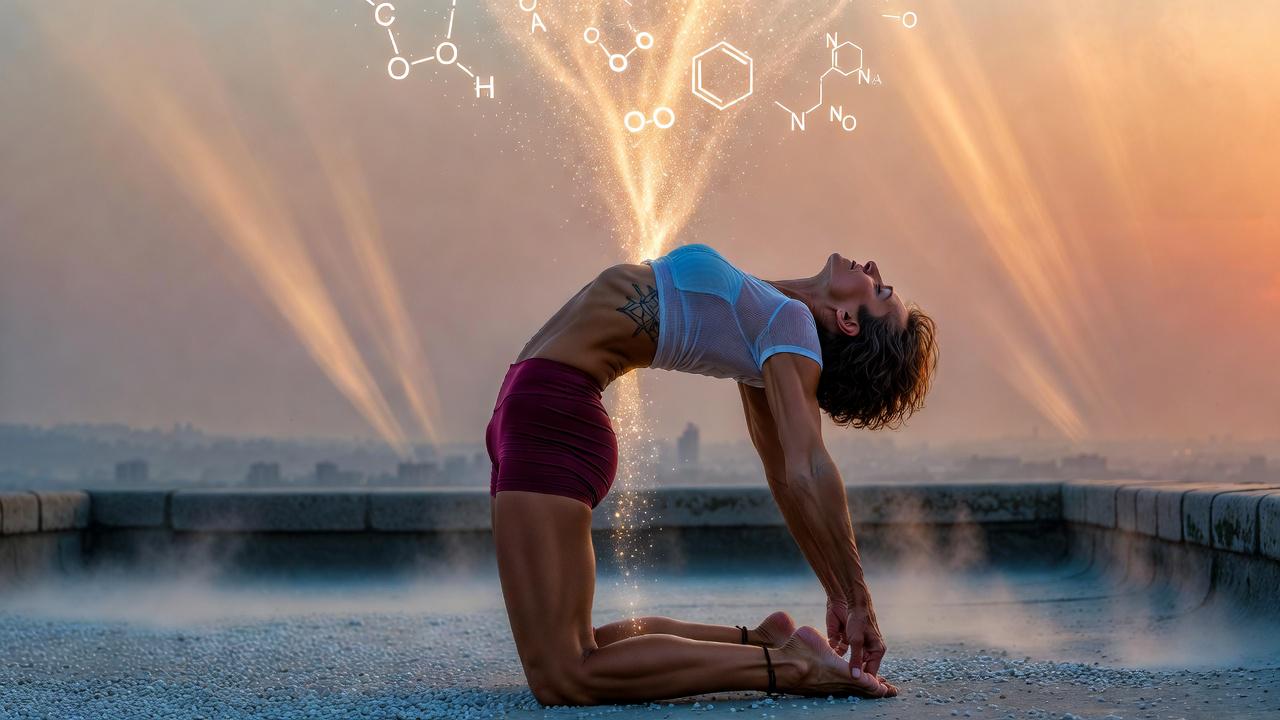
Regular early morning yoga creates real and measurable hormonal adaptations, but they are not universally positive or negative — they are conditional. Cortisol naturally peaks shortly after waking, supporting alertness and glucose release. When yoga is added at this time, especially consistently, the endocrine system adapts to expect movement as part of the morning stress-response cycle. In moderate doses, this improves insulin sensitivity, stabilizes energy levels, and sharpens mental clarity throughout the day. I’ve seen this repeatedly in practitioners who keep their morning sessions slow, breath-oriented, and rhythmical. Problems arise when intensity is pushed too far. High-effort asana or aggressive pranayama during the cortisol peak increases adrenal demand and can blunt hormonal flexibility over time. Endocrinology research confirms that chronic elevation of morning cortisol is linked to sleep fragmentation and reduced testosterone and progesterone levels. As Robert Sapolsky notes, the body handles stress well when it’s brief and resolved — not when it’s ritualized without recovery 🙂.
• Gentle morning yoga supports circadian stability
• Intense sessions amplify cortisol rather than balance it
• Consistency matters more than duration
• Hormonal benefits appear after weeks, not days
#morningyoga
#hormones
#circadianrhythm
#stressphysiology
#yogascience
r/MeditationRelax
•
u/BoredMonkeyMind
•
Jun 13 '26
r/MeditationRelax • u/LiliaFuxia • Feb 20 '26

Padmasana, or Lotus Pose, is known for its strong effect on posture and joint stability. By placing the feet on opposite thighs, the hips are gently opened while the knees are supported from below. This position distributes body weight evenly, reducing pressure on the spine.
Regular practice improves flexibility of the hip joints and ankles, which often become stiff from long periods of sitting. The straight spine allows the lungs to expand fully, improving oxygen intake. Many people notice slower breathing and improved concentration. Because the body becomes physically balanced, the brain receives fewer stress signals, helping mental focus stay steady for longer periods.
#padmasana
#lotuspose
#yogaposture
#breathing
#jointhealth
#focus
#mindfulness
r/MeditationRelax • u/LiliaFuxia • Feb 13 '26

Meditation often begins as a private practice, something done alone with closed eyes and minimal movement. Over time, however, its effects start showing up in places that have nothing to do with cushions or breathing techniques. Practitioners frequently notice subtle but persistent changes in how they speak to themselves internally and how they respond to people around them. The practice quietly reshapes everyday interactions.
One of the first shifts happens in self-talk. Instead of trying to replace negative thoughts, meditation trains recognition. Thoughts are seen earlier and with less identification. This creates a small pause between impulse and reaction. In daily life, that pause becomes space for choice. Self-criticism doesn’t disappear, but it loses urgency and authority.
Relationships with others often change through this same mechanism. Meditation increases tolerance for emotional discomfort. Awkward conversations, misunderstandings, or silence become easier to stay with. Practitioners report listening more fully without rehearsing responses. Empathy grows not as a moral effort, but as a byproduct of being less occupied with internal noise.
Over time, boundaries also become clearer. Being present makes it easier to notice when something feels misaligned. The practice doesn’t make relationships smoother by default, but it makes them more honest and less reactive.
#meditation #mindfulness #relationships #selfawareness #innerwork
r/MeditationRelax • u/LiliaFuxia • Jul 18 '26

Kapotasana is an intense backbend that increases spinal extension across all vertebral segments. This improves spinal elasticity and counteracts stiffness.
The pose stretches the hip flexors and quadriceps, restoring functional range of motion in the pelvis. Strong engagement of the legs protects the lower back.
Deep chest opening stimulates respiratory muscles and can increase lung capacity when practiced progressively and safely.
#yoga
#kapotasana
#backbend
#spinalmobility
#breathing
r/MeditationRelax • u/LiliaFuxia • Jan 28 '26
Immerse yourself in the 222 Hz frequency, known for its harmonizing effects on cells, organs, and the nervous system. Combined with the grounding sounds of the drum:
✔️ Strengthens cellular communication (organ regeneration)
✔️ Calms the adrenal glands (stress reduction)
✔️ Promotes emotional balance (chakra alignment)
✔️ Supports liver detoxification
Perfect for deep relaxation, releasing blockages, and energetic protection. The drum rhythm enhances grounding. Try it now!
🔹 #HealingFrequency
🔹 #DrumMeditation
🔹 #ChakraHealing
🔹 #Detox
🔸 #DrumTherapy
🔸 #EnergyBalance