r/LifeInKitsap • u/AdventurousLook580 • 1d ago
Missing children
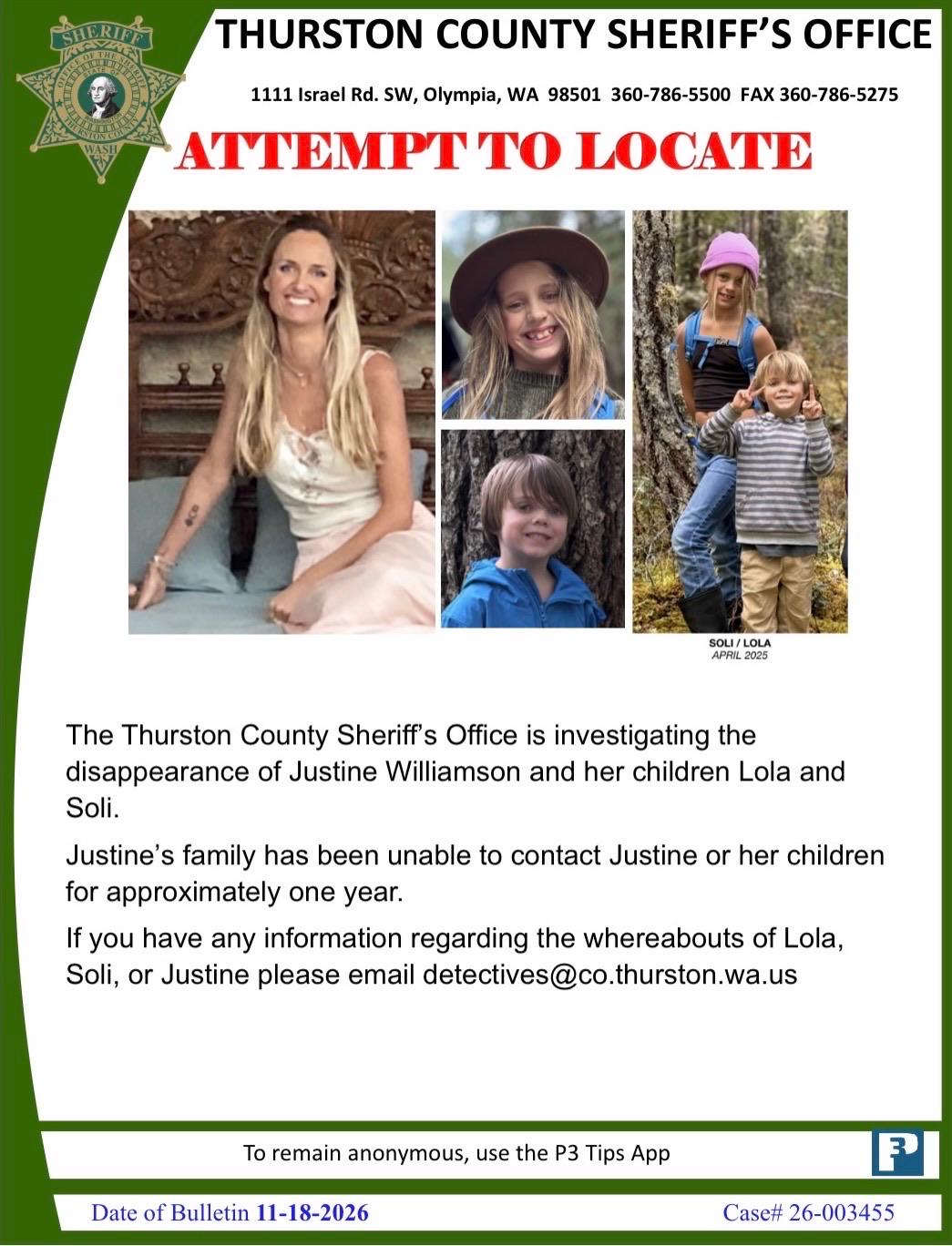
1
Upvotes
r/LifeInKitsap • u/KitsapRealEstateTeam • Nov 17 '25
A community group for neighbors, newcomers & Kitsap lovers
Hey friends — welcome to Life in Kitsap, your go-to spot for all things local!
This group is hosted by the Dupuis Team, but the vibe here is 100% community, not sales. We’re excited to help create a space where people can connect, share, and celebrate the amazing area we all call home.
This is a place for:
Local events & happenings
Yard sales, community sales, & fundraisers
Neighborhood info & questions
Seasonal activities & things to do
Small business shoutouts (keep it neighborly, not spammy)
Lost & found pets
Local recommendations (contractors, restaurants, trails — you name it)
Moving-to-Kitsap questions
Photos of our gorgeous PNW scenery
Ferry stories, mountain sightings, and everything that makes Kitsap… Kitsap
Everyone!
Whether you grew up here, just arrived via the ferry for the first time, or live nearby and love exploring Kitsap — this group is for you.
To keep this space helpful, welcoming, and fun:
Be kind & respectful — we’re neighbors.
No political debates — plenty of other places for that.
No spam or aggressive advertising — sharing a business is fine, spamming isn’t.
No personal attacks or drama — we’re here to connect, not clash.
Keep posts local & relevant — Kitsap County and nearby PNW life.
We love:
Ferry pics
Orca alerts
Yard sale treasures
Local market pop-ups
“Mountain’s out!” sightings
Community wins
Rainy day recommendations
Basically… if it feels like real life in Kitsap, it belongs here.
We’d love to get to know you! Drop an intro below:
What part of Kitsap do you call home?
What do you love most about living here?
Any favorite hidden gems?
Thanks for being here — we’re excited to build an awesome Kitsap community with you! 🌲💙
r/LifeInKitsap • u/KitsapRealEstateTeam • 4d ago
There are lots of reasons to possibly move out of an apartment. Noisy neighbors, terrible plumbing, a slumlord who thinks fixing the heat is optional. And then there’s the possibility of a five-foot-tall shrimp living in the basement.
In 1948, a Bremerton woman named Virginia Staples was doing her laundry in the basement of her apartment building on Denny Street. At the time, it was an old building with an enormous basement, a washer, a washtub, clotheslines, and some rather questionable holes in the walls. According to Virginia, the building manager had told her there was a rumor that the holes connected to passages leading to the water. As we all know, Bremerton is basically built on top of mysterious catacombs like Paris. (Don’t get me wrong- I’ve been to the underground Seattle tour, also one in San Francisco.)
On this particular day, Virginia had finished hanging her laundry when she got the distinct feeling that someone was watching her. She turned around and found a creature standing in one of the large openings in the basement wall. It was about five feet tall, bright orange, with thin, spidery legs and antennae that moved in and out. And it was looking right at her.
The creature started toward her. Virginia backed out of the basement, went upstairs, packed her belongings, and left. She moved to Seattle to stay with her cousin. I feel like we should pause here to appreciate the decisiveness. Some people would have called the landlord. Some might have contacted the police (no 911 then!). Virginia packed her bags and got the hell out of Bremerton.
But the story didn’t end there. Virginia later visited an aquarium, hoping to find something that resembled what she’d seen. The closest match she could find was a tiny shrimp, which was not especially helpful when trying to explain a five-foot-tall version of one. She said she suffered nightmares for years. Eventually, she worked up the nerve to return to Bremerton, only to discover that the apartment building on Denny Street had been torn down. It’s all… A little fishy. (Sorry)
The story might have ended there, except that Virginia’s account eventually found its way into Strange Magazine. The magazine published a transcription of her recorded telephone message in an issue devoted to unusual firsthand experiences, preserving her description of the encounter. For years, the story circulated among people interested in the strange and unexplained. Eventually, Bremerton acquired something it probably never knew it needed: its own local cryptid. Shrimpy.
The great Shrimpy search.
More recently, a group of researchers associated with Liminal Earth decided to investigate the story. Garrett Kelly, who had moved to Bremerton, became fascinated with the local legend and started looking into the Denny Street location. The original apartment building was gone, and the people involved in the story were no longer around to answer questions, but the researchers started digging into the neighborhood itself.
One of the more interesting details involved a creek in the area. Local residents remembered it, although much of it was hidden from view. Some even recalled playing in it as children and finding crawfish. Kelly and the others also looked into the geography of the neighborhood and the possibility of a connection between the creek and the water. Does this explain a giant orange creature in a basement? No. But it gives us a little more to think about than simply a woman seeing something strange and disappearing from town.
And Shrimpy has developed quite a following. Kelly has become something of a local ambassador for the creature, even appearing in a shrimp costume and campaigning to have Shrimpy recognized as a Bremerton mascot. Local artists have embraced the legend, and a Shrimpy mural has appeared in town. Not every city gets its own cryptid. Some have Bigfoot. Some have lake monsters. Bremerton has a giant shrimp with a laundry room origin story. I think we should probably lean into it. It’s not boring.
A word about homeownership from an agent who knows a lot of stories/ eats seafood.
There’s a lesson here, folks. If Virginia Staples had owned that apartment building, she might have approached the situation differently. Instead of packing her bags and fleeing to Seattle, she could have called an exterminator, a plumber, or possibly a marine biologist. And if she’d eventually decided to sell, she’d have had a few questions to answer on the Washington Form 17 seller disclosure.
Pest infestation? Well, that’s an interesting one. Imagine the explanation: Seller reports previous sighting of one approximately five-foot orange crustacean in basement laundry area. Creature appeared to have antennae and multiple legs. Seller unable to determine species. Seller vacated premises shortly thereafter.
Has the infestation been professionally treated? No. Is the problem ongoing? Unknown. Seller has not returned to basement. Are there any known underground drainage or water intrusion issues? There are holes in the basement walls. Previous building manager mentioned possible underground passages leading to the water. Seller recommends further investigation.
And that’s why we always recommend a thorough inspection. You can fix a roof, replace a water heater, and often even deal with a little moisture in the basement. But you really don’t want to inherit somebody else’s giant shrimp.
Sources:
Strange Magazine, Issue 6 — “The Giant Shrimp in the Laundry Room,” including Virginia Staples’s recorded account
Bigfoot Society — Interview with Garrett Kelly and Liminal Earth about Shrimpy and the Bremerton investigation
Kitsap Smokestack — Interview with Garrett Kelly about Bremerton’s local legends and Shrimpy
Kitsap Sun — “Giant shrimp in the laundry room tale of Bremerton’s own cryptid” (2019)
r/LifeInKitsap • u/KitsapRealEstateTeam • 6d ago
Imagine waking up one morning and discovering that the ferry isn’t running. Not because of weather, mechanical trouble, or some unfortunate incident involving a boat and a log. The people who operate the ferries have simply decided they’re done. Not a big deal, right? Drive around. It stinks, but… let’s imagine you live in Vashon. It’s the great depression anyway. Everything pretty much sucks.
That’s more or less what happened in Puget Sound in November 1935. At the time, two companies controlled much of the region’s ferry service. The Puget Sound Navigation Company, better known as the Black Ball Line, operated routes throughout the Sound. The Kitsap County Transportation Company, also known as the White Collar Line, served communities on the west side of the Sound. Both companies depended on crews of captains, mates, engineers, and deckhands to keep their boats moving. As one does.
And those workers were getting fed up. Members of the Masters, Mates and Pilots union and the Ferryboatmen’s Union walked off the job on November 7. The dispute involved wages, working hours, and union recognition, with workers arguing that the companies weren’t offering acceptable terms. The companies, naturally, had a different version of events.
For people living in ferry-dependent communities, the distinction didn’t matter much. The boats weren’t running.
The Vashon Island News-Record followed the disruption as residents tried to figure out how to get to work, move freight, and keep businesses operating. Some limited and emergency service continued, but it wasn’t anything like the regular schedules people depended on. Boats were tied up, connections with buses were disrupted, and getting across the Sound became a much bigger production than anyone had planned.
Meanwhile, the companies were dealing with their own problems. Kitsap County Transportation Company president J. L. Anderson defended the company’s position publicly, pointing to rising operating costs and taxes. He argued that the company couldn’t afford the additional wages and crews the unions wanted. The unions, unsurprisingly, weren’t convinced.
And then the story took a turn. While the strike was still underway, on November 14, the Puget Sound Navigation Company acquired the Kitsap County Transportation Company. Black Ball took over its stock and vessels and assumed roughly $140,000 in liabilities. In other words, while ferry workers were fighting over the future of their jobs, one of the two major ferry companies was absorbing the other.
The strike itself lasted 33 days. Governor Clarence Martin eventually proposed a new commission to review the disputed arbitration award, and the workers agreed to return. Regular service resumed on December 13.
But the ferry business had changed. The Kitsap company was no longer an independent competitor, and Black Ball was now in a much stronger position across Puget Sound.
A few years later, the state began moving toward public ownership of ferry service. In 1951, Washington State Ferries officially began operating, taking over much of the system that had once belonged to private companies.
So the next time you’re sitting in a ferry line wondering why the boat is late, remember: Puget Sound has been arguing about who runs the ferries, who works on them, and who gets to decide the schedule for a very long time.
Sources:
Vashon Island News-Record — 1935 coverage of the strike and its effects on island communities
Kitsap History Museum — History of the Kitsap County Transportation Company
Rita Cipalla, HistoryLink — History of Washington State Ferries
University of Washington Labor Archives — Maritime labor history
r/LifeInKitsap • u/KitsapRealEstateTeam • 13d ago
Almost every time I show a place on the KP, the postman says “Did you tell your clients about the nudist cult?” My answer is always “no”. Also they weren’t really a cult. Also they weren’t really nudists. I have a great relationship with my clients, but not EVERYONE loves nudist cults. So, for the postman… let’s talk about that whole situation.
In 1896, three families arrived on the shore of Von Geldern Cove, now commonly known as Joe’s Bay, on the east side of the Key Peninsula. They were George and Sylvia Allen, Oliver and Delana Verity, and Frank and Anna Odell. They had recently left a failed communal settlement called Glennis (near Eatonville,) where an elaborate system of rules and regulations had apparently managed to take the fun out of utopia.
The three families decided to try again, this time with their own philosophy. Rather than build a community around a long list of rules, they wanted to create a place where people could live according to their own beliefs, provided they respected the freedom of others to do the same.
They had about twenty dollars left from their previous venture. They used it as a down payment on 26 acres of waterfront property, purchased for seven dollars an acre. The first transportation connection was a small steamer called the Typhoon, which carried people and supplies between Home and the outside world.
They called their new settlement Home City. Remember, no roads there yet! Not really.
The idea was simple, at least on paper. No central authority telling everyone how to live. No rigid social structure. No requirement that everyone share the same political, religious, or philosophical beliefs. People could come, settle, work, raise families, and figure out their own version of a good life.
It was a little bit anarchist, a little bit socialist, a little bit feminist, and a whole lot of unconventional for the late 1890s. And it attracted people. Anyone want to try it again? Keep reading before you answer, of course.
By 1900, Home had grown into a community with houses, stores, a school, social halls, a hotel, a post office, a telephone exchange, and even a baseball grandstand. At its peak, more than 200 people lived there, including a substantial number of children.
The residents weren’t all political radicals. Some were simply people who wanted a different life. There were labor activists, writers, educators, spiritualists, freethinkers, religious people, atheists, and people who seemed to have an interest in just about every philosophy you could imagine.
There were no churches, but that didn’t mean religion was forbidden. Residents held classes and discussions on everything from traditional religion to spiritualism, Theosophy, yoga, astrology, and Esperanto. One resident was known as Professor Thompson and frequently dressed in women’s clothing. Two brothers reportedly lived in a treehouse. Another woman lived in a wigwam.
Home wasn’t really a place where everyone believed the same thing. It was a place where people were allowed to believe different things. That freedom extended to the printed page.
Home became something of a publishing center for radical ideas. Residents produced newspapers that circulated well beyond the Key Peninsula, discussing women’s rights, labor conditions, free love, education, marriage, individual liberty, and the general question of why society had decided that so many things needed to be done one particular way.
One of the most notable publications was Discontent: Mother of Progress. The paper’s first issue declared that it would fight for human freedom from tyranny and superstition. Another publication, Clothed With the Sun, was produced by Lois Waisbrooker, a feminist writer who challenged conventional ideas about marriage and women’s lives.
The community even attracted some nationally known visitors. Emma Goldman, one of the most prominent anarchist activists in the country, visited Home in 1898 and lectured there.
This was not some isolated group of people quietly minding their own business. Home was connected to a much larger national conversation about labor, women’s rights, free speech, and the structure of American society.
And that made some people very uncomfortable.
When President William McKinley was assassinated in 1901 by a man who identified himself as an anarchist, the reaction against anarchists spread across the country. Tacoma newspapers began attacking Home, describing its residents as dangerous radicals and demanding that the community be shut down. I bet you’re shocked, huh? What a weird reaction from the US! (Har)
A group in Tacoma even organized with the stated goal of eliminating anarchism, by legal means if possible, and by other means if necessary.
The people of Home had reason to worry about their safety. But a visit from a local Lutheran minister produced a rather different picture. He went expecting a hostile encounter with people who would reject his religious views. Instead, he found residents who listened, discussed, and went home to think about what he had said. He later wrote in their defense, asking the public not to become lawless in its enthusiasm for fighting anarchism.
Home continued to attract attention from authorities, particularly because of its publications. Federal postal laws at the time made it illegal to mail material considered obscene, and writing about birth control, sexuality, and women’s rights could easily bring a publication into conflict with the law.
Several Home residents were indicted. The community’s post office was eventually closed, and the newspaper Discontent lost its mailing privileges. Lois Waisbrooker, then in her seventies, was convicted over an article she had written about the fate of women outside conventional marriage. Her fine was $100.
The community kept publishing anyway. And then, in 1911, things got a little more personal. The controversy that would become known as the Nudes vs. Prudes began when some residents complained about other residents swimming without clothing. A deputy sheriff who was himself a member of Home arrested three women and one man for nude bathing.
The cases went to court. Several people were convicted before a judge, but when cases were appealed and tried before juries, prosecutors couldn’t secure a single guilty verdict against the nude bathers.
Enter Jay Fox, labor activist and editor of the Home newspaper The Agitator.
Fox was not particularly impressed by the arrests. On July 1, 1911, he published an editorial titled “The Nude and the Prudes.” His argument was that clothing was intended to protect the body, not hide it, and that there was something rather questionable about people who considered the human body inherently indecent. The editorial was not well received by the people who had complained about the bathing.
Fox was arrested and charged under a state law that made it a crime to publish material encouraging disrespect for the law or the courts. He was eventually convicted, sentenced to two months in jail, and spent part of that time appealing the decision. The U.S. Supreme Court ultimately upheld his conviction.
So, yes. The Nudes and the Prudes actually happened. And a newspaper editor went to jail over an editorial defending the right to swim naked. But the bathing controversy was only one part of a much larger disagreement taking place inside Home.
The original community had been built around a shared commitment to individual freedom. Over time, however, the way land was owned began to change. In 1909, residents were allowed to exchange their occupancy certificates for individual deeds, making it possible to sell property to anyone. New people arrived who didn’t necessarily share the founders’ philosophy or their commitment to the original arrangement.
The community became increasingly divided. Some wanted to preserve the Mutual Home Association and the cooperative ownership of common property. Others wanted to dissolve it altogether. There were arguments over property, management, personal behavior, and the future of the settlement.
The old disagreements never really went away. In 1919, members of the opposing factions ended up in court, asking a judge to dissolve the association. The judge agreed, and the Mutual Home Association was formally wound up in 1921.
The experiment in collective ownership was over.
But the town itself didn’t disappear. Home remained, and eventually became a much more conventional community on the shore of Joe’s Bay.
Home is still there (I had a listing there not that long ago,) but it’s KP normal now. That is to say, maybe not that normal still.
Sources:
John Caldbick, “Home Colony (Pierce County),” HistoryLink, January 30, 2026.
Charles P. LeWarne, Utopias on Puget Sound, 1885–1915.
Justin Wadland, Trying Home: The Rise and Fall of an Anarchist Utopia on Puget Sound, Oregon State University Press, 2014.
Key Peninsula Historical Society and Museum, “Home (City).”
Tacoma Public Library, “13 Ways of Looking at the Northwest: Home.”
Washington State University Libraries, Radical Newspapers Digital Collection, The Discontent: Mother of Progress and The Agitator.
r/LifeInKitsap • u/KitsapRealEstateTeam • 15d ago
The S.S. Pacific left Victoria, British Columbia, on November 4, 1875, headed for San Francisco. She was carrying passengers, freight, horses, and a substantial shipment of gold from the Cassiar goldfields in northern British Columbia.
It wasn't an unusual voyage. The Pacific had been running routes along the West Coast for years, carrying the people and supplies that moved between the growing settlements and the goldfields. But the ship had a history, and not all of it was particularly reassuring. She had sunk once before, spent several years out of service, and had only recently been returned to the water after an extensive refurbishment.
That November night, somewhere off Cape Flattery, the Pacific collided with a sailing ship called the Orpheus.
The S.S. Pacific sank. Almost everyone aboard went with it. And somewhere down there, in the wreckage, is a fortune in gold that has been sitting on the ocean floor for 151 years.
The treasure is what tends to get people interested in this story. I get it. But the more you dig into the Pacific, the less this feels like a treasure story and the more it feels like a terrible example of what happens when people, money, and a whole lot of crossed fingers get put aboard an old ship.
The Pacific had already lived a pretty full life before that November night. Built in New York in 1850, she had carried passengers during the California Gold Rush, worked the route between San Francisco and the Columbia River, and spent time in service along the West Coast. In 1861, she struck Coffin Rock in the Columbia River and sank. She was raised, repaired, and put back to work.
By 1872, she was retired and sitting on the mudflats of San Francisco Bay. That might have been the end of her story if not for another gold rush.
Gold had been discovered in northern British Columbia, and suddenly there was money to be made moving miners, supplies, and gold between the mainland and the coast. Old ships that might otherwise have been left to rot were suddenly worth another look. The Pacific was purchased by the Goodall, Nelson and Perkins Steamship Company and brought back into service.
The company said she had been extensively rebuilt. The amount of actual rebuilding is another matter.
The Pacific was certified seaworthy and licensed to carry 203 passengers. She had a crew of 52 and five lifeboats with a combined capacity of about 160 people. Witnesses later told investigators that the ship’s lower timbers were rotten, that she leaked badly, and that the supposed repairs had not addressed the worst of it. One witness reportedly said her timbers could practically be shoveled out.
That is not a sentence you want to hear about the boat you’re boarding. On November 4, the Pacific left Victoria for San Francisco. The passenger count was never firmly established. Tickets had been sold in advance, more were sold aboard, and people were still scrambling onto the ship around departure. Estimates generally land somewhere between 250 and 300 people, including 41 Chinese laborers, miners, businessmen, families, and other passengers whose names were never properly recorded.
There were also six horses, two buggies, hundreds of tons of freight, and gold. The gold figures are a little messy, which seems appropriate for a story that has been confusing people for a century and a half. A report to the Canadian Parliament in 1876 listed $29,220 belonging to H. Garesche, $28,336 belonging to the Bank of British North America, $21,245 belonging to the Bank of British Columbia, and approximately $100,000 in private hands. That puts the reported total at roughly $178,800 in 1875 dollars.
Using a broad inflation adjustment, that’s around $5.4 million in today’s purchasing power.
Among the passengers was Francis Garesche, a banker and Wells Fargo agent associated with the shipment. Also aboard was Sewell P. Moody, a prominent businessman whose name lives on in Moodyville, the former company town on the North Shore of Burrard Inlet. Eighteen-year-old Fanny Palmer was traveling to San Francisco to visit her brother. Her mother reportedly watched the ship leave and told a newspaper editor, “I’m seeing the last of Fanny.”
She was right.
The Pacific was already having trouble before it reached the open ocean. The ship was listing badly, and the crew tried to correct the problem by filling lifeboats with water to balance her. The weather worsened as she rounded Cape Flattery. There was a strong wind, a heavy swell, and a dark, rainy night ahead.
The other vessel was the Orpheus, a large sailing ship heading north toward Nanaimo to load coal. Around 10 p.m., the two ships collided. The Pacific struck the Orpheus more than once, damaging her side and rigging. The impact was described as relatively light. It should not, under ordinary circumstances, have been enough to sink a sound ship.
But the Pacific was not a sound ship. Water poured into the hull. Passengers rushed on deck. The crew tried to launch the lifeboats, but some were already partly filled with water. Others were missing plugs or oars. The boats that could be lowered were badly overcrowded, and the people trying to escape were fighting for space.
One lifeboat capsized almost immediately. Another was so overloaded that it overturned. People were thrown into the sea. Within minutes, the Pacific broke apart and disappeared beneath the water.
The Orpheus continued into the darkness. Her captain, Charles Sawyer, later said he had been inspecting the damage to his own ship and did not realize the Pacific was sinking. That explanation did not satisfy everyone. The Victoria coroner’s jury later found that the Orpheus had crossed the Pacific’s bow and caused the collision, but also condemned the Pacific’s officers and crew for negligence and incompetence. The jury concluded that the ship should not have sunk from such a light impact and must have been unseaworthy.
The jury also found Captain Sawyer guilty of manslaughter for leaving the scene without determining what had happened to the Pacific. Nothing came of that verdict. Only two men survived.
Henry Jelley, a passenger and civil engineer, managed to cling to wreckage from the ship’s pilot house. He drifted for roughly a day and a half before being spotted on the morning of November 6.
The other survivor was Neil Henly, the Pacific’s quartermaster. He had been asleep in the forecastle when the collision happened. After the ship went down, he found himself clinging to a piece of the wreck with several other people, including Captain Howell. One by one, the others were lost to the waves and exposure. Henly survived nearly 80 hours at sea before being rescued by the revenue cutter Oliver Wolcott.
The captain was among those who died. The wreck left families across Victoria and the Pacific Northwest waiting for news. Bodies and debris washed ashore for weeks. Only a small number of bodies were recovered, and many of the people aboard were never identified. The passenger lists were incomplete to begin with, and the loss of so many people left families with little more than a name and a departure date.
The story of the Orpheus did not end with the collision, either. After making repairs, the ship continued north, but its captain mistook the Cape Beale light on Vancouver Island for the light at Cape Flattery. The Orpheus ran aground in Barkley Sound and became a total loss. The crew, Captain Sawyer, his wife, and their young daughter survived. Local Indigenous people helped care for them while they waited for rescue. Later, Indigenous canoe crews also assisted in searching the coastline for survivors of the Pacific.
And the Pacific itself? It stayed down there, somewhere off the Washington coast.
In 2022, a Seattle salvage company called Rockfish announced that it believed it had located the wreck. The company has been pursuing the right to salvage it, and a federal judge extended its exclusive salvage rights through January 25, 2027. As of the court’s June 2025 order, the company was still in the early survey phase of its work.
Whether the gold is still aboard, how much is there, and what condition the wreck is in remain open questions. I suppose there’s something irresistible about the idea of millions of dollars sitting at the bottom of the ocean. But I keep coming back to the people who boarded that ship in Victoria. The miners heading home. The families traveling south. The young woman going to visit her brother. The 41 Chinese laborers whose names don’t appear in the surviving accounts I’ve found. The crew who were sent out on a ship that had no business carrying people.
The gold has had 151 years to wait. The people aboard didn’t get that long.
Sources:
“The SS Pacific founders off Cape Flattery with a loss of 275 lives on November 4, 1875” - HistoryLink
Canadian Parliamentary Sessional Papers, 1876
“Historian Coll Thrush researches the dark history of Northwest shipwrecks in ‘Wrecked’” - University of Washington Magazine
“List of wrecks and disasters occurring in the Strait of Juan de Fuca and off Cape Flattery and adjacent coast, between the years 1874 and 1894” - U.S. Government Printing Office
Rockfish Inc. v. Unidentified Wrecked and Abandoned Vessel - U.S. District Court, Western District of Washington
r/LifeInKitsap • u/KitsapRealEstateTeam • 18d ago
Our gal Jane Garrison (Putte-Pash/ Piapac, if I knew which I would love to tell you,) was born around 1838 in the Duwamish community, according to an interview later given by her granddaughter, Cora in 1917. Cora said Jane married John Garrison in 1853, following Native custom. That was a time when the old communities were being pushed into a rapidly changing world, but many native families were still living, working, marrying, and raising children in the places their people had called home for generations.
Jane spent much of her life around Fairview and Dyes Inlet. She was married into and part of the Garrison family network that lived and worked alongside the Sackmans and other families in the area. The records don't give us a day-by-day account of her life, but they do give us glimpses. She was known to spend time clamming near a small island at the mouth of Barker's Creek. Later, she kept a cottage nearby, where she gardened and lived with some help from neighbors.
She also became one of the people anthropologist T.T. Waterman spoke with while documenting Indigenous place names and history around Puget Sound in the late 1910s. It's worth remembering that people like Jane weren't simply remnants of an earlier time- they were the actual people who carried that history into the twentieth century, often while watching the places they knew change around them.
And then, in 1930, Jane found herself at the center of a very different kind of local history. When the Manette Bridge was dedicated on June 21, 1930 (the original bridge was replaced by the current bridge in 2011), Jane was among the people honored at the ceremony. By then, she was an elderly woman, and the account of the dedication says she was transported to the event in a specially constructed seat mounted on an automobile.
There's a locally famous version of this story that says Jane was 106 years old that day. But her granddaughter's 1917 statement gives her birth year as 1838, which would have made her about 92. That's still a pretty remarkable stretch of history to have lived through, especially for a life with such incredible changes.
What had Jane seen? The waterways that had connected families and communities within her memory were still there, but the world around them had changed. Canoes and sailing vessels had given way to steamships, logging operations, roads, and eventually a bridge connecting Bremerton and Manette. The bridge was a modern engineering achievement, but the water it crossed had been a highway long before anyone thought to build across it. She puttered across in a car. I think remember (and often miss) life without the internet- but she was born in what was like a completely different world.
Jane Garrison had lived through that transition. And when the bridge opened, the community made a point of having her there.
The original Manette Bridge is gone now, replaced by the newer bridge we see now. But Jane's presence at its original dedication gives us a little reminder of the people who were here before the roads, before the bridges, and before the names on the maps became familiar to the rest of us. If you think about the changes that our parents talk about, living in a world where they had telephone operators and now in the world where they have Internet… Just imagine the changes that Jane witnessed! She was born in a time when a lot of people still lived the way they had for generations, almost innumerable. Towards the end of her life, she was part of the community that was more like the kind we might recognize today, riding across a new bridge in the back of an automobile during its dedication. That’s pretty wild.
Sources (for both parts!):
Suquamish Tribe – History & Culture
Maritime Washington – Suquamish History
Duwamish Tribe – History of the Duwamish People
University of Washington – Treaty of Point Elliott (1855)
Bureau of Indian Affairs – 1996 Anthropological Report on the Duwamish
Julia Anne Allain – Duwamish History in Duwamish Voices (2014)
University of Washington – An Atlas of Indigenous Seattle
HistoryLink – The Manette Bridge Dedication, June 21, 1930
r/LifeInKitsap • u/KitsapRealEstateTeam • 20d ago
We’re never very far from the water here. We’ve got inlets, bays, coves, passages, narrows, and enough little places to launch a boat that you could spend a lifetime exploring them all. We tend to think of those waterways as things that separate us. We build bridges, ferries, roads, and docks to get from one side to the other.
But for the people who lived here long before any of those things existed, the water was what connected everything. Thousands of years before Bremerton, Manette, Tracyton, and Port Orchard had names on a map, the waterways of Puget Sound were busy places. The Coast Salish peoples of this region developed a sophisticated maritime culture, traveling by canoe, fishing, harvesting shellfish, gathering plants, trading, and maintaining relationships with communities throughout the Sound.
The Suquamish, whose traditional territory included much of what we now call Kitsap County, were expert canoe builders and navigators. Their relationships extended well beyond the immediate shoreline. Relatives lived at places as far apart as Indian Island, Quilcene, Olalla, and Seattle. The saltwater was not an obstacle between communities. It was the route that connected them.
Families moved according to the seasons. Summer meant fishing, gathering, and living at seasonal camps. Winter brought people together in substantial communal houses, where extended families lived and gathered for cultural and spiritual activities. Food was harvested and preserved using techniques developed over generations. These were not isolated settlements scattered around an empty wilderness. They were connected communities with established territories, economies, family relationships, and extensive knowledge of the landscape.
The Duwamish were another distinct Coast Salish people, whose ancestral homeland was centered around what is now Seattle and central King County, including the Duwamish, Black, and Cedar rivers, Elliott Bay, and surrounding waterways. The two groups had deep connections, but they were not interchangeable. Their histories, communities, and territories were distinct, even as family relationships, trade, and political connections crossed the water.
Then Europeans began arriving in increasing numbers.
George Vancouver came through in 1792, followed by the United States Exploring Expedition under Charles Wilkes in 1841. They mapped waterways, assigned English names, and began describing a landscape that already had its own names and history.
By the 1850s, the pace of change had accelerated considerably. Settlers were arriving, land was being claimed, and sawmills were appearing along the shores of Puget Sound. The enormous forests that had surrounded the waterways suddenly represented an opportunity for a rapidly growing timber industry.
On January 22, 1855, representatives of numerous Native communities signed the Treaty of Point Elliott with Territorial Governor Isaac Stevens near present-day Mukilteo. Among the signatories were the Duwamish and Suquamish, represented by Chief Si’ahl, known to most of us as Chief Seattle, along with other leaders.
The treaty transferred enormous areas of land to the United States. In return, it established reservations and promised certain services, while reserving rights to fish at usual and accustomed locations and to hunt and gather in specified areas.
There were significant problems with the negotiations. The treaty was translated through Chinook Jargon (I’ve written about this,) and then into Lushootseed and Straits Salish. The Suquamish Tribe’s own historical account discusses the resulting misunderstandings, particularly around the concept of transferring ownership of land.
The Port Madison Reservation was intended primarily for the Suquamish and Duwamish. Most Suquamish people moved there, although some families remained in other traditional villages around Kitsap. Some Duwamish people also moved to Port Madison, while others wanted a separate reservation in their own homeland near the Black and Cedar rivers. That separate reservation was never established.
Meanwhile, the timber industry continued to grow. Native people were not simply watching this new economy develop around them. They participated in it. The Suquamish cut and delivered logs to sawmills at places including Port Madison, Port Gamble, and Port Blakely. Native fishermen, sailors, laborers, and business owners were part of the changing economy.
And this brings us to Dyes Inlet.
By the middle of the nineteenth century, families were establishing themselves around the shoreline and working in the growing logging industry. One of those operations belonged to Daniel Jacob Sackman. The settlement that developed on land he purchased was originally called Sackman. In 1890, its name was changed to Tracyton.
Sackman’s operation employed both Native people and newcomers. Historical records identify workers in his household as a boatman, a fisherman, and several cooks. Nearby, around Fairview, lived the Garrison family.
The Garrison and Sackman families were connected through this local logging economy. A federal anthropological report documenting early Duwamish family histories specifically identifies the two families as interacting through their work in the timber industry.
These records also reveal something else about this period. Native families were forming marriages across communities and with newcomers, building family relationships that sometimes helped them remain in the places where they had lived for generations. The resulting family histories are complicated, and the records don’t always tell us everything we’d like to know. But they certainly weren’t simple stories of people disappearing when settlers arrived.
One of the women connected to this history was Jane Garrison. She was called Jane, but her Duwamish name was Putte-Pash or Piapach- my sources varied here.
I’m going to leave this as part one- I went digging today for real.
r/LifeInKitsap • u/KitsapRealEstateTeam • 24d ago
The postman used to live out at Glen Cove. He’s talked about fishing out there, and about a cold little creek where he’d sit in a lawn chair with the water running right over his feet. (He has perpetually hot feet.) We still hike around that area pretty regularly, and it’s one of my favorite places on the KP. It’s just remote enough that your phone doesn’t work, which, depending on the day, is either a minor inconvenience or an absolute blessing.
There’s a lot of history tucked into those woods, and one of the things you’ll find overlooking the cove is a beautiful old Victorian hotel. It was built in the 1890s, back when getting out to this part of the peninsula was a considerably bigger undertaking than it is today. And while the building itself is pretty remarkable, I think the story of the woman who helped make it a destination is even better. Her name was Agnes Petersen.
Agnes and her husband, Nicholas, had come west from Nebraska in 1883 with their young daughter, Louise. Nicholas was originally from Germany, and he eventually found work with an Englishman named Harry Winchester, who was involved in logging operations around Puget Sound. Winchester was also a ship’s captain, which is how he became known around the area as Captain Winchester.
The three became close friends and business partners, working logging contracts around the Key Peninsula. Agnes joined the operation as the camp cook, and for several years the family lived aboard a floating logging camp called a wannigan. Basically, it was a floating home built on thick cedar logs that could move along with the logging operation as the timber was cut. (Look those up- they’re kind of cool. We didn’t know about them.)
So while Nicholas and Winchester were handling the logging business, Agnes was feeding the crew. I’m guessing she didn’t have a lot of time to sit around enjoying the scenery. She was probably one of the few women present with much regularity. I can imagine a lot of eye rolling at burps or sobering.
Eventually, their work brought them to Glen Cove, which was then known as Balch’s Cove. In 1892, Winchester sold Agnes approximately 30 acres of land for $2,000. The Petersens decided to settle there, and in 1896 they began building a rather ambitious three-story Victorian home overlooking the water. The materials were brought out from Tacoma by scow, and construction took about a year.
The house was originally intended to support the family, but it didn’t take long for it to become something more. The Petersens began taking in boarders, including traveling salesmen known as drummers, who made their rounds selling merchandise to the small communities scattered around the peninsula. Before long, they were also attracting vacationers from Tacoma, and the house had become a seasonal resort hotel.
Agnes’s cooking became one of its biggest attractions. Her roast chicken and homemade German noodles (spaetzle!!!) were particular favorites, and meals included fruit and vegetables grown in the family’s own orchard and garden.
The Seymours, a prominent Tacoma family who owned property across the cove, were regular visitors. They would charter boats with friends or take a steamer to Gig Harbor and then ride their bicycles through the woods to reach the hotel.
The hotel wasn’t the only thing Agnes was involved in, either. She was an important part of the little community developing around the cove. In 1906, she helped lead the effort to establish a community hall for Glen Cove. The historical society has preserved the original meeting records, including a list of the first people who contributed money or labor toward its construction. Agnes contributed $20 and three days of work.
Nicholas was involved in community improvements as well. He petitioned Pierce County for a road connecting Vaughn and Glencove, which was surveyed and approved in 1902. The road ran a little over two miles, connecting the settlement with the communities beyond the cove. For a place that had relied so heavily on water transportation, that was a pretty significant improvement.
Their friend Captain Winchester continued living with the Petersens at the hotel until his death in 1909. The bedroom he occupied became known as the Winchester Room. After years of working around Puget Sound, he had apparently found a home with Agnes and Nicholas.
Nicholas died in 1926, and Agnes died in 1931. Their daughter Louise and her husband continued operating the hotel for a few more years, but the business eventually closed around 1930. As roads improved and automobiles became more common, getting out to Glen cove became considerably easier. The hotel no longer served the same purpose it once had.
The building remained in the Petersen family until 1975, when Lawrence and Luciann Nadeau purchased it. They undertook an extensive restoration and eventually reopened it as the Olde Glencove Hotel. Their work helped preserve the beautiful old building, which was added to the National Register of Historic Places in 1978.
The hotel has certainly seen some changes since then, including a serious electrical fire in 2012 that damaged the guesthouse and spread to the main building. The property was restored, and the building remains an important part of Glen Cove’s history.
Agnes Petersen came west as a young woman, cooked for logging crews living on a floating camp, helped establish a successful hotel, and put her own time and money into building a community. She was a businesswoman, a cook, and a community builder, all in a time and place where none of those things were necessarily easy.
Nowadays, it’s an awfully nice spot to soak your toes. Otherwise, pretty quiet! Not a bad thing.
Sources:
Key Peninsula Historical Society, Early Key Peninsula Hotels and Resorts: The Glencove Hotel:
https://www.keypeninsulamuseum.org/
HistoryLink, Glen Cove: Thumbnail History:
https://www.historylink.org
Olde Glencove Hotel, History:
https://glencovehotel.com
r/LifeInKitsap • u/Embarrassed_Skin3190 • 24d ago
looking for recs for a realtor who knows buying manufactured homes (preferably familiar with both purchasing new or one already built on property) TIA!
r/LifeInKitsap • u/KitsapRealEstateTeam • 27d ago
We don’t always think about how much of our culture lives inside our language. It’s in the stories our grandparents tell, the names we give places, the jokes that don’t quite translate into English, and the words we use for things that matter to us. Language carries family history, traditions, and a way of looking at the world. When a language stops being spoken, you lose more than words. You lose pieces of a culture that can be awfully hard to get back.
Here in Kitsap County, the Lushootseed language has survived generations of efforts to silence it. During the boarding school era, Native children were taken from their families and sent to institutions where they were expected to abandon their languages and cultural traditions. Speaking their own languages could bring punishment. The goal wasn’t simply to teach children English or prepare them to live in a changing world. It was to separate them from their cultures and make them conform to someone else’s idea of who they should be.
Lawrence Webster, a Suquamish man born at Old Man House in 1899, knew what that meant firsthand. Lushootseed was his first language. He grew up speaking it with his family, but he was sent away to boarding school, including Cushman Indian School in Tacoma.
When he came home, he continued speaking Lushootseed with his mother and other Elders. But he didn’t pass the language on to his own children.
It’s easy to read that and wonder why. It’s also easy to judge a decision when you haven’t lived through the circumstances that shaped it. Children who were punished for speaking their language learned that something deeply familiar, something that connected them to their families, could get them into trouble. The effects of that experience didn’t necessarily disappear when they left school.
Sometimes, people who had been hurt by a system carried its lessons home with them, even when they had no intention of doing so.
That’s one of the things that makes this history so difficult. The consequences weren’t confined to the years a child spent at school. They could reach into the next generation, affecting what parents felt safe passing on to their children.
Lawrence’s story doesn’t end there. He eventually contributed to the Lushootseed Dictionary, helping preserve the Suquamish dialect. The language remained with the Elders who spoke it, and people worked to record and preserve it for future generations. Today, the Suquamish Tribe continues its work to teach Lushootseed and keep it alive in the community.
There’s a difference between learning another language and being told that your own has no place in the world. There’s a difference between making room for people to participate in a shared society and expecting them to leave parts of themselves behind to belong in it.
We can recognize the value of a common language without pretending that everyone’s family history, culture, and identity need to look the same. Those things aren’t mutually exclusive. A person can learn English, become part of American life, and still speak the language their grandparents spoke. They shouldn’t have to choose.
For Native children sent away to boarding schools, that choice was often taken from them.
The history of these schools is painful, and we shouldn’t soften what happened. But I don’t want the institutions that tried to erase Native cultures to get the final word in the story. The final word belongs to the people who kept speaking, remembering, recording, teaching, and learning again.
A language isn’t just something you study in a book. It’s something people use to talk to their families, tell stories, laugh with one another, and understand the place they call home. Every person who learns Lushootseed today is helping keep that connection alive.
The language survives. The people survive. And the work of bringing the language into the future continues here, in the place where it belongs.
Sources:
Suquamish Tribe, History & Culture: https://suquamish.nsn.us/home/about-us/history-culture/
Hibulb Cultural Center, Language Warriors: https://www.hibulbculturalcenter.org/Storytelling/LanguageWarriors
Puyallup Tribal Language Program, The Boarding School & Cushman Project: https://www.puyalluptriballanguage.org/history/cushman.php
r/LifeInKitsap • u/KitsapRealEstateTeam • Oct 22 '26
One of my favorite things about being in real estate is becoming best friends with someone and then absolutely not selling them a house. Not because I don’t want to sell them a house, but because sometimes there are extreme circumstances that prevent it, yet the friendship survives anyway.
In this particular case, I have clients who want to move here from Texas, but their Texas house will just not sell. And when I say this house is a beast, I mean it. You know Texas- everything is giant out there, and this $1.4 million house is no exception. It has six bedrooms, and I’m pretty sure Mrs. Buyer told me they have seven televisions. They are two people. I don’t know what you do with seven televisions when there are only two of you, but I suppose that’s a Texas question. Anyway, the house won’t sell, and none of those companies that sometimes buy your house so you can buy another one will touch it, either. So the move is on hold for now.
Their best friends moved to Bainbridge Island, and I sold those folks a house. Naturally, these kids want to move out here, too. So we’ve been looking at places and we've been visiting museums in the area, making the best of a situation that hasn’t worked out quite yet. I’m a bit of a Luddite from Port Orchard, and Bainbridge Island sometimes makes me nervous. Every time I went out there to show them places, I’d creep across that bridge like I was entering a foreign country. I know it’s ridiculous. I’m working on it.
All that driving around got me thinking about Agate Pass, the waterway between Bainbridge Island and the Kitsap Peninsula. The Suquamish have a story about how that pass came to be, and it involves a Giant Serpent, a Double-Headed Eagle, and what sounds like a truly terrible day to be standing near the water. The postman told me about this, but the Suquamish museum highlights it too!
According to the story, Agate Pass was once much narrower than it is today, and a Giant Serpent lived in the water there. One day, the Double-Headed Eagle flew over the pass, as they do, and the serpent was NOT having this two headed weirdo in his personal space. The two began to fight, and the earth shook. The water boiled and churned, and people screamed and cried until it sounded like thunder. Then the Double-Headed Eagle burst out of the water carrying the serpent’s body in its claws and flew back into the mountain. And behind it was the wide passage we know today as Agate Pass. They never saw that pesky serpent again. POINT EAGLE!
Now, I’m not going to pretend I know anything about Giant Serpents or Double-Headed Eagles. I have enough trouble keeping up with intel about regular eagles. But here’s where it gets interesting. In 2005, researchers published a paper examining Indigenous oral traditions from around Puget Sound alongside geological evidence of earthquakes and landslides. They included the Agate Pass story and discussed its possible connection to the geological changes associated with a major earthquake in this region around A.D. 900.
The researchers suggested that some oral traditions might preserve memories of geological events, but they were careful not to claim that this particular story definitely describes that earthquake. The connection is a possibility, not a proven explanation. Still, I find it fascinating that a story passed down through generations describes the landscape changing violently, and there’s geological evidence of a major earthquake in the same general area. How long can a story about a place survive? What might people remember about a landscape changing long before anybody was out there taking geological measurements?
The Suquamish Museum has an animated short called “How Agate Pass Came to Be,” which is worth seeking out. I love that this story is still being told, and that a place we drive through every day has a history that goes so much further back than the road we use to get there. This whole area teems with history- people have called this area home for more than 10,000 years. Heck, the Marmes Rock shelter in eastern Washington dates back about 11,000 years! Most of us are still the new kids.
In the meantime, my Texas buyers are still trying to get here. The house may not be selling, and the move may be on hold, but whenever they come to town to visit their friends, we go out for Indian food together. I’d say we’ll keep eating naan, but I have celiac disease, so that’s out. I usually get these little dumplings (kofta) filled with paneer and mashed vegetables, swimming in a creamy curry sauce. Delicious, although the last time we went, there were whole cardamom pods hiding inside them. I’m not saying a Giant Serpent is the strangest thing I’ve encountered lately, but those cardamom pods put up a pretty good fight. You can't just bite into those, they aren't a juicy sea serpent.
Sources:
Ludwin, R. S., et al. “Serpent Spirit-power Stories along the Seattle Fault.” Seismological Research Letters, vol. 76, no. 4, 2005, pp. 426–431.
William Jefferson, *The World of Chief Seattle* (2001), cited for the Agate Pass story in the research paper.
Suquamish Museum, “How Agate Pass Came to Be,” animated short.
r/LifeInKitsap • u/KitsapRealEstateTeam • Oct 18 '26
Did you know… Port Gamble once banned all gambling? This fact has nothing to do with anything, except, come on? No gambling in Gamble? That’s ridiculous. So little vision.
I bet most of you locals have been there, at least once. If you HAVE been, then you’ve probably noticed the big Victorian house overlooking the town. It’s hard to miss. It looks like the sort of place where somebody should be standing in an upstairs window wearing a long white nightgown, preferably holding a candle and looking deeply unhappy with the interlopers upon their lawn.
And if local lore is to be believed, somebody might be doing exactly that. The Walker-Ames House was built in 1888 and 1889, back when Port Gamble was a company town built around the enormous business of turning trees into lumber. This wasn’t just any house- it was the grand house, built for the mill’s resident manager, overlooking the mill and the bay. Important visitors arrived by boat, and the house was positioned to make an impression. You can imagine the company executives arriving by ship and thinking, “Well, these people certainly know how to build a house, nothing else to see here! Raises all around!”
The house was part of a larger arrangement in which your place in the company hierarchy helped determine your place in town. The mill needed workers, workers needed homes, and the people running the operation got the impressive real estate. Funny how that works, huh?
The house’s name comes from the Walker and Ames families. William Walker and his family lived there, and his daughter Maude married Edwin Ames, who became the mill’s resident manager. The house is a lovely example of Queen Anne-style Victorian architecture (you might have heard Seattle has a couple of these also, ) complete with intricate shingles and fancy details.
Here’s a fun little fact: its design was based on a plan published in Scientific American Architects and Builders’ Edition in February 1888. Even a grand Victorian mansion could come from a published plan. The nineteenth century had its own version of house plans you could order. Like tiny homes now, or the Sears houses in Bremerton!
But we haven’t even gotten to the fun part. The Walker-Ames House has a reputation as one of Washington’s most haunted houses. People have reported seeing three small children peeking out of an upstairs window, even when the house was believed to be unoccupied. There are also stories of a woman thought to be a nanny who supposedly checks on the children, along with reports of strange sounds, unexplained lights, and other assorted ghostly shenanigans.
Which leaves us with a perfectly good mystery. Why this house? Why three children? And why, if you’re going to haunt a house, would you choose one with all those stairs? The answer is obviously that stairs don’t matter if you float.
The real history is interesting enough without adding fictional tragedy. The Walker-Ames House is a surviving piece of Port Gamble’s company-town past, when a lumber company shaped not only the local economy but the very arrangement of the town and the homes people lived in. The mill finally closed in 1995, but the town and its buildings remain.
So the next time you’re wandering around Port Gamble, take a look at the Walker-Ames House. Admire the architecture. Think about the families who lived there. And if you happen to see three little faces looking out of an upstairs window, well, I’m sure there’s a perfectly reasonable explanation.
Probably.
Sources:
National Park Service, Port Gamble Historic American Engineering Record: https://tile.loc.gov/storage-services/master/pnp/habshaer/wa/wa0600/wa0623/data/wa0623data.pdf
Gig Harbor Now, “Day Tripper: A diversion in Port Gamble becomes the main attraction”: https://www.gigharbornow.org/news/arts-entertainment/day-tripper-a-diversion-in-port-gamble-becomes-the-main-attraction
Port Gamble Paranormal, “The Story”: https://www.portgambleparanormal.com/the-story
r/LifeInKitsap • u/KitsapRealEstateTeam • Oct 14 '26
I started working on this Sunday night, thinking that I would post it for Indigenous Persons Day on Monday. I don’t wanna sound like I’m complaining at all, but of course the postman was off on Monday and we ended up going out to Staircase for the first time since the fire last year. We ended up being gone all day, and I never came back to finish this. That being said, I now have. Just know that this was written in the spirit of the day, at least initially! (Also, who’s been back out to Staircase? That hurt my heart.)
On January 26, 1855, Washington Territorial Governor Isaac Stevens met with representatives of the S’Klallam, Skokomish, and Chemakum peoples at Point No Point, right here on the northern tip of the Kitsap Peninsula.
Among the principal chiefs named in the treaty were Chits-a-mah-han of the S’Klallam, Dah-whil-luk of the Skokomish, and Kul-kah-han, also called General Pierce, of the Chemakum. They were negotiating an agreement that would transfer Indigenous land to the United States, with consequences that would shape generations of life on this peninsula.
Now, when we hear the word “treaty,” it sounds very official. Important people sit around a table, lawyers make sure everybody understands the terms, both sides negotiate, and eventually everybody signs some paperwork. Either that or you picture dirty, sweaty dudes in a tent, American Civil War style.
That is not quite how this went.
Stevens wasn’t there to negotiate whether the United States would acquire Indigenous land. He was there to secure an agreement under which the United States would take control of it. There is a difference.
The federal government wanted Indigenous land opened to American settlement. The people already living here had their own communities, territories, governments, economies, and relationships with the land and water. They weren’t waiting around for someone to arrive and explain what “ownership” was. And then we get to the language problem.
The negotiations involved communication through Chinook Jargon, a trade language used by people from different linguistic backgrounds. It was useful for commerce and basic communication, but it was not the first language of basically any person involved. It was never meant to convey anything terribly complex, it was more like the idea of a language than a full language. And communicating through a trade language is not the same thing as making sure everyone understands the fine print of a complicated legal agreement. If you think about the goal of Esperanto, it’s kind of like that.
Think about that for a minute. Imagine someone showing up at your house with a contract explaining that you need to give up your property. They explain the terms in a language you use for basic business, but not the language you speak at home. Then they expect you to sign away your property based on that conversation.
Now imagine the contract doesn’t just cover your house. It covers hundreds of thousands of acres.
That’s the scale of what was at stake at Point No Point.
The treaty required the tribes to cede, relinquish, and convey their rights, title, and interest in an enormous territory to the United States. In return, it promised payments, a reservation, and continued rights to fish at their usual and accustomed grounds, along with hunting and gathering rights on open and unclaimed lands.
That last part matters. These weren’t people who had suddenly discovered the concept of fishing. They had been fishing, hunting, gathering, traveling, and sustaining their communities in these places for generations. The treaty was supposed to preserve important rights even as the United States claimed control of their homelands.
But preserving some rights to use the land is not the same as retaining control of it. And the people gathered at Point No Point did not simply nod along and sign whatever Stevens put in front of them.
Historical accounts describe Indigenous representatives objecting to the terms. They raised concerns about the land being offered in exchange, about whether the proposed reservations could sustain their people, and about being expected to leave their ancestral homes.
The negotiations began on January 25. The first day did not produce an agreement. By the following day, Stevens had secured the signatures and marks needed to complete the treaty.
The treaty’s official language says the tribes “cede, relinquish, and convey” their rights and title to the described territory. It is very clear about what the United States believed it was acquiring.
But a document can be clear about what one party intends without proving that everyone involved understood the bargain in the same way.
And that is where this history gets even more uncomfortable. The S’Klallam people had deep roots throughout the region, including the Hood Canal area and the places that would later become valuable to settlers and the lumber industry. The United States claimed the land, while Indigenous communities were expected to relocate to reservations that could be far from their traditional homes and resources.
For the Port Gamble S’Klallam, the consequences were particularly brutal. Their ancestors had lived in villages throughout the region long before American settlers arrived. When Captain Josiah Keller and his business partners established a sawmill at Port Gamble in 1853, they encountered a S’Klallam village already occupying the site they wanted.
The village was moved across the bay to Point Julia. Tribal history describes promises of firewood, lumber for homes, and other provisions connected with that relocation. The mill went on to become a major economic force in the area. The S’Klallam people, meanwhile, were left fighting to maintain their presence on their own ancestral land.
The Point No Point Treaty assigned the S’Klallam, along with other signatories, to the Skokomish Reservation. But many S’Klallam refused to leave their homeland. Some continued living near Port Gamble, working at the mill and trying to preserve their community despite the radically changed circumstances.
And here’s the part that gets me: rather than simply disappear because the United States had decided where they were supposed to live, S’Klallam families began buying land back near their ancestral homes.
In 1886, S’Klallam ancestors Charley Jones, John Soloman, and Cookhouse Charley each purchased 11 acres near Point Julia. Other families followed over the years, acquiring land in an effort to remain in the place they knew as home.
Let that sink in. People whose ancestors had lived in the region for generations were having to purchase land in order to maintain their presence there.
And even that wasn’t the end of the struggle.
In 1922, more than six decades after the treaty, the Port Gamble S’Klallam still had no reservation of their own. Tribal members pursued a claim against the United States for compensation for the land ceded under the treaty. A settlement was reached in 1925, and 533 S’Klallam members ultimately received $722 apiece.
Eighty-three years after the treaty was signed, in 1938, a reservation was finally established for the Port Gamble S’Klallam on the northern tip of the Kitsap Peninsula. Eighty-three years.
That is a long time to wait for a place the government has promised you, especially when the place you are waiting for is part of the homeland your people never wanted to leave in the first place.
So when we talk about the Point No Point Treaty, I don’t think we should tell the story as though a language barrier was an unfortunate administrative hiccup in an otherwise fair negotiation. (I am absolutely certain that none of you would try to make this argument, but I’m sure we all know that those people exist.)
The language barrier mattered. The differences in how the parties understood land and ownership mattered. The power imbalance mattered. And the consequences for the people who already lived here mattered.
The United States got what it came for: control over a vast territory that could be settled and developed by Americans. The people who signed the treaty were not passive, uninformed figures who simply failed to understand the modern world. They had their own interests, their own priorities, and their own reasons for resisting the terms being offered. They argued. They “negotiated”. And afterward, their descendants continued to fight to remain in their homeland and protect the rights the treaty had promised.
The treaty did not erase the S’Klallam people. It did not erase their connection to the land. And it did not make their treaty rights disappear. Those rights continue today.
So the next time you drive through Port Gamble, look out across the bay, or head up toward Point No Point, remember that the history here did not begin with a mill, a town, or a territorial governor arriving with a document to sign.
People already lived here. They already belonged here.
The paperwork came later.
Sources:
Treaty of Point No Point, January 26, 1855, original treaty text.
Port Gamble S’Klallam Tribe, “History & Culture.”
HistoryLink, “Treaty of Point No Point, 1855.”
Washington Department of Fish & Wildlife, “Treaty History with the Northwest Tribes.”
r/LifeInKitsap • u/KitsapRealEstateTeam • Oct 10 '26
We've discused some interesting local history, but it's time for me to introduce you to our neighbors over in Grays Harbor. They had a lot of the same elements as we did- lumber, fishies, labor war... and the turn of the century debatably hit them even harder than it did in Kitsap. The early 1900s delivered them economic boom, along with a WHOLE lot of missing men followed by a WHOLE lot of bodies. They even got a fancy nickname, these mysterious bodies. They called them the “floater fleet.” Ha-ha, I guess?
Around the turn of the century, Grays Harbor was a booming lumber and maritime center. Timber was being cut, milled, loaded onto ships, and shipped out to make somebody else a great deal of money. The men doing the actual work were not necessarily sharing in the prosperity. Logging and mill work were dangerous, life on the waterfront could be brutal, and sailors could find themselves at the mercy of employers who had very little interest in their well-being.
Men came and went through the port. Some were transient workers, some were sailors between jobs, and some were simply trying to get paid and get on with their lives. And men died. It wasn't even all that uncommon. We didn't exactly have OSHA out there watching over everyone's PPE.
Sometimes the bodies turned up in the water. Sometimes the circumstances were unclear. Sometimes a man disappeared, and nobody seemed particularly interested in finding out what had happened to him. It was a grim enough situation without adding a serial killer to the mix.
Either way, here enters Billy Gohl.
Gohl was not some mysterious stranger who wandered into town wearing a black cape and muttering about the moon. He was a labor organizer and an influential representative of the Sailors’ Union of the Pacific. From 1903 to 1910, he worked on behalf of sailors, advocated for better and safer conditions, helped men in need, and became a prominent figure in the waterfront labor movement.
He was also involved in some very bitter labor conflicts. And that matters, because the waterfront was not just a place where people worked. It was a place where powerful people fought over money, control, and who got to tell everybody else what to do. Gohl had enemies. Some were business owners and other influential local men who viewed organized labor as a threat. In 1906, he was involved in a violent labor conflict that resulted in his conviction for a serious crime. By the time the murder accusations arrived, he was hardly a universally beloved figure. Rumors connecting him to disappearances may have already been brewing at that point.
Then, in February 1910, two brothers discovered a body in the water near Indian Creek. The dead man was identified as Charles Hadberg, a sailor who had disappeared the previous December. Contemporary reports described his body lying in the water with an anchor beneath his head. It was the sort of discovery guaranteed to make a community uneasy, especially one already accustomed to finding dead men in its waterways.
Investigators eventually focused on Gohl. Another sailor, John Klingenberg, became a crucial figure in the case. In April 1910, after being arrested, Klingenberg gave a confession accusing Gohl of involvement in the killings of Hadberg and another man, John Hoffman. Klingenberg claimed that Gohl had directed him to participate in the crimes.
Those were serious allegations. And the newspapers treated them like Christmas had arrived early. Suddenly, this was no longer just a murder investigation. The stories about Gohl grew into something much bigger. He was blamed for deaths beyond the specific crime being tried, and estimates of his supposed victims climbed into the dozens. One contemporary newspaper report suggested that he might have been responsible for somewhere between 60 and 150 murders.
That is quite a number to attach to one man, particularly when you consider how much of the broader accusation was rumor, suspicion, and newspaper reporting rather than a collection of proven crimes.
By May, Gohl was on trial for Hadberg’s murder in Montesano. The prosecution relied heavily on testimony connecting Gohl to the killing, including Klingenberg’s account. The defense challenged the prosecution’s case, including whether it had established Gohl’s presence at the killing.
On May 12, 1910, Gohl was convicted of Hadberg’s murder and sentenced to life in prison. He maintained that he was innocent. And there is an important distinction here: Gohl was convicted of a murder. That is a historical fact. The claim that he was responsible for dozens or even more than a hundred deaths is a very different matter. The enormous body count that became attached to his name was never established by that conviction.
But by then, the legend had taken on a life of its own. A century later, historian Aaron Goings took another look at the case. His book, The Port of Missing Men: Billy Gohl, Labor, and Brutal Times in the Pacific Northwest, examines Gohl’s life, the evidence against him, the newspapers that helped shape his reputation, and the bitter labor conflicts surrounding the waterfront.
Goings argues that the case against Gohl was deeply compromised and that powerful anti-union interests had both the motive and the means to undermine him. He also challenges the idea that Gohl was the serial killer responsible for the mysterious deaths around Grays Harbor.
That does not mean every question about Gohl has been neatly answered, or that we can simply declare him an innocent martyr and call it a day. But it does mean that the familiar story deserves considerably more scrutiny than it usually gets.
Because here’s what bothers me about the legend. The men who died in those waters were real. Their dangerous working conditions were real. The labor conflicts were real. And the power struggle between waterfront workers and the people who profited from their labor was very real.
Yet the story most people remember is that one monstrous man was responsible for all that death. It is a much tidier story, isn’t it? Find the monster, put him away, and everybody else can go back to business as usual. The trouble is that history rarely cooperates.
Billy Gohl died in prison in 1927, still carrying the name the newspapers had helped make famous. The “Ghoul of Grays Harbor” became local folklore, and the supposed killer of dozens upon dozens of men proved to be a much more enduring character than the complicated labor organizer who actually lived there.
So what do you think? Was Billy Gohl a murderer whose crimes became exaggerated into legend? Was he a man convicted under circumstances that deserve serious scrutiny? And how many of those deaths were ever properly explained in the first place? I'd venture to guess that there's no way to know for sure at this point.
I don’t think the honest answer is as simple as the nickname.
Sources:
Aaron Goings, The Port of Missing Men: Billy Gohl, Labor, and Brutal Times in the Pacific Northwest, University of Washington Press, 2020.
Aaron Goings, interview with the Labor and Working-Class History Association, October 14, 2020.
Morning Oregonian, April 6, 1910, contemporary reporting on John Klingenberg’s accusations.
Oregon Daily Journal, May 5, 1910, contemporary reporting on Billy Gohl’s murder trial.
r/LifeInKitsap • u/KitsapRealEstateTeam • Oct 10 '26
Apparently, Bremerton had a pretty serious public relations issue in the earlier 1900s. It’s hard to imagine the hub of our (mostly) peaceful peninsula having a bad reputation, but boy did they.
The United States Navy had decided that the little town outside its shipyard was a den of sin, corruption, gambling, drunkenness, and general bad behavior. And the Navy was so disgusted with the whole situation that it threatened to stop sending ships to its own shipyard.
Bremerton had been built, in large part, because the Navy needed a town next door to its new base. Now the Navy was threatening to take its business elsewhere because it didn’t like what people were doing in that town. It’s kind of like they had never met a sailor before, even though they were the Navy.
And what, exactly, was the Navy so upset about?
Saloons. Sixteen of them, serving a population of roughly 1,700 people. Most were within an easy walk of the Navy Yard’s front gate. There were also allegations of gambling, sex work, and sailors being robbed or otherwise relieved of their money during shore leave. (Do you know about The Ghoul of Grays Harbor? If not- maybe next week?)
Rear Admiral Yates Stirling reported that gambling resorts and disorderly houses flourished just outside the Navy Yard, particularly when warships were in port. Acting Secretary of the Navy Charles Darling responded by threatening to keep naval vessels away until Bremerton cleaned up its act.
Bremerton’s mayor, Alvyn Croxton, was having NONE of this. On January 1, he issued a statement calling the accusations an “unqualified falsehood” and insisting there were no card sharks, con men, or brothels in town.
Two days later, he announced that he would close all public gambling. Not sure if he toured the town, talked to the denizens or what- but it was a bit of a change in conversation.
The Bremerton News wasn’t about to let Seattle newspapers drag the town’s reputation through the mud without a fight, either. On January 3, the paper published a vigorous defense of Bremerton, accusing The Seattle Times of printing sensationalized nonsense. The News insisted that Bremerton was a quiet, orderly place and that the accusations had been blown wildly out of proportion.
Then, in what may be one of the more entertaining examples of defending yourself while accidentally making the other side’s argument, the newspaper acknowledged that Bremerton had sixteen saloons and that ordinary forms of gambling were taking place in four or five of them.
But, the paper explained, they were orderly and quiet.
That was the point, right? Not rowdy? The newspaper also pointed out that eliminating the saloons would be an economic disaster. It would hurt local businesses, destroy property values, and wipe out what the paper described as the town’s only source of revenue.
So the town’s position was essentially that yes, there was gambling, and yes, there were a lot of saloons, but everybody was behaving themselves, and besides, have you considered what this would do to the economy?
The Navy was not persuaded. What followed was a spectacularly messy fight between the Navy, the mayor, and Bremerton’s five-member city council. Croxton wanted to appease the Navy, while a faction of the council wanted to keep the liquor licenses flowing and the money coming in.
In February, the council passed an ordinance banning saloons from Front Street, the main business district nearest the Navy Yard. The saloon owners weren’t thrilled, but at least the Navy had gotten something it wanted.
Then the council repealed the ban. Croxton responded by pushing through an ordinance that would cause all liquor licenses to expire on April 1. The council responded by extending those licenses for another year.
At this point, I imagine the Navy was wondering whether anybody in Bremerton knew what the word “decision” meant.
The Navy issued another ultimatum: move the saloons off Front Street or risk losing the shipyard’s business. This time, the threat worked. The council’s pro-saloon faction collapsed, and on June 8, 1903, every liquor license in town was revoked. Every. Single. One.
Did this eliminate drinking and gambling in Bremerton? Of course not. It mostly made those activities less obvious and pushed them farther from the Navy Yard. But the Navy had gotten its way, at least on paper.
And this is where William Bremer enters the story.
Bremer was the Seattle businessman who had founded Bremerton in 1891. He had invested heavily in the town, buying land, building a wharf, and helping establish the businesses that made the place function. He had envisioned a thriving community that would grow alongside the Navy Yard.
Instead, he was watching the Navy threaten the economic foundation of the town he had built, while local officials scrambled to keep the peace and figure out what they were allowed to sell on Front Street.
By September, Bremer had apparently reached his limit.
His solution was beautifully simple: if the federal government wanted to dictate how Bremerton was run, the federal government could just buy the whole damn town.
Bremer obtained powers of attorney from nearly all the town’s commercial landowners, allowing him to make an offer on their behalf. On September 4, his asking price was reported as $350,000. Then he went to Washington, D.C., and offered Bremerton (allegedly- there’s also accounts suggesting it was just MOST of Bremerton,) lock, stock, and barrel, to the Navy for the discounted price of $300,000. (That’s about $11,400,000 btw. A killer deal.)
I don’t know whether Bremer intended it as a serious business deal, a final attempt to protect his investment, or a very expensive way of telling the Navy to mind its own business. The surviving account doesn’t let us read his mind. But he did make the offer, and it was not a small gesture. He was proposing to hand over the town (or maybe just a whole lot of land that became shipyard,) he’d spent more than a decade building.
The Navy decided $300,000 was still too much.
Bremer came home disappointed and never tried again.
And that’s how Bremerton nearly became a town owned outright by the United States government, not because of a military emergency or some grand federal land-acquisition scheme, but because the Navy was fed up with the saloons down the street.
The irony is that the Navy eventually got a much more direct way to deal with the problem. In 1918, the federal government bought the old Front Street vice district, and the area disappeared behind the expanding Navy Yard perimeter.
But in 1903, Bremer’s offer went nowhere. The town remained a town, the Navy remained the Navy, and the argument over what a respectable Navy town ought to look like was left to history.
Sources:
HistoryLink.org, “Bremerton — Thumbnail History.”
HistoryLink.org, “Bremerton voters approve incorporation by vote of 167 to 17 on October 1, 1901.”
The Seattle Star, January 1, 1903, “Bremerton Will Ask a Hearing.”
The Bremerton News, January 3, 1903, as quoted in HistoryLink’s account of the controversy.
r/LifeInKitsap • u/KitsapRealEstateTeam • Oct 03 '26
If you live around Port Orchard, you probably know the name Colby. There’s still a South Colby post office off Southworth Drive, and the old little Colby post office is still standing too, although somebody lives in it now. It is also somewhat recognizable as having once been a post office. I might be extra in tune to post offices, though, being that I live with a postman.
What’s easier to miss is that Colby used to be an actual little town along Yukon Harbor. It had stores, a hotel, a blacksmith, a school, boarding houses, a lumber mill, a meeting hall and a busy steamship landing. The name survived just fine. Most of the town did not.
Colby was also a dry town, which seems relevant considering what happens later. One thing that hasn’t often taken off in the United States is temperance. Community leaders were big on it though, and there was even an Independent Order of Good Templars hall. Years later, during a historical reenactment, a guy portraying one of Colby’s loggers complained, “We had to go a long way to get a nice drink of whiskey.” No whiskey, just dynamite. Excellent.
Before roads got us everywhere, Puget Sound basically WAS the road. Colby was a stop on the Mosquito Fleet, with steamships bringing people, mail, groceries and whatever else you needed to move around the Sound. Grant & Sons store sat near the landing, served as the post office and apparently had a big bell that rang when a steamship was coming in.
Anyway, at some point somebody in Colby decided to have a Fourth of July picnic. I should mention that I have two slightly different dates for this. The Yukon Harbor Historical Society says July 4, 1906. Another local history says 1907. So: 1906-ish. Fourth of July. Colby. Ya dig?
There was a big flat area near Curley Creek (really? Where? Maybe where the school is now?) with enough room for a baseball field, and that’s where they held the celebration. Apparently word got around, because somewhere around 2,000 people showed up, many of them arriving by steamship. Two thousand people! I cannot imagine planning a picnic for 2,000 people now, even with Costco and cell phones and Excel spreadsheets. These people were coordinating potato salad by steamship.
Naturally, being the Fourth of July, they wanted fireworks. They did not have fireworks. This feels like the point where most communities would say, “Well, shoot.” Maybe somebody finds some sparklers. The kids run around. Someone eats a deviled egg that has been sitting in the sun too long and has an absolutely terrible evening.
Colby was a logging town, though, and Colby had dynamite. I think you see where we’re headed.
Dynamite wasn’t particularly strange to have around. It was a tool. Loggers used explosives. People clearing land used them. Well diggers used them. What is slightly stranger is looking at your perfectly useful industrial explosive and thinking, “You know what this is? A good freakin’ time.”
The accounts differ a little on exactly who had this brilliant idea. A later Kitsap Sun story says a dry-goods-store owner used dynamite that was normally sold to loggers. The Yukon Harbor Historical Society names a well digger named Charley Graham as the guy who set it off. I don’t know which man deserves the credit, but I do know what they did: they took a case of dynamite out onto the mudflats and blew it up for the crowd. I hate to say it, but of course it was a guy who set this off. The chances of a woman deciding to do something like ignite a case of dynamite or slim to none. It’s just not our thing.
Those were the fireworks. I’m sorry, but that is wonderful. Deeply inadvisable! But wonderful.
Somewhere around 2,000 people had traveled to little Colby for a Fourth of July picnic, and the entertainment apparently included somebody walking out onto the mudflats with a case of industrial explosives and deciding to show everybody a good time.
I would give a lot for a contemporary newspaper description of this. I want to know how loud it was. I want to know whether everyone knew what was about to happen. I want to know whether somebody’s picnic blanket briefly achieved flight. Unfortunately, I haven’t found one, and I refuse to invent airborne punch with flies in it simply because I desperately want there be.
The later Kitsap Sun called them Colby’s “infamous fireworks,” while the Yukon Harbor Historical Society specifically describes a case of dynamite being set off in the mudflats for the celebration. So the important part survives: they wanted fireworks, they had dynamite, and that was close enough.
Colby itself didn’t survive nearly as well as the story. The little town had thrived in a world where people and goods moved around Puget Sound by water. Roads and automobiles changed that world. Steamship traffic faded, businesses disappeared, and the Depression helped finish off what was left. Today, you can pass through the area without realizing that a busy little town once stood there.
Anyway, happy Saturday. Please celebrate responsibly.
Sources:
Kitsap Sun. “Once Upon a Ghost Town.” Kitsap Sun, 2009.
Kitsap Sun. “Reenactors Tell the Story of South Kitsap’s ‘Lost Town.’” Kitsap Sun, 2009.
Neyman, Russell. “The Grant & Sons, A Cornerstone of Commerce for Eight Decades.” Yukon Harbor Historical Society, 2008.
Yukon Harbor Historical Society. “Historical Maps, Documents & Lists.” Yukon Harbor Historical Society.
r/LifeInKitsap • u/KitsapRealEstateTeam • Oct 01 '26
I'm going to assume that there's not a ton of you out there who like Kitsap history and also the podcast "My Favorite Murder". One thing that has made that my (on and off,) favorite podcast is the hosts. They're delightful to me. There's a lot of reasons. They love to talk about things found in walls. They love to discuss what they're watching on TV. They DO eventually talk about true crime. One of their favorite things though? TRAAAAYSURE. (That's treasure. Hang in there with me, ok?)
Today, I was hoping for a story of mystery. A story with REAL STAKES. A story with treasure. Real treasure- and somehow this googling about ended up at the Enetai Inn, a big old hotel that once stood at 318 Washington Avenue in Bremerton. The building had originally been a Salvation Army home for women before a man named Warren Lea Gazzam bought it and turned it into a hotel. It had around 100 rooms, seven cottages along the beach and views across Sinclair Inlet. For years, it was one of the better-known hotels in Bremerton. (I'd love to know more about this womens home, but I can't find much. Can we just imagine wayward girls smoking in an alley, switchblades in their boots?)
Gazzam was already an old man by the time the part of this story that interests me happened. He had been a businessman, real estate investor, hotel owner and collector for a very long time. Career-wise, I should be curious about the real estate. Mostly, though, I am curious about the collecting.
Because on the second floor of the Enetai Inn was a windowless room. And the door was locked. I am 49 years old, and I still don't possess the emotional maturity necessary to hear “locked windowless room” without immediately wanting to know what is in there, or RUN. RUN is definitely the second option. I've seen movies.
Apparently Warren Gazzam had been keeping part of his collection inside. When he died in Bremerton on January 19, 1961, at the age of 97, the door was still keeping its secrets. Several months later, the Enetai Inn and Kitsap Historical Society decided to open the room and let the public see what Gazzam had been hoarding in there.
IT WAS TRAAAAYSURE.
There was silverware and French porcelain. Furniture. Rare documents. Native baskets. All sorts of things Gazzam had accumulated during his very long life. When the Bremerton Sun wrote about the collection in December 1961, the reporter described opening that old dark door and suddenly encountering a glittering display of treasures.
This is already enough for me. You could stop right here. I got my secret room. But Warren Gazzam apparently felt that ordinary old stuff was for amateurs. After his death, his estate was valued at about $500,000, which included the hotel, real estate around Kitsap County and his enormous collection of artifacts. Court records describing the estate also said that some of the silver and other objects had once belonged to members of the French royal family.
Excuse me? Whose silver?
Unfortunately, this is where history refuses to cooperate with me. I can verify that the French-royalty claim was made when Gazzam's estate was being inventoried. What I cannot find is a reliable inventory telling me exactly which objects supposedly belonged to which members of the French royal family or how Gazzam acquired them. I tried! After the yellow houses debacle, I have to triple check everything.
So was Marie Antoinette's gravy boat sitting in a windowless room in Bremerton? Probably not.
Do I desperately want that to be true? Yes. It COULD still have been hers. Prove me wrong.
There were other eyebrow-raising things associated with Gazzam's collection over the years, including objects said to have belonged to famous Native leaders. I'm being deliberately careful with those because an old newspaper saying somebody owned Geronimo's something-or-other is not the same thing as proving that Geronimo actually owned it. Old collectors were not always terribly troubled by this distinction.
What we can say is already strange enough. Warren Gazzam spent decades accumulating things. He eventually lived at the Enetai Inn with part of that collection locked away in a dark, windowless room upstairs. He died at 97, and later that year Bremerton residents were finally invited through the door to see it.
The hotel didn't last much longer. The Enetai Inn was sold at a sheriff's auction in October 1964 and closed.
And then I hit the part of the story that bothers me most.
I can't tell you where all the treasure went.
I haven't found a sufficiently reliable record accounting for what happened to the entire collection after Gazzam's death. Some of it may very well be traceable if we start chasing individual objects, family records and museum collections, but I am not going to manufacture an ending because history neglected to provide me with a tidy one.
Which means somewhere in my brain there will now permanently be a locked room on the second floor of an old Bremerton hotel. Inside are silver, French porcelain, documents, baskets and possibly the possessions of French royalty.
The building is gone. The old man is super gone. I still want to know where the hell the treasure went.
Sources:
Gilje, Shelby. “Gazzam Treasures to Make Public ‘Debut.’” Bremerton Sun, 11 Dec. 1961.
“Gazzam Estate Estimated at $500,000.” Seattle Times, 22 Mar. 1961.
Kershner, Jim. “Gazzam, Warren Lea (1863-1961).” HistoryLink.org, 2024.
r/LifeInKitsap • u/KitsapRealEstateTeam • Sep 29 '26
I'm sure I mentioned at some point here that I moved offices. It doesn't matter much in Reddit context, because my plan of writing about the history of this place may actually NEVER have anything to do with my business. That being said, I'm honestly awesome to work with, but that isn't really the point. Point is that I do broad socials for another broker now, whilst still doing my own stuff. Last week, I spent more time than anyone ever should researching two things in particular. Thing one- pumpkin patches. Thing two- spots to take kids for candy. Trick-or-Treat Street in Bremerton is happening at Quincy Square these days, if you didn't already know this. It occurred to me that I’ve been saying “Quincy Square” a bit o' time now, without ever really exploring his history in the area. I knew sort of broadly what it was, but nothing super specific. (Boring side bar about me- I worked in record stores for SO LONG. All through my teens into my late twenties. I'm moderately familiar with the guy.) Anyway, I decided to find a story about Mr. Jones, but not Mr. Jones and me. Ha.
Conveniently, this story also involves Halloween.
In 1943, Bremerton was in the middle of a transformation. World War II brought thousands of workers pouring into the area for jobs at Puget Sound Naval Shipyard, and the population grew so quickly that housing had to be thrown up almost as fast as people arrived. If you scroll back, I've written some about the shipyard growth.
Black workers and their families came too, but they did not arrive in an integrated Bremerton. Sinclair Park was built on roughly 80 acres west of the city specifically to house Black wartime workers and their families. Most of its approximately 280 units were small duplexes. Officially it was Sinclair Park, named for Sinclair Inlet, but it was commonly known as Sinclair Heights because it sat up on a hill.
One of the families that arrived there in 1943 was the Jones family. Quincy was 10 years old. His father had come west for wartime work and found a job at the shipyard. Quincy Jones would later describe the housing arrangement pretty plainly: “That’s where they put all the black people.”
Sinclair Heights was isolated and pretty bare-bones. Jones remembered enormous evergreen trees and wilderness, and initially there weren’t even streetlights. The houses didn’t have telephones. But the neighborhood did have the Sinclair Park Community Center, which opened in the fall of 1943 and quickly became the center of community life.
There was a library, scout meetings, clubs, church services, movies, dances, plays and community meetings. There was also a recreation room with a stage and a piano. We’ll return to that.
On October 30, 1943, the community center held its first Halloween party. Kids played games and entered contests, there were prizes and refreshments, and the adults danced. I bet there was bobbing for apples, which is (frankly) super gross. It was one of the first big social events in a building that was becoming particularly important to families who had arrived in Bremerton from all over the country.
Quincy Jones was living there at the time, but I should stop right here before we accidentally create a much better story than the truth. I have no evidence that Quincy was at that Halloween party, and he had not discovered the piano yet. I mean, come on. He was 10. Let him ride his bike.
However, that happened in 1944. Not too far off, right?
According to Jones himself, he and some friends broke into the community center one night looking for lemon meringue pie. I have absolutely broken into almost zero buildings in my lifetime, but if I were going to start, lemon meringue pie seems like a reasonable motivation. I actually like lemon cream pie more though.
The boys found their pie, and Quincy wandered into the recreation room. There on the stage was the piano. He sat down, started fooling around with it and found something considerably more important than dessert. Jones later wrote that he knew almost immediately that music was what he wanted to do with his life. He kept sneaking into the community center at night to practice until a sympathetic supervisor apparently decided there was no reason to make the kid commit a misdemeanor every time he wanted to play piano and began leaving the building unlocked for him.
Quincy Jones eventually left Bremerton for Seattle in 1947. The 10-year-old kid from Sinclair Heights went on to become a composer, arranger, conductor and producer, working with everyone from Ray Charles and Frank Sinatra to Aretha Franklin and Michael Jackson. He produced Thriller and won 28 Grammy Awards during his career.
Sinclair Heights had a much shorter life. It had been constructed as temporary wartime housing, and dismantling began after the war. By the end of 1948, the housing and its residents were gone. The community center survived much longer, eventually becoming a National Guard armory before it was demolished in 2002.
The idea of honoring Quincy Jones in downtown Bremerton began taking shape decades later. Planning for what would eventually become Quincy Square started around 2014, and in 2019 the city asked Jones for permission to use his name.
He wrote back: “Bremerton has always held a special place in my heart as it was where I first discovered what would be my life's passion, music."
Even then, the Quincy Square we know now didn’t exist. The project continued developing for years, construction finally began in January 2025, and the finished Quincy Square officially opened that July as a place for music, art, performances and community gatherings.
Which brings us right back to Halloween.
This year, kids will come to Quincy Square for Trick-or-Treat Street. They’ll collect candy, listen to music and run around a public gathering place named for one of the most important musicians of the 20th century.
Eighty-three years ago, kids were celebrating Halloween at another Bremerton community gathering place, Sinclair Park Community Center. A 10-year-old Quincy Jones lived in the neighborhood, and somewhere inside that building was a piano he hadn’t discovered yet.
He’d find it the next year. He was looking for pie.
Dougherty, Phil. “Bremerton’s Sinclair Park Community Center Holds Its First Halloween Party on October 30, 1943.” HistoryLink.org, 3 June 2021.
Dougherty, Phil. “Sinclair Park Community Center (Bremerton).” HistoryLink.org, 3 June 2021.
Blecha, Peter. “Jones, Quincy (1933–2024).” HistoryLink.org. Updated 2024.
Jones, Quincy. Q: The Autobiography of Quincy Jones. Doubleday, 2001.
City of Bremerton. Quincy Square Design Process and Community Outreach Summary. June 2021.
City of Bremerton. “Quincy Square Recap.” Diversity and CommUNITY Engagement Archives, Aug. 2025.
r/LifeInKitsap • u/KitsapRealEstateTeam • Sep 25 '26
I love fall here. I really do. It’s gloomy today, and we’ve had a couple of wind gusts that briefly made me think we might actually be getting a REAL storm. We are not exactly. There are some branches down, my electricity has flickered a couple of times, and otherwise it is just an excellent day to sit inside and drink coffee. Did I make a second pot just before 2 p.m.? You bet I did. One thing I learned upon getting to Washington is that it's usually either time for coffee or time for an IPA (or cider, if you aren't me. That sugar gives me headaches.)
We do get real windstorms here, though, and occasionally Western Washington gets one that reminds us what it means to live among an absolutely unreasonable number of enormous trees. On Sunday, October 21, 1934, we got one of those, except this one would be remembered as the worst windstorm Western Washington had experienced in recorded history up to that point.
The forecast the night before had called for “fresh southerly winds” around Seattle, although stronger winds were expected along the coast. By morning, the barometer had dropped enough that forecasters realized something bigger was developing. The storm hit southwestern Washington shortly after 7 a.m., bringing gusts of at least 90 miles per hour in places. Aberdeen and Hoquiam flooded, buildings lost roofs and windows, boats broke loose, and trees came down by the thousands.
The speed at which it arrived was remarkable. At 8:30 that morning, Seattle was reporting winds of only about three miles per hour. By 10:10, they were blowing at 50.
Shortly after 11 a.m., the storm reached Olalla, where a wooden steamship called the Virginia V was about to have an absolutely terrible day.
The Virginia V was part of the Mosquito Fleet, the huge assortment of steamers and smaller vessels that once connected communities all around Puget Sound. Before our bridges and highways made it easy to drive everywhere, these boats carried people, mail, freight, farm products and pretty much anything else that needed to get from one waterfront community to another. Built in 1922, the Virginia V ran between Seattle and Tacoma through Colvos Passage, stopping at communities along the way.
That Sunday morning, she had more than 20 passengers aboard and had stopped at Olalla. As the ship was backing away from the dock, the wind caught her and slammed her back into it.
Windows shattered along one side of the passenger cabin, and the wind came through hard enough to send candy from the onboard candy counter flying around the passenger deck. There were obviously more serious things happening, but I love that this detail survived. Suddenly this isn’t just an old newspaper story about a damaged boat. You can picture people ducking broken glass with candy bouncing around their heads. Also... a candy counter? That sounds great to me.
Then things got genuinely dangerous. Part of the dock punched through the vessel and broke a steam pipe in the engine room, releasing live steam below deck. The wind continued battering the ship until the Virginia V became jammed against the dock.
The crew managed to rig a gangplank from the upper deck to shore. More than 20 frightened passengers crossed it while the plank shook beneath them. Remarkably, everyone aboard survived.
The Virginia V was another matter. The storm battered her superstructure and collapsed her pilothouse. Damage was estimated at around $11,000, a serious amount of money in 1934, and she had to be extensively rebuilt from the main deck up. Somehow, she was repaired and back in service by December. (Btw, that's about $273,000 today. Yikes.)
Elsewhere, the storm was deadly. At least 19 people were killed across the region. Five fishermen died when the fishing boat Agnes foundered near Port Townsend. Two deaths were reported here in Kitsap County, both involving men trying to deal with trees brought down by the storm. Power and telephone service failed across large areas, thousands of trees fell, and communities throughout Western Washington were left cleaning up the damage.
The 1934 storm was considered the worst windstorm in Western Washington’s recorded history at the time. It would eventually be overshadowed by the Columbus Day Storm of 1962, which is probably the Pacific Northwest windstorm more people remember today.
But the part of this story I like best is that the Virginia V is still here.
It isn’t a replica or a later boat given the same name. It is the same wooden steamship built in 1922 that was battered against the Olalla dock while passengers scrambled ashore through broken glass, live steam and airborne candy.
The Virginia V survived the storm, was rebuilt, went back to work and continued through several different careers. Today she is preserved in Seattle as a National Historic Landmark and is the last operational example of a Puget Sound Mosquito Fleet steamer.
So I’m sitting here with my second pot of coffee, getting briefly excited whenever I hear the rain clicking at the window.
My electricity flickered a couple of times. At the time of wrapping this up, the sun is peeking out and there's crows out front splashing in puddles. They love that.
I think we’re going to be okay. Almost time for IPA.
Sources
Dougherty, Phil. “Violent Windstorm Rakes Western Washington on October 21, 1934.” HistoryLink.org, 9 Jan. 2015.
National Park Service. Virginia V: National Historic Landmark Nomination. United States Department of the Interior.
The Steamer Virginia V Foundation. “Ship History.” Virginia V Foundation.
Vashon Island News-Record. “Sunday’s Wind Storm Causes Much Damage to Property; 85-Mile Winds.” Oct. 1934.
Vashon Island News-Record. “Virginia V Being Rebuilt; Back In Month.” 1 Nov. 1934.
r/LifeInKitsap • u/KitsapRealEstateTeam • Sep 23 '26
I accidentally posted this on my profile instead of here!
r/LifeInKitsap • u/KitsapRealEstateTeam • Sep 19 '26
Sorry I’m still lazy, y’all. I’m over the worst parts of being sick, but I’m still so TIRED.
There is a plaque in downtown Bremerton claiming something pretty significant happened there. On June 10, 1948, President Harry Truman was speaking to a crowd of about 6,000 people gathered around Fifth and Pacific. He was standing outside the Elks Temple, complaining about Congress, rising prices and how much ordinary people were paying for food, clothing and rent.
Somebody in the crowd yelled something at him.
And 78 years later, we are still arguing about what the hell he said.
Bremerton’s version is the good one. “Give ’em hell, Harry!”
Those four words would become permanently attached to Truman and his famously combative 1948 campaign. And according to the bronze plaque the Bremerton Elks later placed on the building, this was where Truman heard them for the first time.
There is just one tiny problem. The Bremerton Sun covered the speech that very day and reported the mystery man yelling: “Lay it on, Harry!”
Truman’s own official transcript gives us yet another version: “Pour it on, Harry!” This seems like it should settle the matter but it absolutely does not. Not for any good armchair historian.
Truman himself later remembered being somewhere in the Northwest when a man with a booming voice yelled “Give ’em hell, Harry!” Bremerton historian Fredi Perry argued that a newspaper in 1948 might have cleaned up the word “hell” before printing it.
And Bremerton witnesses continued insisting for decades that they heard the famous version. Then things got even better… Over the years, two different guys claimed to be the man who said it.
So what actually happened? We have no idea. We know Truman was in Bremerton that morning. We know he spoke outside the Elks Temple. We know somebody shouted encouragement while he was going after Congress. We have contemporary sources giving us both “Lay it on” and “Pour it on.” We have Truman’s later memory pointing toward the Northwest. And we have generations of Bremerton people insisting that what they actually heard was “Give ’em hell.”
The phrase became so closely associated with Truman that it followed him for the rest of his life. And Bremerton put up a plaque. Which, honestly, is my favorite part.
Historians: “Well, the evidence is complicated.”
Bremerton: “WE HAVE A PLAQUE.”
Maybe someone yelled it here. Maybe somebody yelled something close enough that memory improved it over the years. Maybe several people shouted several things.
But if you happen to be walking around Fifth and Pacific, take a look at the plaque. Bremerton has made its decision.
Sources
Crowley, Walt. “President Harry S. Truman Begins an Early Campaign Trip Across Washington on June 9, 1948.” HistoryLink.org, 2003.
Harry S. Truman Presidential Library & Museum. “President Truman Addresses the Crowd on an Outdoor Platform at Bremerton, Washington.” 10 June 1948.
Truman, Harry S. “Informal Remarks in Washington.” Bremerton, Washington, 10 June 1948. The American Presidency Project.
Vermillion, Allecia. “Did Harry Really Give ’Em Hell in Bremerton?” Seattle Met, Dec. 2019.
United States Department of the Interior, National Park Service. National Register of Historic Places Registration Form: Bremerton Elks Temple. 2011.
Contains the contemporary Bremerton Sun account of Truman’s 10 June 1948 speech.
r/LifeInKitsap • u/KitsapRealEstateTeam • Sep 10 '26
Come on, down vote monster… this one bugged you?
I meant… I’ll be back. I’ve been absent from here since Monday because I have family in town. My seven-year-old nephew is visiting from Kansas with his parents, and he is now almost prepared to relocate permanently to Washington. (He has a girlfriend back home, he’s weighing the pros and cons.)
And I get it. I didn’t roll into town entirely convinced, myself. I was leaving a trail of destruction and chaos, a fresh start (at about 40,) was required. Things had happened, I needed to clear my head, get outside, enjoy some mountain air. When you decide to go scorched earth on everything, you deserve a breather afterwards.
We live here long enough and some of this stuff just becomes the background. The mountains are over there. The water is over there. There’s a ferry. There’s an aircraft carrier. Whatever.
Then you get to watch a seven-year-old see it.
We watched the Reagan come home. He’s ridden a ferry. We went to Tahoma. Today we’re going to a baseball game. But I think the biggest points I’ve scored so far have come from knowing a few Native stories.
I am absolutely not the expert on this stuff. The postman is that guy. I just live with him and apparently absorb things. He’s the smart one, cute too!
Yesterday, on our way up Tahoma, I told my nephew why Douglas fir cones look the way they do. I’ve told this story here before: the little things sticking out between the scales are the back legs and tails of mice hiding inside the cones.
Suddenly every Douglas fir cone requires introspection. I will say that he did point out that it seemed… factually shaky?
And it occurred to me that maybe this is the part I’m enjoying most. We spend a lot of time here talking about what happened in this place, who lived here, what disappeared, and what we drive past without noticing anymore.
A seven-year-old doesn’t drive past anything without noticing it. All the rocks, colorful plants, the sound of a bird, something that may or may not be a trail into the woods.
We almost forget how magical this land can look when somebody is seeing it for the first time. Anyway, History Time will be back. I’m currently busy showing a kid from Kansas why he should probably start packing.
While I’m out, breath some fir tree air in through your nose, then look around at wherever you are.
r/LifeInKitsap • u/KitsapRealEstateTeam • Sep 07 '26
Labor Day means a lot of different things to a lot of different people. I’ve seen a lot of posts today that seemed to misinterpret the meaning of the holiday. It’s definitely become something people use as a reason to barbecue or go buy a new couch. Our state has had some of the more interesting American labor history, and I think it’s worth taking a look at.
On November 11, 1919, Centralia was holding an Armistice Day parade when violence broke out between members of the American Legion and members of the Industrial Workers of the World, better known as the IWW, or “Wobblies.”
The Wobblies were, or are, actually, a labor union with a strong presence in the Northwest, especially among loggers and mill workers. They were fighting for things like shorter hours, better pay and safer working conditions, and they had made plenty of enemies among business owners and anti-union groups. At the time, this was all considered very radical.
Tensions in Centralia were already high. The local IWW hall had been raided before, and union members believed another attack was coming. So on the day of the parade, some of them were armed.
When a group of Legionnaires moved toward the IWW hall, shooting broke out. Exactly what happened in those first few moments has been argued about ever since. Accounts differ on whether the hall had already been entered and who fired first. What is certain is that four Legionnaires were killed.
Then things got even worse.
That night, IWW member Wesley Everest, who had served in the U.S. Army during World War I, was taken from the Centralia jail by a mob. He was driven to a bridge over the Chehalis River and lynched.
Several Wobblies were later convicted of murder.
The whole episode became known as the Centralia Tragedy, the Centralia Conspiracy, or the Armistice Day Riot, depending partly on who was telling the story.
And that difference in names may be the most important part.
Labor history isn’t just a parade of old photographs of people carrying union signs. In Washington, fights over wages, hours, working conditions and the right to organize sometimes became actual fights.
People were arrested. Union halls were raided. People were beaten.
And in Centralia in 1919, people died. So, on Labor Day, it’s worth remembering that things like the eight-hour workday, weekends and workplace protections weren’t gifts handed down because somebody eventually thought they sounded nice. People fought for them. Sometimes literally.
r/LifeInKitsap • u/KitsapRealEstateTeam • Sep 05 '26
My intention today was to tell you all the reasons you shouldn’t be mad at Gorst. I was prepared to tell you about the proud history of the area, the fine people who have lived there, and some of the cool things we’ve lost along the way.
However, the thing that got us talking about Gorst in the first place was my attempt to tell you about those mysterious yellow cabins. It has come to my attention that I got really ahead of myself on that one. I was far too excited. Today, I set my joie de vivre aside, and started over. Completely.
So Gorst will have to wait. Here is my fully reworked attempt at figuring out what the hell those yellow buildings actually are.
They were part of a place called Cottage Cove, an old motel and collection of furnished cabins perched on the hillside overlooking Sinclair Inlet.
By the 1950s, Cottage Cove was renting furnished cabins to travelers as well as people staying for longer stretches. We know this with unusual certainty because Cottage Cove somehow managed to make it all the way to the Washington Supreme Court.
In 1957, Floyd and Mary Jane Chase were living in Cabin No. 7 while looking for a permanent home. James and Lenore Beard had recently purchased Cottage Cove, and there was a problem with the porch at No. 7. Floyd had apparently been warned about it. Mary Jane had not.
One day Mary Jane went outside to empty the garbage, a porch board gave way beneath her, and down she went. There was a lawsuit, an appeal, and eventually, in 1959, the Washington Supreme Court found itself discussing the condition of the porch at Cabin No. 7 at Cottage Cove.
I went looking for some weird yellow houses and ended up reading 1959 premises-liability law. This is what I get for being curious. The court case also leaves us with a surprisingly useful little snapshot of Cottage Cove. These weren’t simply roadside vacation cabins. People lived there. Some stayed briefly, others rented by the week, and at least some used Cottage Cove as a temporary home while looking for something more permanent.
Old business records list Cottage Cove Motel at 330 Highway 3, overlooking Sinclair Inlet. The property included buildings scattered up that steep hillside, remnants of which are what catch our attention today.
Eventually Cottage Cove disappeared as a business, but some of the buildings remained. They sat on the hill while Gorst and Highway 3 changed around them, gradually deteriorating into the strange yellow cluster we see today.
And the property may be changing again. Kitsap County records show plans for a 51-unit residential development called Eagle Pointe Townhomes on the hillside. If that project moves forward, this peculiar little roadside remnant may finally disappear.
Which is sort of why I wanted to know what it was in the first place.
Those buildings have been sitting above the highway long enough to become part of the scenery. You notice them. You wonder about them. Maybe you invent an entire incorrect history about them and share it with several thousand people. Who can say? (Imagine me cleaning my bifocals as I said this last line.)
But people really did live up there. One of them fell through a porch, sued, and accidentally left us a little window into what life at Cottage Cove looked like nearly seventy years ago.
Is it as exciting as the hybrid tale that I showed up with yesterday? Absolutely not. Do we love caselaw? Absolutely not. Did I learn an important lesson about not getting ahead of myself? Absolutely.
Bremelore. “Broken Windows: The History of Cottage Cove.” Bremelore, 16 Feb. 2025.
Chase v. Beard, 55 Wn.2d 58, 346 P.2d 315. Supreme Court of Washington, 12 Nov. 1959.
Kitsap County Department of Community Development. “Eagle Pointe Townhomes, Permit 20-01522.” Kitsap County.
Washington State Department of Ecology. “SEPA Record 202204475: Eagle Pointe Townhomes.”
The Payphone Project. “Bremerton, Washington Payphone Locations.”
And importantly, Chase v. Beard is our strongest source for the historical Cottage Cove material