r/IemReviews • • 26d ago

Audio news๐ŸŽถ [NEWS] DDHiFi MD19BC: USB-C to USB-B Cable Under $30

Post image
0 Upvotes

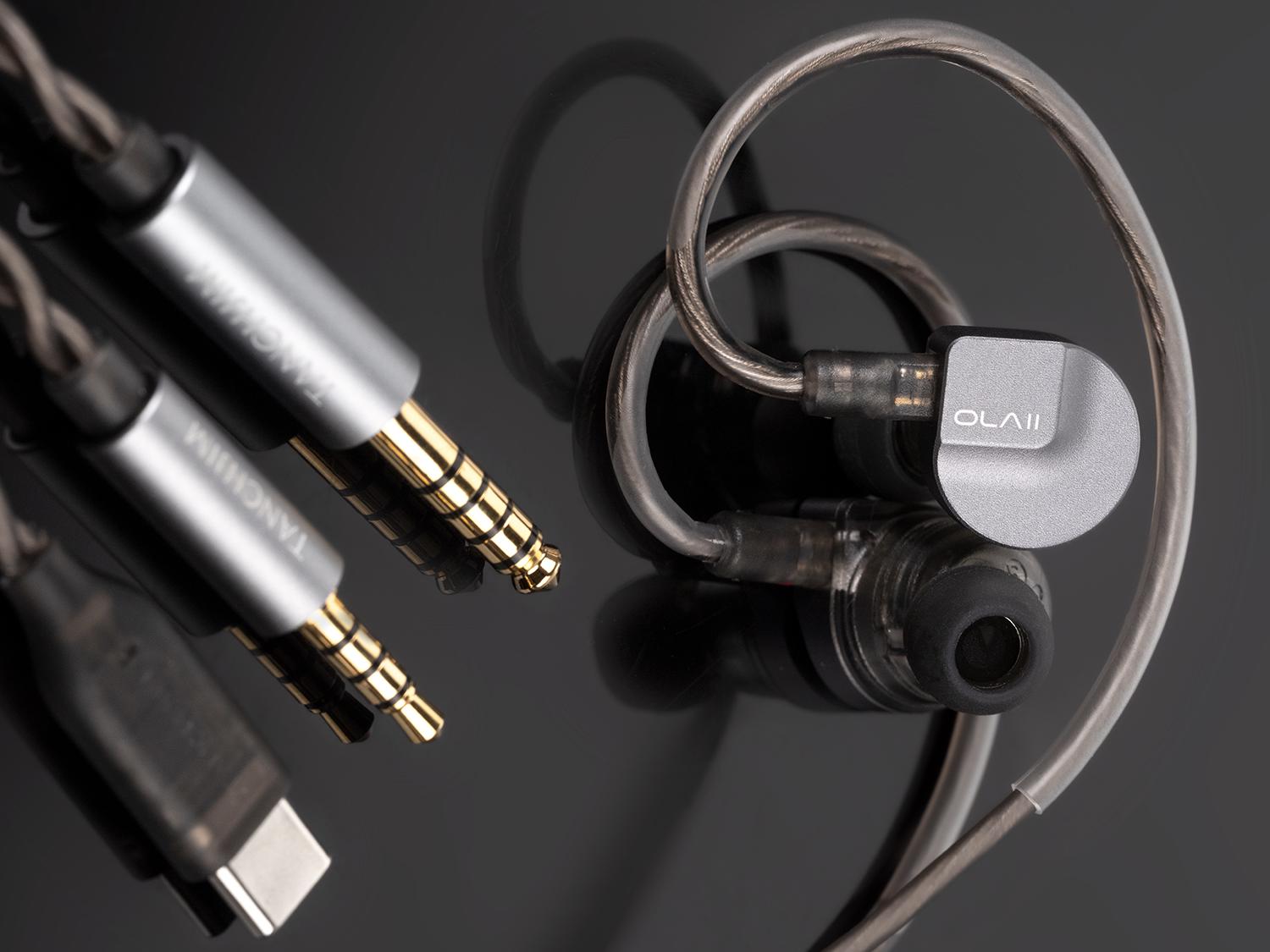
DDHiFi launched a new USB-C to USB-B cable today (October 29), the DDHiFi MD19BC, priced under US$30. Designed to connect DACs to digital audio players (DAPs), smartphones, and PCs via USB, it features the same SoftFlex PVC jacket used in the TC19BC Comet USB cable series and aluminum alloy connector housings. See below for full details.


r/IemReviews • • Aug 08 '26

๐Ÿ“นVideo Review(Must add short impressions) Stop Overpaying for Flagships - Just Buy This! | Erand RESONANCE 5

Thumbnail
youtu.be
2 Upvotes

New brand, 5 drivers, some seriously complex technology... usually that ends in total failure.
But the ERAND Resonance 5 completely breaks that expectation from the very first seconds.

Rich kit, fit like custom IEMs, great isolation, and sound that's like a fine glass of wine or a cup of espresso.
Maximum honest, delicious, rich, detailed, and so captivating that it's hard to tear yourself away from it.

And here I have a question: is this really a hidden flagship, or just a hyped-up fake?
The answer is in my review!


r/IemReviews • • Aug 12 '26

Guide [GUIDE] How to Install a microSD Card in a DAP

Post image
2 Upvotes

Using microSD cards in DAPs (Digital Audio Players) may seem simple, but there are a few precautions that should be taken. With this in mind, I wrote an article explaining how to properly install and use them, covering everything from how to insert them safely to the correct way to format them. I hope you enjoy it. Check it out below.

Note: This post with links has been previously approved by the moderators.


r/IemReviews • • Jan 26 '26

Review๐Ÿ“ Effect Audio Signature Series 2 Review: The Ultimate IEM Fine-Tune

3 Upvotes

Pros:

Exceptional Build Quality
Stunning Design Elements
Effective Fine-Tuning
Versatile Synergy especially Cadmus
Comfortable Ergonomics

Cons:

Premium Pricing
Substantial Thickness
Fixed Termination and upgrading to a switchable "TermX" system costs roughly an extra $80
Aesthetic Mismatch with color selection if you are into aesthetics
Specific Synergy with Eros, could be hit or miss

Video Review:โ€‹

https://youtu.be/E9q1xVb3OAU

This time we are looking at something special: not one, not two, but three cables fromย Effect Audio. Specifically, theย Signature Series 2: theย Ares S II, theย Cadmus II, and theย Eros S II.

Effect Audio is a Singapore-based brand established in 2009, known for their handcrafted, premium audiophile cables. They cover everything from entry-level upgrades around $150 to "godly" flagship tiers costing thousands. The Signature Series 2 sits right in that sweet spot which is a premium entry range designed to unlock specific characteristics in your IEMs, with each cable named after a Greek figure representing its sonic goal: Ares for Power, Cadmus for Clarity, and Eros for Musicality.

Disclaimer

Before we proceed, here is a note on transparency. I was given theย Effect Audio Signature Series 2 cablesย as part of a review tour organized by the Audio Geek group. A special thanks to Sandeep Bhai for making this possible. However, all impressions shared here are entirely my own personal experience and this is a completely unbiased review. The pricing for the Signature Series 2 starts with the Ares S II at approximately $199, followed by the Cadmus II at $249, and the Eros S II at $299. This creates a $50 price jump between each tier as you move up the line.

Design & Build

Design-wise, all three share a similar DNA but with different materials.

  • Connectors:ย They feature theย ConXย system. The top ring is gold and threaded, meaning you can unscrew the 2-pin connector and swap it for MMCX if you need to. Super useful if you have a mix of gear.

  • Hardware:ย The Y-splits are beautiful. They have unique accents with bits of copper and carbon fiber for Ares, copper and carbon for Cadmus, and silver and copper for Eros.

  • Chin Slider:ย It matches the Y-split accent. Itโ€™s a working chin slider (doesn't slide down on its own), but my only nitpick is that it looks really thin. Itโ€™s metal, so it shouldn't snap, but it looks dangerously close to it.

  • Cable Thickness:ย These are 8-wire gauge cables. They are thick. If you want something portable and thin, this ain't it.

  • Termination:ย These come with a standard fixed plug (3.5mm or 4.4mm). If you want the switchable "TermX" plug, thatโ€™s an extra paid upgrade ($80), which isn't included in the base set.

Material Differences:

  1. Ares S II:ย Pure litz copper. Shiny and classic.

  2. Cadmus II:ย Silver-plated copper with a solid copper core. It has a shiny white look and feels smooth, similar to the Ares.

  3. Eros S II:ย A hybrid of silver-plated copper, pure silver, and pure copper with a silver core. This one has aย matte rubber finishย in an off-gray color. Honestly? The gray is a bit unsettling. It doesn't match aesthetically with many of my IEMs compared to a pure black or white cable.

Sound Impressions: The Philosophy

Letโ€™s be real. Iโ€™m going to sugarcoat it:ย Cables make an audible difference.ย But, Iโ€™m not going to go so drastic as to say itโ€™s night and day. Itโ€™s aย fine-tune. Imagine it as that little extra salt or black pepper on your food. It enhances the flavor, but it doesn't change the meal entirely.

Rule of Thumb:ย Don't put a $200 cable on a budget IEM (like a Truthear Blue) expecting magic. Upgrade your IEM first. Once you have a "good" or endgame IEM,ย thenย look at cables to refine the signature.

Pairing 1: Thieaudio Monarch MKII

  • Ares S II:ย Gives a fuller, richer bass. The lower mids to sub-bass region get a nice little boost. It adds a "richness" to the Monarchโ€™s already excellent bass. Also matches the Monarchโ€™s brownish faceplate perfectly.

  • Cadmus II:ย Uplifts the treble a little bit. It makes the highs cleaner, more refined, and "palatable." Vocals felt cleaner and the upper air region was nicer. This is great if you want that extra spice. Lookwise, the white cable synergizes well with almost anything.

  • Eros S II:ย A blend of both Ares and Cadmus. It boosts the bass (better punch than stock, but less than Ares) and uplifts the treble (less than Cadmus). As it says in the tin, it increases the overall "musicality" and makes vocals pop a bit more.

Pairing 2: Mangird Tea Pro (Warm/Detailed Set)

  • Ares S II:ย Not a good match. The Tea Pro is already warm. Adding the Ares made the richness too high, leading to bass bloat/inconsistency.

  • Cadmus II:ย Excellent synergy. It gave that uplifting treble boost the Tea Pro kind of needs.

  • Eros S II:ย Hit or miss. Vocals got a little too sharp for my liking. It didn't vibe well tonally.

Pairing 3: Punch Audio Martilo (Bass Heavy Set)

  • Ares S II:ย Too much bass. The Martillo is already a bass cannon; the Ares made it too bloaty/bleedy.

  • Cadmus II:ย Great match. It helps uplift the treble region that usually gets shut down by the massive bass.

  • Eros S II:ย Really good response. Refined the details and added a tad extra treble while keeping the bass quality high.

Final Verdict & Ratings

Build Quality:ย 5/5ย since its built to last, despite the thin looking chin slider.

  • Cadmus S II: 5/5: This is the "clutch breaker" for me. It looks great and sounds great on almost everything, especially bass-heavy sets that need some air. My personal favorite.

  • Ares S II: 5/5: Excellent if you want that specific bass boost and richness. Just don't pair it with already warm IEMs.

  • Eros S II: 4/5: It's a bit of a hit or miss. The gray color is hard to match aesthetically, and the sound is very specific to certain gear. Itโ€™s the most expensive but not necessarily the "best" for everyone.


r/IemReviews • • 4d ago

Review๐Ÿ“ EPZ TP65 Review: A dongle that could replace your desktop setup?

Thumbnail
gallery
3 Upvotes

I've been testing the EPZ TP65, a $129 portable DAC/amp, against devices ranging from the inexpensive Apple dongle to the $400 MUSEHiFi M7.

The TP65 packs dual Cirrus Logic DACs, 551mW balanced output, PEQ, microphone mute, 100 step volume control and 60W charging passthrough.

I've also tested it with DCA Aeon Core and Thieaudio Monarch MKIV to see how well that substantial power translates into actual performance.

My conclusion is simple.

It sounds good, but the features are what make it interesting.

Disclosure: This DAC/AMP was sent by EPZ for review. All thoughts are my own.

As always, you can find my impressions across 200+ different audio products, including headphones, IEMs, DAC/amps and accessories, through the link in my profile. It is accessible to everyone.

Hardware and design

SpecificationEPZ TP65
Price$129 MSRP
DACDual Cirrus Logic CS43198
AmplifierDual SGM8262
Outputs3.5mm and 4.4mm balanced
3.5mm output power151mW @ 32ฮฉ
4.4mm output power551mW @ 32ฮฉ
SNRโ‰ฅ130dB / โ‰ฅ135dB
DecodingUp to 32bit/768kHz PCM
Volume100 steps
GainHigh / Low
Charging passthrough60W USB PD
Other featuresMic mute, LED indicator, PEQ, UAC 1.0
Weight27.52g

What makes the TP65 interesting is just how much functionality EPZ has managed to pack into it. You get dedicated gain controls, microphone mute, 100 step volume adjustment, an indicator light and PEQ support.

But the biggest win for me is the 60W charging passthrough. I can charge my iPhone 17 Pro Max while listening to music through the TP65. This works perfectly and solves one of my biggest frustrations with dongle DACs. Combined with the physical controls and balanced output, I can easily see this replacing a basic desktop DAC/amp.

Listening tests

In terms of sound, the TP65 is remarkably similar to TRN Black Pearl and Snowsky Melody. All three have a nice, clean and smooth presentation that I generally associate with the Cirrus Logic implementations I've enjoyed. Nothing sounds particularly aggressive or distracting. I don't hear a compelling reason to favor the TP65 over those much cheaper devices purely on sound quality.

More importantly, I wanted to see how well it drives my equipment.

Headphone / IEMTP65 results
Thieaudio Monarch MKIVAbsolutely fine. No issues with amplification or sound quality.
DCA Aeon CoreBass lacked impact and control compared to my desktop DAC/amp, even at maximum volume.

The Aeon Core was particularly interesting. While I could get reasonable volume, the bass lacked the impact I'm accustomed to. It also sounded slightly loose, with notes lingering longer than expected, which is quite unusual for a planar magnetic headphone. My desktop setup delivers noticeably better bass impact and control.

551mW sounds impressive on paper, but getting sufficient volume and getting satisfactory performance aren't necessarily the same thing. For context, in my previous NK1 Ultra testing, Arya Stealth worked well through the balanced outputs of Black Pearl, Melody and BTR17. Only the M7 satisfied me through 3.5mm. I haven't repeated that test with TP65.

A quick note on DAC chips

One question I often come across is whether differences in DAC sound come from the chips themselves or their implementation. I don't think there's a simple answer. I'm not an engineer, and my experience comes from listening rather than technical measurements.

However, after testing quite a few DAC/amps, I've noticed some patterns.

Cirrus Logic: Generally the smoothest and slightly warmest implementations to my ears. Snowsky Melody, TRN Black Pearl and TP65 are good examples.

AKM: Often a nice middle ground with good detail retrieval. AFUL Ember 01 and Fosi K7 are examples I've enjoyed.

ESS: A bit of a coin toss for me. I love the BTR17 implementation, but MUSEHiFi M7 in Delta Sigma mode and Topping DX5 II aren't to my preference. I find their upper frequencies a bit spicy.

Interestingly, I've disliked the Topping DX9, which uses AKM, and TRN TE Pro, which uses Cirrus Logic. That reinforces the point that implementation matters more than the chip manufacturer.

I've often listened to a DAC/amp, found it spicy, and subsequently discovered an ESS implementation. But clearly, that isn't a universal rule. These are my personal impressions from A/B comparisons under similar listening conditions. I haven't conducted controlled blind tests, so take them for what they are.

The competition

Here's the range of devices I've compared across my DAC reviews. N/A indicates a review unit.

DevicePrice paid vs. MSRPMain advantage
Apple dongle (EU)$3 vs. $9Tiny, inexpensive, sufficient for many IEMs
NICEHCK NK1 UltraN/A vs. $29.99Premium build, straightforward 3.5mm listening
MUSEHiFi U3N/A vs. $29.99Dual outputs and customizable EQ
Kiwi Ears Allegro Mini$15 vs. $20Compact design and dual outputs
Snowsky Melody$35 vs. $40Balanced output, PEQ and clean sound
TRN Black Pearl$22 vs. $30Balanced power, PEQ and excellent value
FiiO BTR17$105 vs. $199Bluetooth, PEQ and greater flexibility
EPZ TP65N/A vs. $129Charging passthrough, controls and balanced power
MUSEHiFi M7N/A vs. $399.99Tube mode and substantial amplification

The TP65's closest competition, in my opinion, is Black Pearl and Snowsky Melody. Both sound remarkably similar, offer balanced outputs and support PEQ. They're also substantially cheaper and have less power. The BTR17 is another interesting alternative, particularly if you want Bluetooth and a built in battery.

However, none of these offers the same combination of controls, power and 60W charging passthrough as the TP65. That's really what you're paying for.

Battery consumption and charging

This matters when running a dongle from my iPhone 17 Pro Max. In my previous testing, here is the approximate battery consumption across five songs.

DeviceBattery consumed
NICEHCK NK1 Ultra1%
Kiwi Ears Allegro Mini1%
FiiO BTR171%
MUSEHiFi U32%
Snowsky Melody2%
TRN Black Pearl3%
EPZ TP652%

These are approximate observations rather than controlled measurements. Being able to charge my iPhone while listening is genuinely useful, especially during longer listening sessions.

The real problem: Price

At $129, the TP65 is not particularly cheap.

Black Pearl costs $30 at retail, while Melody is $40. Both deliver excellent sound, balanced connectivity and PEQ. If all you want is a good sounding dongle for your IEMs, I don't see much reason to spend three or four times as much. But if you need charging passthrough, microphone mute, and precise volume adjustment; the TP65 becomes considerably more attractive. The question is whether those additional features are worth the premium to you.

Another issue is that for this money you can buy a desktop setup like Topping DX1 II or Schiit Fulla-E or something else from SMSL or other Chinese brands. But then carrying them around is not practical.

I do see this discounted for about 85$ for me at the time of writing so the MSRP vs. reality has a lot of savings built in due to BF sales.

Final thoughts

EPZ TP65 is a very capable DAC/amp in an increasingly competitive market.

It delivers a clean, enjoyable sound that I find remarkably similar to the much cheaper Black Pearl and Snowsky Melody. Having said that it adds additional features that are valuable plus looks quite nice with premium construction.

Would I buy it purely for sound quality? No. There are considerably cheaper alternatives that sound just as enjoyable to me.

Would I consider it as an everyday DAC/amp that could replace a basic desktop setup? Absolutely if this was the only thing I was going to use and not driving hard to drive headphones like Aeon Core.


r/IemReviews • • Jul 24 '26

Review๐Ÿ“ CCA Falcon: good for competitive gaming, unremarkable for everything else.

Thumbnail
gallery
0 Upvotes

Hello Community!

With me is the CCA Falcon, the brand's latest gaming proposal. I'll tell you the result of my experience with them.

Price: โ‚ฌ19-$22

Pros:
-Good performance in competitive gaming.
-Clean presentation and very good organization.
-Bright female vocals.
-Energetic and open treble region.
-The mids are the protagonists, with good resolution.

Cons:
-It may cause listening fatigue due to being bright.
-It is not very suitable for genres that seek exuberance.
-The cable and eartips could be improved.

Accessories:
-Two earpieces.
-Cable with QDC connection and 3.5mm termination.
-One set of S/M/L size eartips.

Comfort, design and build:
In a low-cost product, it must be understood that the materials used for manufacturing are low-cost. This happens with the CCA Falcon and it is normal; however, the product's finish is well taken care of, without noticing protrusions or burrs that would indicate poor quality control.

The set has a resin body that lets you see the internal components, with a zinc alloy faceplate featuring gills and vents, giving it an aggressive aesthetic that is very much in line with the product's gaming approach.

On the other hand, the ergonomics were satisfactory. I found a proper insertion into my ear canal and I did not have to make many adjustments for the size and shape of the shell to adapt satisfactorily to my ear.

What the brand should improve are the eartips, which are not very flexible and do not facilitate a proper seal, and the cable, a great friend of tangles and of acquiring uncomfortable or unsuitable shapes, both in sedentary moments and while moving.

In both cases, I used third-party products.

Technical aspects:
-2DD configuration (7mm+8mm)
-Impedance 25 ohms.
-Sensitivity 104 dB.
-Declared response 10Hz-20kHz.

Pairing for the tests:
-Neutral source.
-Gain set to low.
-KBEAR Coffee eartips.
-KBEAR Lattice 4.4mm cable.

Sound signature:
The normal thing when you come across a 2DD configuration is to think that these drivers are going to move a lot of air and increase the sense of impact in the music. Nothing could be further from the truth: the CCA Falcon offers a tuning far from what we know as warm and tries to offer a response where it attempts to prioritize cleanliness and separation with a touch of brightness.

Speaking about the low range, it has a correct extension, not dominant nor the protagonist, but with a slight presence when the track demands it. The atmospheric sensation is not absolute, but it can be felt when it is emphasized in the songs.

The mid-bass leaves similar sensations, with a restrained but fast and well-defined punch, with texture, without excessive thickness, leaning more towards the technical, dynamic and analytical than towards decorating your ears. This, as we might expect, goes against offering a listening experience with high doses of fun, but strongly favors a clean, non-invasive tonality: body is not the argument in this frequency sector, where it is quite implicit that control has been prioritized over quantity.

The mids show a convincing character for several reasons: the first, and the one I like the most, is that they are not recessed, bringing out a rich resolution, with great presence, full of detail, separation and naturalness.

The transients occur quickly because, as I mentioned before, having a bass region that is not dominant and authoritative is beneficial for the midrange to express itself freely. The instruments sound logical both in timbre and position, with agility and order. I do not perceive them as dense; I could say that the note weight is light and graceful.

The second reason why I liked the midrange is because of the dynamism that is felt. It is a set that feels fast, without bleed where you feel the notes take time to fade away, making it easy to follow the sound lines.

As for the vocals, they are not especially physical or deep. Rather, I perceive the male vocals throughout the spectrum as thin, as if lacking the intention to offer something positive, since I did not like the articulation or timbre. The female vocals are another story, as they enjoy a very gratifying point of openness, resolution and clarity that brings them closer to naturalness, projecting themselves into the mix harmoniously.

On the other hand, in the higher frequencies, I find another positive aspect in these monitors, as there is a good extension in the treble with a generous amount of energy, resulting in a large space where the details come to the surface. It is not a set that is kind to fatigue, since it is bright, not excessively so, but it can become tiring to listen to: it happened to me.

To finish, technically they are average or slightly above average. The size of the recreated soundstage convinced me for the prices where this Falcon lives, the positioning of the sound image was correct and precise, and the instrumental separation of the sound layers was simply satisfactory and logical for what is expected in this type of tuning.

Multi-player shooter video games:

Check the conditions under which I analyze the audio in this section.

If there is one area where the CCA Falcon manages to justify a good part of its tuning philosophy, it is precisely in competitive video games. Everything that during music playback can be perceived as a restrained bass response and greater emphasis on the upper end ends up clearly working in its favor here. The overall sensation is that of a clean, organized and easy-to-interpret soundstage even when the match begins to become complicated.

In Counter-Strike 2 the performance seemed especially convincing to me. The positioning of footsteps, reloads and utilities is precise, with a stereo image that makes it easy to interpret both the direction and the distance of opponents without the need to make any additional effort. Even during the moments of greatest tension, the separation between the different sound elements maintains a good level of clarity.

In Apex Legends, where verticality and the number of simultaneous effects increase the difficulty of the soundstage, the Falcon maintains good organization between abilities, gunfire and nearby movements. The representation of the vertical axis conveys a convincing sensation, while the depth, although correct, could offer an additional degree of distance in certain situations. Even so, I never had the feeling of losing really important information during engagements.

In Call of Duty: Warzone they once again show that same philosophy. The restrained bass prevents explosions or killstreaks from masking relevant sounds, making it easy to identify footsteps, slides and nearby movements even in particularly chaotic situations. Only when the sound load reaches a very high level can a slight loss of separation between some layers be perceived, although without compromising the overall readability of the match.

Battlefield 6 represents one of the most demanding tests due to the enormous amount of simultaneous information. Even so, the Falcon manages to maintain a stable image and convincing separation between vehicles, gunfire, explosions and ambient effects, making it quite easy to follow distant sound cues.

Final conclusion and personal evaluations:
The Falcon is not a set that can impress us easily, as it has a fairly defined personality that I believe will not suit the vast majority. The proposal revolves around cleanliness and a presentation that is much more technical than exuberant.

This means that certain musical genres lose part of their essence (electronic, pop...) but it also knows how to favor the kind of sound that needs order, layering, transparency and detail.

Being a set specifically oriented towards competitive video games, I believe this is where it can justify its existence, since it has more than enough sound localization capability in a soundstage that is moderately wide and clean, informing the player quickly for correct decision-making.

To be truly fair, I think there are other options if what you want is to enjoy music in a general rather than specific way like what the Falcon proposes, but if you are looking for a set for competitive video games, it has my highly positive evaluation, especially because it rises above, even if only slightly, the competition in this price segment.

If you have made it this far, thank you for reading.
More reviews on my blog.
Social media on my profile.
See you in the next review!

Disclaimer:
This set of monitors was sent by CCA Hifi. I sincerely appreciate the opportunity to try one of their products at no cost and that no conditions were imposed when preparing this analysis.

Despite this, my priority is to be as impartial as possible within the subjectivity involved in analyzing an audio product. My opinion belongs only to me and I develop it around the perception of my ears. If you have a different one, it is just as valid. Please feel free to share it.

My sources:
-Topping DX5 II for music and gaming on the main PC.
-NiceHCK Octave while I work.
-FiiO BTA30 Pro + FiiO BTR13 for LDAC wireless listening at home.
-FiiO BTR13 + FiiO Airlink + iPhone 16 Pro Max for wireless listening outdoors.
-Apple Music.
-Local FLAC and MP3 files.
-Windows/macOS/iOS/iPadOS/Android.


r/IemReviews • • 27d ago

๐Ÿ“นVideo Review(Must add short impressions) Linsoul Made Its First IEMsโ€ฆ And I'm Impressed!

Thumbnail
youtu.be
0 Upvotes

Lots of people know Linsoul as a marketplace thatโ€™s been helping the biggest Chi-Fi brands grow for a decade, but now theyโ€™re taking the next step and launching their own In-Ear Monitors.

This is the Linsoul Avant - hybrid IEM, with two dynamic drivers, three custom balanced armatures, and one MEMS driver. And, guys, this might be one of the best implementations of MEMS tech Iโ€™ve ever heard.
But can Linsoul create a truly decent product on their very first try?
You'll find it out in my review!


r/IemReviews • • Oct 24 '26

Review๐Ÿ“ [REVIEW] DDHiFi TC19BC Comet Gold USB Cable Review

Post image
0 Upvotes

My review of the DDHiFi TC19BC Comet Gold USB cable covers its build quality, flexibility, connector fit, and more. Throughout the article, I also compare the original Comet (OG) with the Comet Gold. Read the full review below.


r/IemReviews • • Oct 17 '26

Review๐Ÿ“ MUSE HiFi U3 โ€“ Sometimes โ€œit just worksโ€ is enough

Thumbnail
gallery
1 Upvotes

I've been using the MUSE HiFi U3 for a while now, and funny enough, the more I used it, the less I wanted this review to become another technical breakdown of DAC chips, op-amps and numbers.

Because the thing I kept noticing about the U3 was much simpler.

It just works.

I didn't only sit at home switching IEMs and listening for differences. I brought it with me on commutes, used it while walking, threw it into my EDC bag and just lived with it for a bit.

And that's where this little thing started making sense.

The U3 plugs directly into the USB-C port of my phone. No short USB cable dangling around, no little stack to arrange, nothing else to remember.

Phone, U3, IEM.

That's it.

It also takes almost no space in my EDC bag, which I appreciate more now than I thought I would. I've carried bigger portable setups before, and eventually every extra cable and little box starts adding up. With this, I can literally leave it attached to the phone while walking or put everything in my jeans pocket without thinking about it.

I also decided to get an opinion from someone completely outside the hobby.

I showed it to a friend who, apparently, had never met an audiophile nerd before in her life. She didn't even know people like us existed haha.

I showed her the U3 without explaining much and asked if the design would make her curious.

Her first question wasn't about the finish or the logo.

It was basically:

โ€œIf the wired earphones can already connect to the phone, why do you need another gadget?โ€

And honestly, I thought that was a great question.

We already know why these things exist. Someone outside the hobby doesn't care about DAC architecture or amplifier chips. They want to know why another gadget needs to hang off their phone in the first place.

And I think that's exactly where the U3 works.

It doesn't make using wired audio feel complicated.

Sound-wise, it's clean.

I've gone through my IEMs with it and haven't heard any hiss or unwanted background noise so far. Even with the more sensitive sets I own, the background stays quiet.

That's probably one of my favorite things about it.

There's enough drive for every IEM I've tried with it as well. I'm not talking about trying to replace a desktop amplifier here, but for the kind of IEMs most people would realistically use with something this small, I haven't felt like the U3 was struggling.

I also own a DDHiFi TC44Pro, which is probably one of the more obvious comparisons because they're both tiny direct-connect dongles.

Interestingly, their rated balanced output isn't that different on paper. The TC44Pro is rated at 120mW @ 32ฮฉ and the U3 at 125mW @ 32ฮฉ.

But actually listening to them, the U3 comes across as having better control and drivability to my ears. It feels a little more confident with my IEMs, and overall I simply prefer how the MUSE sounds.

I've also compared it with my Questyle and FiiO dongles.

I'm not going to tell you this $30 thing suddenly makes those irrelevant. It doesn't.

But that's also not really the point.

The U3 gives me a clean, quiet and genuinely enjoyable source in something so small that there's almost no reason not to carry it.

And that's why I'm keeping it.

One other useful thing: I'm currently on the Qobuz Android beta with bit-perfect USB playback, and the U3 has worked with it without any drama. Connect it, Qobuz sees it, music plays through the DAC. Exactly how I want this kind of setup to behave.

There's also the WalkPlay app if you want to get deeper into it and use PEQ or adjust settings.

But you don't need the app.

Straight out of the box, the device itself works perfectly fine. If you don't care about PEQ, plug it in and forget about everything else.

My only real nitpick is the MUSE HiFi branding across the front.

It doesn't really bother me, but it's definitely there. You won't mistake who made it. Personally I think a smaller, more understated logo would make an already clean-looking little device look even better.

That's about the extent of my complaints.

At around $30, I actually think this is an easy recommendation, especially if you're new to wired audio and you're looking for your first proper USB DAC/amp.

You don't need to start with an expensive DAP or a huge dongle.

Get something small, quiet, capable and easy to use first.

For that kind of person, the U3 is almost a no-brainer.

And even after using considerably more expensive portable sources myself, I'm keeping this one.

Not because it's going to replace all of them.

Because sometimes I just want to leave the house, put my phone in my pocket, bring one IEM and listen to music.

For that, the U3 is kind of perfect.

For those who want the technical bits:

Independent DAC + amplifier architecture

Dual SGM8262 amplifier stage

3.5mm: 105mW @ 32ฮฉ

4.4mm balanced: 125mW @ 32ฮฉ

PCM up to 32-bit/384kHz

Native DSD128

PEQ/settings through WalkPlay

Weight: 18.8g

Price at time of writing:

$29.99 regular price

Around $26.99 on sale at HiFiGo

Purchase links are below:

HiFiGo: https://hifigo.com/products/musehifi-u3

Amazon US:

https://www.amazon.com/dp/B0HJH8VZPT

AliExpress:

https://www.aliexpress.com/item/1005013224360035.html

The MUSE HiFi U3 was provided by HiFiGo for review. No one has seen or approved this review before posting. Thoughts and impressions are my own.


r/IemReviews • • Feb 05 '26

Review๐Ÿ“ A reference grade IEM cable - Brise Works MIKAGE (Handcrafted in JAPAN)

Thumbnail
gallery
19 Upvotes

Imagine a cable that impresses you the moment you hold it in your hand. The quality of the materials is so high and palpable. This handcrafted cable, made for premium users who value quality, is arriving from Japan this week. I thank them for sending me this wonderful example for review.

In high resolution portable audio systems, cables are often treated as accessories rather than instruments. However, when the surrounding chain reaches a certain level of transparency, the cable ceases to be a passive conductor and becomes an active participant in how the music is shaped, stabilized, and emotionally conveyed. Brise Works MIKAGE stands like a confident samurai at precisely this intersection, where engineering discipline meets musical intent.

Unlike other cables, MIKAGE doesn't use a rigid, ear hugging structure. Instead, it relies on the soft, adaptable material of its cable. This is a cable that reveals its refinement and comfort gradually, through long listening sessions, premium materials, and, most importantly, extremely sensitive and high resolution systems.

This review was written after extensive listening using the Sony NW ZX507 as the primary reference digital audio player, with Japanese source and converter pairings. Tests were conducted with a wide variety of IEMs selected for their ability to reveal subtle changes in signal behavior. The result is a clear understanding of what MIKAGE does, why it does it, and why it ranks among the best IEM cables in its price segment worldwide.

The Philosophy Behind Brise Works and MIKAGE

Brise Works is a new brand building upon Brise Audioโ€™s long-standing philosophy of uncompromising sound quality and meticulous design.

Traditional Brise Audio products are handcrafted by skilled artisans in Gunma, Japan. Each cable is made to order, ensuring exceptional quality control but also leading to long wait times and high prices. Brise Works was created to solve this dilemma.

By revising design and manufacturing systems, utilizing advanced molding technologies, and collaborating with highly precise external assembly partners, Brise Works achieves mass production without compromising sound quality.

The result is fast delivery, stable supply, and wider accessibility while preserving Brise Audio's sound design DNA.

MIKAGE is the first cable born from this philosophy, a product that directly challenges the belief that exceptional sound always requires exceptional time and cost. Because it's made in Japan, you'll feel its quality to the core.

Construction and engineering

MIKAGE uses high purity high performance copper conductors developed by Brise Audio. These are paired with a specially engineered high performance resin chosen not for durability alone, but for its effect on vibration control and signal stability.

A key element of MIKAGE is the use of CNT technology. By integrating a CNT sheet inside the plug, Brise Audio incorporates its proprietary sound processing approach directly into the termination. This contributes to reduced micro vibration, improved transient behavior, and a cleaner signal path without altering tonal balance artificially.

The cable is terminated in a 4.4mm balanced, L shaped plug and uses 2 pin 0.78mm connectors. The connectors are custom molded and designed by Brise Audio, offering a secure fit and long term reliability. Ergonomically, MIKAGE is supple, well behaved, and suitable for long listening sessions without memory effect or stiffness.ย 

For the conductor, we use a twisted wire structure consisting of 49 strands per core (7ร—7 structure) with a total of 4 cores and 196 strands overall.

This structure is ideal for transmitting high quality audio signals, delicately rendering even the finest details and lingering reverberations of the sound.

Reference source and why it matters

The Sony NW ZX507 is an extremely revealing digital audio player. Its S Master HX architecture offers exceptional control over transient edges, micro dynamics, and tonal density. It does not exaggerate or smooth over flaws. Instead, it exposes changes in cabling, impedance interaction, and signal purity with clarity.

When paired with resolving IEMs, the NW ZX507 makes cable differences obvious, especially in bass articulation, vocal density, treble decay, and spatial layering. This makes it an ideal reference for evaluating a cable like MIKAGE.

What follows are detailed impressions of MIKAGE paired with several IEMs, all driven by the Sony NW ZX507.

MIKAGE with Moritz Audio ENZO and Sony NW ZX507 (synergy)

The Moritz Audio ENZO is an exceptionally sensitive and expressive IEM. It responds instantly to changes in upstream components and does not mask weaknesses. When paired with MIKAGE and the Sony NW ZX507, the result is a presentation that feels deeply intentional and controlled.

Bass with this pairing is remarkably articulate. Rather than increasing quantity, MIKAGE improves structure. Sub bass extends with authority, but more importantly, it carries texture. Bass notes have a defined start and a natural decay, with no lingering bloom. The Sony player provides the grip, while MIKAGE ensures that energy is delivered cleanly and evenly.

The midrange is where this pairing becomes emotionally compelling. Vocals gain density without warmth being artificially added. There is a sense of body and presence that feels organic. Micro details such as breath control, subtle vibrato, and harmonic layering are rendered effortlessly. The cable does not push vocals forward, yet it anchors them firmly in space.

Treble remains smooth and extended. Cymbals shimmer naturally, with realistic decay tails that fade into the surrounding space rather than stopping abruptly. There is no added glare, no sharp edge. Instead, the treble feels confident and stable, allowing long listening sessions without fatigue.

Soundstage with ENZO expands primarily in depth rather than width. MIKAGE improves layering and separation, giving each element its own space. Imaging becomes more precise, with a solid center image and improved positional accuracy. The overall effect is immersive and emotionally grounded.

Final thoughts

The Brise Works MIKAGE is a cable defined by restraint, intelligence, and musical purpose. It does not impose a signature. It refines what is already present, allowing high quality sources and transducers to perform at their best.

In its price segment, MIKAGE stands among the finest IEM cables available today. It embodies Brise Audioโ€™s philosophy while making it accessible to a wider audience. For listeners who value coherence, realism, and emotional engagement, MIKAGE is not merely an upgrade. It is a reference.

If you want, the next step can be a dedicated comparison against flagship cables, or a shorter editorial version for publication.

Thanks for reading.

Disclaimer:ย I would like to thankย Brise Audioย from JAPAN for providing theย Brise Works MIKAGEย for review purposes. I am not affiliated withย Brise Audioย beyond this review and these words reflect my true and unaltered opinions about the product.

Instagram @ Electro Audio World >>ย ย https://www.instagram.com/electroaudioworld/

Used photo Gear : Sony A7 III + Sigma 24โ€“70mm F/2.8 DG DN II Art Lens

-


r/IemReviews • • Feb 28 '26

Review๐Ÿ“ The liquid metal beast that broke the market for under $30 - TRN Dolphin Review

Thumbnail
gallery
9 Upvotes

Welcome back! The sheer number of products that drop each and every month is overwhelming, not only do we have the same brand releasing multiple models, but in general, we have a LOT of products, and itโ€™s not uncommon for a lot of these models to fly under the radar... But occasionally a model will pop up that gets you to raise an eyebrow. Iโ€™ve been testing the TRN Dolphin for a few days prior to their launch, and based on how theyโ€™re priced ($22-26), Iโ€™m surprised at how good they sound compared to other models Iโ€™ve tested from the same manufacturer... After testing them for several hours and sending them through my trident of DACs, here is my analysis and also my own photos to show you what you get inside the box versus just using the promotional render images...

What i like / What i donโ€™t like

  • The polished liquid metal alloy construction is absolutely insane, they look like they cost more money than they do.

  • The LCP diaphragm produces a sub-bass that is both rumbling and extremely quick, there is zero muddiness.

  • Micro-details and separations are significantly better than youโ€™d expect at this price point.

  • The cable is modular, as well as extremely flexible, this is relatively unheard of in this price point.

  • There is zero pressure in the ear when wearing them and zero sign of the annoying driver flex when putting them on.

  • The bad part is that sometimes they only ship one termination even though the cable is modular.

  • The treble peak will cause you fatigue if you are sensitive or if you tend to turn up the volume to extreme levels.

  • They are not discrete in design, youโ€™ll look like a space dolphin when wearing them๐Ÿ˜…

Specifications

  • Drivers: 1x 10mm dynamic driver (LCP diaphragm) + dual magnetic circuit.

  • Frequency response: 20hz โ€“ 20khz.

  • Sensitivity / Impedance: 106db / 32 ohms.

  • Shell material: Liquid metal alloy with aerodynamic design.

  • Connector: 2-pin 0.78mm (although TRNโ€™s proprietary-ish system uses a different pin configuration).

  • Cable: Braided OFC copper with modular design.

  • Weight: Approximately 9.3g per shell but still very comfortable to wear.

Unboxing and build

The packaging continues the marine theme. As soon as you open the box, the two shells are staring back at you, shiny like mirrors. The CNC machining is top-notch, they did an excellent job sculpting the shells to resemble a dolphinโ€™s fin and they feel cold to the touch, as if they are made of premium materials. The best part is the ergonomic fitment, the 9.3g shells are so well-distributed that you almost forget youโ€™re wearing them during extended sessions. The dual ventilation system works great at preventing the driver flex, however, itโ€™s odd to see the two vent holes located on the same side of the IEM. I believe the overall build quality is truly insane for 25 dollars.

Inside the box you get standard white tips and a pair of TRN T-ear tips (there is only one size available). The cable is a four-conductor braided cord with a clear polymer that allows you to see the copper. Itโ€™s flexible and doesnโ€™t tangle too much in my opinion. The cable uses a 5 pin connector to ensure it doesnโ€™t come loose accidentally. However, the grey cloth pouch is very basic and your best bet is to find a hard case to protect the shells from getting scratched on the first day.

Sound

The signature is a smooth u, kind of harman-esque but turned up to 11 at the ends. Itโ€™s a lively sound. The bass has incredible authority, the sub-bass shakes you in electronic tracks, but because the LCP is so fast, the impact is elastic and dies down immediately without causing any problems. Itโ€™s fun, yet controlled and not bloated bass covering everything else.

The mids are clean due to the lack of hybrid crap. Male vocals have a wonderful warmness and female vocals are very present and full of life. The timbre is fantastic, but if you crank the volume to extreme levels in modern pop music, the vocals can sound a little sharp. Youโ€™ll definitely enjoy the clarity here, trust me. The treble is very airy and detailed, bringing out texture in songs where other IEMs in this price range cannot. However, there is a big energy peak here, use caution if youโ€™re sensitive or tend to max-out your volumes. If you like high volume and the recording is bright, the s and sh sounds will chew you alive, at moderate levels, however, they're pure bliss in terms of tech.

Soundstage/instrumental separation/imaging

The stereo field is extremely wide and therefore delivers a very front immersive experience. It's similar to sitting in the front few rows of a concert and getting hit straight on with every note. The Dolphin is simply phenomenal when it comes to separating instruments especially in fast-paced metal music where normally everything gets jumbled together. In addition, the Dolphin's fast recovery time prevents that terrible overlap of sound that many of us don't like in low-end budget cans. The Dolphin delivers pinpoint accurate imaging which makes it relatively easy to pinpoint where each sound is coming from.

Pairing

  • FiiO K9: Now we get the best out of the stage and the background is dead silent. The bass has become scalpel-sharp and the ESS chips do a somewhat better job at controlling the treble than a simple dongle, although the treble still presents every flaw of the recording to your ears.

  • FiiO KA15: The stage is right in your face and very frontal, the bass is beastly strong as well. It's a very energetic combo, perfect for electronic music... But beware, it won't hide anything and the treble remains super loopy in the upper reaches.

  • Questyle M15i: The famous current mode amplification provides the Dolphin with a natural warmth and softness that takes some of the harshness out of the midrange and treble that occasionally shows up in the Dolphin. It also makes the voices and the overall stage feel incredibly natural and adds a lot of depth to the sound.

Comparisons & mini ranking

  • Kiwi Ears Cadenza II:ย  I like to include a slightly more expensive model in my comparisons that I have reviewed recently, and these are the kings of organic timbre and relaxing listening. You could sit with them for hours without feeling tired, but it's true that the Dolphins far surpass them in terms of raw power, subbass, and micro details with their tuning.

  • NiceHCK Tears: The Tears offer a much wider soundstage and are almost like open-back headphones, but their bass is weak and the treble has a slight metallic sound. The Dolphins are clearly the more technical and realistic option compared to the Tears.

  • TRN Starfish: The Starfish are the slightly lazier siblings of these new Dolphins, in my opinion. They are warm and forgive poor quality recordings by playing it safe, but they lack detail and the soundstage is flatter compared to the resolution of the Dolphins.

Mini ranking:

  1. Kiwi Ears Cadenza II: First place, in a way it was somewhat expected due to their natural timbre and zero fatigue with slightly more resolution, although the price difference is not as great as one might expect. Even so, they lack the soundstage and spacious brightness that the Dolphin headphones provide.

  2. TRN Dolphin: Unsurpassed in terms of technique, speed, and build quality, we'll leave the design aside. The Dolphin is the most complete package for anyone looking for separation and treble without neglecting the rest of the frequencies, but obviously, in general terms, they are a step below the Cadenza II, although very close despite costing half as much.

  3. NiceHCK Tears: Great soundstage and airiness, but they lack the resolution and body in the mids to rank among the best headphones.

  4. TRN Starfish: If you just want a dense sound to disconnect your brain, then the Starfish is your choice, but technically it is the weakest of the four.

You can check my full ranking of all the IEMs reviewed so far on my profile (Reddit doesn't allow me to post the Drive link here)

Final thoughts/conclusion

For under $22-26 dollars and packing a lightning-fast LCP diaphragm into a CNC carved liquid metal casing, TRN is declaring war on the entire industry. It is quite easy to sum up a review of the Dolphin: if you want detail, technique and a sub-bass that knocks you over the head, they are a must buy. If you are one of those folks whose ears are too sensitive and the high cymbals in the recording drive you nuts, then run for cover because they will destroy you mercilessly.ย 

The Dolphin is designed for enjoying detail at reasonable listening levels. I think it would be difficult to find anything in the same price range that is as professional looking or sounding as this product.

The TRN Dolphin can be purchased at the official TRN store: https://trn-audio.com/trn-dolphin.html

Disclaimer: This unit was given to me by TRN, but I personally spent $5.19 out of my own money to pre-purchase the product. My opinions are 100% my own and have been checked through no brand prior to publication.ย 

I'll read your comments below, as per usual, these designers are crazy!!


r/IemReviews • • Feb 06 '26

Review๐Ÿ“ Setting the entry-level ablaze - GK Kunten Review

Thumbnail
gallery
26 Upvotes

I hadn't seen this kind of buzz online about IEMs in a while. Everyone's been chatting about the GK Kunten. Actually, someone in my Monarch MKIV review's comment section got me curious, so I hit up the company. They were cool enough to send me a pair for review, no strings attached. Rumor has it they've got the same driver as the KZ Zenith (which costs way more!), which would be a crazy steal. After using them for a few days, I totally get the hype, but let's keep it real.

What's great:

  • The oomph and punch make you question the price. Seriously!

  • The bass goes deep and feels amazing, tops for this price point.

  • The sound feels big, not stuck in your head like some others.

  • Easy to power with anything, even with a 43ฮฉ impedance.

  • Things sound pretty separated, even if it can't handle everything.

What's not so great:

  • The cable? A tangled, plasticky nightmare.

  • The stock ear tips? Same deal โ€“ kinda like KZ's basic ones.

  • The resin build is okay, but feels a bit cheap, might not last forever.

  • Could be too much if you're sensitive to bright sounds.

  • Doesn't block outside noise great because they're semi-open.

Specifications:

  • Driver: 10mm Dynamic (composite diaphragm).

  • Impedance: 43 ฮฉ.

  • Sensitivity: 109 dB.

  • Frequency Range: 20 Hz โ€“ 40 kHz.

  • Cable: Silver-plated copper, 2-pin (0.78mm).

  • Plug: 3.5mm.

My Sources:

  • FiiO K9: My main desktop equipment connected to my PC for critical cleanliness and power tests.

  • FiiO KA15: Portable DAC dongle for daily use when leaving home due to its amount of quick adjustments, its integrated equalizer, multimedia buttons to handle from the pocket...

  • Questyle M15i: Reference portable amplifier/DAC to search for a more organic and musical texture, when I am at home but not necessarily at the PC.

What's in the box and how they're made:

Don't expect anything fancy when you open the box. The packaging looks just like KZ's and some other brands: white box, IEMs inside, and cable with tips underneath. The earbuds themselves are light, made of dark resin with metal plates that have vent openings, giving them a techy look; though just like with KZ, we are still stuck with the QDC connection. They're comfy, but the included tips don't seal well. I had to use the Azla Sedna Earfit Origin to get the best sound. If you don't get a good seal, you won't hear that awesome bass I mentioned earlier.

About that cableโ€ฆ

The cable is the weakest link. It's one of those thin ones that tangles by itself and makes noise if it rubs against your clothes. It's not modular, so you're stuck with the 3.5mm jack, which is understandable at this price. If you have a decent 2-pin (0.78mm) cable lying around, use it. You'll get better comfort, looks, and toughness. In my case, as you can see in the last photo, Iโ€™m using a NiceHCK C16-3 cable, which I love because of how easy it is to handle.

Performance with my sources:

I tested them with my usual stuff to see what they could do:

  • FiiO K9: The Kunten shows what it's got here. The K9 controls the driver perfectly, no distortion even at high volumes. Sounds get bigger, but I used low gain because they're super sensitive, and background noise could show up with a less clean source. The bass texture sounded the best here โ€“ stronger and more natural, so the sound doesn't get cramped on different music types.

  • FiiO KA15: I love being able to change the volume and EQ with the buttons. The KA15 gives the mids a push, which is great for noisy places. And the KA15's DAC seems to clean up the highs, so they're less sharp when I'm walking around. Plus, the KA15 is powerful enough to handle the 43 ฮฉ impedance without losing bass detail.

  • Questyle M15i: This adds some warmth and makes the mids sound more organic, so the Kunten is less digital and more enjoyable. This also softens the transition between the upper-mids and highs, so I can listen to poorly recorded rock albums without getting ear fatigue. The KA15 could be too much, but the M15i balances out the Kunten's V-shape, giving it a more analog vibe.

Sound and frequencies:

It's a classic V-shape, but done really well โ€“ lots of energy, but with some brains.

  • Bass: This is the star, for sure, if you get a good seal. The sub-bass rumbles so you can feel it. The air really moves on heavy soundtracks. The bass isn't muddy. You can tell the difference between a deep synth and an electric bass. The only bad point? This can be a bit tiring in busy tracks because of the sound pressure, especially if you listen loud, where the mid-bass gets a bit strong.

  • Mids: These are a bit behind, common for a V-shape. The lower-mids have enough body, so male voices don't sound too distant. Though the Kunten has a strong high-mid boost. This makes female voices and electric guitars super clear, but it's a double-edged sword: can be a bit shouty if the recording is bright. Not for those who like smooth voices โ€“ this is all about clarity and attack.

  • Highs: These go surprisingly high for being $15 or less on AliExpress. There's detail in the cymbals, and the airy frequencies make it feel spacious โ€“ not super wide, but better than many others at this price. I didn't hear any harsh sounds, but it's a bright and energetic sound. The downside is that the highs can sound a bit fake compared to higher-end drivers. You can tell it's a dynamic driver trying hard to deliver detail, which sometimes sacrifices the natural timbre in higher frequencies.

Soundstage and imaging:

The semi-open design helps here:

  • The soundstage: Is pretty wide for such a cheap IEM. Sounds don't feel trapped in your head, projecting outwards.

  • The imaging: And placement are good. You can pick out instruments fairly easily, which is rare at this price.

  • Instrument separation: Has limits in complex orchestral pieces where many instruments compete. The Kunten starts to sound muddy here, losing the surgical definition that separates it from game/media IEMs and higher-end ones, despite people online.

Model comparison:

Compared to two recent reviews for models usually below $40. This will also include a comparison with the Monarch MKIV, which brought me to write this review. Let's see what happens when compared with the Kunten.

  • TRN Starfish: The Starfish is more balanced and better for listening for hours. Has a more natural sound and less aggressive highs. The Kunten wins with a stronger initial punch and wider feel. Starfish is for focused, calm listening, but the Kunten is for pure excitement.

  • NiceHCK Tears: The Tears focuses on voices and sound. It's more polite. Though is not exciting when put against the Kunten. While the Tears is decent and a bit flat, the Kunten gives a more complete and exciting feel for modern music for much less. Tears have more extension and better air/highs. The bass feeling is more engaging on the Kunten.

  • Thieaudio Monarch MKIV: Not really a fair fight. If you read online, that the Kunten is that of an endgame is wrong. If the Kunten was THAT good, the IEM >$1K market would not exist. The Monarch is a tool with great instrumental separation making the Kunten seem like a toy. Bass has great texture and the highs are smooth because of the electrostatic drivers. The Kunten tries to imitate the soundstage, but the Monarch puts you in the recording. Though what the Kunten offers at less than $15 makes it quite a feat. If this is your first time with IEMs, it will more than fly your mind. It's even great for other expensive models like the Monarch.

Mini-ranking:

  • 1-Thieaudio Monarch MKIV: King of resolution and features.

  • 2-GK Kunten: King of the price because of stage and sounds.

  • 3-NiceHCK Tears: Great vocal qualities and highs, though something is missing.

  • 4-TRN Starfish: Solid and even, but less wild.

Last Thoughts:

For around $12-15 USD, the GK Kunten is insane. Fun, good sounds for price, soundstage makes you smile quickly. It has issues such as bad accessories and separation is limited. It's a must buy for getting into this hobby of IEMs.

Thanks for checking out the review! If you've tried them or are curious, leave a comment and share what you think!

Disclaimer: I got this unit from GK for review purposes. This review is with my own thoughts and perspective.


r/IemReviews • • Jul 07 '26

Review๐Ÿ“ Moondrop x Wuthering Waves U.C.T.S. - Music without cutting you off from the world

Thumbnail
gallery
3 Upvotes

I have always found open-ear headphones curious. In fact, I came close to buying a pair between 2023 and 2024 when I was still making the transition to IEMs and constantly fighting with TWS earbuds. The model I almost bought was the Huawei Free Clip. However, due to several factors including the price and the fact that I was not sure if I would even like or be interested in this format, I never got to try open-ear headphones until now. Instead of isolating you from the outside world, the idea behind this type of headphones is that you can still hear what is going on around you while you enjoy your music, play games, or simply spend a few hours in front of the computer without that feeling of having your ears completely plugged.

Moondrop has been releasing quite a few TWS models. I have already been able to own the original Space Travel and the recent Moondrop Pudding, but they were not open-ear. Therefore, this new proposal, which also comes in the form of a collaboration with a video game that to be honest I did not know, caught my attention quite a bit.

After using them for several days both at home and during some walks down the street checking their main feature, I think the U.C.T.S. make their goal quite clear from the very first moment. They are not trying to compete with noise-canceling headphones or offer the same experience as traditional IEMs. Their proposal is different and, precisely for that reason, I think it is worth analyzing them always keeping in mind the type of product they really are.

What I liked / What I didn't like

  • Very different design from any other headphone I have tried.

  • Excellent comfort after several hours.

  • Very good stability once in place.

  • Balanced sound for an open design.

  • Very complete application.

  • Compatibility with LHDC V5 / Bluetooth 6.0.

  • Lots of content for Wuthering Waves fans.

  • Three configurable gain levels but...

  • ...only the high gain is useful to me and even then it falls short.

  • The case takes up considerably more space in the pocket than usual.

  • Like any open design, the bass has limitations.

  • The application offers many functions, but some menus could still be better organized.

Specifications

  • Open Wearable Stereo (OWS) design.

  • 13 mm dynamic driver.

  • Coaxial planar microdriver.

  • Bluetooth 6.0.

  • SBC, AAC, LC3, and LHDC V5 codecs.

  • AI noise reduction for calls.

  • Multipoint connection.

  • Three gain levels.

  • Up to 9 hours of playback.

  • Up to 30.5 hours using the charging case.

  • USB-C charging.

  • Compatible with the Moondrop Link app.

Unboxing and build quality

The presentation conveys the feeling of opening a collector's edition rather than just simple wireless headphones much more strongly. In fact, I think I was surprised by the large size of the box when I received it, thinking they had even sent me something else or something extra besides the headphones๐Ÿ˜….

The box maintains a very careful aesthetic, combining black tones with silver details inspired by the game. Once you lift the lid, everything appears perfectly organized inside a foam mold where each accessory has its own space. It is a quite elaborate presentation and, at least personally, I found it even better than I expected just looking at the promotional images.

In addition to the headphones and the case, we find the USB-C cable, the usual documentation, a strap to carry the case, and a good amount of exclusive merchandise consisting of badges and bookmarks, I think. Even for someone who is not a regular gamer, it is appreciated to see that the collaboration is not limited solely to the design of the headphones, but also includes small details that help give it a more special character.

The case is probably the most striking element of the whole set. Instead of resorting to the classic oval or square format that we see in practically any TWS, Moondrop has opted for a completely cylindrical design. In principle, it is mostly or entirely made of plastic, or that is my impression, but it looks sturdy, although I have not dropped it on the floor to verify it 100 percent. It has different decorative engravings that I understand maintain the aesthetics of the game itself.

Something I love is its opening system. It is not a conventional lid, but a rotary mechanism that reveals both headphones when rotated. It is one of those small details that do not add anything to the sound quality, but they do manage to give the product a lot more personality. It is the typical detail that will probably stop surprising after a few weeks, but from the first moment it makes the set feel different from any other model that has passed through my hands. The mechanism, by the way, must have some kind of spring since it has some resistance when you start turning it, but when you let go it wobbles until it stays in the open or closed position, which is very pleasant.

Of course, this design also has a quite obvious consequence, the size. Compared to most current TWS cases, this one takes up significantly more space in the pocket. It does not become uncomfortable, but it is something to keep in mind if you are looking for maximum portability.

The headphones themselves follow exactly the same philosophy. Their clip-like design means they do not enter the ear canal, but rather rest on the ear via a flexible silicone bridge. I admit that at first I had some doubts about this system because I had never used a model of this type, but the adaptation was much faster than I expected.

Once you find the correct position, you practically forget you are wearing them. The pressure they exert is very light and, at least in my case, they never caused any discomfort even after several consecutive hours of use. Furthermore, during walks I also did not have the feeling that they were going to move or fall off easily, something that initially did worry me looking at their design.

Precisely that position is quite important in this type of headphones. Since there is no seal inside the ear canal, a few millimeters can slightly change the way we perceive the sound. It does not seem to be something exclusive to this model, but a characteristic of practically any open-ear design. Once you find the sweet spot, the experience is very consistent, so it is worth taking a few seconds to adjust them correctly the first time, but I think they are designed to be worn as close to the back and lowest part of the earlobe as possible.

Application and features

After having tested the Moondrop Pudding very recently, the application was no surprise to me. Both models share the Moondrop Link ecosystem, something I consider one of the strong points of the brand's latest releases.

The first connection was practically immediate. Of course, just as it happened with the Pudding, the application did not detect the headphones until I took them out of the case. From that moment on they appeared automatically and I was able to access all the available options.

One of the details that I think is worth mentioning is the issue of codecs. By default, my phone only showed SBC and AAC. It was necessary to go into the application itself to manually activate LHDC, at which point both LHDC V3 and LHDC V5 appeared depending on the selected mode. It is not something particularly complicated, but it is worth knowing because more than one user might think that their phone is not compatible when in reality they just need to activate the corresponding option.

The application allows you to check the battery level of each headphone separately, update the firmware, configure the touch controls, activate the multipoint connection, and modify different parameters related to the operation of the headphone itself.

A function that I found especially useful are the three available gain levels. The problem with being headphones that do not go inside the ear is that the high gain mode, at least on my phone, has been the only one that has been of any use to me, especially outside the house walking down the street. On the other hand, when I went down to the subway taking advantage of a short trip I had to make, it was totally impossible to listen to the music every time a subway train approached. This rendered the high gain mode completely useless and with the volume of my smartphone at the maximum it allowed me, so I can say that the maximum volume of these headphones does not get as high as I would like.

As was the case with the Pudding, we also find a full parametric equalizer along with Auto EQ. While most manufacturers limit themselves to offering four or five predefined profiles, here we can modify the frequency, gain, and Q factor of each band or simply load one of the numerous available profiles.

Being a collaboration with Wuthering Waves, the application also incorporates some small exclusive extras, such as the ability to change the system voices between different characters in the game. It is not an essential feature, but it is a detail that completes the experience for those who especially enjoy this collaboration.

If I had to find a fault with this app, it would probably be the interface. It works well and offers many options, but visually it still looks like an application designed more by engineers than by designers. Some menus could be better organized. In fact, I found the menu to configure the touch presses of the headphones completely by chance and right now I do not remember how or where I opened it, luckily I already left it configured the way I wanted.

Even so, I still think exactly the same thing I mentioned in the Pudding review. For me, Moondrop Link continues to be one of the most complete applications that currently exist within this price range and adds real value to the product instead of just showing the remaining battery percentage. After using it on both models, that impression has only grown stronger.

Sound

Bass

The bass response is clearly designed for the characteristics of an open design. Instead of trying to artificially compensate for the lack of a seal with a huge amount of bass, Moondrop has opted for a much more balanced tuning. There is enough presence to add body to the music, but always maintaining control and preventing the bass from trying to become the star of the show.

Obviously, anyone coming from IEMs or traditional TWS will notice that the impact is lesser, but that is part of the very philosophy of this type of headphone. In return, the bass never invades the rest of the frequencies and lets the whole presentation breathe much more easily.

The sub-bass is present, although it does not convey the physical sensation that a sealed headphone can offer. The mid-bass provides slight support to some instruments, achieving a quite clean sound regardless of the musical genre.

I tried, although obviously the ergonomics of these headphones did not allow it, to try to push the headphone deeper inside the ear and the bass response obviously increased considerably but the sound quality was negatively affected. This makes clear the correct way in which they should be used. That said, the volume when trying to have them deeper in the ear did reach the level I would have liked.

Mids

I think it is precisely in the mids where the Moondrop Wuthering Waves stand out above the rest of the frequencies. Both male and female voices appear very well defined and always occupy an easy to locate position within the mix.

The tuning itself helps explain this behavior. There is some prominence in the upper mids area that adds clarity and makes instruments stand out quite easily without becoming exaggerated.

I also liked the naturalness with which they transition from some frequencies to others. It does not give the feeling that there is a sudden jump between bass, mids, and treble, something that helps practically any musical style to be pleasant to listen to.

If I had to define the tuning with a single word, it would be balanced, without impressing during the first few minutes with a spectacular response in any specific frequency, but offering a very comfortable listening experience during longer sessions.

Treble

The treble maintains that same philosophy. There is enough extension to provide a sense of detail and a fairly open presentation, but without seeking an excessive level of brightness, at least with the stock equalization.

It is true that the upper-mids zone has slightly more presence than the top end, so the sense of definition comes more from that part of the response than from particularly prominent treble. So when listening to cymbals or other metallic instruments they do not steal the attention unfairly.

During my testing, I never perceived a fatiguing sound, even after several hours of continuous use. In fact, I think that was precisely Moondrop's intention, to offer a tuning that accompanies you for a long time without being tiring.

Since these are open-back headphones, I have not found it necessary to recommend changes through equalization either. The tuning seems quite consistent with the philosophy of the product and, honestly, I think any attempt to increase the bass too much would end up going against the physical limitations of this type of design itself, but you have the option both manually and through various presets of well-known models of the brand.

Soundstage

One of the aspects that surprised me the most about these Moondrops has been the sense of spaciousness. Precisely because there is no seal inside the ear, the presentation is much more open than what I have been finding in conventional TWS.

It does not mean that the soundstage is huge, but it does convey a very natural sense of space. Instruments have enough room to breathe and the music does not seem to concentrate inside the head as easily as it happens in many in-ear headphones.

Furthermore, I think this way of presenting the sound fits perfectly with the use for which they were designed. During my walks I could still hear the traffic, the bicycles, or anyone approaching perfectly well while the music kept playing in a totally natural way. That feeling is even more convincing than using the transparency mode of traditional TWS, since here it does not depend on microphones artificially reproducing outside sound, but rather you simply never stop hearing what is going on around you.

Instrumental separation

The instrumental separation has also left me with good feelings. The restrained bass response helps each instrument find its space quite easily and prevents heavily loaded mixes from losing clarity.

Understandably, it does not reach the level we can find in many IEMs of a similar price, but I think that would not be a fair comparison either considering the completely different concept of both products.

In the context of open-ear headphones, the result seems very satisfactory and sufficient to follow each instrument without much difficulty.

Imaging

The imaging maintains a very consistent level throughout the entire listening session. The placement of voices and instruments is easy to identify and the small shifts between the left and right channels are perceived quite naturally.

I also used them to play some casual games and watch videos during these days. Without being headphones designed for competitive use, they perform perfectly when it comes to locating sounds or easily following the direction of different effects within the scene.

And I think that is precisely the greatest virtue of these Moondrop Wuthering Waves. Instead of trying to look like wireless IEMs, they take advantage of the benefits of an open design to offer a different but very well executed experience with many options to adapt them to our liking.

Global Ranking Link

You can check my full ranking of all the IEM reviewed so far on my profile (Reddit doesn't allow me to post the Drive link here)

Conclusions

The Moondrop x Wuthering Waves U.C.T.S. have left me with a much better impression than I expected before opening them. At first I thought the main attraction would be the collaboration with the video game, but after using them for several days I have the feeling that all the aesthetic section and the content for collectors are simply an addition to a product that already had its own arguments to draw attention.

The soundscape created by the tuning works perfectly along with the idea behind these headphones, which provide a comfortable and pleasant experience when listening to your favorite tracks. There is an emphasis on vocal clarity as well as an impressively large soundstage for the type of product that Wuthering Waves has provided.

Of course, there are limits to what these headphones can do. One of the biggest drawbacks for myself is that, although they offer good quality sound at low volumes, they fall short in terms of maximum volume level in extremely noisy areas, because they are designed to sit on top of the ear rather than go into it. So, if you want extreme isolation from the environment or a much heavier bass response then I would recommend that you consider a more traditional true wireless stereo (TWS) option. However, if you like to enjoy listening to music while at the same time keeping yourself informed about what's going on around you, I believe that Wuthering Waves were made for people such as yourselves.

If you're a fan of Wuthering Waves as well, then the additional content contained within the box related to the exclusive partnership adds a great deal of extra value to these products. Even without considering anything about the partnership, however, I feel confident in stating that there are many reasons why Wuthering Waves stand out among other options available within the open-ear headphone market.

Wuthering Waves Purchase Link: ShenzhenAudio

Disclaimer: This unit was supplied for evaluation purposes by ShenzhenAudio. My thoughts were formed independently and no part of those thoughts were swayed by the manufacturer or retailer.


r/IemReviews • • Aug 30 '26

๐Ÿ“นVideo Review(Must add short impressions) CCA Phoenix Honest Review โ€“ Buy or Skip? ๐Ÿ‘€

Thumbnail
youtu.be
3 Upvotes

The budget IEM market is packed with options, and the CCA Phoenix is another interesting contender. After spending some time with it below are my thoughts:

Build, Comfort & Accessories

The Phoenix has a compact metal shell with a mirror-like finish and feels well-built. Despite carrying some weight, I was able to use it for over three hours without any comfort issues.

The accessory package is also decent, including a carry pouch, standard three pairs of eartips, and a surprisingly good-quality 2-pin cable with Mic and Type-C variants are also available.

One thing to be careful about is the nozzle area, as it doesn't have a traditional protective mesh and can be damaged if handled roughly.

Sound & Gaming

The Phoenix has a balanced but energetic sound. There's enough bass to keep music engaging without completely overpowering the vocals, while the forward instruments and upper frequencies provide good clarity and detail.

The downside is that the upper frequencies can occasionally become too prominent. I noticed this more while watching movies and series, where certain background effects could sound sharper than expected.

Gaming performance was surprisingly good, with decent soundstage and positional accuracy.

Final Thoughts

The CCA Phoenix is a good budget IEM with a compact metal build, comfortable fit, solid cable, engaging bass, and good gaming performance.

I'd recommend it if you're looking for somethingย energetic and versatile for music and gamingย and prefer a tuning with forward instrumentals. However, if you prefer aย smoother and more relaxed sound, particularly for long movie or binge-watching sessions, there may be better options depending on your preference.

I've covered the sound, microphone, gaming performance and overall experience in much more detail in the full video.

Thanks for reading and do checkout the video <3


r/IemReviews • • Oct 14 '26

Review๐Ÿ“ Dual Review of T-Shaped Dongle DACs Priced Around $50: Kiwi Ears Allegro BAL and Allegro Pro

Thumbnail
gallery
3 Upvotes

Hi everyone, Iโ€™m back with a review of Kiwi Ears Allegro Pro and Kiwi Ears Allegro BAL Dongle DACs. I received this IEM from Nicole, who kindly provided it for review purposes. Thank you to Nicole and the Kiwi Ears team.

Here are my subjective impressions as an audio enthusiast. To summarize, here are the pros and cons of the Kiwi Ears Allegro BAL and Kiwi Ears Allegro Pro:

Allegro BAL (+)

  • Having 2 balanced ports makes it quite easy for A/B testing, allowing you to compare the sound of one IEM/headphone with another of the same model that might be abnormal or already modified.

  • If you need to listen to music in an intimate setting with a partner, you no longer have to share a single IEM/earphone, now each individual can enjoy full stereo because both ports are active simultaneously.

  • Free from dangling cables.

  • Its 180mW output power is enough to drive most IEMs on the market and some high-sensitivity headphones.

  • Features a 5-band PEQ.

  • The shape is still relatively compact and solid, similar to other T-shaped dongle DACs released by Kiwi Ears, but this one is the widest.

  • Has a sound signature that remains similar to other Kiwi Ears T-model DAC series, which is neutral leaning slightly bright.

Allegro BAL (-)

  • Even though it has a PEQ, competitors already support more than 5-band PEQ, come with companion apps, and can be accessed across various devices.

  • If you have a laptop with 2 adjacent USB Type-C ports, there is a high chance your second slot will be blocked by this dongle DAC.

  • As for the filter selection button, sometimes it has been pressed but the light refuses to change, and the filter options don't sound any different to my over 30 year old ears.

  • Compared to lower tier versions like the Allegro Mini and Coda, the noise floor is slightly more audible.

  • If you are a low volume listener, it is quite difficult to set the volume as low as possible because, at its default setting, the lowest volume is still not low enough for me, especially for IEMs. I recommend that if there is a pre-amp option in the application you use, you should give it a try.

Allegro Pro (+)

  • Features a 5-band PEQ.

  • The shape is still relatively compact and solid, similar to other T-shaped dongle DACs released by Kiwi Ears.

  • Features SE (Single-Ended) and balanced jack connectivity, and both ports can be used simultaneously.

  • Has a neutral sound tuning leaning slightly bright.

  • Free from dangling cables.

  • Its 170mW output power for balanced is enough to drive most IEMs on the market and some high-sensitivity headphones.

Allegro Pro (-)ย Same as the Allegro BAL.

These impressions are based on my preference for a V-shaped bright sound signature. Please don't use these impressions as a reference, as every ear is different and I'm only sharing my personal experience. Always trust your own ears and audition if possible. If you find any mistakes, feel free to comment.

Initially, I wanted to separate this into 2 reviews, but since these 2 dongle DACs are not vastly different in character, I decided to combine them to make it easier for readers to choose, after all, their prices and decoding capabilities are also quite similar.

The specifications for the Kiwi Ears Allegro Pro are as follows:

  • Connection method: USB Type-Cย 

  • Output terminals: 3.5mm single-ended / 4.4mm balanced (dual output)

  • Output power: 68mW @ 32ฮฉ (3.5mm) / 170mW @ 32ฮฉ (4.4mm)

  • SNR: > 113dB

  • THD+N: < 0.006%

  • Crosstalk: Less than -65dB at 3.5mm output / Less than -100dB at 4.4mm output (at 32ฮฉ)

  • Dual ESS9603 Sabre amplifier chips

  • PCM support: 44.1kHz to 384kHz / 32bit

  • Construction: All-aluminum alloy body

  • Compatibility: Windows, macOS, Android 5.1+, and compatible iOS

The specifications for the Kiwi Ears Allegro BAL are as follows:

  • Connection method: USB Type-C (direct plug-in)

  • Output terminals: 4.4mm x 2 balanced (dual output)

  • Output power: 180mW @ 32ฮฉ (4.4mm)

  • SNR: > 113dB

  • THD+N: < 0.005%

  • Crosstalk: Less than -100dB at 4.4mm output (at 32ฮฉ)

  • PCM support: 44.1kHz to 384kHz / 32bit

  • Noise Floor: 5mV

  • Construction: All-aluminum alloy body

  • Compatibility: Windows, macOS, Android 5.1+, and compatible iOS

Additionally, on both dongle DACs, there is a button that functions to change the filters as follows:

  • Blue: Game Mode

  • Red: Music Mode

  • Green: Theater Mode

  • Blank: Default

Honestly, these filters are barely noticeable to my over 30 year old ears, and its operation sometimes misses, after the button is pressed, the light does not change, so I cannot explain it any further.

As for the included accessories, they are very minimal, ย you only get the dongle DAC along with the product information paper.

Regarding the price, the Kiwi Ears Allegro BAL is currently around $49 and the Kiwi Ears Allegro pro around $59.ย 

Usage Experience

Both devices share similarities in the materials used, ย which is a solid aluminum alloy. So far, the most significant difference, in my opinion, lies only in their appearance and port availability. The Allegro BAL has two 4.4mm ports, while the Allegro Pro has a 3.5mm port and a 4.4mm balanced port with a larger power output.

When I first tried both of these dongles, one annoying thing for me was the volume level, which I felt couldn't go down to the lowest level I desired. Consequently, even though I had set the volume as low as possible on both my PC and Android, the sound was still a bit too loud for me. It is a bit cumbersome if you use high-sensitivity IEMs, you have to use a pre-amp application to lower the volume via software, but this shouldn't be a problem if you are a middle-level volume listener.

As for the power from the balanced port, which can deliver up to 180mW, it is quite capable for various high-sensitivity IEMs and headphones. However, it is very unfortunate that the noise floor is still noticeable. There is a slight background hiss that is somewhat masked when you play songs/music, but during silence, this hiss is quite annoying. Oddly enough, this hiss is quite noticeable when connected to a DAP or Android phone, but fairly minimal when connected to a PC.

Regarding the tonal sound, it is still in the same vein as other Kiwi Ears Allegros I have tried, which is neutral with a slightly bright hint. However, because the Kiwi Ears Allegro Pro and BAL have more capable power, I feel the dynamic impact in some songs is better compared to the Kiwi Ears Allegro Mini and Coda. Meanwhile, regarding technicalities like resolution and detail, I do not feel any significant improvement from the Kiwi Ears Allegro Pro and Allegro BAL, the sound still feels a bit analytical.

The most noticeable advantage of the Allegro Pro and Allegro BAL versions, in my opinion, is their power, which reaches around 180mW, providing ample headroom for most high-sensitivity IEMs and headphones. As for operating temperature, I feel the Allegro Pro gets slightly warmer than the Allegro BAL, but it remains quite comfortable.

An interesting thing about the Kiwi Ears Allegro BAL is that, with the availability of two 4.4mm balanced ports, we can do A/B testing by comparing the sound of the same model of IEM or headphone with another that might be abnormal or modified, since the volume output is identical. Or, if you have a partner or friend who wants to listen to music together, you can simply plug another headphone/IEM with similar power requirements into the other port.

Conclusion

So, are the Kiwi Ears Allegro BAL and Kiwi Ears Allegro Pro worth buying? As T-shaped dongle DACs, which are somewhat rare on the market, I feel a price of around 50 bucks is still quite affordable if you need a practical, cable free dongle with more than enough output power. If you are someone who likes to share songs to enjoy together with a partner, but wants it to feel more intimate without disturbing the surroundings with a phone speaker that sounds tinny when turned up, you might want to consider getting the Kiwi Ears Allegro BAL. Furthermore, if you are an audiophile who often compares the sound of one IEM/headphone to another, you can also use the Allegro BAL as your A/B testing tool. That's all, fellas. Thank you for reading. Cheers.


r/IemReviews • • 4d ago

Review๐Ÿ“ Kiwi Ears Stardust, A 1DD+4BA Hybrid IEM with Warm, Smooth, and Fatigue-Free Sound Tuning for 65 Bucks

Thumbnail
gallery
1 Upvotes

Hi everyone, Iโ€™m back with a review of the Kiwi Ears Stardust IEM. I received this IEM from Nicole, who kindly provided it for review purposes. Thanks to Nicole and Kiwi Ears Team.

Here are my subjective impressions as an audio enthusiast. To summarize, here are the pros and cons:

(+)

  • Safe from sibilance and peaks, quite coherent. The tuning is fairly mature and balanced U-shaped, and in my opinion quite warm and smooth.

  • Very suitable for long listening sessions because the sound tuning is not fatiguing, quite an all-rounder for me as long as you do not listen to songs with aggressive genres.

  • The IEM shell is fairly light and ergonomic

  • It is very easy to drive.

  • The packaging and accessories provided are fairly proper for its price.

  • Suitable for those of you who are sensitive to treble.

ย (-)

  • Build quality is rather average, though compared to competitors released this year some even offer build quality that is better than the Stardust.

  • The image of the faceplate looks like an aftermarket raised sticker and the resolution is not that good, making it look cheap compared to competitors at its price.

  • Not for bassheads or trebleheads, nor for those of you who listen to a lot of songs with aggressive genres such as hard rock and metal.

These impressions are based on my preference for a V-shaped bright sound signature. Please don't use these impressions as a reference, as every ear is different and I'm only sharing my personal experience. Always trust your own ears and audition if possible. If you find any mistakes, feel free to comment.

As usual, before I continue further, I will give a brief description of this Kiwi Ears Stardust. At first I thought this Stardust still had the sound DNA of its older sibling, the Kiwi Ears Astral, whose sound is quite fun for me with a fairly rumbly sub-bass and very extended upper treble, but in reality it doesโ€™nt. The Stardust is an IEM whose sound presentation is quite smooth, yet does not go so far as to feel boring. As for the price itself, in marketplaces it is around 65 bucks. Here are the specifications and accessories you will get:

  • Sensitivity: 107 dB

  • Frequency Response: 20Hzใ€œ40kHz

  • Impedance: 13ฮฉ

  • Driver: 10 mm PU with LCP DD + 4 Balanced Armature

As for the included accessories, they are as follows:

  • 1 pair of Kiwi Ears Stardust IEMs

  • Silver-plated copper detachable cable

  • 3 pairs of eartips in black and white

  • 1 User Manual

  • 1 carrying case

Unboxing and Physical Build

For the accessories provided with the Kiwi Ears Stardust, they are fairly adequate for its price, we get a carrying case whose design reminds me of the carrying case designs on Artti and Soratune. As for the eartips themselves, we get 3 pairs in black and white with different designs: the black ones are more rounded and longer, while the white ones are shorter and softer. I, myself, didn't suit either of them and chose NiceHCK C04 eartips for this review.

In terms of build quality, especially for the IEM shells, in my opinion they are average. Almost the entire body is made of resin plastic, while the part made of aluminum metal is only the rim surrounding the faceplate, and as for the faceplate itself, it looks very plain with a raised Kiwi Ears logo sticker that, when seen up close, looks like its resolution is not hi-res. Nevertheless, the fitting of the Stardust IEM on me is quite positive, its shape is fairly ergonomic in my ears, but if you using the stock eartips it will be less comfortable because the Stardust's nozzle is not long enough for my ears, though that can be worked around by changing eartips. Throughout using it I never felt any ear soreness at all, which means I am very comfortable with the design of this Kiwi Ears Stardust quite well.

Moving on to the cable, this cable is quite similar to the one on the Kiwi Ears Belle, made of silver-plated copper which is indeed fairly good, has no microphonics, and does not tangle easily either. As for the cable, the unit I received happens to have a 3.5mm jack, though Kiwi Ears also provides a connection with a mic and one terminated with a USB Type-C cable. The price difference itself is only 2โ€“3 dollars for that option.

Here are my sound impressions. In my opinion, the sound signature is a mild U-shape with a sound that tends to lean toward warm. For this review, I used theย  NiceHCK C04 eartips. For my source, I used a Topping DX5 II streaming Tidal with a single ended output at a volume of 25-27/100 on high gain.

Bassย 

The bass leans slightly toward sub-bass, though the sub-bass itself in my opinion does not have very noticeable rumble, it is just kind of there but not visceral,though its extension is still fairly deep, only its quantity and quality are not satisfying enough for me. For mid-bass, the texture is fairly good, only the attack also does not feel impactful enough for me. Overall I feel the bass character of this PU+LCP driver is not overly technical, where its transient response is fairly fast, yet also not overly musical where the bass nature is fairly slow. The bass is fairly neat and controlled, though not tight and punchy, yet it does not feel weak either and is fairly clean.

Midrange

The female and male vocals are fairly forward yet do not feel shouty at all, they feel thick, and when I first tried this IEM it felt a bit strange compared to other IEMs. Vocals feel fairly relaxed with their position in front of the instruments, while sound separation still feels fairly clear and balanced, though sometimes I feel that because of this vocal thickness, on some songs the sound comes across as honky, especially when listening to male vocals with a thick and heavy character. Note attacks from guitars also sometimes feel less biting, and the same goes for female vocals, which in my opinion on the Stardust become too sweet so the emotion and dynamics are less conveyed.

Treble

The treble presentation on the Stardust feels quite smooth and safe, yet does not feel dark at all, although for me as a treblehead its treble comes across as somewhat rolled-off, yet I can still fairly enjoy that modest treble. Donโ€™t expect that with the presence of 4 BAs here the sound will feel crispy and sparkling. The good news is that with this smooth treble you wonโ€™t feel any piercing or sibilance, and even the shimmer of cymbals here is only faintly audible.

Technicalities

In terms of soundstage, the Stardust feels fairly spacious, but not large, just average, with imaging that can be fairly imagined, though not what feels precise. Sound separation is also fairly good and it seems fairly helped by the addition of 4 BAs, yet even so its coherence is still very good, and because of its smooth character, for songs that require high dynamics and fast tempo it still feels overwhelmed and compressed. Technically speaking, the Stardust indeed seems tuned to prioritize the musical aspect, so if we talk about resolution, macrodynamics, and microdynamics, the Stardust is not adept in those areas, whereas in terms of timbre and tonality stardust is very good, it feels fairly warm and organic sounding.

Conclusion

So, is the Kiwi Ears Stardust worth owning? With priced around 65 bucks, I think if you are looking for an IEM with warm tuning, thick vocal coloration, and an inoffensive presentation, fairly fun then you can pick it up, however, if you prefer an IEM with high dynamic range, using the Stardust will most likely feel boring, even though for me personally the sound is not all that laid-back. Nevertheless, I think the Stardust can definitely be the right choice for those of you who enjoy listening to music for hours, thanks to its musical and smooth sound. That's all, fellas. Thank you for reading. Cheers.


r/IemReviews • • Oct 02 '26

Review๐Ÿ“ Kiwi Ears Stardust: Riding the galaxy with incredible smoothness.

Thumbnail
gallery
6 Upvotes

Disclaimer: First of all, thanks to Ribbon from Kiwi Ears and Linsoul. The Stardust Iโ€™m reviewing is a sample, so yeah, this has some influence on how Iโ€™m going to talk about this after my tests. I'm not going to deny that, but as with my other reviews to date, Iโ€™m going to be sincere and honest in my thoughts and conclusions, and thatโ€™s because before Iโ€™m a reviewer, Iโ€™m also a consumer and hobbyist. And I also disclose my personal biases: Tuning and musical preferences.

Introduction:

The Kiwi Ears Stardust is a new IEM by the house of Kiwi Ears, carrying a hybrid configuration consisting of 1 DD + 4 BAs and this time pointing towards the more budget segment that those kinds of products used to be in. Now, Stardust is not trying to reinvent the wheel in the price segment, but offers an option for a lot of people; letโ€™s see how it goes.

You can get a Stardust at an MSRP of 76.99 to 79.99 USD (With a cable without a mic and a 3.5 mm jack, a 3.5 mm jack with a mic, and a Type-C jack with a mic options available, respectively). And you can buy it directly at the Kiwi Ears official webpage: https://kiwiears.com/products/kiwi-ears-stardust, the Linsoul official store: https://www.linsoul.com/products/kiwi-ears-stardust, Linsoul official stores on AliExpress, Amazon US, UK, and Europe, and other online retailers.

About the Flow eartips, you can get a set of these on the Linsoul official stores, for an MSRP of 9.99 USD: https://www.linsoul.com/products/kiwi-ears-flow-ear-tips?srsltid=AU7gw4WMKeSliczh6IhvxjMlJN-Uop4QUg1Hzo2OhLdS8DHGGv4mmzNq

TLDR: The Stardust is a new IEM from the house of Kiwi Ears. With an unusual driver configuration for its price segment (1 DD + 4 BAs per earpiece), and also an unusual tuning philosophy this time.

The Stardust doesnโ€™t excel in bass quantity (8 dB sub-bass), but stands out in quality, transparency and resolution in this frequency range; itโ€™s a set in which you can enjoy a warm yet well-placed midrange, so male and female vocals shine without being recessed or exaggeratedly forward. In the treble, it is noticed the use of balanced armatures because it is very smooth, on the verge of feeling dark sometimes, but it is resolving, clean, crisp and technically proficient enough for its price segment.

Its included accessories and cable are more than adequate for using it right out of the box. And the Flow eartips are a perfect match for it, sonically, in fit and seal, so you can use the Stardust at medium-to-high volume without experiencing fatigue or annoying sibilance.

Finally, the Stardust is not an all-rounder because it has a well-balanced tuning, with great air, an expansive soundstage and decent technicalities overall, but that relaxed treble makes it sound warmer and less resolving, and thatโ€™s fine, because not everyone whoโ€™s getting into IEMs needs the brightest, most technical, and โ€œflatterโ€ and/or dryer yet neutral/organic tonality, some folks are treble sensitive but wants to get the most of their money and have the option to use their IEMs in every possible scenario (music, gaming, podcasts, etcetera).

Pros:

- Comfortable, lightweight, and ergonomic design

- Excellent bass quality, with speed, and cleanliness

- Warm, natural, and well-balanced midrange

- Smooth, non-fatiguing treble with good sibilance control

- Good imaging, layering, and soundstage for the price

- Good stock cable, eartips, and carrying case

- Easy to drive and low powered sources friendly

- Well-done price-to-performance ratio

Cons:

- Bass quantity may feel lacking for bassheads or bass lovers

- Treble can sound too relaxed or dark for some listeners

- Microdetail retrieval and resolution are only average; it is not the most analytical or technically focused set

- Stock cable could be more aesthetically fitting

- No 4.4 mm balanced option included by default

Its technical specifications:

- Driver configuration:
- 1 x 10mm PU+LCP diaphragm dynamic driver (bass)

- 4 x Custom Balanced Armature drivers (mid, high, and ultra-high ranges)

- Earpiece materials: Resin (main body), anodised aerospace-grade aluminium alloy (faceplate)

- Sensitivity: 107 ยฑ 3 dB

- Frequency Response: 20 Hz โ€“ 40 kHz

**- Channel balance:**โ‰ค1.5 dB

- Impedance: 13 ฮฉ

- Frequency range: 10 - 42 kHz

- Jacks: 3.5mm No Mic / 3.5mm With Mic / Type-C With Mic

- Cable type and length: 2-pin 0.78mm connectors, 2-core, twisted pair, silver litz oxygen-free copper. 1.2 m long

What comes in the Stardustโ€™s packaging:

- 2 x Kiwi Ears Stardust earpieces

- 1 x rectangular fabric carrying case (similar to the case some Kefine and KBEar IEMs come in)

- 6 x pairs of eartips:

- 1 x set of white silicone standard bore

- 1 x set of black silicone narrow bore

- 1 x 2-core twisted pair, silver litz OFC cable, with a 3.5 mm jack and 2-pin 0.78 mm connectors. (with or without mic, and USB-C with mic available).

The earpieces are mid-sized; they are lightweight despite carrying 5 drivers inside, and the design is ergonomic and comfortable to use them in long sessions. The main body is made of resin, shiny black in colour, with an aluminium alloy faceplate and an emerald blue gradient triangular design on the faceplates themselves, looking gorgeous.

Itโ€™s well vented with two vents mainly for the dynamic driver, avoiding any driver flex. Its nozzles are covered by the usual metallic mesh and are 6.1 mm in diameter, more on the mid-size side, perfect for my mid-sized ears as well, with a lip to adjust the eartips, and the stock eartips fit them well, but the Flow eartips are an even better match in fit and seal for the Stardust, allowing me to use them in long sessions.

About the stock eartips included, Iโ€™m more inclined to use the white silicone, standard-bore ones on the Stardust because of its warm and relaxed tonality. But sonically, the Stardust makes a better synergy with the Flow eartips.

And its included cable: itโ€™s not the best aesthetic match for the Stardust, but itโ€™s a great cable, well built, high quality, flexible enough, doesnโ€™t hold a shape, doesnโ€™t tangle easily, and doesn't produce translated vibrations. My recommendation is to upgrade the cable to something with a 4.4 mm balanced jack or anything more aesthetically appealing to you.

Its carrying box is a nice detail, with enough space to carry the IEMs themselves with their cable and maybe a little dongle (like the Kiwi Ears Allegro and Allegro Pro).

How do the Kiwi Ears Stardust sound?

The Stardust is a mild V-shaped tuned set, with a configuration of a 1 PU+LCP diaphragm dynamic driver + 4 custom Balanced Armature drivers; letโ€™s see if it goes a long way.

As I mentioned before, Iโ€™m using the Stardust with Flow eartips (balanced-to-wide bore, soft silicone, conical shape), and I swapped the cable for a Jialai AzureBay with a 4.4 mm jack. Still, honestly, it's just for the aesthetic, since the Stardust doesnโ€™t need much power to shine, and its stock cable works perfectly. Thanks to ATechReviews for his graph of this set.

Bass range:

The PU+LCP dynamic driver on the Stardust delivers a high-quality bass shelf that does not excel in quantity, and alas, thatโ€™s not the objective in this one; you can expect a fast, very clean bass with a natural decay, and more sub-bass thumping than mid-bass kick, so itโ€™s not bleeding into the lower midrange and acts properly when the music asks for it.

Midrange:

This portion of frequencies is when the Stardust shines the most; as a mild V-shaped tuned set, the lower midrange is well-put, with zero bothersome bleeding from the mid-bass, and male vocals sound natural and kind of forward a bit. It has a good noteweight added, and itโ€™s decently clean and resolute.

Around 600 Hz, the frequency curve begins to rise with a warm pinna gain, then gets a bump around the 2000 Hz area. Male vocals and instruments sound forward, with good presence and clarity. That bump goes around 3 kHz, merging smoothly with the lower treble. Female vocals sound well-positioned, not shouty nor fatiguing at mid-to-high volume.

Highrange:

Hereโ€™s the thing: no matter that the Stardust has 4 Balanced Armature drivers per earpiece handling the mid and highrange, its treble is very smooth, on the verge of being dark, but fortunately, with a decent spark, transparency, well-resolving, and with certain unique characteristics.

Lower treble descends from the 3 kHz region to a 4.5 to 5 kHz peak that enhances female vocals and instruments, and a 6 kHz dip to handle the sibilance excellently. In the mid-treble, a bump going from 7 to 9 kHz gives some energy to the mix, and a 10 kHz dip adds to the sibilance handling at mid-to-high volumes, so you can crank the volume up without that bothersome spiciness and for long sessions.

Upper treble and technicalities:

The upper treble in the Stardust is something that also stands out: decent air, an expansive soundstage that can be a base for gaming and other content consumption. And very well extended into the higher frequencies.

In the technical aspects, the imaging is above average, and the layering of instruments is pretty decent for its price, but with that smooth and relaxed treble, you canโ€™t expect the Stardust to be a microdetail beast, and while its reproduction of macro and micro details is adequate for its segment, it is not the main focus of this set. So, resolution is also average, and thatโ€™s ok; the Stardust is more musical than analytical, and without that typical โ€œcheap BAโ€ timbre that can detract from the overall listening experience.

Final thoughts and conclusion:

The Stardust, contrary to what its marketing says, is not an all-rounder, nor the neutral beast you can expect for that definition, but it is an IEM that seeks to be warm, relaxed, yet decently musical, more-than-analytical-tuned, and it can work for a lot of folks who donโ€™t look for the most technical and โ€œflatโ€ set, with treble close to the sun ringing in your ears; nope, it can work perfectly for the everyday user who is sensitive to treble but also wants the best experience possible for their money.

I personally prefer a more pronounced treble shelf to balance the mid and lower-range, but I also understand the public the Stardust are covering. The Flow eartips are a nice addition to the Kiwi Ears โ€œarsenalโ€, not only for IEMs from the brand themselves but other IEMs that can benefit from them. The stock eartips and cable for the Stardust are nice to use out of the box, so I understand folks who buy this expect to have the best price/performance and adequate accessories for the price you are paying for it.

The Stardust, with its 13 ohms of impedance and 107 dB of sensitivity, as I mentioned before, is easy to drive, even with low-powered sources, but my recommendation with it is to pair this set with a โ€œneutralโ€ or uncoloured source, just to get the best of it.

Finally, again, thanks to Ribbon and Kiwi Ears for giving me this set, I can recommend it to certain folks who are looking for that kind of tuning, and IMHO it is well-priced for what it offers. And thanks mainly to you, the consumer who looks for reliable sources of information to make an informed buying decision.


r/IemReviews • • 13d ago

Review๐Ÿ“ MuseHiFi U3 - Best T-Shaped DAC/Amp?

Thumbnail
gallery
4 Upvotes

Having read quite mixed opinions on the rapidly growing lineup of MuseHiFi's DAC/Amps, I was eager to try out the U3. The affordable $30 price point, bold power claims and PEQ capabilities only intrigued me further. Can the U3 deliver on its promises or will it fall short?

Disclaimer: The U3 is a review unit sent to me by HiFiGo. I have neither been instructed to say anything particular nor do they have any editorial control over this review. However, I will activate the brand affiliate option, as I could turn around and sell this unit.


Testing Parameters

I primarily used the U3 with my Acer laptop running Windows 10 with YouTube Music streaming. However, I also briefly tested the U3 with a range of sources to ensure there were no issues with basic functionality.

  1. Firmware: 1.0.1

  2. Laptops: Acer Swift 3, MacBook Air M1

  3. Phones: OnePlus Nord CE 5G, iPhone 15

  4. IEMs: Softears Volume S, Juzear x Vivir Digital Fiesta, Punch Audio Martilo, Dunu x Gizaudio DaVinci

  5. Headphones: Sennheiser HD600 & HD480 Pro


Build & Form Factor

The U3 is a metal T-shaped DAC with 3.5mm and 4.4mm connectors on either end. The sleek and solid design is ruined by the ugly font for the brand name. It is time for the company to muse on a simple and elegant logo to replace their existing branding. Although the metal has visible seams, it feels sturdy in the hand compared to a lot of the competitors.

Dimensions (approx.)

  • Length: 3.6cm

  • Breadth: 3.1cm, 2.2cm (excluding Type-C plug)

  • Height: 1.3cm

  • Weight: 19g

I spend most of my listening time on a laptop and this form factor often blocks neighbouring ports. If your Type-C port is isolated and you don't like a dangling dongle then the U3 may be preferred. Another issue with this form factor is the offset Type-C port. On thinner devices, this forces you to one orientation of the connectors lest you strain your device port. While the Type-C plug fit through all my phone cases, the U3 may not fit snugly if you use a particularly thick case.


Performance

Sound

I personally do not believe that the sonic differences between solid state DAC/Amps (with low output impedance and competent hardware design) are significant enough to warrant any thought or mention. The same applies for higher sample rate or bit depth playback. The U3 features microphone support and this works as expected.

Noise

MuseHiFi has made bold claims about the excellent noise floor performance of the U3 and it holds up even through the balanced connection. Although I don't have any exceptionally sensitive IEMs on hand, even cheap $3 earbuds my dad picked up at a street vendor remained hiss free. For what it's worth, I rarely find noise to be a concern even on entry level dongles during playback.

Power

With a claimed 105mW and 125mW at 32ฮฉ through the 3.5mm and 4.4mm ports respectively, I had no issues powering anything I plugged in. Even my relatively harder to drive IEMs have massive headroom. I could quite easily EQ in a 10dB bass shelf on my HD600 (4.4mm) and HD480 Pro (3.5mm). This additional power on tap to drive hungrier headphones firmly places the U3 a step ahead of its competitors.

Heat & Battery Drain

The U3 does not heat up excessively and remains comfortable and safe to handle even at high volumes on the HD600. Battery drain is also quite similar to other DAC/Amps in my rotation like the TRN Black Pearl and the Snowsky Retro Nano.


Software & PEQ

First, let's get the specifics regarding the PEQ implementation out of the way and I'll talk about the user experience and interface next. Although I appreciate the thorough PEQ implementation, the provision of 5 bands is slightly disappointing and an additional 5 bands would have put the U3 on par with the best options in the market at this price point.

Parameter Options

  • Bands: 5

  • Filter Types: Peak, Low/High Shelf, Low/High Pass

  • Frequency Range: 20 to 20,000 Hz

  • Q Factor: 0.1 to 10

  • Gain: -10 to +10 dB (NA for Pass Filters)

The Walkplay software is available as an Android application and a website but unconscionably requires you to create an account and sign in for functionality that could be implemented offline. At least this account allows the syncing of custom EQ presets across devices. The interface has massively improved over the last year and is responsive with mostly solid English translations. There are options to adjust microphone gain and update the firmware as well.

The PEQ page is clean and changes to the filters reflect instantly with no audible playback glitches or hiccups. You can save multiple custom presets and even AB them seamlessly with the "Try" or "Listen" buttons. The phone app and website both interrupt playback briefly while saving a preset to the U3. The default and online presets are useless and I would rather have an option to import and export EQ files. All in all, this is a decent tool but other manufacturers have surpassed Walkplay on the UI/UX as well as functionality.


Verdict

While I personally dislike this T-shaped form factor for my daily routine, I have come to appreciate some of its appeal past few weeks. If form factor is not a priority, you can save some money with capable and compact dongles like the Protocol Micro. Alternatively, you could also step up to significantly more powerful options like the TRN Black Pearl.

If you exclusively use IEMs and would trade power for 10 PEQ bands, the Snowsky Tiny is the better pick. Ultimately, the amalgamation of a powerful yet noise-free output alongside a 5 band PEQ implementation in a sturdy metal chassis makes the U3 the best T-shaped DAC/Amp in its class. At its full retail price of $30, the MuseHiFi U3 is not an instant recommendation; however, at current 11.11 sale prices closer to $20, it is a compelling option.

Who should buy? Those seeking the most powerful T-shaped DAC/Amp under $50.

Who should skip? PEQ enthusiasts or those who simply want maximum power regardless of form factor.


r/IemReviews • • Mar 21 '26

Review๐Ÿ“ DUNU Titan X | I simply DON'T KNOW anything BETTER at that PRICE

Thumbnail
gallery
14 Upvotes

Hi, itโ€™s me again, Iceberg, and hereโ€™s my review of the brand-new Dunu Titan X, with a 10mm single dynamic driver, priced at around $35, which Dunu boldly calls the โ€œMarket Slayerโ€ in the budget segment.
So, here we get heavy, entirely metal shells in gunmetal color with a simple X on the faceplate. And their shape is compact and sleek, so they fit perfectly in my small ears, donโ€™t put pressure on them or stick out, and feel almost weightless, though the nozzle is quite thick, so those with narrow ear canals should be more careful.

Sound-wise, DUNU aimed to make IEMs for everyone, and they nailed it! Itโ€™s a super friendly, relaxed, and pleasant V-shaped sound signature that I would call just plug-and-play.
No getting used to, no burn-in, no need to change tips, just plug them into your phone and you are ready to go.

The bass focuses on the sub-bass, which is deep, with a pleasant vibration and control, while the mid-bass is dense and meaty, but not so boomy. I mean, bassheads might find it lacking in power, but for hip-hop, electronic, and rock, itโ€™s just right.

The mids are warm and musical, so male vocals are rich and natural, and female ones are lively and expressive thanks to the boost in the upper-mids.

The treble is sparkling, with a boost at 8 kHz for cymbal sparkle and airiness, but without aggression or fatigue, and the upper end is slightly muted, making it safe for treble-sensitive people.

And the soundstage, however, is modest in height and depth, which is pretty typical for a single DD, but itโ€™s focused and immersive, which generally works well in games.

TL;DR In conclusion, Dunu didn't lie with the Market Slayer, because for that price, the Titan X delivers one of the most enjoyable and hassle-free listening experiences, which people often choose as their daily driver.

Of course, there are some compromises. It's not super detailed, it lacks micro-nuances, the soundstage isn't huge, and it's not a basshead. But in reality, they delivers half of what the ZiiGaat Odyssey 2 or Simgot EM6L offer, for only $35, and I donโ€™t know of anything better you can get for this price.

All in all, I give them a 9.5/10 and would definitely recommend them to beginners and anyone who just wants to enjoy great music without any hassle.

More about Titan X in my FULL YouTube review
https://youtu.be/bgMElmk7R6o


r/IemReviews • • Feb 09 '26

Review๐Ÿ“ Little Rock beast? - GK Kunten Review - 2026

Thumbnail
gallery
34 Upvotes

Price Bought: 319 php / $5.45 in shopee

Disclaimer: This review is not sponsored by GK. I personally bought the GK kuntens with my own money for listening experience and review.

Specs: Frequency Range: 20 - 40,000 Hz Impedance: 43 ฮฉ Sensitivity: 109 dB Plug Type: 3.5mm Pin Type: 0.78mm (2-pin QDC) Cable Length: 1.2m Cable Type: Silver-plated OFC flat cable or standard OFC flat cable (options available) Driver: 1 ร— 10mm Super Linear Dynamic Driver (Composite diaphragm) Weight (per earphone): ~5.8g

Inclusions -

GK Kunten 3 pairs of stock KZ Starline eartips (S, M, L) Silver plated qdc KZ cable Warranty and product info in 1 paper card

Unboxing - Bare essentials and minimal packaging. Cannot complain for the price

Stock cable tangles easily and doesnโ€™t behave well despite roadie wrapping (over under) but is usable when sitting down. I advise to upgrade to at least the qkz t1 cable for improved texture, increased volume, and aesthetic.

Comfort - Fits alright because of its shape and lightweight but the nozzle size is a little too big for my ears with the reversed starline tips. Stock medium eartips fit well in my ears but only have semi isolation due to it not filling up my ear. Reversing the eartips helps improve seal and isolation perfectly but the fit is a little too big. Dunu S&S Medium tips fit perfectly for me. This passed my comfort test as I could use these for more than 4 hrs at a time comfortably.

FR Graph

Source: Audio Amigo

U shaped sound signature that is upper midrange forward

Testing Equipment & Source -

Spotify Lossless Acer laptop 3.5mm jack jcally jm12 Dunu S&S M eartips QKZ t1 cable

Sound

Bass - The sub bass has a presence of rumble in the background to feel it but not disrupt the other frequencies. While the mid bass slaps really nicely and quick enough. This amount of bass satisfies me even if im a basshead coming from bluetooth earbuds previously. Overall bassy without becoming muddy or overshadowing the vocals which is great.

Midrange/Vocals -. Vocals sound clear and forward for both female and male vocals. Female vocals are very nicely done but can be a little synthetic. Vocals are better here compared to the edc pros but not to the point where it is shouty.

Treble - Relaxed and smooth treble that is suitable for long listening sessions especially when using the reversed starline tips. Some air can be heard from artists breathing in some songs. There is a little lack of detail and clarity in the upper end overall compared to the 7hz zero 1.

Guitar strumming sounds thin but not sharp. Cymbals sound nice and decay smoothly.

Overall sound: Jm-1 curve with bass boost (similar to Harman), female vocal forward while being warm and relaxed. Clean and smooth treble but can be lacking in detail. A hint of air from the artist.

Sibilance - Rarely heard sibilance and if there is, itโ€™s not piercing for my ears

Soundstage/Imaging - Good for testing with dolby atmos surround sound videos, Vertical sound can be distinguished enough and sounds wider than the edc pros probably because of its semi open back design which could help open up the soundstage.

Separation - Can easily determine different instruments in the background and the movement of the strings direction is easily distinguishable from the static strings.

https://youtu.be/N_vVU43Kz_w?si=lHCIZBY4dYeNx-dk

Songs:

Haru (sunny) - yorushika Backburner - Niki Over 85 - Hojean Same ground - kitchie nadal Adamas - LiSA Magnetic - Illit Golden - Huntr/x What it sounds like - Huntr/x Crying over you - Honne, Beka Imahe - Magnus Haven I wish I was Stephen Malkmaus - Beabadoobee Estranghero - Cup of Joe The Weekend - Bibi Multo - Cup of Joe Huwag na huwag mong sasabihin - kitchie nadal Same ground - kitchie nadal Bulong - kitchie nadal


r/IemReviews • • Jul 02 '26

Audio news๐ŸŽถ [NEWS] FiiO FG3 launched with dual drivers, PEQ and ENC mic

Post image
2 Upvotes

FiiO yesterday (July 1) launched its first over-ear gaming headset, the FiiO FG3. Its key features include dual dynamic drivers, a 10-band parametric equalizer (PEQ), a microphone with Environmental Noise Cancellation (ENC), and an integrated DAC/headphone amplifier. Check out all the details below.

Note: This post with links has been previously approved by the moderators.


r/IemReviews • • 3d ago

Review๐Ÿ“ TANCHJIM OLA II Review - A Small Hybrid with a Big Character

2 Upvotes

Electro Audio Worldโ€™s Take :

I own two other IEMs from TANCHJIM the Fola and the Nora both of which I appreciate for their tonal balance, refined sound character, and focus on technical performance. The OLA II was provided to me by the manufacturer. It possesses a distinct character for its price point, while still maintaining the signature TANCHJIM sound.ย 

I wouldnโ€™t call it a strictly neutral presentation. By utilizing a hybrid driver configuration, it combines a full bodied mid bass response with clear vocals and an impressive upper frequency range, resulting in a more energetic and engaging sound profile.

Within its compact housing, TANCHJIM has integrated a 10mm DMT5 dual magnet dynamic driver alongside a PURE Hi balanced armature driver in a coaxial hybrid arrangement. The result is an affordable IEM that offers far more than just a bass heavy tuning and in my opinion, they have succeeded in this regard.

After testing the OLA II with two different FiiO music players, I found that its greatest strength lies in its ability to balance musical enjoyment with satisfying technical performance. When my wife listened to it, we both noticed a slight sharpness in the upper frequencies a characteristic I attribute to the bright tuning of the balanced armature driver.

Design, Comfort and Build

The OLA II features a compact design, characterized by a transparent shell paired with a brushed, matte finish aluminum faceplate. Its minimalist aesthetic is quite attractive.

In my view, comfort is one of this IEMโ€™s strongest attributes; the lightweight housing makes it feel almost imperceptible, even during long listening sessions. However, its design and the dimensions of its nozzle may not suit every ear shape.ย 

In my opinion, choosing the right ear tips is quite important, as the choice of tip can directly affect both the quantity of bass and the energy in the upper frequencies. (As the nozzle gets closer to the eardrum, the perception of bass also increases.)

At this price point, the inclusion of a detachable 0.78mm 2 pin cable is another positive feature; I found the cable itself to be of quite high quality.

Sound Performance

The OLA II has a sound signature that leans toward warm tones, with a slight V shape. The mid bass region carries a noticeable weight, which gives drums and bass guitars a satisfying, physical presence.ย 

That said, the sound is not overly dark or excessively warm. Energetic upper mids and an extended treble response ensure that the sound remains clear, preventing the overall presentation from becoming heavy or muddy.

*** You can read the sound impressions and the full comparative review here.

Pros:ย 

Enjoyable and energetic sound signature
Punchy mid bass with a satisfying physical impact
Clear and compelling vocal presentation
Extended and detailed treble (brightness varies depending on the source)
Strong imaging and instrument separation for the price point
Lightweight and comfortable design
High quality cable with various plug options
Excellent price to performance ratio

Cons:ย 

Mid bass can occasionally be too prominent
Treble may sound a bit sharp on brighter recordings
Soundstage depth is moderate
The design may not suit every user
Using Spinfit or Eletech Velvet ear tips instead of the ones included in the box yielded better results.


r/IemReviews • • Sep 15 '26

Review๐Ÿ“ Who Said Planars Can't Be Good? // Tangzu x HBB Wu Heyday

Thumbnail
gallery
13 Upvotes

Tangzu has been making real strides in the audiophile market, particularly at the budget end. Last time I reviewed the Yu Xuanji, an outstanding product that deserves far more attention than it gets. This time I have the Tangzu x HBB Wu Heyday, a collaboration between HBB and Tangzu, where HBB deviated from his usual warm, bassy style. And honestly? The Heyday is a very underrated IEM that deserves to be talked about far more. This is simply planar excellence.

A huge thanks to u/mournfulmonk for letting me experience this product for such an extended period of time. Words cannot express the gratitude I have towards him.

I am under no obligation to speak in favour of this product, and absolutely no one, neither the brand nor the owner, gets to see this review before it is published. My thoughts and critiques are entirely my own.

Readers' disclaimer: this is going to be a detailed, lengthy post.

Build, Comfort & Accessories

Built entirely from metal, the Heyday feels like a tank. Despite the sturdy construction, it isn't overly heavy, though it carries a heft that feels premium. The finish has a dark, tungsten-like colour, and its glossy surface makes it a dust and fingerprint magnet, though it looks beautiful when kept clean. The dome-like ear contour works well and delivers solid comfort. The nozzles have a lip that makes fitting eartips with slimmer stems trickier, but once you find the right pair, comfort holds up well. It earns a 7/10 for comfort, as I noticed some heat build-up at pressure points after four to five hours of continuous use.

I didn't receive the full accessory set, so I can't comment on it in detail.

With that out of the way, let's get to the sound.

Low-End Performance

Muse - Hysteria [alternative rock, hard rock]

Right off the bat, the Heyday impresses with consistent control over the bass. The distorted intro bassline retains its texture, and even when the full band enters the mix, the bass doesn't get tangled up with the busier instrumentation around it. The vocals hold centre stage, and the cymbal sits correctly in the left channel. Attack is tight and quick, decay matches it, and the low end never turns muddy or sluggish. Even on a track that gets quite busy at points, the Heyday causes no fatigue.

The Heyday does an admirable job keeping every element distinct throughout the song. Overall, a strong performance.

Tipper - Grabbers Holders [EDM, electronic]

The Heyday performs superbly on this track, reproducing its intricate layering with accuracy. The blowing-air effect in the intro is rendered so convincingly that it genuinely feels like something is passing close to your ear. The Heyday holds its own on imaging too, placing every element of this track exactly where it belongs.

Despite being a neutral-tuned IEM, it performs quite well in the lower regions of the frequency response.

Massive Attack - Angel [rock, trip hop]

On a menacing track like this, built around a constant sub-bass rumble, the Heyday does the song justice: the sub-bass carries adequate body and weight throughout. Although the Heyday is undoubtedly neutral in tuning, its bass performance isn't compromised as a result, credit goes to the speed of its planar driver. The song's brooding tone comes through compellingly.

I have no complaints about the Heyday's bass; it's nothing short of exceptional, and for that, the Heyday deserves an S for its low-end performance.

Midrange, Instruments and Vocal Delivery

Periphery - Zylgrox [progressive metal, djent]

The Heyday proves an excellent choice for metal and other heavy genres, thanks to its warm, somewhat resonant timbre. The distorted guitars come through impressively, and it delivers a genuine masterclass in pinpointing instrument placement, cymbals, guitars, and toms alike. The raspy vocals and screams carry adequate texture, though the vocals did feel a little thin here, a thread I'll pick up in later tracks.

The relentless machine-gun kick drum is projected very well, with a quick attack and equally fast decay. The Heyday might be the definitive IEM for genres like this.

Alice In Chains - Nutshell (MTV Unplugged) [grunge, rock, acoustic]

The vocals do sound thin on the Heyday, even after tip-rolling. This has been a consistent trait across every Tangzu IEM I've tried; they tend to make male vocals a touch thin. Where the Heyday shines on this track is imaging, pin-pointing exactly where the guitars, bass, and drums sit. The vocals retain their texture despite that thinness.

The soundstage, although not quite wide, is expansive enough to place the audience far from the stage.

I'm giving the Heyday an A+ for male vocals, brought down from an S purely because of that thinness. It's worth noting that a few of my peers found certain tips lessen the effect, but I think being this tip-dependent is itself a drawback, hence the score.

Alison Krauss & Union Station - The Lucky One [country]

The strums, plucks, and chucks of the guitar strings are preserved with real fidelity, evidence of a strong micro-detail retrieval on the Heyday. The shimmer and dynamics of both vocals and guitar hold up, and the timbre reads as closely accurate throughout. The vocals themselves sound full and lush.

There were moments where the higher notes crept towards harsh, worth noting for anyone sensitive to that.

For this, I'd happily give the Heyday S tier for instruments.

Treble Performance & Technicalities

Yosi Horikawa - Bubbles [experimental, ambient]

The transients in the background sit a little closer than expected, suggesting the Heyday's soundstage runs on the compact side, not congested exactly, but more contained than expansive; call it average in scale. The imaging, though, is outstanding: the impact of the balls and marbles hitting the floor is easy to locate, and I could pick out the small bell-like element clearly enough to distinguish every individual โ€œclink.โ€

The Heyday also captures the initial suspense before each ball lands, along with the bassy aftermath as the balls rapidly bounce to a stop.

Frazey Ford - September Fields (Acoustic) [soul, indie folk]

The Heyday turns in a satisfying dynamic performance; the guitar's expressive playing on this track is faithfully reproduced. The lower end of the guitar never overshadows the vocals, nor do Frazey Ford's higher notes bury the other elements. That said, I found the Heyday grows somewhat harsh in the treble region on songs built primarily around female vocals like this, though only when I pushed the volume up a little.

Even though the female vocals on the Heyday are excellent, I'm giving it an A+, docked from S for that occasional harshness.

Anouar Brahem - Stopover At Djibouti [fusion, jazz]

The Heyday proves its technical proficiency once again here, rendering the harmonics on the oud with accuracy. Instrument separation is strong, and I'd commend it for its fine micro-detail retrieval, evidenced by the subtle buzz of the double bass after each pluck.

The imaging is precise, the timbre close to accurate, and the soundstage, while not especially wide, is sufficient. Detail retrieval, bass control, and texture are where the Heyday truly excels.

Conclusion

The Heyday was a benchmark for planar IEMs when it released, and it remains one. HBB and Tangzu deserve real credit for tuning it this way rather than defaulting to an overly warm or bassy signature. That said, I can't overlook that male vocals sound consistently thin, and that other elements sitting in the higher registers, mainly female vocals, occasionally turn harsh at normal volumes above normal.

For this reason, I'm giving the Heyday an A+.

What This IEM Means To Me

This is one of the best Tangzu products I've tried. I thoroughly enjoyed Metal tracks on this IEM; its tonal character genuinely elevates them. Jazz worked beautifully too, especially pieces featuring saxophone, where the Heyday's somewhat resonant nature makes them sound absolutely heavenly.

I'll miss this IEM when I send it back. It's a remarkable IEM and proof that IEMs can be very good even at this budget. This is by far my favourite Tangzu product; I just wish the male vocals came through a little fuller rather than thin.

I want to thank u/mournfulmonk again for letting me spend so much time with the Heyday. That extended window let me truly take in everything it had to offer.

As always, this section of my review is a personal and subjective rant. It has nothing to do with the actual rating that I give to the product. The above section is ignorable and not to be taken into consideration or seriously.

Gear(s) Used for the Review

  • KBear Purple 4-core cable, 4.4mm termination

  • VE Devastator 4.4mm

  • Cayin RU6 (R2R) on low-gain and NOS mode

  • Nothing Phone (3a) w/ Poweramp (Perfect Bit Perfect mode) & Apple Music

Eartip(s) Used

  • Dunu Candy


r/IemReviews • • Oct 01 '26

Review๐Ÿ“ ZiiGaat Horizon: New horizons of transparency, technical performance and detail

Thumbnail
gallery
6 Upvotes

๐‡๐ž๐ฅ๐ฅ๐จ ๐‚๐จ๐ฆ๐ฆ๐ฎ๐ง๐ข๐ญ๐ฒ!

One of the icons of the ๐™๐ข๐ข๐†๐š๐š๐ญ brand is its ๐‡๐จ๐ซ๐ข๐ณ๐จ๐ง model, a reference and for many the rival to beat in its price range. A very special and distinct set that I want to dissect and share with you.

๐๐ซ๐ข๐œ๐ž: 298โ‚ฌ-329$

Link

โ€‹๐๐ซ๐จ๐ฌ:

-Crystal clear timbre clarity. Transparent reading across the entire spectrum.

-Absence of bleed. Disciplined and polite bass.

-Speed and decay of the bass, with control.

-Transparency, resolution, and space of the midrange. Voices and instruments shine without congestion, naturalness, and ease.

-Exquisite holography in a very open and remarkably separated environment, without crowding or congestion.

-Micro details emerge with utmost ease. It even shows you the background details with rich sharpness.

-Total coherence, transitions are smooth and meshed.

-Treble extension, massive dose of air and sparkle.

โ€‹๐‚๐จ๐ง๐ฌ:

-Light body in the mid-bass and lower-mids cause some genres to sound thin.

-Male voices with lower registers feel skinny due to the character of the tonality in those frequencies.

-With the bass withdrawing so fast, it gives the treble much more prominence by being so extensive.

-The cable does not do justice to such a good set.

โ€‹๐€๐œ๐œ๐ž๐ฌ๐จ๐ซ๐ข๐ž๐ฌ:

-Two capsules.

-Modular cable with 0.78mm connections and 3.5mm/4.4mm terminations.

-Two sets of silicone eartips in SML sizes.

-A pair of memory foam eartips.

-Transport and storage case.

-User manual.

โ€‹๐‚๐จ๐ง๐Ÿ๐จ๐ซ๐ญ, ๐๐ž๐ฌ๐ข๐ ๐ง ๐š๐ง๐ ๐œ๐จ๐ง๐ฌ๐ญ๐ซ๐ฎ๐œ๐ญ๐ข๐จ๐ง:

Contemplating the design of the ZiiGaat Horizon is contemplating an authentic visual work of art on its faceplate, I am not going to hide or disguise my love for its faceplates, where the tricolor pattern evokes a mountainous scene with snowy peaks over a starry night sky and turquoise blue flashes at the base that simulate frozen depths.

The body maintains the classic brand structure made of 3D printed black resin, characterized by slightly thick shapes and protrusions designed to fit stably in the auricle. The general construction transmits remarkable solidity.Ergonomically, despite its thickness, the capsules couple naturally, allowing a firm insertion that seals the canal very effectively.

Thanks to its lightness in the shells and the smoothness of its contours, the set behaves wonderfully during long sessions, where I had no annoying pressure points.

The stock cable stands out for its excellent flexibility and lightness, avoiding annoying tangles. It is not a cable of a value matching the set, truly, but at least I am glad it does not feel especially flimsy or poorly constructed.

The eartips are indeed of a high level, the silicone ones above all. Whichever you choose, you will find a comfortable and effective fit.

โ€‹๐“๐ž๐œ๐ก๐ง๐ข๐œ๐š๐ฅ ๐š๐ฌ๐ฉ๐ž๐œ๐ญ๐ฌ:

-1DD+2BA+2PL configuration.

-24 ohms impedance.

-102 dB sensitivity.

-Declared response 20hz-35khz.

โ€‹๐’๐จ๐ฎ๐ง๐ ๐’๐ข๐ ๐ง๐š๐ญ๐ฎ๐ซ๐ž:

This ZiiGaat set offers a clean sound reading, with a slight analytical presentation and extraordinarily well-directed towards detail. It is not an IEM conceived to astound with a resounding bass, but for those seeking a certain level of transparency without neglecting technical capabilities, balanced with a subtle touch of warmth that turned out very organic for me.

Starting with the bass zone of the Horizon, it is probably the most restrained flank of the set, clearly opting to take a step back and cede prominence in favor of general clarity. The sub-bass is present with adequate extension and a very controlled and neat technical profile, but do not look here for an overwhelming impact or a huge rumble, as it shows itself polite in that aspect.

The mid-bass, meanwhile, maintains a fast and dry presence, with a very swift decay that completely avoids any type of bleed towards the mids. It is a technical, efficient bass, with a certain elasticity, which prioritizes millimetric control and speed over physical punch.In the midrange frequency sector, the set displays commendable transparency. There is a subtle warmth that moves through this register, endowing transitions with a very particular musicality and with a very tight body in the instruments that inhabit the central mids.

Male voices retain a correct body, good depth, and a truthful timbre. Female ones, on the other hand, I perceive brought forward, with greater definition and brightness, showing a crystal-clear, very direct clarity, which avoids any sensation of masking. The instrumental separation in this band is possibly what excites me most about Horizon since elements breathe with total freedom, allowing a clean dissection and avoiding feeling the congested mids.

The treble zone is where the Horizon brings out its potential thanks to the deployment of its dual micro-planar drivers that take charge of this zone. The extension in this register is simply fantastic, it made me fall in love, reaching extremely high levels that provide an ample dose of air, sparkle, and micro-details.

The speed in transients is fulgurant, with a memorable definition and resolution, decaying naturally, without abruptness.That said, this deployment of energy comes with a small warning on my part: in bright recordings, the treble can result somewhat crunchy or prone to showing sibilance although I cannot speak at any moment of having felt fatigue from listening fatigue.

As for its technical capabilities, the set performs at an outstanding level that we rarely find in this price sector. The soundstage stands out for a superb horizontal amplitude and a very achieved tridimensionality, creating an open and spacious environment that far surpasses what is expected in the competition.Positioning and imaging are of a very precise character, where sounds are located in space with excellent ease, facilitating the identification of the exact position of each instrument while layer separation works wonderfully, making sound lines distinguishable with sharpness, independence, and without crowding.

๐’๐ข๐ง๐ ๐ฅ๐ž-๐ฉ๐ฅ๐š๐ฒ๐ž๐ซ ๐ฏ๐ข๐๐ž๐จ ๐ ๐š๐ฆ๐ž๐ฌ:

Know how I analyze audio in this field.

Immersing yourself in single-player campaigns with the ZiiGaat Horizon is discovering a dimension where cinematic worlds breathe with unusual amplitude, allowing you to enjoy the story without ending up with exhausted eardrums after hours in front of the screen.

Far from seeking to have every explosion shake you, this tribrid bets on technical cleanliness and spatial finesse that completely transform the solo experience. For the better, of course.When facing the most intense moments of the game, when the chaos of shootouts, structural collapses, and blasts flood the scene, the bass response acts with speed and discipline.

Forget about any trace of muddy, diffuse, or overly saturated sensation since instead, you enjoy a dry punch, extremely fast, and of well-calculated weight that keeps the mix uncluttered and perfectly articulated.

Where the set puts on a recital is in the management of voices and the sharpness of dialogues. Despite the containment in the bass, male dialogues retain the packing and organic depth required to sound credible, while female registers emerge in these scenes endowed with dazzling brightness and definition. The result is a vocal plane always upfront, extraordinarily legible, even when the soundtrack and sound effects appear in unison.

Giving life and realism to video game scenarios turns out fascinating thanks to a very generous tridimensional soundstage and precision in the location of each element. Detecting with millimetric exactness the crunch of leaves behind your echoes, the reverberation of echo inside a cave, or the stealth of distant footsteps becomes an intuitive task, backed by impeccable layer separation and treble as extended as airy that fill your ears with dynamism, detail, and richness.

๐‚๐จ๐ฆ๐ฉ๐ž๐ญ๐ข๐ญ๐ข๐ฏ๐ž ๐ฌ๐ก๐จ๐จ๐ญ๐ž๐ซ ๐ฏ๐ข๐๐ž๐จ ๐ ๐š๐ฆ๐ž๐ฌ:

Consult how I analyze audio in this field.

Facing the terrain of competitive shooters with the ZiiGaat Horizon requires understanding that we are not before an earphone designed exclusively to seek maximum tactical advantage, although its technicalities grant it considerable virtues. Its clean tuning and analytical character make it a competent tool, even if it presents some aspect that I did not like as much.

In closed-cut tactical titles like Counter-Strike 2, the Horizons hold their own with a high grade. Absolute cleanliness in the bass completely avoids thunderous noises from hiding crucial information, allowing footsteps, ammo reloads, and utility deployments to stand out with millimetric precision. Stereo imaging and directionality are interpreted in a very intuitive way, facilitating a clean reading of the environment.

Things get considerably more uphill in proposals of great verticality and cumulative chaos like Apex Legends or Battlefield 6. Although layer separation and the general agility of the set allow it to order the scenario with ease, the combination of a very restrained low zone and such extended treble can work against us. In moments of tension with explosions, overlapping abilities, and moving vehicles, the high zone tends to show itself especially incisive, turning the treble into a focus of fatigue that can end up saturating your ears.

In Call of Duty: Warzone, on the contrary, behavior turns out considerably more balanced. Sub-bass containment helps distant shots to be distinguished with clarity among the fray of close combat, maintaining a perception of constant control over what happens around us.Ultimately, it is not a native specialist for pure competition, but it offers a more than solvent technical performance for those who prioritize transparency and space organization.

๐…๐ข๐ง๐š๐ฅ ๐œ๐จ๐ง๐œ๐ฅ๐ฎ๐ฌ๐ข๐จ๐ง ๐š๐ง๐ ๐ฉ๐ž๐ซ๐ฌ๐จ๐ง๐š๐ฅ ๐ž๐ฏ๐š๐ฅ๐ฎ๐š๐ญ๐ข๐จ๐ง๐ฌ:

Horizon seems to me a hugely ambitious set, firmly betting on transparency but delivering a hugely attractive midrange and very tasty expansive treble. On the other hand, it is not a set that makes you feel inside a bass festival, but that clear and concise definition of its proposal is precisely what gives it such a singular personality against the competition of its range.

Its capacity to fuse outstanding speed with enviable technical aptitudes in positioning and tridimensionality make it an excellent companion for any environment where millimetric precision turns out vital.It is true that it shows certain limitations if you yearn for a visceral punch in the construction of the rhythmic base or a high zone that in bright recordings does not occasionally show itself incisive, but I would do poorly to penalize the set for terrains it never intended to tread. Instead, it compensates with a colossal soundstage, superb plane separation, and a crystal-clear dissection that turns out an authentic delight for the ear.

This ZiiGaat proposal treasures plenty of arguments for any enthusiast to add it to their collection as long as they value technical finesse above raw muscle.

If you have made it this far, ๐ญ๐ก๐š๐ง๐ค๐ฌ ๐Ÿ๐จ๐ซ ๐ซ๐ž๐š๐๐ข๐ง๐ .

More reviews on my blog.

Social networks in my profile.

๐’๐ž๐ž ๐ฒ๐จ๐ฎ ๐ข๐ง ๐ญ๐ก๐ž ๐ง๐ž๐ฑ๐ญ ๐ซ๐ž๐ฏ๐ข๐ž๐ฐ!

๐ƒ๐ข๐ฌ๐œ๐ฅ๐š๐ข๐ฆ๐ž๐ซ:

This monitor set has been sent by ๐‹๐ข๐ง๐ฌ๐จ๐ฎ๐ฅ.I thank from the heart the opportunity to be able to test one of their products at no cost and that no condition has been imposed when making this review.

Despite this, my priority is to be as impartial as possible within the subjectivity that analyzing an audio product entails. My opinion belongs only to me and I develop it around the perception of my ears. If you have a different one, it is equally valid. Please, feel free to share it.

๐Œ๐ฒ ๐ฌ๐จ๐ฎ๐ซ๐œ๐ž๐ฌ:

-Topping DX5 II for music and video games on the main PC.

-Macbook Air M4.

-Apple Music.

-Local FLAC and MP3 files.

-Windows/MacOS/IOS/iPadOS/Android.


r/IemReviews • • Sep 09 '26

Review๐Ÿ“ Nici HiFi 13 Chronicle Classical Oils: premium elegance for your audio setup.

Thumbnail
gallery
6 Upvotes

Hello Community!

I never thought that I could have a cable of this economic value and much less be convinced that the investment in this type of accessories is more than justified for those people who are looking for not only Premium materials but also sketch a smile every time they observe how it decorates their desk.

I present to you one of the top-of-the-range cables from the renowned cable manufacturer Nici Hifi: the 13 Chronicle Classical Oils.

Price: 203โ‚ฌ-236$

Pros:

-Extremely robust construction.

-Premium materials and finishes: OCC, silver-palladium, gold coating and rare earth metals.

-Connections and terminations finished with exquisite quality.

-Aesthetically lustrous, beautiful, classic, but without arrogance. Very well understood elegance. A piece of great visual value for your desk or audio setup. It brings a lot of visual presence, ideal for high-end IEMs.

-Good resistance to tangling or adopting uncomfortable shapes.

-It could survive a nuclear attack.

Cons:

-It is not a cable that likes going out of the house. Uncomfortable for outdoor activities and in pockets it takes up a lot of space.

-The product concept, being something Premium, makes it difficult to justify the price if we are only looking for functionality.

-The weight and thickness at the same time are its greatest constructive virtues but its main ergonomic inconvenience.

Features:

-Product type: aftermarket cable for IEMs.

-Length: 1.2m.

-Configuration: 4 cores.

-Conductor: 8N OCC

-Conductor plating: 6 nano microns of silver.

-Additional materials: silver-palladium and rare earth metals.

-Impedance: 0.16 Ohms.

-Connector: 0.78mm 2-Pin (other options available)

-Termination: 4.4mm and 3.5mm gold-plated (silver plating option available)

-Preformed ear hooks.

-Metal slider and splitter.

Aspects to take into account:

-I do not believe in the capabilities of a cable to modify the sound unless they carry electronics, resistors or capacitors.

-My tendency in recent times is to prefer thin cables for mobility and rigid and semi-rigid ones for desktop use.

How is it constructed?

Well, the Nici HiFi-13 Chronicle Classical Oils is a product that strongly radiates the feeling of not being faced with a simple accessory that serves to replace the cable of our IEMs.

Inside we find 8N OCC conductors with a 6ฮผm silver plating, accompanied by high-purity silver-palladium and a coating based on rare earth metals. It has a declared impedance of 0.16ฮฉ and an approximate length of 1.2 meters.

In my particular case, I am using the version with the connectors and terminations gold-plated, something important because there are different variants of this same model.

The 0.78mm 2-Pin connectors, the splitter, the slider and the Jack housing are manufactured with really carefully made metallic finishes, transmitting from the first contact that sensation of a premium product that Nici HiFi seeks.

Package and quality of life (QoL):

The Nici HiFi-13 Chronicle Classical Oils comes together with a rectangular synthetic leather case to transport and store it. The presentation is not especially abundant, but I don't think much more is necessary either. You take out the cable, connect your IEMs and enjoy. I appreciate the case because, the Quantum Wanderer that I recently reviewed from the brand, did not include it and, furthermore, it is a set that cries out for a BAL 4.4mm termination to squeeze the power of its BC driver.

As some who follow my reviews will know, I am a person who uses his wired equipment of any kind a lot and, precisely because of that, I especially value that a cable does not end up becoming the protagonist of the experience.

But here we have a small inconvenience.

The Chronicle is a thick, robust cable with considerable weight, so personally I do not consider it the best option for going out for a walk or carrying out more demanding physical activity. In movement, that additional weight ends up being noticeable and, although it does not have excessive memory, it is not the cable I would choose if I am going to leave the house. Not even for doing everyday tasks such as shopping or running some errands, even continually taking it out and putting it back in the pants pocket can be unnecessarily annoying.

But for my desktop sessions, where I work, play video games or simply enjoy music for hours, the story changes completely and radically.

I have not had problems of any kind with tangles, since it maintains a logical and appropriate posture, and I have not perceived microphonics during its use either. Despite its thickness, it maintains enough flexibility to place it comfortably and, once positioned, it remains stable.

I especially liked the ear hooks very much. With use they end up adapting to the shape of our ears and keep the monitors firm without exerting excessive pressure, something I applaud because sometimes, when we realize it, we have been sitting with the headphones on our ears for longer than we think.

The slider also does a correct job: it moves easily along the cable and maintains the chosen position firmly.

But if there is something that has especially caught my attention, it is its aesthetics.

The combination of the dark brown color of the cable with the metallic elements achieves a classic, sober and, at the same time, luxurious appearance. We are not looking at a cable that needs striking colors to stand out because it does so through its finishes and that aura of a well-finished and quality product that it gives off.

And here I perfectly understand the concept of Classical Oils.

It is a cable that visually reminds one of something old, classic and carefully made, but brought to a modern product. In fact, I think it is one of those accessories that can completely change the visual perception of some IEMs, even of your desk or audio setup.

The connectors, the splitter and the Jack housing are finished with excellent quality and everything transmits that sensation of a product of great value that has been designed to accompany monitors of a certain level.

Final conclusion and personal assessment:

In short, we are looking at a cable that I personally would mainly use at home. Its robust construction, its weight and its presence make it less appropriate for activities that require movement, but during desktop or sedentary sessions it performs extremely well.

It is a product clearly focused on a demanding user who wants something more than functionality: they want construction, aesthetics and that sensation of being using a truly Premium accessory regardless of the monetary cost, but knowing that the added spiritual value is enormous.

If you have made it this far, thank you for reading.

More reviews on my blog.

Social networks on my profile.

See you in the next review!

Disclaimer:

This cable has been sent by Nici Hifi. I sincerely appreciate the opportunity to be able to test one of their products at no cost and that no condition has been imposed when preparing this analysis.

Despite this, my priority is to be as impartial as possible within the subjectivity that comes with analyzing an audio product. My opinion only belongs to me and I develop it around the perception of my ears. If you have a different one, it is equally valid. Please, feel free to share it.

Equipment tested:

-Topping DX5 II.

-Tanchjim Space II.

-IEMs: Nici HiFi 42 Quantum Wanderer, Simgot ET142.