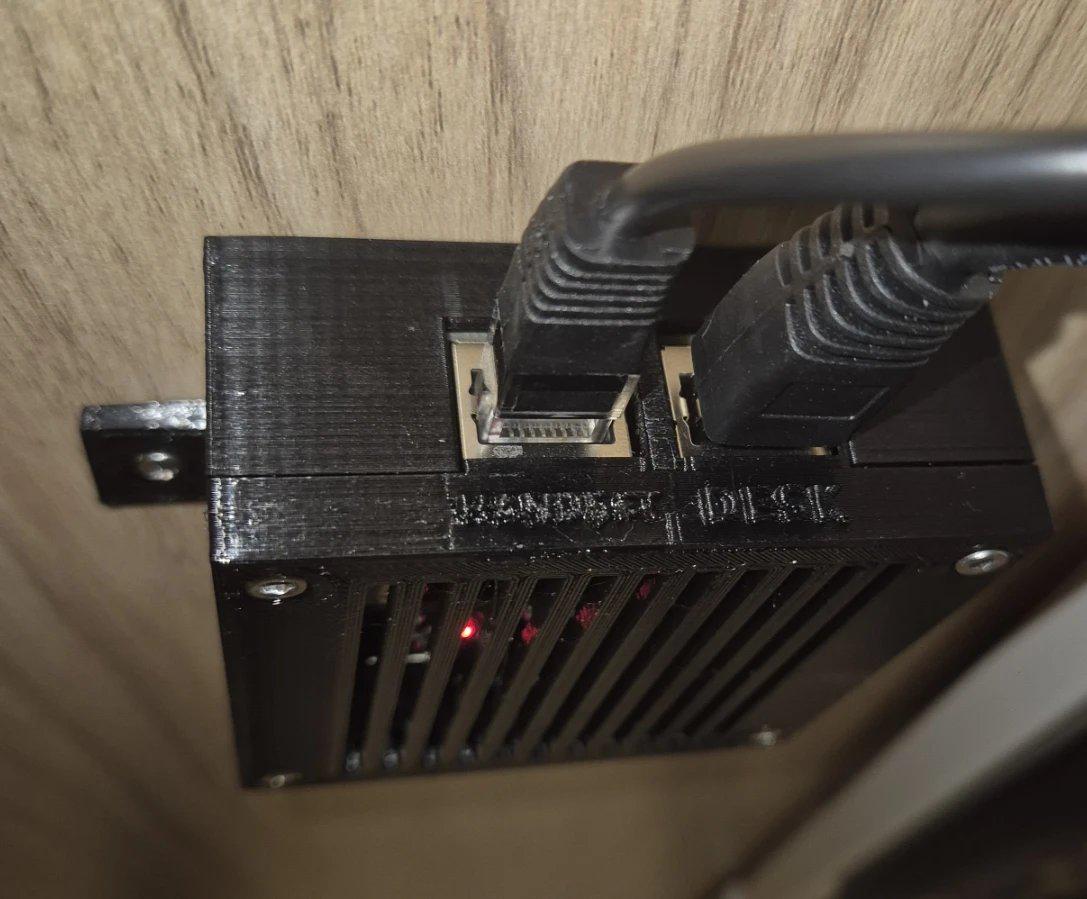
Built a second presence sensor: XIAO ESP32-C6 + HLK-LD2450 + BME280. Config compiled, board joined Wi-Fi, BME280 readings came through, but the radar entities stayed empty.
Metered it: 3.3V pin read 3.3V. The 5V (VBUS) pin read 1.7V with USB plugged in.
Assumed I was measuring wrong, so I swapped everything: two meters, different leads, different USB supplies, different cables. Same 1.7V every time.
The reason the board kept running: on the XIAO the 5V pin sits behind the board's power-path parts, not a straight wire from the USB jack. A heavy load drags that pin down while the ESP32 keeps running fine on USB. So a good 3.3V reading told me nothing.
Stripped it back to the bare board: 5V pin read 5V. Added parts back one at a time: the LD2450 had shorted internally and took the BME280 with it. A second LD2450 did the same thing, including on an ESP32 DevKitC, so it wasn't the XIAO.
What I check now before anything goes on a board:
- Ohm out each module's supply pin to GND, unpowered. A few ohms or a dead short = don't connect it.
- Add parts one at a time and measure the supply pin after each.
- Measure the pin that actually feeds the part, at the part's header if you can. Don't trust 3.3V as proof.
- Feel for heat. A shorted module's main chip gets warm within seconds.
- Check reused jumper harnesses for nicked wires shorting 5V to GND.
- If in doubt, power the radar from its own 5V supply with grounds tied.
I've gone back to an LD2410C for this one (same as my shop sensor, which has been solid). Anyone else had an LD2450 fail like this?
Full write-up with photos: https://imakethings.fyi/esp-projects/blog/ld2450-radar-short-vbus-1-7v/