This is a campaign led by deaf, disabled and/or neurodivergent (DDN) public figures. We have come together to speak out against the UK government’s inhumane proposal to cut disability benefits, including Personal Independence Payment (PIP) and the health-related component of Universal Credit.
We’ve launched this campaign because we refuse to stay silent while vital support, which allows disabled people to live with dignity, autonomy and inclusion, is under threat. The government’s proposal will devastate over 3.2 million disabled people and their families, pushing us deeper into poverty.
We are using our voices to demand the immediate withdrawal of these proposed cuts and to call for a benefits system that is fair, compassionate, and co-designed with disabled people and disabled led organisations. Cutting PIP means cutting people off from care, mobility, work, housing, and community.
We urge the government to stop #TakingThePIP letter sent to the Prime minister
To: The Rt Hon Sir Keir Starmer KCB KC MP
CC: The Secretary of State for Work and Pensions
RE: Demand to Immediately Withdraw Planned Cuts to Disability Benefits
Dear Prime Minister,
We, a collective of Deaf, Disabled and/or Neurodivergent (DDN) people with public profiles, write urgently on behalf of our community to demand that the government withdraw its inhumane and catastrophic plans to cut disability benefits, including Personal Independence Payment (PIP) and the health-related component of Universal Credit.
If these plans go ahead, 700,000 families already living in poverty will face further devastation. Over 3.2 million disabled people and their families will be affected. This is not reform; it is cruelty by policy.
Under the government’s proposals, people will no longer qualify for the daily living element of PIP unless they score a minimum of four points in a single daily living activity. This is a radical departure from the current system, where points are accumulated across areas of need. As a result, someone who cannot wash below the waist or needs support to eat may be deemed “fit” and cut off from lifeline benefits.
The changes don’t stop there. The health component of Universal Credit will be cut by nearly half, from £97 to £50 per month for new claimants, and payments will be frozen below inflation for existing recipients. Worse still, losing PIP will automatically strip people of the health element of Universal Credit – causing a domino effect of financial ruin.
The proposed cuts will:
Strip financial support from those who need it most
Push hundreds of thousands of families deeper into poverty
Reduce access to care, equipment, transport, and basic needs
Overwhelm councils, which rely on PIP assessments for social care
Remove eligibility for Carer’s Allowance from thousands of unpaid carers
Deepen social exclusion and increase disability-related deaths
According to Scope, disabled households face an average of £1,010 extra costs per month – even after existing benefits. The Joseph Rowntree Foundation warns that by 2029/30, individuals could lose 16–58% of their income. Some will be unable to cover food, bills, or housing. Many will lose their homes. Homelessness amongst disabled households has risen by 75% since 2019.
Already, 69% of people referred to food banks are disabled. These numbers will surge. The Trussell Trust, Carers UK, and multiple disability organisations have raised the alarm. Every £1 removed from PIP will cost local councils £1.50 – these cuts won’t save money but will displace suffering and drive up public costs.
There are over 16 million disabled people in the UK, yet not even a quarter of those receive PIP. Those who do are the most in need. For us, PIP is not a benefit – it is access to life. Without it, people are left housebound and isolated. As many cuts to PIP are not consulted on in the Pathways to Work Green Paper, we fear they will be enacted without debate or DDPO (Deaf and Disabled People’s Organisations) input.
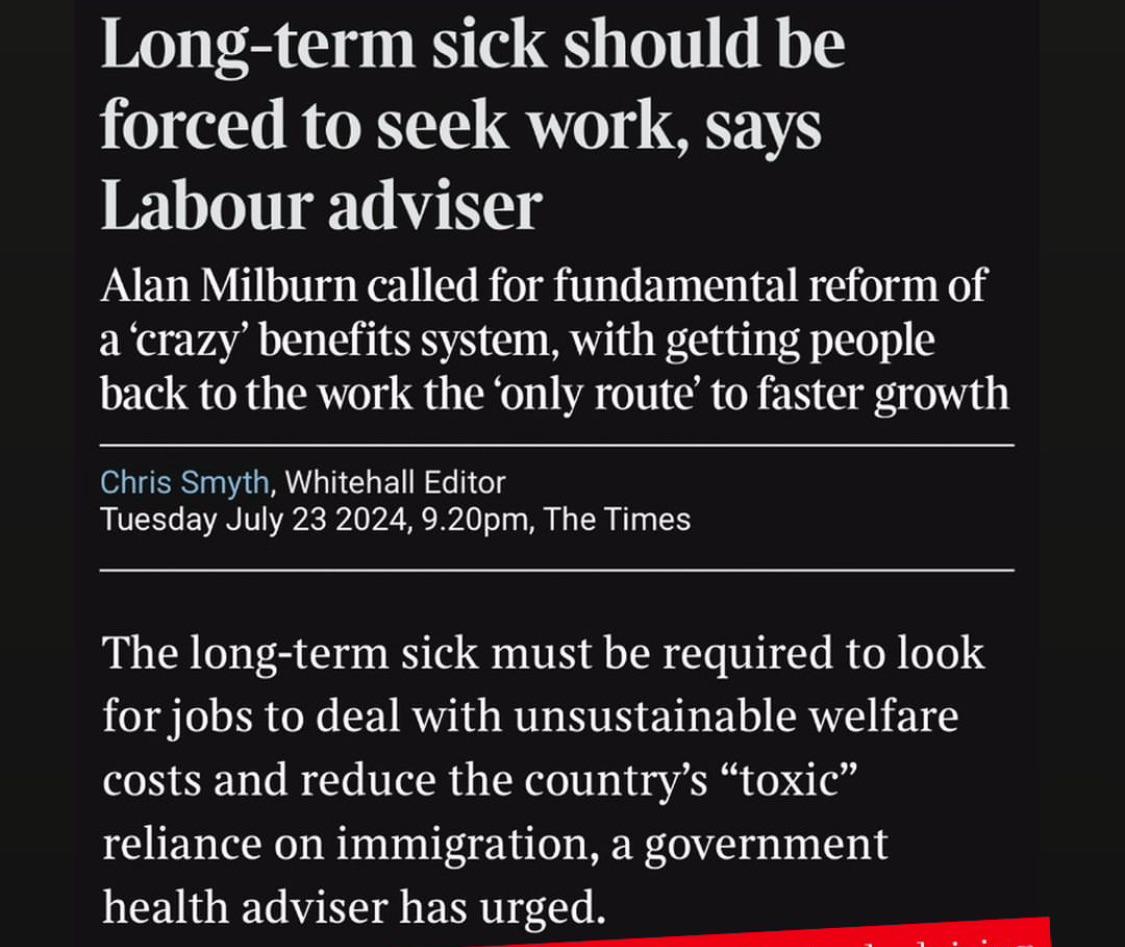
The community is also alarmed by the government’s strict focus on getting disabled people into work to justify the cuts. This is worsened by Access to Work backlogs – some wait over six months. For many, PIP is essential to enter and remain in employment.
We have already endured a decade of austerity, disproportionate pandemic losses, and life-costing cuts. Our community is on its knees. Framing welfare cuts as “incentives” to work implies that disabled people must earn their place in society through productivity – a dangerous narrative. Disabled lives are inherently valuable – whether someone can work or not.
In an inaccessible world with high additional costs for disabled people, PIP and Universal Credit are lifelines. They offer the stability and support needed to live and, where possible, work. Removing them undermines the autonomy and inclusion your government claims to promote.
An inclusive society doesn’t punish those needing support – it invests in them. A just society backs all its members, not just the economically efficient. Real inclusion begins by recognising every person deserves respect, security, and support – regardless of work capacity. Anything less is not inclusion, but exclusion disguised as reform.
There have been many tears and sleepless nights in our community these past months – people unsure how they will survive. This isn’t just financial – it is existential.
We demand the government immediately withdraw these cuts and engage meaningfully with disabled people and DDN-led organisations to co-design a fair, compassionate, and sustainable benefits system that supports, not punishes, disabled lives.
This is a matter of justice, survival, and basic human rights.
We, the undersigned, will not stand by while our community is sacrificed for the illusion of savings. We urge the Government to stop #TakingThePIP
Sincerely,
Jack Thorne, writer
Rosie Jones, comedian
Rose Ayling-Ellis, actor
Liz Carr, actor and activist
Ruth Madeley, actor
Mat Fraser, actor
Lenny Rush, actor
Cherylee Houston MBE, actor
Ade Adepitan – Journalist and TV Presenter
Jordan Jarrett-Bryan, sports reporter
Lee Ridley, comedian
Jack Carroll, comedian
Sophie Morgan, presenter, writer and campaigner
George Robinson, actor
Lisa Hammond, actor
Nadia Nadarajah, actor, writer and creator
Cerrie Burnell, writer, actor and creator
James Moore, actor
Francesca Martinez, performer and writer
Lisa George
Stu Richards
Samantha Baines, author, actress and broadcaster
Tom Shakespeare
Leon Harrop, actor
Jenny Sealey OBE, joint CEO/ artistic director of Graeae
Jess Thom, artist
Annalisa Dinnella
Marc Woods, paralympian
Bethany Black, actor, comedian and writer
Bryony Arnold, executive producer
Nickie Wildin, theatre and radio director
Paula Garfield MBE, artistic director of Deafinitely Theatre
Ewan Marshall, television producer/director
Simon Startin, actor
Kiruna Stamell, actor
Hollie Bowes
Melissa Johns, actor, writer and Co creative lead of TripleC
Jon Furlong, actor
Ekow Otoo, actor and model
Natalie Amber, actor and dancer
David Proud, actor and writer
Angela Clarke, screenwriter and author
Genevieve Barr, writer and actor
Krissi Bohn, actor
Dr Laurence Clark,
Dr Steph Lacey, actor and writer
Jo Coffey, actor
Zak Ford-Williams, actor
Reece Pantry, actor
Rachel Charlton-Dailey, journalist and author
Gabriella Leon, actor and writer
Cara Jayne Readle, actor
Matilda Feyiṣayọ Ibini, writer and filmmaker
Lucy Webster, writer
Mik Scarlet Wallace, broadcaster/Journalist
Tanya Motie, executive producer
Ella Maisy Purvis, actor
Lizzy Luxford, author
Chloe Vollenweider, historian and theatre maker
Laura Guthrie, designer and director
Ally Castle MBC, media consultant
Paul Noble MBE, sports commentator
Elle McNicoll, author
Andy Gilbert, company director
Robert Softley Gale, artistic director
Gareth Berliner, actor
Suzanne Bull MBE
Dr Richard Butchins, filmmaker and artist
Cathy Reay, author
Kate Monaghan, producer and director
Anna Landre, researcher
Ella Glendining, writer, director and actor
Ellen Jones, author
Laura Elliott, author and journalist
Ru Jones, influencer
Ione Gamble, editor and writer
Nick Ransom, journalist and neurodiversity consultant
Faith Alabi, actor
Dr Polly Atkin, writer, bookseller and critic
Hannah Shewan Stevens, journalist
Ciara McCarthy, activist and content creator
Eliza Rain, content creator
Lisette Auton, author and playwright
Jodi-Alissa Bickerton, deputy artistic director of Graeae
Penny Pepper, author, poet and activist
Jo Verrent, Director of Unlimited
Mark Harrison, activist
Briony May Williams, TV presenter
Lizzie Huxley-Jones, author
Sophie Woolley, writer and actor
Dr Erin Pritchard, academic
Toby Hadoke, actor, writer and comedian
Amy Forrest, actor
Katie Erich, actor
Simon Minty,
Dr Amy Kavanagh, Activist and Disability Professional
James and Lucy Catchpole, authors and literary agents
Robin Surgeoner MBE PLY, artist, activist, coach and re-empowerer
Elspeth Morrison,
Karina Jones, actor
Stefan Krywiuk
Sara Schirazi, producer and director
Celestine Fraser, writer and filmmaker
Caroline Stickland, CEO of Transport for All
Holly Cocker
Andrew Roach, Talent Manager
William Mager, scriptwriter
Dr Rachael Boast FRSL, writer
Lou Chandler
Shari Desilva
Andrew Miller MBE
Josh Merritt, screenwriter and playwright
Dr Cath Nichols, writer and academic
Julie Fernandez, access coordinator and campaigner
Jemma Moore, actor
Ellie Henry, actor
Heloise Beaton, screen inclusion consultant
Jess Gardner, producer
Dr Sally Huband, writer
Ali Briggs, actor
Amy Conachan, actor
Caitlin Hamilton, actor
Kate Stanforth
Daisy Lafarge, novelist
Monique Jarrett, dancer and model
Sam Renke
Eugene Grant
Anthony V. Capildeo FRSL,
Dr Jay Watts, consultant clinical psychologist
Alim Jadavji
Melissa Parker
Please support them in sharing your and their voices see here for full details: https://takingthepip.co.uk/
Edited to add an EASY READ VERSION: https://takingthepip.co.uk/wp-content/uploads/2025/05/PIP-cuts-easy-read.pdf