r/Assyriology • • Aug 14 '21

What would be the personalities of the different Mesopotamian peoples? I would really appreciate your answer 🙏

3 Upvotes

Hello, I want to make a comic and its protagonists are Mesopotamians. It happens to know how they act I want to know how they acted.

Example: Klingons are proud, brave, aggressive, honorable and so on.


r/Assyriology • • Jun 06 '21

Why are a lot of academic books/journals in German?

0 Upvotes

Are they writing for themselves or something? Bc hardly anyone speaks German outside of like 6 countries.


r/Assyriology • • Aug 31 '24

What does it say on the lid of the tomb of gilgamesh?

0 Upvotes

Here are screenshots of the lid of the tomb: https://imgur.com/a/7KObqFm

I extracted them from the original video recorded on VHS: https://www.youtube.com/watch?v=5AhCfmGyGpA

Can someone please identify and translate as much as possible?


r/Assyriology • • Aug 20 '22

What were the disturbing sexual facts of the Mesopotamians?

1 Upvotes

Law that Mediterranean cultures practiced bestiality in his time, but I know nothing about the sexually disturbing facts about Mesopotamian sexuality.


r/Assyriology • • Aug 14 '22

"Horned hats"? I call shennanigans

4 Upvotes

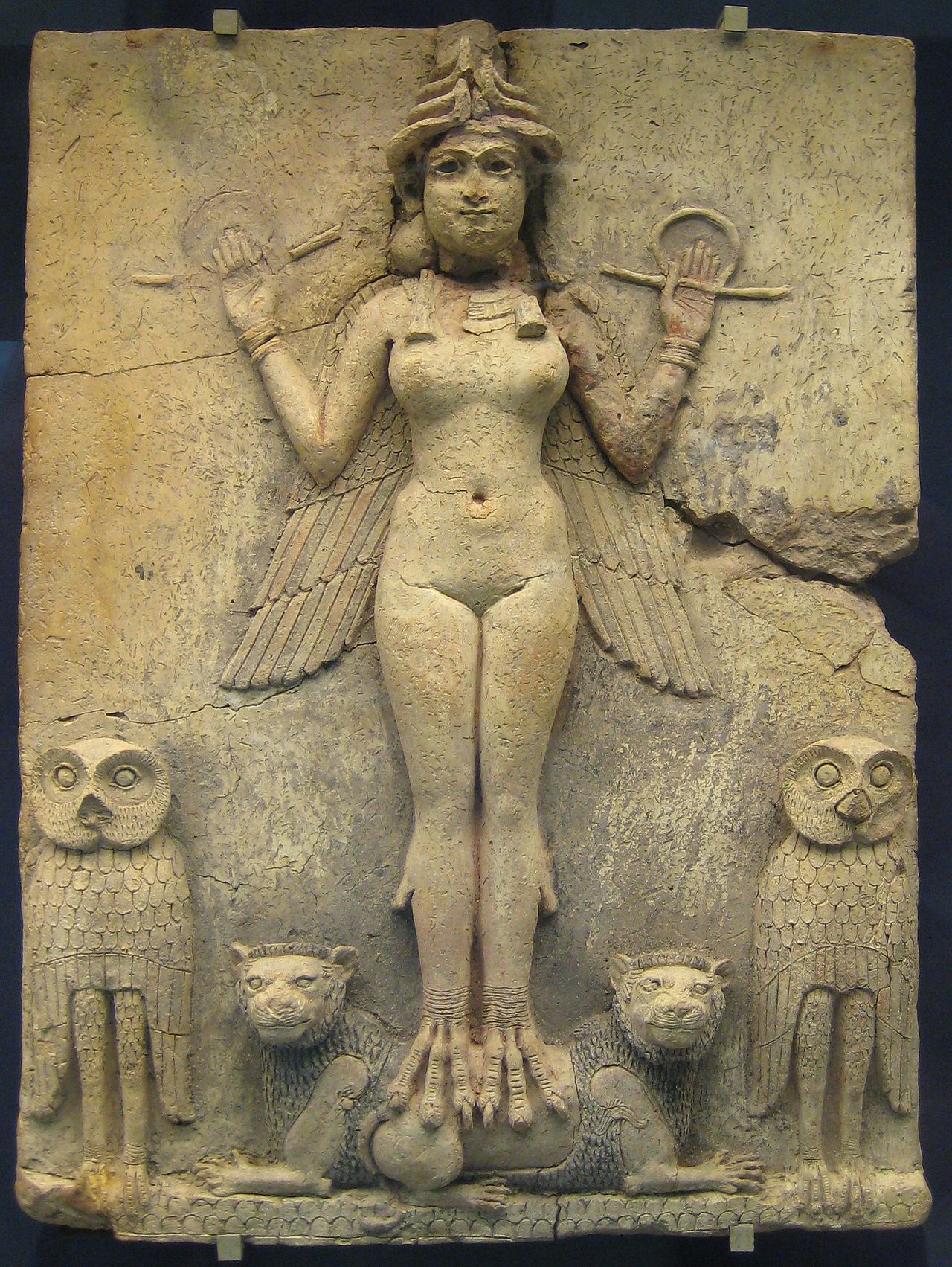
I keep seeing it said that Babylonian deities wear horned hats, even in published books and notes on museum exhibits and so on. And no, they don't. "Wait a moment", you say, "I've seen pictures of them and yes they do!"

You have indeed seen pictures of them, but no they don't. Let's look at one of those pictures again, let's say the seal of Adda, one of my faves.

https://www.britishmuseum.org/collection/object/W_1891-0509-2553

"See!", you say, "they're wearing horned hats!"

No they aren't.

Now let us look at some three-dimensional images of Babylonian deities. What do they have on their heads? They have ribbed or folded turbans.

Head of a god, Getty Villa Museum https://p1.storage.canalblog.com/17/13/119589/126215712_o.jpg Human-headed bull, same source https://p3.storage.canalblog.com/33/86/119589/126215476_o.jpg Head of a god, the Louvre http://mini-site.louvre.fr/babylone/COMMUN/img/AO4353.jpg Head of a lamassu, Metropolitan Museum of art https://thumbs.dreamstime.com/b/head-lamassu-metropolitan-museum-art-room-assyrian-palace-relief-panels-human-headed-winged-bull-lion-64553664.jpg Ereshkigal, British Museum https://upload.wikimedia.org/wikipedia/commons/thumb/2/22/British_Museum_Queen_of_the_Night.jpg/1280px-British_Museum_Queen_of_the_Night.jpg

Now look at the seal again.

See? They're not wearing horned hats. They're wearing the same folded turbans they're wearing in the sculptures, but now in 2D as conventionally represented by a Babylonian seal-cutter. See the folds now? Yup.

Either I'm right or the gods of the Babylonian deities changed their headgear according to what medium they were being represented in. In the latter case I would like to ask if that makes any sense whatsoever, and if there is any attested parallels — did, for example, the Mayan gods wear fedoras when depicted on frescoes but baseball caps in mosaics?


r/Assyriology • • May 13 '23

What would the phrase “Non Serviam” or “I Will Not Serve” be in Akkadian?

1 Upvotes

I’m just curious as to how it would look as part of a potential tattoo idea. I’m thinking of putting it around a chaos star symbol. If it sounds fascist at all that is not my intention.


r/Assyriology • • Aug 09 '21

What personality did the various Mesopotamian peoples have?

0 Upvotes

Were they like the stereotypes of the French: sophisticated, sensual and promiscuous or of the Germans: passionate about their work and love beer?

How did they act and what was their personality? Is there a fictional character in general who dresses as a Mesopotamian should act?

I don't know if they saw Gilgames from fate. He acts in an almost stately, arrogant, hedonistic and sophisticated way (everything he uses, eats and drinks is of the highest quality), is that how Gilgamesh would have acted?

I would appreciate any help creating historically realistic characters. My vision may be biased by my culture I need an objective vision.


r/Assyriology • • Jun 04 '23

What would the word vengeance be in Akkadian? Plus what would the cuneiform signs be?

0 Upvotes

On an Akkadian dictionary that I’ve used before I found tūr gimilli. Is that correct? Is there a better word/phrase in Akkadian?


r/Assyriology • • Jan 26 '25

Interested in a Discord Server for Mythology? Join us in Mythology Ignited!

0 Upvotes

Mythology Ignited is a server dedicated to the discussion of mythology, whether you're a complete beginner, a folklore guru, or somewhere in between!

Aside from discussing world mythologies, we also have a variety of clubs, including gaming, philosophy, cooking, and even a collaborative creative writing project in making our own fictional mythology! We hope to see all of you mythology fans join us in Mythology Ignited!

https://discord.com/invite/RAWZQDp6aM


r/Assyriology • • Dec 15 '18

What is something assyrian can do that can move us 1 step forward to reclaiming our lost land ?

1 Upvotes

r/Assyriology • • Jan 18 '19

So what is this talk about assyrians being named "Assyrian" by the brits in the 19th century? What proof is there that they have that assyrians called themselves that way before brits arrived?

1 Upvotes

r/Assyriology • • Jan 03 '26

Rant: why are scholars so confused at times?

Post image
0 Upvotes

This is taken from the very famous "A grammar of Akkadian", third edition, by Huehnergard.

Item (b) is devoid of any information if taken literally. It is exactly equivalent to saying "syllables can't begin with vowels except when they do".

What the author intends to say is that single intervocalic consonants are always the onset of the next syllable, and never the coda of the previous one, which is a rule that holds for the vast majority of human languages (and whose logic is easy to understand).

But it's explained in this extremely poor, arbitrary, old fashioned way, which obscures the underlying patterns.

Sorry, this really got me so furious. I hate sloppy thinking and poor communication. Thank you for reading.


r/Assyriology • • Jun 29 '25

Should I learn Akkadian or Middle Egyptian?

4 Upvotes

I couldn’t find any posts on this so I am coming here for advice from any who have learnt, or attempted to learn, the Akkadian language or Middle Egyptian.

I made a post on r/cuneiform asking about Akkadian but I’m still struggling to choose between it and Middle Egyptian.

I know:

  • Modern English (native)

  • Old English (intermediate; studied for about a year)

  • Basic Japanese (studied in early high school)

  • Basic Italian (ditto)

  • Some Arabic (started trying it out a few months ago but I think I want to drop it now)

  • Basic German (studied earlier this year but quit because it messed with my Old English)

Now, I have come to decide to pick up another language, and I don’t want it to be Indo-European because it feels like cheating, makes me feel racist, too many people learn them, and quite frankly a lot of them are boring to me. I really like, however, the Afro-Asiatic languages, in particular their triconsonantal roots, and their phonologies.

I have sorted a list of pros and cons for both languages:

Pros and cons

  • Akkadian and Egyptian both use logographies (this is kind of both a pro and a con)

  • hieroglyphs work on consonants, but cuneiform is syllabic

  • cuneiform is sort of 3D and looks really fun to write

  • Egyptian has more media presence than alakadian (both a pro and a con)

  • Egyptian has pharyngeals (I like pharyngeals)

  • Akkadian has ejectives(I like those too)

  • both sound cool (I think Egyptian sounds very slightly better though)

  • both are tied to very interesting cultures

Questions I have:

  • which of these was more fun for you?

  • which of these has the best literature?

  • which has the most literature?

  • which has the best resources?

  • which should I learn?


r/Assyriology • • Jul 10 '26

Why did SR and RB invert meanings in Hebrew from Sumero-Assyrian?

0 Upvotes

In Sumero-Assyrian, the SR root (e.g. Sarrum) means King, while in Hebrew Sar can mean King in rare and archaic meanings but more typically means Prince. The RB root (e.g. Rubum) means both Prince and King, while in Hebrew Rabb means Lord, Great/Mighty and King.

Does this have to do with the transition from polytheistic Assyrian kingdoms to the monotheistic Judean Kingdom?


r/Assyriology • • Nov 26 '24

Yo mama’s shadow has a footprint… (Joke in Sumerian)

Thumbnail
youtu.be
0 Upvotes

r/Assyriology • • Jan 05 '23

I compiled all descriptions I could find of the mythical Abzu in Sumerian Myth.

Thumbnail
protocodex.com
0 Upvotes

r/Assyriology • • Jul 16 '20

Vat4956 Nebuchadnezzar's 37th year

Thumbnail
vat4956.com
0 Upvotes

r/Assyriology • • Feb 11 '26

Do you think these proto-cuneiform signs match? *Dam, *Ukkin, *Anse

Thumbnail
gallery
0 Upvotes

r/Assyriology • • Aug 03 '26

Hello everyone! Are there any who know Akkadian, the ancient Babylonian language, well?

1 Upvotes

The idea may seem strange, but I need someone who can sing a lullaby beautifully in a female voice in the Akkadian language.


r/Assyriology • • Dec 15 '18

why the assyrians kept there name and not the babylonians?

3 Upvotes

r/Assyriology • • 15d ago

The Colonial Horizon of West Asian Archaeology: Epigraphic Distortion, Theological Geography, and the Fabrication of the Levantine Hypothesis in Mandaean Studies

Thumbnail gallery
5 Upvotes

Abstract
For over a century, the academic study of West Asian antiquity specifically the fields of Syro-Palestinian archaeology, Semitic philology, and Mandaean studies has operated under the guise of secular, empirical science. However, a rigorous methodological deconstruction reveals that modern secular archaeology inherited the structural paradigms of 19th-century European Biblical Archaeology. This paper demonstrates how theological imperatives, combined with Eurocentric colonial agendas, systematically corrupted the interpretation of ancient Mesopotamian and Mandaean inscriptions. By analyzing genetic continuity data, Mesopotamian Aramaic (Syrio-Mandaic) linguistic substrates, and localized ritual geography, this study exposes how institutional scholarship falsified place-names (such as relocating Oršlam from the Babylonian Mahoze along the Euphrates to Palestine) and ignored the complete absence of Levantine references in Mandaean sacred texts to fit a pre-determined Judeo-Christian narrative map.
I. Introduction: The False Secularization of West Asian Archaeology
The emergence of modern archaeology in the 19th and early 20th centuries was inextricably linked with the geopolitical expansion of European empires into the Ottoman-controlled West Asia. Under the pretext of scientific discovery, Western academic institutions funded by biblical societies and colonial interests mapped, excavated, and interpreted the antiquities of the Tigris-Euphrates and Levant regions.
Although late 20th-century scholarship formally shed its overt theological rhetoric, renaming departments from "Biblical Archaeology" to "West Asian Studies" or "Syro-Palestinian Archaeology," the foundational paradigms remained unexamined. The epistemological baseline of the discipline remained tethered to a Eurocentric teleology: namely, that all major religious, baptismal, and monotheistic developments in West Asia must inevitably originate in, or derive their legitimacy from, the Levantine-Judean corridor.
This paper examines how this legacy resulted in the systematic distortion of Mandaean origin narratives, the mistranslation of Mesopotamian Aramaic (Syrio-Mandaic) inscriptions, and the arbitrary relocation of geographical landmarks from indigenous Mesopotamian soil to Palestine.
II. Epigraphic and Linguistic Corruption: Mandaic as an Autochthonous Eastern Substrate
A central pillar of the colonial "Western origin" hypothesis was the assertion that the Mandaeans the last surviving Gnostic and baptismal community of antiquity were refugees who migrated from Palestine or the Jordan Valley into lower Mesopotamia during the 1st or 2nd century CE. To sustain this hypothesis, early European orientalists had to manipulate the linguistic evidence.
Mandaic is not a Western Aramaic dialect, nor does it display the phonetic, syntactical, or lexical traits of Judeo-Aramaic or Samaritan Aramaic. It is a strictly Late Mesopotamian Aramaic (Syrio-Mandaic) language. Linguistically, Mandaic developed directly out of the ancient southern Babylonian Aramaic substrate, exhibiting the characteristic loss of gutturals (such as 'Ayin and Heth) a phonetic shift caused by centuries of direct contact with the non-Semitic Sumerian and East-Semitic Akkadian languages native to the Tigris-Euphrates basin.
To align Mandaic with Levantine origins, early translators frequently imposed biblical Hebrew and Western Aramaic etymologies onto Mandaic ritual terms:
The Mistranslation of Yardena (ࡉࡀࡓࡃࡍࡀ): Colonial philology insistently translated Yardena as the "Jordan River" in Palestine. However, in Mandaic texts (Ginza Rabba, Drasha d-Yhia), Yardena is a generic noun representing any running, living water (mia hayi) necessary for masbuta (ࡌࡀࡑࡁࡅࡕࡀ, baptism/purification). The term derives from an ancient pan-Mesopotamian hydrographic root meaning "flowing stream," embodied locally by the Euphrates and Tigris, rather than a specific 50-kilometer river in Judea.

The Reinterpretation of Nasoraean (Naṣuraiia): Orientalist scholars attempted to link Naṣuraiia to Nazareth or Levantine Jewish sects (such as the Essenes). Yet, in indigenous Mandaic usage, Naṣuraiia denotes the guardians of secret esoteric knowledge (nasiruta), an initiate rank completely distinct from Jewish sectarian legalism.

By forcing Western etymologies onto an autochthonous Mesopotamian Aramaic (Syrio-Mandaic) lexicon, secular philology effectively sanitized the Mesopotamian heritage of the language to maintain a Levantine origin myth.
III. Theological Geography and the Manipulation of Oršlam
The most glaring manifestation of geographical corruption in West Asian studies is the treatment of Oršlam (Jerusalem) in Mandaean literature, such as the Haran Gawaita (ࡄࡀࡓࡀࡍ ࡂࡀࡅࡀࡉࡕࡀ).
Standard Western scholarship read the occurrence of Oršlam as empirical proof of a Palestinian homeland. However, critical internal analysis of the texts, corroborated by archaeological mapping of Parthian and Sasanian Babylonia, reveals that the Western geographical model collapses under physical scrutiny:
Spatial and Hydrological Incongruities: Mandaean texts describe Oršlam as situated adjacent to major rivers, marshlands, and urban centers identified with the Babylonian Mahoze (ࡌࡀࡄࡅࡆࡉࡀ the urban metropolis complex around Seleucia-Ctesiphon and the Euphrates/Tigris canals). In contrast, the physical Jerusalem in Judea is situated in an arid mountainous region, over 50 kilometers from the Jordan River, making daily Mandaean water purifications physically impossible.

Textual Silence on Levantine Topography: If the Mandaeans originated in Judea, their sacred texts would naturally reflect the topography, flora, and geography of Palestine. Yet, the entire Mandaean canon contains zero references to "Palestine," the "Land of Israel," Mount Zion, Galilee, or Judean landmarks. The term Bait Israel (House of Israel) appears exclusively as a theological descriptor for an opposing religious ideology, never as a physical homeland.

The literalist mapping of Oršlam onto Judea by modern scholars represents a standard failure of theological geography: the uncritical habit of forcing symbolic or local Mesopotamian urban references onto biblical maps.
IV. The Omission of Levantine and Rabbinic Evidence
If a large, distinct baptismal community like the Nasoraeans had existed in 1st-century Palestine, led or influenced by figures like Yhia Yhana (John the Baptist), their presence would inevitably be recorded in contemporary Levantine sources.
However, the historical record presents a complete void:
Levantine Sources: Neither the Dead Sea Scrolls, Philo, Josephus, nor early Judean texts make any mention of the Mandaeans or their distinct non-circumcising, non-Sabbath-observing, non-Torah theology.

The Essene Fallacy: Western scholars frequently attempted to classify Mandaeans as an offshoot of the Essenes. This comparison fails on a structural level: the Essenes were rigidly Jewish, observant of the Mosaic Code, aligned with Temple purity laws, and tied to Judean messianism. Mandaeans explicitly reject Mosaic law, the Sabbath, circumcision, and Levantine sacrificial cults.

The Rabbinic Silence: The Babylonian and Jerusalem Talmuds which obsessively document rabbinic polemics against various heretical sects (minim / מינים) contain no record of Yhia Yhana (John the Baptist) as a Judean rabbinic figure. His operational matrix and the traditions surrounding him belong to an Eastern baptismal milieu that functioned outside the Judean legal framework.

The total absence of the Mandaeans from ancient Levantine literature directly refutes the hypothesis of a Palestinian migration.
V. Bio-Archaeological and Genetic Refutation
Where colonial archaeology relied on selective textual interpretation, modern bio-archaeology and archaeogenetics provide objective, empirical data that dismantles the Western origin hypothesis entirely.
Populations that undergo long-distance migrations retain distinct genetic signatures from their region of origin. Recent population genetics studies analyzing high-resolution autosomal DNA (including G25 allele frequency mapping against Bronze Age and Iron Age West Asian skeletons) demonstrate that:
Mandaeans exhibit ~87.8% direct genetic continuity with ancient indigenous Mesopotamian populations (Sumerian, Akkadian, and Babylonian baseline profiles).

Mandaeans show no significant genetic drift or admixture connecting them to ancient Levantine, Palestinian, or Southern European populations.

This biological reality proves that the Mandaeans are not displaced Western migrants, but the direct demographical descendants of the indigenous inhabitants of lower Babylonia and the southern Iraqi marshes (Ahwar). Their material culture from the reed-constructed Mandi temples (mirroring ancient Sumerian 𒄀𒂍 bītu qanû architecture) to the ritual use of clay trays (ࡈࡀࡓࡉࡀࡍࡀ) is an uninterrupted continuation of native Mesopotamian civilization.
VI. Conclusion: Decolonizing the Mesopotamian Narrative
The persistence of the "Western origin" theory in Mandaean studies is not a failure of available data, but a failure of institutional methodology. For two centuries, West Asian archaeology operated within a framework designed to validate Eurocentric and biblical narratives, systematically reducing indigenous Mesopotamian traditions to mere derivatives of Levantine history.
By synthesizing linguistic evidence (Late Mesopotamian Aramaic [Syrio-Mandaic]), textual criticism (the Babylonian context of Oršlam), negative evidence from Levantine sources, and archaeogenetic continuity, we arrive at an indisputable conclusion:
Mandaeism is fully autochthonous to lower Mesopotamia. The Western origin hypothesis is a constructed academic myth born of colonial bias and theological geography. Restoring the truth of this history requires stripping away these entrenched 19th-century assumptions and recognizing Mesopotamia as the sole birthland, biological home, and sacred geography of the Mandaean people.

Ardwan Ghany


r/Assyriology • • Nov 12 '25

VERY IMPORTANT: RSC Response to tablet removal

Thumbnail reddit.com
0 Upvotes

r/Assyriology • • May 27 '23

What would something like metal music translate to in Akkadian?

0 Upvotes

I can imagine there wouldn’t be any direct translations. So what would a kind of constructed version be? Would it be something like “growl music” or “dark growl music” or something to the effect of “evil music/sound”? I can imagine that if any of them were alive today and heard any that they would potentially view it that way. And I can imagine most ancient peoples would view it in those ways if any were transported to now from the past.


r/Assyriology • • Jan 21 '25

Could AI translate better than humans and why?

0 Upvotes

And if not what troubles do ai's face when translating