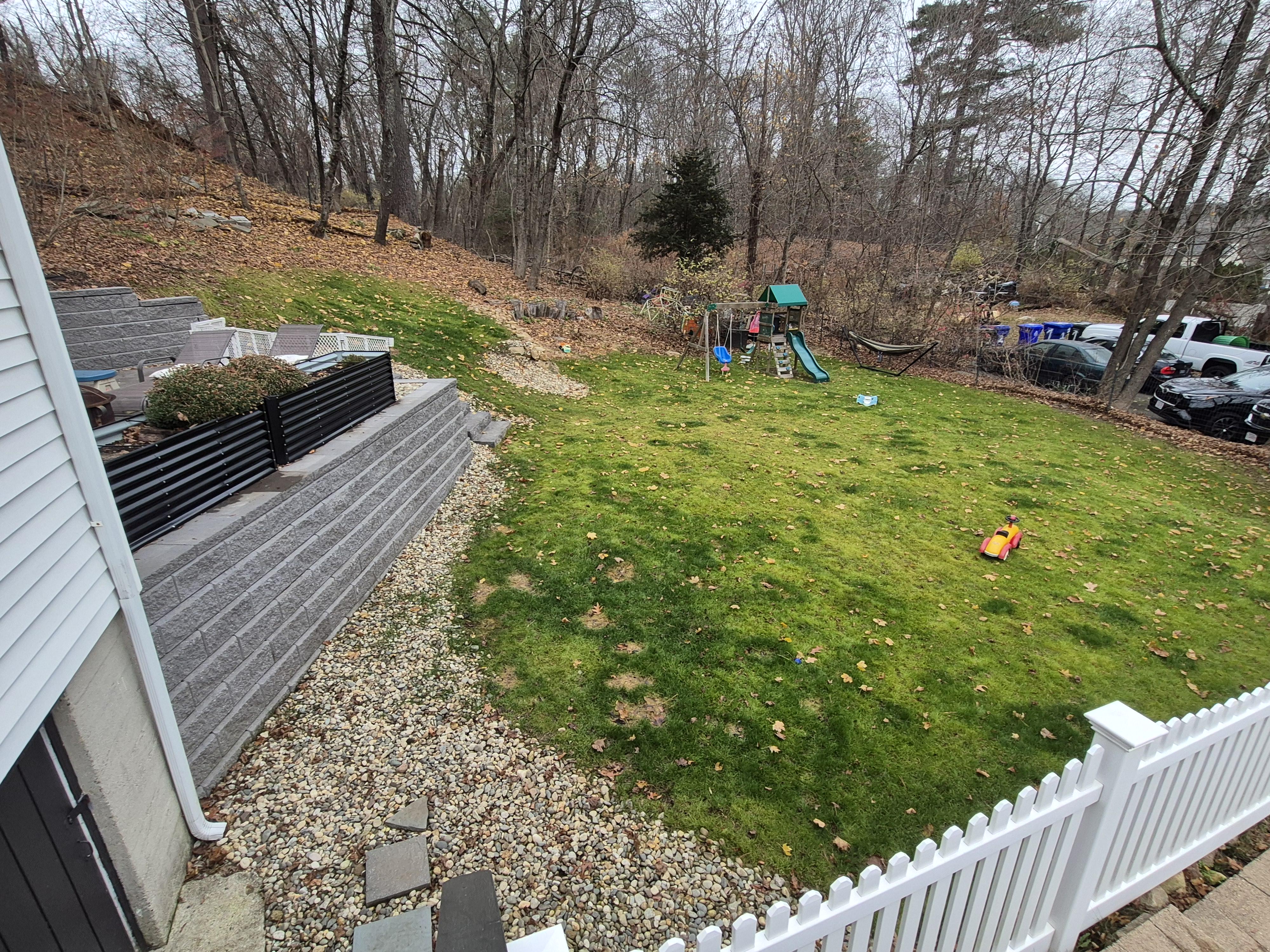
Location: Northern US & Canada, cool-season lawns (Kentucky bluegrass, tall fescue, perennial ryegrass). The same protection ideas apply elsewhere, but the timing below is for cool-season grass.
When a lawn turns brown in late fall, it usually is not dead — it is dormant. The grass has pulled its energy down into the crowns and roots. Dormancy is usually even across the whole lawn; patchy browning is more often damage. Blades that hold firm when tugged, with a hint of green at the base, are a good sign.
What to do now, before the ground freezes:
- Keep mowing while the grass is still growing, and never remove more than one-third of the blade at once. For the final cut, keep a cool-season lawn at about 2.5 to 3 inches.
- Get the leaves off. A thick blanket of whole leaves left all winter blocks light and air, traps moisture and encourages snow mold. Mulch light layers with the mower; rake up the heavy ones.
- Feed cool-season lawns only, with one last feeding while the grass is still green, before the ground freezes. Warm-season lawns get no late-fall nitrogen.
- Water until the ground freezes, then winterize the irrigation — drain in-ground lines or have them blown out.
During winter, it is mostly protection:
- An even blanket of snow is good — it insulates the crowns. Water only during long dry spells, if the ground is not frozen.
- Stay off frozen and frosted grass. This is the most common cause of winter lawn damage: ice crystals inside the blades make them brittle, and foot traffic snaps them.
- Keep rock salt off the lawn. Shovel first and use far less deicer than feels right — Minnesota guidance puts it at about 12 ounces, roughly a coffee mug, per 1,000 square feet.
What NOT to do to a dormant lawn:
- Do not fertilize it — dormant grass cannot use the nutrients.
- Do not mow it — it is brittle, and mowing can scalp the crowns and compact the soil.
- Do not try to force it green with heavy watering or feeding.
- Do not aerate or dethatch — both are jobs for active growth.
- Do not apply broadleaf herbicides in winter — most need temperatures around 50°F to work.
One useful winter job for cool-season lawns: dormant seeding. Once the soil stays below 40°F, seed can be spread dry on thin spots and will germinate in spring. Just note that pre-emergent herbicides cannot be used in spring on a dormant-seeded lawn, because they will also stop the new seed.
In spring, cool-season lawns usually green up early, often before the last frost. If you find circular patches of matted, straw-coloured grass when the snow melts, that is often snow mold — it usually grows out with mowing and light raking.
What is your lawn doing this winter — dormant and brown, or still growing?