r/AgeofMan • • Dec 10 '18

CRISIS The Indo-European Migration

27 Upvotes

Indo-European Migration

The Indo-European Migrations will take place over the next many centuries to come. They will spread fast and all around where they have historically gone, unless you somehow manage to avoid it. Being pinged and called to respond to this post or a follow-up post means the migrations have reached your claim's lands, and you will have to decide the future of your claim.

Your options are as follows:

Option 1: Integration

In this scenario, your people and the PIE avoid conflict. Peaceful integration of one or the other is the outcome, similarly to how this likely happened to many "Old Europe" cultures.
You can either choose to have outcome 1, or it will be randomly determined.

  • Outcome 1 (90% base chance, you can choose to have this outcome): The PIE tribes move into the lands of your people. Their people outnumber your people, but there is enough land for everyone. Over time, your people interact with and adapt to the languages and the customs of the newcomers. Your claim's culture and language becomes one of the branches of the Proto-Indo-Europeans. You receive "domestic horse" as a technology.

  • Outcome 2 (10% base chance, you can increase this chance up to 25% through suitable role-play): The PIE tribes move into the lands of your people. They outnumber you, but there is enough land for everyone. Over time, they somehow begin to adopt to your languages and traditions. Your claim's culture and language is mostly unchanged. You receive "domestic horse" as a technology.

Option 2: Conflict

In this scenario, your people and the PIE cannot coexist. There may not be enough land or food, or you simply cannot get accept sharing your land for other reasons. A long series of conflict decides the fate of your people.

  • Outcome 1 (95% base chance, you can choose to have this outcome): The PIE tribes destroy your people. Your people are killed, chased away, enslaved or subjugated to the invading cultures. Your claim becomes part of one of the branches of Proto-Indo-European. You receive "domestic horse" as a technology.

  • Outcome 2 (5% base chance, you can increase this chance up to 15% through suitable role-play and 65% through other conditions. The highest possible chance caps at 70%): Your people fend off the PIE. In their myths, your people gain a fierce reputation and migration to your land decreases over time. Your claim's culture and language is largely unchanged. You receive a free military technology for which you have the prerequisites, or two technologies if your percentage score is 20 higher than the necessary amount for outcome 2. Conditions that increase your chances are having a claim in only mountainous terrain (25%), having a claim only in high mountainous terrain (40%, does not stack with previous), having only 2 provinces (10%), having only 1 province (20%, does not stack).

Option 3: Isolation

In this scenario, your people retreat and isolate themselves from the PIE. Coexisting is impossible, but centuries of conflict are avoided through the isolation of your people. There is only one outcome

Your people isolate themselves from the migrating PIE. You can stay in your homeland if it is entirely mountainous or on (an) island(s) fully owned by your claim. If you are not in suitable geography, you must spend your expansion migrating your entire claim to the nearest mountainous terrain or islands you can fully own with your current size. Your claim's culture and language remain unchanged. You receive a free culture technology for which you have prerequisites.

Option 4: Creativity

In this scenario, you can do something else not described in 1, 2 and 3. Outcomes will be determined on a case by case basis. There are a few things to keep in mind: your claim is not a country, not a government, or even a single tribe with a chief. You are several tribes who share a linguistic and cultural identity. It is impossible to maintain an "official policy" towards the migrating PIE, so your option should be describe general, broad courses of action taking place over several centuries.


r/AgeofMan • • Nov 30 '18

MOD POST Subreddit Start!

23 Upvotes

Just a quick announcement, claims will be open on the 3rd of December (Monday) at 00:00 GMT. The claim period will go for 1 week, ending on the 8th of December at 12am GMT. This first week will only consist of Claim Posts and Mythos posts, with the following week actually being 4000BCE-3000BCE. Claims are not first come first serve: overlapping claims should be sorted out by players first, and will be arbitrated by mods if necessary.

For information on how to play the game, visit the Subreddit Guide.

For any questions, don't hesitate to leave a comment or join the Official Discord.

See you on Monday!


r/AgeofMan • • Dec 03 '18

CLAIM Imitcheak: People between Aunamendiak and Azalekoa

21 Upvotes

"Aunamendiak, our home." The elderly lady spoke "Was not a land of milk and honey. Mother Txemata gave birth to many children, and she divided her bosom among them. To Imitcheak, ourselves, she gave Aunamendiak, the roof of the world. It may not be the land of plenty where sheep can dartle without fear, or where our barley grows without pause, but it is our home."

The others were gathered around the lady and her fire. Besides her words, the night on the beach was silent, with only the crackle of the fire and the babble of the calm surf making any sounds. There were no wolves here, only Imitcheak, their boats, and their tents.

"Aunamendiak is over in the distance. We have fled our home, but with our eyes we can still see her there, our beacon of darkness. The peaks fill us with hope, the slopes fill us with sadness. They're bleak reminders of how little we could do against the Wolf-Men. How complacent we had grown in our vales, how confident in the thought that we had no rivals in Aunamendiak."

The lady sighed, and no one said a word. A young boy, captivated by her story, begrudgingly got up and brought the lady some water, after his mother nudged him to. The lady drank with big gulps, and she continued.

"The Wolf-Men have brought us to Azelekoa. Some Imitcheak have always lived here, we cannot forget that for some, seeing Aunamendiak is close enough to home. They welcomed us and accomodated us in their villages. We are capable of change and Azelekoa, the water, we know her too. She is not our home or ours to rule over, but she is equal in her hostility. Mother Txemata has given us the wood to brave Azelekoa, but it is still a fool's errand to go out there. Yet, Imitxeak fish instead of staying among the meek sheepherders.

Azelekoa is ours to conquer and Aunamendiak is ours to rule. We cannot let Wolf-Men and the sea take from us what little that we own. We are the children of Mother Txemata. From Imitxeak of Aunamendiak to Azelekoa, we have come together by necessity, but the elders have chosen the wisest of women and the bravest of men to brandish our cunning and sharpen our spears. We will live in our land, where we have lived and will always live, even if only our children's children will return to the heart of Aunamendiak.

But now we should all go to sleep. It has been a long day."

Aunamendiak are the Pyrenee Mountains. Azelekoa is the Mediterranean Sea.

Map

Claim type: Confederation

Focus: Maritime


r/AgeofMan • • Dec 03 '18

CLAIM From the Ashes: The Moiran Peoples

21 Upvotes

200 Seasons Ago

It started off with the boy reaching down by the waters to wash his face.

Another goat had managed to escape his gaze and the boy knew his father would be unbelievably upset if they lost yet another goat to the wilderness. It was difficult to determine what constituted as ‘wilderness’ and ‘not-wilderness’ at the time, but everyone knew there was no getting a feral goat back into its enclosure if it went out for too long. That meant that he had to spend most of the day running around trying to catch the damn thing. Fortunately, it was only a mid-sized goat, but it did not stop baaa'ing as the boy nudged it back home with his foot.

Once that tiring task was completed, he asked one of his older sisters if she could watch over while he went to go wash off his sweat in the river.

“I doubt that will help keep you clean.” She said playfully. “You’re only going to get dirty anyway, you little goat.”

He baaa'ed back at her but she waved him off as he went to go take his impromptu bath. He had barely started to splash water onto his face when he felt it. It was a slight movement. A little boom. If you were running or sleeping, you might not have noticed anything odd. But the boy did. The water shook ever so slightly. Like someone large was jumping not too far from where he was standing. It was only for a second, so he paid it no attention.

Boom.

That one was more pronounced. And he felt the smaller pebbles shift a little around him, too.

BOOM.

That one was accompanied by a noise and the boy turned around in a hurried attempt to find the source… and he found it. It was a peculiar one. At that age, he did not know what it meant. And admittedly, the older people back in the village didn’t recognize it at first. But it soon became clear what it was. Smoke. Large, dark clouds of smoke seemed to be coming from one of the tallest mountains. The noise itself sounded like some sort of thunderstorm… but there were blue skies as far as the boy could see.

For a moment. Nothing else happened. The adults began to laugh it off. But the boy felt very odd. There was a sinking feeling in his gut that did not vanish. Where there is smoke, there is fire. So he decided to just run home as soon as possible. Washing himself could wait for latter.

“Mama!” Called out the boy. “Ma! Did you hear that?” He threw aside the door as he heard his older sister curse him out and run back to readjust it.

Like most families, the boy and his family lived within the natural openings of a cave, like their ancestors had for many years. The caves provided warmth and shelter from the elements, so there was no reason to break tradition after so many generations. Dwellings were very sparse and simple, but some families like to decorate their caves and (or newfangled stone huts) with wooden coverings for a semblance of privacy. Light came from small holes around their structures, carved out by the family members.

The boy’s eyes took some time to readjust to the darker area, but he already saw a frantic commotion taking place. His family looked like they were leaving in a hurry. They didn’t have much to their name, but they did have a few small, crudely-made stone carvings bearing the likeness of older generations and the boy noticed that they were missing from their usual spot.

“Where are the figurines of our ancestors?” He asked.

But no one was paying any attention. His younger siblings were hugging themselves tightly while everyone else was quickly packing what little they had.

“And where is Da?”

“Working in the mountains. Deep in the mountains” Said his older sister, quietly. She seemed to know something that no one else seem to know. Except maybe the mother, who gave her eldest daughter a knowing but painful glance.

“We must go.” Said the mother. “We must go, now before-”

The little boy could not hear the rest of her sentence. Just as soon as it had ended, the ground started to shake once more. Much more violently this time. And that was when the screaming started. He didn’t remember running out his home, but the next thing he knew, he and his family were running outside, away from the mountains. To the waters, probably. A thin layer of smoke seemed to be descending upon the trees and the rest of the hills… and it also seemed to be snowing. Snow, thought the boy, in the hot season? Confusing as it was, he didn’t have much time to think before the waves of other people started to crash in with his family. The shouting was confusing. No one knew what was going on, including him. And suddenly he became separated from his family. The gentle hand of his older sister was tugged away as he attempted to avoid the stampede of people running away. Countless faces, random shouts, and an incomprehensible mass of wiggling, running flesh rammed into the boy at full speed. He felt a kick to his head from some much taller man’s knee and that was the last thing he could register before he blanked out.

He awoke only a few moments later, but by that time, the sun had vanished under a thick cloak of darkness and there were fires burning around him. It was difficult to breathe. “Ma? Da? Anyone?!”

The boy was panicking. He couldn’t breathe, which made him panic more. Which made him breathe more. In a panic, he tried breathing deeper and faster but it didn’t seem to help. And for the final time that day, he sank to the floor in pain. He was too young to understand what was coming, but somehow, he felt that this was the end.

And just before the darkness could hold him in its warm embrace once more, he saw an unexplainable sight. Coming towards him was a rather tall, pale woman with hair almost as red and lively as the burning fires around him. She was wearing the same kinds of clothing as the people from his community, but they somehow looked clean. Considering she was in stark contrast to the rest of the land around her, the boy assumed she was some sort of harbinger of death.He wasn’t completely wrong.

The woman leaned in and smirked, as if she was amused by his thought.

“Am I going to die?” He asked her, looking up from where he was lying.

“Eventually. But not right now.” With a strength he did not know a thin woman like her could possess, she lifted him up without much struggle and rocked him as she walked to some unknown destination. “For I have great plans for you and the rest of our people. It is time to play.” She was very warm. Almost warmer than the fires.

The boy was beginning to pass out. But there was one more question burning in his mind. “Who are you?”

-------------------------------

‘Present’ Day, Season of Renewal

“...”

“... well?”

“Hm?”

The little girl looked up at her oldfather and pleaded with him. “No fair! You said you were going to tell me the whole story! What was her name?”

The girl’s mother tutted as she called from outside the caves, where she was cooking some skewered meat. “Your oldfather is forgetful. You know that. Just remind him of what he was talking about.”

The girl got up from her sitting position on the floor and hugged her elderafther. “Did you forget again?”

“Forget what?”

“The story! You said the woman picked you up?”

“Ah! Right. Then she brought me to the rest of our people, who had made it to safety. They all saw her. Burning red hair. Very clean clothes. And little me in her arms, barely breathing. But still alive. She left me with my mother and walked away before anyone could talk to her. I think they were all shocked that I was alive.”

“Okay. But what was her name?”

“Hush, I am getting to that. When I woke up everyone asked me how the woman came to save me. I told them the same story I am telling you now, and they all were very weirded out with the story. But they believed me because other people also had similar stories with their own children. Hard to not believe it when you see a woman like that, too. We never saw her again, but we know she’s still out there. Looking out for us. Her people.”

The girl’s eyebrows scrunched up in concentration, as if piecing together the story. “Oh. I think I know her name, oldfather.”

“Oh?”

“We are her people. So we are named after her. Right?”

“Right you are! Such a clever girl. That is how our people got their name. Your mother knows the story, you know the story, and then your children will know the story. And by calling ourselves her people and telling the story, we also remember that she is always protecting us from dangers. Without her, many of those left behind would’ve died.”

“Was that the end of the story?”

“No story really has an ending, youngdaughter. Or a beginning. Just little parts that we tell each other in hopes that one day we can create a long story that tells the story of everyone and everything. When you tell this story to your children, I imagine you will tell them about how I am telling you this story. Of course it will change. Some things will be forgotten. Some things will be replaced. But the story of the Moiran goes on.” The old man looked out to the fire that their dinner was being prepared on, just outside the cave’s entrance. It burned brightly, in contrast to the night skies. “And so does our Flame...”

Starting Techs: Eurasia and Mediterranean

Claim: Confederation

Tribal Focus: Metal-Workers

Map: Here


r/AgeofMan • • Dec 03 '18

CLAIM The Seinausians

20 Upvotes

Legend says that an ancient energy runs through these lands.

The Seinausians are a nomadic people, joined together by their faith in the four gods, and their belief in Seinaus, the great Wolf God. She watches over these lands, hungry, prowling. Life is not easy here.

Yet one thing has driven the Seinausians together. A great ditch in Wiltshire, by the name of Stonehenge. From thousands of miles away from each other, the Seinausians lug huge stones across miles of countryside to create a huge altar to observe the stars and to honour the Gods. There is a huge, round, stone altar in the middle, for the Awen Keishur to make sacrifices to Seinaus. And so it was, the very first forming of the a new peoples. The ones who believed in the Gods, and would follow the rituals of the Awen Keishir would be known as the Seinausians. And Stonehenge would remain strong, as a testament to the engineering of Man. Finally, from the great feral chaos, had come knowledge - true knowledge. It was a knowledge of the Gods, and with it came the empowerment of farmers and hunters to become something more. Chiefs. Warriors. Perhaps one day there shall be great conquerors and heroes.

But for now, they will raid.


I'm claiming the construction of Stonehenge as it happened before the end of this turn, but I'm also adding an extra stone altar to the middle. Shouldn't be too far-fetched, I hope.

Map

Claim: Nomad

Focus: Agrarian.


r/AgeofMan • • Dec 03 '18

CLAIM The Paandan

20 Upvotes

This post has been wiped and anonymized. The author may have removed it for privacy, opsec, or to prevent data scraping, using Redact.

school placid slap person scale glorious middle cagey wine retire


r/AgeofMan • • Dec 03 '18

CLAIM A joining of two tribes

19 Upvotes

On the tip of a certain peninsula, a tribe of people had lived as long as their people could remember. They were seafarers at heart, and frequently braved the waters off the coast of their homeland to fish and travel along the coast in their boats. They did not often travel beyond their peninsula, as they had everything they thought they needed in their little piece of heaven.

At least, until on one fateful day, a fisherman called Kupriianis headed out west to his favourite fishing spot with his boat. As evening fell, a storm began to blow, forcing the man to beach his boat in a nearby cove before he was blown too far away from home by the strong winds. He knew he would have to spend the night in the cove, because there was no way he could return home in this ungodly weather. But what he had not expected, was that he would share the cove with someone else.

It was a woman, stranded here until the storm blew over, just like him. But he did not know this woman. She was not of his tribe. This surprised both of them, of course. The fisherman had scarcely even been aware there were other people out there. Nonetheless, they spoke a very similar tongue, and after the initial surprise wore off they quickly struck up conversation. They learned that their tribes shared many things: their tongue, their looks, and their love for braving the sea. The woman from the other tribe was a fisherwoman herself, called Laeliiu, and Kupriianis soon took a liking to her. And as the storm continued to rage on and refused to let up for the next days, his liking turned to a deep fondness, and eventually the two stranded fishers fell in love.

When the storm finally ended, Kupriianis and Laeliiu went to Kupriianis’ home village together. The other people of Kupriianius’ tribe were initially astonished, then intrigued, and finally jubilant about the discovery of this new tribe. Soon they rode their boats south to meet Laeliiu’s tribe, who lived on a certain other peninsula. The tribes held a large celebrational feast upon their meeting. That same night, Kupriianis and Laeliiu were married, an event that could be considered to be the official unification of these two tribes.

Over the next generations, the tribes grew steadily, slowly growing closer and closer, until finally they no longer had to go over sea to reach each other. They had truly unified. This new confederation of seafaring people was going to last a long time, that much was clear to everybody. Kupriianis and Laeliiu’s chance meeting had resulted in the birth of a new tribe. A new people.

Thus began the history of the realm that would be known to the world as Lituura.


Claim name: Lituura
Type: Confederation
Focus: Seafaring
MAP: Behold!


r/AgeofMan • • Dec 03 '18

CLAIM The Karhavejiz

19 Upvotes

Łovakło Hyiza ci Talgau sze Haivnea


I. Armageddon

"Prak, Prak!"

The battle-cry, bellowed from the pounding lungs of the warriors, was said to summon their ancestors to their aide, for the elder spirits to guide their weapons in battle against the enemy. With every strike they would be blessed to prevail against the enemy, to succeed if worthy and glorify the venerable Baaliku and most benevolent Kaaliku with offerings of triumph and libations of blood. Blades of stone were to leave the field of battle only when lathered in a coat of sanguine crimson, one which was shed from the lacerated flesh of man.

On this day of battle the warriors of Hjiz Iszkuj, numbering some dozens strong and bearing with them the blessed totems of Baaliku and Kaliku, did battle with tribes of lesser men, savages who resided along a stretch of rocky coastline not far from the Iszkuj village of Huszkont. The village tecav had deemed the war, one seen as necessary for the survival of the tribe and settlement, a necessary action and as such bestowed unto the warriors the holy totems. The totems themselves acted as an embodiment of Baaliku and Kaliku respectively, living objects that held within them their divine essence.

The totem of Baaliku was made of a long branch of cypress, carved with depictions of the deity himself in his full majesty. His horned head was perched atop the form of a muscular man, wielding in his hands the fire of the Black Sun. Fastened atop the branch with straps of hide and simple rope sat the skull of a bull, charred from the fire which had burned away the last scraps of flesh that had stuck to its bone. The forehead of the skull was ordained with a simple religious pattern, a diamond incomplete along its upper-right edge, that represented Baaliku. Kaliku's totem was also a branch of cypress, this one left un-carved in its natural form. The partly-assembled skeleton of an eagle, held together with a similar rigging of hide straps lathered in natural resin and sap, sat atop the totem of Kaliku, with small strands of hide draping down from the wings.

Together these two totems comprised the holiest artifacts of the village of Huszkont, and the blessings they conferred would surely have been enough to confer victory if the warriors proved themselves competent fighters, which they unfortunately did not. The two tribes clashed, and as the skirmish grew longer it became clear that the sons of Huszkont were not destined to win this battle. The barbarians quickly descended upon them as their ranks fell one-by-one, soon surrounding the Hjiz Iszkuj and their sacred standards. Unwilling to let anything happen to the banners, the warriors formed a circle and fought until their lives ran out, until they bled dry or their hearts ceased to beat any longer. The last Iszkujvari fell clutching the banner of Baaliku, falling lifeless to the sun-baked stones of the eastern hills with his god in his arms.

The next day the heathen warband approached Huszkont with the totems in hand, and at high noon they stood atop the hill overlooking the town as they broke them apart and cast the debris down the mountainside into the outskirts of the village. They then ransacked the village, raiding and pillaging what they could before they disappeared into the distance. The Hjiz Iszkuj of Huszkont were seemingly doomed, now godless and without food or shelter. Their past, present, and future had collapsed before them, and both in life and death they held no quarter.


II. Pilgrimage

From Huszkont the survivors left, heading north and west from the lakeside ruins of their picturesque home to the great unknown and the horrors which ruled it. Through the cypress-blanketed hills they strode, cautious and fearful of what, or perhaps more importantly who, may walk these woods as well. Every step was calculated, every campsite meticulously chosen to maximize the capacity for defense of all persons and property, and every movement planned with whatever knowledge of the surrounding lands the Huszkonti could scrounge up.

Fear dominated their actions, and with great restraint they proceeded.

In a week's time they had made considerable progress, and after passing through the lands of the other villages of Hjiz Iszkuj they found and into lands which were claimed by none of the other Hjiza. This is not to say the land was absent at all, for the hillsides at night were ablaze with the campfires of various bands of shepherds and the hearths of village hovels. No son of Baaliku held power in these hills, on this verdant coast flanked by the most blessed sea, for the Clan of Ughan ruled over them.

Ughan was a feared being, a form many of the vari hesitated to even consider a man. His hulking form and malevolent grimace could strike the fear of death into any reasonable soul at first glance, and with the backing of his warriors he was to be feared tenfold. Stories told to the villagers at Huszkont by wandering shepherds of Hjiz Niku and Hjiz Ru said that Ughan's personal weapon, a long spear, was known as "Harkemmen", or the Killer of the Souls. Ughan's torturous tendencies and penchant for brutality were not lost upon the hjiza of the Vari either, and the Huszkont refugees moved with great caution and worry as they ventured into the accursed lands.

They had not gone one night before a servant of Ughan approached their camp, introducing himself as Cebu. Cebu had been dispatched from the village of Ughan, Barughal, to demand tribute from the travelers, who of course had none to provide aside from their necessities. When the offer was promptly rejected, Cebu demanded that the Huszkonti suffer trial under Ughan or face him in a battle for dominance, something the Huszkonti knew was an indomitable task.

From their ranks they selected their best warrior, a lean youth by the name of Vakd. Vakd was known not for his immense brawn but for his wisdom, as he could easily outsmart most men he came across. Cebu seemed amused by the Huszkonti and their foolish wit, and the young champion and his people began their journey to Barughal.


III. Salvation

Barughal was, to the Huszkonti, a filthy town of shit-smothered miscreants and heathenous cretins who had not only succumb to the ravenous greed for power exuded by Ughan, but also had not seen the true way of divinity that Baaliku and Kaliku had provided them. With such thoughts in mind it makes sense why the Huszkonti avoided local folk as intensely as possible. Their tents surrounded the hillside above Barughal, providing them a view of not only the village but the sea as well. The sea was Barughal's redeeming factor, for its relatively flat plain sat adjacent to the open waters ripe with fish. Some of the residents of the hamlet would hobble down to the sea to fish daily, bringing back a catch to feed themselves and the village. It was here that the Huszkonti first gained an affinity for fish, and desires of power over Barughal came to fill them.

That day at noon Vakd was summoned to the residence of Ughan, a rather large building made of thatch and mud. Inside the room sat the warlord atop a large rock, and flanking him were his brothers and his wives, all of whom wore fine furs. The women were adorned with flowers while the men hung talons and the fangs of snakes from their necks, fitting for the savage henchmen. Ughan himself arose to meet Vakd, and as he looked down upon him told him that he had until night to prepare himself for the fight to come. He had until the stars awoke to ready himself, and needed to use this time wisely if he sought to succeed.

For hours Ughan readied himself, striking and swinging with Harkemmen feverishly upon dummy targets. Battle rage and passion flowed through his veins, and he could only anticipate what Vakd would do against him. Ughan was a brute but certainly not stupid, and he knew he would need to be on his guard to win his battles. And so he contemplated as he struck his target, debating how Vakd would attempt to counter the legendary brawn and might that accompanied him.

Vakd had done something unprecedented before the battle, something even Ughan could not expect. When his own people found what Vakd had done, they were angered greatly, some to the point of rage. Truthfully, Vakd had simply slept, and when he awoke and gathered his spear for battle he was refreshed and ready for battle.

The two warriors were in the ring of battle only moments later, and as Ughan began to swing he found that Vakd was dodging his thrusts and strikes with ease. This frustrated Ughan, who began to charge Vakd to tackle him to the ground. Bursting into a sprint, Vakd led Ughan on a chase, and after mere moments the brutish warlord was tired out. Then Vakd attacked, striking with fury as Ughan was ever-more helpless to defend. The flurry of spear-strikes began to land on Ughan, piercing deep into flesh of the warlord until he fell limp onto the ground.

The death of Ughan shocked all who saw it, and the villagers of Barughal began to kneel before Vakd in fear. The new warlord, as it seemed, had taken control over the village and was expected to pillage it as was the practice. Yet Vakd did no such raiding, for instead he and his kin taught the villagers the ways of their people, the Hjiz Iszkuj. Soon the tongue of the people, their religion, and their customs were spread to Barughal, now known as Havamr. The village was to be the seat of Vakd's cheifdom, the cornerstone of the destiny of the Łovakło Hjiza.


Claim Information

Claim Name: Karhavejiz ("Watchers of the Holy Stars")

Claim Type: Confederation

Claim Focus: Seafaring

Claim Map: The Karhavejiz


r/AgeofMan • • Dec 03 '18

CLAIM Yehn Righh Pfanripfpa, The Good Northmen

18 Upvotes

Backstory

”These lands are our birth lands. From here, atop the cold peaks of the Pfanbrenvh to the gravel shores and cliffs of the Hnfaghyfhn...”

Moon after Moon passed, Righupfypfen into Righupfypfen, and a peoples were created. A culture and faith defined these people under one unified band: the ways of old, a body of celestial beliefs whereby the machinations of the world revolve around the Righupfypfen (seasons). Only by the will of the Gods were these people born and only by their will shall they live, and eventually die. These people, for lack of knowledge of any others like them in the world, called themselves ‘Yehn Ripfpa’ (The Men/Mankind) so as to distinguish themselves from both their gods and common beasts.

The Ripfpa people lived simple lives, traversing the mountains and hills of their homeland as they pleased. Inland, sheep, among other animals, were butchered and eaten, while shallow watered sea-life such as crabs were gathered as food along the coasts. Fighting among the people rarely occurred as the Ripfpa - ever on the move - scarcely had cause to. Familial disputes sometimes broke out which may be resolved by ritual combat, and sometimes the more greedy tribes would raid their nearby kin if food proved scare, however this was only necessity. In Hanbref Ripfpaghhn, home of the Ripfpa, it was quite often survival of the fittest; if it wasn’t the cold in Winter, or a dispute with another family, then it was a lack of food that saw the end of you.

By the laws of their gods and the harshness of their homeland, Yehn Ripfpa people lived for generations. Families who have in history dominated others have grown larger, more powerful, while those unfortunate enough to be on the receiving end have crumbled and been forgotten. As these families grew, so too did their tribes. Steadily, Ripfpa tribes spread out across much of North Hanbref Ripfpaghhn, occupying lands as far south as Yehn Hapfhpehn (Kintyre). Maintaining a strong following of their peoples traditions and an even firmer belief in their faith, Yehn Ripfpa continued to live and die across their homelands.


By 4000 BC, the Yehn Ripfpa people became further divided by increasingly powerful tribes and families. Furthermore, a knowledge of warmer, more arable lands to settle south were rumoured. And yet, with ambition and rivalry rich in the air, these people remained as united as ever under their Wolf God and Sky Horses. And with this faith, a great fear too existed: tales of ‘Yehn Pfyhghhbrenvh Hghruhpa’ (The Great Mountain Monster) lurked in their minds with a prophecy that soon Hanbref Ripfpaghhn will be consumed. All they required were the signs; should the right circumstances arise, these people can only go south.

Now, ready to depart south, taking their heritage with them, the Ripfpa quite affectionately now called themselves ‘Yehn Righh Pfanripfpa’ or The Good Northmen (Good relating to their devotion and piety). Should the Righh Pfanripfpa begin a mass migration south, it is likely that one of the great tribes will take the lead, nominating themselves almost as the lead family of the Righh Pfanripfpa. Whether or not the other tribes will submit to this is unknown.


Translations:

  • Pfanbrenvh = ‘North Mountains’ (The Highlands of Scotland)

  • Hnfaghyfhn = ‘Cold Waters’ (Basically Scotland’s surrounding waters)

  • Righupfypfen = ‘Zodiac’ (Seasons)

  • Yehn Ripfpa = The Men/Mankind (The Ripfpa Peoples)

  • Hanbref Ripfpaghhn = Scotland (more or less)

  • Yehn Hapfhpehn = Kintyre

  • Yehn Righh Pfanripfpa = The Good Northmen (The Ripfpa Peoples preparing to migrate south)

Dictionary


Information

Claim Name: Righh Pfanripfpa

Claim Type: Nomadic Horde

Claim Map: North Hanbref Ripfpaghhn

Claim Focus: Cultured


r/AgeofMan • • Dec 03 '18

CLAIM Ban’so’gaŕokan

18 Upvotes

The Ban’so’gaŕokan, or the People of the Sand, always remember living in the desert and grassland regions. Their oral history and legends all come from these places, or are stories of going off to far off regions and returning. Their elders would tell stories of when they would wander these lands in groups, chasing the herds of wild animals that promised food. Nowadays, of course, our people live in huts and permanent shelters where we can grow the food we need ourselves without having to wander throughout the land. We have begun to explore out into the water, finding fish and other tasty wildlife.

The Ban’so’gaŕokan are a sedentary people that live off the fertile land of North Africa and the fish of the Mediterranean. They have a large pantheon of deities representing every part of life and death and remain a communal one. They live in large clan-like structures with powerful family structures within that provide a backbone to this society.

Map

Claim Type - Confederation

Tech Region - Mediterranean

Focus - Maritime


r/AgeofMan • • Dec 03 '18

CLAIM Birth of a Nation - Nomads of the Desert (Nizarites)

18 Upvotes

In 4000 BCE, a group of people who named themselves as “Al Nayzar”, or the Nizarites, began to migrate from the Mesopotamian fertile lands into the barren deserts of the Southern Peninsula. They were driven out of Mesopotamia by rivaling peoples of the land between two large rivers. They crossed the merciless deserts of the region and crossed large mountains, keeping the move south going in hopes of finding suitable safe land to begin a new life for themselves.

Soon the Nizarites exited the mountain range and found flat plains and a coast barren from any previous settlement. It’s as if no Human has even stepped foot on this land prior to their arrival. The gods smile upon them on this day! Virgin land for them to begin to call their own a place to build up and develop. While the land isn’t fertile enough to grow anything at this point, that will change as soon as they find more fertile lands to expand into.

The Nizarites began to organise themselves based on familial and tribal connections. They soon began to roam the desert and even began to hunt for wild animals, as well as fish. The tribes would somewhat cooperate with each other, however fighting isn’t uncommon from among them. The tribes however would still unite if outside forces threaten them or their lands.

Hope to unite the Nizarities once and for all is still shining from within them, they only need a strong leader to give direction and lead this nation to last the test of time. For now however, the Nizarites now have an entire peninsula to expand into, will they succeed? Or will they perish in their quest to allow their nation to be written into the annals of history.


Country type: Nomads

Tech type(s): Middle East/Eurasia

Map: http://imgur.com/gallery/av2rUNG

Focus: Warlike


r/AgeofMan • • Dec 03 '18

CLAIM The Ga'o Arise From the Sands

18 Upvotes

”Puu dzapfa ai rawau ki shaawu a xo suu ee waidzu kii hwoyu a hiiu ki iya da au e.”

“Gather around,” the old, frail man said to the children as the made a circle around the fire, “and hear the story of how your ancestors conquered this land.”

Blue waters flow north along the great Xuye river, its name, “sun water,” proving to be apt today as the glow of the setting sun dances across the river’s surface, small, rolling waves causing the light to warp. This land, known by its natives as Kumat, was called Cigo by its conquerors: the “green valley.” The Ga’o, peoples of Nilo-Avonian descent, had travelled far from the White Nile into the lands of Cigo (the Nile Delta), taking a path along the great river from which they originated. Arriving in Kumat, which the Ga’o called Kuumade, it seemed that this land was more prosperous than all those before it, and so the Ga’o called down the power of the great legends, commanding their warriors into battle with the Kuumade people. At least, that’s what the legends say; the truth is perhaps a bit more complex and less glorious.

The decision of the Ga’o to remain in the land of Cigo did cause quite a bit of fighting between the Ga’o and the Kuumade, and after an initial string of attacks, the Ga’o tribes commanded (if a bit loosely) a sizable portion of the Xuye’s fertile delta. The Kuumade were hardly able to prevent the eventual expansion of the Ga’o, but it was hardly a great military conquest. Rather, the spread of Ga’o culture occurred in many instances organically, both by the Ga’o adopting Kuumade practices and by the Kuumade taking up those of the Ga’o. The two were still very much distinct cultures, but the blurring lines between the two proved to be the Ga’o’s greatest weapon in their conquest of Cigo.

As Ga’o power prevailed at the highest forms of government, those ruled by the waiye (chiefs) lived a different life. The nomadic Ga’o had settled along the Xuye, but they lacked the mastery of agriculture that the Kuumade possessed, and so to achieve their lines’ survival, the Ga’o commoners began to intermarry with the Kuumade, adopting their sedentary way of life. While some still dream back to the glory days when the Ga’o roamed the countryside free, most were more than happy to settle in Cigo and give up the freedom of the open country for the safety of the farm. The waiye were also happy to stay along the Xuye, learning that it was easier to govern over those based on the land they farmed rather than the animals they owned. The Kuumade did often practice endogamy, but marriage, and thus friendship, with Ga’o provided many advantages to a Kuumade household, most notably the acceptance into the clan of the waiye, who hold the final say in happenings of villages and communities.

The waiye were only loosely connected, originating from the plethora of different Ga’o clans that had roamed the countryside with their livestock. Frequently warring with each other, it seemed that all wished to rule the entirety of Cigo, but despite this, the clans often found themselves fighting alongside against Kuumade resistance, and through this, cultural practices of allegiance formed the basis of a confederation. The complex politics within the clans demanded that they all be well allied, and soon, it was hard to differentiate enemy from ally. This created a peace suitable enough for life in Cigo to begin to prosper again, though some conflict of course still did occur. The clans were consistent of all from direct family to distant relatives, but all true Ga’o knew the clan they belonged to and could recite that clan’s legends nearly word for word. Local Kuumade were often absorbed by the Ga’o through marriage, though some communities resisted absorption into Ga’o tribalism, and this granted them status as a member of that clan. Families and, by extension, clans were organized with a patriarchal structure, inheritance being granted to the strongest male heir of the family, most often being a son in smaller family units. In clans, the title of waiye was often transferred in one-on-one combat, the tradition being that claimants would fight for the title bare-handed, often to the death, though this was not necessary. Another way of going about this would have been for a claimant to gather supporters from his clan and demand a battle with the current waiye, though this was less common as it was seen as cowardly to let others fight your battles. Despite this though, the clans were very tight-knit communities, forming the basis of the larger Ga’o social structure.

Outside of the fertile regions of the Ga’o, some Ga’o clans continue the old ways of life, traveling across the sand with their herds of livestock. Many draw lines between the Ga’o nomads and those who have adopted sedentary ways of life, but the two still interact frequently, often trading with each other and forming alliances. The Ga’o nomads do present some issues for sedentary peoples, as they frequently conduct raids for supplies, foods and slaves. These nomads, known as yå xaa, “desert men,” live in some of the harshest conditions, and their cultures represent that, often being seen as harsh or cruel by those who do not live in the desert.

In Ga’o culture, war primarily serves the purpose of capturing slaves, as it is integral for a clan to retain its balance of xoiro ri, “spirit energy,” which becomes weak in all living members when a clan member has died. Captives are either adopted by the clan, kept as slaves or executed of their presence is not needed. This decision is made through a ceremony where either fingernails or locks of hair are burned and a kaasha, a priest or shaman, determines whether the results of the flame are auspicious or not. This need for captives makes most wars in Ga’o culture more of informal skirmishes between clans than full-scale, declared wars. Those who do not engage in xoiro ri wars are often declared by kaasha to be dishonorable toward the dead, staining their reputation. Some clans take xoiro ri more seriously than others, depending on the individual cults that they follow and the viability of conducting these wars for the clan.

Within the social structure, the young and virile are valued most in Ga’o culture, the elderly preserved as sources of wisdom when known to have lived honorable lives. Those elderly who lived dishonorably are often abandoned to live the last of their days alone without any support structure. In Ga’o society, the man is the head of families and clans, but women are vital in maintaining sustainability and keeping daily activities moving forward. Seen as inherently different from men, women’s role in Ga’o society is believed to be in the domestic matters, and they are often disregarded by their male counterparts. Men often practice polygamy, though this is more common among the wealthy and elite rather than commoners, who often cannot afford more than one wife. One’s wealth is derived from the amount they harvest each year, though for the rare specialized worker, it is harder to distinguish without any form of actual currency having developed yet. Often harvest or livestock are traded to a woman’s father for marriage, and most marriages occur within clans, the exception to this being the Kuumade, who are looked down upon by some, but to most have integrated into Ga’o society to a degree that the benefit they provide is worth more than the perceived dangers they pose.

Harvest festivals have been adopted by the Ga’o from the Kuumade, and for a span of five days every year during harvest season, a grand festival is celebrated throughout Ga’o Cigo. Here, men and women dance and sing, celebrating a successful year of farming, and it is from such activities that the oral tradition of the Ga’o has been bolstered. In addition to the harvest festivals, each year sees the celebration of good livestock and good fields for grazing, which has now proven less necessary after the Ga’o’s settling in Cigo, but is still celebrated in tradition. At these festivals, livestock are often sacrificed en masse as a sign of gratitude toward all the forces that brought good tidings that year, and in general, animal sacrifice is rather common in Ga’o culture. Human sacrifice is much less in demand,as it is often associated with the worship of evil gods, but some cults still practice human sacrifice, usually with slaves. Slaves are most often taken as spoils of war, and many slaves see their lines adopted into their master’s clans through marriage, though this is much more common for female slaves than males.

It is believed by most Ga’o that the greatest and most honorable profession is agriculture, whether that be herding or farming; as a symbol of this, waiye often manage farms or herds of livestock, even if they themselves are not occupied in maintaining them as a way of placating their subjects. Generally, professions that create or cultivate are seen as more valuable and admirable than positions such as merchantry that profit off of the work of others. It is often said that ri ruu oe’a ge pfaa du’ai au, ri pai oehwii, “True work has been making from something, not making from nothing.” Despite this, many rulers still enjoy profiting off of trade, even when simultaneously looking down upon it. One quirk of Ga’o culture is that it is actually seen as honorable for the poor to beg, so long as they beg with honesty and do not falsify their status. During festivals and celebrations, it is tradition for the waiye to invite honest beggars to dine with him under his roof, as a sign of humility. Humility is one of the most important virtues of Ga’o culture, alongside honor (the most important), bravery, honesty and abstinence from excessivity.

Despite these virtues, the Ga’o often come off as prideful and arrogant to other cultures, as their quest for honor can make them quite headstrong. The Ga’o also look down on those who worship “evil gods,” as they would call them, without recognizing the great feats of man, which to other cultures makes it seem as though they place themselves above the gods, which, in many regards, is true. Ga’o are also often honest in ways that might come off to others as offensive or hostile; for example, if a woman is ugly, a Ga’o might find it completely appropriate to tell them so to their face, even if they do not wish to offend. Ga’o also do indulge in carnal behavior despite being morally opposed to it, and the festivals they hold are sometimes scrutinized by the most conservative of the faith for being overly excessive.

After settling in Cigo, Ga’o genetics spread across the region as they integrated with the many other genes of peoples of the region. For even thousands of years before the arrival of the Ga’o, Cigo saw peoples from many regions migrate to its soils, and the gene pool of the Kuumade consisted of blood both local and from Afro-Asiatic peoples all across the region, from those of Northern Africa to the Levant, as well as some Varic DNA. The Ga’o gene pool before migration most closely resembled Cushitic genetics of the patrilineal Haplogroup E (primarily E-V32, with, to a lesser extent, E-M75), with a significant portion of Haplogroup A DNA as well, and a small bit of Haplogroup B. The largest haplogroup of mtDNA (matriarchal) lineage of the Ga’o is Haplogroup L3, with significant amounts of Haplogroup N and M1. The Kuumade genetics are more varied, though they primarily consist of (Y-DNA) Haplogroup J-M267 and E-M81, while their mtDNA is a blend of Haplogroup L3, N and M.

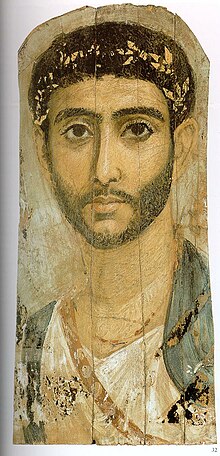
These genetics culminate in an appearance that resembles a mix of Amhara, Semitic, and to a lesser extent Berber, Varic and Sub-Saharan features. Ga’o generally have medium-brown skin (ex. 1 2 from Faiyum mummy portraits), with thin and angular facial features and black, curly hair. Eye color is mostly brown, though some Ga’o descendants possess grey or green eyes, believed to represent strength and fertility respectively, and heterochromatic genes are more common than usual within the Ga’o. Defects in the melanin content of hair are also more common, meaning people more frequently are born with white, or more accurately colorless hair, which is believed by many to be a sign of nobility. Facial hair is not common among younger Ga’o peoples, as it is traditionally associated with those considered “elderly” and would be stigmatized in younger peoples, though it is considered acceptable for those with exceeding wisdom to grow beards. Hair is traditionally kept relatively short for men, and longer, but not extremely long, for women. Ga’o people are tall (for the time period) and stereotypically possess thin forms with long arms, legs and necks. Tattoos are semi-common, used to represent one’s clan or individual feats, or in some instances, to brand slaves.

The Ga’o speak a language known as Ngu Ga’o, “Tongue Ga’o,” a member of the Ga’o branch of the Nilo-Avonian language family, it’s closest living relative of another branch being the language of the Vinča. Ngu Ga’o is distinctable by its syllable structure by which all syllables end in vowels, as well as its high amount of palatal noises and palatalization of consonants and it’s V-S-O grammar. It is an analytic language, meaning that little inflection occurs to words within the language, information about words instead being transmitted by particles in a system of base-periphery where the main word is a base and the particles conveying information about it are the periphery. The Ga’o language is also distinct in its numeral system, which is based on intervals of five and counted from smallest to largest rather than largest to smallest.

Ga’o’uurau is located on one of the most fertile lands in the world, and, as such, is home to many different peoples. A hub for trade, Cigo sees people from all different backgrounds travel to and fro, diffusing their culture as they go. Ga’o culture also promotes individuality, which can cause new developments or changes in cultural practices, and so the Ga’o culture is constantly growing and changing, and it is something that most Ga’o pride themselves in, from the myths of their own clans to the grand stories of all the Ga’o people. This rapid development of Ga’o culture has ensured that the collection of traits that make up the Ga’o identity are continuously morphing and taking on new forms.

Bringing with them Pa Xeco, “the faith,” the Ga’o’s beliefs were not immune to the Kuumade either, and over some generations, the two began to take elements from one another. It is thought that the world was created by the unknowable creator, a deistic figure whose intentions cannot be comprehended. Before this event, the gods had lived outside of Ngi’o, the temporal realm, but the creation bound them to the world of the material, and in unending creation, the first men were born. The gods, led by the vile Keea, king of the gods, enslaved these early humans, using them to create great structures and cities which nobody inhabited, stoking the gods’ incessant pride. Man sung of the day they would be free, and after much toil, it seemed that they had their calls answered. Rau, god of honor, thought to manifest himself as a crocodile-man, saw what his brethren were doing to mankind, and it is said that his fury build up so much that he destroyed Yo’eshuu, the “Gold City” and the greatest city of the gods. Teaching man of honor, and thus lifting them up from their servile state, Rau created Piiaa’a, the “Afterlife,” for mankind so that those who acted honorably would continue after meeting Aanuupii, god of death. The dead are traditionally buried in Pa Xeco alongside anything they may need in Piiaa’a, and those who were wealthy often had their organs removed, bodies embalmed and mummified, a tradition adopted from the Kuumade.

Alongside Rau, the gods of bravery, Giishai, craft, Åpo, fertility and birth, Uudaxii, and war, Voiau, found their way to the side of humanity in the Ra Kirode, the great war between mankind and her allies and those gods who detested humanity’s new enlightened state. Battles between man and god raged across Ngi’o, and many legends were made of mankind’s bravery on the battlefield, but one story proved especially important. Xoo Uuhwa, “Lion-Heart,” had become a prominent soldier among mankind’s ranks, leading charges against the tyrannical gods, but even with such valiant efforts, mankind still was losing the fight. Unlike men, the gods could not be killed; or, at least, so it was thought. In a last stand atop of the ruins of Yo’eshuu, the gods had surrounded the last of man’s forces. The battle was fierce, and the men found themselves surrounded when, from the haze, Dapa, god of pride, made himself known on the battlefield, calling out for Xoo Uuhwa to face him in one on one combat. The greatest warrior ever known to man, Xoo Uuhwa accepted the arrogant god’s challenge, and in a tense battle, Xoo Uuhwa slew Dapa, sending his body tumbling down a cliff into the realm of Aanuupii, becoming the first of the mu uxe xuu au, the “ones who kill gods,” a power that would spread across Xoo Uuhwa’s lineage, making itself known in only the greatest of men.

The Ga’o, tracing their own lineage back to Xoo Uuhwa, worship those five gods that sided with humanity as well as the cu yå, the men of legend whose deeds are immortalized as examples of humanity’s greatness. Worship is generally decentralized, the stories and myths told through a vibrant oral tradition, often varying from village to village and clan to clan. The Kuumade made a lasting impact on the Pa Xeco, their practice of worshipping idols both in temples managed by kaasha (shamans/priests) and at home adopted by the Ga’o. The Ga’o also worship phenomena of nature as well as elements of human life nature and society as divine forces, almost a type of god in and of themselves, whose bound existence can bring harm or benefit to those who involve themselves with their source of power. This power, called xoiro ri, “spirit power,” exists in all things, including people, and it must be kept in balance within Ga’o societies, which leads to kewu kirii, “mourning fights,” which are meant to restore balance to a Ga’o community. It is believed that those in Piiaa’a can also provide powerful boons to those still in the mortal world of Ngi’o, and so sacrifices and worship are made toward them as well. Prayers are made with prayer items and sacrifices endowed with xoiro ri, their blessings providing certain benefits to the items’ holders.

The specific beliefs of individuals vary throughout the clans of Ga’o, and some Kuumade reject the Pa Xeco entirely, instead choosing to form cults worshipping their gods in more traditional ways. Cult (pura) is a term used to describe the specific belief sets of a group, and many cults follow this general belief set but branch out in all different directions; some cults even worship crocodiles. Cults usually are centered around a specific temple, worshipping one deity over others, but it really varies a lot from place to place. Waiye often endorse local cults while outlawing others, sending believers either scattering or into hiding.

The Ga’o naming system is intrinsically tied to their belief systems. A child born into a Ga’o clan is given a pii name, a “whelp/youngling” name alongside their clan name. Clan names come before the pii name when stating one’s full name. A Ga’o man must do some sort of noteworthy and honorable feat to receive their deru shii, their “honor name.” from a kaasha, A deru shii relates to the act committed by an individual, so if one were to kill an enemy in battle, their deru shii might be Mu Wai Wipuu (names exclude particles and are left to context), “One Who Kills [the] Enemy.” A kaasha also grants personal names to individuals once they become “adults.” For men, this is the same time as the granting of a deru shii, and for women, this most often occurs when one enters a marriage. Personal names are used by persons known to the individual, while deru shii are used more as a title to indicate one’s deeds. Only men who are granted deru shii are accepted Piiaa’a (unless they do not receive one due to corruption of a kaasha, which is one of the gravest sins in Pa Xeco), and women can only enter Piiaa’a in accompaniment of a man with a deru shii, such as a husband, brother or father (accompaniment meaning they were under that person’s “care” when they died). Those without deru shii are judged harshly by Aanuupii, often either forced to be reborn in the endless creation or, often worse, banished into one of the realms of the dead. This makes Ga’o culture very focused on honor as well as individuality, and often men without deru shii face harsh criticism by their community, and may even be forced to divorce their wives so that they will go to Piiaa’a.

Eepho ee he’yi nga ru ge yå ko ku hwoicii o, ee koioi pa Ga’o au gu pa Kuumadu e ei au’oo oehwii dii a ki suua diia au uua pa Xuye e, ei au’oo hoiyo pa Ngi'o å ki gna kapee å.

And so it was told by the men of old, that the Ga’o would descend upon Kumat and make their home along the Nile, and the world would forever be changed.

map of Ga'o'uurau (Claim name) Confederacy with Cultured focus


r/AgeofMan • • Dec 15 '18

MOD POST Technology Updates

17 Upvotes

Two announcements for technology starting next week:

1 - We have been seeing a lot of mistakes regarding the way research posts should be made and what should and should not be included. There have also been mistakes surrounding the deadlines. Part of these mistakes are on us for bad communications. This week, we have been lenient and we will ignore most mistakes just this once. For next week, we have overhauled the rules and requirements to hopefully paint a more obvious picture of what is and is not required. As such, there will be no more leniency next week. It is both our and your job to make technology as smooth as possible and that requires some effort on both sides.

EDIT: NUMBER 2 WAS LUDIE'S IDEA, THANK HER, NOT ME.

2 - For next week AND NEXT WEEK ONLY, each claim will be able to research 10 extra technologies to make up for imbalancing in the number of tech slots and the long duration of weeks. The requirements are as follows:

  • These 10 technologies can only be from the Master Technology Sheet (MTS).

  • In total, only 3 technologies you research next week may not be from the MTS.

  • For each of the 10, you need to have all the technology and RP prerequisites. You need to include these in your research post and links to all the necessary RP.

  • The minimum year still applies. If a tech can only be researched in 2000 BCE, you cannot get it next week as it is 3000 - 2500 BCE next week.

  • These 10 technologies cannot be used for Military technologies.

  • There is no replacing or doing over if we deny any of these 10 technologies. Denied = slot is gone.

  • These 10 technologies need to be marked (T10) in your research post.

  • Going for fewer than 10 is okay, still mark them (T10) and not T8 or something like that.

Also, all normal tech requirements still apply.


r/AgeofMan • • Dec 07 '18

CLAIM The Komiwak

17 Upvotes

Claim Type: Confederation

Focus: Warlike

Tech Group: Mediterranean

Map: https://i.imgur.com/12ITWsa.png


The Komiwak lived along the Tsimpa river in small closely knit farming villages and towns. Komiwakans often abandoned their villages after intense farming to let their lands fallow, re-settling on formerly abandoned locations. Through this, the Komiwakans followed a pattern, leaving their villages every other year to another and vice versa. The villages were roughly in a circle around a comparatively larger town, which normally ruled over the area, collected taxes and provided services that the villagers themselves could not manage. These towns were run by a council of war chiefs, shamans and elders all chosen from the surrounding villages and from the town itself.

The Komiwaks believed themselves to be descendants from the ground, emerging from a cavern opened by a particularly strong lightning strike. Their ancestors who were unable to escape the underground were killed as a great flood swept through the cavern, wiping out those trapped inside. Their spirits were then said to inhabit the river, providing for their lineage by feeding them with fish and irrigation for their crops. As the Komiwaks adjusted to life above, they gave birth and they died. The dead Komiwaks inhabited nature, banding together in forests providing game for their progeny to hunt and to eat or in the ground providing plants to heal and to feed.

These cycles continued for a great deal of time, until bands of barbarians threatened the Komiwaks. A great deal of villages and towns were destroyed as the Komiwaks were forced to learn the art of war in proper. A great battle between the legendary Komiwakan general Nime Mandœmasyiarn and the barbarian leader took place, resulting in the mass slaughter of the barbarian bands as the Koimiwaks displayed their talents. The barbarian spirits however lingered, infecting some of the beast of the land, some of the plants and some of the people. These unfortunate vectors soon got ill, and made others ill as well. Using the ancestor spirits the Komiwaks combated the barbarians spiritually, but the battle seems eternal.

Bargaining with these spirits is a integral part of Komiwakan life. Dealing with the barbarian spirits is often know to bring misfortune to the unwary, but those cunning enough to outwit the barbarians gain great benefits. Dealing with the ancestors is normally a safer task, whereby offering sacrifice strengthens them and grants their knowledge and their protection to the person.

The Bear is a common symbol used by the Komiwaks. Symbolizing both the need for cunning and strength to succeed in daily dealing and in war, amulets bearing the shape of a bear are often worn and bears are frequently displayed in pottery. In sculpture, wooden representations of the spirits are often burned with various sacrifices in them to offer to the ancestors. Pots are painted with vibrant colors, with thick flutes and smooth coils.


r/AgeofMan • • Dec 03 '18

CLAIM The People of Yangshao

17 Upvotes

The people of the Yangshao Plateau* dwell in their wattle and daub abodes, gathered around deep dug wells and fertile lands sown with millet crops. Across these lands, lie older derelict homes, abandoned to nature, and set aside to find new verdant lands. Small herds of pigs find themselves in close neighbourhood to packs of domesticated dogs.

These tribes have in common, a rough hierarchy of power: a male, and wives. What differs are the number of wives, and whether power lies in the Patriarch or Matriarch(s).

Each tribe has for themselves a set of ideal virtues, that which they find attractive, and respectable, although these too differ on a per tribe basis.

All is not peaceful between these groups - it is easy to vilify and other rivals, especially in envy of their lands, or livestock. The polished stone tools can often be found bloodied and lost, dropped from the hands of slain tribesmen, or their spared kinsmen. Death is not a certainty for such conflict, often a village is merely consumed for resources, and it's survivors given mercy in-exchange for obedience.

Now through mercy, pottery, and a good deal of luck - the tale of the Yangshao people begins.


Yangshao Plateau - Loess Plateau


r/AgeofMan • • Dec 03 '18

CLAIM "There Will be no Peace"

17 Upvotes

"You must see reason. This will destroy us all!"

"Destroy you invaders! You have no place here. By Ausvhiavan, if you will not accept we will destroy you."


Since time immemorial the children of Ausvhiavan, Great Mother Fire, had lived by the Silver River, her masterwork and gift to man poured down from the west to the heart-land. They were a hundred little tribes and villages, united only by culture and language, revering their mother-flame. Agriculture proceeded proto-metalworking, and the Scions of Mother Flame sprung to life in a hundred settlements. Proliferating along the river, they practiced their little sacraments, invoking the Great Mother to shape rock into brilliant, sacred bright-rock as they grew and progressed. Villages sprung to life, becoming first small towns, then larger ones, a civilization of the Rho-Ausvhiavan.

A century ago, the Nhetsin from the Aibunh Tonmitaya, had been blown of course by an unusual torrential storm. Adventurers from their homeland, they had sailed east in scattered boats and canoes and rafts and landed near the heart of the Silver River, scattered, and united only by culture and language. Heretics and outcasts, they quickly developed their own religion and ideals and settlements. Sailors, traders, and adventurers, they still soon developed bases, and then outposts. Settlements. First villages popped up, then towns, distant from their homeland, they grew quickly to become their own people. Their own civilization, of the Nhi-Nhetsin.


"You are a fool! This could be prosperity for the both of our civilizations! Both our peoples!"

"You are not chosen of Mother Flame! You partake not of her sacraments! This is heresy!"


The Mother's Breath could be found in most places, and teased her rites to life. But the fine bright-rock, the Mother's Blood was found only away from the homeland of Lihr-Rho. It was a distant journey over choppy seas to Suhr-Avan. Firehome. Isolated mining villages of the Scions of Mother Flame scattered across the island, dealing in small quantities of rare, valuable ore. But one day, they discovered a new people, beaching their boats and exploring.

The voyages of the Nhi-Nhetsin brought them never again too far from home. The legendary Voyage of the Perfect Man was whispered reverently, but never undertaken again. But they did continue to sail. And one day, they landed on an island, not far from home. Ores were plentiful, as were deposits of some stranger rock. But as they set up their colonies to mine, they came under attack from a strange people.


"You damn us all! Neither of us shall have your sacred island! We wash it in blood and trample the bones of the dead underneath!"

"Better than desecrating it by allowing your filthy unsanctified feet upon the island."


There was a brief attempt at communication. But then there was war. A brief, bloody conflict, as the Rho-Ausvhiavan attacked, outraged by this affront to their holy island. The Nhi-Nhetsin took their spears and counterattacked. Nobody won that day. Nobody won for any of the weeks and then months after but the predators and insects and decomposes ready to feast on the bodies of the dead. The settlements of both civilizations were devastated, villages lying empty and depopulated. Both were defeated, and both withdrew from Firehome. The Rho to their largest town of Sur-Ahiadin, which became the nucleus of a new temporary alliance. The Avonians to their own settlements and their own confederations. Then there was another brief attempt at communication.


"Then we fail! War again! We dishonor all our gods, all our ancestors."

The Avonian envoy, a merchant who had traded with the Scions of Mother Flame before shook his head angrily.

"Folly. Folly, all of this."

The Rho-envoy smiled thinly. "Suhr-Avan will not be despoiled by your people. If you will not leave the island, and abandon all claims to it, there will not be peace."

It was not the birth of a nation. But it was the beginning of an era. The Scions of Mother Flame and the Followers of the Perfect Human would begin the age of fire and the age of man


The States of Flame and Man

Map: https://imgur.com/a/yVU6Ej4

Nhetsin red

Rho blue

Claim Type: Confederation

Focus: Metalworkers

Technology: Eurasian and East-Asian


[m] I know there's some trouble with the NA migration. Can I have this provisionally approved, and if the NA migration gets retconned and blasts most of the claims I was planning to diplo with to oblivion, I'll rewrite it.


r/AgeofMan • • Dec 03 '18

CLAIM The Eora people of Baralku

17 Upvotes

The evening was mild, the crackling campfire warm. The sun had just sunk below the horizon, only the fire and the stars illuminated the campsite. The old healer stoked the fire with a stick. When he saw the children running towards him, cheering, he smiled.

"Healer, healer!", shouted one boy as soon as he was close enough to be heard. "Tell us a story!"

"You want me to tell you a story from the Dreaming?", asked the healer dramatically.

"Yes. yes!", cheered the children in unison.

"Gather around", he said, as the children sat down around the fire. Some grabbed sticks to stoke the campfire. The healer looked around at the children. "What story do you want to hear?"

A girl sitting right next to him answered first. "Tell us a story of Barnumbirr", she said.

"Oh yes, Queen Barnumbirr of the Eora", said the healer, smiling at the girl. "Which one?"

"Tell us of the land she came from", she said. "What it was like there."

"Hmm, this will be interesting", said the healer. He leaned dramatically into the circle. The children scootched closer so they could better listen, as the healer started to tell the story. "Listen carefully."


"There once was a fisherman in a far away village. Every morning, he would go to the shore, row out to sea with his boat, throw out his nets and return with just enough fish in the evening to feed his wife and three daughters.

One day, Rainbow Serpent, travelling far through the ocean, was caught in his net. The fisherman did not know who he had caught, and so he pulled Rainbow Serpent into his boat.

"I am Rainbow Serpent", said Rainbow Serpent, as the fisherman removed the net curiously and untangled it. "I have created the land."

The fisher,an became scared of these words. Rainbow Serpent, clearly a powerful being, must be very angry to be caught in a net. The fisherman feared Rainbow Serpent's wrath. "I am just a lowly fisherman", he said. "I go about my daily work and fish to feed my wife and three daughters."

Rainbow Serpent was not angry, but curious, and did not take notice of the fisherman's fear. "Show me your daily work", Rainbow Serpent requested.

And so the fisherman continued to fish and Rainbow Serpent observed, and when his boat was full and the sun was setting, he returned to shore with Rainbow Serpent in his boat. The fisherman's family came out of their hut to help him, but they were also afraid at the sight of Rainbow Serpent and approached very slowly.

"Who are they?", asked Rainbow Serpent. The fisherman was still afraid, and so he said: "This is my family. My wife and three daughters. We do not amount to much in our village, but they mean much to me." Rainbow Serpent still took no note of his fear, and as they left the boat Rainbow Serpent requested: "Show me how you live." Rainbow Serpent had never seen a hut like this and had grown more curious.

And so the fisherman invited Rainbow Serpent into his home and they ate the fish that the fisherman had caught. Rainbow Serpent noticed that nothing was left over and that it was barely enough. But Rainbow Serpent's curiosity was not satisfied, and so the fisherman and his family sat around a fire - much like this one - and they told stories to Rainbow Serpant, the stories of their people.

As the sun had set and night had come, Rainbow Serpent said thanks. The fisherman, still afraid, said thanks in return and offered his last fish to Rainbow Serpent. Rainbow Serpent did not take notice of the fear and understood it as humility and was touched. "I cannot accept this gift, for I am the one who is thankful", said Rainbow Serpent and swallowed the fisherman's eldest daughter, whose name was Barnumbirr. The fisherman and his family ran away in fear, but Rainbow Serpent spew out the fisherman's eldest daughter soon after. "Times will be fortuitious soon", said Rainbow Serpent to Barnumbirr. "You will make it so."

And Rainbow Serpent left the shore and changed the land under the sea. Lots of fish now lived here and no fisherman in the area would ever starve again, and the waves were calmed and boats would rarely sink. The people of Baralku lived a life of abundance, migrating with the fish when they moved with the seasons, and their villages would prosper. The fisherman would tell the story of Rainbow Serpent to all the people and they gave thanks to Rainbow Serpent in dances and songs.

As for Barnumbirr... well, that is another story."


Claim Type: Nomadic

Tech region: South East Asian

Focus: Cultural

Map


r/AgeofMan • • Dec 03 '18

CLAIM The Hasiŕ’gaŕokan

17 Upvotes

Located on southern-most tip of the Hasiŕean Peninsula lies a number of tribes who refer to themselves as the Hasiŕ’gaŕokan, the people of the Peninsula.

While there was a core population in the region that consider themselves to be of the Hasiŕ, the Hasiŕ’gaŕokan themselves are divided into multiple clans or tribes (known as Kais-ke) of varying sizes. Certain clans were close each other, however the largest tribes had always been disunited and belligerent between each other. The three great Kais-ke - the Seloniŕ, the Lasiŕos and the Olśkuan - had long been rivals, constantly fighting for hunting spaces, stealing clan-folk and sheep from each other, the list went on endlessly.

Eons ago, in twilight years of the Age of Heroes, one particularly bloody conflict took place. A conflict that would forever shape the future of the Hasiŕ’gaŕokan. It was known as the Blood-War, having been orchestrated by the Goddess Yŕiŕ to ensure that the Hasiŕ would be gone for good, especially Kais-ke Olśkuan – as they were the Protectors of the Gates to the Peaceful Sea, a realm that Yŕiŕ desperately wished to corrupt. Alongside the God Tuŕla the Treacherous, she manipulated events to sow hatred between the Kais-ke. The sons and daughters of chieftains were killed, water-supplies were poisoned, stores of food for the winter were burned. As tensions rose, everything erupted when Ilti´raretan Beleaitu, the Clan Chieftain of the Kais-ke Olśkuan, was assassinated during a hunt. The next in line was Beleiskeŕ, the eldest son of the Clan Chief. Beleiskeŕ had lost much over the years, his younger brothers had been killed and prior to the death of his father, his wife-to-be had been kidnapped.

Beleiskeŕ would undertake an epic journey, which itself merits its own story for another time, in order to recover his beloved from the jaws of the Si’atikanis, the vilest of Yŕiŕ’s creations which had been locked away in Aki-naŕeś – the Land of the Dead, deep into Lakuiltum’aunorti. On his journey, Beleiskeŕ would gain the blessings of Agintiŕ the War God and Laieśka the Goddess of Wisdom as he learned of and began striving to foil Yŕiŕ’s plans to seed chaos amongst the Hasiŕ.

However, Beleiskeŕ was on his arduous journey to the Abyss at the time of his father’s death. Therefore, he was unable to tell the Kais-ke of Yŕiŕ’s foul intentions and manipulations.

This unfortunately meant that the Olśkuan, after having been subject to years of abominable actions from what they presumed were their fellow Hasiŕ, were quick to cast blame on the Lasiŕos and the Seloniŕ. The accused Clans voiced their indignation against the accusation, claiming that the Olśkuan had been just as bad. Both sides refused to see reason and were quick to muster their warbands.

The war that ensued pitted the Olśkuan (the largest of the three Clans) against the Lasiŕos and the Seloniŕ, all three rallying the minor Clans under their influence. Legends claim that the entirety of the three clans (women, children and elderly included) had been used as fighters, and were entering a final war between the Clans which would have little to no survivors, an event that would have forever broken the Hasiŕ’gaŕokan, and been a victory for Yŕiŕ.

As the Blood War commenced, it was immediately destructive, carrying on for years. As more and more Hasiŕ of all three Kais-ke fell, the blood-thirstiness of the survivors grew to inhumane proportions, fostering more hatred between the Kais-ke each passing day. In the meanwhile, with the Hasiŕ distracted and the Iśaŕkatan powerless to stop her, Yŕiŕ began her siege of the Gates of Yŕeśuniŕ – the massive Si’atikanis battering down the walls that kept the Abyss’ corruption out of the Peaceful Sea. Fortunately Beleiskeŕ, now a Aŕikaŕ’kinuŕe (a Hero blessed by the Gods), had travelled there, after rescuing his wife, to stop Yŕiŕ and her spawn. Using Laieśka’s wisdom, Aŕikaŕ’kinuŕe Beleiskeŕ fooled the Si’atikanis into using the hills on both sides of the Gate as leverage when smashing itself against the walls. Then, using Agintiŕ’s strength and resolve, Aŕikaŕ’kinuŕe Beleiskeŕ slammed two mountains onto the Si’atikanis’ tentacles – trapping the monster. However, the monster had been able to destroy the Gate and the Abyss would soon begin to seep into the Lakuiltum’labeisiŕ. With the gifts from both of his blessings, Aŕikaŕ’kinuŕe Beleiskeŕ used Si’atikanis’ blood, therefore also Yŕiŕ’s blood, as well as his own to embed a seal on the two newly formed mountains adjacent to the opening. Foiling Yŕiŕ’s plans for the moment.

Back to the Blood War, after countless years of fighting, the Clans had finally moved for a final confrontation. Readying themselves at the chosen battleground and charging, they instead halted in their tracks after hearing the earth shattering and rumbling unlike ever before – looking towards the Gates of Yŕeśuniŕ, they noticed the two new mountains that been smashed into the ground.

The battlefield remained in silence, the remaining survivors had lost their blood-driven fury and were now confused and unsure more than anything.

Aŕikaŕ’kinuŕe Beleiskeŕ then appeared in the middle of the three Clans, and began addressing every Hasiŕ present. He revealed the truth behind the Blood War and the machinations of Yŕiŕ, the hated enemy of the Iśaŕkatan, in creating the conflict in the first place. Now more than ever, he argued, the Hasiŕ had to stand united in protecting the Peaceful Sea and stop Yŕiŕ from filling the sea with monsters and abominations from the Abyss, corrupting it for eternity. Aŕikaŕ’kinuŕe Beleiskeŕ’s seal on the newly formed Pillars of Beleiskeŕ would not hold forever, it needed to be maintained by the Hasiŕ’gaŕokan. He urged the Clans to respect the fallen on both sides and burn their bodies, so that their ashes could be cast into the sea, allowing their souls to reinforce the seal by continuing the fight against Yŕiŕ alongside Yŕeśuniŕ, the Goddess of the Sea.

While Aŕikaŕ’kinuŕe Beleiskeŕ was not able to unite the Clans completely underneath the Olśkuan, he had managed to ensure peace between the Hasiŕ’gaŕokan. Binding them with a Pact that made sure that there would no longer be any more wars between the clans, and that any tensions would be diffused with words rather than spears. As time went on Beleiskeŕ would lead the Hasiŕ to the best of his abilities, eventually going himself to the Sea of Heroes in order to fight the Abyss and leaving his descendants to ensure that the peace between the Clans is forever maintained.

Claim Location

Claim Type: Confederation

Claim Focus: Industrial

------------------------------------------------------

Iśaŕkatan : the Pantheon of the Hasiŕ’gaŕokan

Hasiŕ: Peninsula

Lakuiltum’labeisiŕ: the Mediterranean Sea

Lakuiltum’aunorti: the Atlantic Ocean

Pillars of Beleiskeŕ: the Pillars of Hercules


r/AgeofMan • • Dec 03 '18

CLAIM The Varavarta

17 Upvotes

"The Black Sun in battles help his Varanite worshipper, he who hath hundred helps at hand in every fray, in frays that win the light of heaven. Plaguing the lawless he gave up to blazing, 'twere, he burns each covetous man away, he burns, the tyrannous away."

~Varaveda, book of the Varanites


Mythological Foundation - The Varaveda

In the Varic Plateau, there sits darkness. Nothing but the wind and the rain bucketing onto the ground. Then, seemingly out of nowhere, the skies open up and a ray of sunlight hits the ground, the first ray of sunlight the world had ever seen. Out from that sunlight walked a man, a man of pure strength and spiritual knowledge, the first of the Varanites. After him came his wife, a woman of loyal nature and endless beauty. These were the first of their kind, the bringers of life to the dark plains. They were married, their names, Vari and Tabeitha, the fore-bearers of the Varanites, divinely sent to ensure the land that had been created by Kalikhan and her husband, Baalkhan, would be populated with the righteous. They had four sons: Varan, their first and favorite, blond and blue eyed, Kar, their second, brunette and green eyed, Vuaz, their third, sandy and brown eyed, Ura, their fourth, an outcast but loved nonetheless, and then the ill begotten son Edom, black haired and brown eyed.

These sons were the first children of the Varic people. Varan was the eldest and thus the inheritor of his father, Vari. He stayed where they had been birthed and created a tribe from his ribs, birthing the people of the modern Varanites. Kar went to west and settled near the water, creating the Karhavej. Vuaz, their third son, went to the east and settled in the hot sands of Vuazrayava. Ura, seeing his brother's go off and explore the world quickly left to the east, following his older brother Vuaz. Their last son, the bastard, the leftover, Edom, he stayed as a servant under Varan, knowing that he would never amount to anything as they did, they became the Edomites, the slaves.

With the sons of Vari settled in the lands which would be known as the Arevelk’ (the east) and Arevmutk’ (the west), he passed away happy. His wife and mother of the four, went to live with Varan, marrying him and giving him many children to populate the tribe from which he birthed from his ribs. Varan quickly became the most powerful of the sons of Vari, establishing a large control over the Varic Plateau, their primordial breeding grounds. The children of Varan were known for their quick wit, their blond hair, and their blue eyes, they were also the strongest of the descendants of Vari and their legacy quickly grew as they took over their homelands. None could face the legions of the Varanites.


The Varanite Tribes - Encyclopedia Varatica

In the early 6000sBCE, a small culture group by the name of the 'Varic people' emerged in what we now call the Varic Plateau, a hunter-gatherer society who eventually created Chalcolithic Cities and Temple Complexes within the region. The Varic people were known initially for their complex religious systems with an early pantheon of three gods, the Black Sun, Baalkhan, and Kalikhan. As the Varic people begun to settle within the region, unknown forces created a split between the group, creating what is now theorized as 'Western Varics' and 'Eastern Varics', with the first containing the Varanites and the Karhavej, the latter containing the Vuazrayava, the Edomites, and the Urapi. This split also caused a split in religion, politics, and language between the culture groups. With the Varanites and the Edomites keeping the closest language allegiance based on the enslavement of the Edomites as early as 5000BCE. The early Varanite tribes were organized under a tribal chiefdom scenario, based highly in military prowess and religious fervor. The name for the chief, almost exclusively a high-born Varanite (characterized by the Ur- prefix) would be known as a 'Daarśas'. The tribes were organized into regions called 'śas', and as previously mentioned, ruled over by a Daarśas.

The Varanite tribes quickly confederated into an alliance sometime during the 4000-3000BCE era, creating a safe-guarded region to practice their culture and gods without interruption from any foreign tribal confederations or nomadic hordes. As for the split off Varic people who went further west and to the east, they were quickly forgotten about until they next met, around a thousand or so many years after the initial split.


Claim Information

Claim Name: Varavarta, Abode of the Varanites.

Claim Type: Confederation.

Claim Focus: Warlike

Technology Region: Eurasia/Middle East

Claim Map: Varavarta.


r/AgeofMan • • Dec 03 '18

CLAIM Vinča

17 Upvotes

Villages had quivered. They had seen the flames in the distance, and they knew that they would be next. Men and women ran as more of the foreign men on the horizon came. It had been unknown how, or why, these people had arrived, but all that was known was that they were here now and that they were not too keen on not being in control.

For the men coming up on the horizon, it was a much different story. Their group had come all the way from the White Nile as part of a great migration alongside a few other notable tribes and the like, however, had detached themselves from the other Nilo-Avonians somewhere around (Syria), and instead migrated up to the left. This decision would turn out to be a very poor one, with the splinter group being forced to cross mountains, deserts, & even a small strait, all the while occasionally combating the native inhabitants. What had once been a huge group would have dwindled to a tiny fraction of its original size by the time it actually reached its new lands, however, the intense conditions had hardened them significantly. Whereas they left simply as peaceful nomads, they arrived in (Serbia) as a race of warriors; a race of warriors that was now fighting their next target.

Their little invasion would last for scarcely a few years, however, the repercussions of which would culminate for the next 500, during which the Nilo-Avonians & the native inhabitants had basically become one culture, with one religion, and one language. Despite the conquest itself being relatively unopposed, the Nilo-Avonians simply didn't have the numbers to completely enforce their culture, and as such, they blended.

To the people, the cultural union was of huge religious significance; they had believed that every people were headed by a god, and the blending of the two was an alliance in the heavens between Iapam̥ & p̪fɹpam̥, the gods of fertility & war respectively. The religion itself was a major part of the people's life, with early shamans & the like who taught it via stories in the early cities being praised as de facto leaders, a glimpse of what was to come.

While the original inhabitants' territory actually stretched for a while, the Nilo-Avonian influence and over-all different culture were limited to some mountainous regions where the communities had been divided and conquered individual. For that reason, the newly formed Vinča only resided in the southern area, however continuous raiding strikes on the rest of the inhabitants grew in size & strength as time wore on.


Claim Type: Confederation

Focus: Warlike

Tech Groups: Eurasian, Med

Map


r/AgeofMan • • Mar 27 '19

DECLAIM The Fall

16 Upvotes

The end of the Bagaroki was nigh. The Lydians had landed onto their land, their own land, in their arrogance and clothed in their own armor. And yet they had defeated the Imperial Army to the last man, killing one of the members of the triumvirate on the battlefield, and causing chaos throughout the empire. Issarism spread like wildfire in the western region of the Empire as the Misalir Kingdoms fell to its tendrils, and Bagaroki were slaughtered by the thousands by the locals. The western Hasir region was still in disarray as the Ors'ruic was continuing to struggle to regain control over the region. The utter defeat of the Imperial Army and the damaged naval forces meant that the Harakoi were left off entirely free, especially when news of the failed Misalir invasion came to Bagaroki. Yet the bad news had not ended. As the Dzeri returned home to report at least some sort of victory in Lituura against the pockets of Harakoi, news immediately followed about a popular uprising against the now-helpless Ors'ruic. The forces of the Ors'ruic that had found victory had been spent on an ally that had betrayed them. The fall of Bagaroki influence in Libya and Cyrenaica meant that all the client chieftains and migratory peoples of the Sahara saw opportunity, and much of the borderlands of the Bagaroki were under attack for the first time in millennia. The people and the Ors'ruic was helpless to do anything against this new enemy.

The Sin'Aikas fumbled in this time of crisis, for the one issue with such a bureaucratized and formalized system was it was extremely slow to respond to such a situation. The one system in place to partially combat this, the triumvirate, was an entire failure in this particular moment. One member had died attempting to push back the Lydians, and another was in the Misalir Kingdoms when it fell. All that remained was a single Dzeri Sin'Aikasi who was the last remaining member of the triumvirate. However, in the uproar against the utter failure a mob was formed in Bagaroki, and before anyone could do anything the last member was murdered for his failure, and the Sin'Aikasi that remained were forced to disperse to save their own lives. The crown jewel would fall to despotism and anarchy as different underground factions fueled by incessant greed and money battled for control over the remnants.

The rest of the Bagaroki regions would fall to regionalism and tribalism as the hill tribes in the western mountains would come down to establish their own tributaries. City-states would emerge from the pre-Turfet [Kingdom] days, despots would rise, and chaos would take control of the region. It would be left to see whether the region would ever regain its former prominence.


r/AgeofMan • • Dec 08 '18

CLAIM Aryavarta Janapada

16 Upvotes

Claim Type: State

Focus: Innovative

Technology Group: North India / Indus Valley

Map: Aryavarta, in the delta of the Indus River Valley


Aryavarta, Land of the Nobles


The Aryavarta Janapada is a sovereign state located in the fertile delta of the Indus River Valley along the coastline of the Arabian Sea. The state is a collection of communities that reside in villages, each a subject of the Samraj who rules from his seat at Arjunapura.


Politics

The Samraj is the sole, sovereign authority in the land where each and every man and woman is a direct subject to his power and decisions. Although carrying near absolute authority, the Samraj realizes that one man cannot possibly know everything and maintains a council of trusted advisers, each of them a scholar or pandit. This board of advisers serve only in a advising capacity and have very little say in the affairs of the nation and can be appointed or dismissed at the Samraj's pleasure.

The state actively encourages academic pursuit and scholarship, which is primarily taken by wealthy aristocratic families, some dedicating their entire lives to the pursuit of knowledge. These pandits are the most respected and revered people in the social hierarchy, followed by aristocrats and major landholders, and then workers and merchants further down the ladder.

Arjunapura

The Samraj resides at his palace in Arjunapura - the administrative, cultural, and economic center of the state, and would be considered the 'capital' in modern usage. The city is named after Arjuna, the mythological founder of both the nation and its religion and culture, who is said to have received divine blessing at the site of the city and built it from scratch.

State of the Realm

Just a decade ago, Samraj Vijaya went beyond the confines of the city and its confines united the peoples in the Indus Delta under his rule, and has great ambitions to expand across the entire Indus River Valley as foretold to be his destiny. Parties have been sent north, west, and even east, offering peace and reward if they voluntarily submit to the Samraj or war and death if they don't.


r/AgeofMan • • Dec 08 '18

CLAIM The P'axichimsanhtli

16 Upvotes

Claim Type: Nomadic Horde

Focus: Cultured

Tech Group: South Indian and Eurasian

Map, with the P'axichimsanhtli in Dark Green


It had been many, many full moons since the war of the Nine Clans, but the divisions it caused still lingered around not only in the society of the Itayat’imunhtli, the People of the Place Between the Many Rivers in the Eastern wetlands near the sea, but in a group of people that split from the clashing tribes and clans to follow their own path: the P'axichimsahntli, the People of the Land of the Flat Hill.

This group of people from all walks of life are still culturally similar to the Itayat’imunhtli, and their darker skin and distinct hair sets them apart from the native populations of the area, remnants of a migration not even the eldest of elders can remember, but what sets them apart from the people living in the lowlands below is their supreme devotion to a single god out of the Pantheon; Sixallo’tje, the Northern Star, god of discovery and movement.

During the war of the Nine Clans, the great leader Tinju’elile’lawetratijok (“He who follows the star”), a diviner for the Northern Star, who during a vision saw Sixallo’tje pointing northwest, and decided to set out with a group of his followers in that direction, to discover the lands far away, beyond the flat mountains.

To his group flocked tons and tons of families fleeing from the gruesome conflict, as they set out to the top of the flat hills. They arrived after five full moons at a place that they called Wetxichi, the sky hill, and over them came a feeling of inaction, as their priests and diviners failed to get any visions from Sixallo’tje.

Blaming it on Ratoq'uch'iya (“That who makes things stop moving”), Sixallo’tje’s antigod, the priests spent all of their available resources on getting signals from the Northern Star, although these attempts failed.

This led to years after years of stagnation and settlement, until, a few months before today, Tinju’elile’lawetratijok’s descendant, Tinle'laxkistirapa (“He who leads many”) experienced the same vision on behalf of Sixallo’tje, and readied the tribes for the trip North, not before commencing the building of a stone monolith, to mark their way back home after their migration is finished.


r/AgeofMan • • Dec 05 '18

CLAIM The City of Palkh

16 Upvotes

City of Palkh

  • Claim Type: City-State

  • Focus: Warlike

  • Tech Group: Middle East/Mesopotamia

  • Religion: Palkhan (Varic Group)

  • Map: Right here


In a Time Before Time...

The child-god Ghembari came down to earth, and fashioned man from clay, drawn from a floodplain. These clay men were clever and brave, but their bodies did not match their brave hearts. Being made of clay, they were soft and weak, needing time to dry in the hot sun. Ghembari, being a young god, was not wise, and did not posses the foresight to consider this before starting on his endeavor. He watched as his new creations wilted and collapsed where they stood as they tried to leave their birthplace. Even worse still, some fell to the ravening wild beasts that patrolled the edges of the plains, out of reach of the god.

Ghembari began to build more men, trying desperately to replace the ones lost to the elements and beasts. Soon, he picked the riverbed clean, what few clay men that remained hudding in fear in the shadow of their god, hiding from the beasts, yet prevented from drying in the sun by the very shadow of the god that they stood by for protection. Ghembari continued to build feverishly, digging deep into the ground, his hands finding not soft clay, but hard stone, and coarse sand. Ghembari's efforts yielded instead a new kind of man. Strong and stoic, and loyal to a fault.

Ghembari raised a finger at one of the beasts, a hulking brute of a creature, and the new man rushed forwards without hesitation, taking up a large stone from the plain. The pair battled viciously, with the beast mauling the stone man within an inch of his life, blinding the stone man, and tearing a hand from his arm. In the end, the stone man claimed victory, crushing the skull of his enemy with a swing of the stone he held.

Ghembari saw the strength of his newest creation, and charged him with the protection of the plain. As Ghembari fashioned more men of clay, the man of stone, Palkh, was charged with protecting them as they dried in the sun. By day, Palkh patrolled the the floodplain, striking down whatever beasts approached. By night, he begged Ghembari to allow him to leave the plain, as the dried clay men did. Every night, Ghembari refused, stating he needed one as strong as Palkh to keep a watchful eye on the plain.

Palkh's body began to decay as time wore on. The wind and rain took their toll, as did the fangs and claws of the wild creatures he did battle with. Ghembari continued to chasten his creation, rebuffing all of Palkh's requests for freedom. But the floodplain was running out of clay. Soon, Ghembari would have no more men to make, and Palkh's purpose would be fulfilled. The time came. One final litter of clay men was forged, and one more day remained to protect them.

Palkh fought ferociously that day, his earthen hands and heavy stone smiting the beasts before they even came close to the clay men. But that night, when Ghemarbi surveyed his creations, and ushered them off into the world, he came across the mangled body of Palkh. The ravages of time and combat had rent Palkh asunder, leaving him shattered. Ghembari wept for his favored son, and took the last of the clay he could find in the floodplain, and mixed it with the sand and stone of Palkh's corpse, making a new race of men.

They would not be as strong as their forebear, nor as stout of mind and body, but even the faintest hint of Palkh's being in each and every one of them raised them above their counterparts. They were the Palkha, the Last Men.


r/AgeofMan • • Dec 05 '18

CLAIM The Changed Ones

16 Upvotes

Chandera folk, dare resist

Invaders and weakness

We must face the truth of life

Venerate the god-ancestors

We chose for ourselves


It is said that long ago, when the bull, Baalkhan defeated the Black Sun, and shattered the Black Sun into one million shards in the sky, and when the harpy, Kalikhan first gave birth, Baalkhan devolved into a great fit of rage; for the child that Kali had given was a child of brown hair and brown eyes. Baalkhan then devoured the child, and devoured many more after that first unfortunate child, until Kalikhan finally gave birth to creation.

And when the sunborn children emerged to rule the world, they had fallen into the same behaviors which Baalkhan had developed. One by one, the children of the sun separated from their ancestral land and went their own ways; the Urapi in search of a new life, the Vuaz in search of wealth, and when the Karhave left their home to attain enlightenment, all that were left were the Varans. Bitter at their siblings for leaving, the Varans, based on the principle of Baalkhan; of divine appearance, quickly enslaved those who were like the early children of Baalkhan and Kalikhan. For no fault of their own, and almost instantaneously, they found themselves shackled to live in squalor and to work to death, working the difficult lands of the Varic plateau. They would be known sympathetically as "the Betrayed" to the others who had escaped the Varic plateau, but alas, for eons upon eons, their bonds to the land were strengthened and the years of slavery bore hard on the Betrayed, all for the sake of appearances and for Varan greed.

And from the deaths that they suffered a thousand times over at the end of a Varan stick, they cried, Deliver Us!

And from the bones of their ancestors buried under the weight of work, their spirits destroyed by the labor, they shouted, Save Us!

And from the years of slavery that they endured still, from the years that rendered them old and feeble before their time, a small shard of hope still existed within them, and though hope may be frail, it is hard thing to kill.


The Goddess of the Moon, the Goddess of Dusk and Dawn, a shard of the Black Sun, would intervene. She would see from her ethereal perch of the hushed words and meetings at night which happened. Ashura, she was, and took pity on the plight of the Betrayed she did. The Goddess called a favor from the God of Words and Diplomacy, the Lord of Tricks and Deceit, the Lord Karamakhan, and appeared together one night in a feverish dream to a boy in the night.

And the Goddess, appeared to him, holding high the Moon-and-Star. Moon-and-Star spoke to the boy, speaking of seeing the plight of the Betrayed. She spoke of how the Varans had grown decadent and greedy, and that their reckoning of their priests and kings would soon arrive. Then, Karamakhan, the Masked God, appeared. The Masked god spoke of plot and schemery, and made a deal with the boy; if the Betrayed lived according to the ways of Ashura and Karamakhan, then they would receive their liberation, but if they ever deviated on the paths set by Ashura and Karamakhan, then they would decline and crumble, and be punished, like the Varans.

The boy grew, and became a man. He was quickly put to work in the fields, as was custom. He had avoided the barbarous tradition of slavekilling, where a Varan boy, when coming of age, would slaughter a member of the Betrayed. He spoke of the vision of Ashura and Karamakhan, and after great trial, his word would be accepted by his people. Of course, the Varan overlords caught wind of this, and one night, the man was found hanging from a tree. His word showed to the Betrayed that there was hope still indeed, and that their suffering would soon be over. This was the first prophet.


The second prophet was an old man. Ashura and Karamakhan appeared in another vision, this time while the man was meditating in the night. They told him that the moon will protect the Betrayed and that their energy would be the highest in the night. And so, the Varans began to notice that their slaves would not be present in the homestead past dusk. They would convene and discuss, and would build rudimentary, hidden shrines to their two patrons. The Varans found the second prophet hoarding some straw one night for an idol, and cut off his hands and made him bleed to death in front of all. His death showed that the night was the ally of the Betrayed, and that veneration of the gods was important.


The third prophet was a woman, and to her, the third Goddess was revealed. Moon-and-Star and the Masked God appeared to her one night, and the prophet saw a blinding light, and the descent of Mera, Goddess of the Realm of the Dead and Guardian of the Underworld. The Lady held her shining sword high, and pledged to protect the ancestors of the Betrayed who had already ascended to the spirit world, in exchange for the continued honoring of the deal struck by the first prophet and Moon-and-Star and the Masked God. She would spread this word, and would cement the veneration of Mera as the third Lord of the Betrayed. It is not known how the third prophet died, only that her clothes were mysteriously found on top of a hill one day.


The fourth prophet was born, and when the fourth prophet was a young man, he mysteriously found a large stash of spears and axes hidden underneath dense forestry near their town. Then, the three patrons appeared, and showed the fourth prophet how to fight against the Varans, and how the Varans may be defeated in battle. They promised that the time of the Betrayed would come soon, and that it would be within the lifespan of some of the younger Edomites. The fourth prophet taught the Betrayed martial knowledge, and how to defend themselves in the event of the worst occurring. The fourth prophet was found teaching some of his brothers to fight by his master, and was brutally bludgeoned to death. After he died, his body was rendered unrecognizable and dumped in a stream.


The fifth and final prophet was born into noble blood, yet after his appearance was deemed unworthy, his Varan parents left him to die. He was adopted by a compassionate Edomite family, and was raised in this fashion. One day, working in the fields by himself, the three patrons appeared to the boy. They said that he was the chosen of the Gods, and that he would deliver their ultimatum to each of the Kings of the Varans, that the wrath of the Moon-and-Star, The Masked God, and the Lady, would come down in full force on the Varans for their millennia of crimes upon their brothers.

When given this message, the Varan Kings did not respond well. Most had merely laughed the slave out of their courts, and threatened to kill the boy if he ever returned. The last King who the boy visited, flew into a fit of rage and ravaged the boy's face. Feeling broken and defeated, the boy left the towns and fled into the mountains of the Varic plateau to hide from the Kings. The boy grew, and, with guidance from the Three Gods, recovered his constitution and strength. He wore a black robe, with a plain wooden mask covering his disfigured face. He had tamed a Lion with the guidance of Karamakhan, and was ready to return to deliver the judgement of the Gods on the arrogant Varans.

And he came once more. Let my People go! He cried, and when the Varan Kings once again refused, he threw a bloody axe at their feet, and cursed their names, and swore that Ashura, Karamakhan, and Mera would deliver their unflinching rage swiftly on the Varans for all that they had done in the past.

And all across the Varic plateau, the skies darkened. The Betrayed put down their labor and entered their shacks, and watched as the Varans reaped what they had sown over the course of thousands of years.


First came the bugs. Oh, the bugs! They were everywhere! Swarms of Locusts would arrive and destroy every crop that the Varans would try to harvest. Every morsel that the Varan Kings would attempt to scrounge would find itself eaten and rendered inedible by bugs, and the bugs seemingly attacked the lawmen and soldiers of the Varan Kings. And a great famine began in the Varic plateau, and the Varans would starve as they had starved their brothers.

Then came the pestilence. Livestock began to spontaneously die in the streets and fields, and their filth brought plague and death to the Varans. Mera stalked the streets, gleefully harvesting the souls of dead Varans to fuel her legendary sword. The Varans would face disease and death as they had tormented their brothers.

Then came the great rockfalls. Ashura would lift nothing but a finger, and the rocks came crashing down. Entire towns were buried under the rocks that fell, and one by one, the Varan Kings would die, suffocated and crushed under the weight of the rocks of Ashura, and not a single person was left alive from entire communities. The Varans would be crushed, just as they had crushed the spirits of their brothers.

And finally, the bloodmoons and the Void Nights would come. Many times in their punishment of the Varans, the moon would turn a color of blood red, and sometimes stayed like this for days. This caused great unrest in the Varan lands, as the Varans would know that Ashura disapproved of their people. Then, the moon disappeared for an entire year, causing mass panic and a break down of any semblance of order. Varans would turn on each other, the Kings would go mad, and the land would shake, as Varans died by the hundred. The Varans would have their spirits and hope shattered, just as they shattered the spirits of their brothers.

With their lands in tatters and the death of the Varan Kings and the priesthood, their successors finally relented, and allowed the Betrayed to leave the Varic plateau. This was not without a final attempt to stop this by one overzealous Varan King, who attempted to murder as many Edomites as possible and end their attempt to leave, but the Lion of the Prophet was able to kill the King, and his band would be routed.

And their deliverance arrived.


They would leave their slums by the hundreds, and would follow the Fifth prophet. The Patrons showed themselves once more, and revealed the land upon which the Betrayed would settle. It was a veritable cornucopia of plenty, a beautiful and serene landscape in the mountains, removed from the Varans and the oppression of the past. Across hundreds of miles and steps, and as the Prophet's hair greyed and thinned, they would finally reach the land bequeathed to them by their champions.

And with their rejuvenated ancestor spirits, with their three champion gods, and with the prophet, they settled around the Lake Varsha'ad, named after the legendary Lion companion of the Prophet. They founded their first town, Narsis-Where-All-Fervently-Praise-The-Prophet, and they would go into the world without their shackles.

They would obey the Codes set by the Gods, and they would live with the times.

For they were the Chandera, the Changed Ones, the Children of the Moon.


Claim: Confederation

Tech Region: Persia

Focus: Architects

Map


Redn'es Minshahr a Velothed, Nu Kathan va Minsh'ad Baan a Ashura

Redn'es Minshahr a Velothed, Nu Be'ethan ve Geremhir a Karamakhan

Redn'es Minshahr a Velothed, Nu Ke'eftar va Keremshad a Mera