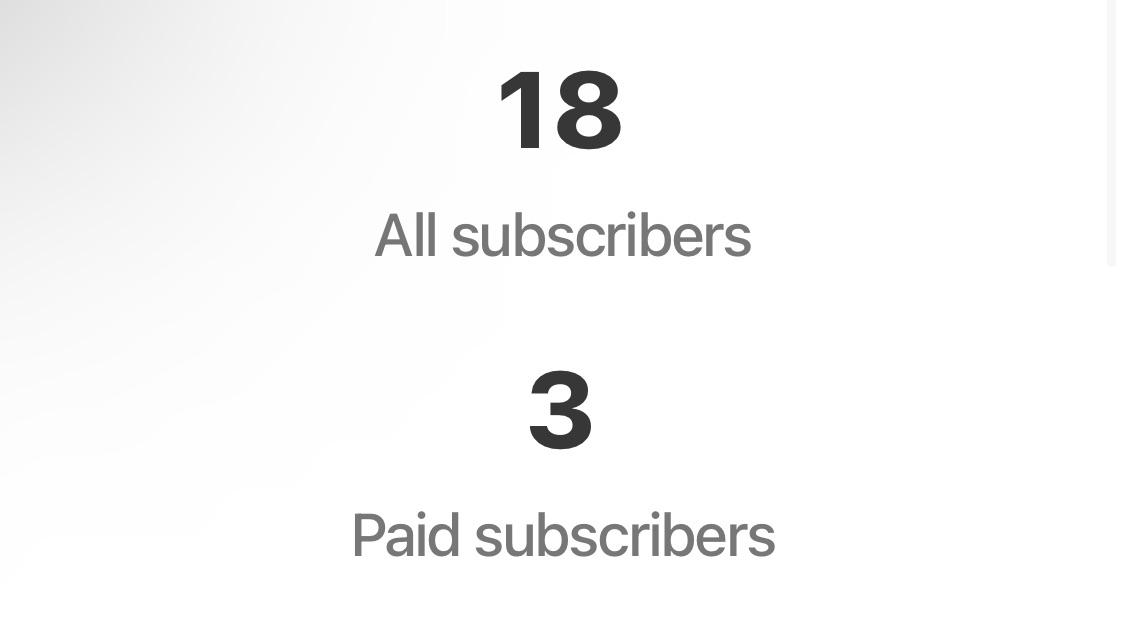
I had no idea Reddit had a Substack forum. I read a bunch of posts over breakfast and realized that in all the threads about how to grow I wasn't seeing the #1 way I and other bestsellers grow: recommendations. So I made a throwaway account.
Yes, Notes engagement helps. It helps a lot. But nothing helps like recommendations. Their recommendation engine is the most powerful growth tool there is.
Recommendations from a very big account (purple check or solid orange check) represent steady, ongoing growth. From an account like mine (bestseller with the plain check) they represent occasional, noticeable bumps, which you have to work a bit harder to maximize.
Also, the algorithm is a bit unfair to newcomers. It rewards success. When I got 100 paid subs, I got a huge boost. I started growing a lot faster. It took about a year to get 100 paid subs but I got to 500 in the second year, and 600 over the next four months. I did nothing different, and my recommendations kept growing (but growing at the same rate they'd been growing all along -- a new one every week or so). It was all algorithmic boosting.
It's dropped off now, but I'm also writing a lot less than I used to. Got married, got busier.
So if I were brand new on Substack, I would find orange check accounts, either a couple of plain ones or one or two solid orange ones (the purple ones are likely too big/busy to notice you). Become a paid sub. Engage in the comments thoughtfully. Join their subscriber chat if they use that feature and engage seriously and thoughtfully. DO NOT just link your own stuff willy-nilly, but if you have a serious and substantive post that could honestly enlighten on the EXACT TOPIC, go ahead.
This should get you a recommendation or two. And from there the Substack engine does most of the work.
Hope this helps!!
EDIT: I was getting downvoted earlier but now I'm not so I guess the early morning crew is different, LOL.
Let me start by saying that until a few months ago I didn't even know about Substack 😁 Today I can say that I manage to support myself through my blog. I haven't reached the level of Bali, but I believe that with enough perseverance, anything is possible!
I do blog analysis and recently launched a masterclass on substack . I also noticed a very common mistake - everyone launches from an early payment, and they don't even know what to offer their audience.
But I want to share with you some things that I hope will be helpful:
Most experts give advice from Medium - please, don't fall for that. The algorithms are different.
Yes, subscribers come from Notes, but it's good to post at least once a week.
People read more authentic stories, not how they did X thing.
Readers judge your cover - if the thumbnail doesn't win them over, they might not read anything from you.
Weekends aren't particularly successful, but experiment - learn when your audience is most active.
Don't spend your money on MetaAds - it's pointless.
I’m an author who writes about sensuality, feminine confidence, and erotic storytelling. I already have a blog site where I post regularly, and I’m also working on a few ebooks.
Now I’m starting a Substack, but not in the usual way. I’m not interested in promoting it through social media. No Instagram, no Twitter, no TikTok.
I simply love to write. That’s where my energy goes. Not into content creation or chasing followers, but into my blog, my stories, and now into this new space where I want to grow my author presence under my pen name.
So here’s my question:
Is it possible to grow a Substack without social media? Can it reach new people just through writing or platform discovery? If I’m only doing this to build a more visible author profile, what are some ways I can make the most of it?
I’d love to hear from anyone who has tried this or has any experience growing quietly but steadily. Every piece of advice is much appreciated.
So I've been on Substack for a while now and I've been studying the platform a bit.
Recently I had the chance to sit down and record a podcast with Christ Best, Substack CEO and gather some insights about the platform and how to grow in it + what's the future of it:
Substack started out as an idea coming from the frustration that Chris Best felt with social media belonging purely to ads business and algorithms and promoting censorship and dumb content.
So they launched a very simple version of an email paywall software for Bill Bishop's newsletter and it got traction early on.
After that, it was all about building a product and growing it. It's now at 5M paying users.
What's happenning right now:
- Substack has gone from newsletter platform to newsletter platform + social media.
This creates a double effect: writers can grow more their audiences with the platform users, but you are also giving away your subscribers for free to substack and other writers.
I guess this is just part of the cost of being in Substack today.
Now, what's the easiest way to grow on the platform?
- Notes: it's no secret some notes go viral. However most of the notes that go viral are kind of cheap content that's been copied a million times and it's about recommending each other
- Live: ok this is a feature they are pushing a lot and supposedly works great: doing a live with another person allows their subscribers to subscribe to your newsletter. This way you can multiply your subs by collaborating with other creators.
- Video: Video is definitely the future of the platform and they are going hard after it. It generates more engagement than anything else and subtack recently created a tiktok-style feed.
There's someone who appears to have subscribed me to their newsletter and I didn't ask for it. It's my work email that I never use to sign up for anything ever so I know it wasn't a mistake on my part. Is it possible to add someone without them confirming? The header info seems like it's legit from substack servers and not a phish, so if I hit the unsubscribe, is that going to work without subjecting me to more substack spam? Is there a way to report this person as a spammer to substack?
They don’t say it directly but the recent update allows you to automatically label other people’s writing as AI. Meaning you can’t control if the system makes an error and a reader forces a false label on you.
At the same time, if you look at the setting for AI labels? It says that you can report errors and admits that mistakes will be made. You can flag things that are labeled incorrectly.
Meaning that any time you report something, it trains its model by what you flag and changes what it does using your writing to train it.
Everything that Pangram claims about its supposed ability to detect AI writing is false and it now openly admits it.
Don’t come at me with “It says it’s 97% accurate, which means it’s going to make 3% mistakes”. You wouldn’t need to report anything if it was that accurate in reality.
It’s not accurate and doesn’t detect anything. It’s being paid by Substack to steal your writing.
I started from 0 a few months ago and earlier today, I got the notification about my first paid sub. It’s not a lot of money but yes, it does feel nice to know that a random stranger wants to see more of my work.
I don’t even have 500 subs yet. I’m honestly not that great of a writer. I don’t write beautiful prose, I simple write like I’m explaining something to a friend. Not every article gets reposted because honestly they’re not all that great but I’ve noticed the ones that get the most attention are the ones that are well structured in a storytelling manner.
Yes I’m being intentionally vague but I’m just here to vent a little about it. Just keep writing and being you. Most importantly be consistent and have a niche.
I strongly believe like all social media, complete enshittification is nigh for Substack.
I think before the year is out, or maybe sometime in 2027, the powers that be over at Substack will completely turn off organic reach for anyone who doesn’t have paid subscribers, and the more paid subscribers you have, the more reach you’ll get.
Substack in not a charity, and they are fully aware of the fact that many people are using what little reach is left for the taking via Notes to promote there master classes, books, and merchandise, which Substack earns absolutely no money from in the end.
Folks like Michael Burry and Heather Cox Richardson will continue to dominate the Substack social media platform, and the traditional media types, companies, organizations, and celebrities will start taking the lions share of whatever scraps are left over in the end.
Facebook, Instagram, Twitter, LinkedIn, and many others all followed this same exact pathway to enshittification, and Substack will be no different.
I mean think about the current Substack model carefully. Someone could literally run a free newsletter and send it out to a million people for free… does that sound like a sustainable business model to you?
What do you think, am I on to something here, or do I need to put the pipe down?
I was writing a Note on Substack, and after four paragraphs it showed 100% human-written. Then I added a fifth paragraph, and it suddenly changed to 100% AI assisted.
Why would adding a single paragraph completely flip the result?
I'm not interested in trying to "beat" the detector. My concern is that if I genuinely write something myself, it could still be labeled as AI-assisted with no explanation.
I also think Substack should be much more transparent about how these systems work. It's not enough to publish a blog post that basically says, "Here's our AI detector. How does it work? It detects AI. End of story."
If a tool can affect how readers perceive an author's work, there should be at least some explanation of what it's measuring, its limitations, and how confident it is in its predictions.
Has anyone else experienced something similar?
P.S. There's also another case that concerns me. Many authors write their own ideas from scratch (either in English or in their native language) and then use AI only to improve the writing, fix grammar, or translate the text. Labeling those posts simply as "AI" or even "AI-assisted" without explaining what that actually means can be misleading. There's a big difference between using AI to generate ideas and using it as a writing or translation tool.
My own workflow is a good example. I'm a physicist with a master's degree in AI. I don't have much free time because I work full-time and I'm also building two startups. When I write for Substack, I develop the ideas myself, run simulations, create the figures and animations, organize the article structure, and write as much of the draft as I can. Sometimes I use AI to improve the wording or make the English read more naturally.
I'm trying to share technical knowledge for free with anyone who's interested. If that kind of workflow is reduced to a generic "AI-assisted" label without any context, it feels less like transparency and more like a penalty for using modern writing tools responsibly.
Until recently, I could see the posts that I'd liked by going to my profile, which gave the option of either seeing the posts that I've posted on my Substack, or the posts that other people have posted on their Substacks that I have liked. "Posted/Liked".
Now that's disappeared, and I can only see the posts that I've posted (now labelled "Latest").
Is there any way to see the posts I've liked, or has that feature gone forever?
I started posting weekly articles on Substack in January as a New Year’s resolution. I had no other internet presence so only had 5 subscribers to begin with (my parents, and three friends).
Now, nine months later I have 1.1k followers and average around 15k views a month.
Here’s a tip that I don’t see many people talking about here. Focus on writing articles that age well and can have a second or third round of engagement.
My “niche” is libraries, reading, and picture books. So I’m not stuck chasing never ending trends or breaking news. Because of this most of my articles can be read months after I publish and still be as timely and relevant as the day they were posted.
So many people chase trends and fads and their articles are dated the day they post. Whereas my best circulating article didn’t even get traction for the first two months until someone bigger reposted it. Now I reliably get a few likes on it every week.
Not everything is a “hack” sometimes offering quality content is the best strategy.
I started a throw away account for obvious reasons. Someone--a subscriber no less--plagiarized an essay of mine. The only reason I knew about it is because the post contained a hyperlink to another essay of mine. I read the post and was quickly taken aback by how much language from my essay was lifted into this one. I messaged the person directly, stating that I want to keep things amicable but that I cannot tolerate plagiarism.
He eventually deleted it, but not before confiding to me that he took my essay, ran it through AI asking to write something similar, and that was the result.
I am actually pretty angry about this but I don't want to alienate a subscriber, so I made a point a point to be diplomatic and firm.
I thought contributors here would want to know for a variety of reasons. I don't know how a person protects against this. If another essay was not hyperlinked to a different essay, I probably would never have found out.
I want to continue 'following' writers on Substack under my 'Reads' tab and reading their work when I log onto Substack on my computer or on the app on my phone.
But I want to stop receiving all the emails I receive everyday whenever they publish new pieces. I don't enjoy having them all clog up my inbox and like I said, I prefer to read pieces while I'm on Substack itself.
But in the past when I've tried to stop emails from a certain writer, Substack simply unsubscribed me altogether, so that I wasn't 'following' them anymore under 'Reads.'
Any advice? I feel like this would be an obvious/popular option people would want.
EDIT: Here's what I did y'all. This is a comment I shared with someone below:
'Here's what I did: I created a seperate label for Substack emails on my Gmail and a filter so Substack emails don't appear in my inbox. Instead, there's a label on the left now that says 'Substack' that I can click to see all my Substack emails. I have thousands in there. I rarely if ever click the Substack label/view my emails from Substack because I prefer to read pieces in the app/on Substack in my web browser like I said. And whenever I want to clear my Gmail of the thousands of Substack emails I have, I simply click 'select all' after clicking on the my Substack label on Gmail and 'delete all' or whatever.
I recommend you do this. Let me know if you succeed. Remember, you need to create a Substack 'label' and a 'filter' that makes Subtack emails bypass your inbox/not appear in your inbox. Good luck.'
I have been doing this just over a year, and I still have a lot to learn, but this is what helped me to get bestseller status and build a community I want to be a part of.
1. Find five people, not five hundred. Read their work properly and leave comments that cost you some thought. When I had no audience at all, a writer who did have one took me seriously, and that really helped me grow.
2. Make something together instead of trading favours. A joint post, an interview, a guest piece, a conversation you both put your name to. If a stranger who knows neither of you would not want to read it, what you have built is a favour exchange, and those collapse the moment one person stops reciprocating.
3. Never do sub for sub, and stay out of pods. People who subscribe in order to be subscribed back do not open anything, and enough of them will drag your open rate down for the readers who actually want you.
4. Be careful with recommendation swaps for the same reason. Recommendations brought me 15,080 free subscribers and 77 paying ones. Writing in my own voice on the platform brought 4,973 free subscribers and 121 paying ones. Three times the headcount and a fifth of the conversion, because one click on a recommendation screen is not a decision to read anybody.
5. Protect your own measurements. Once a chunk of your list is there out of obligation you can no longer tell which of your posts did anything, and at the start that signal is the most useful thing you own.
A hundred people who chose you will carry you further than four thousand who were traded to you.
Happy to answer anything in the comments.
NB: Claude was used to help me run the stats and edit parts of this post.
I'm new to substack and am looking to avoid obvious mistakes and also to climb the learning curve faster. What's something you wish you had known early on in your Substack efforts?
E.g.,
What are some settings that you wish you'd changed earlier? (I only recently figured out how to get notes to display on my Substack!)
To what do you attribute your subscriber growth?
What workflows did you figure out after doing it for a while?
Where did you find your first 1,000 readers?
What "common wisdom" is everyone perhaps wrong about?
What you'd advise someone getting started today to do that's different from what you yourself did.
To help aim your advice, I'm writing for a niche audience of people who love reading about dancefloors -- what happens on dancefloors, how to make a great dancefloor, how to kill a dancefloor, the culture and history of dancefloors, and how some of them rise to the level of magical dancefloors. I have 71 subscribers since starting a little under a month ago.
My friend is a subscriber to Kendra Austin’s “Come Home” Substack, and has been since 2021. Four months ago, out of nowhere, she noticed a $4600.00 (!!!) charge on her Discover credit card associated with this Substack subscription — an incorrect charge, and also just an absurd amount of money for any Substack subscription. At the time of the charge, she marked it as fraudulent with Discover and went on with her life.
Now, four months later, Discover is saying it cannot mark the charge as fraudulent because she had previously paid for this subscription, even though the rate she paid for was $50/year.
This prompted her to reach out to Kendra, who responded right away and disclosed that Substack contacted her about a breach of her data. Kendra suspects she was hacked because a few other subscribers had a similar experience as my friend. In Kendra’s attempts to resolve these charges, she was locked out of her Stripe account (Substack’s built-in payment processor) and cannot access it. She needs access to her account in order to see if the funds are still there and also to issue a refund.
My friend also reached out to Substack and Stripe for help with the fraudulent charge, as did Kendra, and both platforms responded saying there is nothing they can do.
My question is: Has anyone else experienced this to the tune of THOUSANDS of dollars? If so, did it get resolved? And if yes, who helped you resolve it?
Is there anyone out there who works at Substack or Stripe who can help my friend gather evidence to present to Discover to resolve this?
I wasn't expecting to go viral on Substack, but I was also hoping to have more than 136 subscribers after writing 48 posts over something like 30 months.
Yes, I do use Notes almost daily, engage with other writers, etc etc etc. Even gone semi-viral on Notes a couple of times. But I'm obviously just not writing material that inspires or entertains, and/or am incorribly shit at personal branding (no question about that part). I wrote one of my most popular posts a few weeks ago; 250ish views, quite a few likes and comments and personal Whatsapp messages... and it generated one whole subscriber. Nobody cares – and why should they? We're all drowning in content.
So when I consider the other things I could have been doing with this time, including paid writing commissions... I get all grumbly.
Any else turned their back on the whole Substack / blogging dream? What have you done with the time instead?
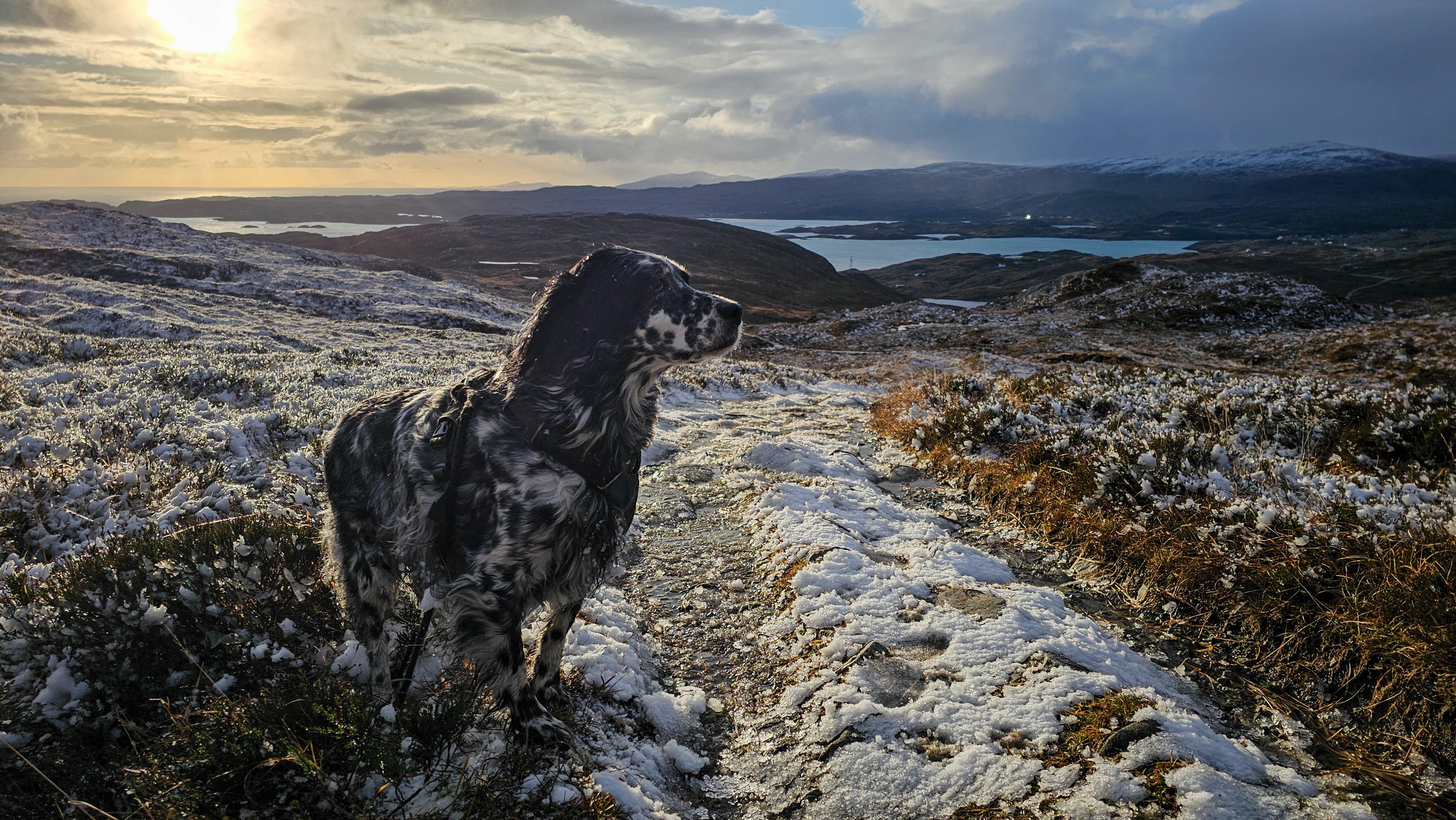
Photo is of Alfie, the dog I could have been walking.
I'm sooooo happy! I just started on November 3rd, and I already have my first paid member. It's crazy! I fell in love with Substack the minute I started using it and now it already pays off too. Amazeballs!
Seems like it’s very difficult to grow on Substack because the platforms awards already successful accounts or those who input big email lists from the start. Good content might never emerge. What motivates you to keep going? I started from 0 and I’m on my 7th weekly post and I love it. I just wish more people would find it on their feed. Currently at 32 subs.
UPDATE: still 33 subs, but 11th posts. 10 weekly and I’ve now switched to bi-weekly. The 11th is arriving tomorrow. I’m loving it and I stopped caring about subs. Thank you to everyone how’s participated to this thread. It’s really inspiring to read your comments. Here is my Substack if you’re interested. I share about my journey of building a bespoke jewelry brand.
Today marks the end of my first month writing on Substack.
Just wanted to share a few quick reflections on what actually worked in terms of growth.
1. Notes Do Work… Eventually
At the beginning, I felt like I was shouting into the void. Notes barely got any views. But once I hit around 200 followers, things changed. It seems like Substack needs to see some early engagement—likes, comments, restacks—before your notes start showing up in other people’s feeds. So if your notes aren’t getting traction early on, don’t worry. They will. Just takes a bit of momentum.
2. Reuse Your Longform Content
The biggest driver of new subs for me was posting shortened versions of my articles in relevant subreddits—with a link to the full post. Some of those Reddit posts really took off. One hit over 350k views and brought in around 2,000 clicks to the newsletter. That turned into a solid stream of new readers. It’s definitely worth experimenting with.
3. Quality > Quantity (By Far)
It’s tempting to post more often and chase those quick little subscriber bumps. But what really paid off for me was focusing on quality. I started noticing that high-quality pieces were getting shared organically—on forums, Discords, even other newsletters. That led to spikes in traffic days or even weeks after publishing. And since older posts stay relevant (depending on your niche), good content has a long tail. Great writing gets shared. Shared writing grows. Simple as that.
You've got this, whoever you are who needs a little push to keep going,—you've got this, just take your time—the real secret sauce in my experience is to find a community on notes and spend some time chatting it up, get involved in the discourse! read stuff that challenges you and repost it and find others who have similar interests.