r/MiddleEastHistory • • Jun 06 '26

In 1818, the Ottomans executed the Saudi ruler in Istanbul and sent his head to Mecca. In 1962, Egypt bombed Saudi border towns. The same powers are now building a military alliance. The fault lines documented.

15 Upvotes

In December 1818, Abdullah bin Saud, the ruler of the First Saudi State, was executed in Beyazit Square, Istanbul. Before the execution, Ottoman officials forced him to listen to a lute. He was Wahhabi. Music was forbidden. The humiliation was deliberate, and a final insult to the man whose religious movement had declared the Ottoman Sultan an illegitimate guardian of Islam's holiest cities.

Then they beheaded him. 

His body was displayed naked for three days. His head was sent to Mecca. 

The Saudi capital of Diriyah was razed to the ground. Egyptian garrisons were posted in its ruins.

The Ottoman Sultan had sent Muhammad Ali's Egyptian army to do the work. It took seven years, cited as the Ottoman-Wahhabi War of 1811-1818,  to settle a single question: who speaks for Islam?

The question was never answered.

Saudi Arabia vs Egypt — Yemen, 1962-1967

In September 1962, Egyptian-backed republicans overthrew the Saudi-allied Imamate of North Yemen. Nasser sent 70,000 ground troops, a third of Egypt's entire army, into Yemen's mountain passes against Saudi-backed royalist tribesmen. 

The Soviets funded Egypt. The Americans funded Saudi Arabia.

Egyptian aircraft conducted air raids on Saudi border towns. Saudi pilots repeatedly defected with their American-supplied jets to join Nasser's Egypt, forcing King Faisal to ground his own air force out of distrust. The CIA warned Washington the kingdom was acutely vulnerable to internal collapse.

Historians call it the Arab Cold War. 

In practice it was Egypt trying to break Saudi Arabia through Yemen.

The Ottoman-Saudi Fault Line — Then and Now

The 1744 Diriyah Pact between Muhammad ibn Abd al-Wahhab and Muhammad ibn Saud was built on a foundational theological claim: the Ottoman Sultan's caliphate was illegitimate. In 1802 Wahhabi forces sacked Karbala, killing approximately 5,000. By 1806 they occupied Mecca and Medina, stripping the Ottoman Sultan of his claim as Custodian of the Two Holy Mosques.

The Ottoman response was the destruction of the First Saudi State, the public beheading of its ruler, and the razing of its capital.

The contest, as to who holds legitimate Islamic authority, Riyadh or Istanbul/Ankara, has never been formally resolved. 

It went underground. It did not disappear.

Sources

  • Britannica: Wahhabi movement and Ottoman-Saudi conflict 1744-1818

  • Brookings Institution: "The Proxy of My Proxy — Saudi Arabia vs Egypt in North Yemen"

  • Association for Diplomatic Studies and Training: oral history archive, North Yemen Civil War

  • Academic source: Elif Ayşenur Conker, "The Transformation of the Ottoman Perception of the Wahhabi Movement 1745-1818," Sabancı University

Full documented piece with complete sourcing in first comment.


r/MiddleEastHistory • • Sep 28 '22

One of the best battles of the middle east

Thumbnail
youtu.be
0 Upvotes

r/MiddleEastHistory • • Nov 03 '24

Why is the Crusades Seen as the epitome of Religious Wars? Why is other religious wars (in particular the destructive 30 Years War) so overlooked?

1 Upvotes

I mean The Crusades as a whole barely killed 2 million in the almost 3 centuries it was waged and was mostly a sideshow in the grand scheme of things esp in Europe.

The 30 Years War on the otherhand killed at least 4 million people with typical estimates reaching over 8 million (with the highest numbers even surpassing World War 1's total death rates) and that is just deaths from battles and fighting alone and does not count deaths from famines and diseases esp near the final years of the war (and afterwards), An entire country that would become Germany today was destroyed to the ground and so many European nations was bankrupted. In particular Sweden (who was a great power on the verge of becoming a superpower) and esp Spain (the premier superpower of the time and would lose all the gold and silver it gained from Latin America because they spent almost all of it on the war).

The war ultimately destroyed the Vatican's hold on Europe and even in nations where Catholicism dominated the culture so much as to be indistinguishable from Romanism such as Italy marked a sharp decease in Church prestige and gradual rise of secular influences.

So much of the Constitution and Bill of Rights of America was created in fear of the tyranny of the Catholic Church coming from this war and the patterns of the Protestant revolutions.

Yet the 30 Years War (and the wars of the Protestant Reformation in general) is never brought up as the focal point of holy wars. While the Crusades is seen as the embodiment of religious fanaticism and sacred wars despite not even really impacting even the Middle Eastern kingdoms of its time period.

Don't get me started on the war on the Anglo Saxons, Portugal's conquest of Goa, Islamic invasion of the Sassinids, and other even more obscure conflicts.

How did the Crusades get the reputation of THE HOLY WAR by which all others are measured by? It should be the 30 Years War since Europe was literally shaped by it esp Western secularism and individualism and the American principle of Freedom of Religion was based all around fear of the Rome's tyranny!


r/MiddleEastHistory • • Dec 30 '25

Which iran do you guys prefer?

Thumbnail
gallery
22 Upvotes

Might be a stupid question, because the answer changes depending on how you view it


r/MiddleEastHistory • • Nov 06 '23

History Of Israel

0 Upvotes

A common misperception is that the Jews, after being forced into the Diaspora by the Romans in the year 7O C.E., suddenly, 1,800 years later returned to Palestine demanding their country back. The Jewish peo- ple have maintained ties to their his- toric homeland for more than 3,700 years. Independent Jewish states existed for more than 400 years. An independent Jewish state would be 3,000 years old today if not for foreign conquerors. Even after most Jews were exiled, small Jewish com- munities remained in the Land of Israel. Jews have lived there contin- uously for the last 2,000 years. Mod- ern Israel developed the land from a largely uninhabited wasteland filled with malarial swamps into a thriving high-tech Western society.

Jews have fought and died to win independence in their homeland. They are connected to the Land of Israel by both faith and history. The international community granted political sovereignty in Palestine to the Jewish people. While the Zion- ists accepted the UN decision to divide their homeland in 1947 , the Arabs rejected the partition plan that created an independent Pales- tinian state for the first time in his- tory.

Israel's international "birth certificate" was validated by Jewish statehood in the Land of Israel in Biblical times; an uninterrupted Jewish presence from at least the Roman period onward; the Balfour Declaration of 1917; the League of Nations Mandate, which incorporated the Balfour Declaration; the United Nations partition resolution of 1947; Israel's admission to the UN in 1949; the recognition of Israel by most other states; and, most of all, the soci- ety created by Israel's people in decades of thriving, dynamic national existence.

The Twelve Tribes of Israel formed the first constitutional monarchy in the Land of Israel in about 1000 B.C.E. The second king, David, first made Jerusalem the nation's capital. Although Israel eventually was split into two separate Israelite king- doms, Jewish independence under the monarchy lasted for more than 400 years. The Arab connection to Palestine dates only to the Muslim invasions of the seventh century. Palestine was never an exclusively Arab coun- try. No independent Arab or Pales- tinian state ever existed in Palestine. When the distinguished Arab- American historian, Princeton Uni- versity Prof. Philip Hitti, testified against partition before the Anglo-American Committee in 1946, he said: "There is no such thing as 'Palestine' in history." Most Pales- tinian Arabs, including the original PLO chairman, Ahmed Shukeiry, believed Palestine was part of southern Syria.

The term "Palestine" is believed to be derived from the Philistines, an Aegean people who, in the 12th Cen- tury B.C.E., settled along the Mediter- ranean coastal plain of what is now Israel and the Gaza Strip. In the second century C.E., after crushing the last Jewish revolt, the Romans first applied the name Palaestina to Judea (the southern portion of what is now called the West Bank) in an attempt to mini- mize Jewish identification with the land of Israel. The Arabic word "Filastin" is derived from this Latin name.

The Canaanites disappeared from the face of the earth three millennia ago, and no one knows if any of their descendants survived or, if they did, who they would be. Palestinian claims to be related to them are a recent phenomenon and contrary to historical evidence. Over the last 2,000 years, there have been massive invasions (e.g., the Crusades) that killed off most of the local people, migrations, the plague, and other man-made or natural dis- asters. The entire local population was replaced many times over. Dur- ing the British mandate alone, more than 100,000 Arabs emigrated from neighboring countries and are today considered Palestinians. Even the Palestinians themselves have acknowledged that their asso- ciation with the region came long after the Jews. In testimony before the Anglo-American Committee in 1946, for example, the Palestinian spokesmen claimed a connection of only 1,000 years, and even that assertion is dubious.

The Jewish people have a connection to the Land of Israel that dates back more than 3,700 years. They created a monarchy that dominated parts of the area for more than 400 years. Even after the defeat of the monarchy and the end of Jewish independence, a Jewish presence remained in the Land of Israel throughout the centuries preceding the reestablishment of the Jewish state in 1948. While, at best, the Palestinians can claim a connection to the area fol- lowing the conquest of Muhammad's followers in the 7th century, no serious historian questions the Jewish con- nection to the land or relation to the ancient Hebrews.


r/MiddleEastHistory • • May 29 '23

Dueling Legacies: Which Sultan Deserves Credit for Oman's Oil-Driven Development?

Thumbnail
youtu.be
1 Upvotes

r/MiddleEastHistory • • Jan 03 '15

Middle East Map / Map of the Middle East - Facts, Geography, History of the Middle East - Worldatlas.com

Thumbnail
worldatlas.com
0 Upvotes

r/MiddleEastHistory • • Dec 31 '20

Israel and the UAE Strike a Deal . This is Historic!

Thumbnail
bpntoday.com
1 Upvotes

r/MiddleEastHistory • • Mar 04 '14

When donthe Arabs first enter the scene?

3 Upvotes

Reading about the history of Jerusalem, in Eric Cline's "Jerusalem Besieged". I study Islam, otherwise.

The first mention of the Arabs as "the Arabs" in the book comes when Alexander defeats the Persians in the late 4th C. BCE. So, before that, what are they up to? Do we have earlier written reference of them? What're they up to? Who are they trading with? When do they expand north to occupy the Levant, as the seem to have done by the time the 2nd Temple Is destroyed?

Cheers

Edit: It seems there could be evidence of Arabs in the Levant prior to the 3rd Century AD, even so far back as the 8th-4th C.s BCE. If you can provide references to these possibilities, we all in the thread would be greatly appreciative.


r/MiddleEastHistory • • Jan 19 '23

Review: Graham Hancock's Netflix Series Ancient Apocalypse– Deeply Flawed but Worth Watching - History Arch

Thumbnail self.historyarch
0 Upvotes

r/MiddleEastHistory • • Jan 01 '21

On this day (31 December 695 CE {15/16 Ramadan, 76 AH}), Muhammad bin Qasim, the first general to lead Muslim armies into India, was born.

Thumbnail
m.facebook.com
1 Upvotes

r/MiddleEastHistory • • Jul 28 '23

Including Middle Eastern History and Culture in Schools

1 Upvotes

Please sign my petition about including Middle Eastern studies in the education system. It is important that we shed a positive light on all the history, culture, and languages of the Middle East within schools in the US. We need 10k signatures within a month so anything helps!!

https://www.change.org/p/represent-the-middle-east-and-north-africa-in-school-curriculums?redirect=false


r/MiddleEastHistory • • Sep 30 '24

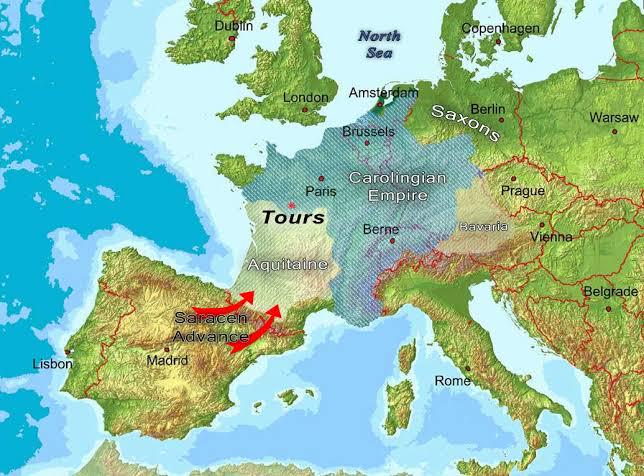
Is Battle of Tours a defining moment in the history of mankind?

Post image
13 Upvotes

I think it's fair to say that if Umayyads had defeated Charles Martell and his Frankish army, Islam would have easily spread and dominated Europe and consequently the world as well. It just feels like the most defining moment in our history because this would have completely changed the whole geopolitics, scientific developments, sports and culture of most of the mankind.


r/MiddleEastHistory • • Jun 27 '21

Can someone explain to me

13 Upvotes

Why do so called 'communists' or communism appreciators want the 'state' of Palestine to be a thing and the secular State of Israel to be eradicated? I thought "no gods, no masters" would also translate to "no gods, no Mullahs". Also I thought, that Israel was planned to be a socialist state, in the very beginnings at least... Thank you for your answers.


r/MiddleEastHistory • • Dec 24 '22

Seljuks vs Ottomans (Which did more for the Ummah)

Thumbnail
youtube.com
3 Upvotes

r/MiddleEastHistory • • Jul 18 '20

With the Hagia Sophia becoming a Mosque again, I thought I'd make a video with my two cents on it. What do you think about the issue?

Thumbnail
youtube.com
0 Upvotes

r/MiddleEastHistory • • May 27 '19

Iraq’s Rejection Of UN Inspectors Led To Mistrust Over WMD And 2003 Invasion

Thumbnail
musingsoniraq.blogspot.com
2 Upvotes

r/MiddleEastHistory • • Jan 14 '23

The Islamic World During the Crusade Era - Weak

Thumbnail
youtu.be
4 Upvotes

r/MiddleEastHistory • • Sep 09 '21

This Day In Iraqi History - Sep 9

1 Upvotes

1914 India Viceroy requested 3rd ship to be sent to Shatt al-Arab and to seize Basra vilayet

before start of WWI

(Musings On Iraq review Iraq In World War I, From Ottoman Rule to British Conquest)

(Musings On Iraq review When God Made Hell, The British Invasion of Mesopotamia and the Creation of Iraq, 1914-1921)

1915 UK cmdr Gen Nixon wrote India that Baghdad should be occupied

1940 Mufti of Jerusalem who was living in Baghdad sent proposal to Italy In return for supporting

Arab nationalism Iraq would block UK and give concessions Proposal was also sent to German ambassador in Rome Amb said Germany willing to give money and weapons if Italy agreed Italians had given money to Mufti before and gotten little in return so didn’t believe he could deliver on anything but agreed to give small amount of money

(Musings On Iraq review Rashid Ali al-Gailani, The National Movement in Iraq 1939-1941)

(Musings On Iraq review Persian Gulf Command, A History of the Second World War In Iran and Iraq)

1944 Iraq and Soviet Union established diplomatic relations

1961 Gen Qasim sent army brigade from Darbendikhan to Sulaymaniya to provoke Barzani

(Musings On Iraq review Journey Among Brave Men, Travels in Kurdistan)

(Musings On Iraq review The Kurdish Revolt 1961-1970)

1965 PM Razzaq announced Revolutionary Command Council disbanded Powers transferred

to cabinet and National Defense Council created under Pres Arif

1980 Iranian F-5 Tiger II jet shot down by an Iraqi MiG-21

1989 Elections held for 50 member Legislative Council in Kurdistan

(Musings On Iraq review The Kurds, A Modern History)

(Musings On Iraq review Kurds of Iraq, Tragedy and Hope)

1990 Joint US-Soviet statement said that Iraq’s aggression in Kuwait would not stand

1991 UN reported clashes between Kurds and Iraqi army in Kurdistan 16 dead

1996 KDP captured Sulaymaniya from PUK

(Musings On Iraq review The Kurds, A Modern History)

1997 New inspector head Butler arrived in Baghdad Was more confrontational and worked closely

with US

1998 UN Resolution 1194 condemned Iraq’s halting of cooperation with weapons inspectors

(Musings On Iraq UN Inspectors Were Right Iraq Was Not A Threat)

(Musings On Iraq Iraq’s Rejection of UN Inspectors Led To Mistrust Over WMD and 2003 Invasion)

1998 PUK sent delegation to Turkey to try to improve relations Ankara backed KDP in civil war

2002 UK intel report Iraq probably wouldn’t use WMD without being attacked beforehand

2002 State Dept spokesman mentioned that Iraq tried to buy aluminum tubes for centrifuges for nuke

program to reporters Were for rockets

(Musings On Iraq How A Contested Aluminum Tubes Story Became The Basis For War With Iraq)

(Musings On Iraq review The WMD Mirage, Iraq’s Decade of Deception and America’s False Premise for War)

2002 French Pres Chirac told NYTimes needed to be 2 UN resolutions 1 on inspectors 2nd if Iraq didn’t

comply and that he didn’t support regime change

(Musings On Iraq Chilcot Report Section 3.4 Development of UK Iraq Strategy and Options, Late July to 14 September 2002)

2002 Iran’s SupNatlSecCouncil met over impending US invasion of Iraq Decided on short and long term

policy to protect Tehran’s interests

(Musings On Iraq Iran’s Policy Towards Iraq)

2002 Iraqi-American doctor from Cleveland went to Iraq for CIA to talk to her brother who worked on

Iraq’s nuke program Brother said program ended in 1991 Doctor one of dozens that talked with relatives in Iraq working on WMD-nuclear programs Info never used in any major reports CIA thought it was part of Iraqi disinformation campaign

(Musings On Iraq review State of War, The Secret History of the CIA and the Bush Administration)

2003 Zarqawi hit US intel base in Irbil with suicide car bomb killing 3 wounding 54

(Musings On Iraq review The Caliphate At War, Operational Realities and Innovations of the Islamic State)

(Musings On Iraq review Suicide Bombers In Iraq, The Strategy and Ideology of Martyrdom)

2003 Under Sec Def Feith said Pentagon prepared for all kinds of contingencies for postwar Iraq but

they never happened

(Musings On Iraq review Hard Lessons, The Iraq Reconstruction Experience)

2004 Dep Natl Sec Adv Hadley said White House had to come up with measurements to determine success

in Iraq Ended with 140

2004 Army inquiry found CIA hid up to 100 ghost detainees in Iraqi prisons in Baghdad

2004 Major fighting broke out between US forces and insurgents in Tal Afar 57 insurgents killed along

with 27 civilians and another 70 wounded

2004 Turkmen claimed 50,000 fled Tal Afar due to fighting Turksh media claimed Kurds were replacing

Turkmen in town Turkmen politicians claimed Iraqi National Guard were mostly Kurdish and carrying out ethnic cleansing in Tal Afar

2004 US made deal with local leaders in Samarra to start reconstruction projects and return city council to

office

2006 Sheikh Abu Risha and 50 other sheikhs announced formation of Anbar Awakening

(Musings On Iraq Demise, But Not Death of Al Qaeda In Iraq)

(Musings On Iraq How A Change In Perceptions Led To The Anbar Awakening)

(Musings On Iraq interview with author Carter Malkasian on Anbar Awakening)

(Musings On Iraq review Confronting Al Qaeda, The Sunni Awakening and American Strategy In Al Anbar)

(Musings On Iraq review The Marines Take Anbar, the Four-Year Fight Against Al Qaeda)

(Musings On Iraq review Illusions of Victory, The Anbar Awakening And The Rise Of The Islamic State)

2008 Maliki govt denied deal with Kurds to withdraw army and Peshmerga from

Khanaqin dist Diyala leaving Kurds still in political control of district

(Musings On Iraq Cold War Between and Kurds Turns Hot)

2008 PM Maliki said govt would integrate 20% of Sahwa into ISF and rest would receive govt jobs

when became available PM spokesman said govt would go after bad elements within Sahwa

(Musings On Iraq Will Baghdad Pay For The Sons Of Iraq Update)

(Musings On Iraq review Surge, My Journey with General David Petraeus and the Remaking of the Iraq War)

2008 US and Iraqi military officials met and said govt not going after Sahwa It was

2008 Report Iraqi army little logistics Full of corruption Funds rarely trickled down from Def Min down to

the units

2008 Report $75 bil in investment from US Europe Gulf States stuck in red tape Only one project started

2009 Iraq and Syria agreed to stop media attacks upon each other return ambassadors after PM Maliki

accused Baathists and Syria for Aug bombings in Baghdad Was actually done by ISI

(Musings On Iraq Baghdad Can’t Get Its Story Straight On Aug 18 Bombings)

(Musings On Iraq Iraq-Syria Dispute Update)

2009 Iraq-Russia signed deal to build 2 natural gas pipelines Never happened

2011 Head of Integrity Comm Judge Ugaili resigned under pressure from PM Maliki

2012 ISI carried out 21 car bombs along with ten other attacks across 18 cities killing more than 100

2012 Court sentenced former VP Hashemi to death for alleged killing of two people in terrorist attacks

2014 Peshmerga found 14 Yazidi bodies in a mass grave in Ninewa Early sign of IS massacres to come

2015 PM Abadi removed 123 dep ministers and director generals to cut costs as part of his reforms

(Musings On Iraq interview with Reidar Visser on PM Abadi’s reform program)

2018 Ammar Hakim’s Hikma said it was against 2nd term for PM Abadi

2018 Hashd Dep Cmdr Muhandis accused US consulate in Basra being behind protests and threatened

retaliation after several Hashd group offices burned in province

2018 Protests in Muthanna and Dhi Qar over services


r/MiddleEastHistory • • Sep 04 '13

The Search for Muhammad: Abd al-Malik ibn Marwan

Thumbnail
futiledemocracy.wordpress.com
1 Upvotes

r/MiddleEastHistory • • Aug 30 '21

Today is August 30, The Victory Day of Turkey! The holiday commemorates the decisive victory in the Battle of Dumlupınar, the last battle in the Greco-Turkish War, on 30 August 1922. Following the battle, Greek presence in Anatolia ended. We commemorate Kemal Atatürk and his brothers in arms.

Post image
26 Upvotes

r/MiddleEastHistory • • Dec 10 '17

This Day In Iraqi History - Dec 10

Thumbnail
musingsoniraq.blogspot.com
0 Upvotes

r/MiddleEastHistory • • Dec 27 '16

Where to start?

0 Upvotes

Hey folks,

Trying to expand my knowledge of Islam and the middle east due to current events in the world. I find myself strolling through social media debates and arguments that have made me realize my weakness in this subject.

My local library has the New Cambridge History of Islam encyclopedias and I plan on starting there, but it seems monumental of a task to get through. I'm also thinking of starting with The Arabs: A History since it seems to offer a more concise explanation of what I want to learn. Any recommendations ? Thanks!


r/MiddleEastHistory • • Sep 11 '17

This Day In Iraqi History – Sep 11

Thumbnail
musingsoniraq.blogspot.com
0 Upvotes