Back health matters now more than ever
Things have ground to a halt since the coronavirus emerged. Many people are working from home and many people have been laid off. There is more sitting, more bad posture, and having a strong back matters more than ever. I wanted to share a routine I developed to keep your back and core strong at home.
The Routine
Bird Dogs Common Errors:
The back leg isn't supposed to go up; it's supposed to go back. Raising the back leg too high forces the back to arch and builds bad habits. Don't drive your back leg up, drive it back. Try to reach your heel as far behind you as you can.
You're rushing it.
You should be pausing at the top of every rep for a "one one-thousand." I want you to feel your muscles contract every single rep. Every rep is a chance for you to get better, focus, and be deliberate.
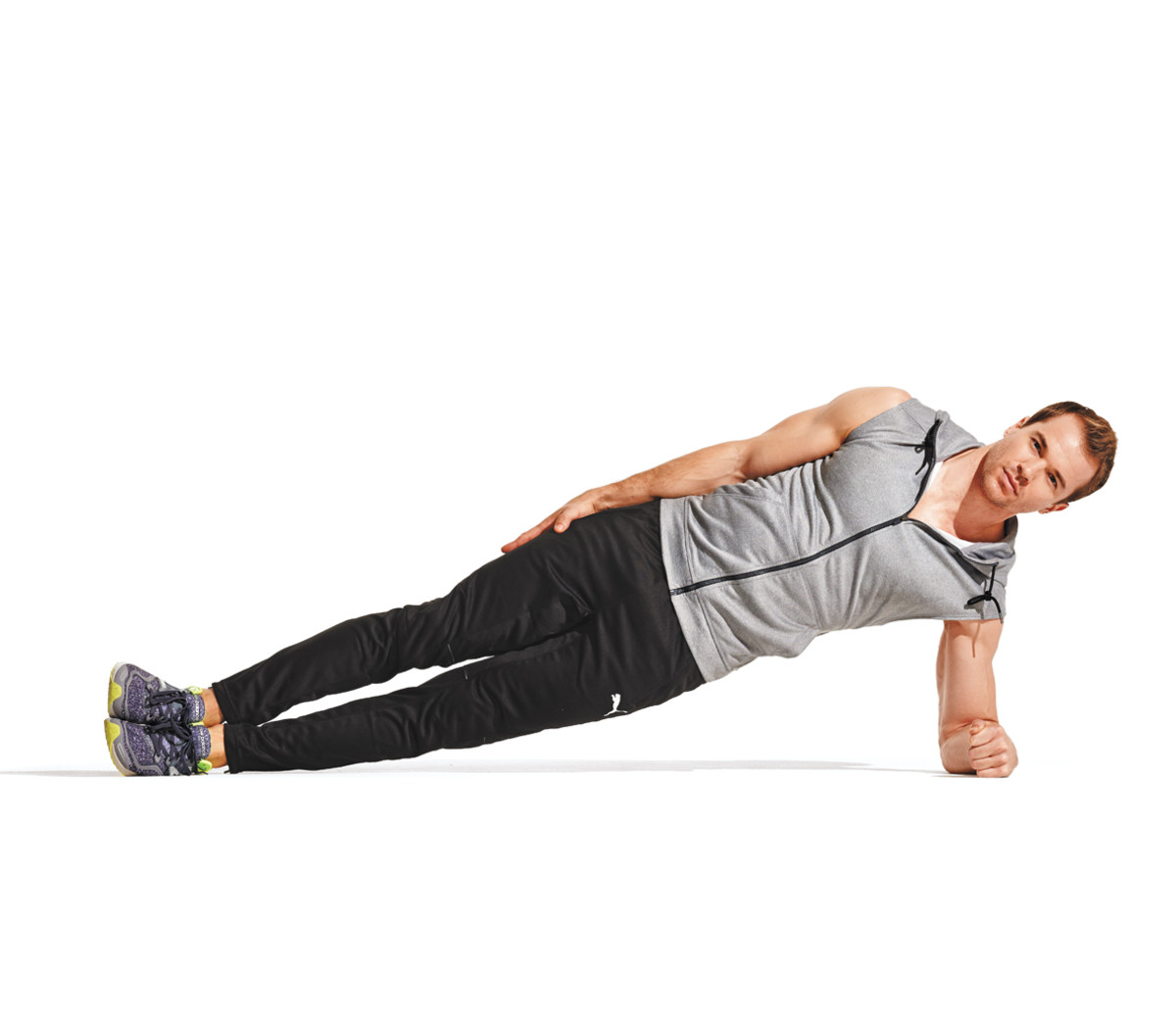
Side Plank Common Errors:
If you can't do 30 seconds with perfect form, start with 15 seconds and gradually build to 30 seconds.
You're not using your glutes.
Squeeze your glutes; they will improve your balance and stabilize you.
Arch Up Common errors:
Arch ups are a whole-body exercise, raise your feet off the ground every rep.
You're rushing it.
See above.
Side Raise Common errors:
You should be raising your upper and lower body for each rep. Bring your shoulder to the ceiling. You should feel your obliques working more.
Stretching is good, right?
I think stretching for back pain is overrated. Stretching relaxes and lengthens tight muscles to make room for underactive muscles to contribute. The problem is that stretching on its own won't activate or use the underactive muscles or train the core. All that being said, stretching (particularly the hamstrings) can help when coupled with other exercises.
Here is how to tell if your hamstrings are tight.
Lie on your back, keep your legs straight, and raise one until it can't go further without bending or lifting your other leg. If your leg gets to 90 degrees, you're good. Anything less and stretching will help.
Here is the best way I've found to stretch the hamstrings. Put your foot on a chair, bend forward, keeping your chest tall and back straight. When you can't go any further without bending forward, contract your hamstrings for 5 seconds. Think about pushing your heel down into the ground. Try not to bend at the knee. Once you relax, you should be able to move another inch or so, repeat 3-5 times on each side.
Most common errors:
The reason we're stretching the hamstrings is to stop rounding the low back. We want to build flexibility with the back in a neutral position.
You're flexing at the knee, not the hip.
The best results come from flexing the hamstring at the hip, try to push from your butt and not your knee. Flexing at the knee will work, but flexing from the hip works better.
You need to contract for longer.
1-2 seconds isn't enough, hold for a five-count. You should feel your muscles relax afterward. If you still feel tight, then reduce the stretch and try again.
You're going too far.
You should feel a stretch, not pain. If you start breathing hard, you've gone too far.
You're holding your breath.
Holding your breath is a symptom of stretching too far. Ease up, relax, and breathe deeply.
What about those foam rollers and lacrosse balls?
Self-myofascial release (SMR) quiets down overactive muscles through external pressure. Like stretching on its own, SMR doesn't fix bad habits, and the effects are temporary. If you enjoy SMR, then go for it. Stretching has worked better for me and my clients. Contract release stretching also builds the mind-muscle connection. If I had to pick between stretching and SMR, I would pick stretching.
I'm ready for more, what are some more advanced exercises?
If you want to know why this routine works, then read on.
The Nerdy Stuff
Don't round your back
Stuart McGill, a very prominent back pain researcher, has done research linking back pain to chronic flexion (i.e., rounding). Weakness in the core and low back create bad posture, which puts extra pressure on the spine and disks. Too much pressure coupled with spinal flexion can lead to injuries like herniation. Keeping the back healthy is done by strengthening the core, low back, and building good movement habits.
Your core is probably weak
The core isn't a muscle; it's a relationship of muscles. The muscles in our torso bridge the gap between our ribcage and our hips; they are the base of movement. They become rigid and stable when we deadlift, and they become mobile when we rotate or bend. If you want a strong core, then you need to train it both as a stabilizer and as a mobilizer.
You need to train diagonal motion
Do you know how your right foot goes forward with your left arm when you walk? The arms and legs work in opposition to maintain balance, try walking with the same arm and leg and you'll see what I mean. That diagonal movement pattern is everywhere, and you need to train it. Bird dogs are part of this routine because they teach you to balance and stabilize in the diagonal pattern without arching your back too much.
Here is why these exercises work
Neurological connection
My opinion is that these exercises work by creating a stronger connection between the brain and the back. You ever tell somebody they're rounding their back during a deadlift and they say "I am?" Knowing where your body is in space is called proprioception, and our backs are terrible at it. If the brain doesn't know what the low back is doing or where it is, then it will make mistakes. These exercises train the brain to move the back with balance, stability, and efficiency.
Obliques
Another factor is the obliques. This routine strengthens the obliques, which for many people are weak, tight, and need some attention. Remember, the core is a relationship of muscles. A weak link will affect everything. The obliques are the weak link for most people.
Blood flow
Finally, these exercises promote blood flow to the back. Blood is liquid life. It brings nutrients, removes waste products, the more blood an injury gets, the faster it heals. Extra blood flow isn't likely a significant factor, but its a bonus.
Hopefully, you found this routine helpful, leave a comment, and let me know what you thought. Stay healthy, stay safe, and stay strong.
edit: The frequency part was confusing. The minimum I would recommend doing this routine is once per week. The maximum is 3 times per day but that number is kind of arbitrary. Some days I'll do this routine once, sometimes three times, sometimes not at all, do whatever feels good for you and works in your schedule.