r/BioHackingGuide • • Feb 23 '26

cjc 1295 no dac and ipamorelin results: what changed for sleep, recovery, and morning energy

5 Upvotes

If you’re looking at CJC 1295 no DAC and Ipamorelin for sleep or recovery, the biggest surprise is this combo can feel way “cleaner” than people expect. Not in a magic way. More like it quietly improves the stuff that makes training actually stick: deeper sleep, better recovery, and less of that “wired but tired” feeling.

here’s what stood out for me after about 6 weeks

• sleep quality improved, not just falling asleep faster, but staying asleep and waking up less

• morning energy came back, less dragging, less feeling flat

• mood and stress tolerance improved, fewer spikes and crashes through the day

• workouts felt more repeatable, less “one hard day then two dead days”

• joints and nagging soreness felt calmer when the rest of the routine was clean

what this combo feels like vs what people assume

• most people talk about it like “just a weak GH boost”

• in real life, the best part is often the recovery and sleep signal, not a dramatic scale change

• if your sleep is already trash, this usually doesn’t cover for that. it just exposes it

what we keep the rest of the setup like

• no late stimulants

• solid hydration

• protein and calories not crashing too hard

• consistent training schedule so you can tell what’s changing

timeline people usually describe

• week 1 to 2: subtle, mostly sleep related, not a “hit you in the face” effect

• week 3 to 4: waking up feels easier, less soreness drag

• week 5 to 6: recovery becomes the main win, training feels more consistent

common uncertainties people ask before running it

• do you run it for sleep, recovery, or both

• does it actually help if you already sleep “fine” but recover poorly

• do you notice water retention or weird hunger changes

•does it feel different compared to CJC with DAC

If you’ve run CJC 1295 no DAC with Ipamorelin, what was your biggest change: sleep depth, morning energy, soreness, or something else

Dosing Guide I used HERE


r/BioHackingGuide • • Jan 17 '26

The Peptide Hiding in Plain Sight for Nerve Health and Inflammation

5 Upvotes

I don’t know about you guys but if you been around you probably heard of BPC-157, TB-500, sometimes KPV. Meanwhile, there’s a peptide with human clinical trials that barely gets mentioned.

That one is ARA-290, also called cibinetide. I’m honestly surprised it isn’t talked about more in the peptide and biohacking world, especially for people looking into neuropathy, nerve support, or inflammation.

What is ARA-290?

ARA-290 is based on a small piece of EPO (erythropoietin). But the idea is this it’s aimed at tissue protection and repair signaling, not the red blood cell boosting side that makes EPO risky.

So instead of “blood building,” the focus is more like “tissue protective” signaling. In simple terms, people look at it as a way to support repair pathways without the same “blood thickening” concern that comes with traditional EPO use.

Why ARA-290 stays under the radar

Most peptides get popular through gym culture first, then people hunt for studies later.

ARA-290 is kind of the opposite. It started in research. It’s not flashy. It’s not something most people “feel” on day one. That makes it harder to hype, so it stays quiet.

What the research points to most strongly

When people search ARA-290 benefits or what does cibinetide do, the most common lane is nerve health plus inflammation support.

It shows up a lot in conversations around small fiber neuropathy and neuropathic pain. Not as a simple painkiller, but more like something that may support nerve tissue and calm inflammatory signaling that keeps nerves irritated.

Why some longevity people care about it

Beyond nerve support, some people are also interested in ARA-290 for bigger-picture inflammation and tissue resilience over time.

This isn’t the “instant results” type of compound. It’s more of a long game idea for people who feel like inflammation is always simmering, recovery is always stuck, or the nervous system feels constantly “on.”

Setting realistic expectations

If your goal is muscle pumps, fat loss speed runs, or PR chasing, this probably isn’t your peptide but if your goal is nerve symptoms, stubborn low-grade inflammation, tissue protection, or recovery that feels limited by nervous system stress, then ARA-290 is one that people keep circling back to.

Fair warning: it’s usually described as subtle and slow-building. More like trend changes over weeks, not a day-one effect.

Research dosing (what gets mentioned most)

In human research and common summaries, you’ll often see 2 mg per day mentioned. Some protocols mention up to 4 mg per day split into doses. A lot of runs are described as 2 to 4 weeks, sometimes longer depending on the goal.

People also talk about stacking it with other peptides like BPC-157 and TB-500, but there isn’t a lot of clear, high-quality discussion about interactions in the typical community spaces.

If someone has serious medical issues, especially cardiovascular, clotting, or blood pressure problems, or serious nerve symptoms, this should be a clinician conversation, not a solo experiment.

Has anyone here actually tried ARA-290?

If you’ve run ARA-290 what did you notice, if anything?

Did you notice changes in nerve pain or tingling, inflammation, sleep, recovery, or anything else?


r/BioHackingGuide • • Jan 14 '26

The Peptide’s Not Working? The Real Reason One Compound Often Isn’t Enough

5 Upvotes

From my experience, after a few years of trial and error and way too many dollars pissed down the drain, most “peptides don’t work” stories come from the same setup. People grab one peptide, run random dosing, don’t fix sleep or diet, and expect fat loss or recovery to just happen. Peptides aren’t magic injections. They’re signals. If your system is already stressed, under-slept, inflamed, insulin resistant, or your gut is a mess, one compound usually can’t overpower that.

Here’s the part people miss: your body doesn’t work in one lane. Sleep affects recovery. Recovery affects training output. Training output affects body composition. Hormones and insulin sensitivity affect appetite, energy, and where fat wants to stick. So a peptide can be “doing something” and still look like it’s doing nothing, because the foundation isn’t there. This is also why stacking sometimes makes sense, not because “more is better,” but because you’re supporting multiple systems at once instead of betting everything on one switch.

If we’re talking fat loss peptides people always bring up, most fall into 3 buckets. CJC-1295 + Ipamorelin is the “sleep + recovery + metabolic rhythm” lane. AOD-9604 gets talked about as a “stubborn fat support” lane. Tesamorelin gets talked about a lot for visceral fat and midsection issues. But none of these replace the basics, and none of them beat bad sleep, inconsistent nutrition, and low activity. They work best when the foundation is already in place, because then the signal has something to amplify.

This is where blood work matters, even if people hate hearing it. If you don’t check anything, you’re guessing. And if you’re insulin resistant, liver markers are off, thyroid is dragging, or inflammation is high, you can spin your wheels for months and blame peptides when the real issue is upstream. If you’re going to check anything before experimenting, here’s a simple “minimum useful” lab list.

What to checkWhy it matters (simple version)What it can explain if peptides feel “weak”
Fasting glucosequick snapshot of blood sugarenergy crashes, poor fat loss response
Fasting insulinshows insulin resistance better than glucose alonestubborn fat, hunger swings, “nothing works” dieting
HbA1caverage blood sugar over ~3 monthslong-term metabolic issues that slow progress
Liver enzymes (AST/ALT)liver handles a lot of metabolic workpoor recovery, fatigue, bad fat loss response
Kidney markers (creatinine, eGFR)basic kidney function checkgeneral safety + explains weird fatigue in some cases
Lipid panelcardiovascular/metabolic risk snapshotmetabolic dysfunction that shows up before you “feel it”
IGF-1baseline for GH/IGF signalinghelps you know where you’re starting (and if you’re an outlier)
Thyroid (TSH, free T4, free T3)thyroid drives energy + metabolism“I’m doing everything right” but still flat/slow
Testosterone basics (total T, free T, SHBG)not just libido, also recovery and body complow drive, poor recovery, stubborn body comp changes
CRP (inflammation marker)quick read on systemic inflammationfeeling beat up, poor recovery, stalled progress

If you don’t want to waste money, focus on the boring stuff first training, steps, protein, sleep, and basic labs so you’re not guessing. Peptides can be powerful, but they’re not a shortcut around weak fundamentals. That’s the real reason one compound often isn’t enough.


r/BioHackingGuide • • Jan 12 '26

5-amino-1mq

5 Upvotes

Anyone using 5-amino-1mq, what kind of dosages are you using?


r/BioHackingGuide • • Dec 14 '25

Inventory?

5 Upvotes

What’s recommended to keep around close by just incase I feel like bpc is a must have but other than that I can’t decide maybe some nootropics? What are some recommendations anything else for recovery and I’m referring to just peptide inventory I hear glutathione for hangover cure I feel like semax and selank isn’t a bad choice to keep around idk


r/BioHackingGuide • • Dec 06 '25

⚖️ Semaglutide vs Cagrilintide — Why The Experience Feels Completely Different

5 Upvotes

Have you looked into GLP-based peptides for weight loss? you’ve probably seen people mention Semaglutide and Cagrilintide as if they’re interchangeable or they might sound similar

They both influence hunger and metabolism, but they do it through completely different hormone pathways, which changes how your brain and body respond to food.

This is a realistic breakdown of how each one feels, how results show up, and who each one makes sense for based on actual behavior change, not just theory.

Semaglutide — The “Quiet the Hunger Signal” Effect

Weeks 1–2:
Your appetite softens. You still think about food, but there’s a quiet buffer now. You get full faster and stay full longer. One big difference people notice early is that impulse eating slows down. GLP-1 also improves insulin secretion, which stabilizes blood sugar and keeps your energy steadier throughout the day.

Weeks 3–6:
Your daily patterns start reshaping themselves. Smaller meals feel natural. Snacking becomes less frequent. Emotional eating triggers show up weaker. You still enjoy food, but you’re not pulled by it. Things feel calmer.

By Weeks 8–12:
You’re down 8–20+ lbs depending on intake and activity. You’re eating less without feeling restricted. Your habits have changed gradually, and because of that, they tend to stick. This is why rebound risk is lower if habits are reinforced while on it.

The Real Effect:
Semaglutide works by making hunger manageable. You still eat you just don’t feel pulled to eat as much or as often. It’s appetite control, not appetite removal.

Important Notes:
Many people take Semaglutide after food or with meals to reduce nausea. Starting too fast or increasing too quickly is what causes 90% of the bad side effects you hear about.

Best For:
People who want sustainable change, who still want to enjoy food, who want to gradually reshape habits and appetite without losing connection to food entirely.

Cagrilintide — The “Food just stops mattering” Effect

Weeks 1–2:
Cagrilintide is not about “eating less.” It’s about the desire to eat fading. Amylin is the natural hormone that signals you’re full and done. Cagrilintide mimics that signal. You don’t have to discipline yourself your brain simply feels finished with food. But this is also why titration is important start low (0.25mg/day) and go slow. Jumping doses = nausea.

Weeks 3–6:
The shift gets stronger. Cravings don’t show up. The emotional or compulsive pull toward food goes quiet. You eat because it’s time to eat, not because you want to. Weight drops faster because you’re not fighting hunger anymore. You’ll need to be intentional about hydration and protein lack of hunger + slow stomach emptying can lead to constipation if you don’t drink enough water.

By Weeks 8–12:
You’re usually down 20–35+ lbs depending on starting point. The biggest change is psychological eating becomes functional. Food loses emotional gravity. You feel free in a way most people don’t realize is possible.

The Real Effect:
Cagrilintide doesn’t reduce hunger it turns down the drive to eat as a behavior. This is why people call it “food silence.”

Important Notes:
Go slow with dosing. Monitor digestion. Hydrate consistently. Rare but real some individuals should be monitored for pancreatitis risk when suppressing appetite this deeply.

Best For:
People who struggle with binge eating, grazing, emotional eating, or compulsive food reward behavior. People who feel like hunger has controlled their life.

In basic terms

Semaglutide = “I can eat less.”

Cagrilintide = “I don’t even want to eat.”

One changes hunger strength.
The other changes the reward system behind hunger.

Stacking (Only If You Know What You’re Doing)

Some people stack them Semaglutide keeps day to day hunger in check while Cagrilintide creates deep satiety. Others cycle them 8 weeks on Semaglutide for behavior shaping, then 8 weeks on Cagrilintide for identity-level satiety recalibration.

Stacking works but the hunger suppression gets strong, which means eat plenty protein, prioritize electrolytes, and hydration on purpose. If you don’t, you’ll feel flat and undernourished. Only do this if you understand your body and you track intake.

Full Protocol & Deep Dives ⬇️

Cagrilintide Full Guide (how to titrate safely, prevent nausea, dose scale, stacking protocol):
Cagrilintide Full Guide Here

Semaglutide Full Guide (how to ramp slowly, avoid nausea, stabilize appetite long-term):
Semaglutide Full Guide Here


r/BioHackingGuide • • Nov 19 '25

Does this NAD look right?

Thumbnail
gallery
5 Upvotes

Looks crystallized almost. Is that normal?


r/BioHackingGuide • • Nov 09 '25

Timing - SS-31&MOTs-C/AOD-9064&L-carnitine

5 Upvotes

For context: I am a 58 yr old male, 5'10", I recently lost approximately 80 lbs on tirzepatide (260 to 180) over the past 20 months, moving to maintenance and hopefully off.

However, although I do resistance training, I did lose a significant amount of muscle mass I would like to recover. I have started CJC-1295/Ipa to help with muscle recovery and am back up to resistance training 3-4 per week.

Looking forward, I still have some stubborn fat in the midsection and am currently at roughly 19% body fat. I would like to enhance my muscle recovery and fat loss.

I am considering the following: AOD-9064 AND L-carnitine along with SS-31 and MOTs-C. However, I am not sure of the timing. I know SS-31 should precede the MOTs-C, but I wasn'tsure if I should run the L-carnitine first with the SS-31 and the AOD-9064 with the MOTs-C, or run the SS-31separately first, and then run the L-carnitine and AOD-9064 together with the MOTs-C.

I would love to hear your thoughts.


r/BioHackingGuide • • Nov 05 '25

Part 3: The Link Between Mitochondria & Aging/Disease

5 Upvotes

Part 3: The Link Between Mitochondria & Aging/Disease

Mitochondrial dysfunction has popped up as a hallmark of aging and is connected to cardiovascular disease, neurodegenerative disorders, metabolic syndrome, and cancer. In Alzheimer’s and Parkinson’s disease, defective mitophagy the process of clearing out damaged mitochondria is a key pathological event.

Declining mitochondrial function contributes to cellular senescence, chronic inflammation, and reduced stem cell activity all important aspects of aging. Even in healthy people, low mitochondrial performance contributes to fatigue, less ATP production, slower metabolism, and higher susceptibility to illness. Organs with high energy demands like the brain, heart, and kidneys are especially vulnerable.

Do you think mitochondrial health is the missing link in understanding chronic diseases and longevity? Why or why not?


r/BioHackingGuide • • Oct 27 '25

Ditching Insulin for IGF-1

5 Upvotes

I’ve been looking into switching insulin for IGF-1 to see if it can deliver better muscle fullness without all the bloat that usually comes with insulin use some podcast I listened to mentioned that IGF-1 gives the same or even greater anabolic benefits while keeping water retention low and improving nutrient partitioning. Basically, they described it as the cleaner, more efficient version of insulin for serious bodybuilders and biohackers. Insulin obviously has its place, but it’s also risky and easy to mess up if you’re not dialed in. Increlex seems to mimic some of insulin’s muscle building effects without crashing blood sugar or making you look watery has anyone tried this switch was the fullness legit? Did you notice better recovery or fewer sides or do you think insulin still wins when it comes to raw mass gain?


r/BioHackingGuide • • Oct 22 '25

Dressing Well Can Rewire Your Mindset and Boost Performance

5 Upvotes

This may not be no peptides no testosterone non of that I know but I still find this to be a form of BioHacking in my opinion regardless if you guys think otherwise and honestly is probably a cheaper approach idk but dressing well isn’t all just impressing others and honestly I’m at a point in my life that I do everything for my benefit or my family nothing is to impress others and as soon as I wired my mind to dress for myself it almost felt like I felt some kinda power or authority come over me and people looked at me differently but in a good way and talked to me with respect and so I got curious and read up on “enclothed cognition” and quickly came to find that what you wear directly influences confidence, focus, and motivation and even cognitive performance when you put it on certain clothes it shows competence success, and professionalism study show that people perform better on task and think more creatively and feel more confident when they wear outfits that they believe represent power or capability it works like a snowball affect for example like I always say “you look good you feel good you do good” and there’s so much truth behind that so just remember the clothes you put on starts at snowball effect and it’s gonna change how others respond to you then that reaction is what triggers your confidence and behavior so just remember put your best fit on the days it matters most but also feed your body the things it needs starting your day but that’s a whole other topic for another day feel free to share do you guys agree or am I just crazy and want to justify why I like to look sharp? I feel like I’m not the only one but who knows and no you don’t need high end big name brands you can feel good from goodwill clothes Walmart clothes doesn’t matter where it’s from as long as you know how to put it on!


r/BioHackingGuide • • Oct 09 '25

💉 First Testosterone Cycle

5 Upvotes

💉 First Testosterone Cycle — What’s the Proper Dosage?

A lot of people curious about testosterone eventually wonder: what does a “first cycle” actually look like, and what’s considered a proper starting dose?

Here’s how Id personally breakdown it down based on common protocols discussed in bodybuilding and TRT communities:

🧬 Typical First Cycle
• Compound: Testosterone Enanthate or Cypionate (long-acting esters)
• Dosage Range:
• Low end → 250–300mg per week (borderline TRT dose, “mild” cycle)
• Standard first cycle → 400–500mg per week
• Frequency: Split into 2 injections per week (e.g., Mon/Thurs) for more stable levels.
• Cycle Length: 10–12 weeks is most common.

✅ Positive Benefits of Starting at the Right Dosage
• Steady Progress → Lean muscle gain, better recovery, improved strength without feeling “overblown.”
• Fewer Side Effects → Easier to manage estrogen, blood pressure, and hematocrit.
• Easier to Track Response → Starting in the 300–500mg/week range gives you a baseline to see how your body reacts.
• Better Long-Term Strategy → You don’t burn through higher doses too early, leaving room to scale up in future cycles.

❌ Too Low vs Too High — Risks Compared

Too Low (<250mg/week) Too High (600–750mg+/week)
Minimal results (slightly above TRT, little muscle/strength gain) Estrogen spikes → gyno, water retention, blood pressure issues
Still shuts down natural T → tough recovery for little payoff Thickened blood → higher hematocrit, cardiovascular strain
Can feel discouraged, may want to increase mid-cycle More acne, hair loss, mood swings
Basically “all suppression, no reward” Harder recovery, natural production slower to rebound

📈 How Do You Know When to Move Up?
• Consistency First → Training, diet, and sleep must be dialed in before blaming the dose.
• Bloodwork Feedback → Labs show if your test levels aren’t where they should be.
• Physical Progress → After 8–10 weeks at 300mg/week, if you see almost no change in strength, recovery, or body comp, it might have been too conservative.
• Side Effects Check → If you’re already fighting estrogen, acne, or blood pressure issues, upping the dose will only make it worse.
• Cycle History → First-timers should stay in the 300–500mg range. Increasing usually makes more sense in later cycles.

👉 Rule of thumb: Don’t bump mid-cycle unless something’s clearly wrong. Finish the cycle as planned, then adjust next time.

⚖️ Things to Consider
• Aromatization → Testosterone converts to estrogen. Many first-time users need to monitor for high estrogen side effects.
• Bloodwork → Keep track of hematocrit, cholesterol, and hormone levels.
• Post-Cycle Therapy (PCT) → Crucial if you’re not staying on TRT.
• Lifestyle Factors → Diet, training, sleep, and cardio matter just as much as the compound itself.

Community Questions
• For those who have run their first cycle, what dosage did you start with?
• Did you feel 250–300mg/week was enough, or did you need 400–500mg/week for real results?
• When did you know it was time to increase the dose, and how did you decide?
• What mistakes do you wish you avoided the first time around?

Frequently Asked Questions (FAQ)

Q: Do I need an AI (aromatase inhibitor) on my first cycle?
A: Not always. Start without unless symptoms of high estrogen show up (sensitive nipples, water retention, mood swings). Always have one on hand, though.

Q: Should I stack other compounds with testosterone for my first cycle?
A: No. First cycle should be test-only so you know exactly how your body reacts before adding anything else.

Q: Do I need Post Cycle Therapy (PCT)?
A: Yes, unless you plan to stay on TRT. Most first-cycle users run a PCT with Clomid or Nolvadex to help natural testosterone production recover.

Q: How soon do results show up?
A: Most feel effects around week 3–4 (better recovery, strength gains). Physical changes like size/definition become noticeable by weeks 6–8.

Q: What’s the best first cycle dosage?
A: 300–500mg/week is the sweet spot for most beginners. Anything lower risks minimal gains, anything higher risks unnecessary side effects.

Q: How important is bloodwork?
A: Critical. Pre-cycle labs establish your baseline. Mid-cycle labs monitor health and side effects. Post-cycle labs confirm recovery.

⚠️ Disclaimer: For educational discussion only. Not medical advice.


r/BioHackingGuide • • Oct 07 '25

SLU-PP-332 SubQ/IM Experience

5 Upvotes

I wanted to see what people have tried with SLU-PP-332 SubQ/IM, what doses they used, and what results they achieved. Most of the SLU-PP-332 is available in pill form, but a growing number of vendors are now offering vials. No one has captured the SubQ/IM as of yet, according to my search on this Reddit.


r/BioHackingGuide • • Oct 18 '26

Can Oxytocin Nasal Spray Help With Apathy in Frontotemporal Dementia?

4 Upvotes

I read about a trial where people with frontotemporal dementia used an oxytocin nasal spray every third day for six weeks, and their apathy scores got a little better compared to placebo. The effect was small, and it only looked at apathy in that one type of dementia, but it made me curious, so has anyone here heard about this or know someone who's looked into it?


r/BioHackingGuide • • Sep 14 '26

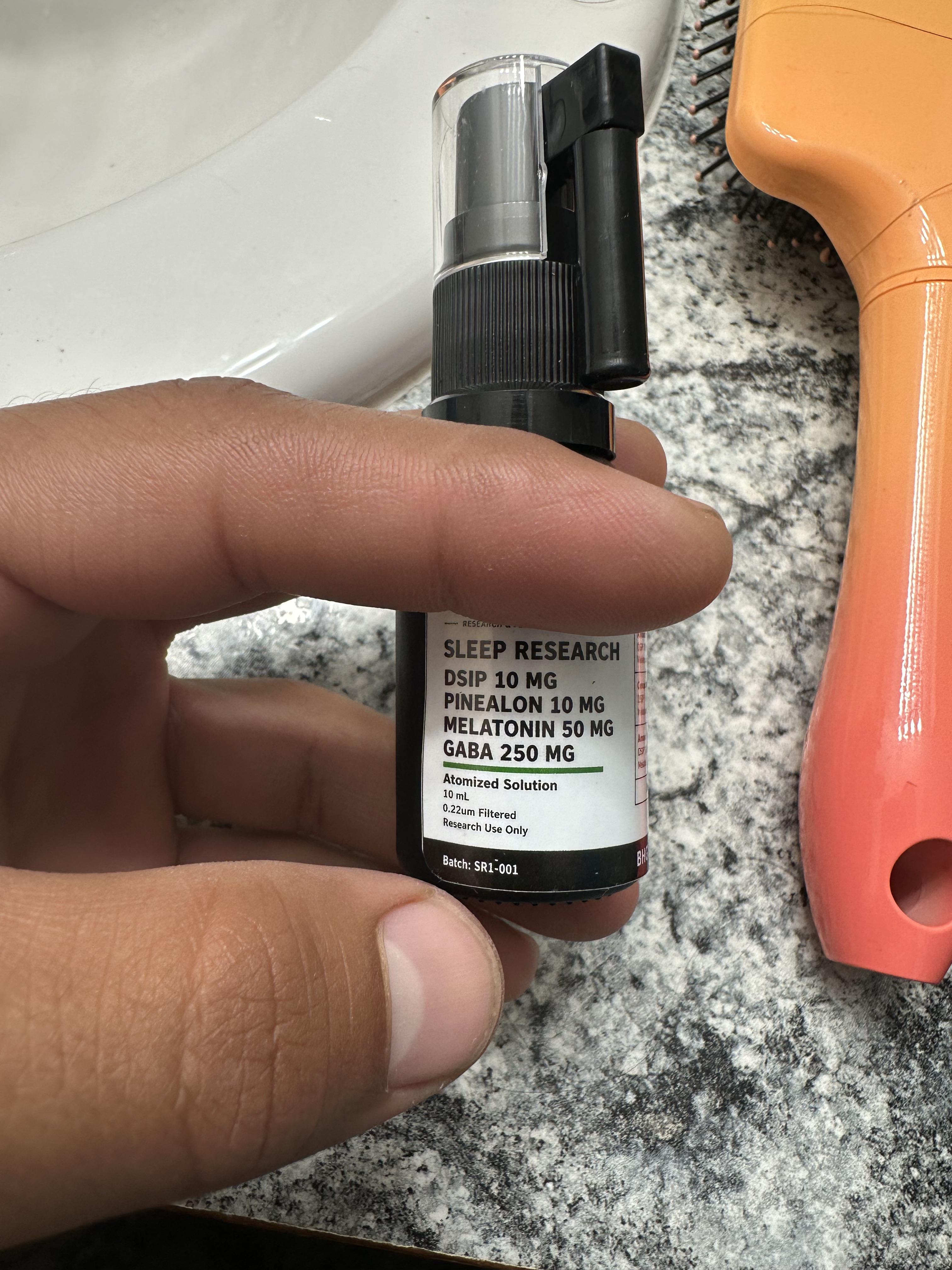
Sleep Research Blend Nasal Spray (DSIP, Pinealon, Melatonin, GABA) Anyone Run This Long Term?

Post image
4 Upvotes

Been takimg this sleep spray for a bit now, DSIP 10mg, Pinealon 10mg, Melatonin 50mg, GABA 250mg, all in one bottle. Works pretty well honestly, I've been liking it.

Only thing I'm not sure about is running it every single night. Do you need to take breaks off something like this, or is continuous daily use fine long term? Anyone else started something like this before what did your experience look like?

Also wondering about side effects, anything to watch for running this consistently. Let me know what you've noticed if you've tried it.


r/BioHackingGuide • • Aug 29 '26

Has anyone actually compared oral NAD precursors (NR/NMN) with NAD IV or subq shots?

4 Upvotes

I’ve been reading up on NAD and I’m trying to separate clinic marketing from what actually happens in the body.

My understanding is that intact NAD+ does not easily cross most cell membranes. Whether you take an oral precursor (NR or NMN) or get NAD IV / subcutaneous shots, a lot of what ends up being used inside the cell still has to be broken down into smaller pieces (NR, NMN, nicotinamide) and then rebuilt as intracellular NAD. Oral precursors also go through the gut and liver first. Injections skip the gut, but they still don’t appear to deliver intact NAD straight through the cell wall.

So my honest question is practical, not theoretical:

Has anyone here used both for a meaningful stretch of time — daily NR or NMN and NAD IV or subq — and noticed a real difference?

If you have:

•  What oral product and dose did you use, and for how long?

•  What injection route (IV vs subq), dose, and how often?

•  Did energy, recovery, sleep, brain fog, or labs actually change on one vs the other?

•  Was any “IV feeling” just during the drip, or did it last days/weeks?

•  Any side effects worth mentioning (nausea, flushing, chest tightness, cost vs benefit)?

Not looking for a sales pitch. Genuinely trying to decide if shots add anything once someone is already consistent with a precursor. Thanks.


r/BioHackingGuide • • Aug 12 '26

Bloodwork Series Part 2 What To Get Checked In Your 40s

4 Upvotes

Alright, part two. This is where a few new things start showing up that weren't really important back in your 30s hope to not scare anybody younger than 30 non if this is guaranteed to happen I promise but its a reality so might as well learn about it now lol

Why your 40s hit different

Everything from the 30s post still applies, keep pulling those same markers. But this is the decade where cancer screening kicks in, metabolic stuff tends to shift faster, and hormone decline starts becoming something you might wanna look at

Same baseline panels, still matter

CBC, CMP, lipid panel, fasting glucose and insulin, thyroid panel, testosterone, vitamin D. If you missed the 30s post, go grab that list, all of it carries forward into this one.

What's new for your 40s

TestWhat it checksWhy now
A1C3-month average blood sugarInsulin resistance risk climbs in this decade, A1C catches trends fasting glucose alone can miss
Hs-CRPInflammation markerCardiovascular risk starts becoming more real here, this one's a good early flag
PSA (men)Prostate-specific antigenScreening conversation usually starts 40-50 depending on risk factors and family history
Estradiol (women)Estrogen levelsPerimenopause can start showing up in the 40s for some women, worth having a baseline before symptoms hit
HomocysteineCardiovascular/methylation markerElevated levels tied to heart risk, cheap test, gets skipped a lot
CortisolStress hormoneWorth checking if fatigue, weight gain, or sleep issues are creeping in

Cancer screening starts becoming important

Colon cancer screening kicks in at 45 for average risk people, colonoscopy or a stool test if you'd rather go that route. If anyone in your family had colon cancer, especially young, talk to your doctor about starting earlier than 45 nowadays for some reason more than ever younger people report having colon cancer and that's probably due to lack of good quality food these days so its important to supplement fiber its gives me gas a bit but I still take some

PSA testing for prostate usually enters the conversation in this decade too, not a hard rule at exactly 40, more like 40-50 depending on family history and race, since risk factors vary. Quick blood test, simple, worth asking your doctor about even if nothing feels wrong.

Women, this is also a good time to talk to your doctor about mammogram timing if you haven't already, guidelines vary by risk factors so that's a conversation, not something I'm gonna throw a specific age on here.

Commonly looked into if something's off

MarkerIf it's offCommonly looked into
A1C (elevated)Prediabetes riskBerberine, magnesium
Hs-CRP (elevated)InflammationOmega-3s, curcumin
PSA (elevated)Needs follow-up, not self treatmentGoes straight to your doctor, not a supplement conversation
Estradiol (low, women)Possible perimenopauseHormone conversation with your doctor, not something to self-manage
Homocysteine (elevated)Cardiovascular/methylationB6, B12, folate
Cortisol (elevated)Chronic stressAshwagandha, magnesium, but sleep fixes this more than any supplement will

Timing on those

SupplementBest taken
BerberineWith meals, especially your biggest carb meal
MagnesiumEvening, helps with sleep too
Omega-3sWith a meal that has fat in it
CurcuminWith food, pair with black pepper extract for absorption
B6/B12/FolateMorning, food doesn't matter much
AshwagandhaEvening for most people, some do better AM, test what works for you

What to eat depending on what came back

Elevated A1C or fasting insulin? Cut back on refined carbs and liquid calories, juice, soda, that kind of thing. Build meals around protein and fiber first, carbs after. Eggs and vegetables over cereal, or a protein-heavy plate with rice and vegetables instead of just rice and sauce. Walking after meals helps more than people expect too.

High LDL or triglycerides? Lean into fatty fish, salmon, sardines, a couple times a week. Cut back fried food and seed oils where you can, cook with olive oil or avocado oil instead. More fiber, oats, beans, vegetables, fiber pulls cholesterol out through digestion.

Elevated Hs-CRP or general inflammation? Think Mediterranean style eating, olive oil, fatty fish, vegetables, less processed food and added sugar overall. Turmeric and ginger in your cooking doesn't hurt either, even outside of supplement form.

Elevated homocysteine? Leafy greens, beans, and eggs are naturally high in B vitamins and folate, which is what usually brings this one down alongside supplementation.

Low testosterone or estradiol? Make sure you're eating enough fat overall, hormones are built from fat, a diet that's too low fat for too long works against you here. Zinc-rich foods like beef, shellfish, and pumpkin seeds matter too.

Elevated cortisol? Less about a specific food, more about consistency, regular meal timing, not skipping meals, cutting caffeine especially later in the day.

None of this is a strict diet plan, it's just direction based on what your numbers are telling you instead of guessing.

Lifestyle side of things

MarkerIf it's offLifestyle worth checking
A1C (elevated)Insulin resistance buildingWalk after meals, strength training, cut liquid calories
Hs-CRP (elevated)InflammationSleep quality, cut processed food, regular movement
Homocysteine (elevated)Cardiovascular/methylationLeafy greens, reduce alcohol
Cortisol (elevated)Chronic stressSleep consistency matters more than any supplement here

Strength training becomes more important in this decade for keeping metabolic markers in check and slowing the muscle loss that starts creeping in. Alcohol also starts showing up more in liver and inflammation markers around this age if it's a regular habit

Peptides worth knowing about in this decade

Not telling you to run all of these, just what tends to become a thought once you're pulling these panels and seeing where you're at.

Recovery: BPC-157 and TB-500 for joint stiffness and slower recovery since it starts becoming noticeable research dosing runs 250-500mcg BPC-157 daily, TB-500 2-2.5mg, both SubQ.

Inflammation: KPV for general inflammation and gut related issues, works through NF-kB inhibition instead of just masking symptoms. Common dosing is 500mcg-2mg daily SubQ, or 500mcg-1mg oral if the target is gut specific.

Sleep: DSIP if sleep quality shitty which happens a lot in this decade even without obvious cause. Runs 100-300mcg, 30-60 minutes before bed, SubQ or intranasal.

Longevity: NAD+ and Epithalon once people start thinking longer term NAD+ runs 100-250mg, 1-2x weekly, IM or IV. Epithalon runs 5-10mg daily for a 10-20 day course, done 2-4x a year.

None of this replaces the bloodwork, it's the other direction, the bloodwork tells you if any of this is something you should be looking at for your specific situation.

If you're feeling something specific

Energy crashing harder than it used to, brain fog creeping in? Thyroid panel plus cortisol, both tend to drift in this decade and either one can mimic the other.

Noticing more belly fat even though your routine hasn't changed? A1C plus fasting insulin, usually the first real sign metabolic stuff is shifting.

Joint pain or stiffness that's new? Hs-CRP plus a basic inflammatory panel, worth ruling out before assuming it's just age.

Libido tanking, mood flatter than usual? Full hormone panel, testosterone for men, estradiol/progesterone for women, don't guess at this one, get it tested because if your anything like me then your guessing skills may not be all that great lol

What to do with your results

Same as always, don't panic over one number, bring everything to your doctor, keep records so you can track trends year over year instead of looking at everything in isolation. And on the diet, supplement, and peptide mentions above, that's general direction based on what commonly gets looked at, not a strict plan, talk to a doctor or someone qualified about what actually makes sense for your specific numbers.

Next one's your 60s. 😳

Anything you may need or want to know also found here, unless you already have your own place to get what you need, that's great, share below. https://www.reddit.com/r/BioHackingGuide/comments/1smca8k/peptide_research_compound_table_2026_updated/

Research and educational purposes only, not medical advice.


r/BioHackingGuide • • Aug 12 '26

Bloodwork Series Part 1 — What To Get Checked In Your 30s

4 Upvotes

Starting a new series here feel free to ask away or add you input, I think this is gonna be helpful for a lot of people. Basically breaking down what bloodwork makes sense depending on your age or what's going on with you. Not just "go get bloodwork" lol , I mean real panels, real reasoning behind why.

Coming up over the next few days I'll cover the 40s, that's when colon and prostate screening start becoming relevant, then the 60s, fatigue, diabetes risk, cancer risk, and bloodwork for anyone running peptides or hormone stuff maybe this might be boring to some but life changing for others

Starting with your 30s since I think that's usually when people first start paying attention to any of this at least Id hope so, so if your 30 what are you doing about your health?

Why it matters now

You probably feel fine, and that's good but this isn't about finding a problem right now, it's about getting your numbers on file while everything's likely still normal. That baseline is what every future test gets compared to down the road, so it's worth having even if you feel fine

What to ask for, and what "normal" looks like

TestWhat it checksOptimal range
CBCBlood cell counts, catches anemia and immune stuffHemoglobin 13.5-17.5 (men), 12-15.5 (women)
CMPKidney, liver, glucose, electrolytesCreatinine 0.7-1.3, ALT/AST under 40
Lipid panelCholesterol and triglyceridesLDL under 100, HDL above 40-60, triglycerides under 150
Fasting glucose + insulinHow your body's handling blood sugarGlucose 70-99, insulin under 10
Thyroid panelTSH, free T3, free T4TSH 0.5-4.5, though a lot of people feel best closer to 1-2
Testosterone (total + free)Hormonal baselineTotal T 300-1000 depending on lab, wide range so trend matters more than one number
Vitamin DDeficiency's common and easy to miss30-50 ng/mL is the general target

Ranges vary a bit lab to lab so don't stress the exact cutoffs too hard, the point is having something to compare against later.

If a marker comes back off, here's what people commonly look into

MarkerIf it's offCommonly looked into
Hemoglobin (low)Possible anemiaIron, B12
Liver enzymes (high)Liver stressMilk thistle, NAC
LDL/Triglycerides (high)Cardiovascular riskOmega-3s, fiber
Insulin (elevated)Early insulin resistanceBerberine, magnesium
TSH (high)/Thyroid (low)Thyroid functionSelenium, iodine, talk to a doctor before touching thyroid stuff yourself
Testosterone (low)HormonalVitamin D, zinc
Vitamin D (low)DeficiencyD3 with K2

Timing on those, if you end up needing any of them

SupplementBest taken
IronEmpty stomach if tolerated, with vitamin C
B12Morning, food doesn't matter much
Milk thistle / NACWith food, timing's flexible
Omega-3sWith a meal that has fat in it
FiberSpread through the day, not all at once
BerberineWith meals, especially your biggest carb meal
MagnesiumEvening, helps with sleep too
Selenium / IodineMorning, away from other supplements
Vitamin D / K2With a meal that has fat in it
ZincEvening, empty stomach can upset some people so adjust as needed

Lifestyle stuff worth looking at too, not just supplements

MarkerIf it's offLifestyle side worth checking
Hemoglobin (low)Possible anemiaIron-rich foods, red meat, leafy greens, cast iron cookware even helps a bit
Liver enzymes (high)Liver stressCut back alcohol, watch for hidden seed oils and processed food overload
LDL/Triglycerides (high)Cardiovascular riskMore fiber, less refined sugar, regular cardio helps this one a lot
Insulin (elevated)Early insulin resistanceWalk after meals, cut liquid calories, strength training helps insulin sensitivity a ton
TSH (high)/Thyroid (low)Thyroid functionSleep quality matters a lot here, chronic stress and poor sleep both mess with thyroid function
Testosterone (low)HormonalSleep is huge for this one, poor sleep tanks T fast. Also body fat percentage plays a role
Vitamin D (low)DeficiencyGet outside more, sunlight's still the best source, supplements are the backup plan not the first move

good thing to add it doesn't hurt to think about hydration and electrolytes because they matter more than people think, especially if you're sweating a lot from training or work. And if you're on shift work or your sleep schedule's inconsistent, that alone can throw off cortisol, thyroid, and blood sugar markers even if everything else about your diet is dialed in.

If you're feeling something specific, here's what to check

Tired all the time, no real reason why? Ask for thyroid panel, ferritin/iron, and vitamin D. All three get overlooked constantly and any one of them being low can make you feel wiped out. If ferritin comes back low, iron supplementation is common, but get retested before assuming you need to keep taking it long term, too much iron isn't a good thing either.

Gaining weight easier than you used to, or noticing more belly fat even though nothing changed? Get fasting insulin and glucose, not just glucose alone. Insulin resistance can be building for years before glucose itself looks off.

Low motivation, low libido, just feeling flat? Get total and free testosterone plus SHBG. Don't just look at total T alone, free T tells you more about what's available for your body to use. Vitamin D and zinc deficiency show up a lot in guys with low T, worth ruling those out before anything more aggressive.

Getting sick more than you used to, or just feeling run down constantly? CBC with differential, that breaks down your white blood cell types and can point toward something worth digging into further.

Random bruising, weird fatigue after workouts that doesn't add up? CBC plus a basic clotting panel, worth ruling out before assuming it's just training stress.

A quick note on cancer screening

I know some people ask about colonoscopies and prostate stuff in their 30s, but that's not standard yet unless you've got family history of colon cancer, IBD, or your doctor's already flagged something. Regular screening starts at 45 for average risk people, and that got moved down from 50 a few years back since colon cancer's been showing up more in younger people lately. Same thing with PSA bloodwork for prostate, that's usually not started until 40-50 depending on risk factors, not your 30s. I'll get into both of those properly in the 40s post.

If anyone in your family had colon cancer, especially at a younger age, or you've got symptoms like blood in your stool, losing weight without trying, or stomach issues that won't quit, that's worth bringing up to your doctor now, doesn't matter your age.

What to do with your results

Don't panic if one number's slightly off, ranges are pretty wide honestly. Just get it done, hold onto it, bring it to your doctor. Having a real baseline now is gonna matter more later when you need something to compare it to. And on the supplement and lifestyle stuff above, that's general context for what commonly gets looked into, not a green light to start stacking supplements off a Reddit table, talk to your doctor about what actually makes sense for your numbers.

Next one's on your 40s.

if you need blood work and don't know where to look check it out here but if you got a way to check that's good feel free to share in the comments if you know we all got differently ways we get our labs but here's mine https://www.reddit.com/r/BioHackingGuide/comments/1smca8k/peptide_research_compound_table_2026_updated/


r/BioHackingGuide • • Aug 07 '26

Bronchogen for Smoker’s Lungs Anyone Run It? Trying to Undo Some Damage

4 Upvotes

Been smoking heavy for a while and started looking into whether peptides could help with the lung side of things. Bronchogen kept coming up as a recommendation, it’s a bioregulator, different category from the stuff most of us usually run, so figured I’d ask around instead of just guessing my way into it.

Anyone here dealt with lung damage from smoking and tried Bronchogen for it? Did you notice a difference, breathing, recovery time after workouts, anything?

Also seen SS-31 and glutathione mentioned alongside it for this kind of stack. Anyone running those together for lung support, or is that more than what’s needed?


r/BioHackingGuide • • Aug 06 '26

Which Peptides Work Well Together? A No BS Guide To Stacking Combos That Make Sense

4 Upvotes

I feel like alot of the times people make the mistake of throwing random compounds together with zero reason behind it. Some stacks make total sense, others are just guessing. Let's go through what pairs up well and why, category by category.

Quick heads up before we start. Some of these combos got real clinical trial backing. Others are still mostly preclinical with the community figuring it out as we go. Big difference, and its important when you're trying to figure out what to do

Cutting Fat

Retatrutide with Tesamorelin is a solid pair. Reta's hitting three different receptors for overall fat loss, still investigational but the trial numbers are strong. Tesa's FDA approved specifically for stubborn visceral fat, the deep stuff around your organs. They're not overlapping each other reta handles the big picture while tesa zeroes in on belly fat specifically.

Semaglutide with MOTS-c is another one that's legit Sema's the most proven GLP-1 out there. MOTS-c is more of a support player, helps your mitochondria keep functioning when you're running low calories on a cut and energy starts tanking.

Tirzepatide with CJC/Ipamorelin covers a different angle, muscle preservation. Tirz drops weight hard but any GLP-1 cut risks losing muscle along with fat. GH support from CJC/Ipa helps protect lean mass while you're in a deficit, especially if you're eating enough protein and still training.

One thing to know, never stack multiple GLP-1 or GIP agonists together. Sema plus tirz, or sema plus reta, that's not a stack, that's overlapping the exact same pathway and stacking risk with it.

Recovery

BPC-157 and TB-500 is the classic, most people know it as the Wolverine stack. BPC handles localized repair, tendons, gut lining, that kind of thing. TB-500 works more systemically, helping mobility and broader tissue remodeling. Both still mostly preclinical data with a ton of community reports backing it up.

BPC-157 with GHK-Cu is another good combo, especially post surgery or after something that needs both internal and external healing. BPC works on the inside, GHK-Cu handles skin and collagen on the outside.

If you want everything like me, KLOW blend packs GHK-Cu, BPC-157, TB-500, and KPV together. Dose it based on the GHK-Cu content since that's usually the highest amount in the vial, most people target around 2mg a day of that component.

GH Support

CJC-1295 with Ipamorelin is the go-to combo here. CJC extends how long your GH pulse lasts, Ipamorelin is what triggers the pulse in the first place. Run before bed, empty stomach, most people land around 100-300mcg of each. 8-12 weeks on, a few weeks off is the usual rhythm.

Add Tesamorelin to that combo if visceral fat is a specific target for you. Just know you're now stacking multiple things that raise IGF-1, so get bloodwork done before and during.

Cognitive

Semax and Selank together is the most common nootropic pairing you'll see. Semax in the morning for focus and motivation, Selank later in the day when stress hits, it works through a calming pathway without knocking you out. Both have real pharmaceutical history in Russia going back to the 90s, this isn't some new theory.

Add DSIP at night if sleep's part of the equation too. Bad sleep tanks everything else you're trying to build during the day anyway.

Anti-Aging

GHK-Cu, BPC-157, and TB-500 together is basically the foundation most people build their longevity stack around. Skin, connective tissue, systemic repair, all covered from different angles. GHK-Cu has the strongest clinical backing here, especially topically.

Thymosin Alpha-1 is worth knowing about too if immune aging is on your radar. It's used clinically in over 30 countries for immune support, more human data behind it than most things on this list.

Gut Health

BPC-157 and KPV is the pair people run for gut inflammation, IBD-type stuff, chronic GI issues. BPC repairs the lining, KPV calms the inflammation response by blocking NF-kB, the switch that turns inflammation on. Add glutathione if there's a detox or antioxidant angle you're trying to hit too.

Rules that matter

Don't start two new compounds on the same day. Run one for a few weeks minimum so you know how your body responds before adding anything else.

If you're running a blend like KLOW, know what's already in it. Adding standalone BPC-157 on top means you're doubling up without realizing it.

More compounds isn't always better. A tight 2-3 compound protocol you understand beats a messy 5 compound stack you're guessing about.

Get bloodwork before and during anything with multiple GH or metabolic compounds. IGF-1, fasting glucose, A1C, basic metabolic panel at minimum.

Cycling schedules mentioned here are community convention, not something backed by clinical studies. Treat them as a precaution, especially for compounds like BPC-157, TB-500, and MOTS-c where human safety data is still thin.

This is for research and education, not medical advice. Multi-compound protocols deserve real medical oversight, not just a Reddit thread anybody have goated stacks people don't mention alot?


r/BioHackingGuide • • Aug 04 '26

If You Cycle Off a Peptide and Come Back On It, Do NOT Jump Back To Your Old Dose (Anaphylaxis Risk)

4 Upvotes

I feel like this one’s important so I've read a lot of times about anaphylaxis risk multiple people have talked about it they run MOTS-C for months, feel great, no issues at all. Cycle off for a while. Come back on it later at the same dose they used before. End up in the hospital.

Shitty situation that's forsure here’s what’s going on. While you’re running a peptide for a while, your body builds T cells that recognize it. Once you stop, your immune system has time to build antibodies against it too, kind of like it’s learning to treat the compound as something to fight off instead of something familiar. So when you bring it back into your system later, your body can freak out. That knee-jerk reaction is what leads to anaphylaxis.

This can happen to anyone, but the risk is higher if you’ve had bad histamine reactions before, on any peptide, not just this one.

What to do about it
If you cycle off something and want to run it again down the road, don’t go straight back to your old max dose. Treat yourself like you’re brand new to it. Start low, at the minimum effective dose, and work your way back up slow, same as your very first time.
I know it’s annoying if you were running high doses before and now you gotta rebuild. But that slow rebuild is what keeps you safe. It gives your body time to adjust instead of panicking.

This isn’t just a MOTS-C thing either. Same rule goes for any peptide you cycle off and back on, especially the ones you run for months straight.

Bottom line
Time off a compound doesn’t mean your body forgot about it. Sometimes it means the opposite happened. Respect the restart, don’t rush it.


r/BioHackingGuide • • Jul 27 '26

My retatrutide progress update

Thumbnail
gallery
4 Upvotes

So after three boys, of course I didn't like how my body looked so I decided to start dieting (a calorie deficit to be specific) I started doing cardio, but a busy mom of three boys can only do so much so I don't have that much time to work out while trying to balance out everything else and I heard of retatrutide and well I just thought I'd share some before and after progress pictures I'm still not where I wanna be but better than what I was should I try Tesa for the visceral fat or keep on doing what I'm doing I'm hoping not to need surgery for skin I feel like I may be ok idk kinda just been using this Peptide table I saw


r/BioHackingGuide • • Jul 27 '26

Social anxiety on semax not sure why any recommendations?

Post image
4 Upvotes

I started taking selank and semax selank at 300mcg and semax at 1mg but start getting social anxiety pretty bad around people should I higher my selank dose to balance things out or lower my semax dose I feel like if I go higher on selank I might be too laid back or am I just not reacting good to semax who's tried them before? What protocol did you guys try?


r/BioHackingGuide • • Jul 23 '26

Peptide storage advice?

Post image
4 Upvotes

What's everyone using as storage how do store your peptide in a case or canister I'm trying to explore alternatives I normally put this into a canister it's takes like three of these plates into a canister


r/BioHackingGuide • • Jul 04 '26

Using Creatine For Brain Performance to help brain fog if you buffer alot or get distracted easy this might help

4 Upvotes

Most people take 3 to 5 grams a day for the gym and call it a day. That's cool for muscle. The brain is gonna need a bit mire than that though

The problem is the blood brain barrier. The transporter that moves creatine into your brain runs near capacity at normal doses, so most of what you're taking isn't doing much up there. A 2024 study dosed people at 0.35g per kg bodyweight and tested increases in brain phosphocreatine. Another confirmed brain creatine went up 8.7% after four weeks at 20g a day. Standard 5g dosing won't even make a difference for the brain

The thing you may not know is high dose creatine pulls hard on glycine because that's what your body uses to make it. Run high doses without compensating and you can start depleting glycine over time, which affects sleep quality, collagen, and nervous system stuff. Keeping glycine at 3 to 5 grams a day covers you if you're going above 10g.

Keep in mind though the cognitive benefits show up strongest in sleep deprived or stressed people in the research and I know for a fact this is true because when I was on night shift for years I found out about the benefits of creatine for the brain and since I wasn't getting good sleep already I was able to notice the benefits pretty good. For someone well rested and eating meat regularly the effect is more subtle. Still real, just not dramatic.

Anyone running higher doses for the brain side, what are you noticing?

Do your homework. Use your brain. But if your having problems using your brain take creatine lol